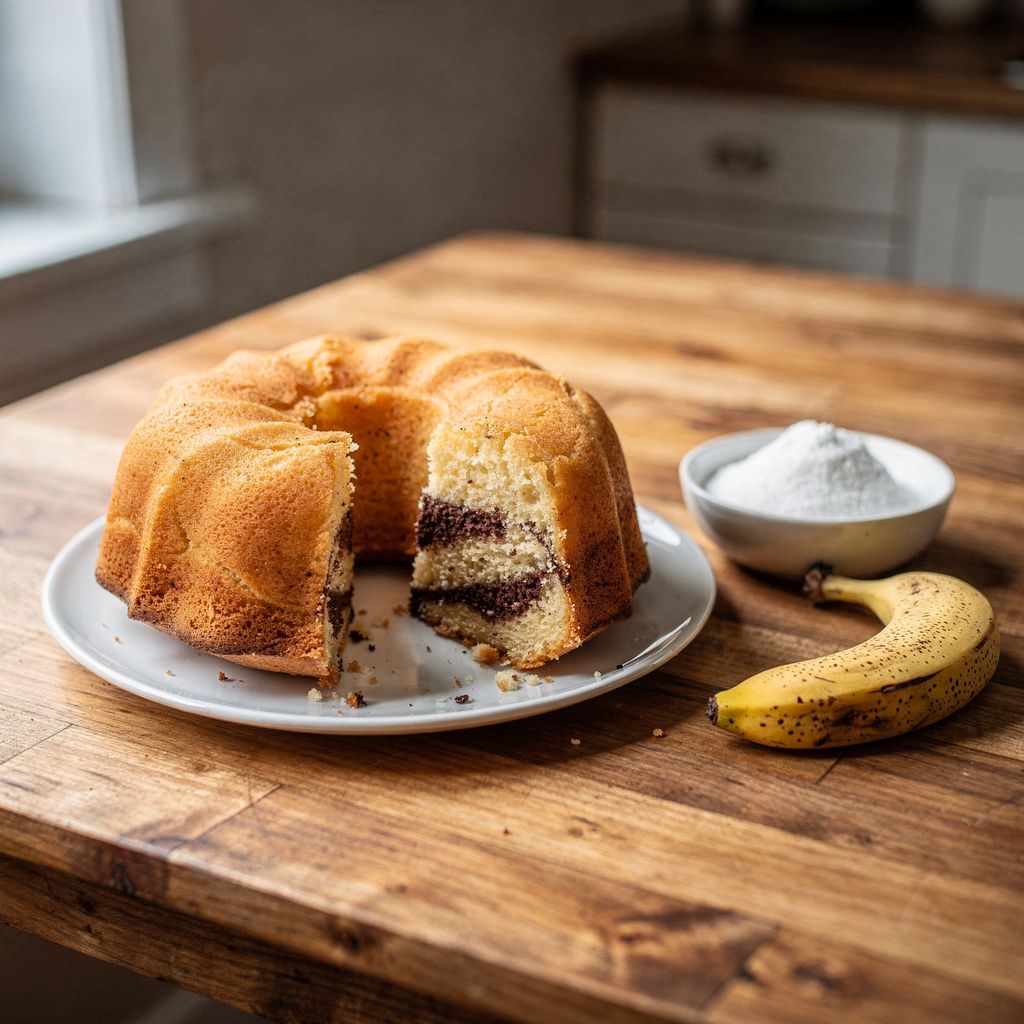
Gluten-free banana bundt cake with chocolate
No Added Sugar Bundt Cake: What to Use Instead (and Keep It Moist)
Updated Oct 3, 2026
A Bundt cake without added sugar can still turn out soft and sweet — you just can't skip the sugar outright. You need to replace it with something else and tweak the recipe a little. Using fruit is another route entirely: then the cake isn't sugar-free as such, but sweetened with fruit instead. On top of sweetness, sugar in the batter does several other jobs too — it holds in moisture, helps you cream the butter, keeps the crumb tender, and browns the crust. Below you'll find what to use instead (erythritol, xylitol, blended stevia sweeteners, or ripe fruit), in what ratio, and what else to adjust in the recipe so your Bundt cake doesn't turn out dry, pale, or unpleasantly gritty.
You can't simply leave sugar out of a Bundt cake, because it does at least five jobs in the batter, and sweetness is only one of them. Take it out with nothing in its place and you'll end up with a dense, dry, pale cake.
Sweetness – the obvious one.
Moisture – sugar binds water, which is why the crumb stays soft even the next day.
Lightness – sugar crystals create tiny air bubbles as you beat them into the butter, and those bubbles are what help the cake rise.
Tenderness – sugar slows down how quickly eggs set and starch firms up, so the crumb stays soft and tender instead of turning gummy.
Crust colour and aroma – sugar caramelises and helps the surface brown.
A good substitute has to cover at least the volume and moisture side of things, not just the sweetness. A few drops of liquid stevia won't cut it in a Bundt cake.
Four options work best: erythritol, xylitol, an erythritol-stevia blend, and ripe fruit (banana, dates, apple purée).
Replace sugar with erythritol at a ratio of roughly 1.25:1 (120–130g per 100g of sugar), since it's less sweet than sugar. Erythritol is a polyol (sugar alcohol) that looks like sugar and bakes in a similar way, but it's only around 60–80% as sweet as regular sugar.
A 1:1 ratio works too, just expect a less sweet cake.
Always grind it to a fine powder. Coarse crystals don't dissolve well in butter and tend to re-crystallise once the cake cools, giving the crumb a slightly gritty texture.
Cooling effect: it leaves a cool sensation on the tongue, a bit like mint. You'll barely notice it in a chocolate, cocoa, citrus, or spiced Bundt cake, but it's more obvious in a plain vanilla one.
It doesn't brown, so the cake stays paler. Don't judge doneness by colour here — use a skewer instead.
Xylitol (often sold as "birch sugar") is about as sweet as sugar, so you can swap it in 1:1 by weight. It doesn't have as strong a cooling effect as erythritol and behaves more like real sugar in the batter, so the cake comes out moister.
Two things to watch out for, though: it doesn't feed yeast (see the FAQ for yeasted Bundt cakes), and it's lethal to dogs. A good middle ground is half xylitol, half erythritol — the cake cools less on the tongue, crystallises less, and only half the sweetener is xylitol.
For a stevia Bundt cake, use a stevia-erythritol blend labelled "sweetens like sugar 1:1" and follow the dosage on the packaging, since the ratio varies between brands. Pure stevia won't give the batter any volume — it's hundreds of times sweeter than sugar, so you'd only ever add a tiny pinch.
The downside: too much and you'll get a bitter, liquorice-like aftertaste. If you're not sure, use a tenth less than you think you need and sweeten the glaze instead.
You might also come across monk fruit sweetener. In the EU, only one specific aqueous monk fruit extract is approved as a novel food (Regulation (EU) 2024/2345); purified mogroside extracts aren't approved as a sweetener, so in Czech shops you'll mostly find stevia.
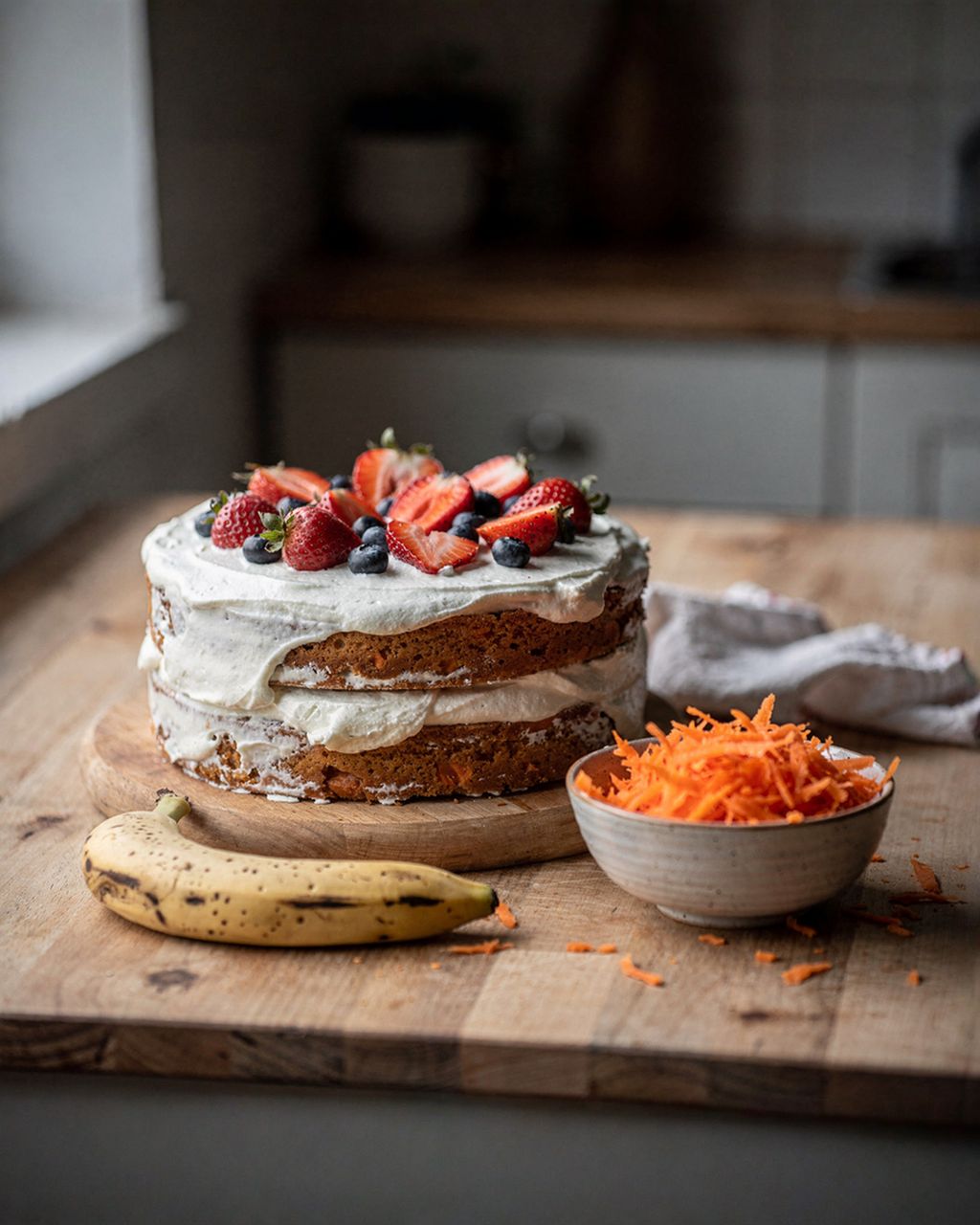
Ripe banana, date paste, or apple purée can replace part of the sugar while also adding moisture, so the batter doesn't dry out. The result is a denser, moister cake with a pronounced fruity flavour. The amounts below are a starting point — adjust to taste depending on how sweet your fruit is.
Ripe bananas (with brown spots): use 150–200g of mashed ripe banana (about 1½ bananas) per 100g of sugar. The cake will be less sweet than with sugar, but it'll be the moistest version.
Date paste: soak dates in hot water for 15 minutes, then blend. Use roughly 100–150g of paste per 100g of sugar. It gives a caramel flavour and a darker colour.
Apple purée (unsweetened): the least sweet option, but it adds plenty of moisture. Use it to replace at most half the sugar — about 100g of purée per 50g of sugar — and sweeten the rest with banana or dates.
Fruit is wet, so cut back on the liquid (milk) by roughly half the volume of fruit you're adding, and expect a slightly longer bake. You'll find a ready-made example with exact amounts further down among the recipes: a gluten-free chocolate banana Bundt cake.
No — a fruit-sweetened Bundt cake is just that: sweetened with fruit. Both bananas and dates contain their own natural sugars. And since you're adding them specifically for sweetness, a cake like this can't be labelled "no added sugar" either.
Under EU food labelling rules:
"sugar-free" means no more than 0.5g of sugars per 100g,
"no added sugar" means no sugars or any other food used for its sweetening properties (such as fruit or honey) have been added. If the food naturally contains sugars, the label must also state "contains naturally occurring sugars".
Which brings up a common trap: honey, maple syrup, agave syrup and coconut sugar aren't sugar substitutes — they're just sugar in another form. A Bundt cake made with honey is simply a Bundt cake made with sugar.
The conversion comes down to six changes: swap the sugar by weight, grind the sweetener to a powder, add extra moisture, beat the butter longer, bake at 170°C/340°F, and check doneness with a skewer. In detail:
Swap the sugar by weight: xylitol 1:1, erythritol roughly 1.25:1, blended sweeteners as directed on the packaging.
Grind the sweetener to a fine powder. This applies to xylitol too, if yours is coarse.
Add extra moisture: for a standard large Bundt tin, add 2–3 tablespoons of plain yoghurt or sour cream, or 20g extra butter. Erythritol holds onto water less well than sugar.
Beat the butter longer — at least 5 minutes, until it turns pale. Powdered sweetener creates fewer air bubbles than granulated sugar, so give it extra time to do its job. Add the eggs one at a time.
Bake at 170°C/340°F instead of 180°C/350°F. Expect the same baking time or 5–10 minutes longer (a large tin usually takes 50–60 minutes).
Check doneness with a skewer, not by colour. A Bundt cake made with sweetener stays paler, even when it's fully baked inside.
For your first attempt, I'd recommend a cocoa or lemon Bundt cake. The cocoa or lemon zest masks erythritol's cooling effect and is more forgiving of mistakes than a plain vanilla version.
A Bundt cake made with sweetener usually turns out dry, pale, or gritty because the sweetener is treated exactly like sugar. Here are the most common issues and how to fix them:
Dry and crumbly: missing the moisture that sugar used to provide. Add yoghurt or extra fat (see point 3 above), and don't overbake — take it out as soon as the skewer comes out dry.
Pale: neither erythritol nor xylitol caramelises like sugar. Grease the tin with butter and dust it with ground almonds or cocoa instead of flour — that way the crust gets some colour even without sugar.
Gritty, like there's sand in it: the erythritol re-crystallised as it cooled. Grind it to a finer powder, or replace part of it with xylitol.
Cooling sensation on the tongue: typical of erythritol. Add cocoa, lemon zest, cinnamon, or cardamom, or swap part of it for xylitol.
Dense, barely risen: the butter and sweetener weren't beaten enough, or the butter was too cold. Let both the butter and eggs come to room temperature first.
Bitter: too much stevia in the blend. Use a tenth less next time.
To keep a Bundt cake truly sugar-free, go for a lemon glaze made with powdered erythritol, or simply dust it with powdered sweetener. Dark chocolate tastes best, but it does contain added sugar, so a cake iced with it is no longer sugar-free:
85–90% dark chocolate, melted with a little butter or cocoa butter. It does contain some sugar (typically 11–15g per 100g for 85% chocolate, less for 90%, depending on the brand).
Lemon glaze: mix powdered erythritol with a few drops of lemon juice into a thick paste. Here, erythritol's tendency to crystallise actually works in your favour, as it sets nicely and turns a crisp white.
Simple dusting: sift powdered sweetener over the top, mixed with a little cocoa if you like.
Only dust the cake once it's completely cool, otherwise the powder will dissolve and disappear.
These are the Bundt cakes that work best with the adjustments above — we don't yet have a recipe specifically for no-added-sugar Bundt cake on Yumsto. The banana version is naturally moist thanks to the fruit, and it's also gluten-free. The orange and pumpkin ones are so aromatic that erythritol's cooling note disappears into the background. The classic 250g curd cheese Bundt cake is a reliable one with clear ratios to work from. If you're baking for a one-year-old, also check out our article on sugar-free cake for a one-year-old.
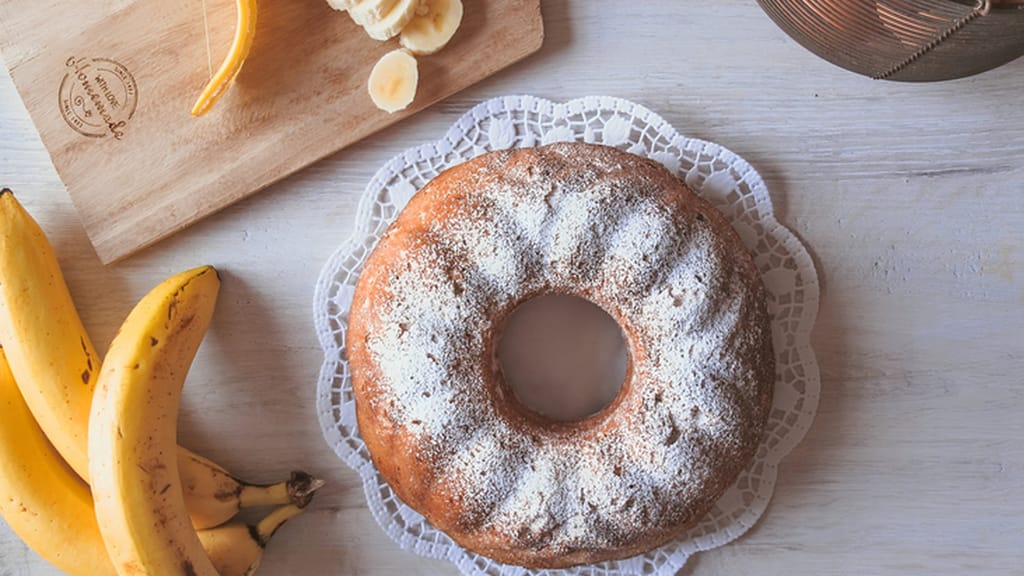
Gluten-free banana bundt cake with chocolate
Gluten-free chocolate banana Bundt cake – the base recipe for a fruit-sweetened Bundt cake
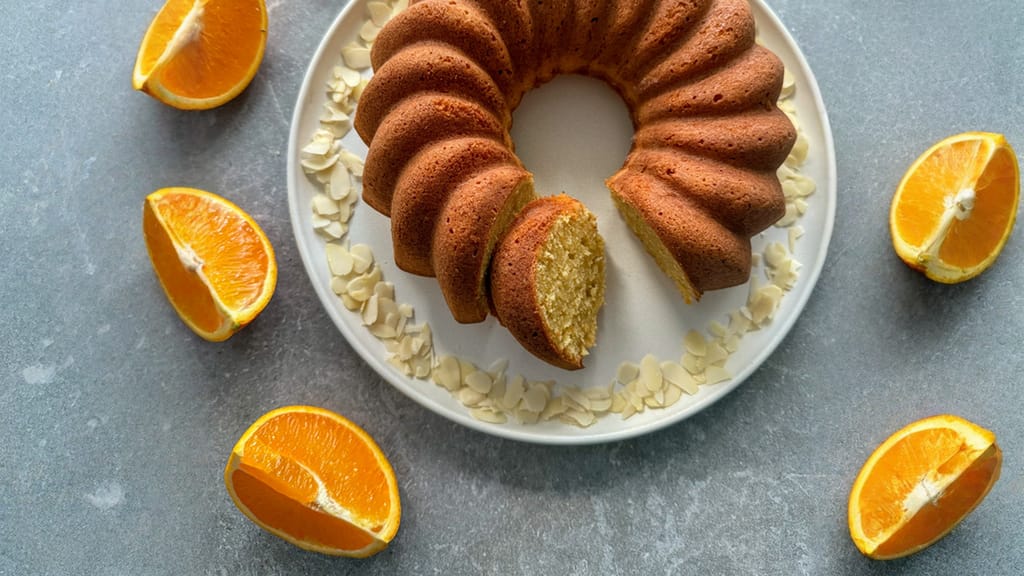
Orange bundt cake with almonds, cinnamon and cardamom
Orange Bundt cake with almonds and cardamom – an aroma that holds up well when converted to sweetener
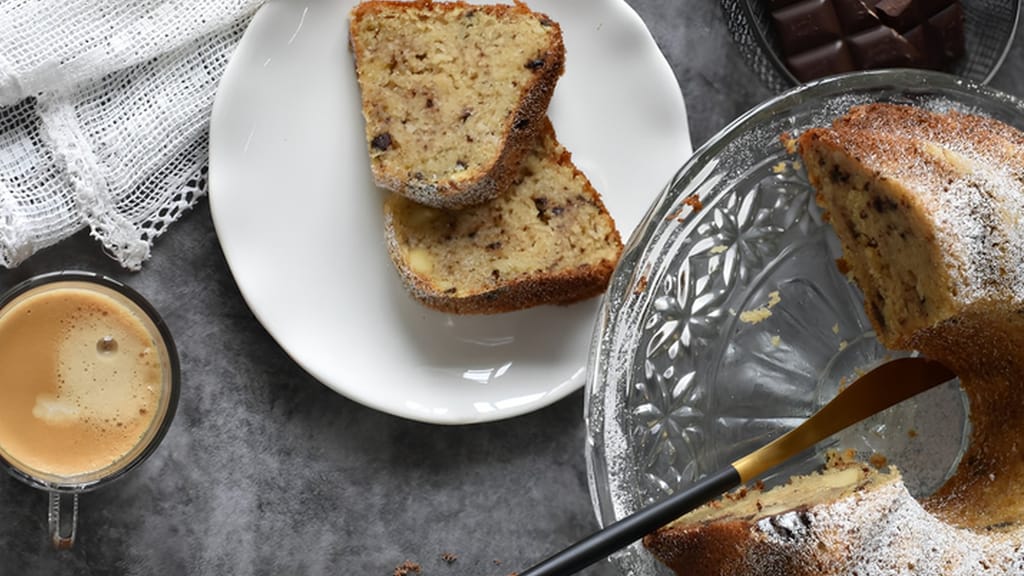
Grandma's two-fifty cottage cheese bundt cake
Classic 250g curd cheese Bundt cake – easy to convert to a sweetener-based version
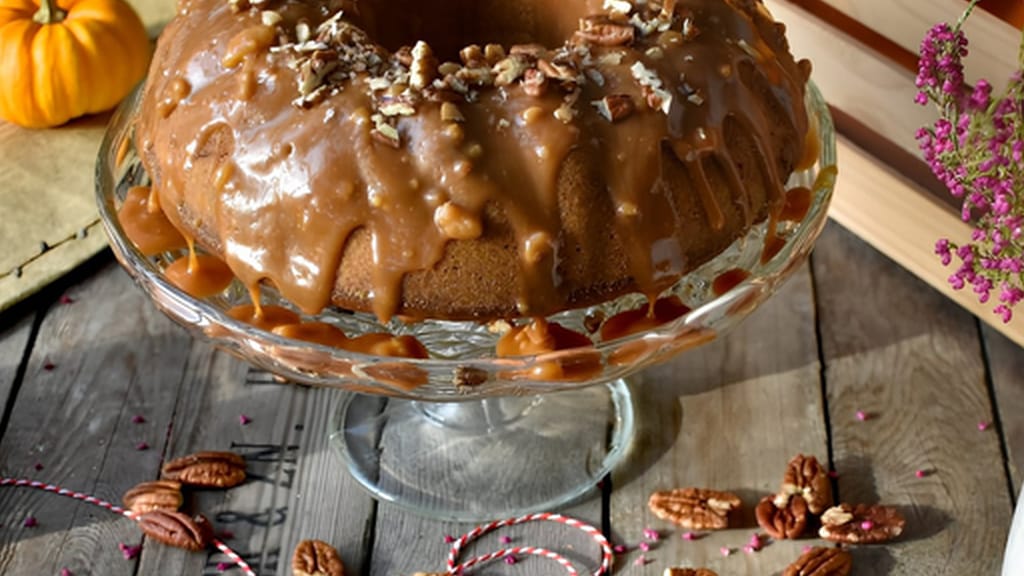
Autumn pumpkin bundt cake with creamy caramel glaze
Pumpkin Bundt cake – spiced and moist, a good candidate for converting
Yes, a no-added-sugar Bundt cake freezes just as well as a classic one. Wrap it in foil once it's completely cool, and it'll keep in the freezer for about 2–3 months. For best results, freeze it already sliced and without icing, so you can take out just a piece at a time. Thaw it still wrapped at room temperature so it doesn't dry out. If you're not freezing it, keep it under a cake dome or in a container and eat it within 2–3 days, since it dries out a bit faster without sugar.
Yes, you can bake a yeasted Bundt cake without added sugar, but it will rise more slowly, since neither erythritol nor xylitol feed the yeast. The yeast has to rely on sugars released from the flour instead. Just let the dough prove somewhere warm for up to twice as long. Mix the starter with just milk and a spoonful of flour, and add the sweetener only to the main dough.
Yes, a no-added-sugar Bundt cake still contains plenty of carbohydrates, because the sweetener only replaces the sugar, not the starch from the wheat flour. "No added sugar" doesn't mean "no carbs".
Yes, you can bake a Bundt cake that's both sugar-free and gluten-free: take a gluten-free recipe, swap the sugar for xylitol 1:1 or erythritol at a 1.25:1 ratio, and add 2–3 tablespoons of plain yoghurt or sour cream for a large tin. The yoghurt makes up for the moisture that gluten and sugar would otherwise hold onto. If you don't mind a fruit-sweetened cake, a ripe banana also helps a gluten-free batter.
Yes, a Bundt cake made with sweetener can have a laxative effect if you eat a larger portion, since erythritol and xylitol are polyols. Under EU regulations, foods containing more than 10% added polyols must carry the warning "excessive consumption may cause a laxative effect". A sweetener-based Bundt cake usually contains more than 10%, so a store-bought version of it would carry the same warning.
One recipe worth heating the oven for, one tip, and one deal from the shop. Nothing else.