Strawberry fraisier cake
Fruit Jelly for Cakes: How to Make It Without Soaking the Sponge
Updated Oct 8, 2026
Fruit jelly soaks through a cake's sponge base when you pour it on warm and still liquid, since it seeps in before it has a chance to set. There are three fixes, and you can mix and match them: make the jelly separately and freeze it as a ready-made disc inside a ring, seal the sponge off from the moisture with a barrier, and only pour the jelly once it's cooled, right before it starts to set. On top of that, you need the right amount of gelatine – and watch out for fruits that break it down.
The base soaks through because sponge cake acts like a sponge, and the liquid jelly seeps into it before it has a chance to set. Gelatine starts to thicken below about 25–30°C (77–86°F), but doesn't fully set until it hits the fridge, so warm jelly can stay liquid on the sponge for a good few dozen minutes.
The most common causes:
Pouring warm jelly straight onto the sponge – it soaks into the bottom few millimetres and leaves a soggy, rubbery band.
A sponge that's already soaked with syrup – once it's wet, it can't absorb more liquid and pushes it out sideways instead.
Too little gelatine – the layer only half-sets, then softens in the warmth of the cake and starts weeping juice.
Fresh pineapple, kiwi, papaya or figs – their enzymes break down gelatine, so the jelly won't set at all.
A gap at the edge – jelly leaks between the sponge and the tin's wall and soaks into the side of the cake.
Three approaches work reliably, and you can combine them: (1) a frozen jelly insert set inside a ring, (2) a barrier on the sponge, and (3) pouring cooled jelly onto a chilled cake. The frozen insert is the most foolproof; the other two come in handy when you want jelly on top or don't have freezer space.
Make the jelly separately as its own disc, freeze it, and add it to the cake already set – that way the liquid never actually touches the sponge. This is how patisseries build layered and mousse cakes.
Use a ring that's 1–2 cm smaller than the cake's diameter (for a 20 cm cake, use an 18 cm ring), so the cream can wrap around the sides of the insert.
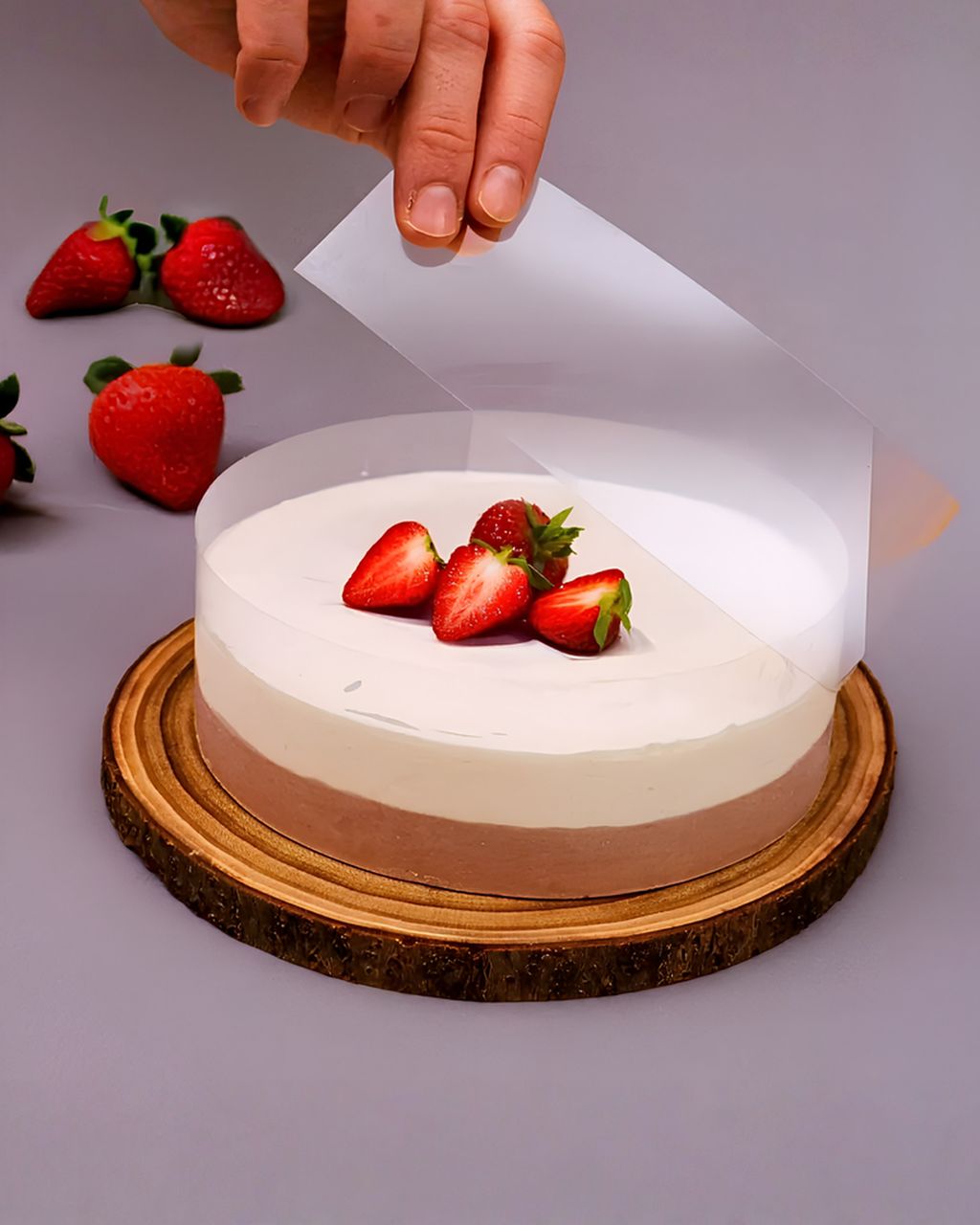
Set it on a tray lined with foil or baking paper and line the inside with cake collar/acetate strip – that way the insert lifts out cleanly with no marks.
Pour in the jelly to a depth of 5–10 mm and freeze for at least 3–4 hours, ideally overnight.
Remove the frozen disc, peel off the acetate, and place it onto the cream layer – never directly onto bare sponge.
The frozen insert holds its shape while you're assembling the cake, then softens to a sliceable texture in the fridge after a few hours. We walk through the whole ring-and-acetate assembly process step by step in Mousse cake step by step: gelatine, ring and acetate strip, and you'll find more on the acetate itself in our guide to acetate cake collars.
A barrier is a thin, waterproof layer that seals the sponge before the moist filling goes on. Fat does the job best here, since it doesn't mix with water.
Melted white chocolate or cocoa butter – brush a thin coat onto the cooled sponge and let it set. The most effective option.
A thin layer of cream (buttercream, ganache, mascarpone cream) – 3–5 mm, chilled until firm.
Jam or thick fruit purée – more of a helper than a true seal; it slows absorption but won't stop it completely.
If you're soaking the sponge with syrup, go easy on it, and only add the barrier after soaking and a short chill.
Pour the jelly onto the cake once it's cooled to 25–28°C (77–82°F) – still liquid, but already starting to thicken. Warmer jelly will soak in; colder jelly starts clumping and won't spread smoothly.
The cake needs to be well chilled (at least 1–2 hours in the fridge), ideally with a barrier or cream layer on top.
Keep a ring lined with acetate around the cake so the jelly can't run down the sides.
Pour it over a spoon starting from the centre, so the stream doesn't gouge into the cream.
A 3–5 mm layer is plenty; for anything thicker, make it as a separate insert instead.
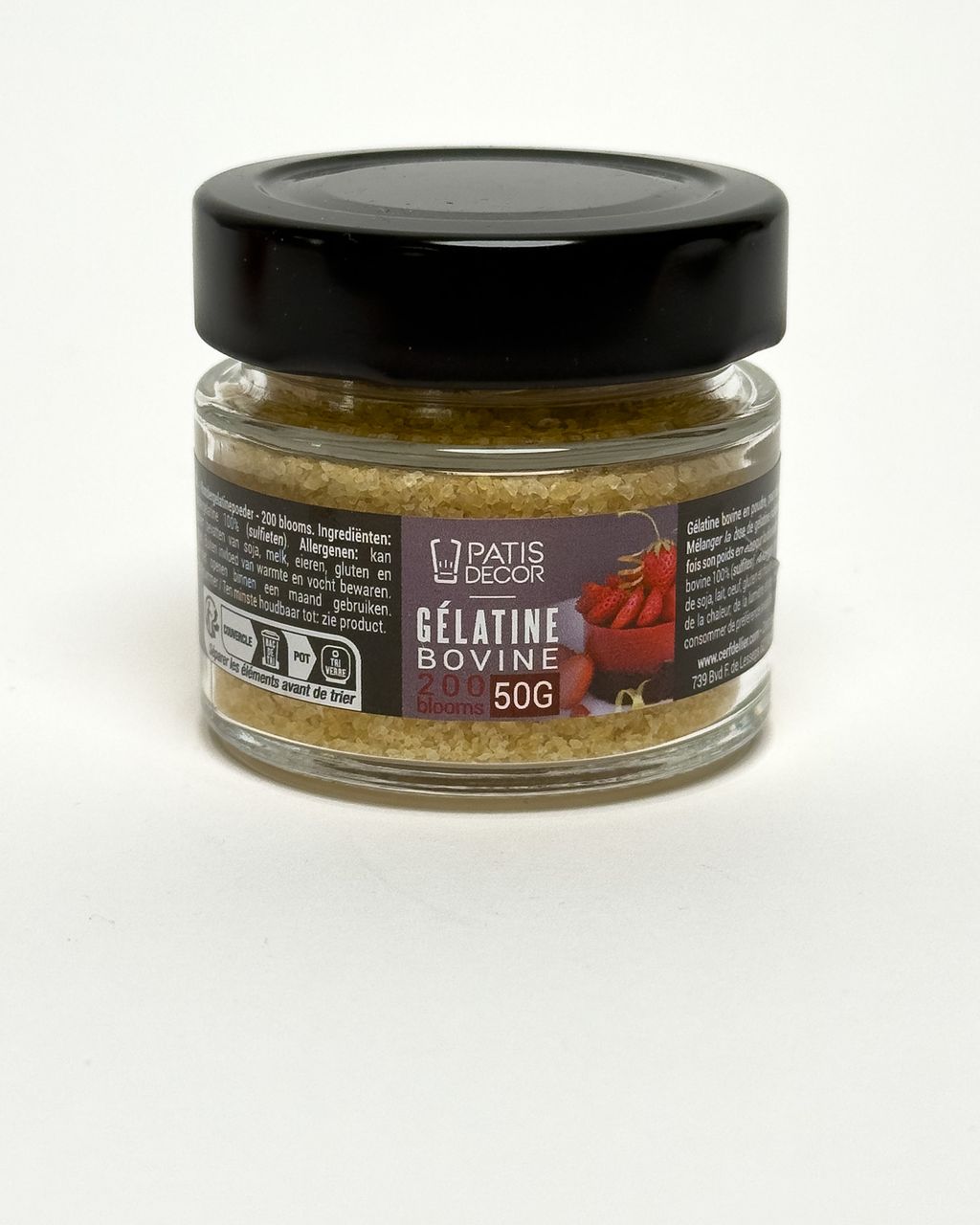
For fruit jelly on a cake, aim for 2–2.5% gelatine (200 Bloom) of the liquid's weight – that's 10–12.5 g per 500 g of purée or juice. That range is reliable for an insert, which needs to hold its shape in the cake and still be sliceable.
A softer, wobblier jelly on top of a cake: 1.5–2% (7–10 g per 500 g).
A firm insert for a tall cake or summer cake: 2.5–3% (12.5–15 g per 500 g).
Very acidic fruit (citrus, redcurrants, raspberries) slightly weakens gelatine – stick to the higher end.
The Bloom number tells you how strong the gelatine is. That's why it pays to stick to one strength in your recipes: with 200 Bloom powdered gelatine, you know exactly how many grams to use, and the result is consistent every time. Leaf gelatine comes in different strengths (so-called gold, around 200 Bloom, and silver, around 160 Bloom). Weaker gelatine leaves are heavier, so one gold leaf and one silver leaf each set roughly the same amount of liquid – which means in a recipe written for leaves, you can swap them leaf for leaf. Weighing by the gram is more precise, though.
When switching between strengths, recalculate using: grams × √(original Bloom ÷ new Bloom). For example, 10 g of 200 Bloom gelatine is roughly equivalent to 11.2 g of 160 Bloom gelatine.
How to work with powdered gelatine:
Sprinkle it into 5–6 times its weight in cold water (10 g gelatine into 50–60 g water) and let it bloom for 10 minutes.
Warm part of the purée to 50–60°C (122–140°F), dissolve the bloomed gelatine in it, then stir it into the rest.
Don't boil it – boiling weakens gelatine, and the jelly will set less firmly as a result.
You'll find gelatine, pectin, agar and other setting agents all together in our gelling agents and binders category.
Gelatine is the most versatile choice for a cake insert: it slices cleanly, has a nice bounce, and freezes well. Agar and pectin have their place too, but they behave differently.
Gelatine – sets in the cold and melts close to body temperature, so it feels soft on the tongue. Freezes well. Not vegetarian, and it's sensitive to enzymes in certain fruits.
Agar – plant-based, sets at around 35–40°C (95–104°F) and melts only around 85°C (185°F), so it holds up even in warm conditions. It's more brittle though – it snaps rather than bending – and can weep water after freezing. It's used in much smaller amounts than gelatine, typically 0.5–1.5% of the liquid's weight.
Pectin (e.g. NH pectin) – plant-based, typical for fruit glazes. NH pectin is low-methoxyl: it sets with calcium and doesn't need much sugar. Its main advantage is that it's thermoreversible – you can reheat and melt it down again. The result is more of a glossy, spoonable texture than a sliceable disc.
If you're baking for vegetarians, agar is a sensible swap – just expect a firmer, less springy layer, and don't leave it in the freezer too long.
Fresh pineapple, kiwi, papaya, figs, and to some extent mango, contain enzymes that break down proteins – and gelatine is a protein. Jelly made with these simply won't set. In pineapple it's bromelain; in kiwi, actinidin.
Heat treatment helps: briefly boil the purée (just a few minutes) to destroy the enzymes. That's why stewed/cooked pineapple works fine with gelatine.
Freezing doesn't help – frozen fruit keeps its enzymes intact.
Agar or pectin aren't affected by the enzymes, since they aren't proteins.
Strawberries, raspberries, blueberries, redcurrants, cherries, apricots and citrus are all safe to use (just watch the acidity with citrus).
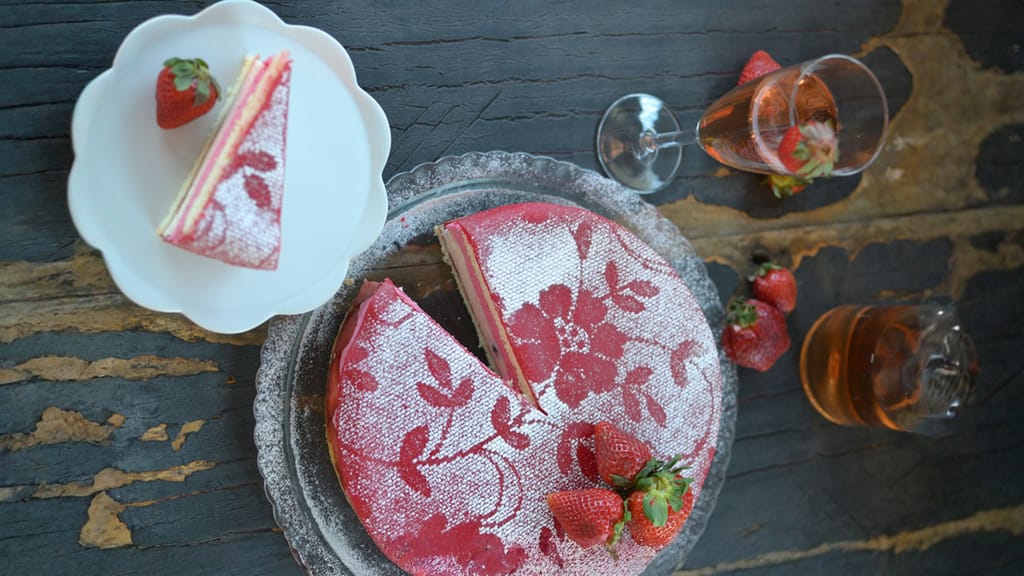
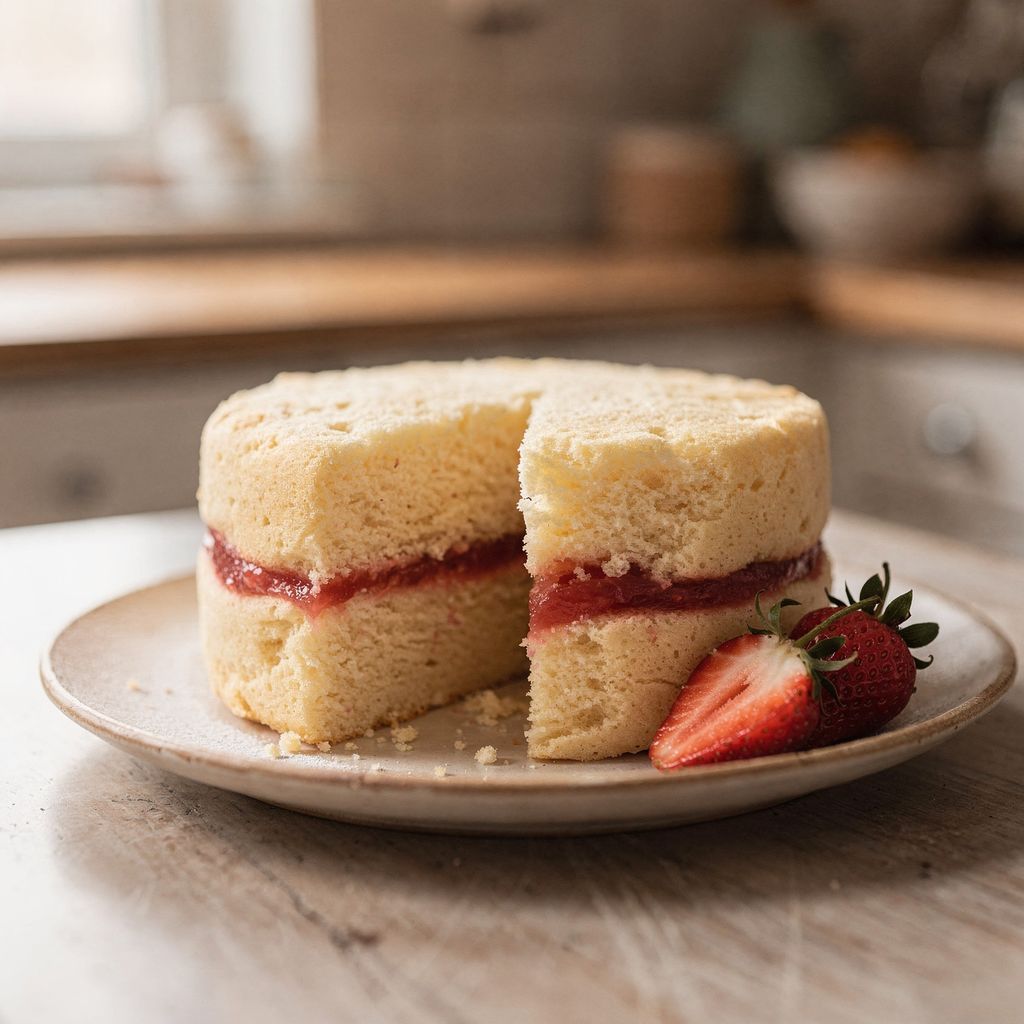
The classic combo is strawberry jelly with vanilla cream and sponge – that's exactly the principle behind the French strawberry fraisier cake, which is assembled in a ring lined with acetate. You can try layering jelly and cream on a smaller scale with our strawberry panna cotta with chocolate and mint jelly.
If you're baking your own sponge, go for one that's flat and firm. If your sponge tends to sink in the middle, read up on why sponge cakes sink in the middle – jelly would pool into that dip and soak the centre.
Strawberry fraisier cake
Strawberry fraisier cake with a jelly layer, assembled in a cake ring
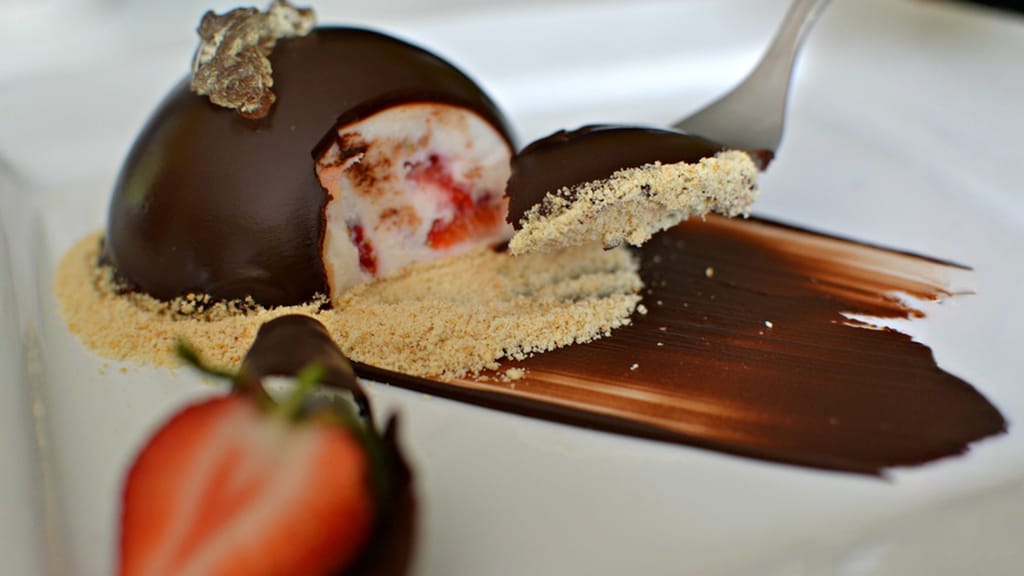
Strawberry panna cotta with chocolate and mint jelly
Strawberry panna cotta with chocolate and mint jelly
A cake ring lined with an acetate strip is the easiest way to get a straight, watertight wall – the jelly and cream can't escape, and the sides come out smooth. Acetate strip doesn't stick to jelly, so once it's chilled you just peel it off.
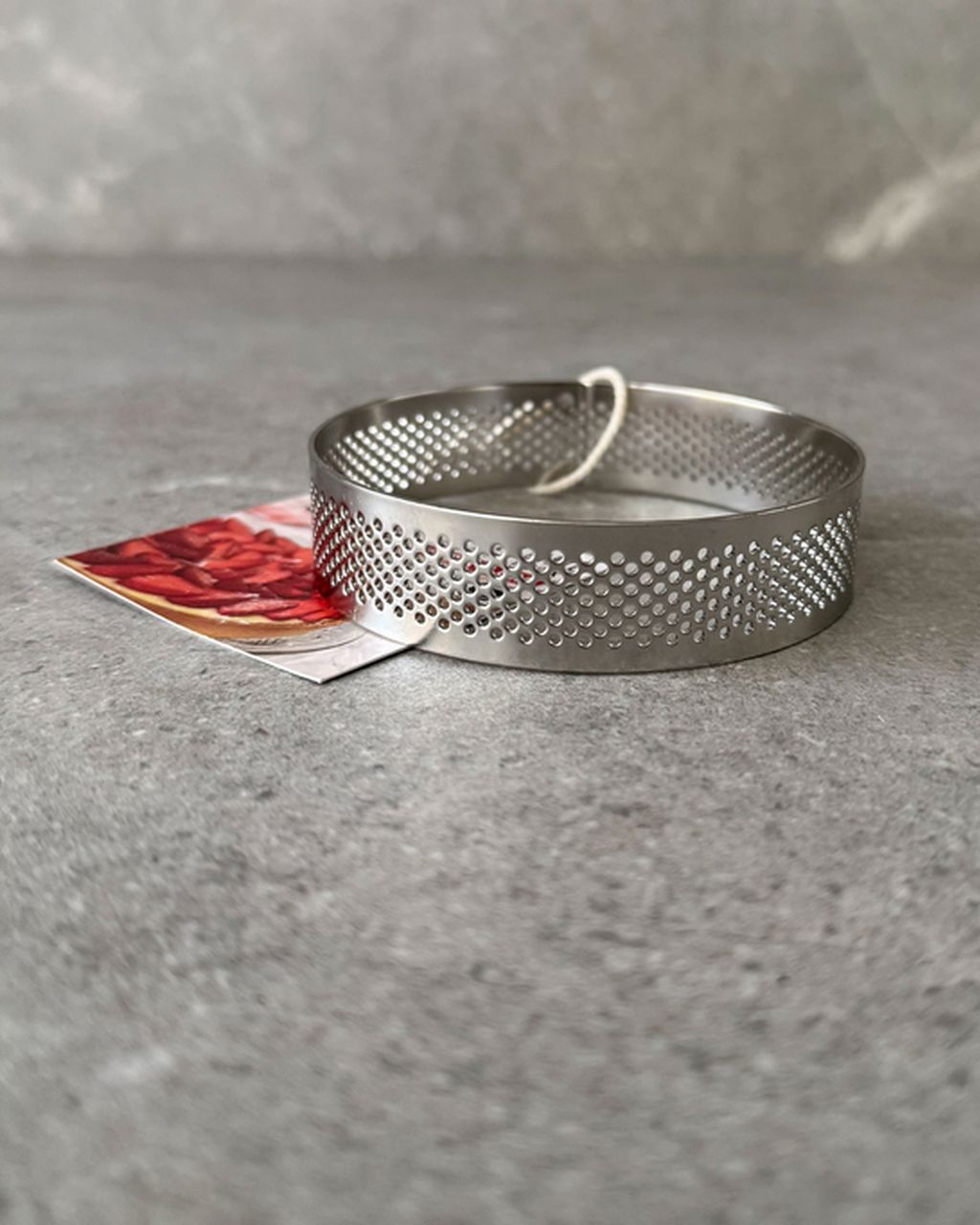
A cake ring (no base) is just a border – you build the cake from the bottom up on a board, then slide the ring off. For a whole cake, use a smooth ring matching the cake's diameter; for an insert, go 1–2 cm smaller.
Small 8 cm rings are perfect for individual cakes with a jelly insert. They come with either a smooth or perforated wall – once lined with acetate, both work fine, and nothing leaks through. Our article on perforated rings explains why some are perforated and how to bake with them.
A fluted ring isn't suitable for a jellied cake – the ridges would print into the sides. Save those for tartlets.
A springform pan's removable ring will do in a pinch too – just line it with acetate or baking paper and expect a less sharp edge.
Baking paper instead of acetate works, but it gets damp, wrinkles, and the sides won't be as smooth. Plastic wrap, on the other hand, tends to stick.
Fruit jelly made with gelatine sets in the fridge in 3–4 hours, reaching full firmness after about 12 hours. A frozen insert firms up in 3–4 hours in the freezer; once it's on the cake, let it soften in the fridge for at least 4–6 hours before slicing.
Yes – it's actually best to make a cake with fruit jelly the day before, since the gelatine reaches full firmness overnight. Store it covered in the fridge so it doesn't pick up odours, and eat it within 2–3 days.
Lumpy fruit jelly can be rescued by gently warming it to 30–35°C (86–95°F) and stirring until smooth, then letting it cool to 25–28°C (77–82°F) before pouring. If the lumps won't go away, the gelatine probably didn't fully dissolve – strain the mixture through a fine sieve.
A cake with gelatine-set jelly can sit at room temperature for about 1–2 hours; in summer heat, the gelatine will start softening much sooner. For an outdoor party, use a higher gelatine dose (2.5–3%) or switch to agar, which doesn't melt until around 85°C (185°F).
Yes, frozen fruit works great for cake jelly – once thawed, it purées easily and often has a more intense flavour than off-season fresh fruit. The exception is frozen pineapple, kiwi or papaya: freezing doesn't destroy their enzymes, so you'll need to briefly boil the purée first.
One recipe worth heating the oven for, one tip, and one deal from the shop. Nothing else.