Mexican burrito with beans and ground beef
Mexican Food at Home: Burritos, Quesadillas, Tortillas and Guacamole
Updated Nov 20, 2026
Mexican food rests on three ingredients, corn, beans and chiles, and on the tortilla that turns them into a meal you can eat with your hands. The easiest way to start at home is with a burrito, a quesadilla and guacamole. You can make all three in 15 to 45 minutes from ordinary supermarket ingredients. Below you'll find the names you'll meet on menus, how traditional Mexican dishes are made, tested recipes from Yumsto and a few tricks that help a burrito hold its shape, keep the cheese in a quesadilla stretchy and keep guacamole green.
Traditional Mexican cooking is built on corn, beans and chile peppers. According to UNESCO, this trio is the core of an entire system that the organization inscribed on the Representative List of the Intangible Cultural Heritage of Humanity in 2010. It isn't only about recipes. UNESCO describes the whole chain: growing on the milpa plot, where corn, beans and squash grow together, grinding by hand on a stone mill, and communal cooking passed down from generation to generation.
What this means for your kitchen:
Corn is the foundation. It's made into tortillas, tamales and pozole, and it's in the kitchen almost constantly.
Beans are the daily staple. Most often black and pinto, cooked until soft, mashed or whole.
Chiles give flavor, not just heat. Fresh ones (jalapeño, serrano) are chopped into salsa, while dried ones (ancho, chipotle) are toasted and soaked to become smoky sauces.
Extras that make a dish "light up": lime, cilantro, raw onion, tomatoes, avocado and green tomatillos.
The key technique is called nixtamalization. Dried corn is cooked and left to stand in water with slaked lime (calcium hydroxide), then rinsed and ground into a pliable dough called masa. This softens the kernels, helps the dough hold together and gives it the typical tortilla flavor. In practical terms, it means one thing: you can't make a corn tortilla from ordinary cornmeal or corn flour, because it will fall apart. You need nixtamalized flour, sold as masa harina.
Mexico is also a big country, and the cooking differs by region. In the north, wheat tortillas and grilled meat dominate, in the center of the country street tacos, and in the south, especially in Oaxaca and Puebla, complex mole sauces. What we call "Mexican" in Czechia is often really Tex-Mex: the cooking of the American borderlands, with more cheese, ground meat and wheat tortillas. There's nothing wrong with that, it's just good to know what you're eating.
Seasonal baking plans, tested recipes and kitchen tricks that save you time. Unsubscribe in one click.
The best-known Mexican dishes are tacos, enchiladas, chilaquiles, tamales, pozole and mole. Around the world, the quesadilla, burrito and guacamole belong with them, and we cover those in detail below, with recipes. For each dish in the first list, you'll find roughly how it's made, so you know what you're getting into.
A taco is a small soft corn tortilla folded over a filling, eaten by hand in two or three bites. Heat the tortilla dry in a hot pan for about 20 to 30 seconds per side, until it turns pliable and gets a few browned spots. Then add seared meat, fish or vegetables and finish with finely chopped raw onion, cilantro, salsa and a squeeze of lime. In Mexico, two tortillas are often stacked under a juicy filling so they don't tear.
Enchiladas are tortillas rolled around a filling and covered in chile sauce. Warm the tortillas briefly so they don't crack when rolled, fill them with, say, shredded chicken or beans and cheese, and arrange them seam side down in a baking dish. Pour red or green sauce over them, sprinkle with cheese and bake for about 15 to 20 minutes at 180°C (350°F), until the sauce bubbles around the edges.
Chilaquiles are a Mexican breakfast of tortilla triangles fried until crisp and briefly coated in hot salsa. Cut older tortillas into eighths and fry them in oil or bake them in the oven until golden. Then toss them for just a minute or two in warm red or green salsa, so they soak up flavor but don't go completely soft. Top with a fried egg, sour cream, onion and crumbled cheese.
Tamales are little parcels of corn masa dough with a filling, wrapped in a corn husk or banana leaf and steamed. Beat masa harina with fat (traditionally lard) and broth into a fluffy dough, spread it on a soaked husk, put the filling in the middle and close the husk by folding it over. Stand the tamales in a steamer and cook for about an hour. They're done when the dough peels away from the husk on its own.
Pozole is a hearty soup of large nixtamalized corn kernels (hominy in English) with pork or chicken. The meat is cooked slowly until it falls apart, and the kernels "bloom" in the soup. Depending on the chile used, it's white, green or red. At the table everyone seasons it themselves: with finely shredded cabbage or lettuce, radishes, onion, dried oregano and lime.
Mole is a thick sauce made from dozens of ingredients: dried chiles, nuts, seeds, spices and, in the best-known version, mole poblano, chocolate. The dried chiles are toasted dry, soaked in hot water and blended with the other toasted ingredients. The paste is then fried and reduced with broth for a long time, until it thickens and turns glossy. It's most often served with turkey or chicken and rice.
The most common terms on a Mexican menu are salsa roja, salsa verde, pico de gallo, frijoles refritos, tostada, fajitas, nachos, elote and chorizo. Here's what they mean and how to make them at home:
Salsa roja: red sauce made from tomatoes and chiles. Dry-roast the tomatoes, onion, garlic and chile in a pan until they blacken in spots, blend them with a handful of cilantro and add salt.
Salsa verde: green sauce made from tomatillos. Briefly boil or roast the tomatillos with the chile, then blend with onion, cilantro and lime. It's fresh and tart, and ideal with chicken.
Pico de gallo: a raw, diced salsa, no blender. Mix tomatoes, onion, jalapeño and cilantro, add salt, drizzle with lime and leave for 10 minutes to release its juice.
Frijoles refritos: "refried" beans. Mash cooked beans in a pan with fat and onion, adding some of their cooking liquid until you get a thick, creamy mash.
Tostada: a crisp tortilla used as a plate. Bake or fry the tortilla until hard, spread it with frijoles refritos and top with lettuce, meat, salsa and cheese.
Fajitas: strips of meat with peppers and onion. Marinate the meat with lime and spices, sear it hard in a hot pan together with the vegetables and serve with warm tortillas, so everyone can wrap their own.
Nachos: tortilla chips baked with cheese. Spread them on a baking sheet, top with cheese, beans and jalapeños, bake for a few minutes until the cheese melts and serve right away with salsa and guacamole.
Elote: grilled corn. Grill the cob until golden, brush it with mayonnaise or cream, roll it in crumbly cheese, dust with chile and finish with a squeeze of lime.
Chorizo: a spiced sausage with paprika. The Mexican kind is raw: squeeze it out of the casing into a pan and fry it until it reaches 71°C (160°F) inside. In Czechia you can usually find dried Spanish chorizo, which only needs a short fry to release its red fat.
At home, the combination that works best is one "wrapped" dish, one sauce and one drink: for example a burrito or quesadilla, with guacamole and horchata. These recipes on Yumsto are tested, and we describe each one by what's really in it:
Mexican burrito with beans and ground meat: 32 minutes, 4 servings, beef, red beans, corn and rice in a wheat tortilla.
Mexican quesadilla with chorizo and potatoes: 31 minutes, mashed starchy potatoes, chorizo and gouda.
Four-cheese quesadilla with buttered corn: 16 minutes, brie, gouda, cheddar and blue cheese.
Quesadilla with apples, spinach and caramelized onion: 43 minutes, gruyère and pecans, baked in the oven.
Tortilla with grilled chicken and a wild garlic dip: 95 minutes, chicken, lettuce and a cream-and-mayonnaise dip.
Guacamole with avocado, tomatoes and jalapeño: 17 minutes, vegan.
Mexican horchata with rice and cinnamon: the rice soaks overnight.
Noodles with meat and Mexican spices: pork tenderloin marinated overnight, then 6 steps in a wok.
The last recipe is a loose fusion, not a Mexican classic, but it's handy when you want Mexican spices in a dish you don't have to wrap.
A burrito is a large wheat tortilla wrapped tightly around a filling into a closed cylinder that you eat from your hand. To make it hold, you need three things: a filling that isn't runny, a warm and pliable tortilla and a tight roll.
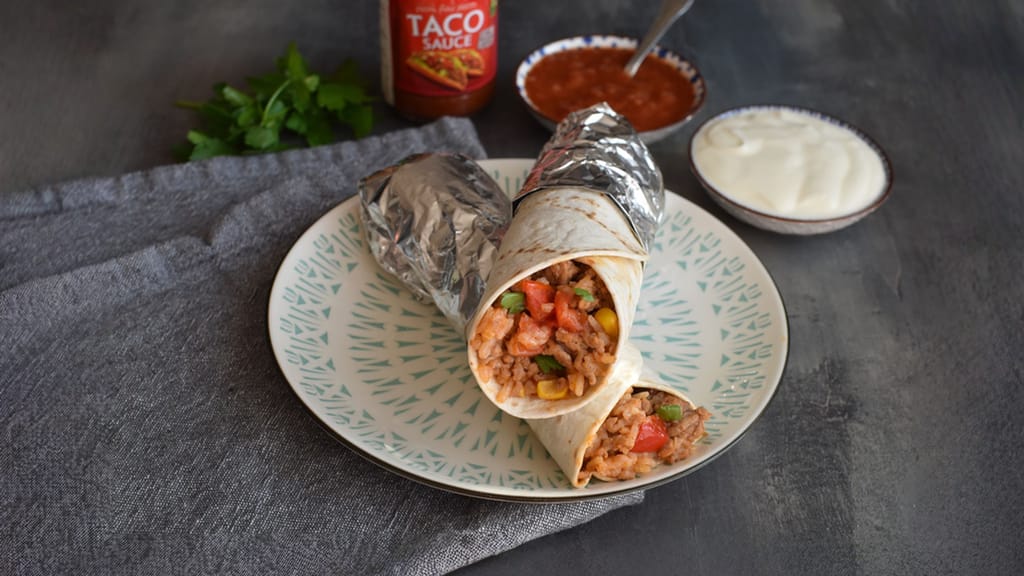
This is exactly how the Mexican burrito with beans and ground meat is built. In a pan, onion is cooked in a little oil until translucent, and 500 g of ground beef is seasoned with salt and pepper and cooked until done (71°C/160°F inside, color isn't reliable). Then you add drained corn (400 g), 250 g of drained canned red beans, a finely chopped red bell pepper and halved cherry tomatoes. Next come burrito spice mix, pressed garlic, tomato salsa roja and rice cooked ahead from 100 g of dry basmati. It all heats through for five minutes so the flavors come together. For 8 tortillas you need 250 g of gouda and a little parsley, and the whole thing is ready in 32 minutes for 4 people.
Why it works:
Drained beans and corn don't release water into the filling, so the tortilla doesn't get soggy on the bottom and split.
Rice absorbs the juice from the tomatoes and salsa and thickens the filling. Rice in a burrito is an American habit, though, typical of Tex-Mex and of the big Mission-style burritos from San Francisco. In Mexico it usually isn't put in a burrito.
A warm tortilla bends, a cold one cracks. Warm it according to the package, or for 15 to 20 seconds per side in a dry pan.
How to wrap a burrito:
Put the filling in a strip on the bottom third of the tortilla and leave at least 4 to 5 cm (about 2 in) of free edge all around.
Fold the bottom edge over the filling and tuck it lightly underneath so the filling is compressed.
Fold the sides in.
Roll it tightly all the way up. The tighter you wrap, the better the burrito holds.
If you want it sealed for certain, place it seam side down on a dry pan for a minute so the seam "bakes" shut.
The most common mistake is overfilling. A 25 cm (10 in) tortilla holds roughly one large ladleful of filling, and any more won't roll up.
Mexican burrito with beans and ground beef
Mexican burrito with beans and ground meat: beef, red beans, corn and rice in 32 minutes
A quesadilla is a tortilla folded over or topped with another tortilla over cheese and cooked until the cheese inside melts and the two layers fuse. It's the fastest Mexican dish you can make at home, and a great place for leftovers from the fridge. A fun fact: according to Mexico News Daily, there's an argument about whether cheese belongs in a quesadilla at all. In Mexico City cheese is an add-on you order, while in the rest of the country it's a given.
Three rules apply to every quesadilla:
Medium heat, not maximum. The tortilla has to turn golden at roughly the same moment the cheese melts. Over high heat it will burn first.
Grated cheese, not slices. It melts quickly and evenly and glues the two halves together.
Less filling than you think. A thin layer heats through, while a thick one stays cold inside.
The four-cheese quesadilla with buttered corn is the fastest, ready in 16 minutes: gouda, cheddar, blue cheese and brie between two tortillas, with corn warmed through in butter.
The Mexican quesadilla with chorizo and potatoes is more filling. The filling is mashed starchy potatoes with chorizo, which releases its red fat, and gouda.
The quesadilla with apples, spinach and caramelized onion goes another way: gruyère, spinach, apple, caramelized onion and pecans aren't cooked in a pan but in the oven.
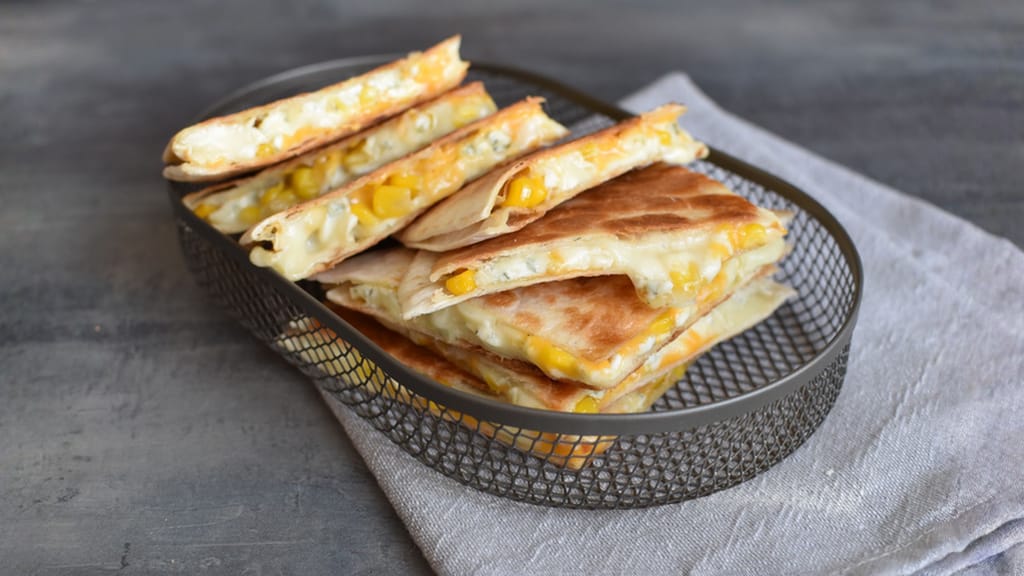
Santa maria four-cheese quesadilla
Four-cheese quesadilla with buttered corn in 16 minutes
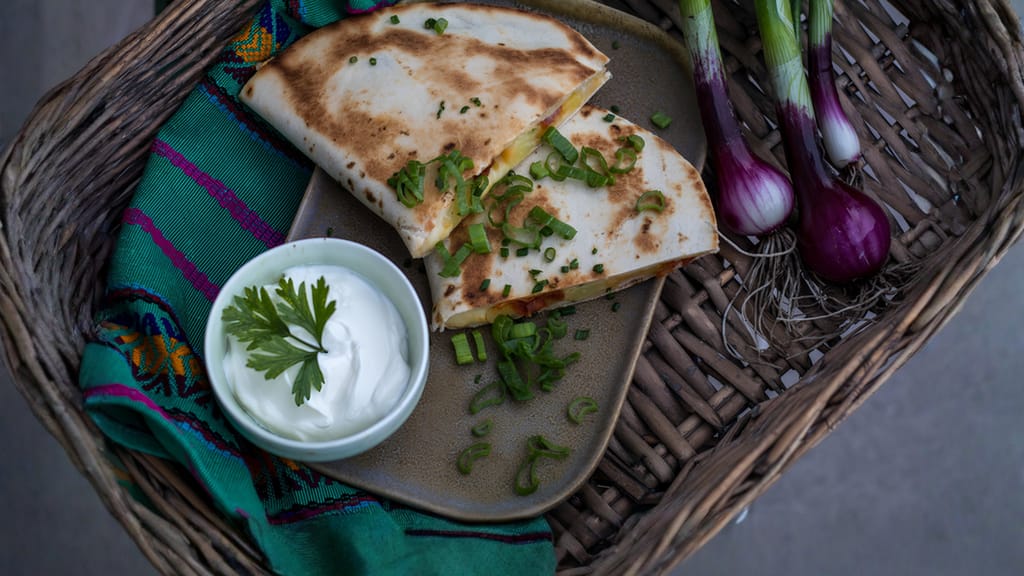
Mexican quesadilla with chorizo and potatoes
Mexican quesadilla with chorizo and potatoes
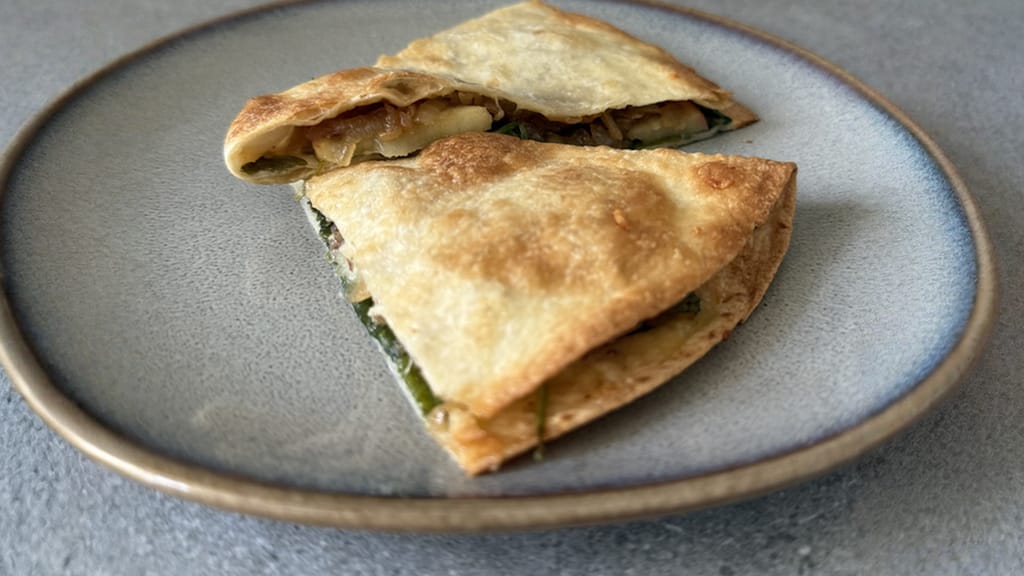
Apple, spinach and caramelized onion quesadilla
Oven-baked quesadilla with apples, spinach and caramelized onion
A tortilla is a thin unleavened flatbread, and there are two main kinds for Mexican food: corn, made from nixtamalized masa dough, and wheat, made from flour, fat and water. Which one to use depends on the dish:
Corn (usually 12 to 15 cm / 5 to 6 in): tacos, enchiladas, chilaquiles, tostadas. It has a distinctive flavor but is more fragile and is usually smaller. An exception is the Oaxacan tlayuda, about 30 cm (12 in) across.
Wheat (20 to 30 cm / 8 to 12 in): burritos, quesadillas, wraps. It's pliable and wraps even a large filling, and is typical of northern Mexico.
Practically every store-bought tortilla needs warming before filling. A cold one cracks, a warm one bends. A dry hot pan works best, 15 to 30 seconds per side. For several at once, wrap them in aluminum foil and put them in a 150°C (300°F) oven for 10 minutes, or stack them in a kitchen towel, where they warm each other with steam.
A wheat tortilla can carry a non-Mexican filling too, for example in the recipe for tortilla with grilled chicken and wild garlic. And a tortilla with egg is one of the quickest filling breakfasts.
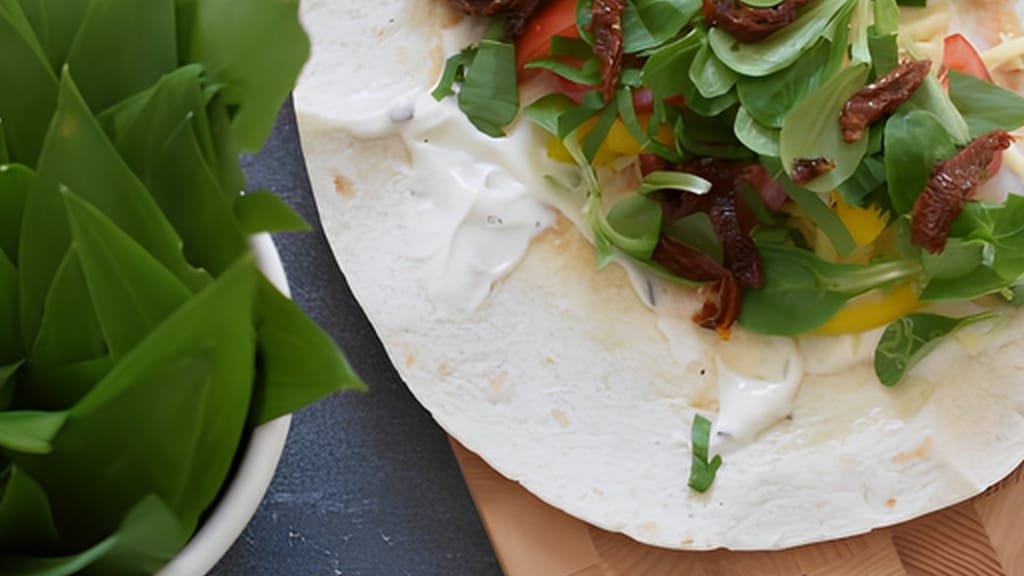
Grilled chicken tortillas with wild garlic
Tortilla with grilled chicken and a wild garlic dip
Mexican bean dishes rely mainly on black beans and pinto beans. They are simmered until tender with onion and garlic, then eaten whole in their broth, mashed as frijoles refritos, or used as a filling for burritos and tacos. In Mexican cooking, beans are an everyday staple, not a side ingredient.
Black beans are the most common in southern and central Mexico. They have a dense, almost creamy flesh and a mildly earthy flavor, and their cooking liquid darkens and thickens, so it doubles as a sauce. The simplest homemade version is frijoles de olla (beans from the pot): soak the beans, drain off the soaking water, boil them hard for at least 10 minutes, then finish them at a gentle simmer with half an onion and a clove of garlic until completely soft. Season the finished beans with a piece of chili and cilantro.
Canned beans are already cooked, so there's no soaking or long simmering. They work well for quick dinners, just drain and rinse them. That's exactly how the burrito above uses its red beans. For a more Mexican flavor, pick black beans. The noodles with Mexican spices combine red beans with green beans.
Three tricks for beans that taste great:
Salt early without worry, or soak the beans right in salted water. The skins soften more evenly and the beans split less. According to cooking tests, a salted soak is what works.
Don't pour off the broth. For frijoles refritos, add it by the spoonful until the mash has the consistency of thick cream.
Add acid only at the plate. Lime or tomatoes in the pot slow down the cooking of beans. When beans stay hard even after long cooking, acid is often to blame, or old, dried-out beans.
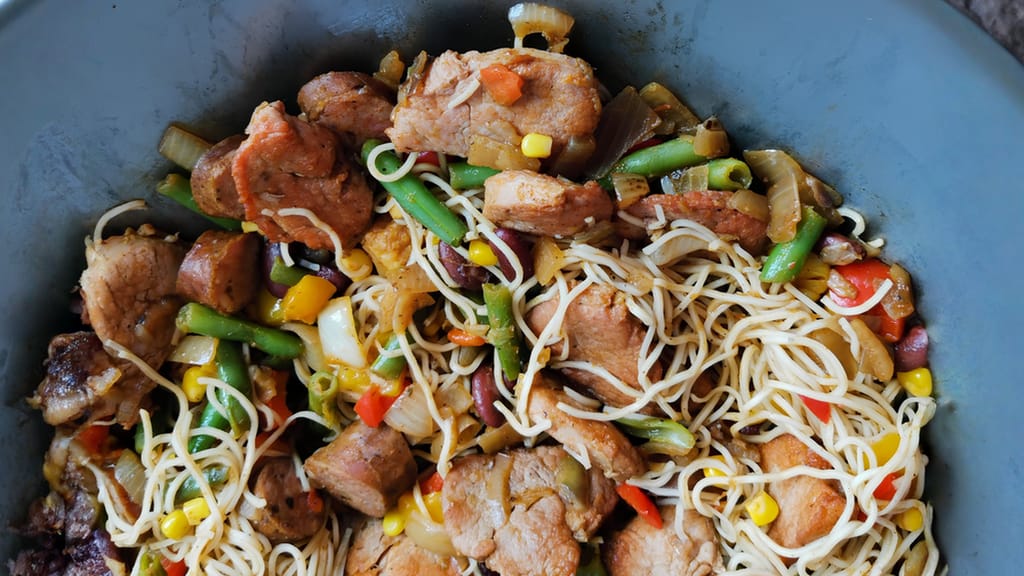
Noodles with pork and mexican spice mix
Noodles with Mexican spices: pork tenderloin, red beans and green beans from the wok
Guacamole is coarsely mashed avocado seasoned with lime, salt, onion and chili. It's best right after you make it, and to keep it green you have to keep air away from it. The whole dish stands or falls on one ingredient, so start there.
How to tell an avocado is ripe: it gives slightly when gently squeezed in your palm, but doesn't stay dented. If you flick off the stem and it's green underneath, the flesh inside is fine. A hard avocado ripens in two to three days at room temperature, or sooner in a paper bag with an apple or a banana.
Guacamole with avocado, tomatoes and jalapeño is ready in 17 minutes for 4 people and is vegan. Half a shallot, two tomatoes and half a jalapeño are chopped into tiny pieces. Two avocados are halved lengthwise, the pits removed and the flesh mashed. Then everything is mixed with salt and pepper, dressed with the juice of one lime and served with corn nacho chips.
Why guacamole turns brown: when you cut and mash an avocado, the damaged cells release the enzyme polyphenol oxidase, and in the presence of oxygen it turns the natural phenolic compounds into dark pigments. Two things work against that together:
Acid. Lime juice slows the browning but doesn't stop it.
No air. Press plastic wrap directly onto the surface of the guacamole, not just over the bowl. The recipe advises exactly this. Wherever an air bubble remains, the guacamole will turn brown.
The pit in the bowl, which the internet loves to recommend, only protects the small spot it sits on, because that spot doesn't come into contact with air. It has no effect on the rest.
Tip for the homemade version: remove the seeds and juice from the tomatoes, or the guacamole will turn watery before long. Add the chili gradually, because jalapeños vary in heat from one to the next. The white ribs and seeds are the hottest part.
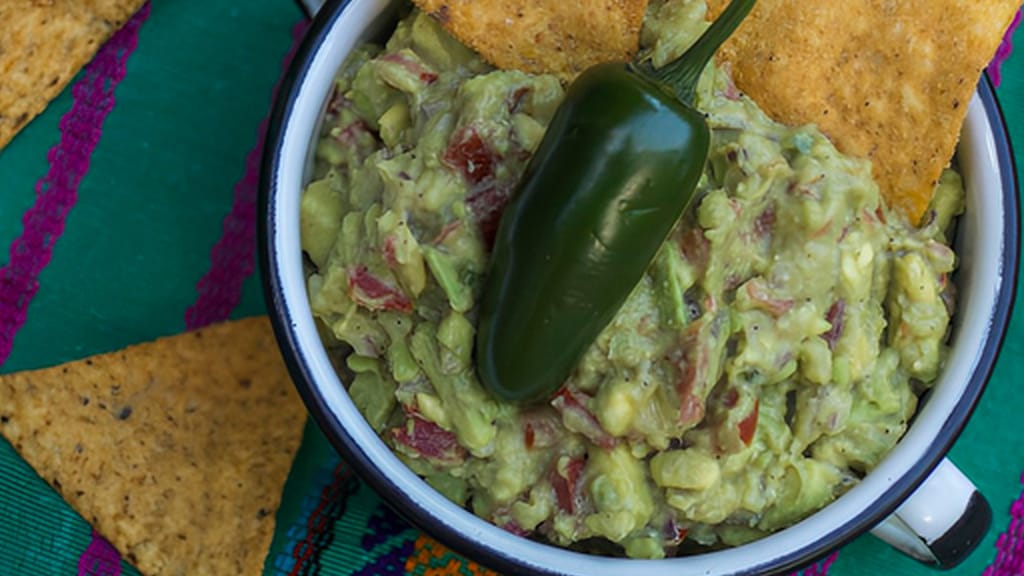
Guacamole
Guacamole with avocado, tomatoes and jalapeño in 17 minutes, vegan
Something sweet, creamy or sour goes best with spicy and salty Mexican dishes. Traditionally that means aguas frescas, horchata or hot chocolate.
Mexican horchata is a rice "milk" with cinnamon: the rice is soaked overnight with cinnamon, then blended, strained and flavored with condensed milk, sugar and vanilla. Rice sediment at the bottom is normal, just stir the horchata before pouring.
Aguas frescas are light fruit drinks. Blend ripe fruit (melon, pineapple, mango) with water, strain, sweeten and finish with a squeeze of lime. It's drunk chilled, ideally with ice.
Mexican hot chocolate is traditionally made from coarsely ground, grainy chocolate (cocoa mass with cinnamon and sugar). It's dissolved in hot water or milk and whisked with a wooden whisk called a molinillo until frothy. How it differs from Italian and French hot chocolate is covered in the article Italian, French and Mexican hot chocolate: how they differ.
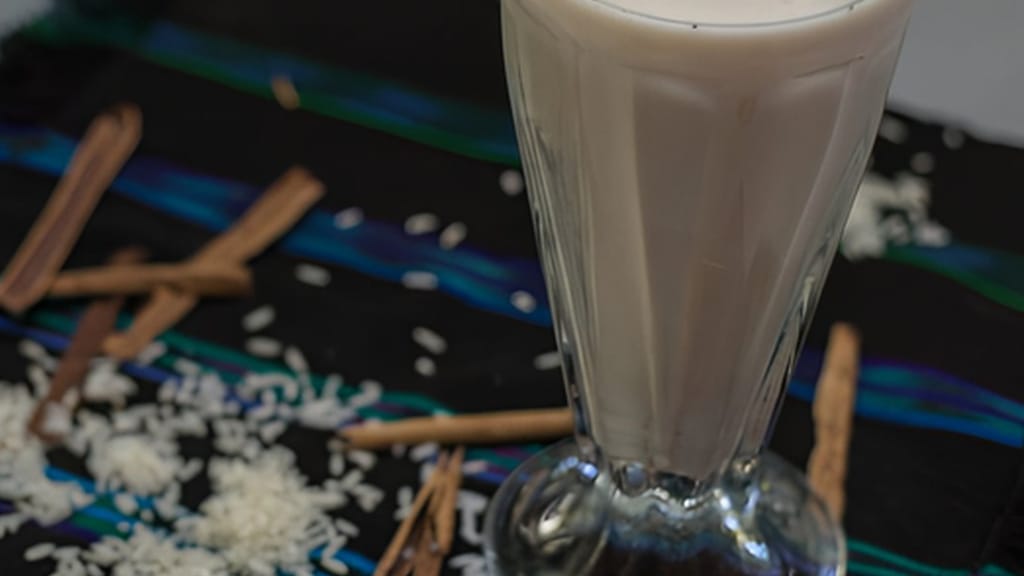
Mexican horchata
Mexican horchata with rice and cinnamon
Typical everyday Mexican food is corn tortillas, cooked beans, rice and salsa, with eggs, cheese or a little meat. Tacos and quesadillas are quick street food. Complex sauces like mole are cooked more for holidays and celebrations.
The best one for a beginner is a quesadilla. All you need is a tortilla, grated cheese and a pan. It's ready in 15 minutes and teaches you how to handle a tortilla. Try guacamole next, which is just chopping and mashing, and only then a burrito, where the wrapping matters.
Yes, the burrito comes from northern Mexico, and its birthplace is most often said to be the area around Ciudad Juárez on the US border. The exact origin isn't documented, though, and the well-known stories about a donkey are more legend than fact. Big burritos stuffed with rice, cheese and sour cream are the American, Tex-Mex version.
Mexican dishes don't have to be hot in themselves. The heat is usually added separately with salsa or fresh chiles at the table. At home it's easy to control: remove the seeds and white ribs from the jalapeño, where most of the heat is, and serve the salsa in a bowl so everyone can add as much as they like.
Fresh parsley with a squeeze of lime juice is the best substitute for cilantro. The flavor isn't the same, but it gives the dish the same fresh green note. If cilantro tastes soapy to you, you're not strange. It has to do with how you perceive its aromatic compounds, and partly with genetics.
Yes, thanks to beans, corn and cheese, Mexican cooking is rich in meatless dishes. On Yumsto, the meatless ones are the four-cheese quesadilla and the quesadilla with apples, spinach and caramelized onion (if you cook for strict vegetarians, watch out for rennet: gruyère and often brie and blue cheese are made with animal rennet). The guacamole is even vegan. In a burrito or tacos, you can use black beans with roasted vegetables instead of meat.
One recipe worth heating the oven for, one tip, and one deal from the shop. Nothing else.