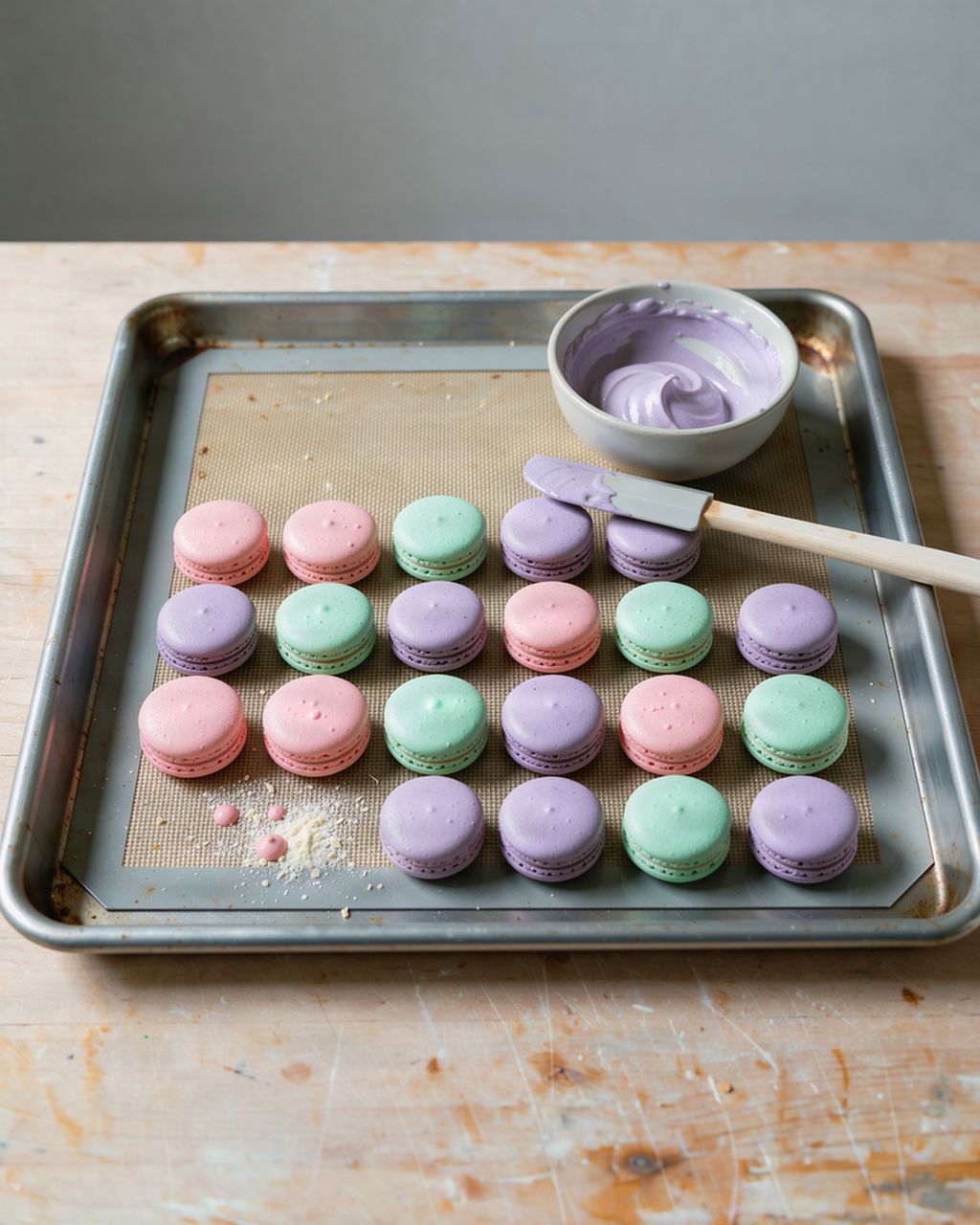
Macarons with vanilla and chocolate cream
Macarons Cracking and No Feet? 8 Causes and How to Fix Them
Updated Oct 17, 2026
Macarons crack when steam escapes through the top instead of the bottom, and they don't grow feet when the batter lacks structure, the surface hasn't dried, or the oven isn't heating the way it should. Behind almost every failed tray is one of eight things: the meringue, the macaronage, air in the batter, resting time, oven temperature, food coloring, almond flour, or the surface you pipe onto. First, use the symptom to work out the likely culprit. Then fix just that one thing.
Every flaw on a shell points to a few specific causes. Find your symptom and jump to the matching section:
Cracked tops → a surface that hasn't dried (4), air bubbles (3), an oven that's too hot (5), liquid food coloring (6).
No feet, flat shells → overmixed batter (2), weak meringue (1), too short a rest (4), an oven that's too cool (5).
Hollow shells → overwhipped or weak meringue (1), an oven that's too hot (5), underbaking (5).
Lopsided feet pushed out to one side → uneven heat in the oven (5), piping at an angle or a wavy baking surface (8).
Peak on top, bumpy surface → undermixed batter (2), coarse almond flour (7).
Sticking to the surface → underbaked, or lifted off while still warm (8).
For the whole process from weighing to filling, see our step-by-step macarons guide. Here we only look at what went wrong and how to fix it.
Seasonal baking plans, tested recipes and kitchen tricks that save you time. Unsubscribe in one click.
Macarons need a thick, glossy meringue with stiff peaks that don't bend. A weak meringue gives the batter no structure, so the shells spread and don't develop feet. An overwhipped, dry, grainy meringue rises in the oven and then collapses, leaving a hollow under the top.
A bowl with no trace of grease. A drop of yolk or a greasy spatula and the meringue will never firm up. Wipe the bowl with a little vinegar or lemon juice.
Room-temperature egg whites. Cold whites whip more slowly and the meringue tends to be less stable.
Add the sugar gradually. Sprinkle it in by the spoonful, only once the whites turn foamy. Add it all at once and the meringue deflates.
Raise the speed gradually. Start low and finish at medium. Full power beats large, unstable bubbles into the whites.
When to stop: the meringue holds a straight peak on the upturned whisk and is smooth and glossy. Once it turns dull and grainy, it's overwhipped.
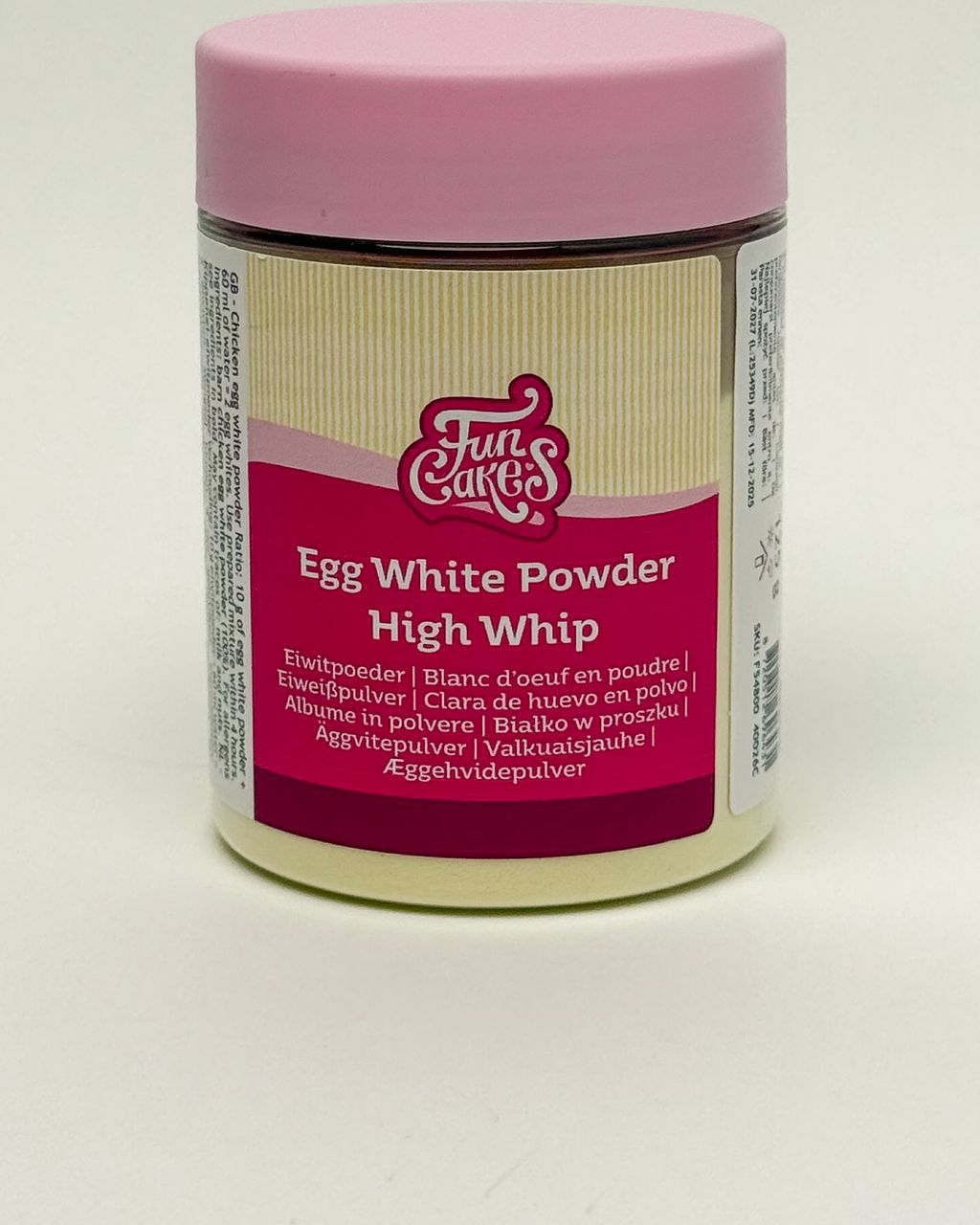
How to firm up your meringue: The cheapest way is to "age" the egg whites. Put the separated whites in the fridge for 24–48 hours, only loosely covered (for example with plastic wrap with a few holes poked in it), so a little water can evaporate. Let them come up to room temperature before whipping. A more reliable and faster option is to add dried egg white powder. According to experienced pastry chefs, about 4 g per 100 g of fresh egg whites is enough, and about half that for cocoa or matcha shells. Mix it into the sugar so it doesn't clump. The meringue is then firmer and the shells dry faster, which is especially handy with deep colors.
The most stable of all is Italian meringue: hot sugar syrup (118 °C / 244 °F) poured into whipped egg whites. It's more work and you need a candy thermometer, but it rarely lets you down. If French meringue keeps failing you, try switching to Italian.
Properly mixed batter flows off the spatula in a continuous, glossy ribbon that melts back into the surface in 10–20 seconds. Macaronage (folding the almond mixture into the meringue and knocking out some of the air) is the step where most macarons go wrong, and it can go wrong in both directions.
Undermixed batter is thick, the ribbon breaks and stays sitting on top. The shells have a peak, a bumpy surface, often crack, and the feet are small or missing.
Overmixed batter is as thin as crêpe batter and spreads. The shells run into flat discs with no feet, sometimes with greasy spots.
How to do it: Fold the dry mix in two or three additions. Then press the batter against the side of the bowl with the spatula and fold it back into the middle. After every 5–10 strokes, test it: scoop up some batter and let it flow off in a figure eight. When you can draw the eight without the ribbon breaking, and the ribbon disappears within a few seconds, stop. You can't rescue overmixed batter, but you can fix undermixed batter. So it's better to test more often and go slowly.
Large bubbles left in the batter after piping expand in the oven and burst the top. That's why you should always bang the whole tray after piping.
Hold the tray by both ends and rap it firmly on the counter 3–4 times. Don't be shy about the noise; gentle tapping isn't enough.
Pop any bubbles that rise to the surface with a toothpick or pin, and smooth the hole over lightly.
Banging also flattens any peak left by the piping tip and spreads the shell into an even circle.
If you still get lots of bubbles even after proper macaronage, your meringue was probably whipped at too high a speed (see section 1).
Let piped macarons rest for about 20–60 minutes, until a matte skin forms on the surface that doesn't stick when you touch it lightly with a finger. In the oven, this skin holds the steam in and forces it to escape from underneath. That's exactly what creates the feet. Without the skin, steam breaks through the top and the shell cracks.
The time depends on humidity, not on the clock. In a dry kitchen, 20 minutes is enough. If you're cooking, drying laundry or it's raining outside, it can easily take over an hour.
The finger test: gently touch the edge of a shell. If your finger doesn't stick and the surface is matte, you can bake.
Nothing drying? Close the door, switch off the pots on the stove, turn on the extractor fan or a dehumidifier. The dried egg white from section 1 helps too.
But not too long either. After several hours, the skin can be so hard that the feet come out unevenly or not at all.
Some Italian meringue recipes skip the resting step. With classic French macarons, don't skip it.
Macarons bake at roughly 140–150 °C (285–300 °F) in a fan oven, and conventional top-and-bottom heat usually needs a little more. An oven commonly differs from its set temperature by 10–20 °C. For macarons, that's a huge gap. An oven that's too hot gives cracks, hollow shells and browned tops. One that's too cool gives shells with no feet that stick.
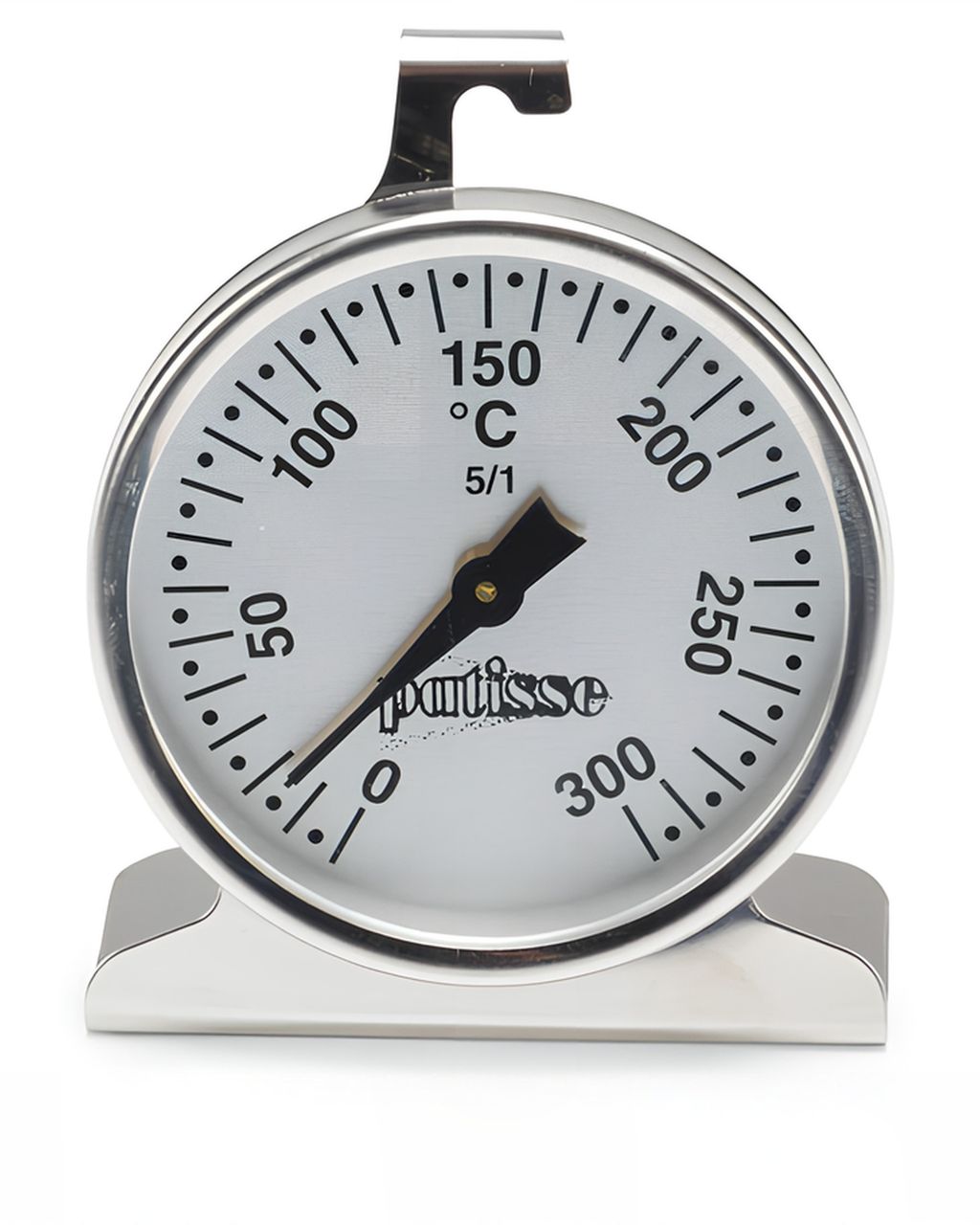
Measure the real temperature. Put a Patisse oven thermometer in the center of the oven and set the dial by it. Find this out once and you'll know it for good.
Preheat for longer. The oven signals "ready" before the walls have heated through. Allow 20–30 minutes.
One tray, middle rack. Several trays at once make the temperature fluctuate and the air doesn't circulate evenly.
Timing: shells 3.5–4 cm (about 1½ in) across bake in roughly 12–16 minutes. They're done when the top doesn't wobble on its feet when you nudge it gently.
Lopsided feet mean the oven heats more from one side or the fan blows too fiercely. After 8–10 minutes, once the feet have formed, rotate the tray 180°. If the fan is "blowing over" your shells, try conventional top-and-bottom heat set 5–10 °C higher.
Start by testing a small batch of 4–5 shells on a piece of paper. You'll save yourself a whole tray.
Macarons need gel or powder coloring. Liquid coloring adds water to the batter, so the shells spread, dry less well and crack. For a deep color, you'd need so much liquid that it throws off the whole ratio.
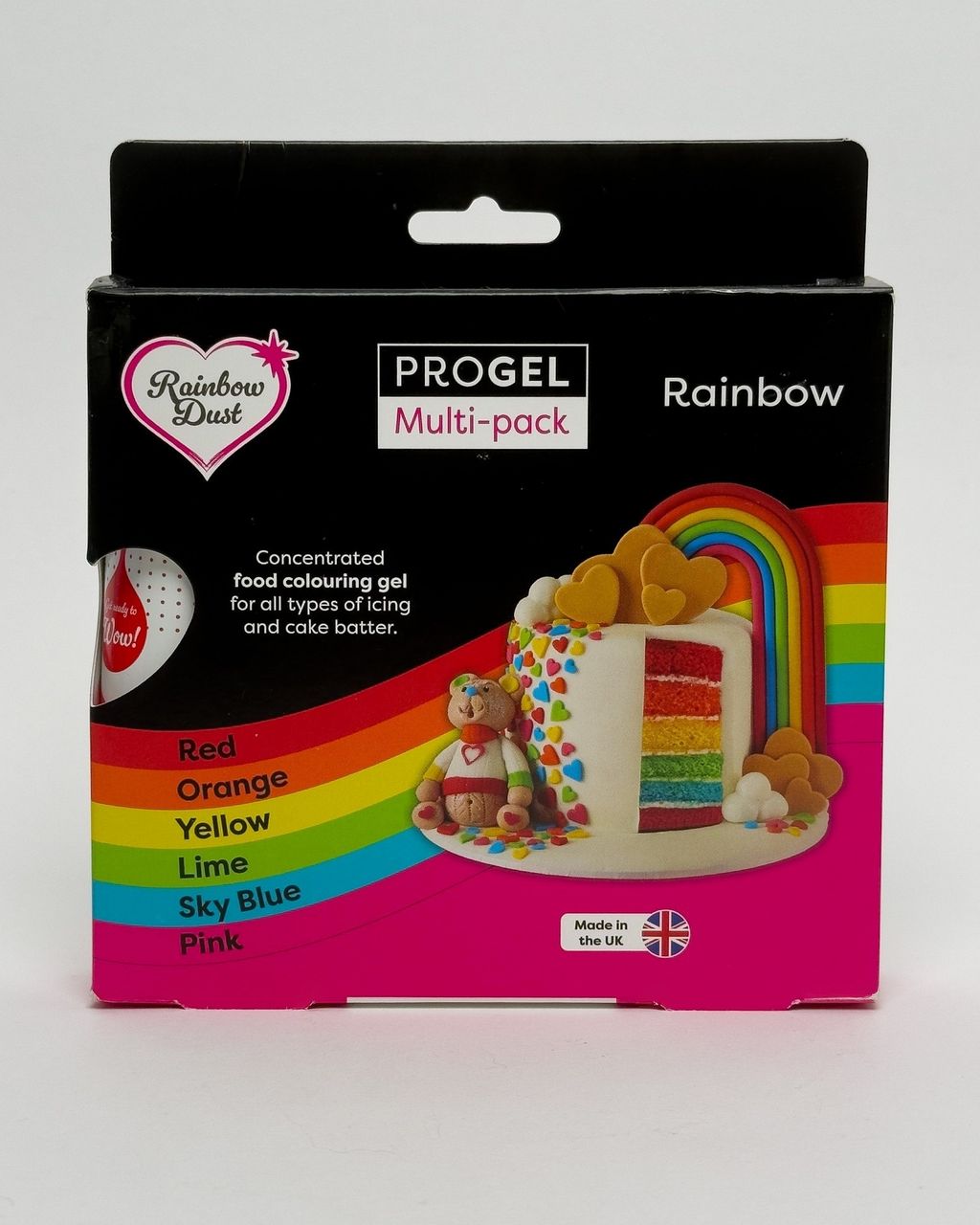
Gel coloring is concentrated; a few drops or the tip of a toothpick is enough. For example, the ProGel Rainbow Set covers the basic shades and they can be mixed.
Powder coloring adds no moisture to the batter, so it's the safest choice for very dark or intense shades. For pastel colors, gel is more convenient.
When to add it: at the end of whipping, into the meringue, not during the macaronage. Mixing it in later would overmix the batter.
The color fades in the oven, so make the batter a shade darker than you want the final result to be.
How much coloring is still safe and how to get an intense shade without cracks is covered in our article Coloring Macarons: How Much Gel Coloring Before the Shells Crack.
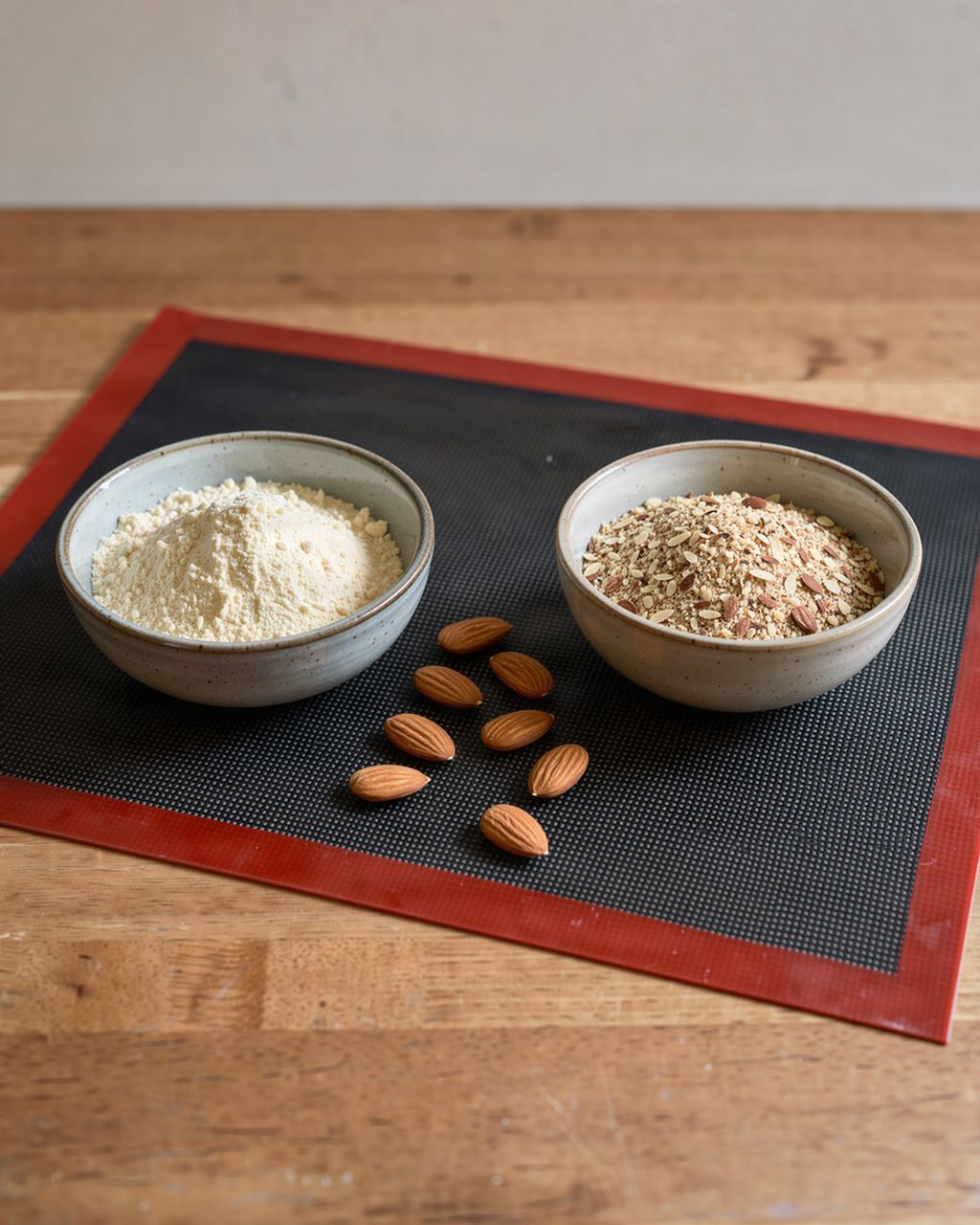
For macarons you need finely ground almond flour made from blanched almonds, sifted with powdered sugar. Coarse bits make a bumpy surface, oily flour leaves greasy spots, and the batter overmixes easily with it.
Sift the flour and sugar together and throw away the coarse leftovers in the sieve (usually 1–2 tablespoons), or use them elsewhere.
Don't grind for more than a few pulses. If you grind almonds at home, they start releasing oil and the flour turns into a paste. It helps to grind them straight together with the powdered sugar.
Dry out damp flour. Spread it on a tray and leave it in the oven on the lowest setting for 10 minutes, then let it cool completely.
How almond flour differs from ground almonds is covered in our almond flour article. For how to grind nuts without releasing their oil, see Nuts for Baking.
Macarons need a flat surface that conducts heat evenly, and a piping bag held perpendicular to the tray. Wavy paper or piping at an angle gives lopsided shells with the foot pushed out to one side.
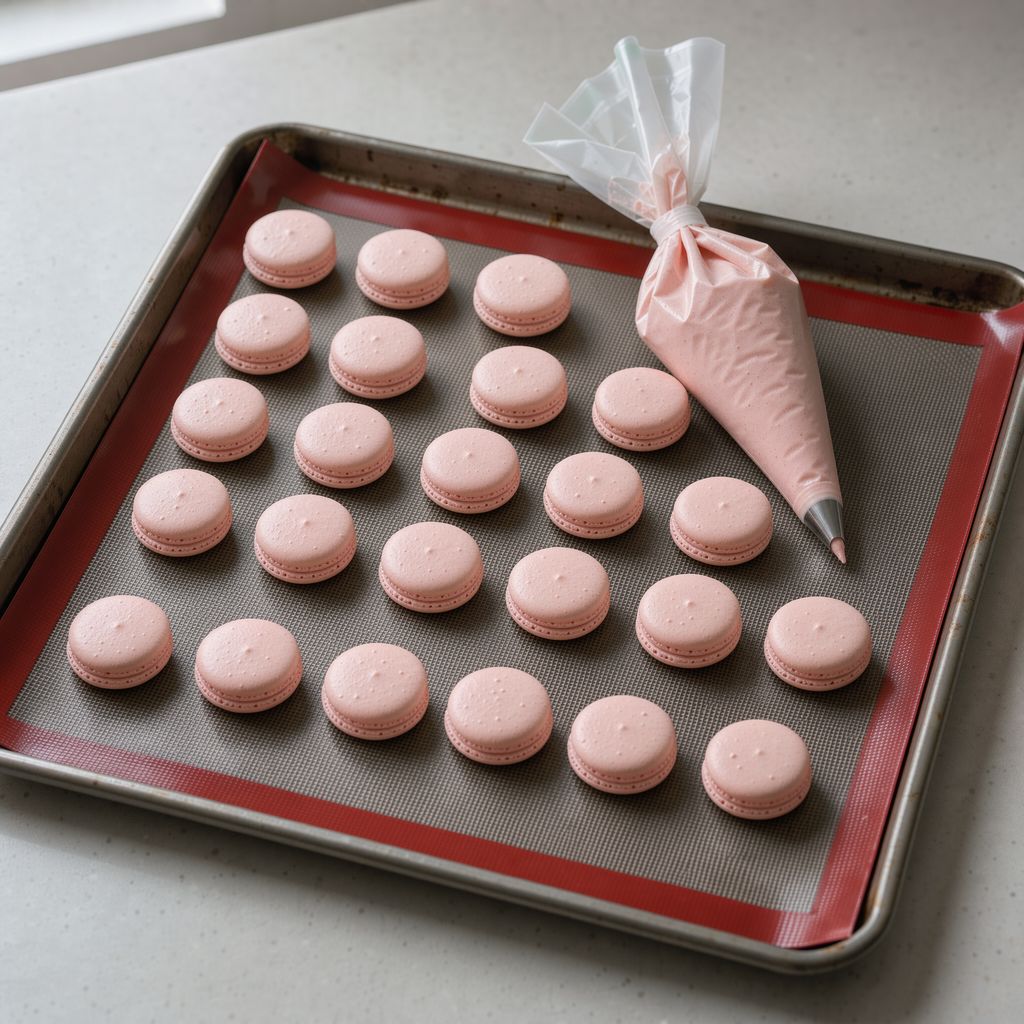
For even shells, pipe from a bag held straight up, in one spot, using a template.
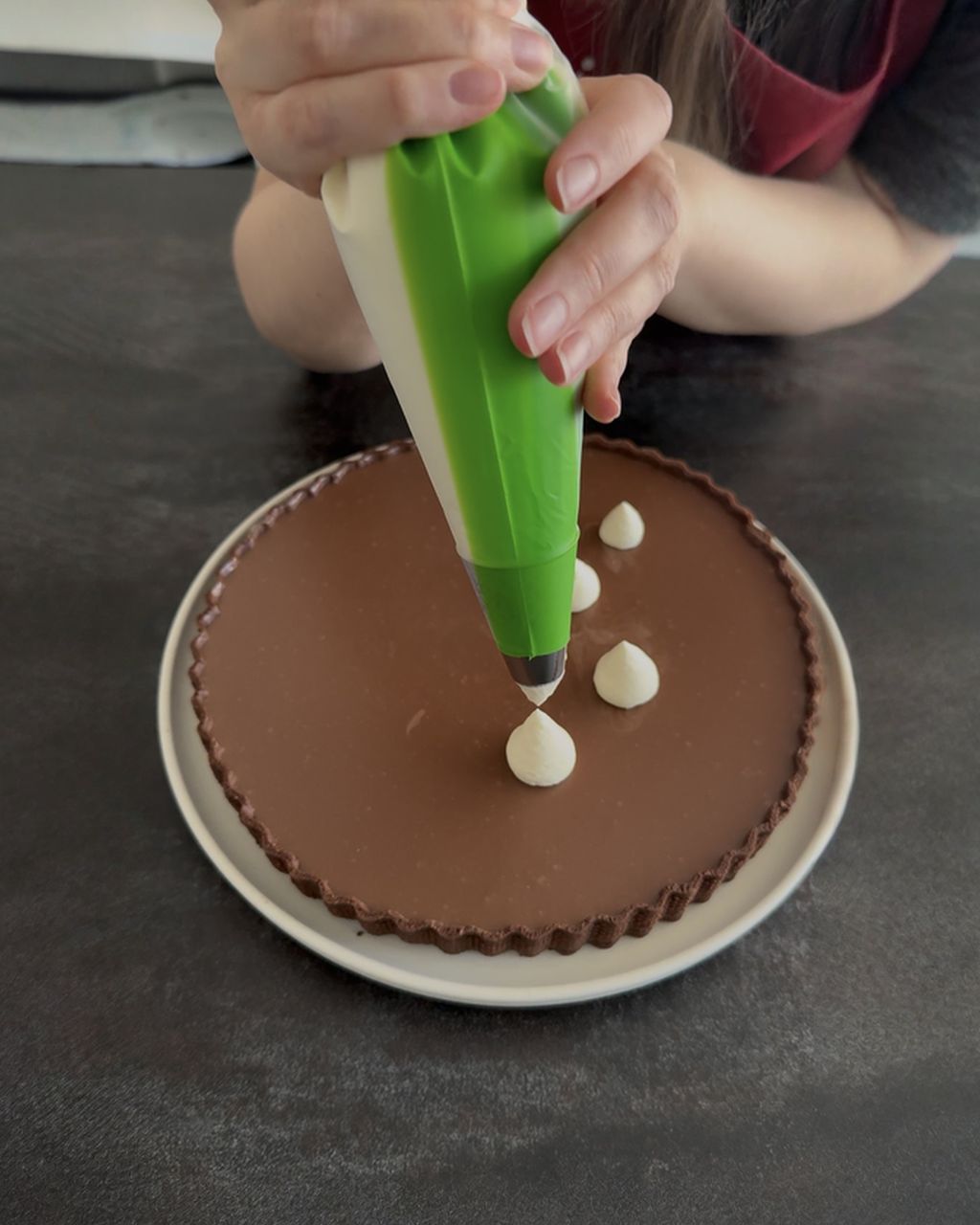
Hold the bag vertically, with the tip about 1 cm (½ in) above the surface. Pipe in place, keep your hand still, and at the end give the bag a quick twist to the side.
A round tip works well. With a smaller opening, like the one on the JEM Round #12, you have more control over the amount, because the batter doesn't run out on its own. You just pipe for a moment longer.
Use a bag large enough, such as 36×20 cm piping bags, so the whole batch fits in and you don't have to transfer the batter and mix it more than necessary.
Put a template with 3.5–4 cm (about 1½ in) circles under the baking surface, then pull it out.
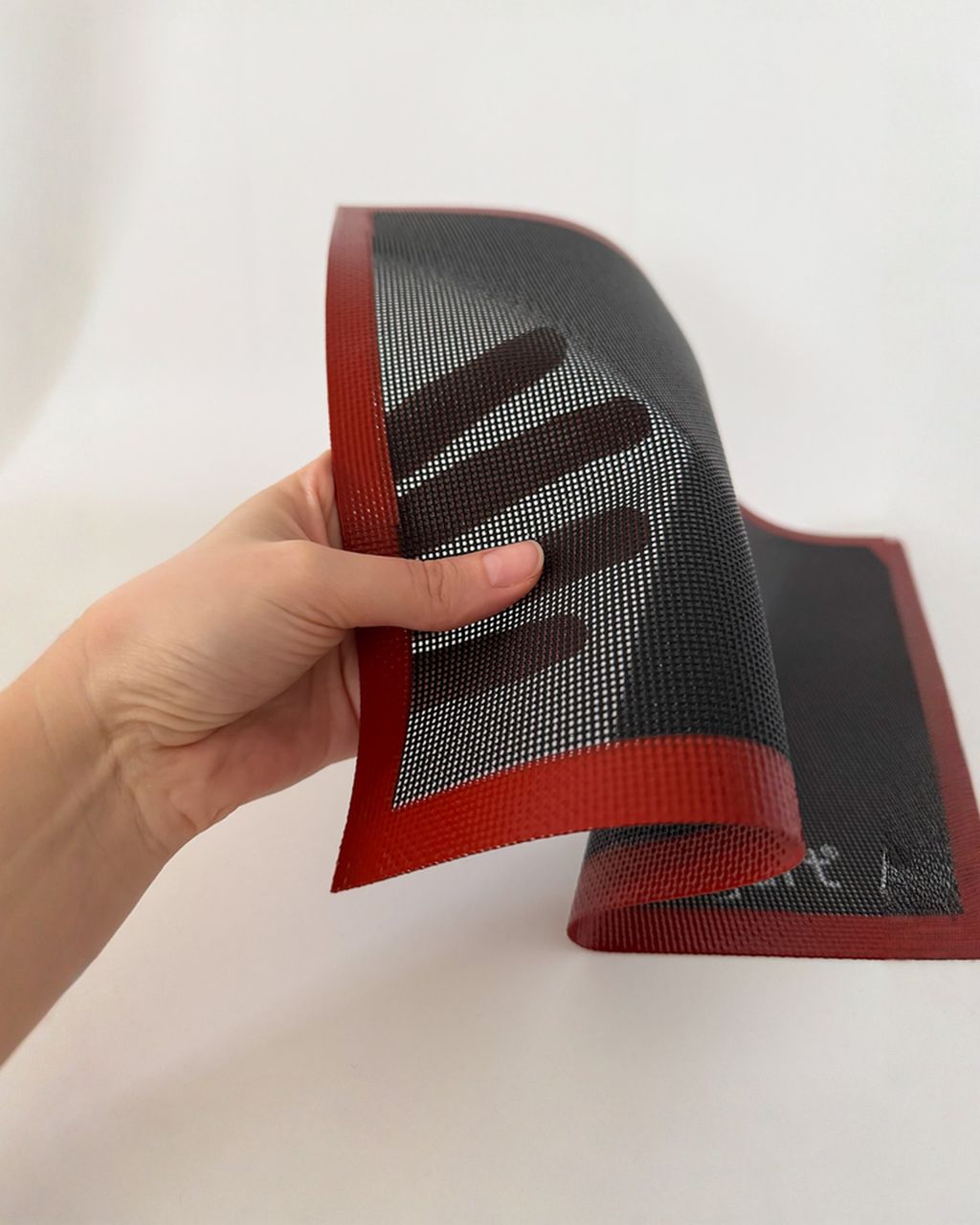
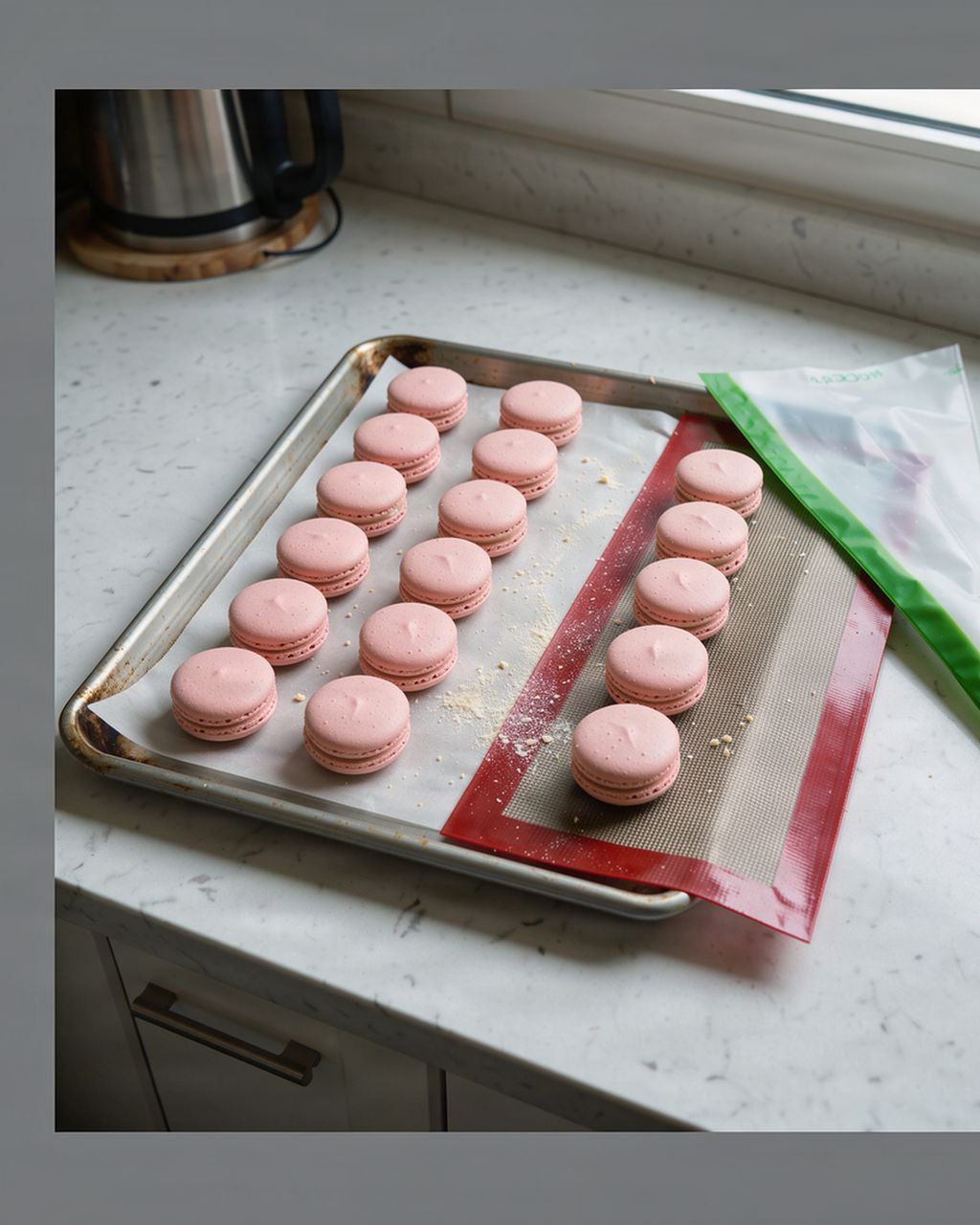
A perforated silicone mat gives the most even feet; parchment and standard silicone work too, each with its own catch.
Parchment paper is cheap and the shells come off it easily. But a fan oven lifts it and makes it ripple, so stick down the corners with a dab of batter.
A standard silicone mat is flat and reusable, but it insulates. Shells take a little longer to bake on it and stick more if you underbake them.
**A perforated silicone mat** lets heat and steam through tiny holes, so the bottom bakes evenly and the feet grow straight. It's a compromise between paper and silicone. For a detailed comparison, see Macarons on a Silicone Mat or Parchment.
You'll find more mats, trays and tools among our molds and baking accessories.
Macarons that stick are almost always underbaked. Next time, leave them in the oven 1–2 minutes longer. Let the baked shells cool completely on the surface, because warm ones tear. If they still hold on, put the mat or paper in the freezer for 5 minutes, and you'll be able to peel the shells off.
Once you know what went wrong last time, bake a proven recipe and change just that one thing. When your shells are ready, check out Macaron Fillings or reach for a white chocolate and coffee or salted caramel cream.
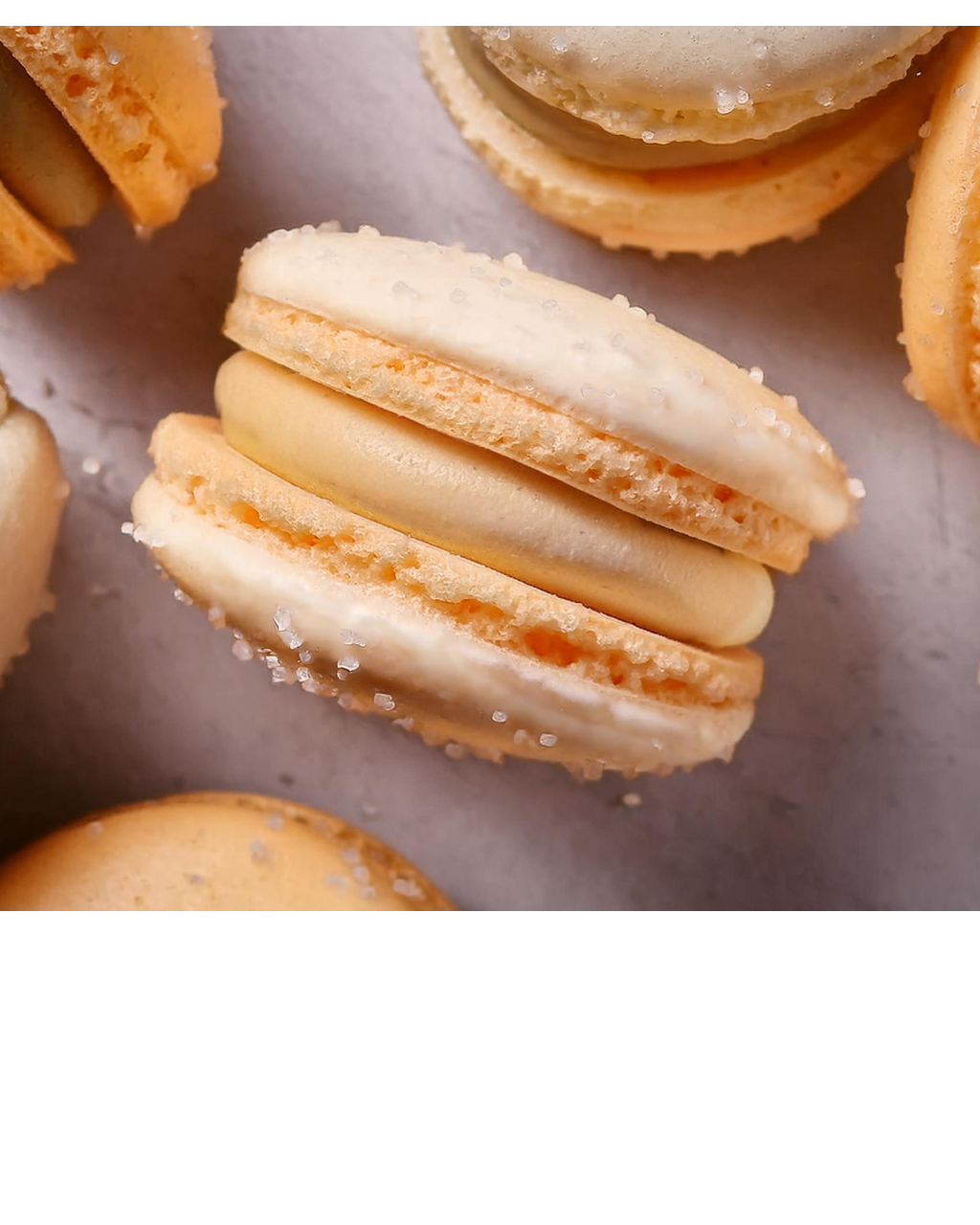
Macarons with vanilla and chocolate cream
Macarons with vanilla and chocolate cream: French macaron recipe
Browned tops mean too much heat hit them from above, either because the oven is too hot or the tray was too high. Check the temperature with an oven thermometer, bake on the middle rack, and put a second empty tray above the first to shield the tops. For pale colors, lower the temperature by 5–10 °C (10–20 °F) and bake a minute or two longer.
Unfilled macaron shells keep for about 3–5 days in an airtight container in the fridge and for several months in the freezer. Let frozen shells thaw in the closed container so water doesn't condense on them. Filled macarons are best after 24 hours of maturing in the fridge, and should then be eaten within 3 days.
Yes, filled macarons are supposed to soften in the fridge. This is called maturing: the filling passes a little moisture to the shell, which turns it from dry and crisp into pleasantly soft and slightly chewy. Ideally, leave them for 24 hours in an airtight container and let them sit at room temperature for 20–30 minutes before serving.
Yes, you can replace the almond flour in macarons with the same weight of other finely ground nuts or seeds, such as hazelnuts, pistachios or sunflower seeds. They must be fine, dry, and sifted with the powdered sugar. Oilier nuts release oil easily, so grind them briefly and straight together with the sugar.
No, pipe the macaron batter right after the macaronage. Left standing in the bowl or piping bag, it keeps thinning and losing air, so the shells spread. What you can prepare ahead is the dry mix (sifted almond flour and powdered sugar in an airtight container), and you can age the weighed egg whites in the fridge.
One recipe worth heating the oven for, one tip, and one deal from the shop. Nothing else.