Macarons Step by Step: How to Bake Perfect French Macarons at Home (Even for Beginners)
Macarons on a Silicone Mat or Parchment Paper: Which Works Better?
Updated Oct 15, 2026
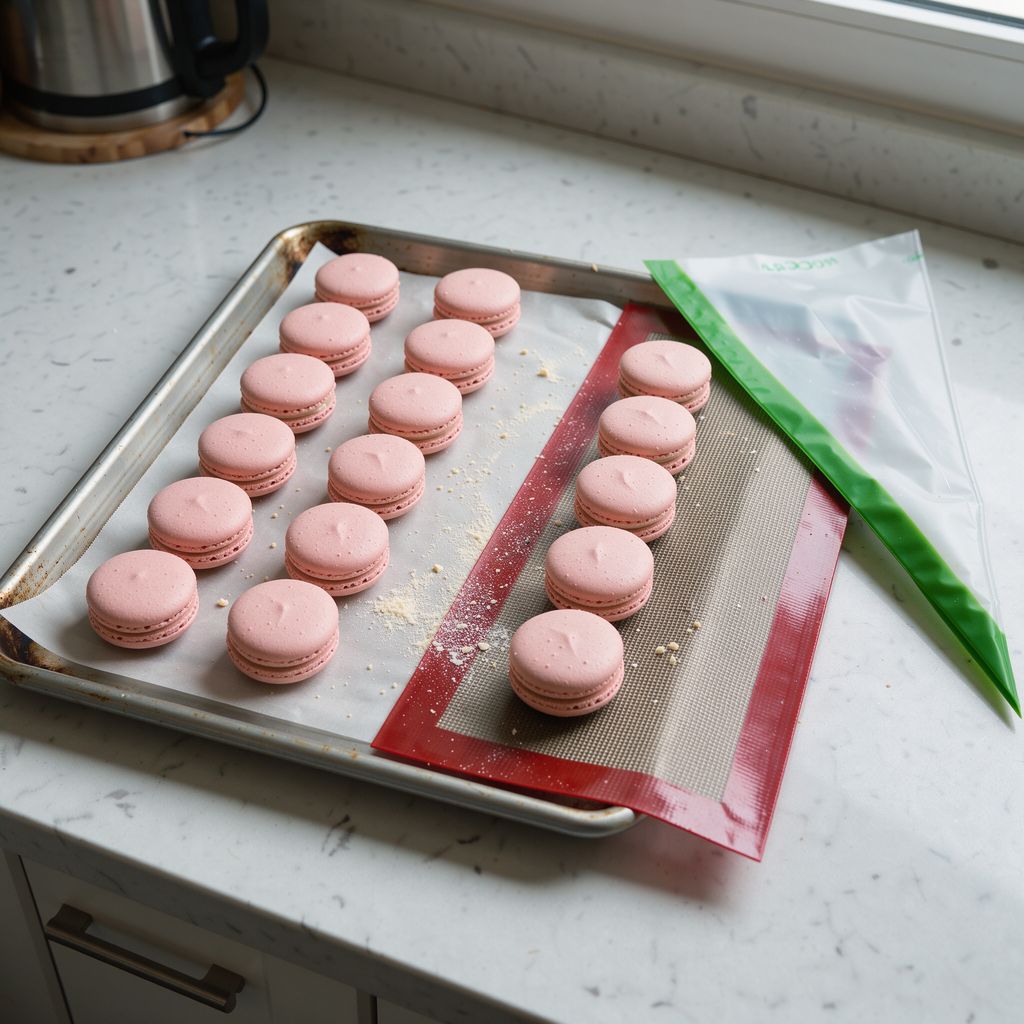
Macarons on a silicone mat or on parchment paper? The short answer: parchment gives you the tallest feet and lets steam escape fastest. A solid silicone mat bakes more slowly and evenly, but the shells stick to it more easily. A perforated silicone mat combines the best of both: a flat bottom, good feet and no curling edges. A perforated mat is mostly worth it if you bake macarons often. If you only bake them once a year, good parchment is plenty. Below you'll find out why each surface behaves the way it does and how to get the best results from each one.
Three surfaces work well for macarons in a home kitchen: parchment paper, a solid silicone mat and a perforated silicone mat. Each behaves differently:
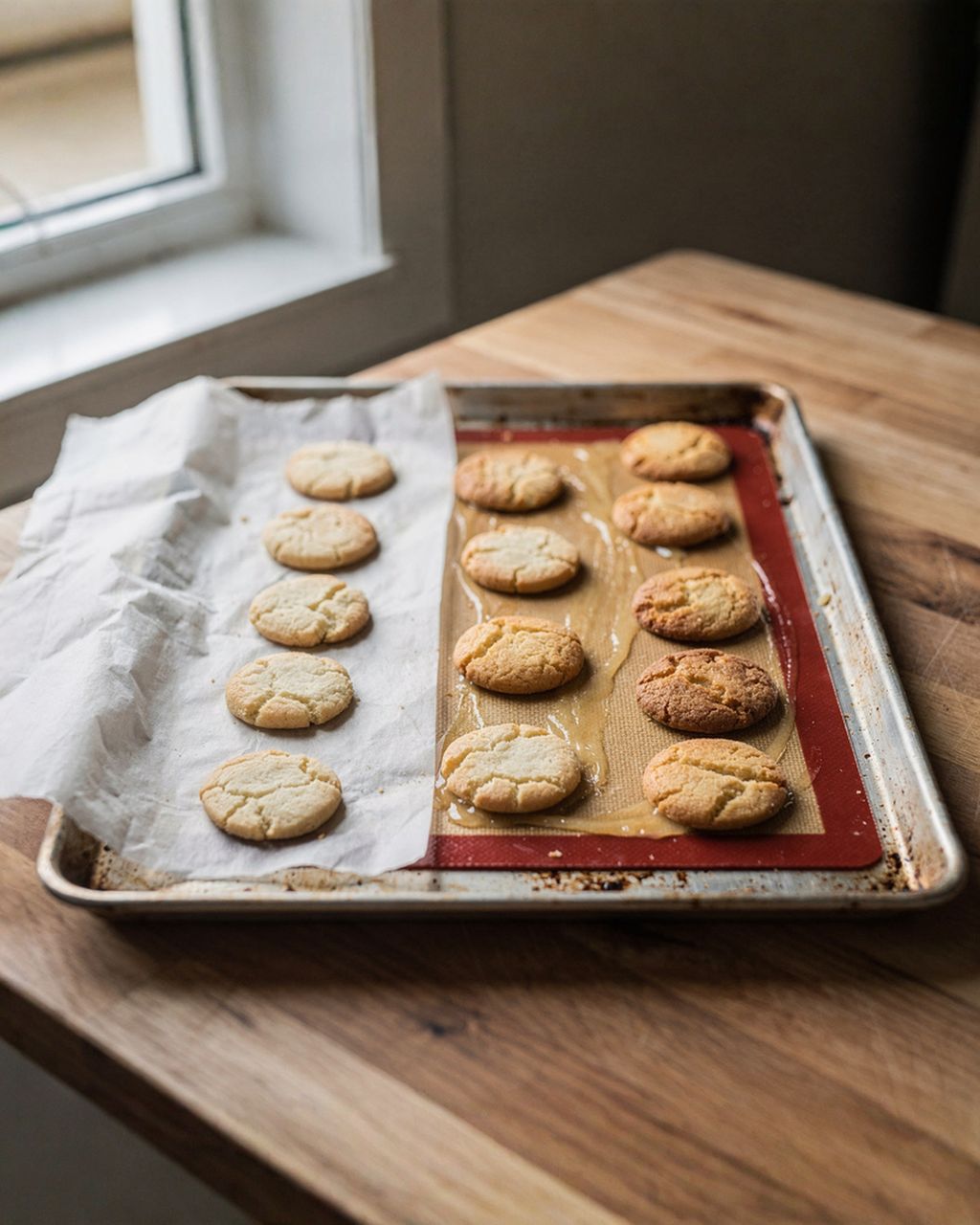
Parchment paper – the tallest, most pronounced feet; cheap and disposable. Downside: in a fan oven it lifts and curls, and the shells come out lopsided.
Solid silicone mat – lets heat through more slowly and bakes evenly; reusable hundreds of times. Downside: the feet tend to be lower, and underbaked shells stick.
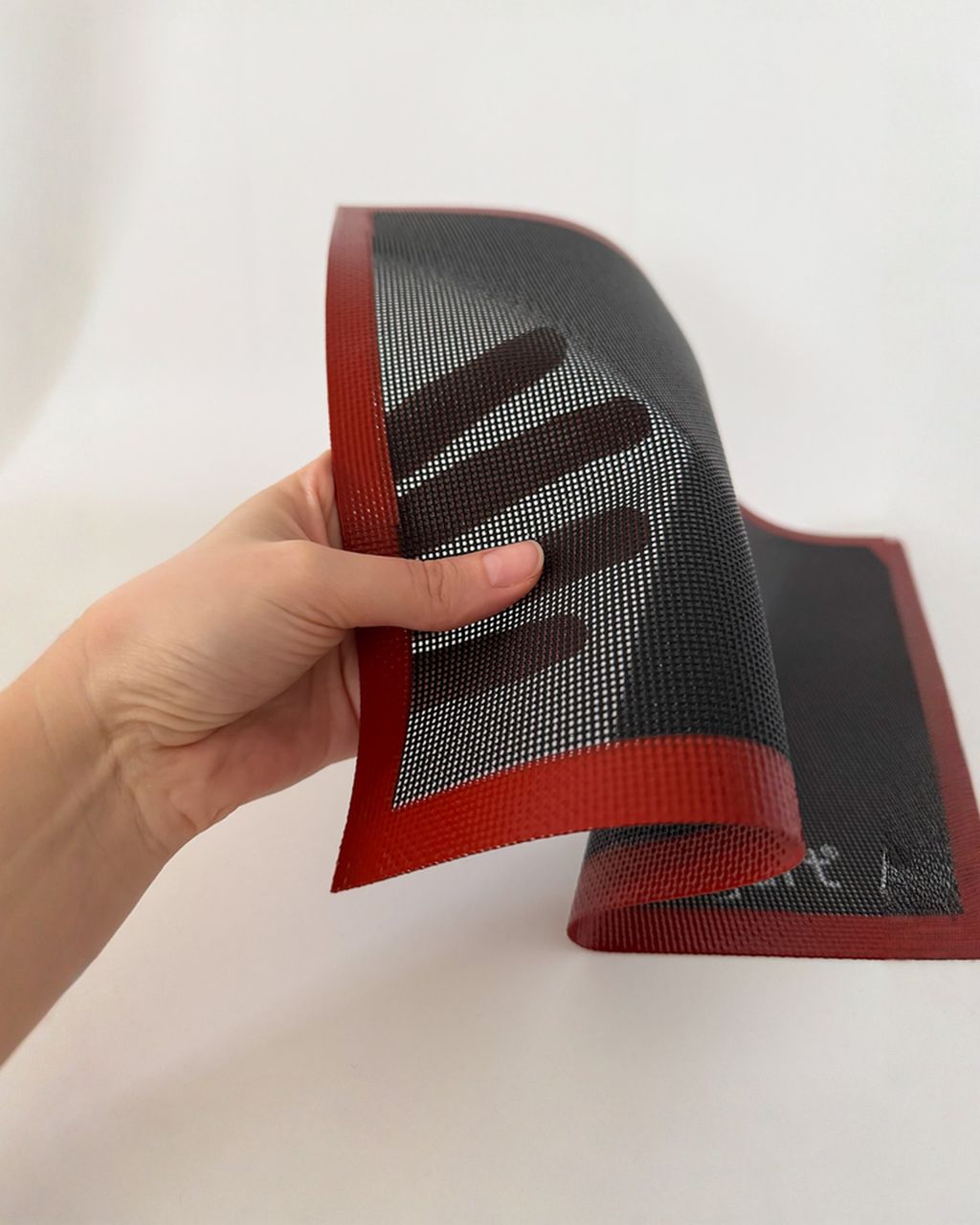
Perforated silicone mat – a fibreglass mesh coated in silicone, with small holes that let steam escape. Flat bottoms, good feet and no curling. Downside: a higher price, and the holes need more thorough washing.
Beyond these three, it's worth mentioning PTFE (Teflon) sheets, which many professional pastry chefs use: thin and smooth, and the shells lift right off. We don't sell them, but if you have one, it's a great choice. It behaves much like parchment, only reusable.
For a general comparison of baking surfaces (for cookies and bread too), see our article on parchment paper, silicone mats and greased baking sheets. Here we're focusing purely on macarons, where a few millimetres of foot make all the difference.
Seasonal baking plans, tested recipes and kitchen tricks that save you time. Unsubscribe in one click.
The surface decides how quickly the bottom of the shell heats up and where the steam escapes, and that determines the height of the feet. The feet form from below: when the bottom heats, the moisture in the batter turns to steam, and because the top has already dried into a skin, the steam can only escape downward and outward. The shell lifts, and the typical ruffled "foot" forms underneath.
The surface under the shell determines two things:
How quickly the bottom heats up. Thin paper passes heat from the tray almost immediately, so steam forms quickly and forcefully and the feet are taller. A thick silicone mat dampens the heat, so steam builds gradually and the feet are lower but more even.
Where the steam goes. Both paper and a perforated mat breathe a little. A solid silicone mat doesn't breathe at all, so moisture stays under the base longer, and the shell needs a few extra minutes to release from it.
That's why the same batter baked side by side on paper and on silicone looks different, and why a recipe that works on paper can turn out "flat" on silicone.
Parchment paper is excellent for macarons as long as you can keep it flat. The main problem is that the oven fan lifts the paper and the edges ripple, so shells piped on a rippled spot spread into ovals.
What helps:
Glue the corners down with batter. Put a dab of macaron batter under each corner of the paper and press it onto the tray.
Cut the paper to the exact size of the tray so nothing overhangs and the fan has nothing to catch.
Use good-quality silicone-coated paper, not the cheapest waxed kind, which sticks to the bottoms of the shells.
Put the template under the paper, not on top of it. Print circles 3.5–4 cm (about 1½ in) across, slide them underneath, and pull them out after piping.
Paper has one quiet advantage: you don't pull the shells off it, you peel the paper away from the shells. Once they've cooled, pull the paper over the edge of the table and the shells come away on their own. If they cling, they're not baked through, so put them back in the oven for 1–2 minutes.
A solid silicone mat is worth it when you need consistency: all the shells the same, with no rippled paper and no scorched bottoms. Silicone insulates the base, so an oven with strong bottom heat or a dark baking tray does less damage.
What to watch for:
Bake a few minutes longer than on paper. You'll know they're done by the feet and by the shell coming off the mat cleanly. If the shells stick after cooling and the bottoms tear, they were underbaked.
Let them cool completely, at least 15–20 minutes. Don't take warm shells off the mat.
Peel the mat away, not the shell. Bend the mat downward and the shell pops right off.
Degrease the mat. Fat left over from earlier baking prevents feet from forming. Wash it in hot water with dish soap and let it dry thoroughly.
Be careful with mats that have printed circles. They're convenient, but they tend to be thicker, and the feet on them are usually the lowest.
Silicone forgives more temperature mistakes, but it needs a well-made batter: properly whipped meringue and correctly folded batter (macaronage).
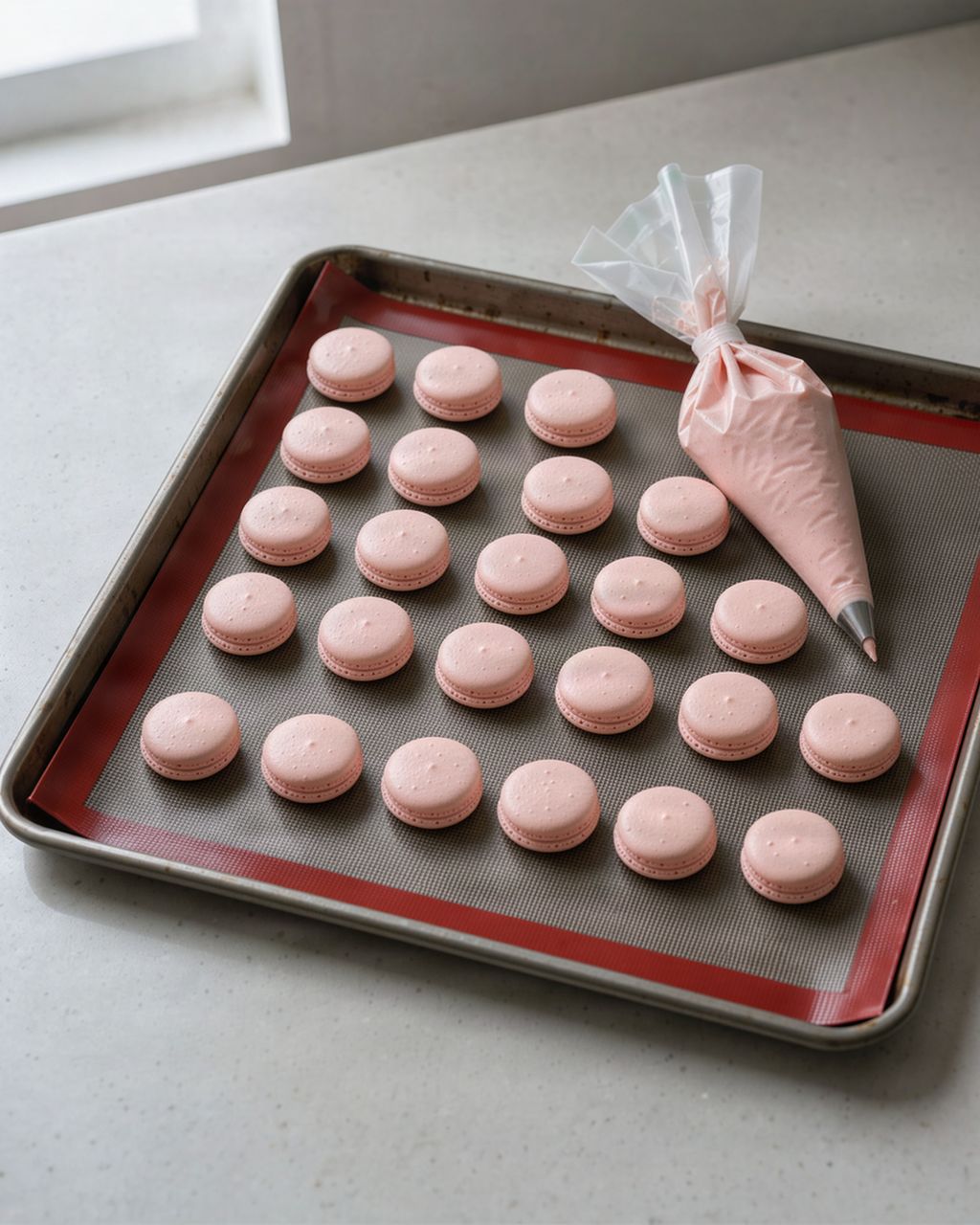
A perforated silicone mat is the most reliable surface for macarons if you bake them regularly. It's a fibreglass mesh coated in silicone with tiny holes: heat reaches the bottom faster than with a solid mat and steam escapes downward, so the feet rise almost as they do on paper, yet nothing curls and the bottom stays flat and dry.
Ours is made by Silikomart. You'll find it alongside other mats and baking rings in the baking rings and mats category. It fits a standard baking sheet and lasts for years.
Two things worth knowing:
The mesh pattern imprints on the base. The bottom of the macaron will be faintly "gridded". Nobody will see it, since the base is hidden by the filling, but expect it.
Wash it with a soft brush and let it dry flat. Don't crush it or cut it.
Bake macarons at 140–150 °C (about 285–300 °F) for 12–16 minutes, depending on the size of the shells and your oven: toward the lower end on paper, toward the higher end on solid silicone. With a fan, go for a lower temperature. Here's a breakdown by surface:
Paper: 140–145 °C (285–295 °F). Quick heating of the base gives you feet even at a lower temperature, and at a higher temperature the bottoms brown quickly.
Solid silicone mat: 145–150 °C (295–300 °F), or a few minutes longer.
Perforated mat: around 145 °C (295 °F).
If the bottoms brown before the shells are baked through, stack one tray on another. Two trays slow the heating from below. This helps most in ovens with a strong bottom element. Check the temperature with an oven thermometer: a 10–15 °C difference from the display is common in home ovens, and macarons notice it before anything else does.
Identical shells come from identical pressure and identical height, and the surface only matters second. Here's how:
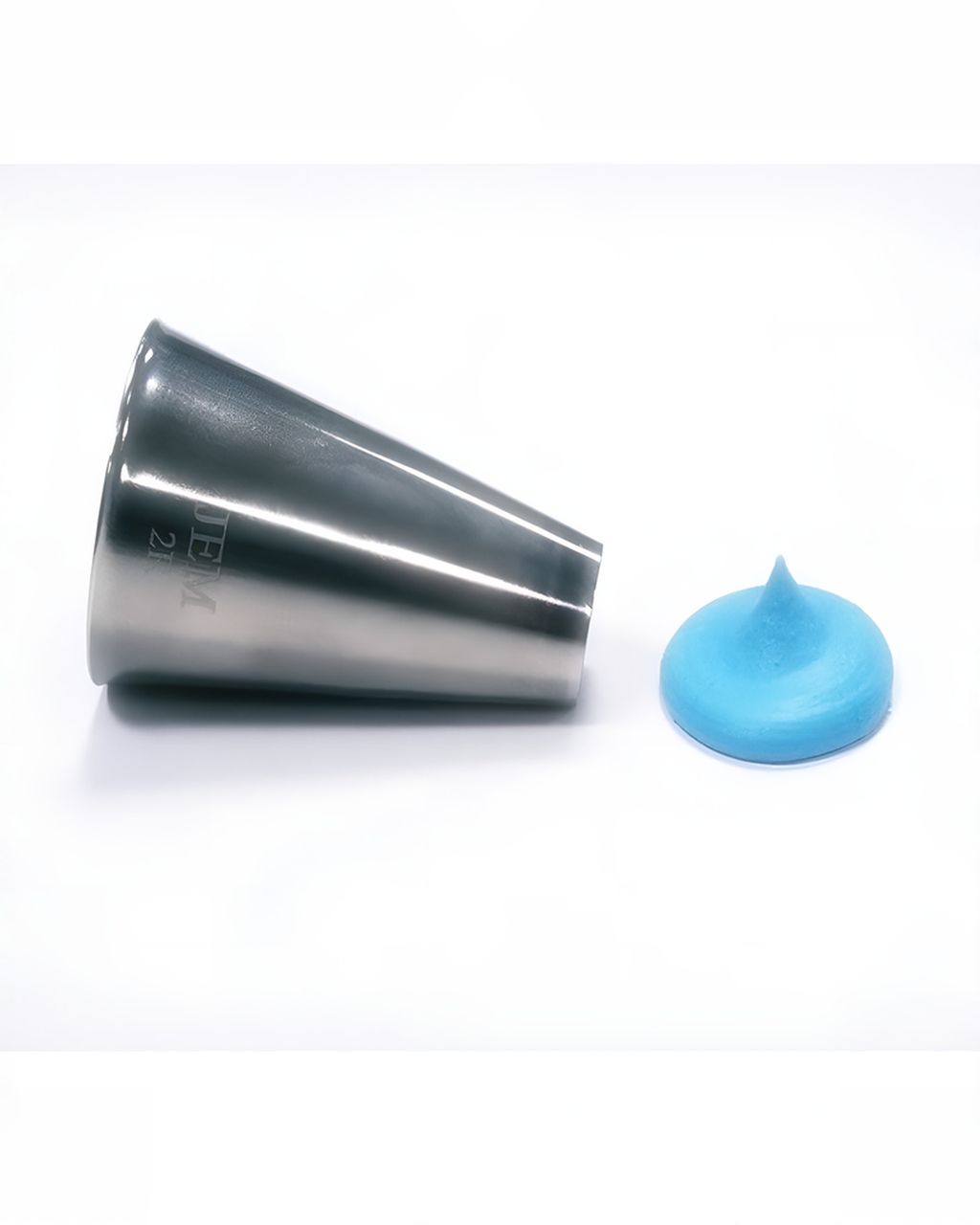
Fit the bag with a medium round tip, such as a JEM Savoy round 2R. A narrow tip tears the batter and gives bumpy shells; one that's too wide gives you no control.
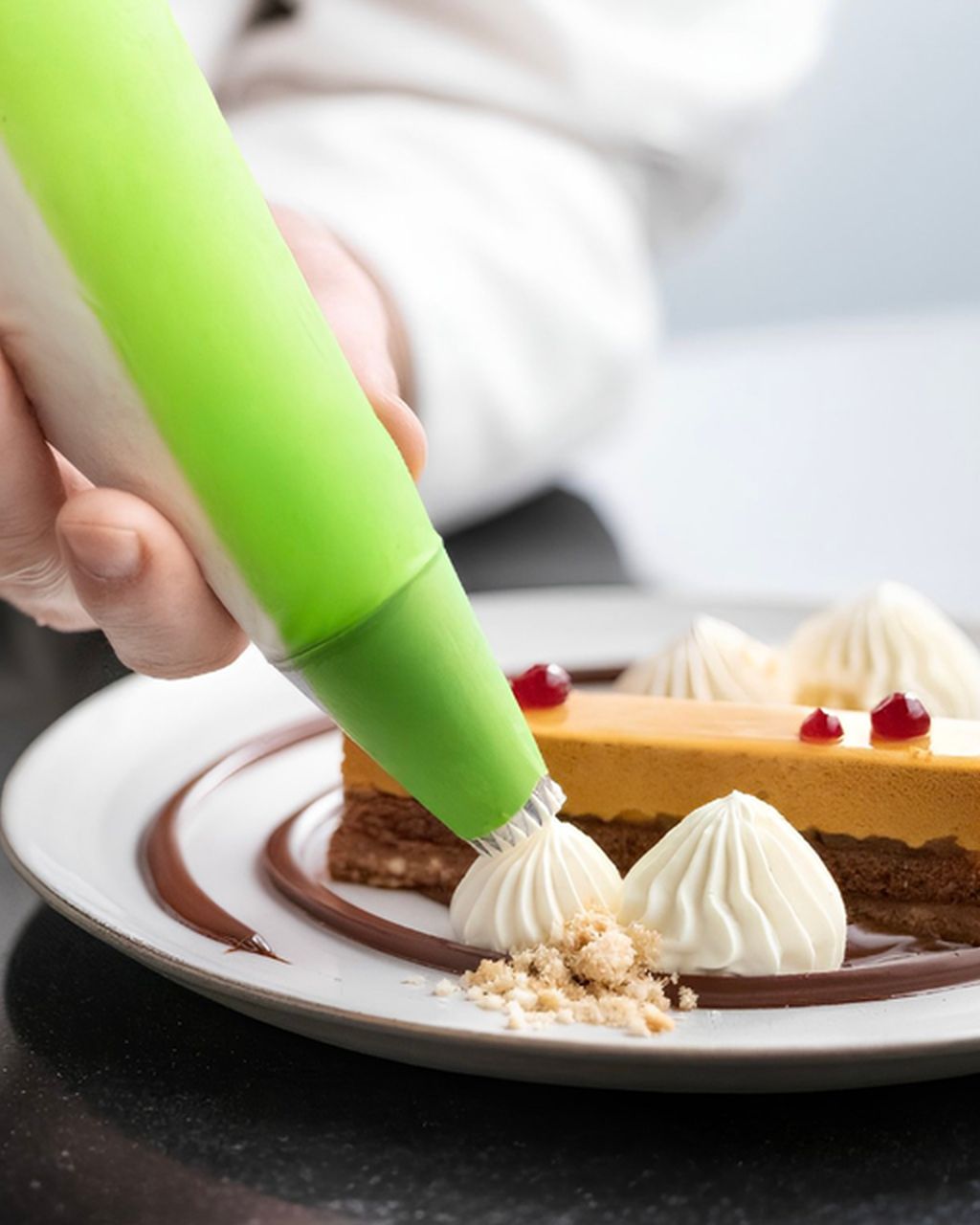
Use a disposable piping bag (for example One Way 30 × 17 cm). The sturdy film doesn't balloon in your hand and holds pressure well; macaron batter is hard to wash out of a cloth bag, and leftover fat harms the next meringue.
Hold the bag vertically, with the tip about 1 cm (½ in) above the surface. Pipe without moving into the centre of the circle, then give the tip a quick flick to the side at the end.
Tap the tray on the counter 2–3 times to knock out air bubbles and flatten the peaks.
Let the shells dry for 20–40 minutes, until they're no longer sticky to the touch. Without this skin, feet won't form on any surface.
Hollow, cracked or flat macarons are more often the fault of the batter, the drying and the temperature than of the paper or mat. The most common problems and their causes:
Hollow shells: overwhipped meringue or too high a temperature. The surface has only a slight effect.
Cracked tops: the shells didn't dry, bubbles stayed in the batter, or the oven is too hot. Watch out for liquid food colouring in the batter, which adds water and makes the shells crack. Reach for gel or powder colouring instead.
No feet: the batter is overmixed, or the shells didn't dry.
Crooked, "runaway" shells: rippled paper or an oven with an uneven fan.
Sticky bottoms: underbaked shells, which are more common on solid silicone.
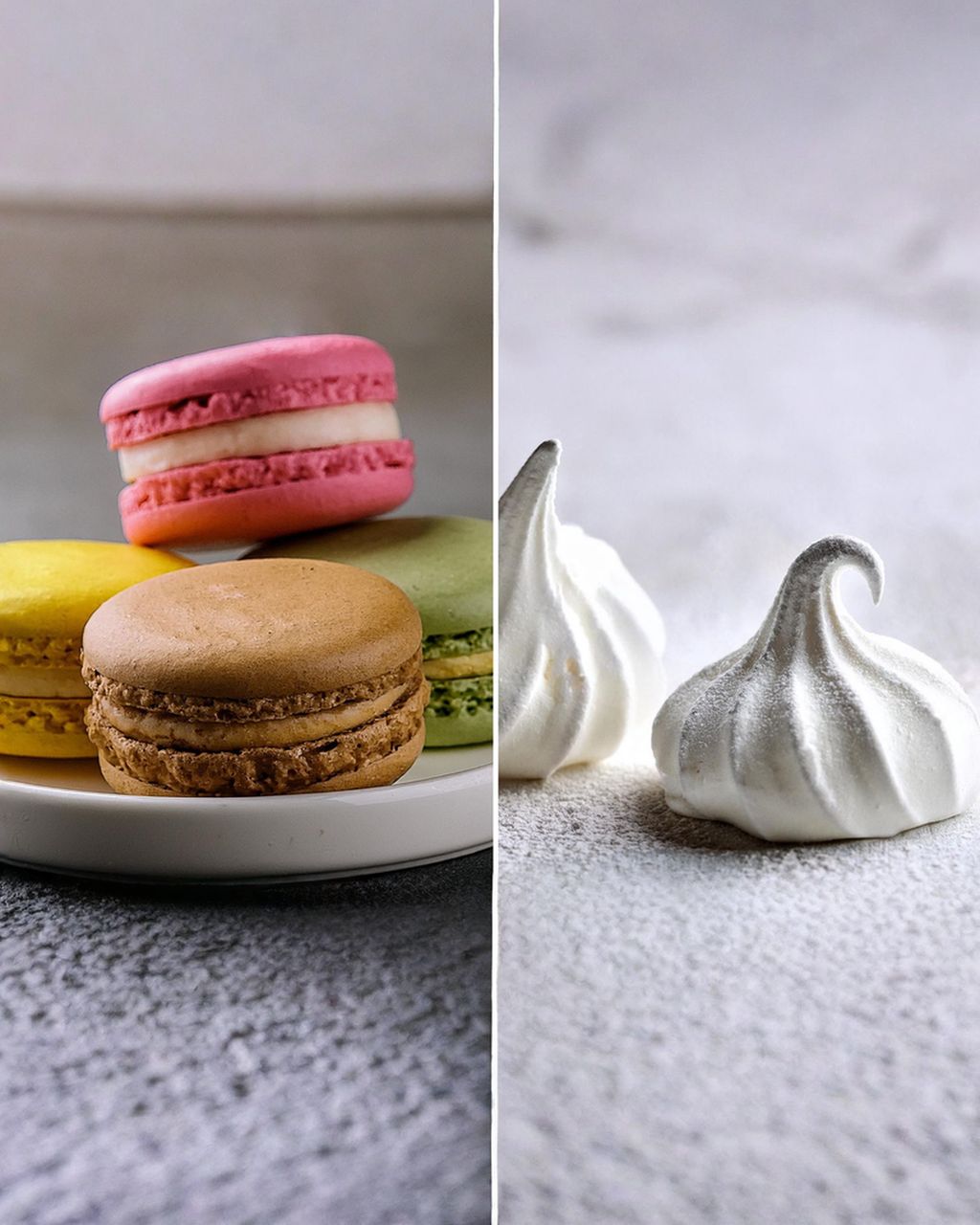
How you whip the egg whites matters more than the surface. To see how macaron meringue differs from the kind used for pavlovas and meringue cookies, read macarons and meringue: differences in technique, and for the whole process, see the guide to macarons step by step.
If you bake macarons a few times a year, take good-quality parchment paper and glue its corners down with a dab of batter. If you bake them regularly, or you're fed up with rippled paper and uneven shells, buy a perforated silicone mat. It will pay for itself after a few batches. A solid silicone mat you already own works for macarons too. Just bake them a few minutes longer and let the shells cool completely.
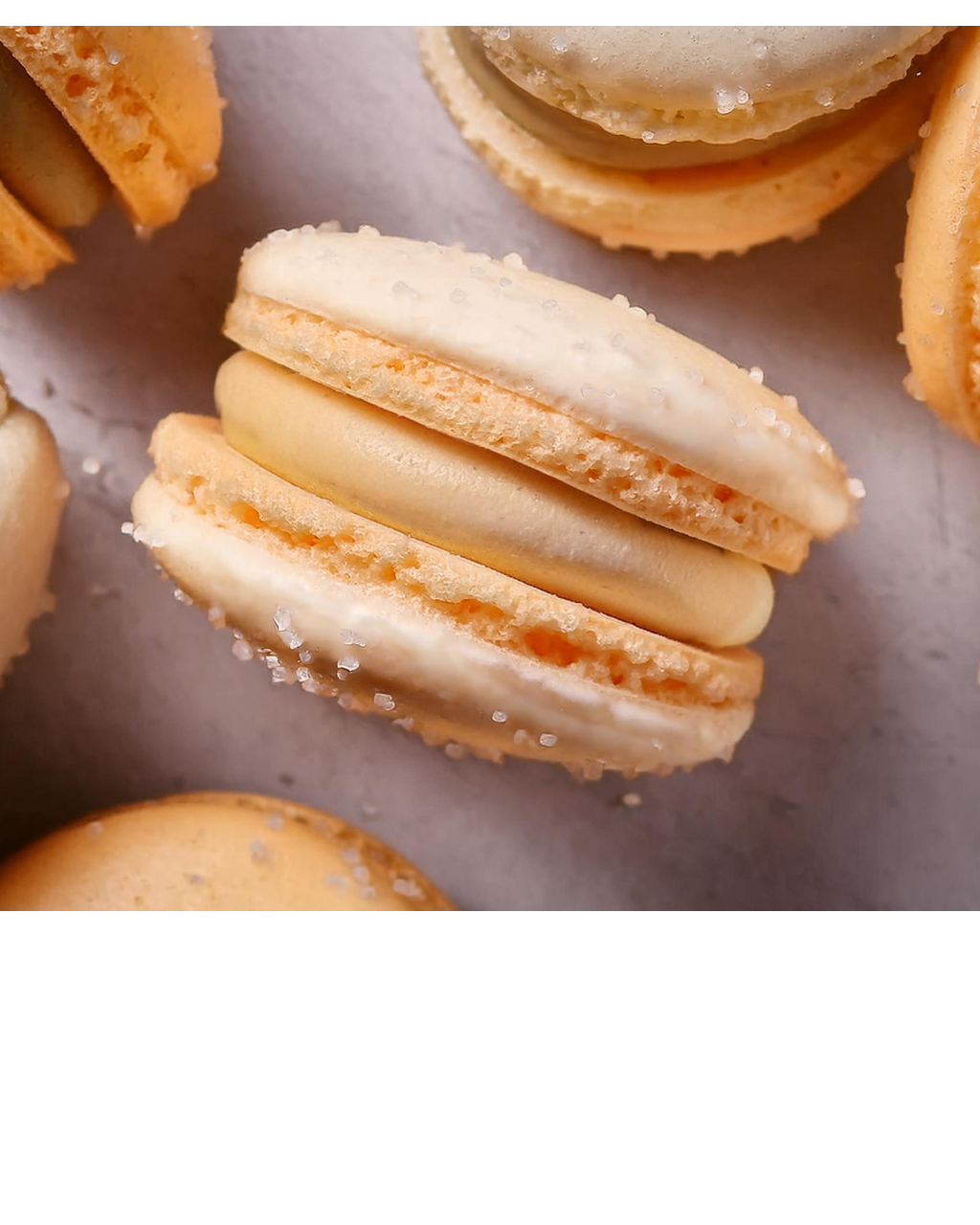
Once you have your shells, filling them is the second half of the job. Try white chocolate and coffee macaron filling or salted caramel macaron filling.
We don't recommend baking macarons on aluminium foil. The shells stick to it and the bottoms tear when you peel them off. Foil also conducts heat too aggressively, so the bottoms can brown before the shells are baked through. If you have nothing else, reach for parchment paper instead.
You can't bake macarons on a greased baking sheet without paper. Fat hurts the feet and the shells spread out. Macarons need a dry, smooth, grease-free surface: parchment paper, a PTFE (Teflon) sheet or a silicone mat.
A standard baking sheet of about 30 × 40 cm (12 × 16 in) fits roughly 30–35 shells, 3.5–4 cm (about 1½ in) across, with 2–3 cm (about 1 in) between them. Don't skimp on the spacing, because the shells spread out a little when you tap the tray.
Yes, but only in a fan oven. In a conventional oven, bake macarons one sheet at a time. Only swap the trays once the shells have formed feet and firm tops, after about 8–10 minutes. If you open the oven earlier, the shells can easily collapse. To be safe, bake the first batch on its own to see how your oven behaves.
Empty shells keep for 3–4 days in a closed container in the fridge, and up to 1–2 months in the freezer. Filled macarons are best after maturing in the fridge for 24 hours, when the shell softens a little from the filling.
One recipe worth heating the oven for, one tip, and one deal from the shop. Nothing else.