Dried Egg White
French, Swiss, or Italian Meringue: How They Differ and When to Use Each
Updated Oct 15, 2026
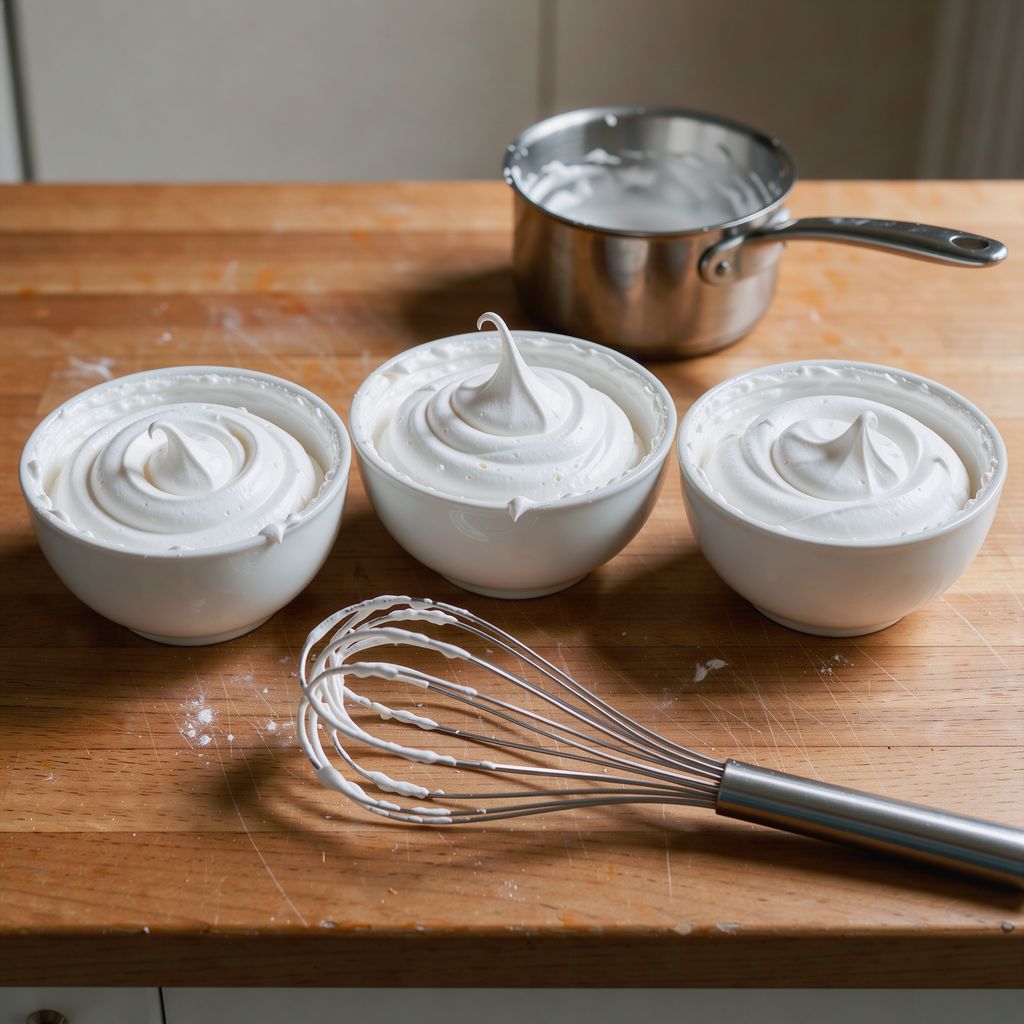
Meringue is whipped egg whites and sugar, and it comes in three types. French meringue is whipped cold, Swiss meringue is first warmed over simmering water to 160 °F (71 °C), and Italian meringue is made by pouring hot sugar syrup (244–250 °F / 118–121 °C) into whipped egg whites. The more heat involved, the thicker, glossier, and more stable the meringue. French is the quickest option for meringue cookies and batters, Swiss is a reliable base for buttercream and cake decorating, and Italian lasts longest, which makes it ideal for mousses, macarons, and torched cakes.
French, Swiss, and Italian meringue differ in whether, and how, the egg whites and sugar are heated. All three use the same ingredients, most often in a ratio of 1 part egg whites to 2 parts sugar (by weight, e.g. 100 g egg whites and 200 g sugar), but the technique is different:
French – you whip raw egg whites and gradually add the sugar. No heat. The lightest and least stable.
Swiss – you heat the egg whites and sugar in a water bath to 160 °F (71 °C), then whip until cool. Dense, smooth, and stable.
Italian – you pour a thin stream of sugar syrup cooked to 244–250 °F (118–121 °C) into whipped egg whites. The firmest and most stable, but also the most work.
One fresh egg white weighs roughly 30–35 g, so 100 g is about three egg whites.
French meringue is the classic egg white and sugar foam, whipped cold, and it works best when you're baking it right away. First whip the egg whites to a foam, then add the sugar a spoonful at a time and keep whipping until the meringue holds a stiff peak and the sugar no longer feels gritty between your fingers.
When to use it: meringue cookies, pavlova, folding into sponge cake or dacquoise, and macarons made with the classic French method.
What to watch out for:
It doesn't keep. After 15–20 minutes it starts to weep liquid, so use it and bake it straight away.
For French meringue, use superfine (caster) sugar. It's finer than regular granulated sugar and dissolves faster in the egg whites, so the cookies don't weep. Coarser crystals dissolve slowly, and it's easy to end up with grains left in the meringue.
Baked French meringue is the most delicate and crumbly. For meringue cookies, that's exactly what you want.
For crisp meringue cookies, including baking temperature and drying time, see our article meringue cookies: how to bake them crisp, even with dried egg white.
For Swiss meringue, you first warm the egg whites and sugar in a water bath and only then whip them. This dissolves the sugar completely and partially sets the protein, so the meringue is thicker, finer, and glossier than French.
The method in brief:
Put the egg whites and sugar in a metal or glass bowl set over a pan of gently simmering water (the bottom of the bowl shouldn't touch the water).
Whisk constantly until the mixture reaches 160 °F (71 °C) and you can no longer feel any sugar grains between your fingers.
Transfer to a stand mixer and whip on high speed until the bowl has cooled to room temperature, usually 8–10 minutes.
When to use it: Swiss meringue buttercream, decorating cakes and tarts, and meringue cookies that need to hold a sharp piped shape, such as lilac meringue cookies with lemon cream.
For buttercream, add softened butter a cube at a time, but only once the meringue has cooled completely. If the meringue is still warm, the butter melts and the buttercream turns thin.
Italian meringue is the most stable of the three, because the hot syrup effectively "cooks" the egg whites as you go. It holds its shape for hours, doesn't weep, and can be folded into a cream or torched.
Typical ratio: 100 g egg whites, 200 g sugar, and 50 g water. You cook a syrup from 150 g of the sugar and the water, and whip the remaining 50 g of sugar into the egg whites.
The method in brief:
Cook the syrup without stirring. When it reaches about 230 °F (110 °C), start whipping the egg whites to a soft foam.
At 244–250 °F (118–121 °C), take the syrup off the heat and, with the mixer running, pour it in a thin stream down the side of the bowl, not onto the whisk (which would fling it into threads).
Keep whipping until the bowl has cooled to lukewarm, usually about 10 minutes.
Without a thermometer, it's a gamble. A few degrees too low and the meringue is runnier; a few degrees too high and the syrup starts to crystallize.
When to use it: Italian buttercream, fruit and chocolate mousses, macarons made with the Italian method (more even shells), lemon tart with a torched meringue topping, baked Alaska, and homemade white Montélimar nougat, where hot honey and syrup are poured into whipped egg whites just as in Italian meringue.
French meringue is enough for baking, Swiss is best for buttercream and decorating, and Italian suits anything that isn't baked and needs to last.
Meringue cookies on a baking sheet, pavlova: French (the crispest), or Swiss if you want a sharp piped shape.
Buttercream for cakes: Swiss (easier) or Italian (a little firmer and less sweet on the tongue).
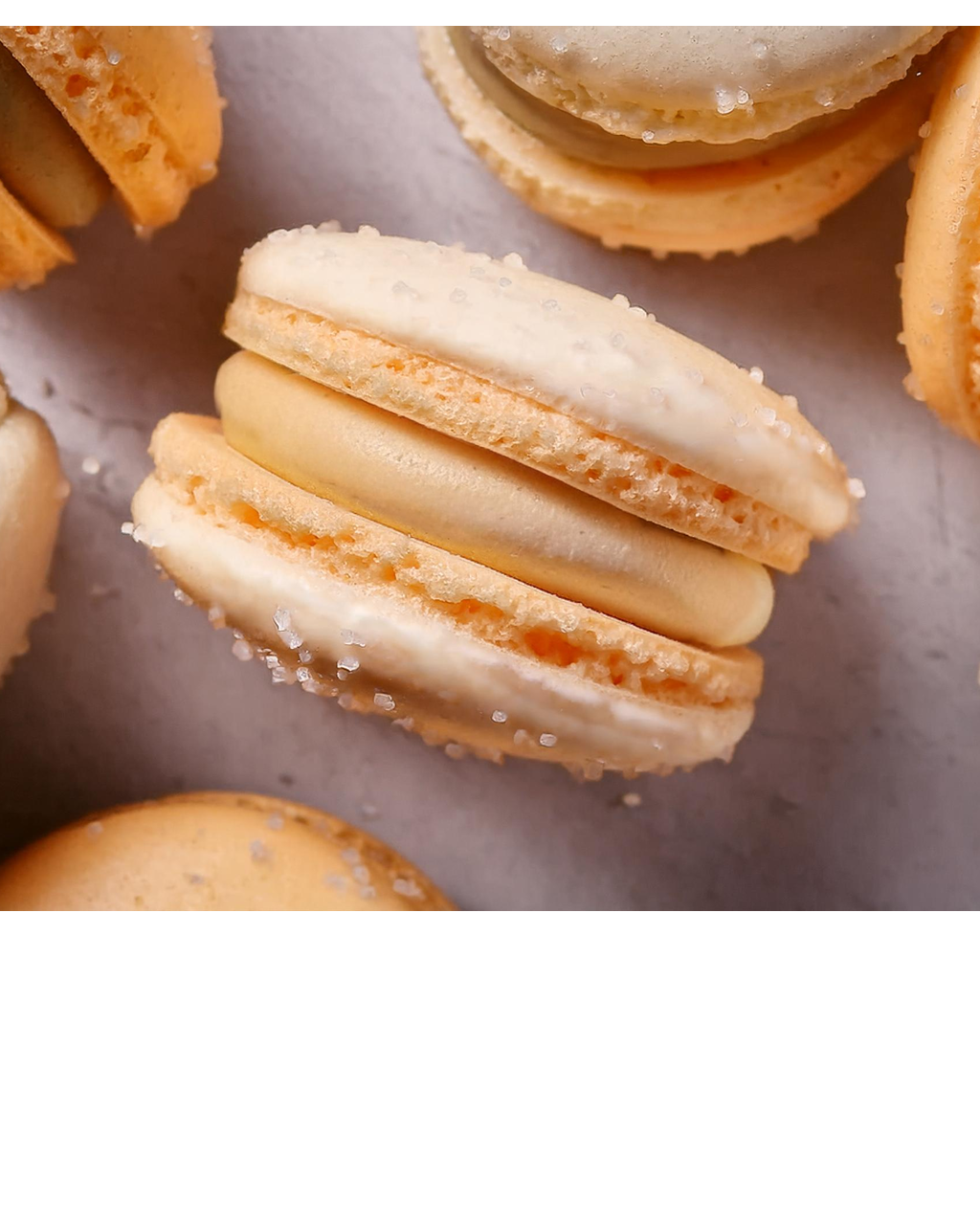
Macarons: French is quicker, while Italian is more forgiving and gives more even shells. You'll find the whole method in macarons step by step.
Mousses and creams that aren't baked: Italian, or Swiss as an alternative.
Torched meringue on a tart, cake, or baked Alaska: Italian or Swiss. French would collapse under the torch.
Folded into batter (sponge, dacquoise): French, as you don't need any more stability than that.
Baked meringue is safe, but unbaked French meringue made from raw fresh egg whites carries a risk of salmonella. Under common guidelines, egg whites are considered treated once heated to about 160 °F (71 °C), and that's exactly the temperature the Swiss method aims for. With Italian meringue, the syrup heats the egg whites considerably, but it doesn't guarantee 160 °F (71 °C) throughout the whole mixture, since that depends on the quantity and how fast you pour.
If you're not baking the meringue, the safest route is pasteurized egg white, either liquid from a carton or dried.
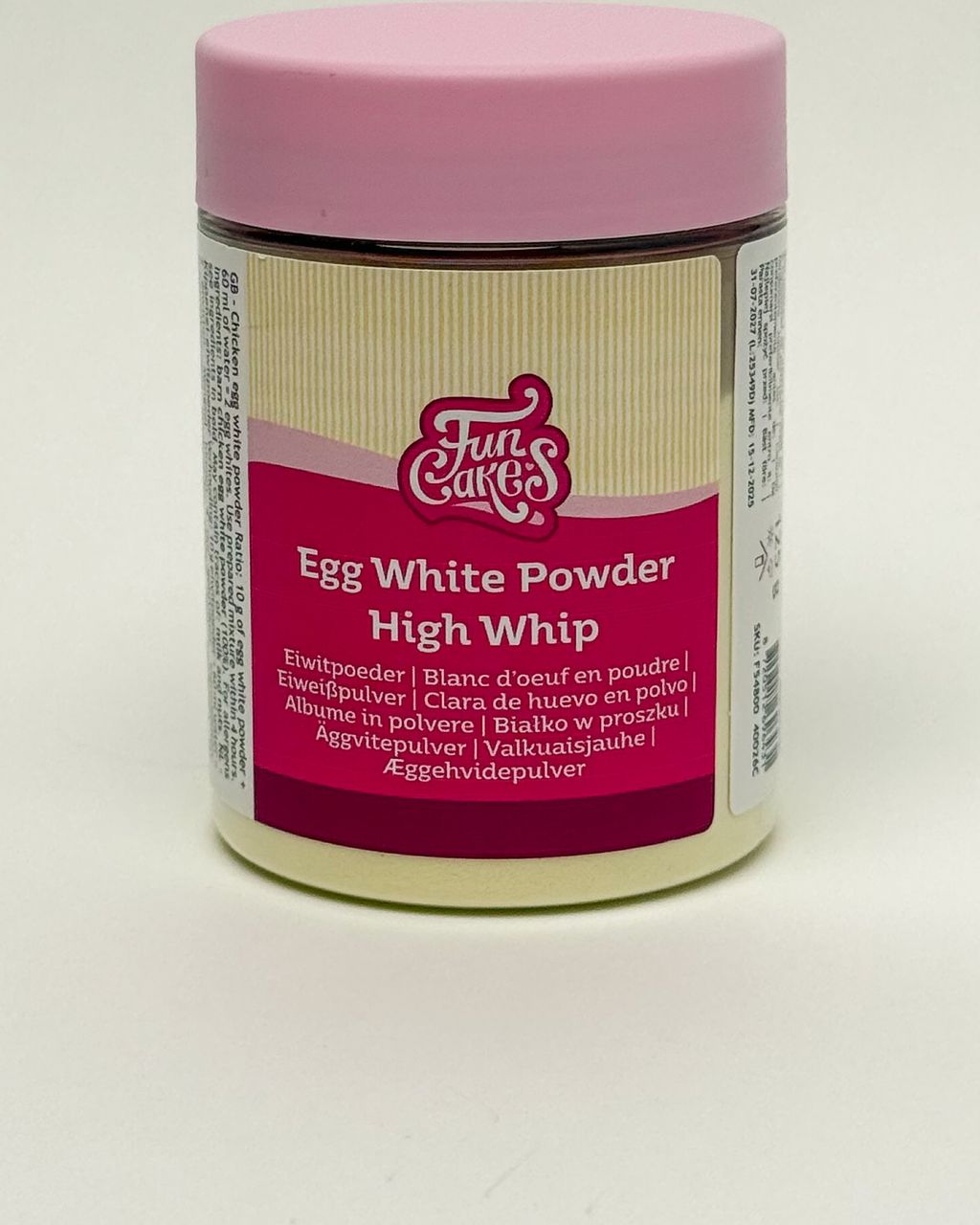
Meringue made from dried egg white whips up just like the fresh kind, because dried egg white is simply pasteurized egg white in powder form that you stir into water. For FunCakes dried egg white, the manufacturer gives 10 g powder + 60 ml water = 2 egg whites, which is 5 g and 30 ml per egg white. Use it within 4 hours of mixing.
When it's worth it:
Unbaked meringue (mousses, buttercream, meringue topping on a cake) – it's pasteurized, so there's no need to worry about salmonella.
No leftover yolks – you measure out exactly as much egg white as the recipe calls for.
Stability – about 3 g of powder (a level teaspoon) added to 100 g fresh egg whites firms up French meringue, so it holds longer and cracks less.
To be honest: fresh egg whites work great, and for meringue cookies you're baking right away, nothing beats them on price. Liquid pasteurized egg white from a carton in the shop is safe too, but it sometimes whips more slowly and holds less well, because pasteurizing it in liquid form weakens the proteins. You'll find dried egg white and other baking helpers among our baking ingredients.
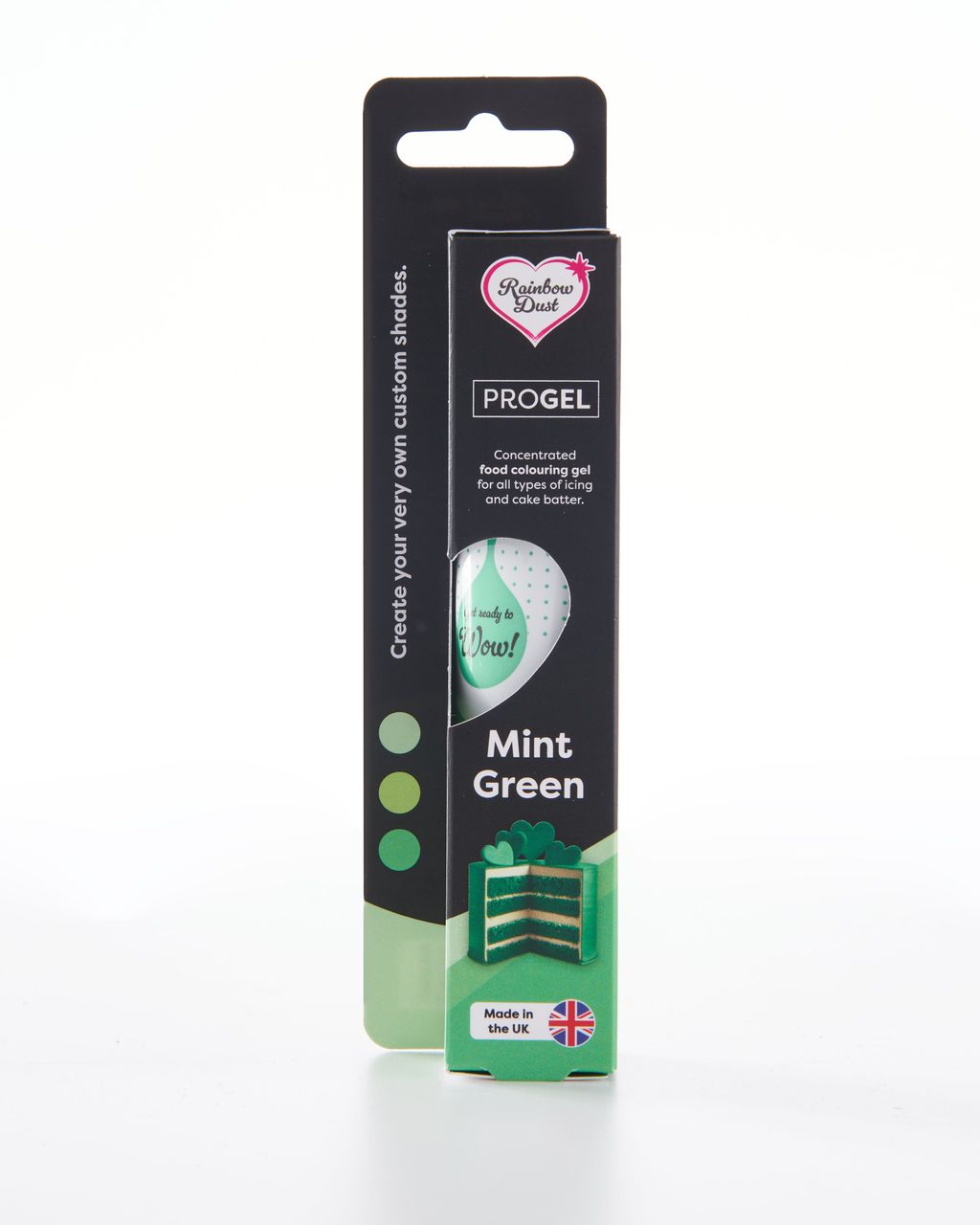
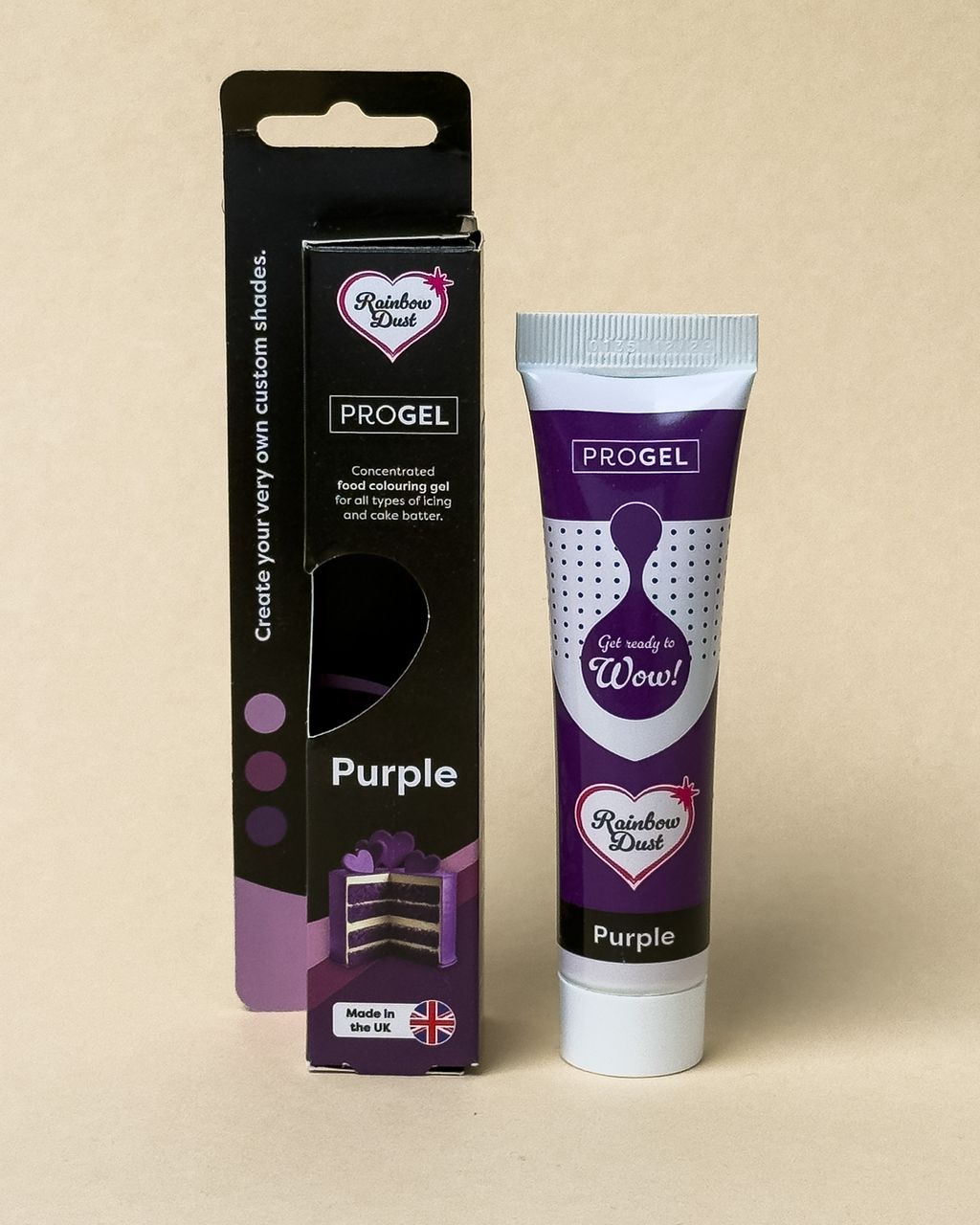
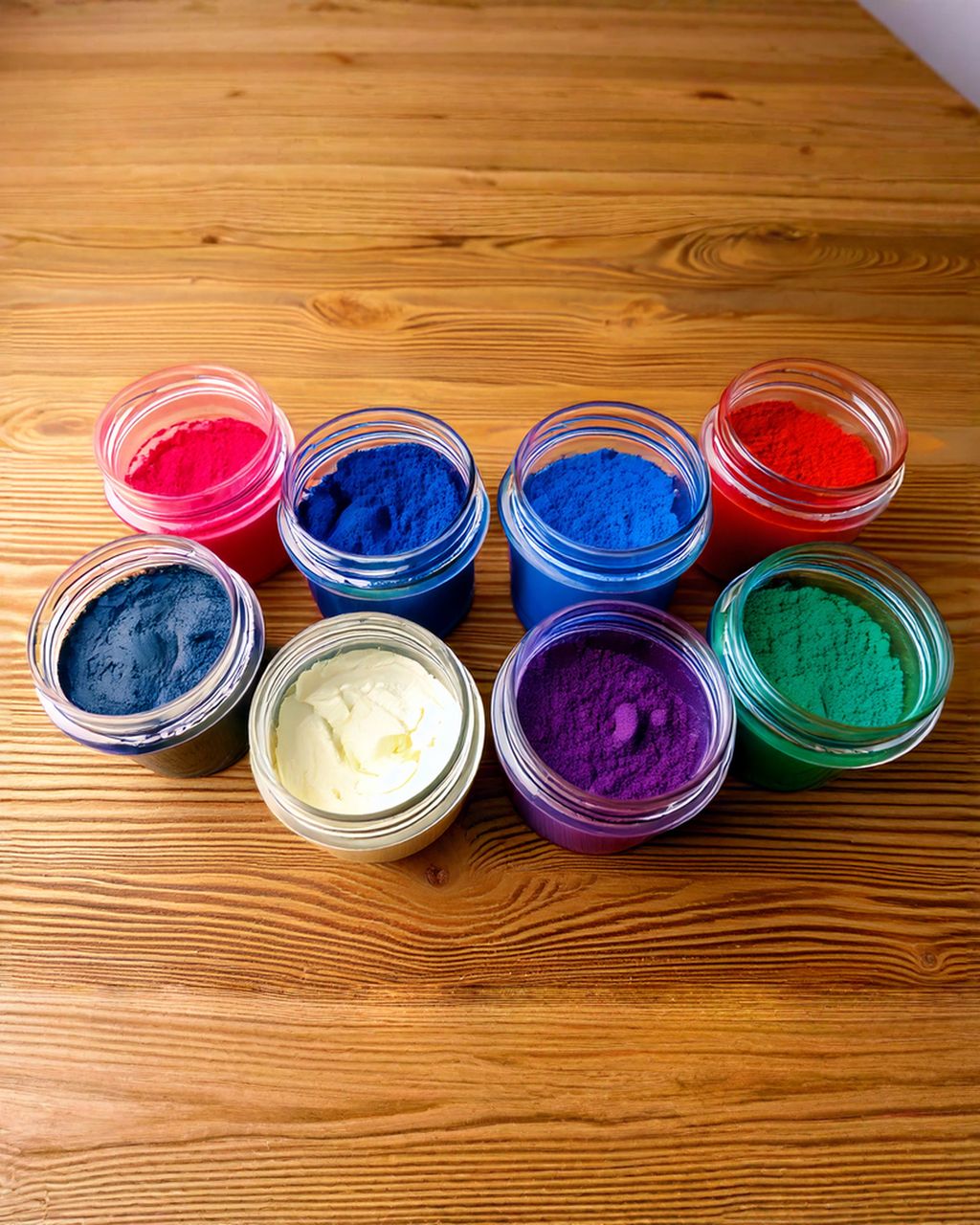
Color meringue with concentrated gel food coloring and add it right at the end of whipping. Liquid food colorings from the supermarket add water to the mixture and thin it out, and to get a deep shade you need so much that the meringue goes soft.
A gel color such as ProGel is thick: the tip of a toothpick per 100 g egg whites is enough for a pastel, with a few more drops for a deep color.
The color fades slightly in the oven, so mix it one shade darker than you want the end result.
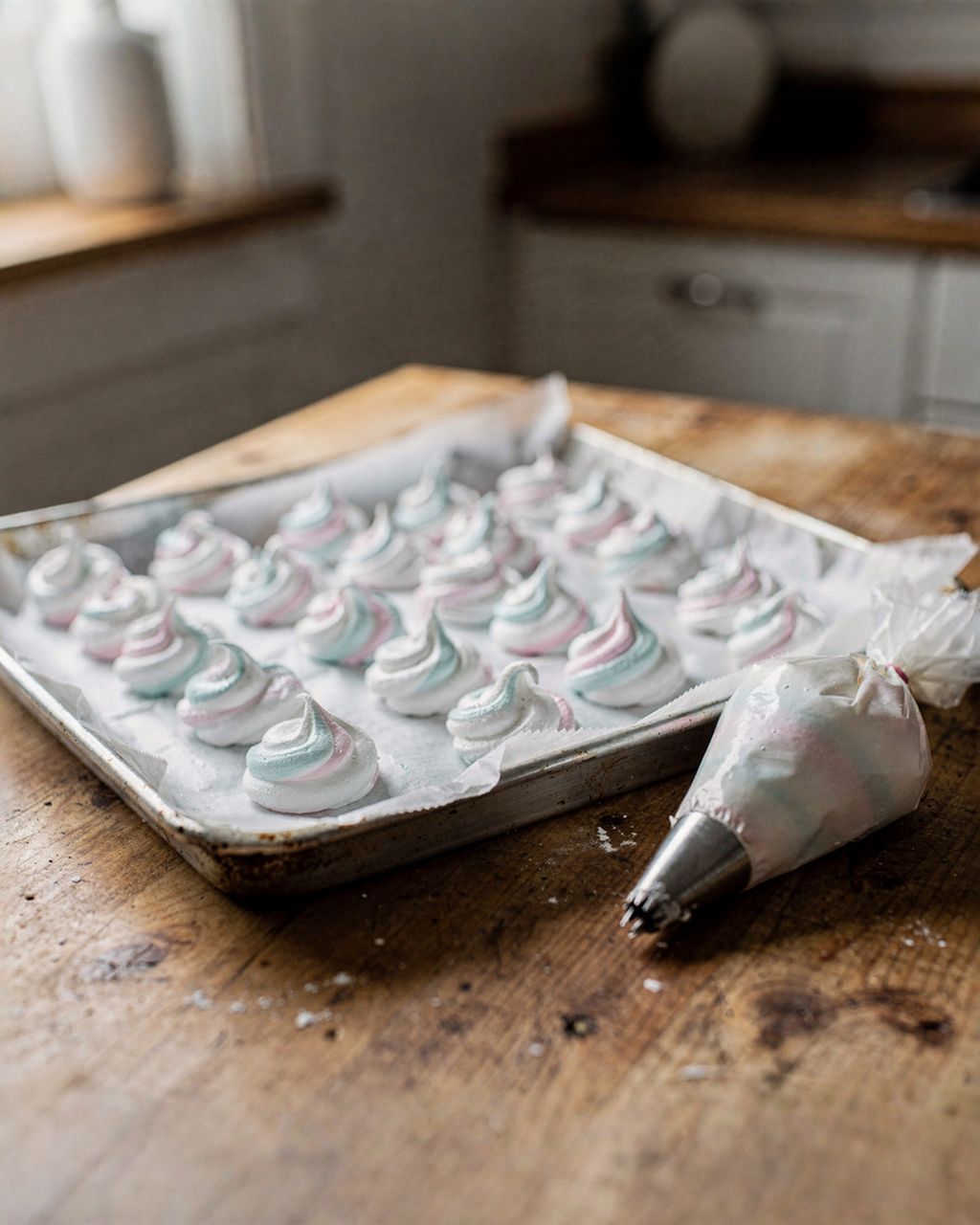
For stripes, don't mix the color in. Brush it inside a piping bag instead. To see how to fill a bag with two colors, check out two-color piped cream.
Watch out for oil-based colors and powders containing fat: fat makes the meringue collapse.
For the differences between gel, powder, and oil-based colors, see food coloring in baking.
The most common reason meringue won't whip up is fat: a drop of yolk, a greasy bowl, or a plastic container is all it takes. Other causes:
Sugar added all at once or too early – the egg whites won't gain volume. Start adding it only when the foam is white and soft.
Overwhipped meringue – it looks grainy, dull, and starts to break up. You can rescue it by adding one egg white and whipping briefly again.
Undissolved sugar – the meringue cookies then "weep" syrupy drops in the oven. With French meringue, whip longer; with Swiss, keep heating until the grains disappear.
Humidity – meringue absorbs moisture from the air. On a rainy day, or next to a boiling pot, meringue cookies go soft.
A stainless steel or glass bowl wiped with a piece of paper towel dampened with vinegar will remove any traces of fat.
Stability tip: for 100 g egg whites, add 1 g cream of tartar (a heaped pinch) at the start of whipping, or 1/2 teaspoon lemon juice instead. The acid firms up the protein, so the foam is harder to overwhip and lasts longer. You can buy cream of tartar at a pharmacy or drugstore.
Not really. Sugar in meringue isn't just there for flavor, it also holds the structure together. With erythritol or stevia you can whip up the foam, but it's less stable, weeps liquid faster, and baked meringues tend to be more brittle and won't stay crisp. You can try it for baking, but we don't recommend it for buttercream or decorating.
Baked, fully dried meringue cookies keep in an airtight container at room temperature for about 2 weeks. Don't put them in the fridge, where they absorb moisture and turn soft. Use a cake decorated with Swiss or Italian meringue within 2–3 days.
Raw meringue can't be frozen, because it turns runny once thawed. Buttercream made with Swiss or Italian meringue, however, freezes well for up to a month. After thawing at room temperature, just give it a short whisk. Baked meringue cookies can go in the freezer too, but they need to be in an airtight container.
They don't have to be, but room-temperature whites whip up faster and to a larger volume. Cold whites give slightly less volume but a more stable foam. For Swiss meringue it doesn't matter at all, since you're heating the whites anyway.
To cover a 20 cm (8-inch) cake, meringue made with 4 egg whites (about 130 g) and 260 g sugar is enough, which means Swiss or Italian meringue at a 1:2 ratio. That's enough for a layer piped through a nozzle or for torched swirls. For a thick decorative layer over the whole surface, add another 1–2 egg whites.
One recipe worth heating the oven for, one tip, and one deal from the shop. Nothing else.