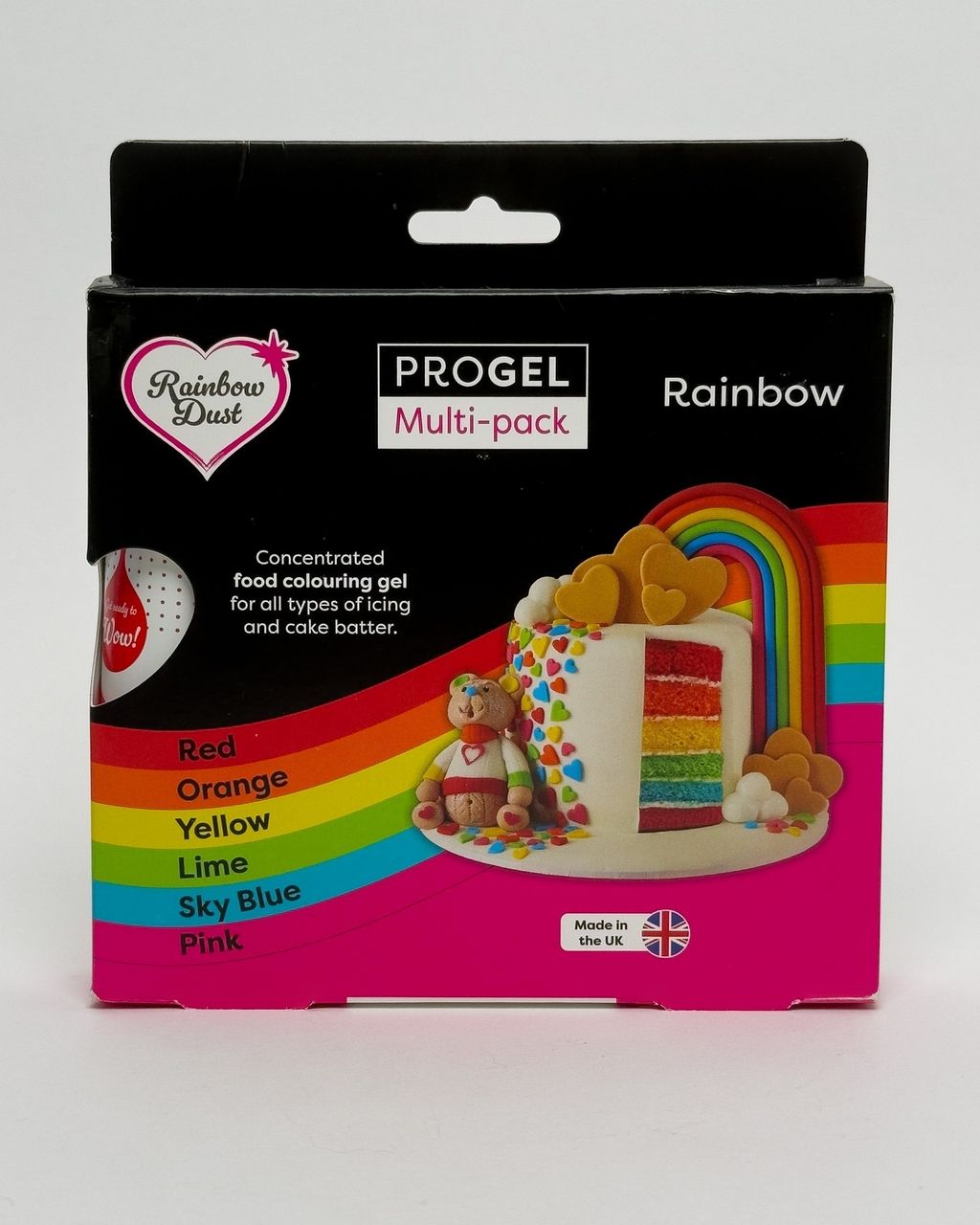
ProGel Gel Food Colouring Rainbow Set of 6
Rainbow Cake: How to Color the Layers So They Stay Vivid
Updated Oct 8, 2026
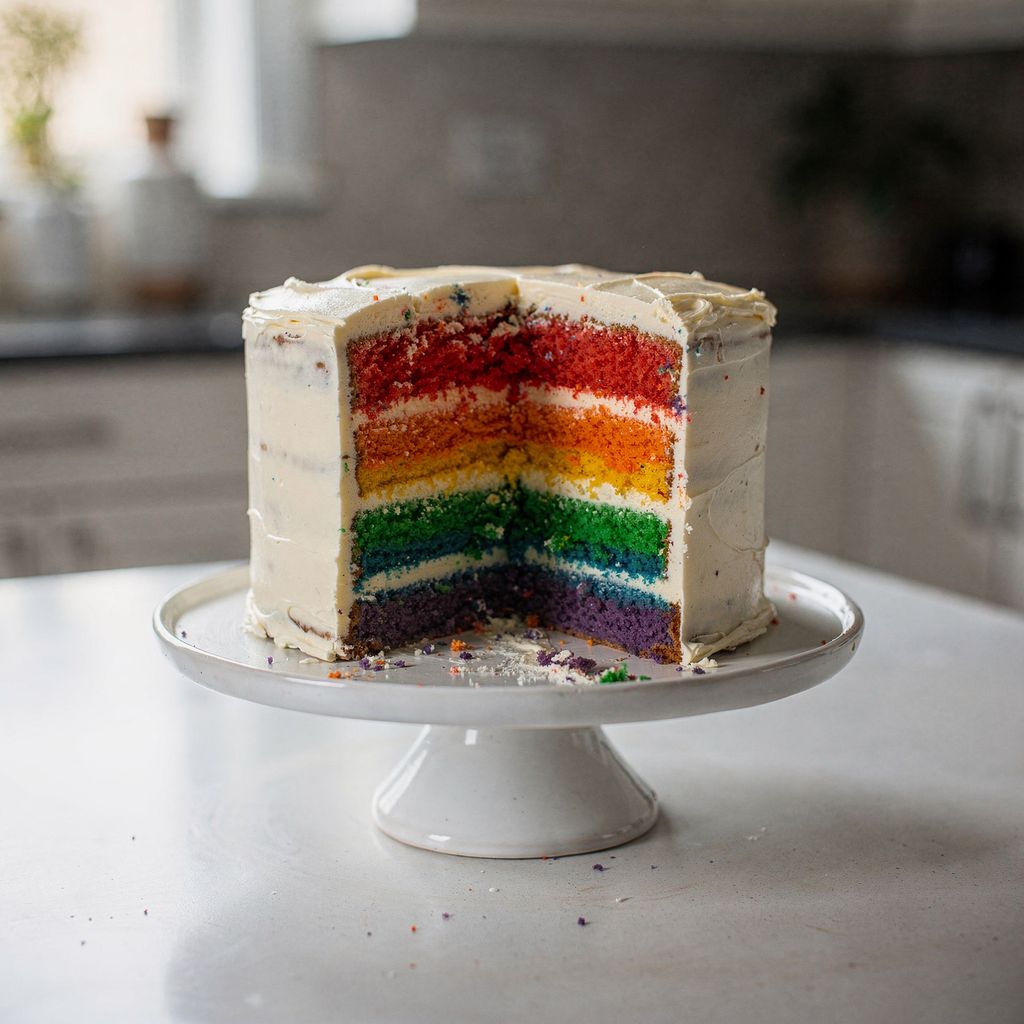
A rainbow cake gets vivid layers when you nail four things: gel color instead of liquid, the whitest possible batter (made with egg whites, no yolks), coloring the batter one shade darker than you actually want, and baking at a lower temperature, around 160°C (320°F), so the surface doesn't brown. Each one fixes a different reason the rainbow fades or turns dull — skip just one, and you'll see it the moment you slice in. Here's how to get it right, with exact amounts and temperatures.
There are four types of food coloring on the market: gel, liquid, powder, and natural — and for a rainbow cake, gel is the one you want. It's concentrated, so a tiny bit gives you a vivid shade without watering down the batter. Here's how each type behaves in batter:
Gel (paste) color — the best choice. A fraction of a teaspoon per layer is enough, it won't change the batter's consistency, and the colors survive baking.
Liquid color from the supermarket — too weak. To get a vivid shade you need so much that you thin out the batter, leaving pastel, denser layers.
Powdered color — very strong and works fine in batter, but mix it into a drop of water or milk first, or you'll end up with colored speckles.
Natural colorings (beetroot, spirulina, turmeric) — these often brown or fade in the oven and add their own flavor. They work for soft pastel layers, but not for a vibrant rainbow. More on this in What to Use Instead of Food Coloring.
The easiest place to start is the Rainbow Dust ProGel rainbow set: six gel colors in squeeze tubes (red, orange, yellow, lime, blue, and pink). Mix purple yourself from blue and pink, or buy it separately. You'll find more shades and other brands in our food colors and colorings category. For a general rundown of how different colorings behave during baking, see our guide Food Colorings for Baking.
Start with 1/8 teaspoon of gel color per roughly 300g of batter and add it drop by drop until the batter looks one shade darker than you want the baked layer to be. Baking lightens the color slightly and takes some depth off it, so the raw batter should look almost "over the top."
Rough amounts of concentrated gel per layer (300–350g of batter):
Yellow: 1/8 teaspoon — yellow is strong, and white batter doesn't need much to overpower it.
Orange, green, blue: 1/8–1/4 teaspoon.
Purple: 1/4 teaspoon of ready-made purple, or roughly 2 parts blue to 1 part pink. An extra drop of pink keeps it warm-toned instead of drifting into grey.
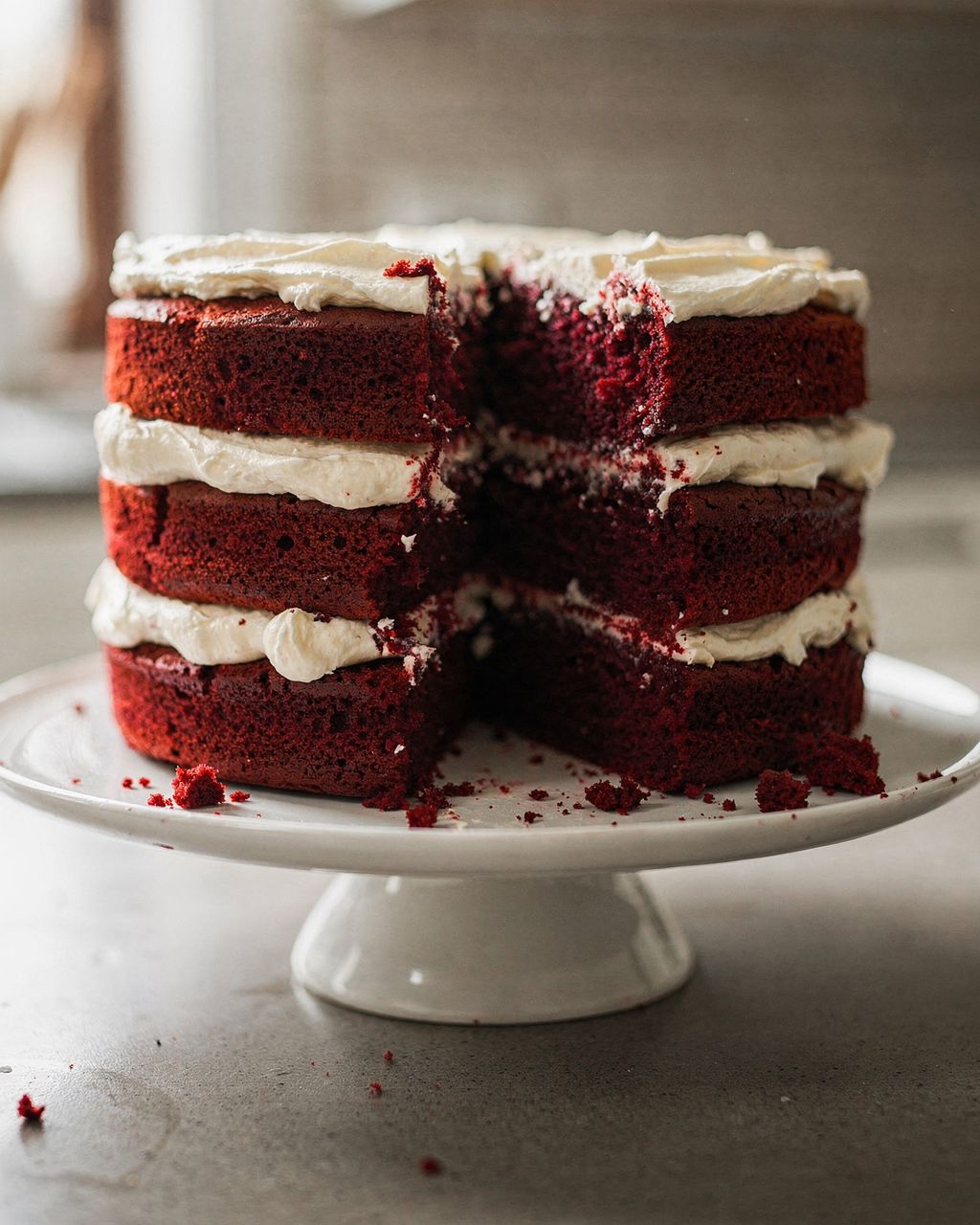
Red: 1/4–1/2 teaspoon — this is the trickiest one, since a white base first turns pink before it gets to red. For a truly vivid red, add it gradually and expect to use the most of any color. We cover this in detail in Red Velvet: How to Get a Deep Red Batter.
Exact amounts vary by brand, so go by eye rather than following a fixed recipe. Fold the color into the batter briefly with a spatula, just until even — overmixing develops the gluten and makes the layer tough.
Three things mute the colors in a rainbow cake: a yellow batter base, browning in the oven, and too little color. You can control all three before you even open the oven door.
Egg yolks and yellow butter mix in yellow. Blue turns greenish on a yellow base, and purple browns into a muddy grey. That's why rainbow cakes are baked from white batter made with egg whites only, ideally with some of the butter swapped for oil. The whiter the base, the cleaner the color — the same principle as with white frosting.
The Maillard reaction browns the surface. Browning kicks in around 140°C (284°F) and speeds up fast as the temperature climbs. Bake too hot or too long and the edges and surface of the layers tan, making the color look muddy.
Not enough color. A pastel layer lightens even further once baked. If you're cautious and go light "just to be safe," you'll end up with a washed-out rainbow.
Even with perfect coloring, you'll still get a thin golden crust on the surface. The fix is simple: once cooled, trim it off with a sharp knife and the color will show right to the edge.
Weigh the batter and divide by the number of colors — a kitchen scale gets this accurate to the gram, so your layers end up the same height. Eyeballing it won't work, and thinner layers also bake faster and brown sooner.
Weigh the empty bowl, then the bowl with the finished batter, and subtract.
Divide the result by six (for a classic six-color rainbow); for a 20cm (8 in) tin, that's roughly 300–350g per layer.
Portion the batter into six bowls and color each one separately.
If you only have two tins, let the remaining colored batter sit covered at room temperature. With standard baking powder it'll lose only a little lift over 20–30 minutes of waiting, but don't leave it sitting for hours.
Bake the rainbow layers at 160°C (320°F) conventional heat (around 150°C/300°F fan), and pull them out as soon as a skewer comes out clean and the center springs back to the touch — for a thin layer in a 20cm (8 in) tin, that's usually 12–18 minutes. The lower temperature slows browning, so the surface stays pale and the color stays clean.
Don't bake "a bit longer just in case." A few extra minutes is exactly what creates a brown ring around the edge.
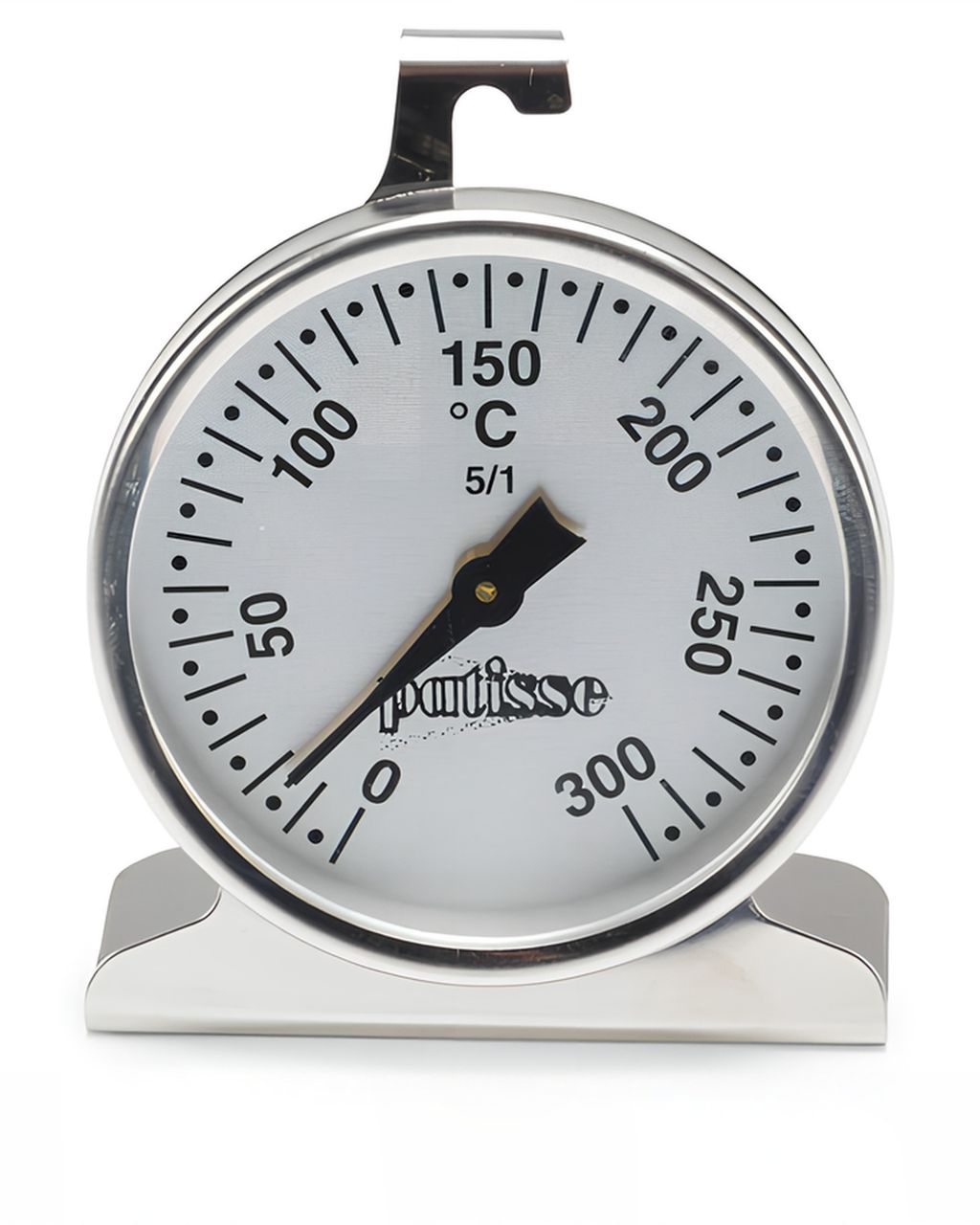
Check your oven's actual temperature. Home ovens commonly run 10–20°C (20–35°F) off, so if yours reads 160°C but is really running at 180°C, you're back to brown edges. An independent oven thermometer helps — we explain why ovens lie in Oven Thermometer.
Line the base of the tin with baking paper and only lightly grease the sides — skip flouring them, as a dark floury crust on the sides dulls the color.
Wrap the cooled layers in plastic film and chill for at least an hour (overnight is fine too). Cold layers trim, slice, and stack more cleanly without crumbling.
Stack the rainbow cake from purple at the bottom to red at the top (or the other way round — the main thing is that the colors run in rainbow order), with a thin layer of white frosting, about 0.5cm (¼ in), between each layer. A white line between the colors acts like a frame and makes each one pop.
Trim the tops and the browned crust so the layers are level and the color reaches right to the edge.
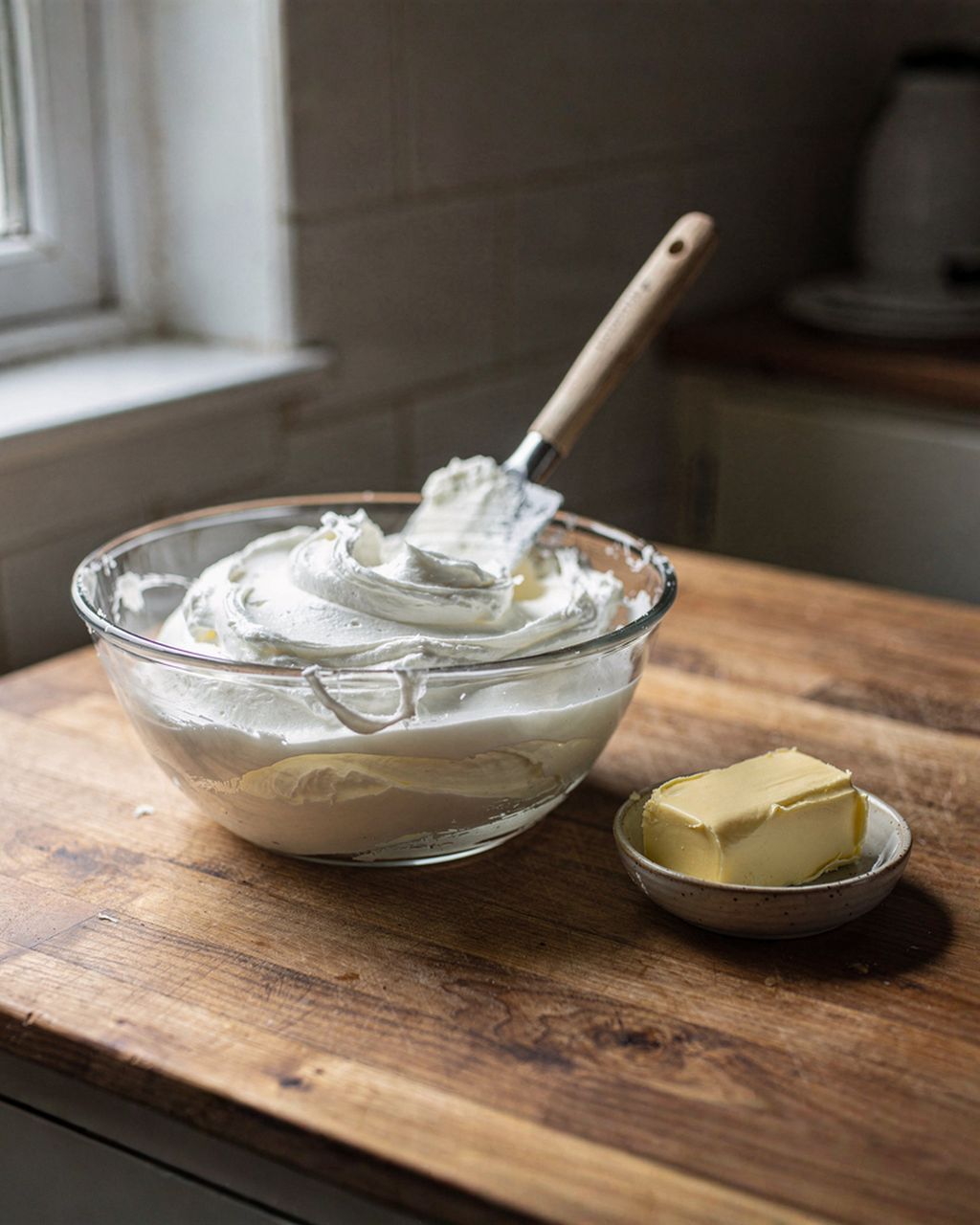
Keep the frosting as white as possible. Buttercream made with yellow butter dulls the rainbow just like egg yolks do in the batter. See Snow-White Buttercream for how to get it whiter; a drop of whitening color in the frosting helps too.
Cover the outside of the cake in plain white so the rainbow stays a surprise until you cut in. If you'd rather have rainbow colors on the outside too, color the frosting with the same set — gel colors in frosting deepen a bit more over 1–2 hours, so mix it one shade lighter than you want.
Slice the cake cold, using a knife dipped in hot water and wiped dry. Wipe the blade after every cut, or the frosting will smear colors into each other.
No — rainbow colors barely show up in cocoa batter, since the brown base overpowers them. A rainbow cake needs the whitest possible batter made with egg whites; save the chocolate for the frosting or filling instead.
Yes, rainbow cake layers can be baked 1–2 days ahead. Once cooled, wrap them in plastic film and refrigerate, or freeze them for up to a month — the color won't suffer, and cold layers are actually easier to stack.
At typical gel-coloring doses in the batter, it usually won't stain your tongue or bleed into white frosting. Color bleeding is more of a risk with heavily colored frosting (especially dark blue, red, and black), which contains much more dye.
Colorings approved in the EU are all approved for food use, but under EU rules six of them (E102, E104, E110, E122, E124, E129) must carry a label warning that they may affect children's activity and attention. If that's a concern for a kids' party, check the specific color's ingredients or go for a pastel version with less dye.
A six-layer rainbow cake with a 20cm (8 in) diameter yields roughly 16–20 servings. It's a tall cake, so you cut narrower slices than you would from an ordinary two-layer cake.
One recipe worth heating the oven for, one tip, and one deal from the shop. Nothing else.