Macarons – the winning recipe
Macarons Step by Step: How to Bake Perfect French Macarons

Updated Aug 15, 2026
Macarons are two delicate almond shells sandwiched together with a creamy filling — and their charm (and their curse) lies entirely in precision. You can absolutely master them at home once you understand a handful of key steps: whipping the egg whites just right, sifting the almond flour, folding the batter with the macaronage technique until it reaches "ribbon" stage, and letting the shells rest so they form a skin and that signature little foot. In this guide, I'll walk you through everything — from ingredients and batter to baking, fillings, decorating, and the most common mistakes to avoid.
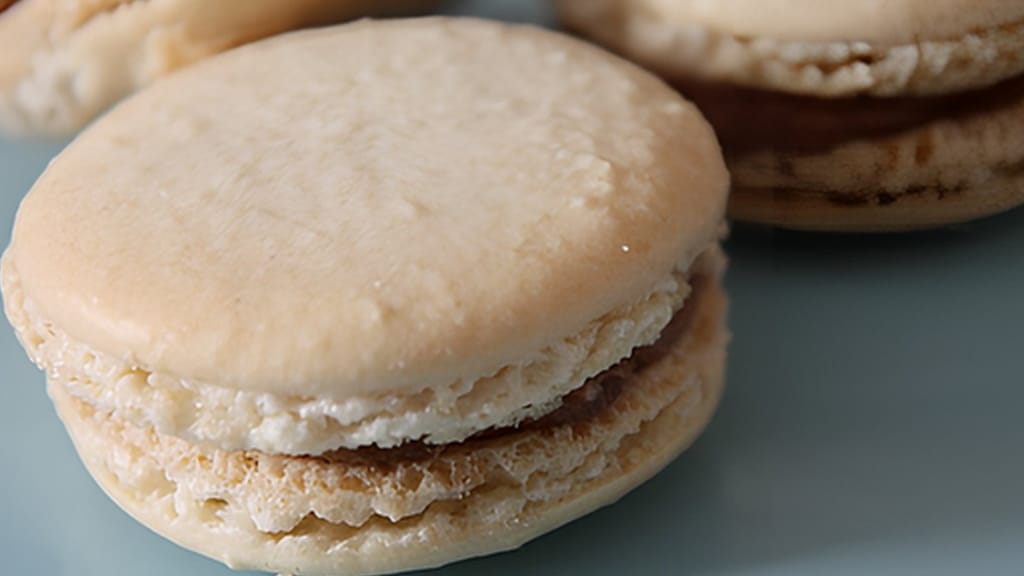
Macarons are two delicate almond shells joined by a creamy filling — a smooth, glossy top, a slightly chewy centre, and that telltale little "foot" at the base. Don't confuse them with the coconut macaroon, a completely different cookie in both texture and taste.
This style of almond confection was born in Renaissance Italy and made its way to France in the 16th century. The popular story that Catherine de' Medici brought it over is more legend than documented fact — historical records don't back it up, and almond pastries actually spread across Europe gradually. The macaron as we know it today, two shells joined by a filling, only took shape around the 1930s, thanks to Pierre Desfontaines of the Parisian patisserie Ladurée.
The base recipe is almost absurdly simple: ground almonds, sugar, and egg whites. It's the technique that's demanding — and that precision is exactly what makes macarons the ultimate challenge for home bakers.
Macarons – the winning recipe
Macarons – the winning recipe: a tried-and-tested base for smooth shells
Macarons only call for a handful of ingredients, but everything hinges on their quality: almond flour, icing sugar, egg whites, caster sugar for the meringue, gel food colouring, and a pinch of salt or a few drops of lemon juice to stabilise the whites. None of these can be an afterthought — lumpy flour or damp sugar will ruin that smooth surface.
For smooth shells, reach for fine almond flour, not coarsely ground almonds. The difference is all about texture: ground almonds are roughly chopped, blanched almonds, while almond flour is finely milled and sifted, so it blends more easily with the sugar and won't leave gritty bits on the surface. Ideally, sift it once more and either grind the coarser leftovers finer or discard them.
Tip: if your flour feels damp, spread it on a baking tray and dry it out in the oven at 90–100°C (195–210°F) for a few minutes, then let it cool completely. Moisture is the enemy of a smooth top.
Use fine icing sugar with no added starch. Starch (often added to prevent clumping) changes both the texture of the batter and the flavour, and can leave the shell looking matte instead of glossy. Always sift the icing sugar together with the almond flour — this aerates and combines the dry mix at the same time.
"Aged" egg whites whip up best — separate them from the yolks a day or two ahead and keep them covered in the fridge. They lose a bit of moisture and whip into a firmer, more stable meringue. Let them come up to room temperature before whipping; cold whites won't gain volume.
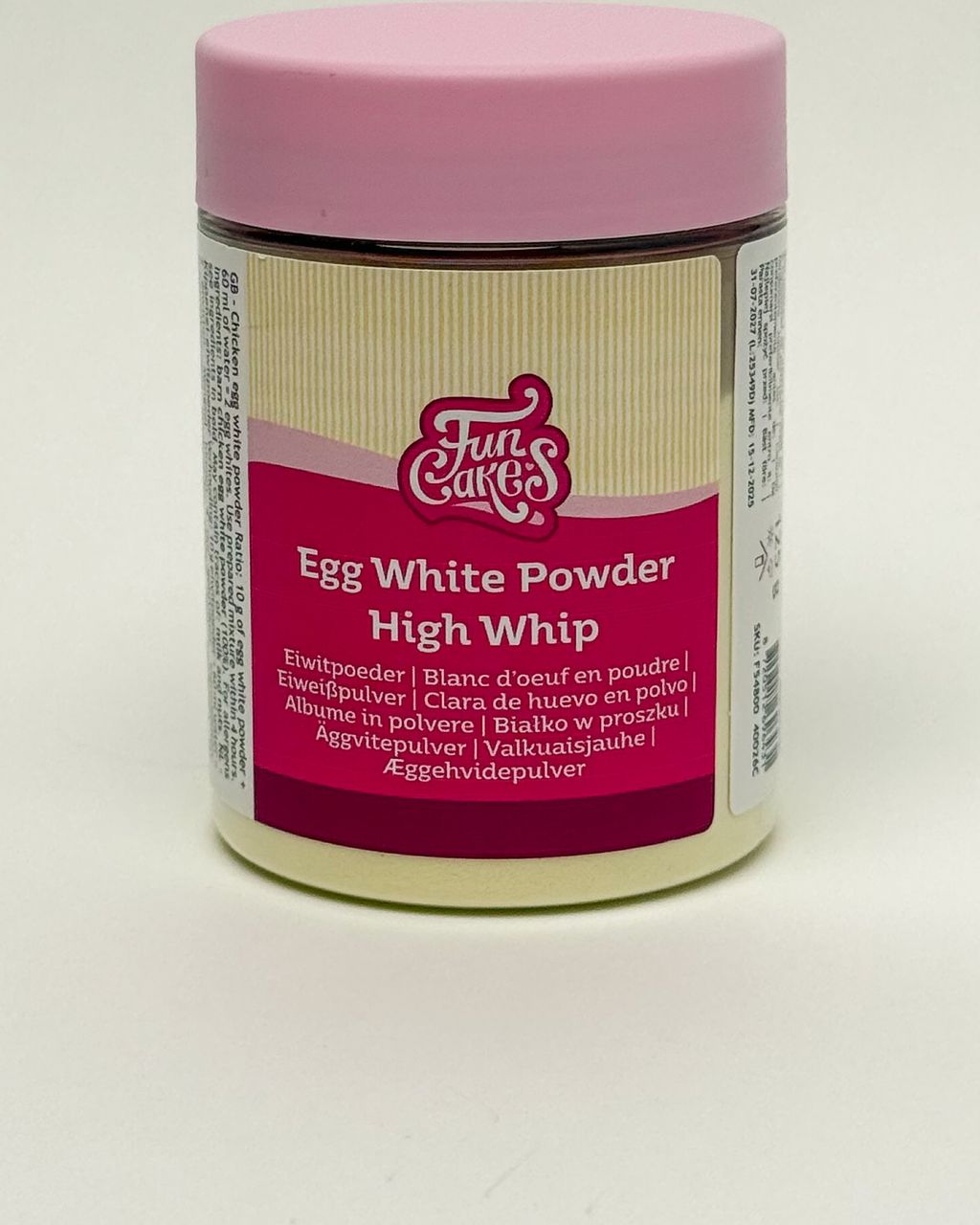
Not a speck of fat or yolk can get into the bowl, or the meringue simply won't form. If you'd rather not risk it, dried egg white powder gives you a reliably stable meringue every time.
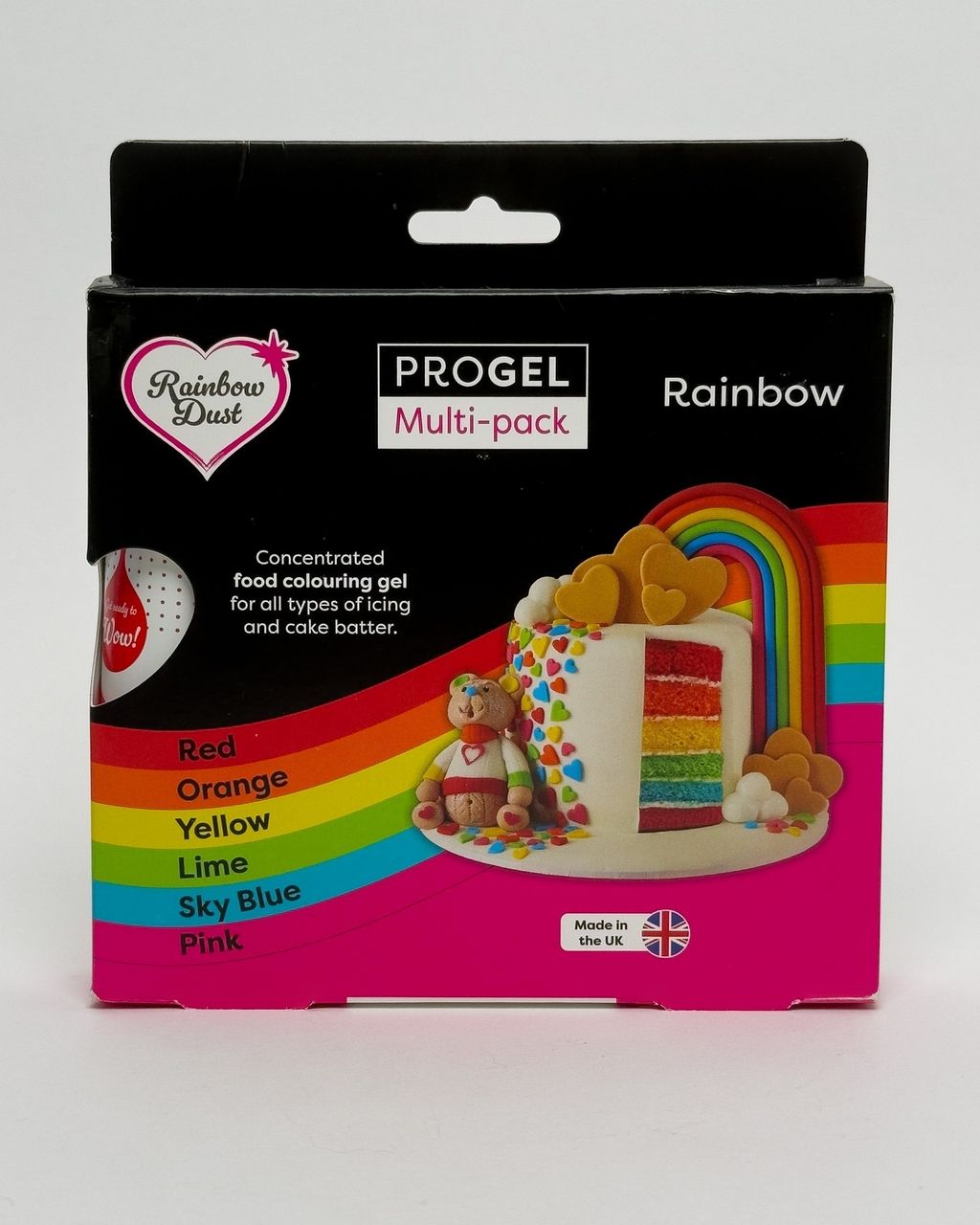
Only ever colour with gel food colouring. It's concentrated, so a few drops are enough, and unlike liquid colouring, it won't water down the batter — excess liquid is a common cause of cracked shells. The meringue also benefits from a pinch of salt or a few drops of lemon juice; add this right at the start of whipping, as soon as the whites turn foamy.
Macaron batter comes together in four stages: whip a firm meringue, fold in the sifted almond flour and sugar mixture, bring it to the right consistency using the macaronage technique, and check it with the ribbon test.
Meringue is made one of two ways. The French meringue method (whipping caster sugar directly into raw egg whites) is quicker and easier for beginners. The Italian meringue method (whipping egg whites with a hot sugar syrup at 118°C/244°F) is more stable and forgiving, but demands a thermometer and precise timing.
Start whipping room-temperature egg whites slowly; once they turn foamy, add the salt or lemon juice, then gradually sprinkle in the caster sugar. Whip until you get a firm, glossy meringue that holds a stiff peak — turn the bowl upside down and it shouldn't budge. Don't overwhip: a lumpy, dull-looking meringue means broken proteins and hollow shells later on.
Fold the sifted almond flour and icing sugar into the meringue in stages and gently — using a spatula, sweep from the edge to the centre while rotating the bowl. This step determines the outcome: fold too little and the batter stays lumpy with peaks that won't smooth out during baking; fold too much and it turns runny, spreading into flat puddles. Add the colouring near the end of folding.
You'll know the batter is ready by the ribbon test: lift the spatula and the batter should flow off in a continuous ribbon, with the trace it leaves smoothing back out within roughly 10–20 seconds. A second check is the "figure eight" test — you should be able to draw a figure 8 with the batter without it breaking.
If the trace stays sharp and holds its shape → keep folding a little longer.
If the trace disappears instantly and the batter is watery → you've overmixed and knocked out the air.
Bake macarons at 150–160°C (300–320°F) for about 12–15 minutes — but only once a proper skin has formed on top. The exact temperature depends on your oven, so it's worth using an oven thermometer and doing a test tray first. Bake one tray at a time in the centre of the oven, ideally on convection/fan setting, with no added steam.
Let the piped shells rest for 20–60 minutes, until they're dry and no longer sticky to the touch. This forms the skin that keeps them from cracking in the oven and pushes the batter upward as it bakes — this is exactly how the characteristic foot forms. In humid conditions, resting takes longer; in steamy conditions, the skin may not form at all. After piping, tap the tray firmly against the counter a few times to release any air bubbles.
Bake for 12–15 minutes. A finished macaron sits firmly on its foot and doesn't wobble; if the top still shifts, give it another minute or two. Let the shells cool completely on the tray before removing them — warm shells tear easily.
The filling is what holds a macaron together and gives it flavour — tried-and-tested options include buttercream, chocolate ganache, fruit purée, salted caramel, and pistachio cream. The rule is simple: the filling needs to be firm enough to hold its shape, but not so sweet that it overwhelms the delicate shell. Tangier fillings (raspberry, lemon) nicely balance out the sweetness.
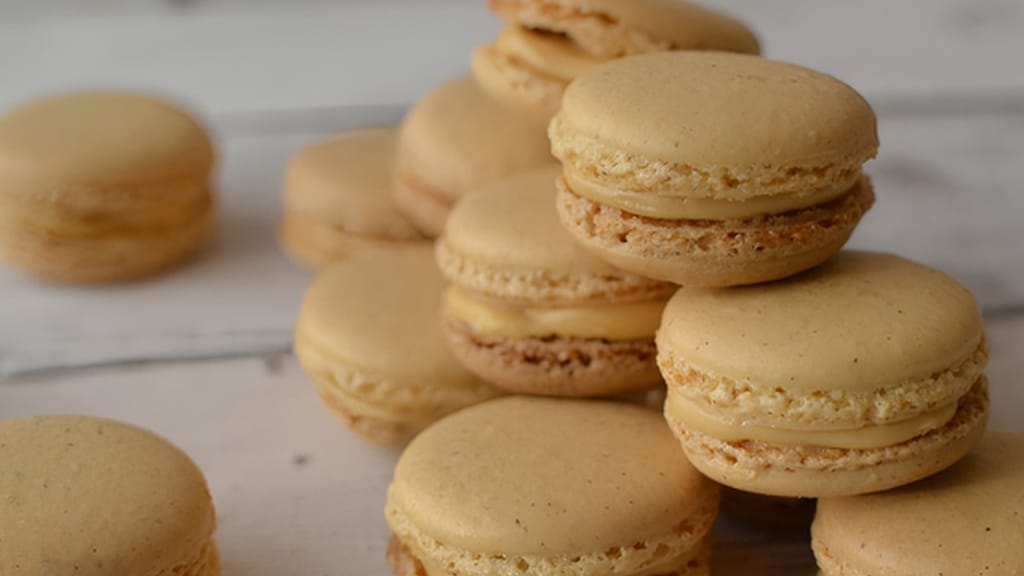
Salted caramel macarons
Salted caramel macarons – full recipe, from shell to filling
Chocolate ganache is the most reliable filling: melt good-quality dark chocolate into hot whipping cream (roughly a 2:1 ratio of chocolate to cream for a firmer filling), then let it cool and thicken. With white chocolate, use a higher proportion, since it's softer and runnier.
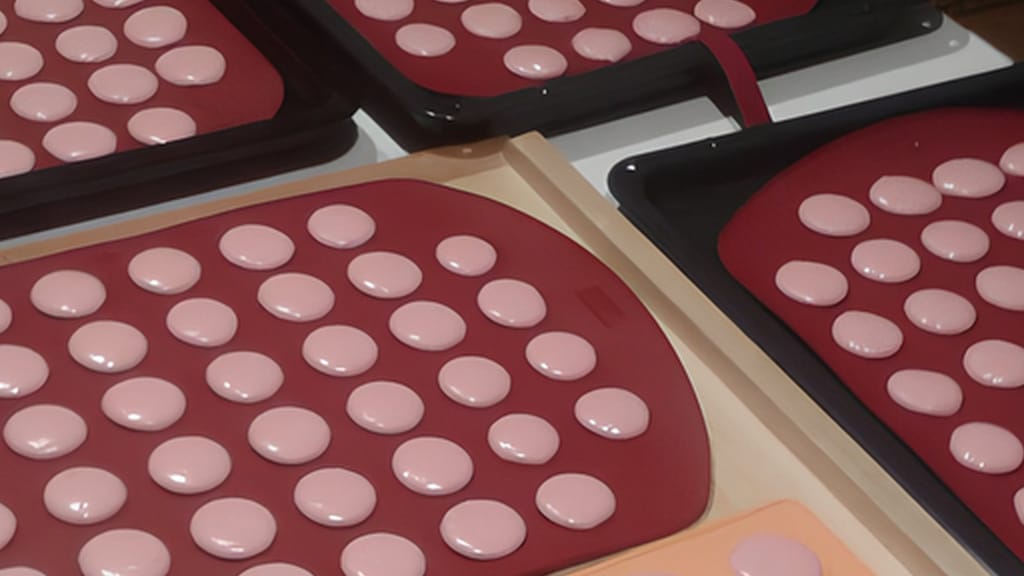
Macarons with vanilla and chocolate cream
Macarons with vanilla and chocolate cream
Salted caramel gives macarons real depth — sweet with a hint of salt. Cook a caramel from sugar, whisk in butter and cream, season with a touch more salt, and let it firm up into a creamy consistency that's easy to pipe into the shells.
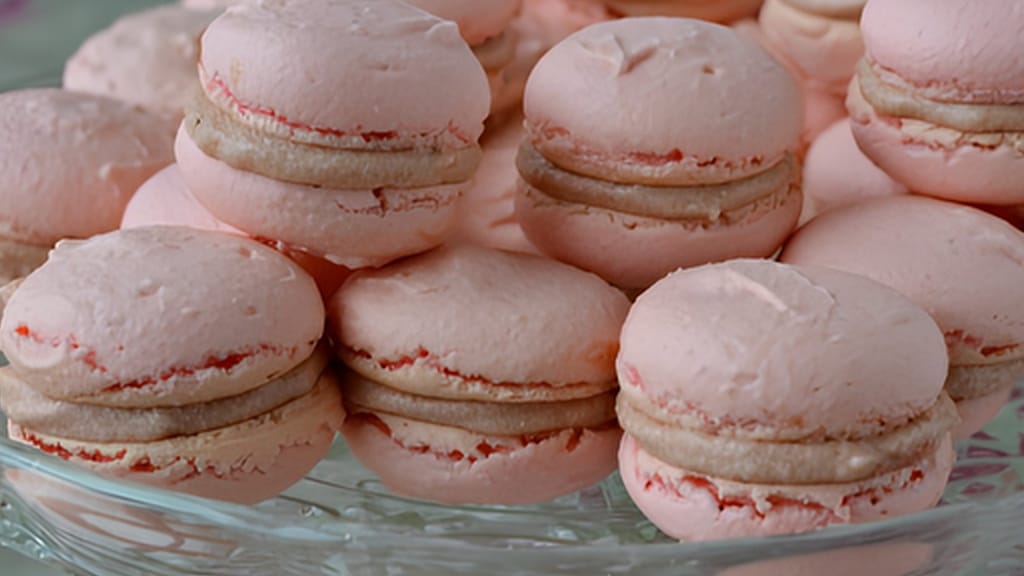
Salted caramel cream - great for macarons and more
Salted caramel cream for macarons
A gentler option for coffee lovers: a silky white chocolate and coffee cream that works beautifully with the shell precisely because it isn't too sweet — the coffee nicely offsets the sweetness.
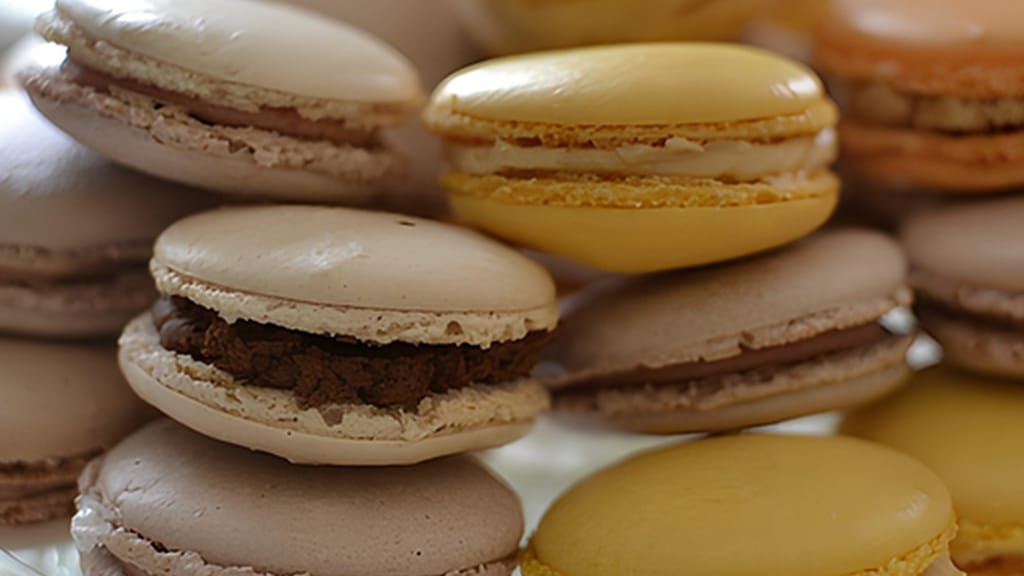
White chocolate and coffee cream - great in macarons and beyond
White chocolate and coffee cream for macarons
Classic buttercream (softened butter, icing sugar, a pinch of vanilla) is a versatile base you can flavour with lemon zest or cinnamon. Fruit purée — raspberry or mango — should be blitzed with a little sugar and lightly thickened before filling (gelatine or agar), otherwise it will make the shell soggy. Pistachio cream, made from pistachio paste and butter, is a luxurious option with a beautiful aroma.
Feel free to mix and match flavours: pistachio with raspberry, or salted caramel with chocolate, creates a lovely contrast of sweet against tart or salty.
Colour macarons with gel food colouring in the batter itself, then finish the surface once baked: edible gold (leaf or dust), edible markers, airbrush, or powdered colour. Try ombré or marbled effects for a distinctive look.
Serve them stacked into a tower ("macaron tower") for weddings and parties, or in small portions of a few pieces so everyone can easily grab one. One extra tip: let filled macarons mature overnight in the fridge — the flavours will meld together and the shell will reach that perfect chewy texture.
Filled macarons keep for about 3–5 days in a sealed container in the fridge. Store them at 4–8°C (39–46°F) so they don't pick up odours or dry out, and let them sit at room temperature for a few minutes before serving. Unfilled shells will keep for several days at room temperature, as long as they're kept dry.
Yes, macarons freeze beautifully. Freeze filled or empty shells in a sealed container for 1–3 months, and thaw them slowly in the fridge to avoid moisture forming. Freezing is a great way to build up a stash in advance.
Yes, macarons are naturally gluten-free, since they're made with ground almonds instead of wheat flour. Just double-check that your icing sugar and food colouring haven't been cross-contaminated with gluten, and if you have a nut allergy, remember that almonds are a tree nut. Always check the packaging of specific ingredients to confirm they're gluten-free.
Filled macarons are left to mature for 12–24 hours so the moisture from the filling can soften the inside of the shell. This gives you that perfect chewy texture instead of a dry biscuit — freshly filled macarons are actually too hard inside if eaten right away.
True macarons need ground almonds — they give the shell both its flavour and its structure. In a pinch, some bakers try ground pumpkin or sunflower seeds, but this changes the colour, taste, and how the batter behaves, so you end up with a different sort of treat altogether. If a nut allergy is the issue, you're better off choosing a different kind of sweet treat entirely.
One recipe worth heating the oven for, one tip, and one deal from the shop. Nothing else.