Homemade eggnog – the best christmas drink
Homemade Christmas Liqueurs: Eggnog, Ginger, Limoncello and Blackcurrant, Plus Gift Ideas
Updated Nov 20, 2026
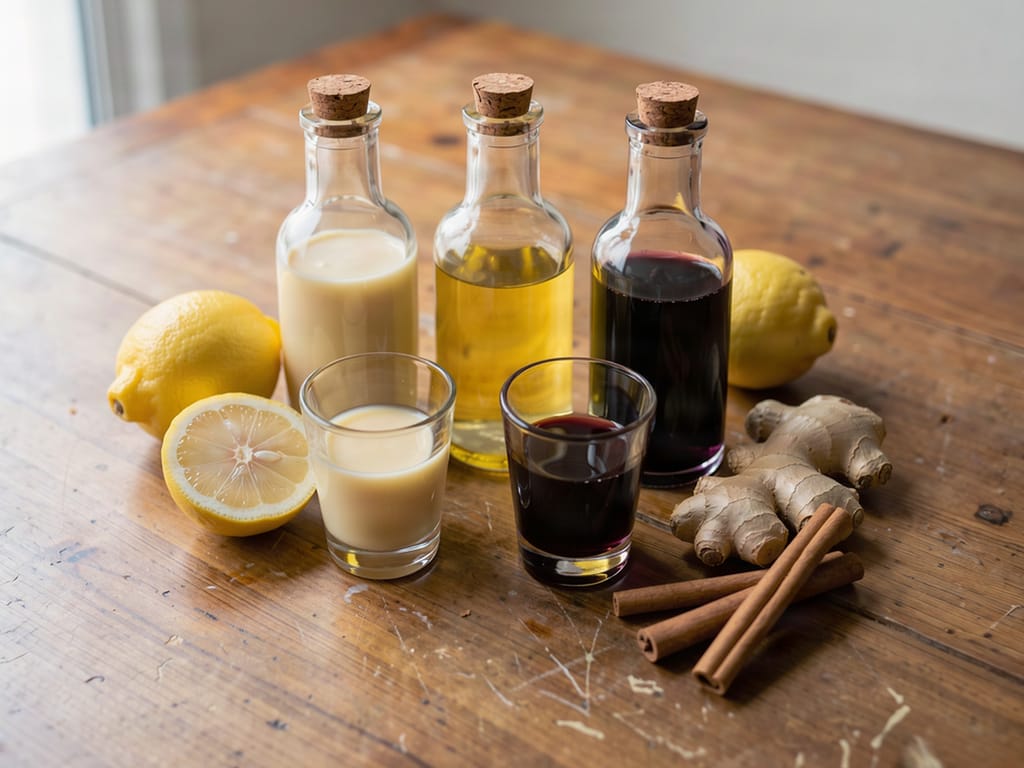
You can make homemade Christmas liqueurs in four styles: creamy eggnog (Czech vaječný koňak, a thick egg liqueur similar to advocaat), a spiced ginger liqueur made with slivovice (Czech plum brandy), lemon limoncello and rybízák, a blackcurrant liqueur. They differ most in how much time they need. Limoncello takes three weeks, ginger liqueur one to two, rybízák a day of steeping (in December made from frozen blackcurrants), and eggnog is made just a few days before Christmas Eve because it doesn't keep for long. Below you'll find what each one depends on, how to handle egg yolks safely, liqueurs without eggs, a sweet alcohol-free option for kids, and tips for wrapping liqueur as a gift.
Four homemade liqueurs are the most worthwhile for Christmas. Here they are in the order you need to start them:
Limoncello: at least three weeks ahead (14 days of steeping and a week of resting).
Ginger liqueur with slivovice (Czech plum brandy): one to two weeks ahead.
Rybízák (crème de cassis, blackcurrant liqueur): best made in July from fresh blackcurrants, so that at Christmas you only have to open it. You won't find fresh blackcurrants in December, so use frozen ones: a day of steeping and at least a minute of bubbling the juice with the sugar is enough.
Eggnog: last, only a few days before you want to drink it or give it away.
There's a reason for this order. Fruit and spiced liqueurs rest on alcohol and sugar, so time does them good: the flavors come together and the sharp edges of the alcohol are smoothed off. Eggnog, on the other hand, is a cream made from egg yolks and dairy. Resting doesn't improve it, it only spoils it. That's why it belongs in the fridge and at the end of the list.
If you start at the turn of November and December, you're in good shape. Start the limoncello first, the ginger liqueur about a week later, the rybízák from frozen blackcurrants any time in between, and the eggnog only in the week before Christmas Eve. Each liqueur also has its own role: limoncello is an ice-cold digestif after a meal, rybízák is the base of an aperitif, ginger liqueur is a glass to go with Christmas cookies, and eggnog is the festive classic everyone waits for at the table.
How to soften gingerbread that’s gone hard, when to fill Linzer cookies and how to tell the carp is done. One recipe and one tip a week. Unsubscribe in one click.
You can make homemade liqueur in three ways: by steeping in alcohol, by boiling juice with sugar and topping it up with spirit, or as a creamy liqueur based on egg yolks or cream. Every liqueur in this article falls into one of these three groups:
Steeping in alcohol. The ingredient (lemon zest, ginger, spices) sits for days to weeks in a spirit, which draws out its aroma and flavor. This is how both limoncello and ginger liqueur are made.
Juice boiled with sugar and topped up with spirit. The fruit releases its juice, which is boiled with sugar, and only then does the alcohol go in. This is how rybízák is made.
Creamy liqueur. A base of egg yolks, cream or condensed milk and sugar, with rum stirred in. That's eggnog.
Why this matters: in the first two groups, alcohol and sugar turn the liqueur into a stable drink that tolerates a cool pantry. That isn't true of creamy liqueurs. Milk and eggs spoil even with rum in them, so treat eggnog like a dessert, not like a bottle of brandy.
A few rules apply to all homemade liqueurs:
Wash bottles and jars thoroughly with hot water before filling and let them dry, or sterilize them with steam. Remnants of old contents spoil the flavor.
Steep in glass. Glass doesn't pass on off-flavors, and you can see what's happening inside.
Steep in a cool, dark place. Heat and light weaken the aroma and the color fades.
Adjust the sweetness at the end. Sugar syrup is easy to add to a finished, strained liqueur, but you can't take sweetness away.
Taste as you go. Ginger, citrus zest and spices have a different strength every year, and a recipe is only a starting point.
Make eggnog either with pasteurized egg yolks, or heat the yolk base over steam to 71 °C (160 °F) and add the rum only afterward. Formally it's called egg liqueur, but at home hardly anyone calls it anything other than vaječný koňak.
Why the temperature matters so much: a raw egg yolk can carry salmonella, and alcohol doesn't reliably kill it. For homemade egg-based drinks, the US Food and Drug Administration (FDA) therefore recommends starting with a cooked egg base, heated with constant stirring to 71 °C (160 °F). The idea that rum "disinfects" it is a myth that persists in many family recipes. According to the FDA, the cooked-base recommendation applies even if you use pasteurized eggs, so heating the base is the safer of the two routes.
Eggnog comes in two classic forms: a quick blended one made with condensed milk, and a slower one whisked over steam with cream. You'll find both on Yumsto, and below we describe how to make each one safely.
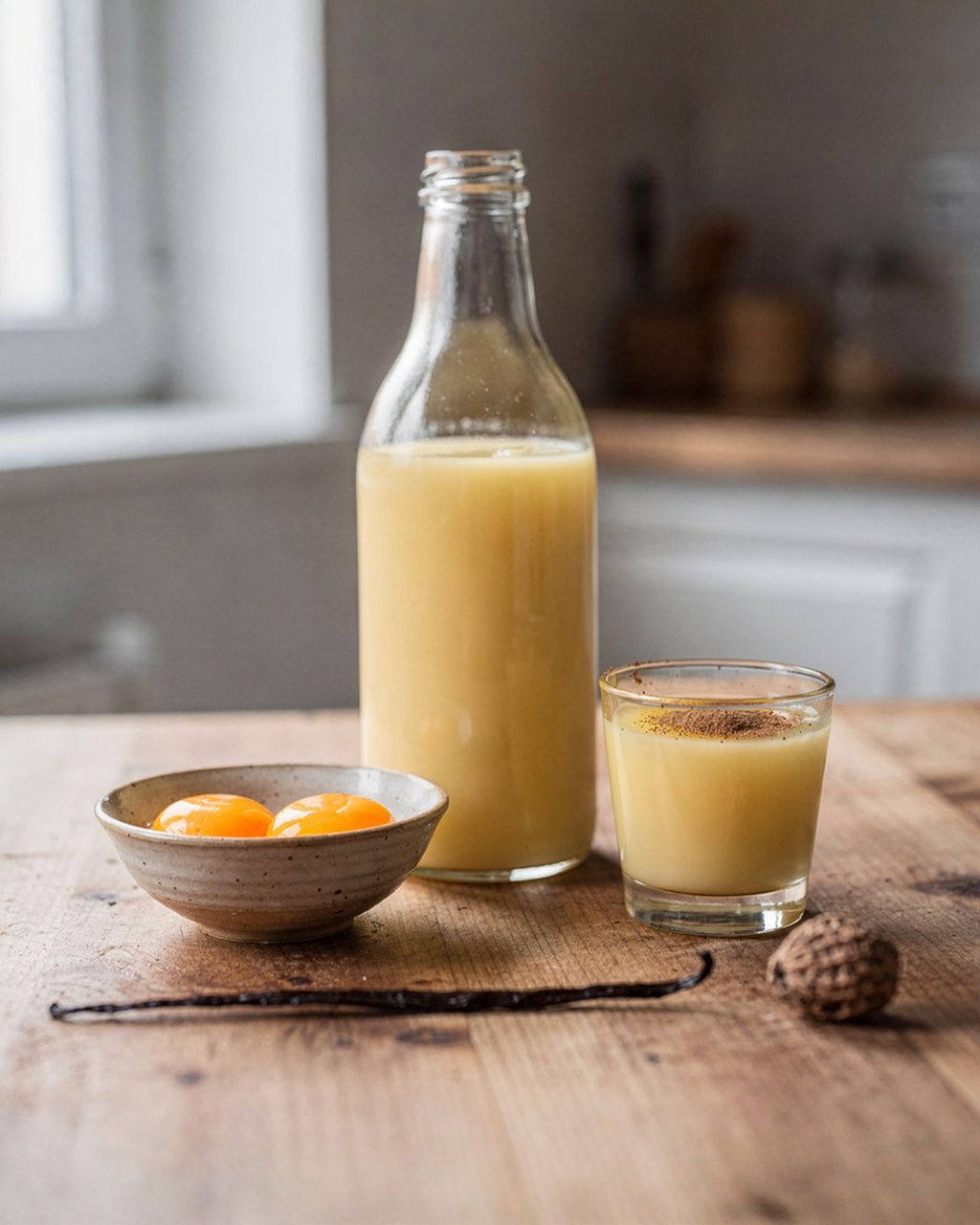
The fastest eggnog is the blended one, ready in eleven minutes. Eggnog made with condensed milk is built on five egg yolks, one can of sweetened and one can of unsweetened condensed milk (often labeled evaporated milk), just 40 g of extra sugar, vanilla and 250 ml of rum. Everything is blended together for about five minutes.
Why this version works: condensed milk is milk thickened by evaporating part of its water. The sweetened kind brings sweetness and thickness at once, and the unsweetened kind brings milky richness without more sweetness. That's why so little sugar is needed, and the liqueur comes out thick, velvety and distinctly milky.
The recipe is written with raw yolks, so you have two options for a safe version. Either buy liquid pasteurized egg yolks. Or first heat the yolks with both milks and the sugar over steam, stirring constantly, to 71 °C (160 °F), let the cream cool, and blend in the rum and vanilla only once it's cold. Don't pour rum into hot cream, because some of the alcohol would evaporate and the flavor would change.
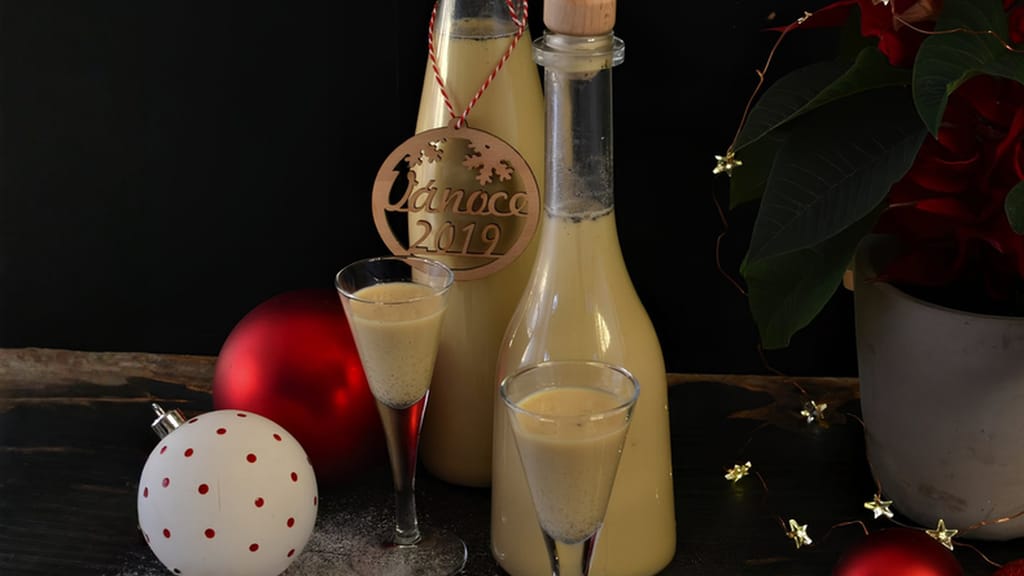
Homemade eggnog – the best christmas drink
Eggnog made with condensed milk, blended in 11 minutes
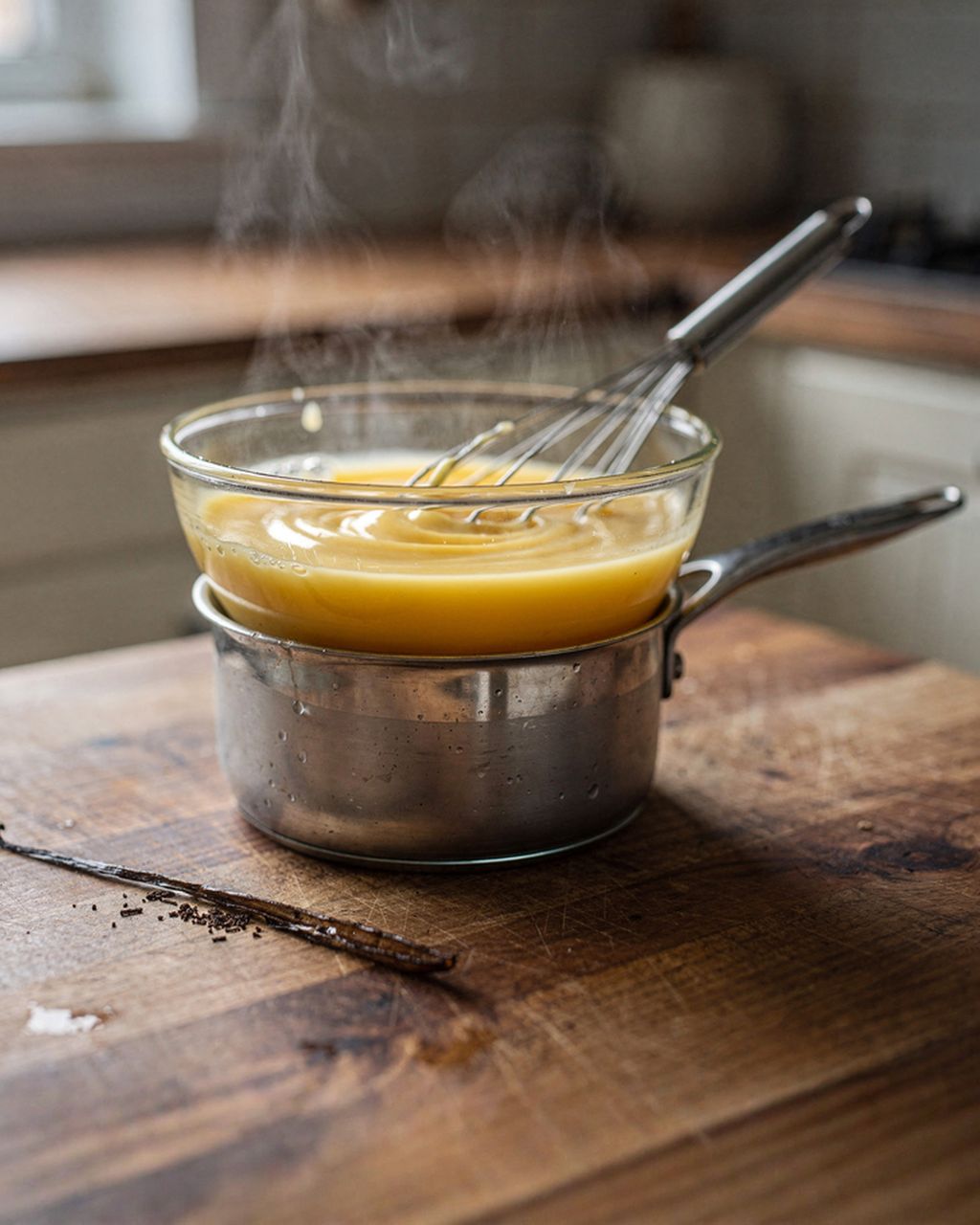
Eggnog with cream, whisked over steam takes just under an hour, but safe heating is built right into the method. The base is eight egg yolks, 500 ml of whipping cream (33%), 200 g of brown cane sugar and vanilla, with 125 ml of rum at the end.
What this version depends on:
Steam, not boiling. The bowl sits over a pot of simmering water and doesn't touch the water. Direct heat would curdle the yolks into lumps at the bottom.
Whisking without a break. This spreads the heat evenly and keeps the cream smooth.
A thermometer. At least 71 °C (160 °F) for safety, but not above 80 °C (176 °F), where the yolks curdle. The cream is done when it leaves a continuous layer on the back of a spoon and a finger-drawn line doesn't fill back in.
Rum only after heating, so it doesn't evaporate.
Fast cooling. At room temperature for two hours at most, then into the fridge, and drink within four days.
You can leave the scraped vanilla pod in the bottle, as the recipe suggests, and the liqueur will smell stronger. Here a whole pod is worth using instead of flavoring, for example Ugandan vanilla pods.
Which eggnog should you choose? The blended one made with condensed milk is quicker, sweeter and milkier. The steam-whisked one is more delicate, more eggy, and the brown cane sugar gives it a darker, caramel note. If it's your first time making eggnog and you have a thermometer, start with the steam version: it teaches you what properly thickened cream looks like, and safety is taken care of right away.
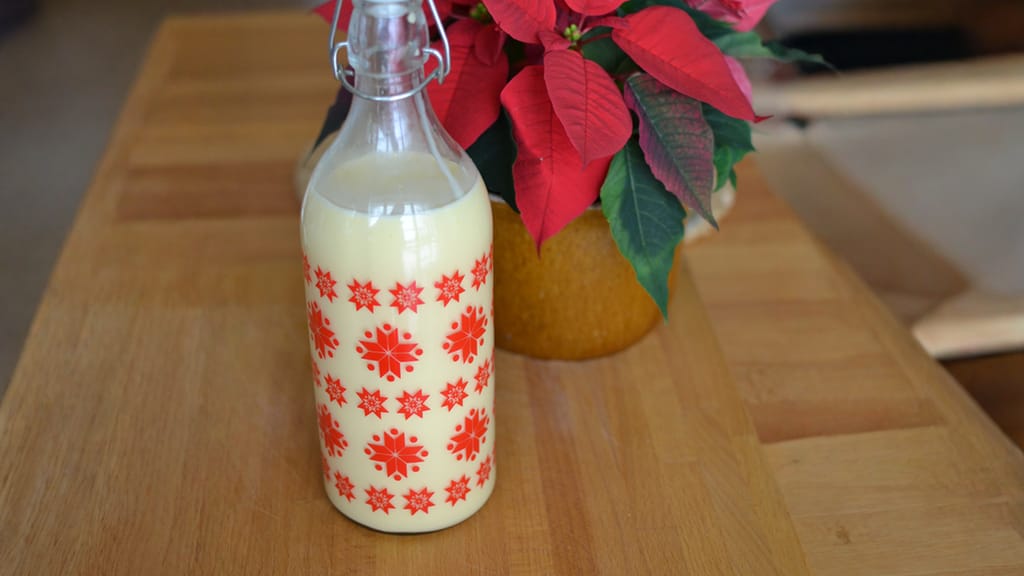
Eggnog liqueur (vaječný koňak) after sandtnerová
Eggnog with cream, whisked over steam
You make ginger liqueur by dissolving caramelized sugar in water, simmering spices in it, and pouring it over slivovice (Czech plum brandy) with grated ginger and citrus. It's ready in a week or two. It's also the best answer to the question of what to do with homemade slivovice when you don't want to drink it straight.
Fragrant ginger liqueur with spices and oranges uses 300 g of sugar, 300 ml of water, 300 g of ginger and a liter of slivovice, plus two oranges, two lemons, star anise, cinnamon and cloves. It steeps for a week, and according to the recipe, two weeks will only do it good.
Why the individual steps work:
Caramel instead of plain syrup gives the liqueur an amber color and a deeper, slightly bitter base.
The spices are simmered in the syrup, not in the alcohol. Heat draws out their aroma faster, and the slivovice goes in only after you turn off the burner, so it doesn't evaporate.
Ginger is grated, not sliced, so the alcohol has the largest possible surface from which to draw out heat and aroma.
The citrus steeps with its peel. It adds freshness and a bitter, aromatic line.
What to watch out for:
Don't let the caramel darken to brown. Burnt sugar turns bitter, and steeping won't take the bitterness away.
Pour the water into the caramel slowly and from a distance. Melted sugar is much hotter than boiling water and spatters violently. It's normal for the caramel to seize into lumps in the water; it will dissolve over low heat.
Wash the citrus with hot water, since the peel steeps too.
Taste after a week. The longer the ginger steeps, the sharper the liqueur, and you decide when it's just right.
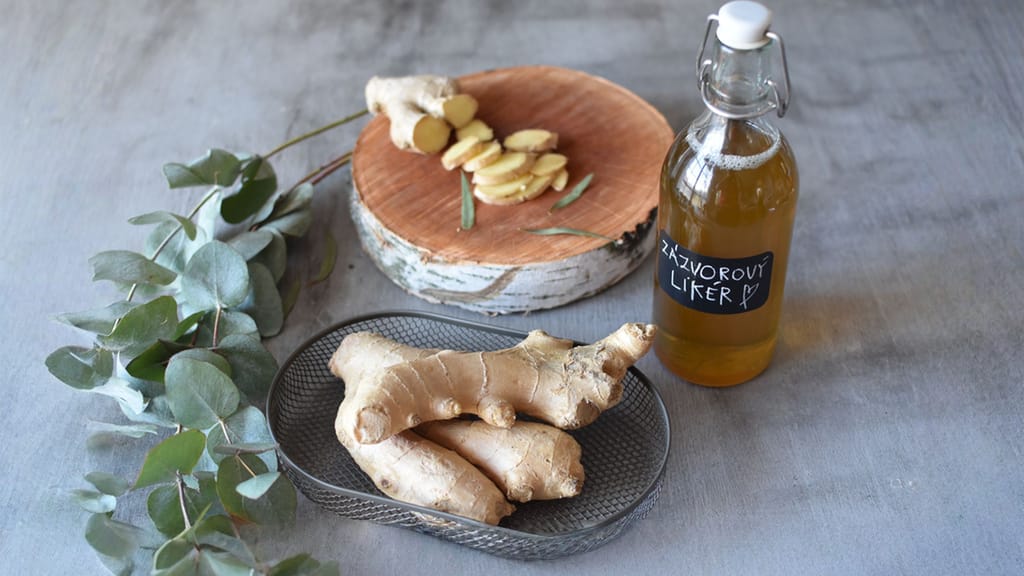
Fragrant spiced ginger liqueur with orange
Fragrant ginger liqueur with slivovice, spices and oranges
Limoncello is an Italian liqueur made from lemon zest steeped in strong alcohol with sugar and water. It needs three weeks: two for steeping and one for resting.
Limoncello, the Italian liqueur calls for 300 ml of 80% alcohol, 400 ml of water and 400 g of sugar per 500 g of lemons. It steeps for about 14 days in a cool, dark place, then the liqueur is strained and rests in bottles for a week so the flavor softens and the alcohol stops standing out.
What limoncello depends on:
The zest, not the juice. The lemon aroma sits in the thin yellow layer of the peel. The white layer beneath it is bitter, so the less of it stays on the zest, the cleaner the liqueur will be. Peel with a vegetable peeler or a sharp knife.
Good lemons. The recipe recommends organic lemons, because it's mostly about the peel and with them you don't have to worry about surface treatment.
Strong alcohol. High-proof alcohol draws more aromatic oils from the zest, and the water and sugar then soften the liqueur to drinking strength.
Fine straining. A cloth removes even tiny bits of zest that would keep making the liqueur more bitter.
Limoncello is served ice-cold, in small glasses, most often after a meal. Don't throw away the peeled lemons: the juice is good in tea, in dressing or in baking.
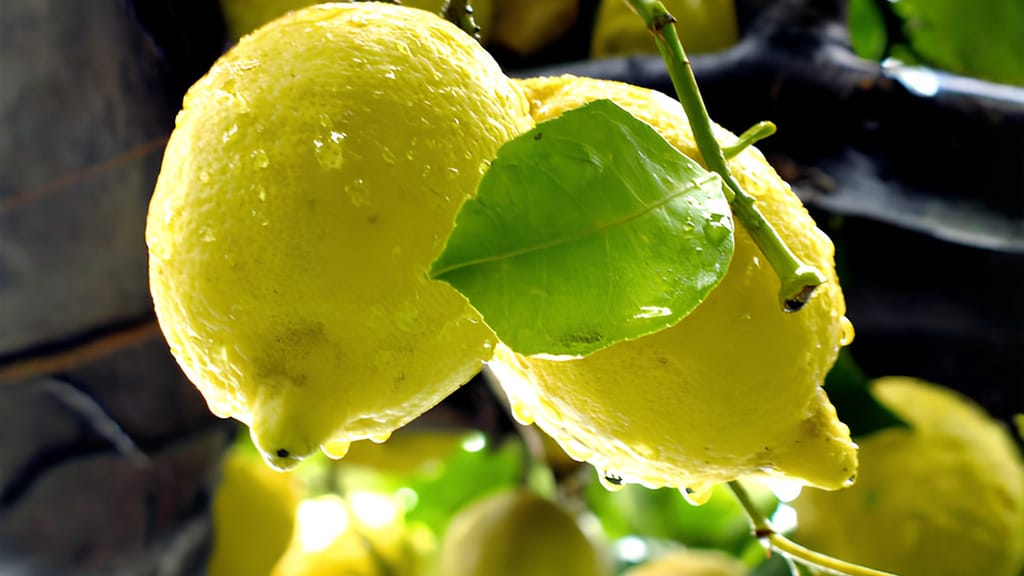
Limoncello – italian liqueur
Limoncello, Italian lemon zest liqueur
Rybízák is the homemade counterpart of French crème de cassis: a thick, sweet blackcurrant liqueur, boiled with sugar and topped up with spirit. Our recipe steeps the currants in red wine, then boils them with sugar and tops the liqueur up with vodka and rum.
Crème de cassis, blackcurrant liqueur or rybízák starts with a kilo of crushed blackcurrants and 750 ml of red wine, which rest together in the fridge for a day. The key is the ratio: for every 1 liter of juice you get, use 800 g of sugar, 400 ml of vodka and 100 ml of rum. So measure the juice first and calculate the other ingredients from it.
Why blackcurrants specifically: blackcurrants have a pronounced, slightly tart and spicy flavor that can carry a large dose of sugar, so the liqueur doesn't turn out merely sweet. The wine adds another layer of fruit flavor. The dark color comes mainly from the blackcurrants themselves.
Why crush the berries: whole berries won't release their juice. Every one of them has to burst, otherwise part of the flavor stays inside.
Blackcurrants ripen in July, so the best rybízák is made in summer, and at Christmas you only open it. In December reach for frozen blackcurrants and let them thaw with their juice before crushing, so nothing is lost. With frozen currants, let the juice and sugar bubble for at least 1 minute, not just come to a boil, because frozen berries can carry the hepatitis A virus and alcohol won't destroy it. Finished rybízák is very sweet and thick. It's drunk in small glasses or, even more often, as the base of an aperitif.
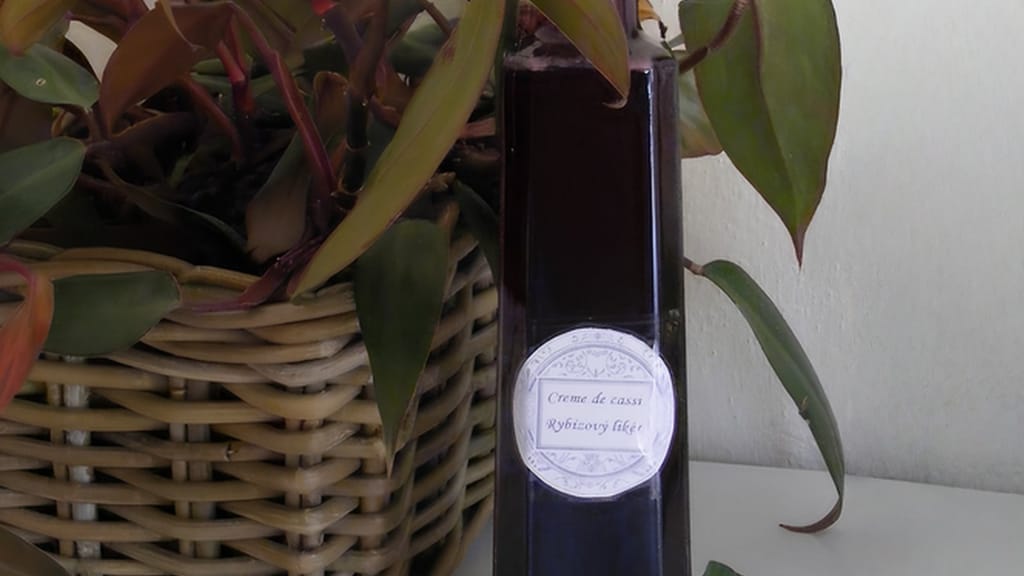
Crème de cassis – blackcurrant liqueur
Rybízák, homemade crème de cassis made from blackcurrants
The best reason to have rybízák at home is kir, the French aperitif of white wine and blackcurrant liqueur. The recipe uses 40 ml of crème de cassis to 200 ml of chilled dry white wine for two glasses. Pour the liqueur in first: the wine mixes it in on its own as you top up, and a quick stir with a spoon is enough. The ratio is a matter of taste, so feel free to adjust it.
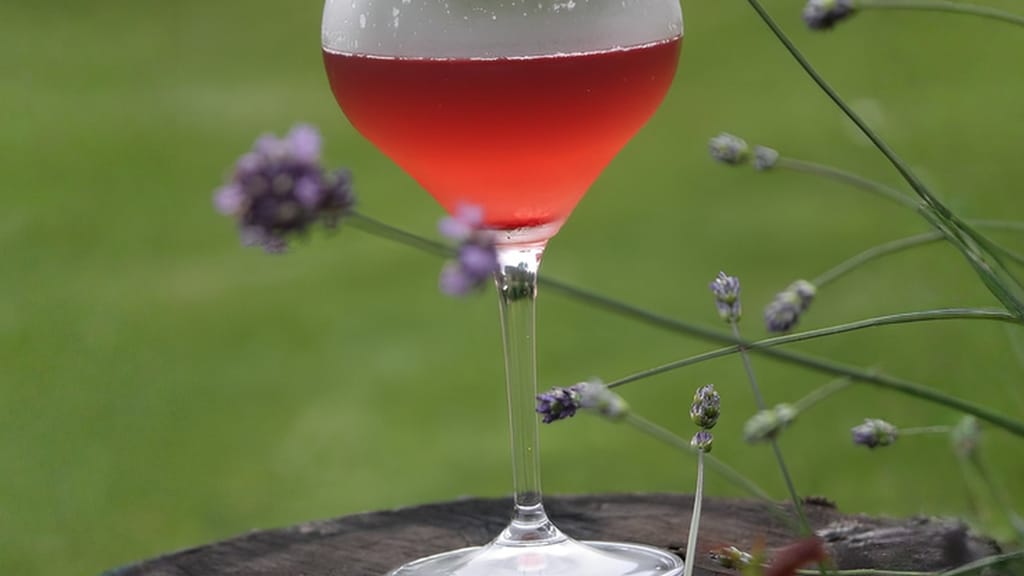
Kir: french aperitif with white wine and blackcurrant liqueur
Kir, the French aperitif of rybízák and white wine
A Christmas liqueur without eggs is any fruit or spiced liqueur: ginger liqueur, limoncello and rybízák contain no eggs at all. They don't have a dairy base, so you don't have to watch the temperature of egg yolks as you do with eggnog. They suit anyone who doesn't eat eggs, and they're also the best candidates for gifts made well in advance.
If you want a creamy liqueur without eggs, the closest route is caramel liqueur. It can be built on cream and needs no eggs.
Caramel liqueur is a creamy liqueur without eggs. You caramelize sugar to an amber color, cook it with cream into a smooth sauce, and stir rum or vodka into the cooled sauce. Make the caramel base following the homemade caramel sauce from 4 ingredients. Because it contains cream, it belongs in the fridge like eggnog and has a short shelf life.
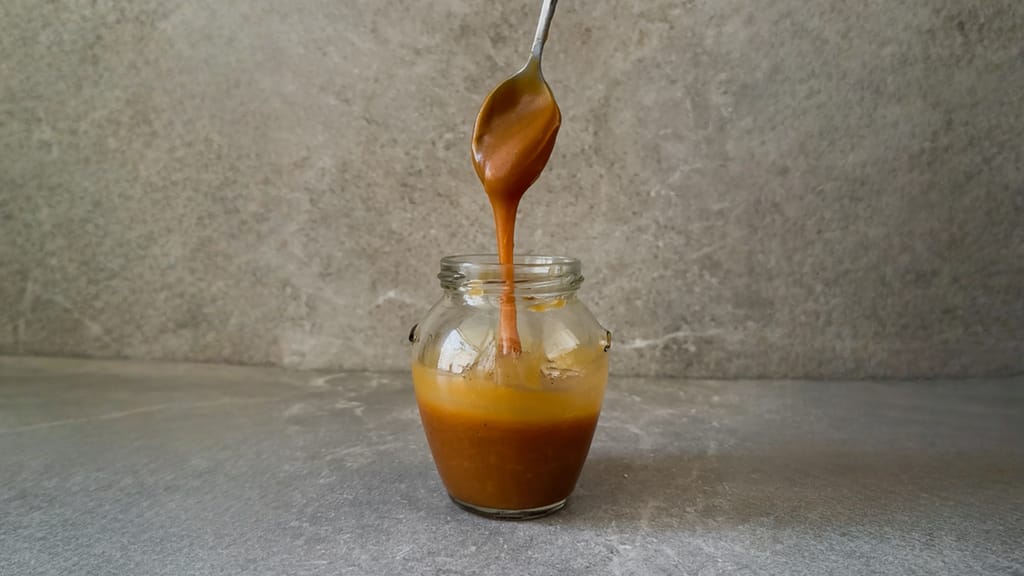
Homemade caramel sauce with just 4 ingredients
Homemade caramel sauce from 4 ingredients as the base of caramel liqueur
An alcohol-free "liqueur" is really a syrup or a cream, and for children it's the only right option. Liqueur with alcohol isn't for children, not even in a small amount or "just a taste". For a children's toast you have two options.
The first is a spiced syrup. Spiced pumpkin syrup has the Christmas spices built right in, so it smells just as festive as the liqueurs for adults, only without a drop of alcohol.
The second option is an egg cream without rum. Make the base as you would for steam-whisked eggnog: egg yolks, cream, sugar and vanilla, whisked over steam until the cream thickens and the thermometer shows 71 °C (160 °F). Simply leave out the rum. You get a liquid vanilla cream that must be chilled in the fridge right away and drunk within a few days. Give it to children only when made from a heated base, never from raw egg yolks.
Label the children's bottle, or give it a different shape from the liqueurs for adults. At a festive table with several similar creamy bottles, this pays off.
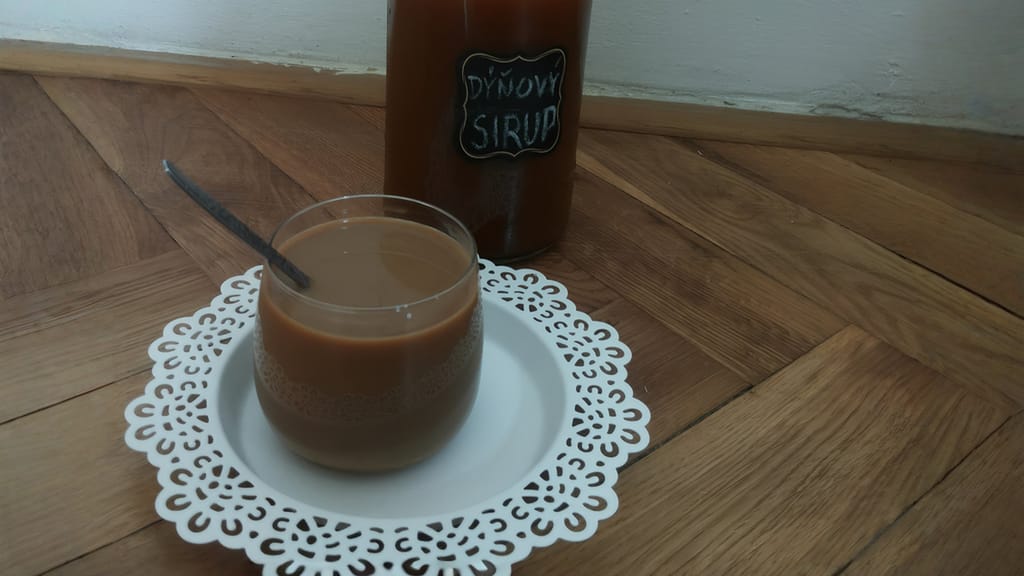
Spiced pumpkin syrup
Spiced pumpkin syrup with Christmas spices for an alcohol-free children's toast
Homemade liqueurs are most often spoiled by the white layer on lemon zest, burnt caramel, raw egg yolks not heated to 71 °C (160 °F), and steeping for too short a time. In more detail, with other mistakes too:
The white layer on lemon zest. The limoncello then turns bitter. Peel thinly with a vegetable peeler, and trim off any white that remains.
Burnt caramel. The ginger liqueur then tastes of burnt sugar. As soon as the sugar is golden, carry on; don't wait for brown.
Rum instead of temperature. Alcohol doesn't make raw egg yolk safe; what counts is 71 °C (160 °F) or pasteurized yolks.
Steeping for too short a time. Limoncello after a week isn't there yet, and neither is ginger liqueur after three days. Patience is part of the recipe.
An egg base over direct heat. The yolks curdle into lumps. A water bath and constant whisking aren't wasted effort.
Eggnog left on the counter. A creamy liqueur belongs in the fridge as soon as it cools, not "after the holidays".
Dirty or wet bottles. Leftover water or old contents spoil the flavor. Wash bottles with hot water and let them dry.
Sweetening by eye right at the start. You can always add sugar but never take it away. With fruit liqueurs, adjust the sweetness only after straining.
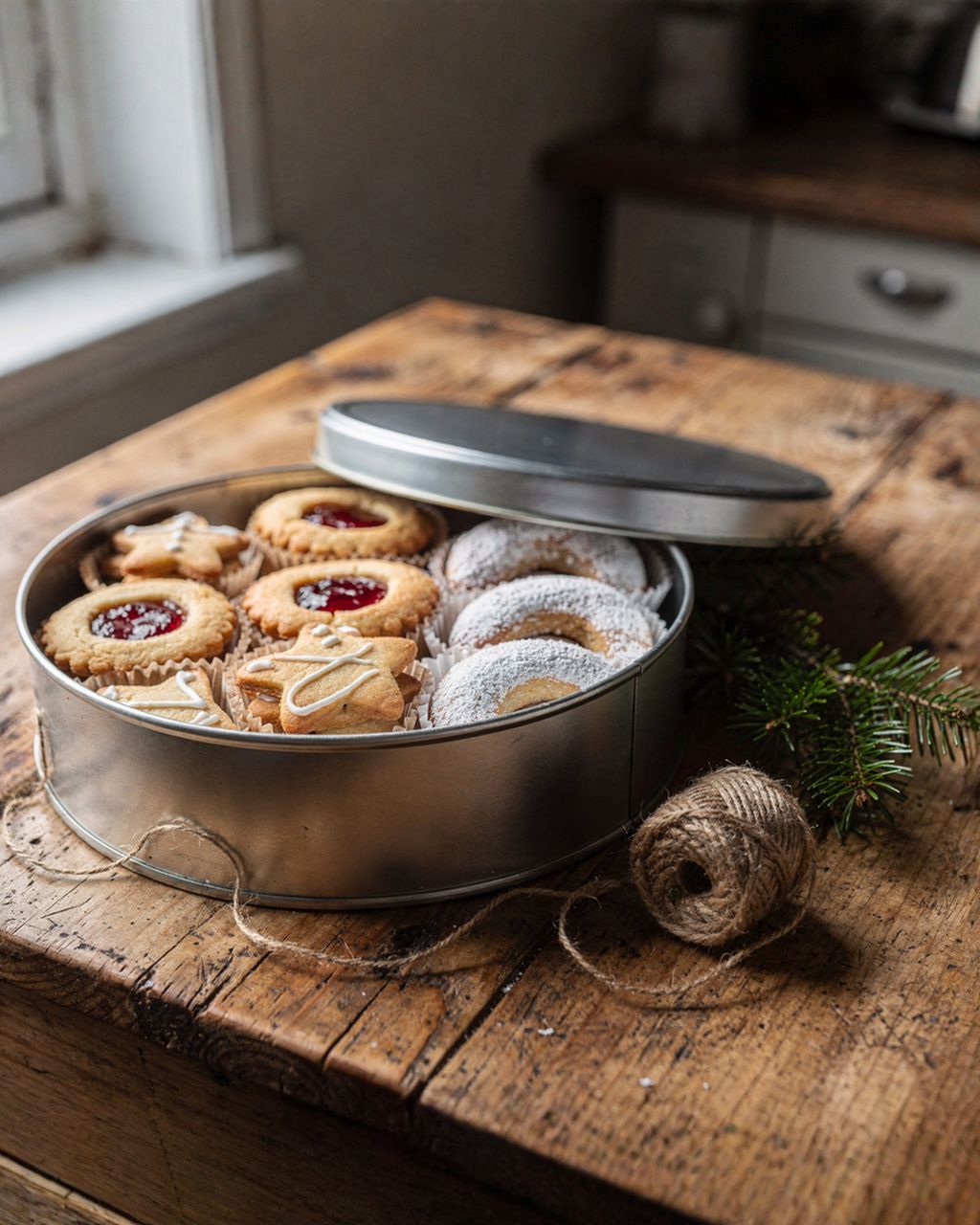
The liqueurs that keep best make the best gifts: ginger liqueur, limoncello and rybízák. Give eggnog only to someone you'll see in person and who will put it in the fridge right away. Don't mail it, and don't put it under the tree days in advance. For more ideas for edible gifts, see the article Christmas gifts from the kitchen: what to bake and how to wrap it.
How to prepare homemade liqueur for giving:
Choose smaller bottles. The recipient can taste it without having to get through a whole liter.
Wash the bottles with hot water and let them dry, or sterilize them with steam. The closure must seal well; both screw-top and swing-top are fine.
On the label, write the name, the date it was made and the main ingredients, including the type of alcohol.
For eggnog and caramel liqueur, add "contains eggs and milk" or "contains milk", "keep refrigerated" and the date by which to drink it.
With rybízák, include a card with the kir: crème de cassis in a glass, topped up with chilled dry white wine. That turns a bottle of liqueur into a ready-made aperitif idea.
With limoncello, write "serve ice-cold". It's a small detail that decides how it will taste.
Homemade liqueur is a gift for adults. If you're packing gifts for the whole family, give the children their own bottle of spiced syrup so no one is left out.
Homemade liqueurs are served cold and in small glasses, each at a different moment of the evening:
Kir as an aperitif, before sitting down at the table.
Limoncello ice-cold after the meal.
Ginger liqueur with coffee and Christmas cookies.
Eggnog on its own, chilled and well shaken, as a sweet finish.
If you're looking for something warm in a mug for a walk or by the fire, we cover mulled wine and punch separately in the article Mulled wine and Christmas punch: which wine, how much spice and what temperature to heat to. Liqueurs don't belong in hot drinks, and heating would cost them the aroma you make them for.
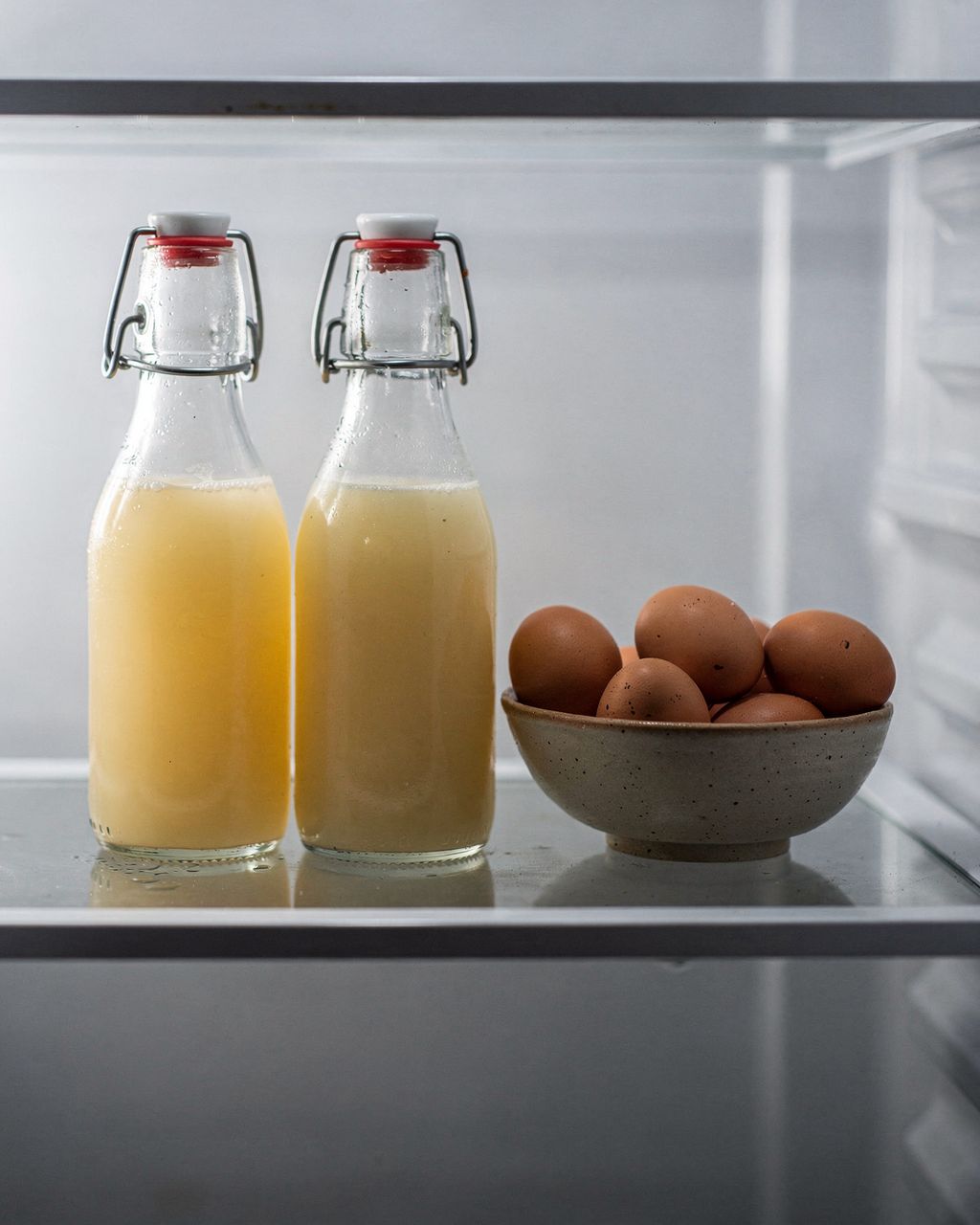
Homemade eggnog keeps in the fridge for only a few days. The storage chart from the US site FoodSafety.gov gives 2 to 4 days for homemade eggnog and doesn't recommend freezing it. Our steam-whisked eggnog recipe allows four days. Keep the bottle in the fridge the whole time, shake it before pouring, and pour away any liqueur that smells sour or doesn't come back together after shaking.
Choose the alcohol according to what should stand out in the liqueur. In the recipes on Yumsto it's rum for eggnog, slivovice for ginger liqueur, 80% alcohol for limoncello, and vodka with rum for rybízák. Stronger alcohol draws more aroma out of the ingredient, and sugar and water then soften it to drinking strength. Use a spirit you would happily drink on its own, because its flavor stays in the liqueur.
Walnut liqueur is made from green, unripe walnuts, traditionally picked at the end of June while they can still be pierced easily with a needle. The walnuts are cut into quarters, covered with alcohol and left to steep for several weeks, until the alcohol turns dark brown. Then the liqueur is strained and sweetened with sugar syrup. So for Christmas you need to start it in summer, and wear gloves when cutting green walnuts, because they stain skin brown.
Yes, aronia, rose hips, elderberries and sea buckthorn all work for homemade liqueur, and you make them by steeping, much like limoncello. The fruit is crushed, covered with alcohol, left to steep for several weeks in a cool, dark place, then strained and sweetened with sugar syrup. Rose hips are halved and the seeds with their fine hairs removed before steeping, so the liqueur can be strained clean. For elderberry liqueur, use only ripe, dark black elderberries without stalks; unripe berries and green parts of the plant don't belong in it. Even ripe elderberries should be briefly boiled (above 80 °C / 176 °F) before steeping, because raw seeds contain sambunigrin and can make sensitive people feel sick.
Cloudiness in a homemade fruit liqueur usually means nothing. In limoncello it comes from citrus oils in the peel, which disperse into a milky haze when mixed with water and sugar; in rybízák it comes from fine bits of fruit that passed through the sieve. If it bothers you, let the bottle stand for a few days and carefully pour the clear liqueur off the sediment, or strain it through a cloth or a paper coffee filter. Creamy liqueurs are different: eggnog that doesn't come back together after shaking, or that smells sour, should not be drunk.
One recipe worth heating the oven for, one tip, and one deal from the shop. Nothing else.