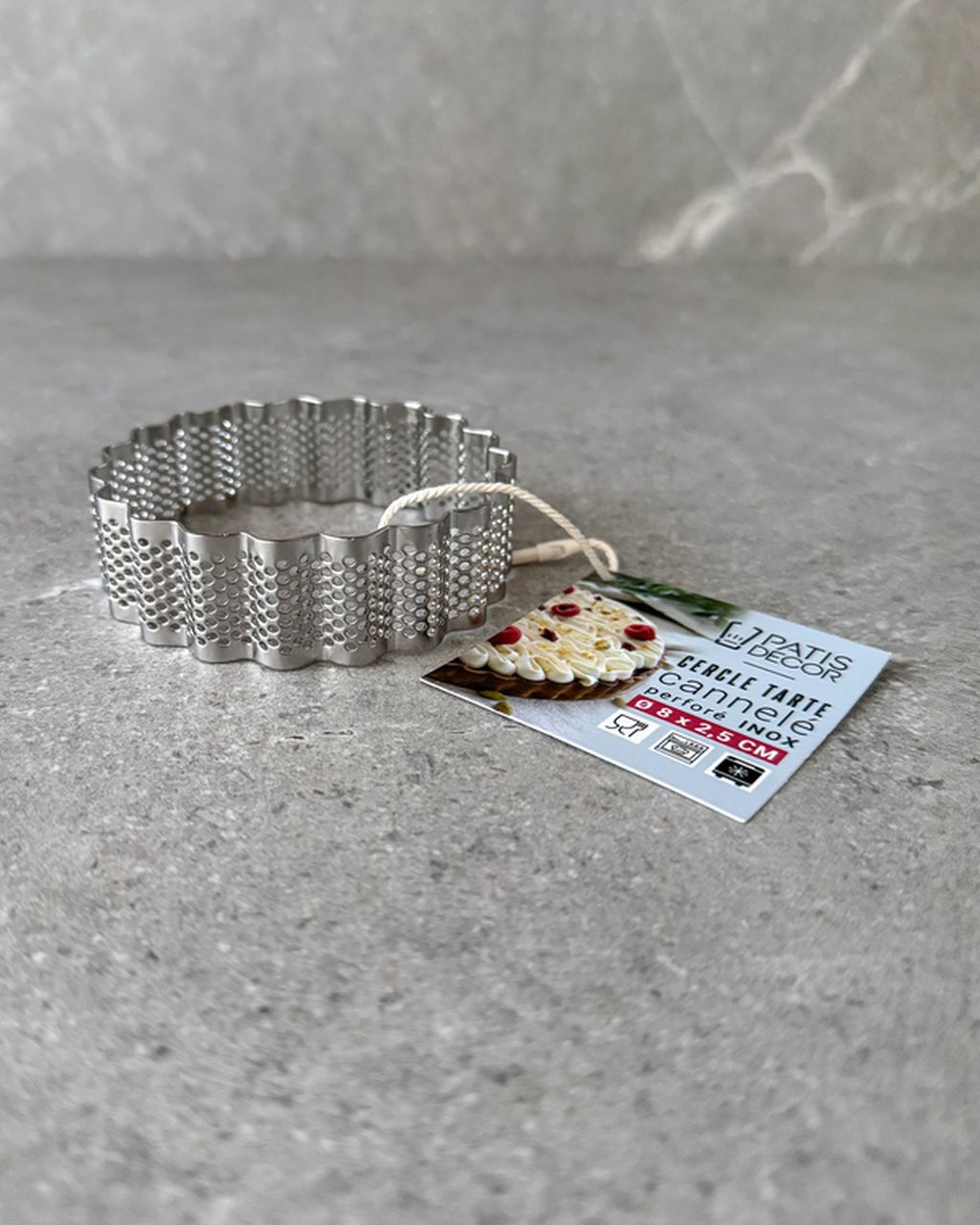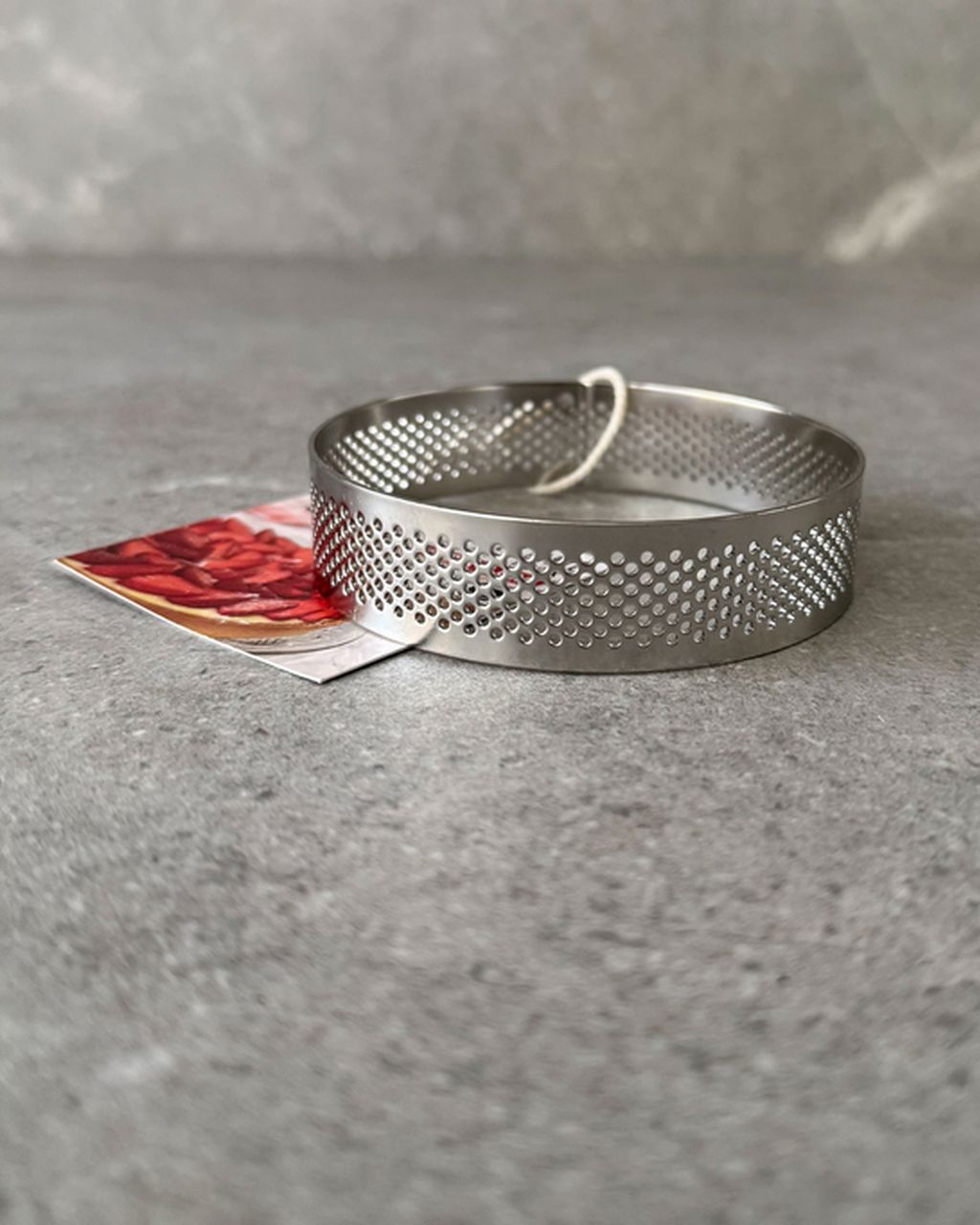
Perforated Stainless Steel Tart Ring – Smooth, Ø 8 cm
Perforated Tartlet Rings: Why They're Dotted with Holes and How to Bake With Them
Updated Oct 8, 2026
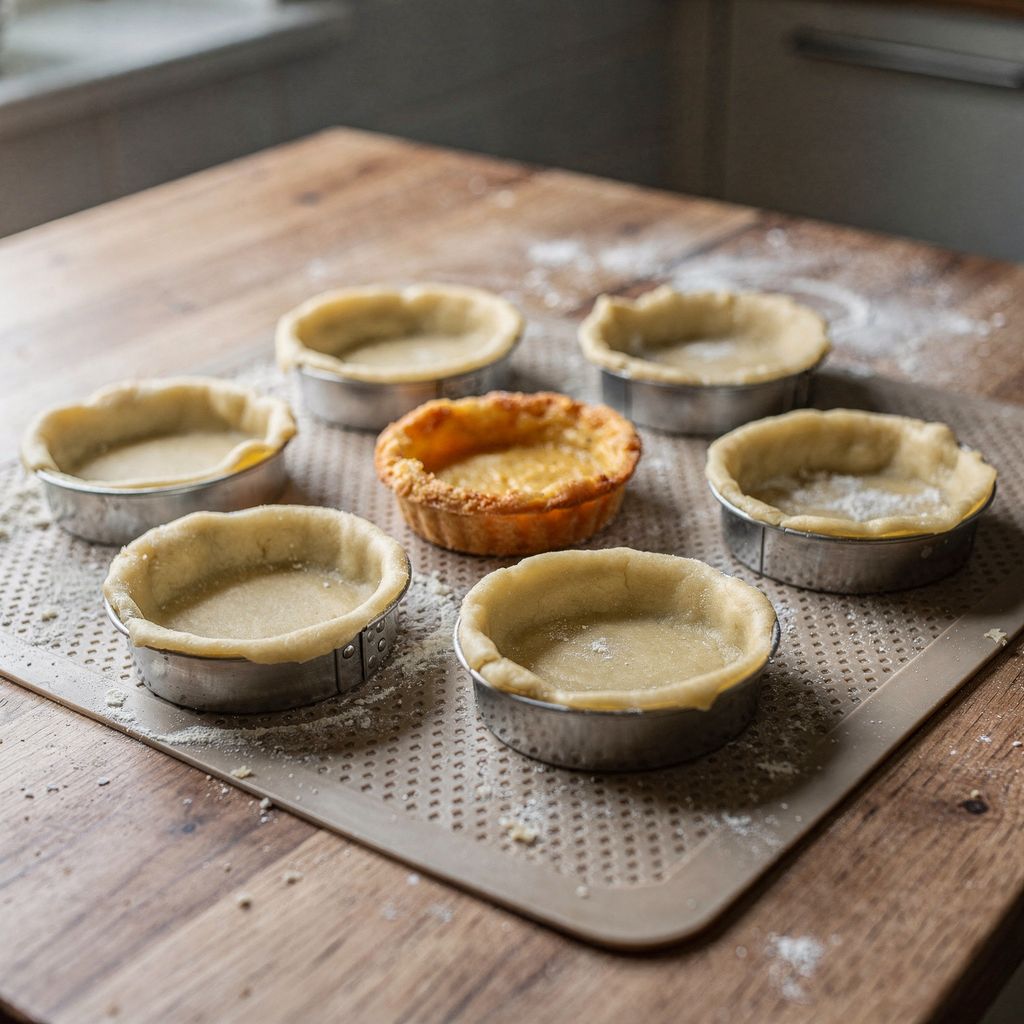
A perforated tartlet ring is a bottomless metal band dotted with tiny holes that let steam escape from the dough as it bakes. The result: the base and sides bake through evenly, the shell turns out crisp, and the edges come out as sharp and clean as something from a pastry shop window. Here's why it works, how it differs from a classic tin, how to line the ring with dough, and what temperature to bake it at.
The holes in the ring let out the steam that's released from the butter and water in the dough as it bakes. In a solid tin, that steam gets trapped between the metal and the dough — the sides can then puff up, slump down, or bake unevenly, leaving the base soggy.
What the perforation actually gives you:
A crisp base and sides — moisture escapes right away, so the dough bakes instead of steaming in its own moisture.
Even colour — hot air reaches the dough from every direction, so the shell turns golden evenly on the bottom and sides alike.
Straight, sharp edges — the dough "grips" the perforated metal and doesn't slide down as it bakes.
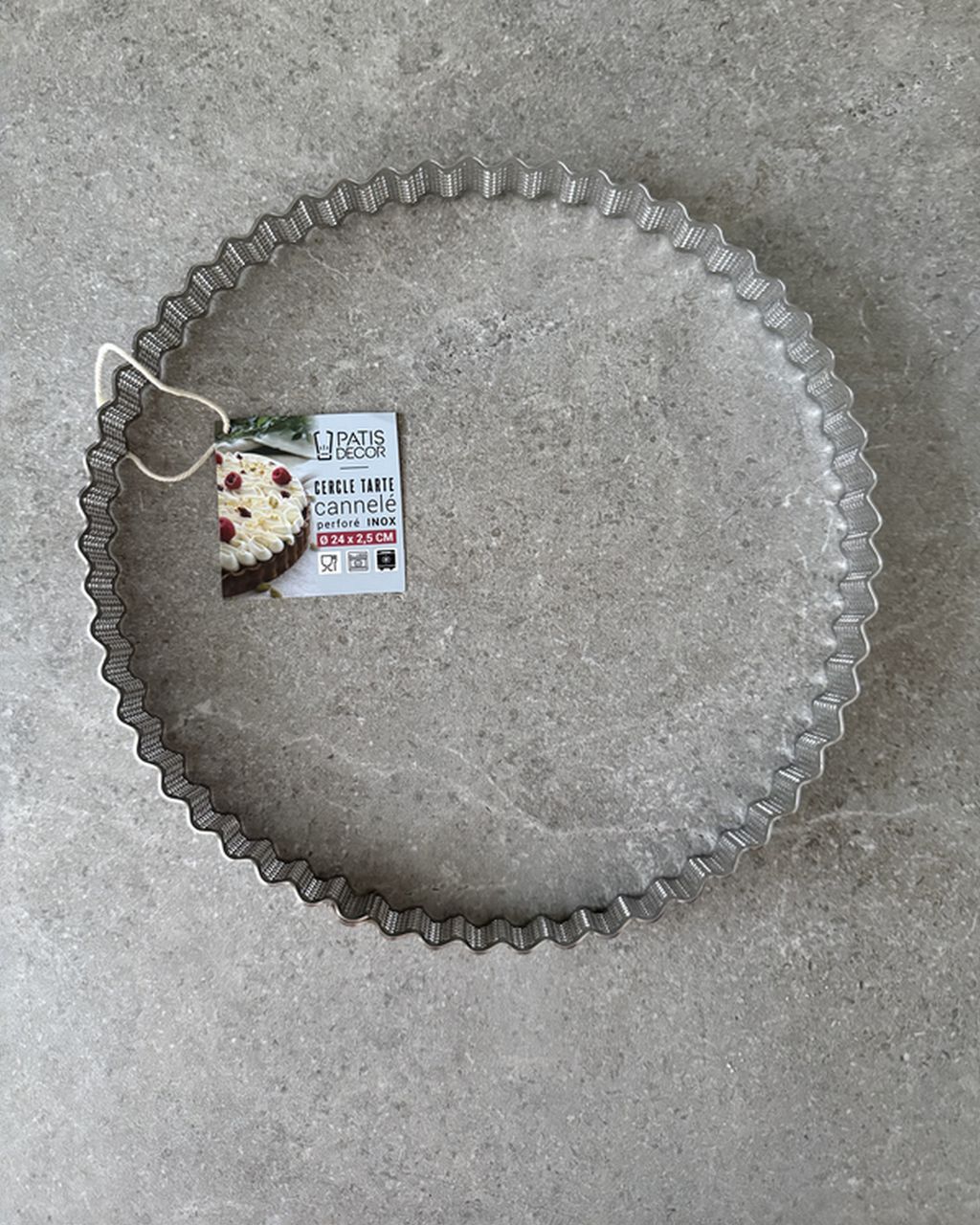
Often no need for weights — with well-chilled sablé dough, you usually don't need baking beans or pie weights. For larger shells (Ø 24 cm / 9 1/2 in) and softer doughs, though, bake with weights, such as baking beans.
For tartlets you've got four options — a perforated ring, a solid ring, a tin with a removable base, and a silicone mould — and the perforated ring gives you the straightest, crispest shell. All of these are perfectly valid choices; it just depends what you want from your tartlets.
Perforated stainless-steel ring — straight sides, a sharp edge, even baking, usually no need for weights. It needs well-chilled dough and works best set on a perforated mat. The shell lifts out easily — you simply lift the ring away.
Solid ring (non-perforated) — the same straight sides, but with nowhere for steam to go, so you have to bake with weights and the base tends to stay paler. Better suited to cakes and mousse-based desserts than crisp pastry.
Tart tin with a removable base — a fluted edge that's a bit more forgiving of warmer dough, but the sides tend to be angled and the base bakes more slowly, so blind-baking with weights is pretty much essential. We don't stock these on Yumst, but if you only bake a tart once a year, it'll do the job fine.
Silicone tartlet mould — easy to unmould, but silicone conducts heat less well than metal, so the shell tends to come out paler and softer.
If you want tartlets that look like they came straight from a pastry shop window — straight sides, sharp edges, even colour all the way round — the perforated ring is the tool that makes the biggest difference. Small Ø 8 cm (3 1/8 in) rings are for individual tartlets, while the large Ø 24 cm (9 1/2 in) ring suits a tart for 8-10 people. You'll find the full range in our tartlet rings and baking mats category.
The easiest way to line the ring is with cold dough rolled out to 2.5-3 mm (about 1/8 in): roll the base and the side strip separately, then chill once more before baking. We cover which dough to choose and how to make it in our article Tartlets: how to choose the dough, prepare it, and bake the shells — here we'll focus on the ring itself.
Roll out the chilled dough between two sheets of baking paper to a thickness of 2.5-3 mm (about 1/8 in). A thicker side bakes more slowly and makes the tartlet feel heavy.
Chill the rolled-out dough for at least 15-20 minutes in the fridge (or 10 minutes in the freezer), until it's as firm as cardboard. Soft dough is hard to line a ring with, and the strips tend to tear.
Cut out the base using the ring itself as a cutter — you'll get a disc that's exactly the right size.
Cut strips for the sides a little taller than the ring (roughly 3-5 mm / about 1/8-1/4 in extra) and long enough to go round the ring's circumference. For an Ø 8 cm (3 1/8 in) ring, that's about 25-26 cm (10-10 1/4 in).
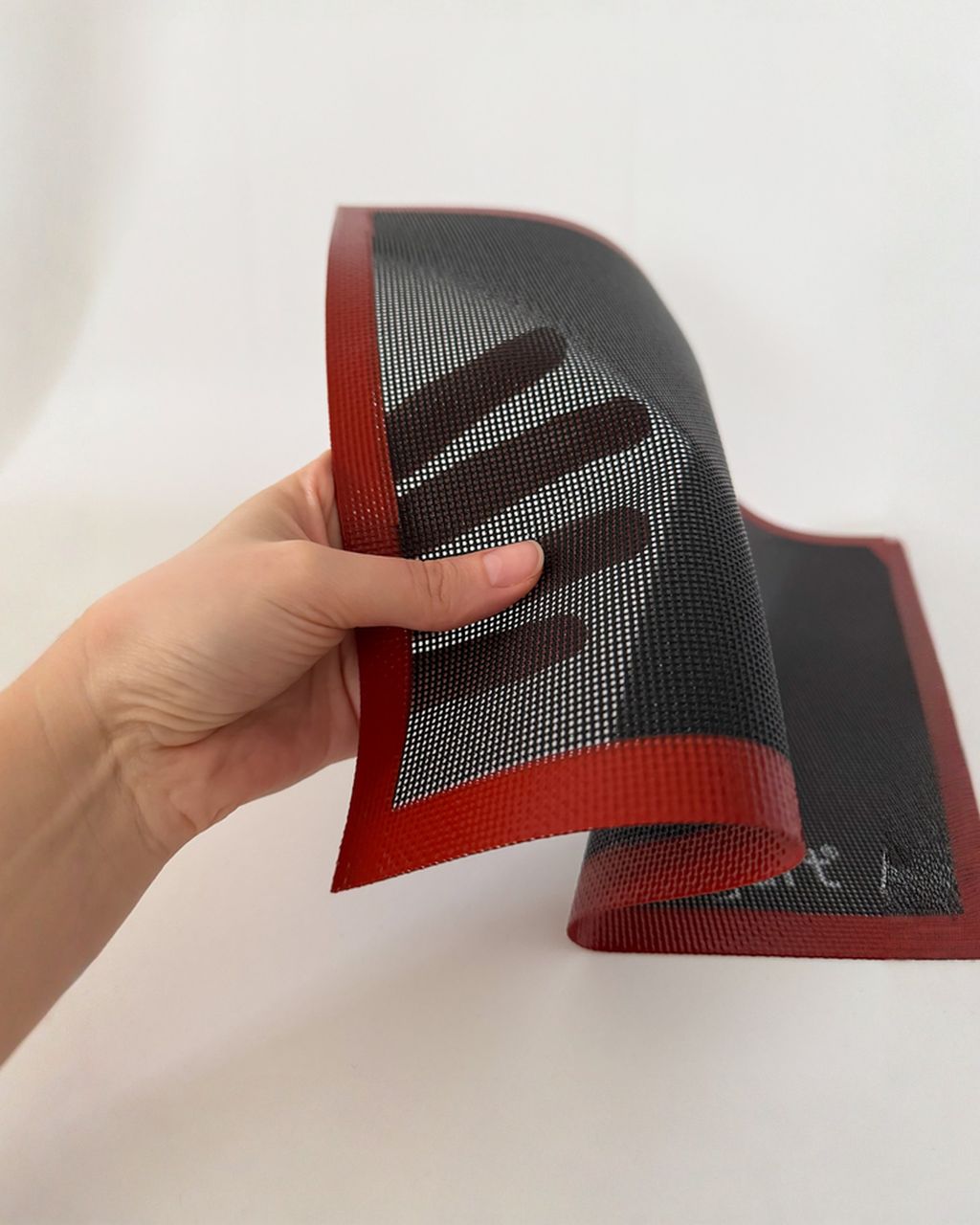
Set the ring on a perforated mat, drop in the base, then press the side strip against the inside of the ring so it meets the base. Press the seam together firmly with your finger so there's no gap.
Chill the lined rings for a further 20-30 minutes. This step is what decides whether the sides hold their shape in the oven or slump down.
As a rough guide: one Ø 8 cm (3 1/8 in) ring takes about 35-45 g of dough, while an Ø 24 cm (9 1/2 in) ring takes around 250-300 g, including trimmings.
Bake the shells in a perforated ring at 160-170°C (320-340°F) fan, or roughly 175-180°C (345-355°F) conventional: about 15-20 minutes for small Ø 8 cm (3 1/8 in) shells, and about 20-25 minutes for a large Ø 24 cm (9 1/2 in) shell, until evenly golden. A lower temperature and longer time give a well-baked, crisp shell; too high a temperature will colour the edges before the base is fully baked.
Colour is your best guide — a finished shell is an even gold both on the base and around the sides. A pale base means it needs another 3-5 minutes.
Put the mat on a wire rack, not a solid baking sheet, so air can circulate underneath too.
Ovens can easily be off by 10-30°C (20-55°F). If your shells bake differently every time, it's probably not the dough's fault — check the actual temperature with an oven thermometer.
Trim the overhang after baking. Any edge sticking up above the ring can be sliced off with a sharp knife or gently sanded down with a grater while the shell is still in the ring. That way the edge comes out perfectly straight.
Remove the ring 3-5 minutes after taking the shell out of the oven: it lifts away easily at this point, but the shell is still fragile, so handle it gently.
If you're going to bake the shell further with a filling (frangipane, a cream filling), only pre-bake it to a light gold, roughly 5 minutes less than the full time.
Most problems with a perforated ring come down to one cause: dough that's too warm. Butter in warm dough melts in the oven before the starch has a chance to set, and the sides slump.
Sides slumped down — the dough wasn't chilled enough before baking, or the strip was too thin. Chill the lined rings for at least 20 minutes and keep the dough at 2.5-3 mm (about 1/8 in) thick.
The base puffed up — steam had nowhere to escape, typically because the ring was sitting on a solid, paper-lined baking sheet. Bake on a perforated mat, or prick the base with a fork.
A gap between the base and the side — the strip wasn't pressed firmly against the edge of the base. The filling will then leak through when you fill the shell. Always press the seam together with your finger.
Butter is leaking through the holes — the dough has too much fat, or the oven is too cold, so the dough is melting rather than baking. Always preheat properly.
The shell has a pale base and dark edges — the temperature is too high, or it's baking too high up in the oven. Lower it to 160-170°C (320-340°F) and bake in the middle of the oven.
The shell breaks apart when removing it — you took the ring off either too soon, or too late, once the butter has already "stuck" to it. The ideal window is 3-5 minutes after taking it out of the oven.
A shell from a perforated ring can carry cream, caramel, or fruit fillings alike — a crisp base is the perfect counterpoint to anything soft. A few Yumst recipes that are a perfect fit for small Ø 8 cm (3 1/8 in) rings:
Caramel pecan tartlets — a thick caramel that really shows off the shell's straight edge.
Crisp salted caramel and chocolate tartlets — here it's worth sealing the base so the caramel doesn't soften the shell.
Mascarpone tartlets with strawberries and a touch of redcurrant — a fresh cream with fruit, best filled just before serving.
Tartlets with a light ricotta and curd cheese cream — a fresh, airier cream, perfect for summer.
Wash a perforated stainless-steel ring by hand in warm water with washing-up liquid and a soft brush, which you can also use to clean out the holes. If there's dried-on dough, let it soak for a few minutes first — don't scrub it with a scouring pad. Dry the ring thoroughly right after washing so no water is left sitting in the holes.
Yes, a perforated ring works just as well for a savoury quiche or tart. Pre-bake the shell until golden, seal the base with egg yolk, and only then pour in the egg filling — it's quite runny, so any gap between the base and the side would show up immediately.
A perforated ring works fine without a perforated mat too, but on a solid baking sheet lined with paper, steam can only escape through the sides and the base bakes more slowly. A perforated silicone mat or perforated baking sheet lets steam escape from underneath as well, so the base turns out just as crisp as the sides.
Yes — baked, empty shells keep for 2-3 days at room temperature in a well-sealed container, and about a month in the freezer. Before filling, you can refresh them in the oven at 160°C (320°F) for 3-5 minutes to crisp them back up.
For beginners, a smooth ring is easier to work with on small Ø 8 cm (3 1/8 in) tartlets, since you can press the strip of dough against a straight side easily and see right away whether it's sitting properly. A fluted edge looks more festive, but you need to gently press the dough into the ridges, which takes a bit more patience and well-chilled dough.
One recipe worth heating the oven for, one tip, and one deal from the shop. Nothing else.