Savory bundt cake with ham and cheese (and more)
Bundt Pan Recipes: What to Make in a Bundt Pan Besides Bundt Cake
Updated Oct 15, 2026
A Bundt pan can do much more than bake a Bundt cake: a savory ham and cheese ring, pull-apart monkey bread, banana bread, potato gratin or a meatloaf ring. You can also use it as a mold for gelatin desserts, aspic and ice cream cake. It works because of the tube in the middle. Heat reaches the batter from two sides, so the center bakes through before the edges dry out, and the fluted shape turns even a simple batter into a showpiece dessert. Below you'll find what suits which pan, how to adjust baking times and how to turn everything out in one piece.
A Bundt pan is useful for seven things most people never think to use it for:
Savory Bundt cakes and savory rings: with ham, cheese, olives or herbs.
Monkey bread and pull-apart yeast bread: balls of dough stacked in a ring.
Loaf cake batters and gingerbread: banana bread, zucchini or carrot loaf, gingerbread.
Gelatin desserts and aspic: the pan works as a mold and nothing gets baked.
Ice cream cake and semifreddo: they set in the pan in the freezer.
Potato gratin and lasagna: a ring gives you more crispy edges.
Meatloaf ring: it cooks faster and more evenly than a regular loaf.
The same thing helps all seven. Thanks to the tube in the middle, the batter is never more than a few centimeters from a hot wall. Heat (or cold, for gelatin and ice cream) gets inside quickly and evenly.
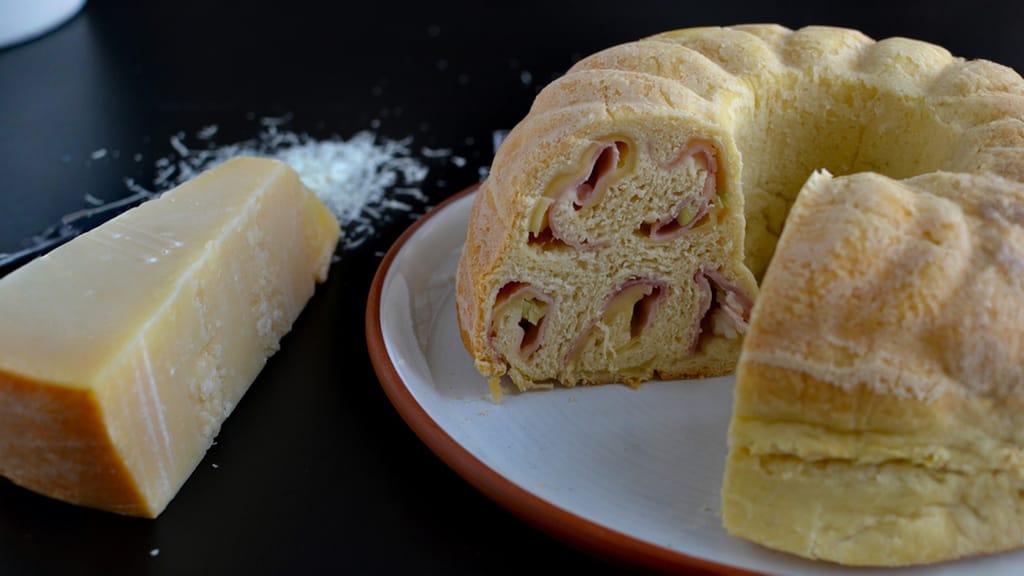
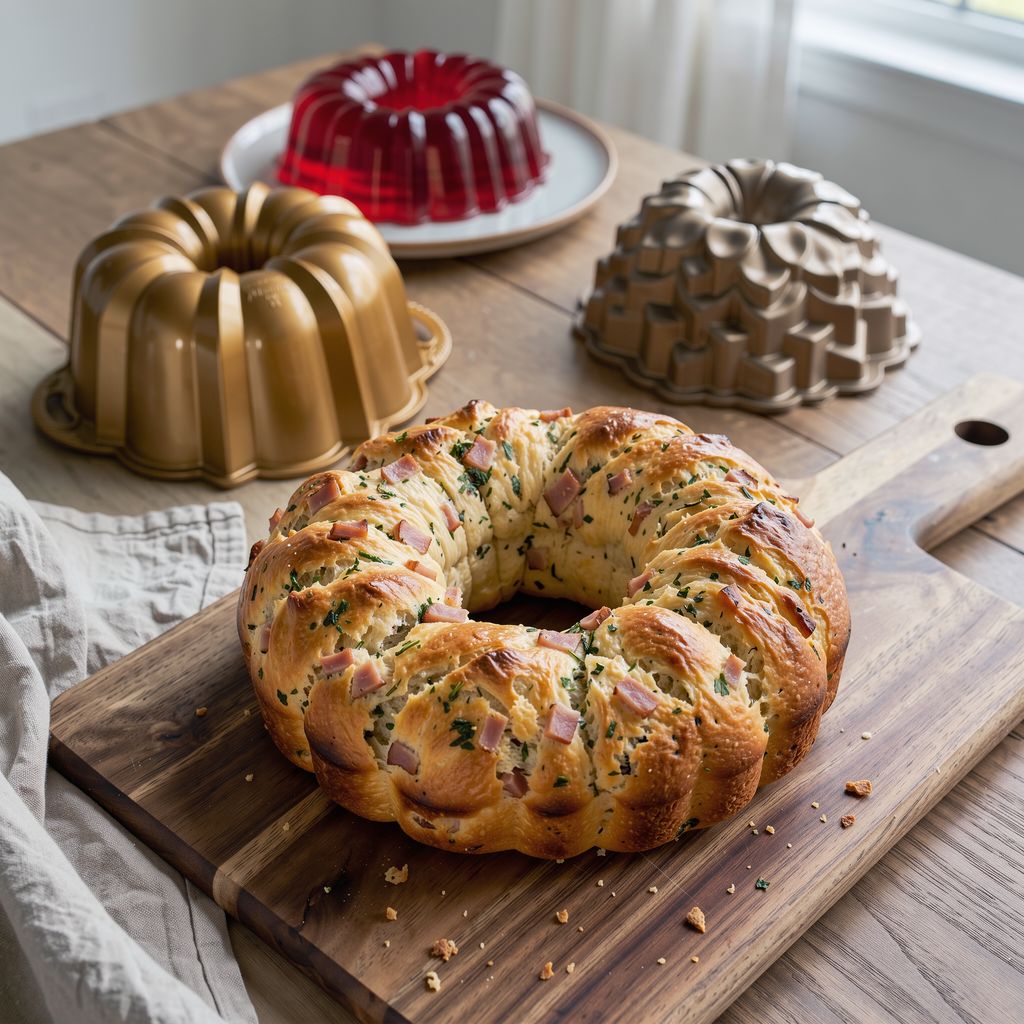
A savory Bundt cake is the easiest way to use a Bundt pan differently: instead of sugar, you put cheese, ham and herbs in the batter, and the shape stays the same. It suits parties, picnics and serving alongside soup. It keeps whole for two to three days and slices like bread.
You'll find a tested base in the recipe for savory ham and cheese Bundt cake. You can swap the ham for smoked meat, sun-dried tomatoes or sautéed onion.
Savory bundt cake with ham and cheese (and more)
Savory ham and cheese Bundt cake: a tested base for your Bundt pan
A savory Bundt cake won't stick if you chop the add-ins small and put plain batter, with no chunks, into the ridges of the pan first.
Cut the add-ins into pieces no bigger than 1 cm (½ in). Large pieces of cheese melt as they bake, stick to the wall and pull off part of the crust when you turn the cake out.
Put plain batter into the ridges first. Pour about a third of the batter, without any chunks, into the bottom of the pan, and only then add the rest with the filling. The pattern stays sharp and nothing sticks.
Add grated cheese on top at the very end. After you turn the cake out, the top becomes the bottom, so the cheese turns into a crispy base.
Monkey bread is made of balls of yeast dough coated in butter and cinnamon sugar that fuse into a ring in the pan. It comes to the table whole, and everyone tears off a piece. The savory version is made the same way, but instead of sugar you use garlic butter, Parmesan and herbs.
Make the balls about the size of a walnut, 25–30 g. Smaller ones dry out quickly, and larger ones don't bake through in the middle.
Fill the pan no more than two-thirds. The dough rises for another 30–45 minutes in the pan and keeps growing in the oven.
Bake at 175–180 °C (350–355 °F) for about 30–35 minutes. It's done when the balls turn golden on top and a skewer pushed in near the tube comes out dry.
Turn it out within 5 minutes of taking it from the oven. The caramel of sugar and butter at the bottom of the pan sets as it cools and glues the balls into the pan.
For pull-apart bread, a pan with simple, shallow flutes works best. The balls won't fill deep detail anyway. In the Nordic Ware Heritage pan, monkey bread comes out evenly shaped, and sweet caramel runs down the smooth walls, whereas in deep ridges it would stick.
Almost any batter you'd bake in a loaf pan can be baked in a Bundt pan too. Only thick, moist batters with fat work well: banana bread, zucchini or carrot loaf, gingerbread. Thin, fat-free sponge batters catch in the ridges and tear when you turn them out.
Try banana bread, for example. In a Bundt pan it comes out taller, with a golden crust all the way around. A savory zucchini loaf with sun-dried tomatoes turns out just as well, as does whole wheat gingerbread, which comes out of a ring pan as a festive wreath.
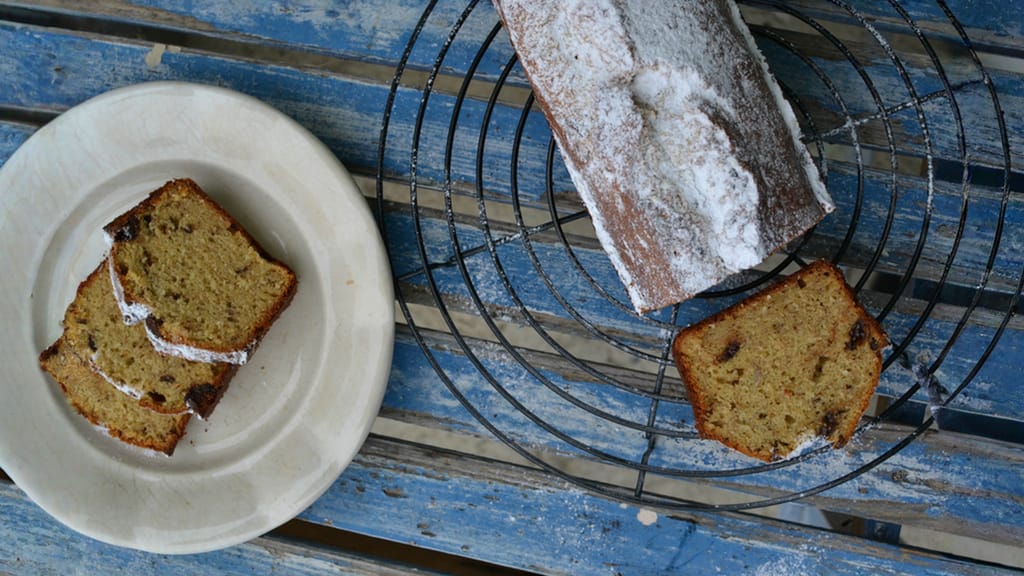
Banana bread
Banana bread you can bake in a Bundt pan too
In a Bundt pan, bake a loaf cake for 10–15 minutes less and increase the batter by about 1.5×.
Shorten the baking time. A ring of batter is thinner than a loaf in a loaf pan, so it bakes faster. Test with a skewer 15 minutes earlier than the recipe says.
Watch the amount. A batch of batter for a loaf pan (about 1.5 l) fills a standard Bundt pan (about 2.2–2.6 l) only halfway, and the result comes out low. Multiply the recipe by about 1.5×, or reach for a smaller Bundt pan with a capacity of 1.2–1.5 l.
Keep the temperature the same. If a recipe says 170–180 °C (340–355 °F), leave it at 170–180 °C. If you raised the temperature, the edges by the metal pan would darken before the inside bakes through.
So the loaf doesn't look unfinished when you turn it out, glaze it. For a glaze that runs down in nice streaks, see the article on Bundt cake glaze.
In a Bundt pan, both gelatin desserts and aspic come out as a festive wreath. Nothing is baked, and the pan simply serves as a mold. Nordic Ware recommends its Bundt pans for gelatin desserts too. A metal pan conducts heat quickly, so the dessert turns out easily.
Wipe the pan with just a light coat of neutral oil and blot off the excess with a paper towel. A thick layer would stay on the dessert as a greasy film.
Setting takes 6–8 hours, ideally overnight in the fridge. A tall ring sets more slowly than gelatin dessert in glasses.
Turn it out by dipping the pan in warm water. Dip the pan almost to the rim in water at about 40–45 °C (105–115 °F) for 10–15 seconds, cover with a plate and flip. Metal passes on heat in seconds, so a longer dip would melt the pattern.
Fresh pineapple, kiwi and papaya won't let gelatin set. They contain enzymes that break down gelatin. Canned or briefly cooked fruit is no longer a problem.
For savory aspic, first put the garnish into the pan (slices of egg, carrot, parsley), cover it with a thin layer of broth with gelatin and let it set. Only then add the meat and the rest of the broth, otherwise the garnish floats to the top, which becomes the bottom once you turn it out. For fruit gelatin that holds its shape and doesn't leak juice, see the article on fruit gelatin for cakes.
Honestly: for gelatin desserts, a silicone mold is the most convenient, because you simply peel it away. But a metal pan with a sharp pattern gives the dessert cleaner edges and a shine.
In a Bundt pan you can make an ice cream cake from store-bought ice cream, or a homemade semifreddo that doesn't need an ice cream maker. Just layer softened ice cream or semifreddo in the pan and let it set in the freezer. Thanks to the tube in the middle, the ice cream freezes evenly and faster than in a deep bowl.
The manufacturer doesn't specifically mention freezing in the pan. If you want to be sure you won't damage the nonstick surface, line the pan with plastic wrap: the pattern comes out a little less sharp, but you can turn the cake out without a water bath.
Alternate layers of 2–3 cm (about 1 in) and put the pan in the freezer for 20–30 minutes between them, or the colors will run together.
Put crushed cookies mixed with melted butter on the bottom (the future top). The cake then stands on a firm base.
Freeze for at least 6 hours, ideally overnight.
Without plastic wrap, dip the pan in lukewarm water for 5–10 seconds, cover with a plate and flip; with plastic wrap, just flip the pan and peel off the wrap. Return the finished cake to the freezer for 15 minutes so the surface firms up, and only then slice with a warmed knife.
Savory baked dishes in a Bundt pan get more crispy edges and slice into neat wedges like a cake. Baked potatoes or lasagna in a ring make more of an impression at a party than a baking dish.
Potato gratin: slice the potatoes 2–3 mm thick, layer them with cream and cheese and bake at 180 °C (350 °F) for about 60–75 minutes. Let it rest for 15 minutes before turning it out. The cream sets and the gratin won't fall apart.
Lasagna: you layer it in a ring pan just like in a baking dish, only you lay the sheets around the tube. Let it rest for 15 minutes before turning it out so the sauce sets.
Meatloaf ring: just press the meat mixture into the pan and bake at 180 °C (350 °F) for about 45–55 minutes. The meatloaf is done when the center reaches at least 71 °C (160 °F), or 74 °C (165 °F) for poultry. Check it with an instant-read thermometer, because color tells you nothing with ground meat. Pour off the fat before turning it out.
For savory dishes, use a pan with a simple pattern. In the Blossom or Braid pans, potatoes and cheese bake into the deep ridges and are then hard to clean. For roasting meat with a lot of fat, such as a chicken set on the tube, rather take a plain inexpensive pan. That way you won't needlessly wear down the nonstick surface.
What a pan suits depends mostly on the depth of its pattern. The more detailed the pattern, the better it works for thick buttery batter or gelatin desserts, and the worse for savory bakes and sticky caramel.
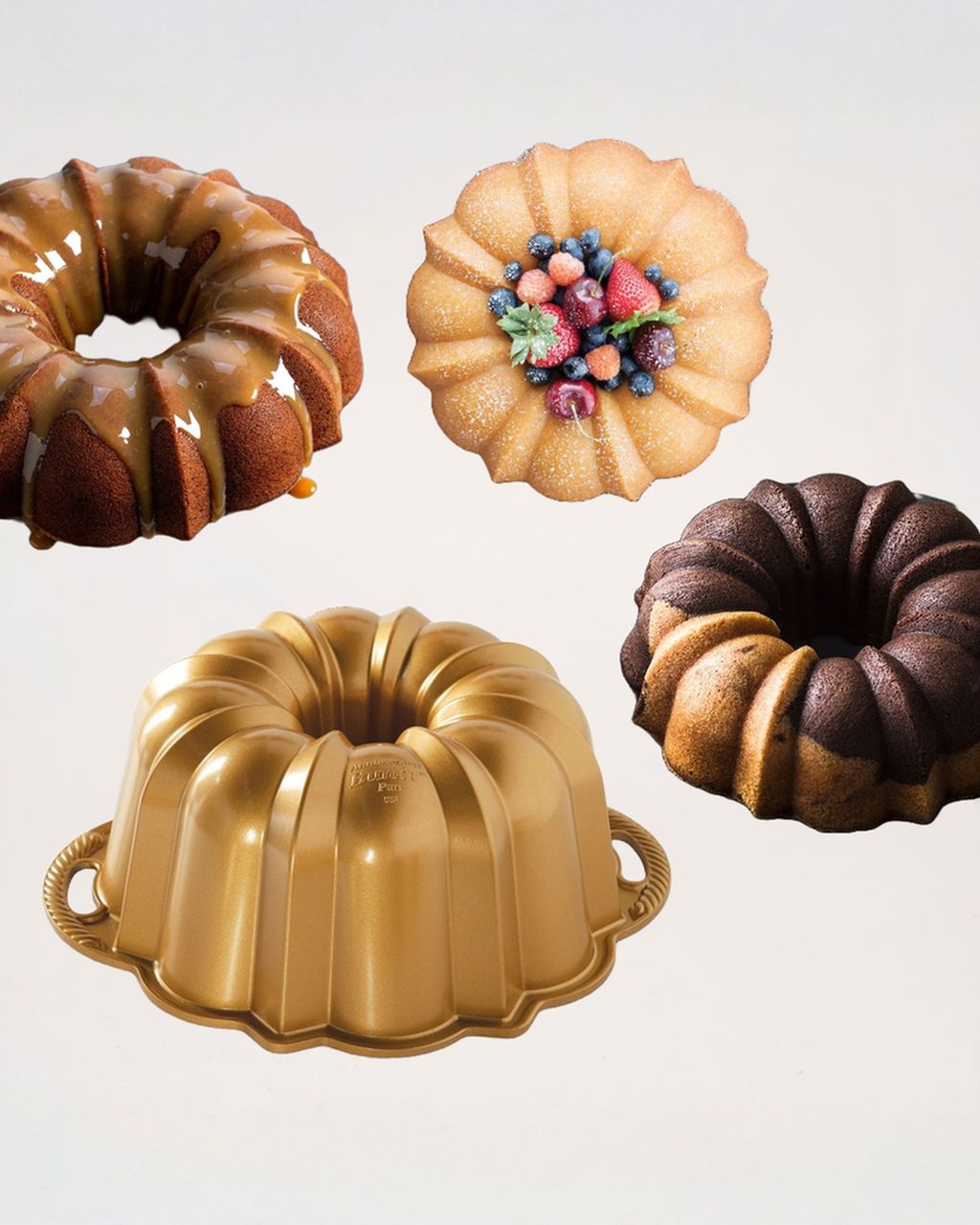
Heritage (Nordic Ware): simple flutes, large capacity. A versatile choice for monkey bread, savory Bundt cake, gratin, meatloaf and ice cream cake. If you're buying only one pan, buy this one.
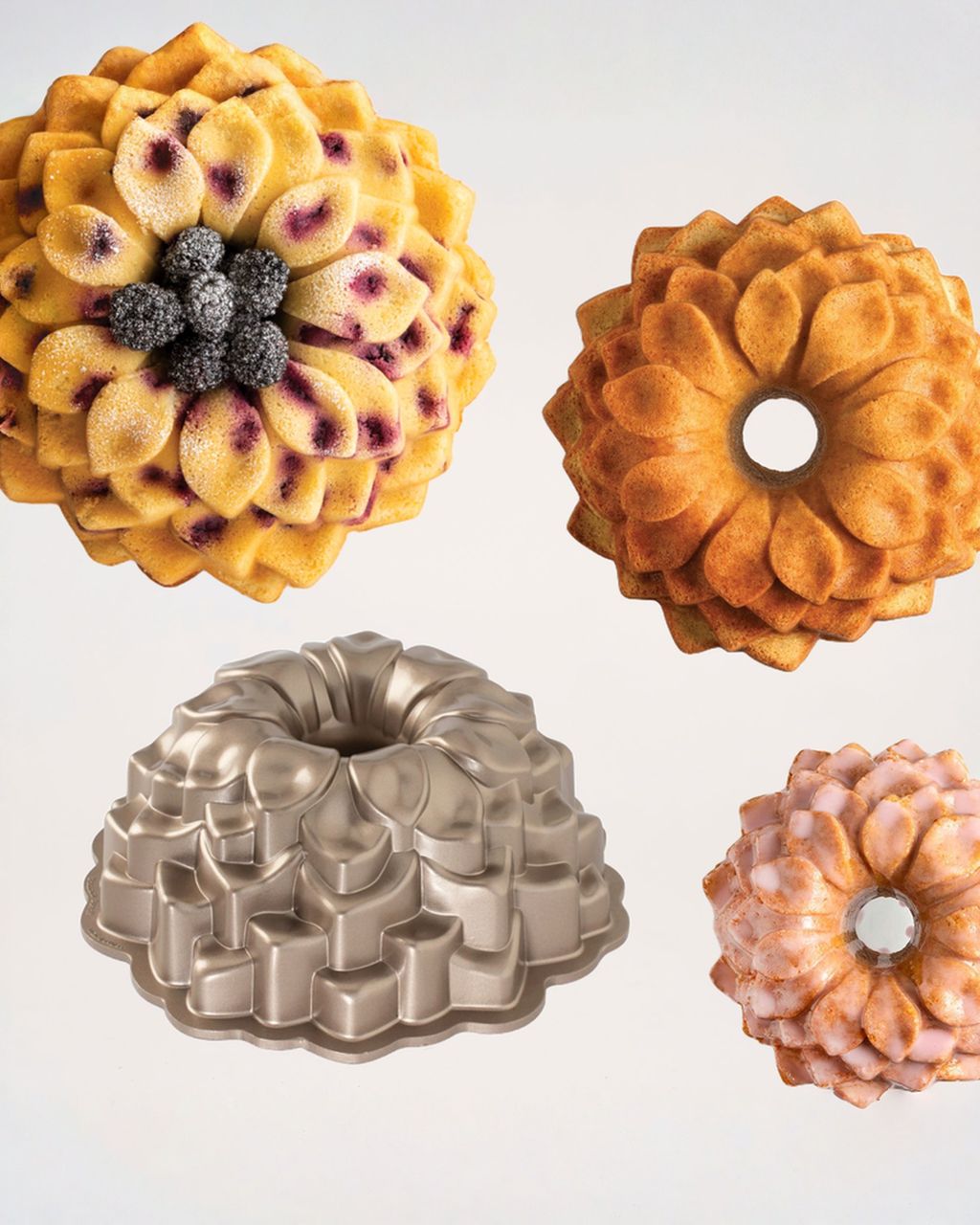
Blossom (Nordic Ware): deep petals. It looks best with gelatin desserts, aspic, ice cream cake and thick loaf cake batters, because they fill the whole pattern. It isn't suited to pull-apart bread or gratin.
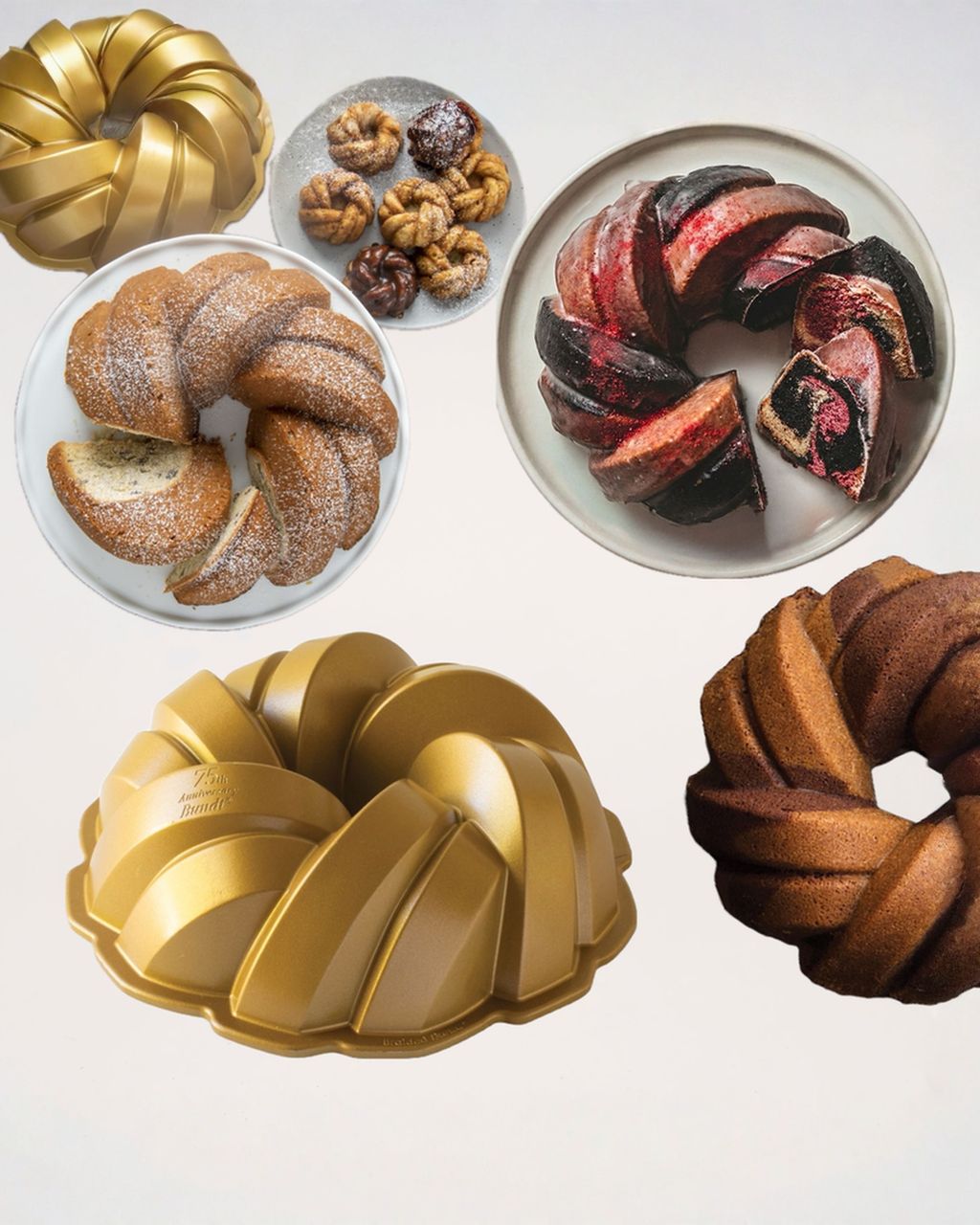
Braid (Nordic Ware): a braided-dough pattern that visually "bakes" the braid for you. It's great for banana bread, gingerbread and butter cakes, and for gelatin desserts, where the spiral ridges stand out.
Silicone pan (we don't sell it): gelatin desserts and ice cream release most easily from it, but the edges won't brown and batter bakes less well in it. It makes sense as an inexpensive second pan for cold desserts.
Ceramic pan (we don't sell it): beautiful on the table and good for yeast dough, but it heats slowly and has no sharp pattern. It isn't suited to gelatin desserts or ice cream.
You'll find all the shapes together among our Bundt pans. For a detailed comparison of materials (cast aluminum, ceramic, silicone, cast iron), see the article Bundt pan: ceramic, silicone, cast iron or Nordic Ware. Wash Nordic Ware pans by hand and without steel wool. The nonstick surface can't stand abrasive sponges or metal utensils.
You can, but we don't recommend it: a thick cheesecake filling is very hard to release from the ridges of a Bundt pan and often tears. If you want to try it anyway, use a pan with a simple pattern, bake at a lower temperature (150–160 °C / 300–320 °F) and let the cheesecake chill in the fridge overnight before you turn it out.
No, Nordic Ware recommends washing its pans by hand. Soak the pan in hot water with dish soap and clean it with a soft sponge or a brush that won't damage the nonstick surface. The dishwasher and abrasive cleaners wear down the surface over time, and the batter will start to stick.
For baked batters, fill a Bundt pan to between two-thirds and three-quarters, and for yeast dough no more than two-thirds. Gelatin desserts and ice cream can go almost to the rim because they don't rise. If you have batter that would overflow the pan, bake the extra in muffin cups instead.
Always grease a Bundt pan, even a nonstick one: the nonstick surface alone isn't enough, and batter catches in the deep ridges of the pattern and tears when you turn it out. Without fat, sugar and cheese bake onto the ridges and pull off part of the crust. The exceptions are gelatin desserts, where a drop of oil wiped around with a paper towel is enough, and ice cream cake, which is easier to release with plastic wrap.
One recipe worth heating the oven for, one tip, and one deal from the shop. Nothing else.