Why Is My Pasta Dough Tough? Hydration, Resting and Flour
Czech Pastries Guide: Koláče, Větrník, Kremrole and Other Classics
Updated Nov 21, 2026
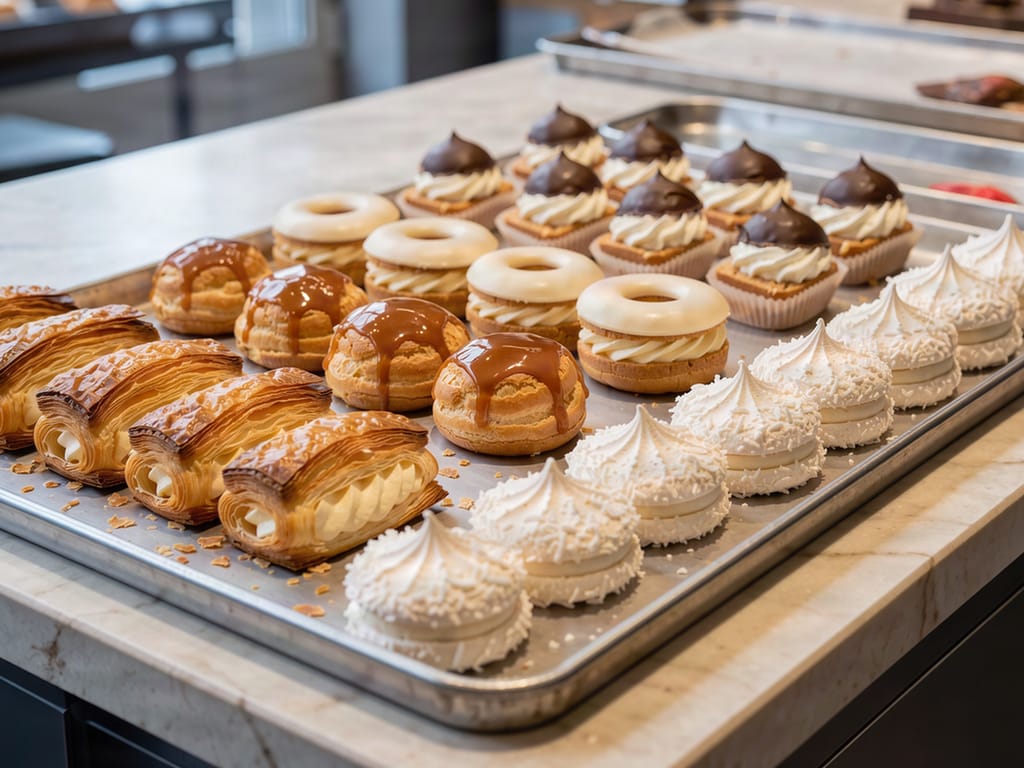
The classic Czech pastries fall into two families: home-baked yeast pastries such as koláče and buchty, and the cream pastries of the cukrárna, the Czech pastry shop, such as větrník, věneček, kremrole, laskonky, rakvičky and indiánek. Add apple štrúdl and you have the core of what Czechs eat with afternoon coffee. Here is what each one is, in a paragraph each, so you know what you are pointing at in a Czech shop window.
Koláče (singular koláč) are round, flat yeast pastries with a sweet filling on top, left open in the middle. The classic fillings are tvaroh (quark), povidla (thick plum butter), poppy seed and jam, often finished with a sprinkle of drobenka (butter crumble). Small ones, koláčky, are baked in large batches for weddings in many regions. Czech immigrants took them to Texas, where they are sold as kolaches; the sausage version there, the klobasnek, is a Texas invention. If you want to bake them, see kolach dough that stays soft the next day.
Buchty (singular buchta) use a similar dough, but the filling goes inside. Each bun is folded around a spoonful of filling and the buns are baked packed together in a pan, so they rise into each other and are torn apart when served. They are home baking more than shop baking: the soft, buttery smell of buchty is a Czech grandmother cliché. Our guide to buchty dough ratios and rising times covers the dough.
Větrník (windmill) is a large choux bun, split and filled with two creams, usually a vanilla custard-based cream and a caramel cream, then topped with a caramel glaze and often a swirl of whipped cream. It is related to the French profiterole, but much bigger and richer. It is one of the best-known cream pastries in Czech shops, and a good one is judged by its glaze: firm, glossy and properly caramel-flavored. See how to get it right in caramel glaze for větrníky.
Věneček (little wreath) is a ring of choux pastry, split and filled with a rich, pale cream, often custard-based, and topped with white fondant. It looks like a smaller, ring-shaped cousin of the větrník, but it is lighter on caramel and heavier on vanilla. It is one of the oldest-fashioned items in a Czech pastry case and one Czechs are nostalgic about.
Kremrole is a hollow roll of puff pastry, made by winding a strip of dough around a cone-shaped or tube-shaped form and baking it. Once cool, it is filled with a sweet egg-white cream, a meringue made by whipping the whites with hot sugar syrup, which is the traditional version, or with whipped cream, and dusted with sugar. If you make the egg-white cream at home for someone at higher risk of food poisoning (the FDA lists pregnant women, young children, older adults and people with weakened immune systems), use pasteurized egg whites, as the FDA advises for dishes where eggs stay raw or lightly cooked. Pasteurized liquid whites can take longer to whip. In some regions it is called trubička (little tube). The name means simply cream roll, and Czech sources point to Austria as its home. Mini versions are a Christmas cookie in many Czech homes.
Laskonky are two crisp, chewy meringue discs sandwiched with a rich buttercream. Older versions used ground nuts in the meringue; today coconut is the most common, which gives them their typical flaky look. The cream varies from shop to shop: classic butter cream, often with a caramel or coffee note. They are often called the Czech answer to the macaron, though they are bigger, chewier and much less fussy. Laskonky are made with egg and usually butter (milk); some recipes and shop versions also contain wheat flour or nuts, or are made where nuts are handled, so anyone with a food allergy or coeliac disease should check the shop's allergen information or the package's may-contain line.
Rakvičky (little coffins) are small, crisp, very light sponge pastries baked in a box-shaped mold that narrows toward the bottom, which is where the name comes from. The batter is mostly egg yolks whipped with sugar, which makes them very light and crisp; ready-made mixes also contain flour. They are filled or topped with whipped cream, sometimes with fruit. The dark humor of eating a coffin with your coffee is very Czech, and the pastry turns up in Czech films and jokes for exactly that reason.
Indiánek is a small sponge base topped with a dome of cream, usually a meringue cream of egg whites whipped with hot sugar syrup, and coated in dark chocolate. Some versions use whipped cream or a marshmallow-style filling instead. It is a relative of the Viennese Indianer pastry, which used whipped cream instead, and of the chocolate-coated marshmallow treats sold across Europe. Its Czech name echoes the Viennese Indianer, but where the name itself came from is not documented. Our guide to how long cream pastries keep covers indiánky, věnečky and cream rolls.
Štrúdl, from the German Strudel, is the Czech everyday name for a rolled pastry with a filling, also called závin. It came into Czech kitchens from the Austrian one. Apple with cinnamon, raisins and nuts is the classic, but Czech cooks also make quark, poppy seed and cherry versions. At home it is often made with ready-made puff pastry instead of stretched strudel dough. For the full story, see our complete guide to apple strudel.
Recipe of the week, one tip that saves you time and one deal from the shop. Unsubscribe in one click.
The next issue goes out on Thursday, November 26.
The cream pastries above belong to the cukrárna, the Czech pastry shop. You choose from a glass case, eat at a small table with coffee, or take a paper box home. Bringing a box of zákusky (pastries) when you visit someone is a long-standing Czech habit, and Sunday afternoon coffee with something sweet is still a fixture in many families.
The yeast pastries are different. Koláče and buchty are mostly home baking, made in a big batch on a weekend. Quark is a perishable dairy filling, so keep quark-filled ones covered in the fridge. Every bakery sells them too. Štrúdl sits in between: home-baked, but also on café and restaurant menus as a dessert.
Cream pastries are best on the day they are made, which is why Czech shops bake them daily. Get any you take home into the fridge within 2 hours, or within 1 hour if it is above 32 °C (90 °F), as USDA FSIS advises for perishable food.
The most famous Czech pastries are koláče and buchty from home baking, and větrník, věneček, kremrole, laskonky, rakvičky and indiánek from the pastry shop. Apple štrúdl is just as common, though it came from the Austrian kitchen.
Koláče are flat, round yeast pastries with the filling on top, while buchty are soft yeast buns with the filling hidden inside. Both use a similar sweet yeast dough and the same fillings, such as quark, plum butter, poppy seed and jam.
A cukrárna is a Czech pastry and confectionery shop that sells cream pastries, cakes and cookies, usually with coffee to drink in or boxes to take away. It is where you find větrník, věneček, kremrole and laskonky.
Czech koláče and Texas kolaches share the same roots, since Czech immigrants brought the pastry to Texas. The sausage-filled Texas version, called a klobasnek, is a Texas development rather than a Czech pastry.
Rakvičky are called little coffins because they are baked in a long, box-shaped mold that tapers at the bottom. The name comes from the Czech rakev, coffin, and Czechs enjoy the dark joke.
One recipe worth heating the oven for, one tip, and one deal from the shop. Nothing else.