Why Are My Cinnamon Rolls Raw in the Middle? How to Tell They're Done
Why Is My Pasta Dough Tough? Hydration, Resting and Flour
Updated Nov 21, 2026
Homemade pasta dough turns tough when it is too dry, hasn't rested, or has picked up too much flour while rolling. A softer dough, a rest of about 30 minutes and thin rolling fix most of it. Here is how to find the cause.
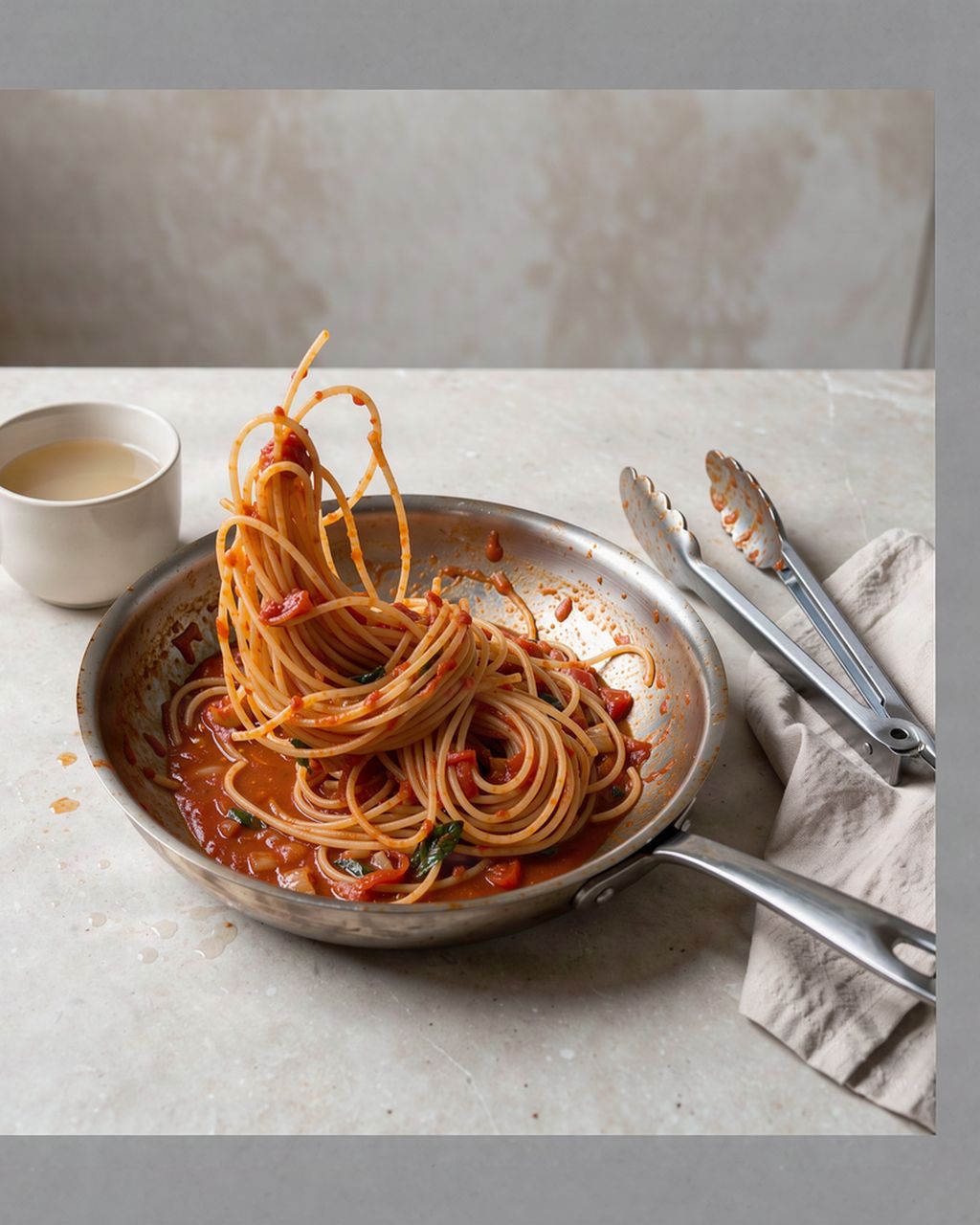
Homemade pasta dough is tough when it is too dry, hasn't rested, or has had too much flour worked into it while rolling. Fresh egg pasta should feel firm but smooth and supple, like soft modeling clay. If it cracks, fights back when you roll it, or cooks up into chewy, rubbery noodles, one of these is usually to blame.
Match what you see:
Stiff, crumbly, cracks at the edges: too dry. Not enough egg or water for the flour.
Smooth but springs back when you roll it: the gluten is tight. It needs a rest.
Dry and leathery after rolling: too much dusting flour, or it sat uncovered.
Cooked noodles chewy and thick: rolled too thick, or undercooked.
The fix for most of these is a softer dough and a proper rest.
Recipe of the week, one tip that saves you time and one deal from the shop. Unsubscribe in one click.
The next issue goes out on Thursday, November 26.
The classic Italian starting point is about 100 g of flour per large egg. Eggs vary in size, and flours absorb water differently, so treat that as a starting point, not a rule.
Why dough ends up too dry:
Measuring flour by cups. A US cup of all-purpose flour is about 125 g when spooned in and leveled, but a scooped, packed cup can hold much more. Weigh it, or check our cups and spoons to grams calculator.
Small eggs. A recipe written for large eggs comes out dry with medium ones.
A dry kitchen or very dry flour.
Adding flour to fix stickiness. A dough that is a little tacky after mixing usually becomes smooth with kneading. Wait before adding more flour.
If the dough is stiff and won't come together, wet your hands and knead, or add water a teaspoon at a time. It is much easier to add liquid early than to rescue a dry dough later.
Kneading builds gluten, the stretchy network that holds pasta together. Straight after kneading, that network is tight and elastic, so the dough springs back every time you roll it. People then press harder, add flour and roll thicker, and the pasta turns out tough.
Resting relaxes the gluten and lets the flour finish absorbing the liquid. Wrap the dough tightly or cover it with an upturned bowl so it doesn't dry out, and leave it at room temperature for about 30 minutes. If you won't be rolling it soon after the rest, keep it tightly wrapped in the fridge at 4 °C (40 °F) or below, the setting the FDA advises, and roll it by the next day, well inside the 2 to 4 days FoodSafety.gov gives for raw eggs out of the shell; freeze it if you need to keep it longer. Let it warm up a little before rolling. Following the USDA FSIS 2-hour rule for perishable food, don't leave raw egg dough out for more than 2 hours in total, including the rest and the warming-up time, or 1 hour if your kitchen is above 32 °C (90 °F).
After a rest, the same dough that fought you will roll out smoothly and thinly.
Under-kneaded pasta dough is rough, lumpy and tears when you roll it. Knead by hand until the dough is smooth and springs back slowly when pressed, usually around 8 to 10 minutes.
Over-kneading by hand is hard to do. Toughness from "too much kneading" is nearly always really toughness from too much flour or no rest. A stand mixer or food processor can overwork dough if it runs for a long time, so stop once it looks smooth.
If you use a food processor, pulse until the mixture looks like coarse crumbs that press together into a ball, then finish by hand.
Different flours give different textures, and some make tougher dough than others:
Italian "00" flour: gives silky egg pasta. "00" is the most refined grade under Italian flour law, set by its ash (mineral) content rather than protein, and it is usually very finely milled too. Our guide to flour numbers explains 00 and the European types.
All-purpose or plain flour: works well for egg pasta. In Czech kitchens we use hladká mouka (finely milled flour), and some cooks mix in polohrubá (semi-coarse flour); see what semi-coarse flour is.
Semolina (durum wheat): gives a firmer, chewier pasta and is used in many eggless doughs. It absorbs water slowly, so it needs a longer rest and a little more water. Fine durum semolina is easier to work with than coarse; see fine wheat semolina.
Bread flour or strong flour: high in protein. It gives chewy, springy pasta that can feel tough. Mix it with all-purpose if that's all you have.
Whole wheat flour: absorbs more water and gives a denser pasta.
If you swap flours, expect to adjust the liquid.
Even a good dough can end up as chewy noodles:
Roll it thin enough. For tagliatelle or lasagne sheets, roll until you can just see your hand through it. Thick noodles taste doughy and tough.
Use little dusting flour. Semolina or rice flour for dusting stops sticking without being absorbed as much as wheat flour.
Don't let it dry out unintentionally. Cover sheets you are not working with. Dry edges crack and cook up tough.
Cook it in plenty of boiling, salted water and taste early. Fresh pasta cooks in a few minutes. Our guide to how to cook pasta covers water, salt and timing.
Raw pasta dough contains raw flour, and usually raw egg. The FDA advises not to eat or taste raw flour, dough or batter, so check the texture by cooking a test noodle, not by tasting the dough.
Crumbly and sticky are the opposite ends of the same problem.
Crumbly: too dry. Wet your hands and knead, or add water a teaspoon at a time. Wrapping it and resting it also helps the flour absorb what is there.
Sticky: too wet, or not kneaded enough yet. Keep kneading for a few minutes first; if it still sticks to your hands and the board, dust with a little flour at a time.
Change the dough in small steps. A spoonful of water or flour makes a big difference in a two-egg dough.
Tough pasta dough usually needs more moisture and a rest. Knead in water a teaspoon at a time if it is stiff, then wrap it and leave it at room temperature for about 30 minutes before rolling.
Pasta dough that springs back or won't stretch has tight gluten that needs to relax. Wrap it and rest it for about 30 minutes, and it will roll out much more easily.
By hand it is very hard to over-knead pasta dough; most tough dough has too much flour or no rest. A machine running for a long time can overwork it, so stop once the dough is smooth.
A common Italian starting point is about 100 g of flour per large egg. Eggs and flours vary, so adjust with a little water or flour until the dough feels smooth and just firm.
Homemade pasta is chewy when it is rolled too thick, made with high-protein bread flour or a stiff dough, or undercooked. Roll it thinner, use 00 or all-purpose flour, and cook it in plenty of boiling water.
One recipe worth heating the oven for, one tip, and one deal from the shop. Nothing else.