Making Cupcakes Ahead: When to Bake, Decorate and Store Them
Cream and Whipped Cream Pastries: How Long Věnečky, Cream Rolls and Indiánky Keep
Updated Nov 17, 2026
Pastries filled with cream or whipped cream, such as věnečky (Czech cream-filled choux rings), cream rolls and indiánky (Czech chocolate-glazed sponge domes with whipped cream), belong in the fridge right away and taste best the day they're made. Eat whipped cream ones by the next day and custard-filled ones within two days at the latest. The US FoodKeeper database (USDA FSIS and Cornell University) gives an upper limit in the fridge of 3–4 days for choux pastries with a milk-based custard filling and just 1 day for sweetened whipped cream. The Czech food inspection authority SZPI advises getting bakery products home as quickly as possible, refrigerating them straight away and eating them as soon as you can. Below you'll find why fillings spoil so fast, how to store pastries so the dough doesn't go soft, and which fillings can go in the freezer.
In the fridge at up to 4 °C (40 °F), pastries with whipped cream keep for about a day, and those with cooked custard for one to two days. Here's the breakdown by filling:
Whipped cream (indiánky, whipped cream rolls, věnečky with whipped cream): eat by the next day. FoodKeeper (USDA FSIS) gives sweetened whipped cream 1 day in the fridge.
Egg yolk and pudding-style custard (classic věnečky, větrníky, Czech choux puffs): 1–2 days. For choux pastries with a milk custard, FoodKeeper gives at most 3–4 days in the fridge, but that's a safety limit, not a quality one. The dough goes soft by the second day.
Egg white filling (classic cream rolls): our advice is 1–2 days in the fridge, but they taste best on the day they're made, while the puff pastry is still crisp. SZPI counts egg white filling among fillings that are not microbiologically stable, and says cream rolls made with it are a bakery product to be stored at up to 8 °C (46 °F).
Store-bought packaged pastries: follow what the manufacturer says on the package. The recipe, packaging and use-by date are set for that specific product.
Take your fridge temperature seriously. USDA FSIS recommends keeping it at 4 °C (40 °F) or below. The door is the warmest spot, so put pastries on a middle or bottom shelf.
Seasonal baking plans, tested recipes and kitchen tricks that save you time. Unsubscribe in one click.
Cream and whipped cream are almost an ideal environment for bacteria: lots of water, milk protein, eggs and sugar, plus a neutral pH. If a pastry sits in the warmth for a while, bacteria multiply in it quickly.
Staphylococcus aureus (Staphylococcus aureus) gets into the filling mainly from hands during filling and decorating. According to USDA FSIS, cream-filled pastries, cream cakes and éclairs are typical sources of staphylococcal food poisoning. In the warmth it produces a toxin that, according to FSIS, survives heating, so spoiled filling can't be saved.
Salmonella is a risk mainly with eggs. Cooked egg yolk or pudding-style custard is safer than a filling made with raw yolks, but once it cools and then sits in the warmth, anything can multiply in it.
That's why cream pastries belong in the cold right away. Don't break the cold chain, even on the way home from the shop.
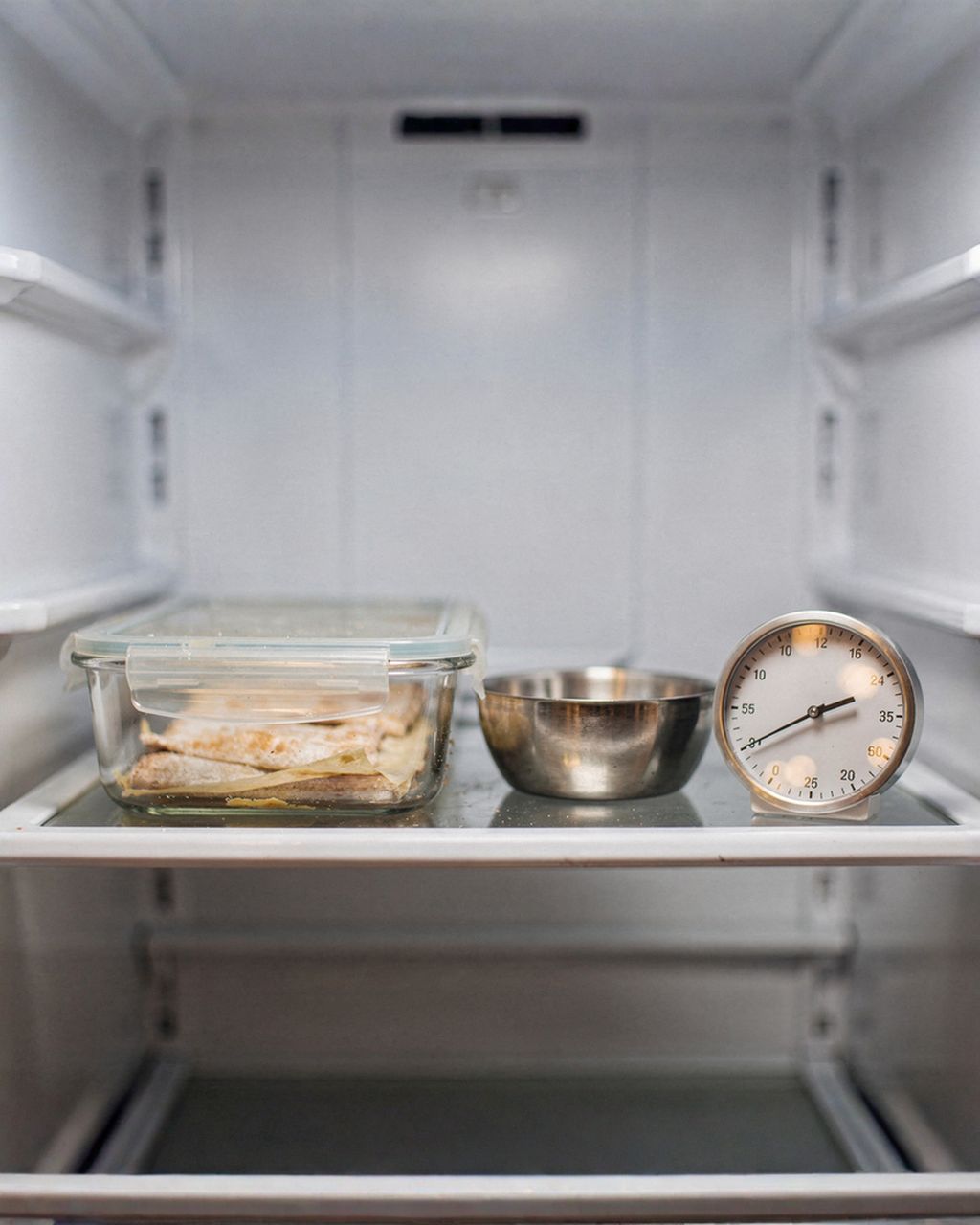
Store pastries in a single layer in a closed container in the fridge, and fill them as late as possible, ideally just before serving. Choux, puff pastry and sponge all go damp because water moves from the filling into the dough, and the fridge is humid. You can't stop it completely, but you can slow it a lot:
Fill as late as possible. It's best to keep the empty shells and the filling separate and put them together just before serving. Baked empty věnečky or puff pastry tubes without filling aren't a perishable food. Just put them in a closed tin and leave them on the counter. Meanwhile the filling waits covered in the fridge.
Make a barrier in the dough. Brush the inside of the shell with a thin layer of melted chocolate or cocoa butter and let it set. The filling then soaks into the dough much more slowly. It works well for cream rolls, for example.
Closed container, single layer. Don't stack the pastries, and put them in a container with a lid. That way the filling doesn't absorb fridge smells or dry out, and nothing squashes the glaze. You can put a folded paper towel under the lid to soak up condensation.
Straight into the cold after shopping. SZPI recommends making the trip home as short as possible, protecting the product from contamination and putting it straight in the fridge at home. In summer, a cooler bag is handy.
Take them out just before eating. The flavor opens up after only a few minutes on the table. Don't leave them sitting out, though; the two-hour limit applies.
Christmas cookies with cream filling behave differently because they're smaller and drier. We have a separate guide for those: how long cream-filled cookies keep.
You can freeze empty shells, sweetened whipped cream and buttercream; egg yolk and pudding-style custard and finished filled pastries don't belong in the freezer.
Empty baked věnečky, větrníky and tubes: freeze them in a closed bag. Before filling, briefly warm them through (dry them out) in the oven at 150–160 °C (300–320 °F) for 3–5 minutes so they crisp up again, and let them cool completely.
Sweetened whipped cream: according to FoodKeeper (USDA FSIS) it keeps 1–2 months in the freezer. After thawing, though, it releases a little water, so it suits decoration or a dessert better than indiánky.
Buttercreams stand up to freezing well. After thawing, just whip them briefly.
Egg yolk and pudding-style custard: don't freeze. The starch releases water after thawing, the custard turns grainy and makes the dough soggy.
Finished filled pastries: don't freeze at all. After thawing, the dough soaks up water from the filling and stays rubbery.
Freezing doesn't kill bacteria, it only stops them growing. According to USDA FSIS, food is safe at −18 °C (0 °F), but anything you put in the freezer that's spoiled or sat in the warmth for a long time will keep spoiling after thawing.
Throw out a pastry with cream or whipped cream that has been out of the fridge for more than 2 hours, or has been in the fridge for more than 1 day (whipped cream) or 2 days (custard), even if it looks and smells normal. According to USDA FSIS, staphylococcal toxin doesn't change the smell or taste. Your senses will only catch spoilage that is already very obvious.
Warning signs that mean you should throw the pastry out right away:
a sour or bitter smell from the filling, or an odor like soured milk,
water under the cream, or cream that breaks into lumps and liquid,
whipped cream that has collapsed and turned yellowish, and a slimy, sticky surface,
mold (fuzz, colored spots) on the filling or the dough.
If you see none of these signs, that doesn't mean the pastry is fine. If you don't know how long it sat out of the fridge, don't risk it.
If you're baking at home, plan it so the filling and the dough only come together on the day of serving. Bake the shells a day ahead if you like and keep them in a tin. Cook the custard in the morning, cool it quickly (you can set the bowl in ice water) and refrigerate it covered. Fill only a few hours before the party. Cream rolls work the same way: bake the puff pastry tubes ahead and keep them in a tin, and fill them with egg white filling on the day of serving. If your věnečky collapse or are wet inside straight out of the oven, it's not a storage problem but a question of batter consistency. That's covered in our article choux pastry: how to get the right consistency and why it collapses.
Carry cream pastries in a cooler bag with ice packs, in a closed container in a single layer, and refrigerate them as soon as you arrive. At temperatures above 32 °C (90 °F), USDA FSIS says they can be out of the cold for 1 hour at most, counting the trip and time on the table. For a longer journey the safest approach is to carry the empty shells and the filling separately, kept cold, and fill them on site.
No. Throw out any pastry with whipped cream or custard that was left out of the fridge overnight. According to USDA FSIS the limit is 2 hours at room temperature. The staphylococcal toxin that forms in warm conditions doesn't change the smell or taste, and chilling or heating the pastry afterward doesn't destroy it.
Unwrapped pastries from a bakery don't keep outside the fridge; SZPI requires them to be stored at up to 8 °C (46 °F). Some packaged supermarket pastries have a filling adjusted to be more stable, and the manufacturer may give a different storage temperature. Follow what's on the package, and refrigerate them once opened.
One recipe worth heating the oven for, one tip, and one deal from the shop. Nothing else.