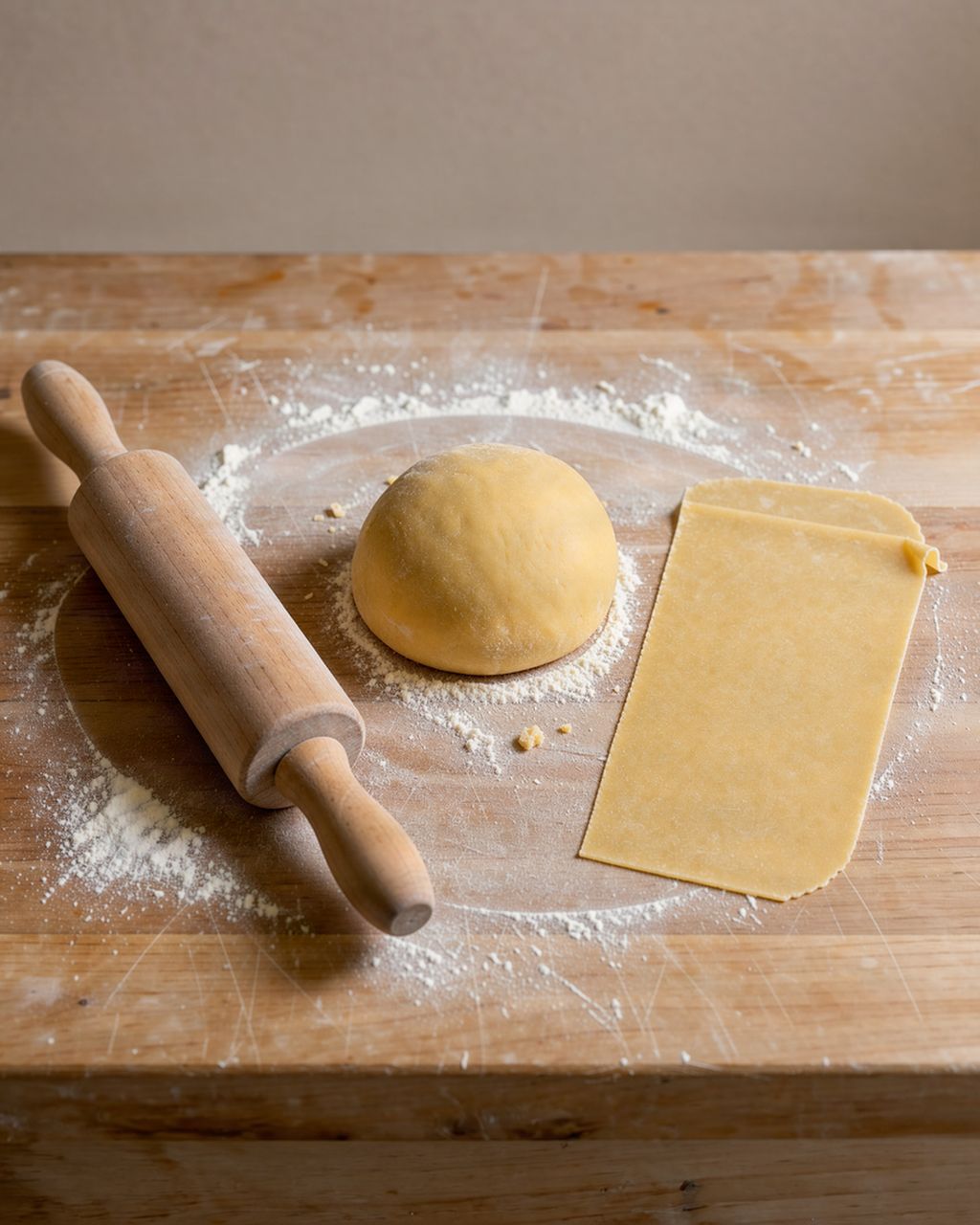
Why Is My Pasta Dough Tough? Hydration, Resting and Flour
How Long Does Mulled Wine Last? Fridge, Reheating and Freezing
Updated Nov 21, 2026
Leftover homemade mulled wine keeps for 3 to 4 days in the fridge, following USDA FSIS advice for leftovers, as long as you strain it and chill it within 2 hours (1 hour above 32°C / 90°F). Reheat it to 74°C (165°F) on a food thermometer, below a boil so it keeps more of its alcohol and flavor, or freeze it for later. The non-alcoholic version follows the same rules.
Treat leftover homemade mulled wine like any other cooked leftover. USDA FSIS advises refrigerating leftovers within 2 hours (1 hour above 32°C / 90°F) and using them within 3 to 4 days. That is the window we follow for mulled wine, too, and for the non-alcoholic version.
Homemade mulled wine is no longer just wine. It has been heated with sugar, fruit and spices, often diluted with juice or water, and left open in a pot for an evening. That is why we go by the leftovers rule rather than how long an opened bottle lasts.
In Czech homes and at Christmas markets, mulled wine is svařák (short for svařené víno, literally boiled wine), and at home it usually gets made in a big pot for a party. The question of what to do with the rest the next morning is a familiar one.
Seasonal baking plans, tested recipes and kitchen tricks that save you time. Unsubscribe in one click.
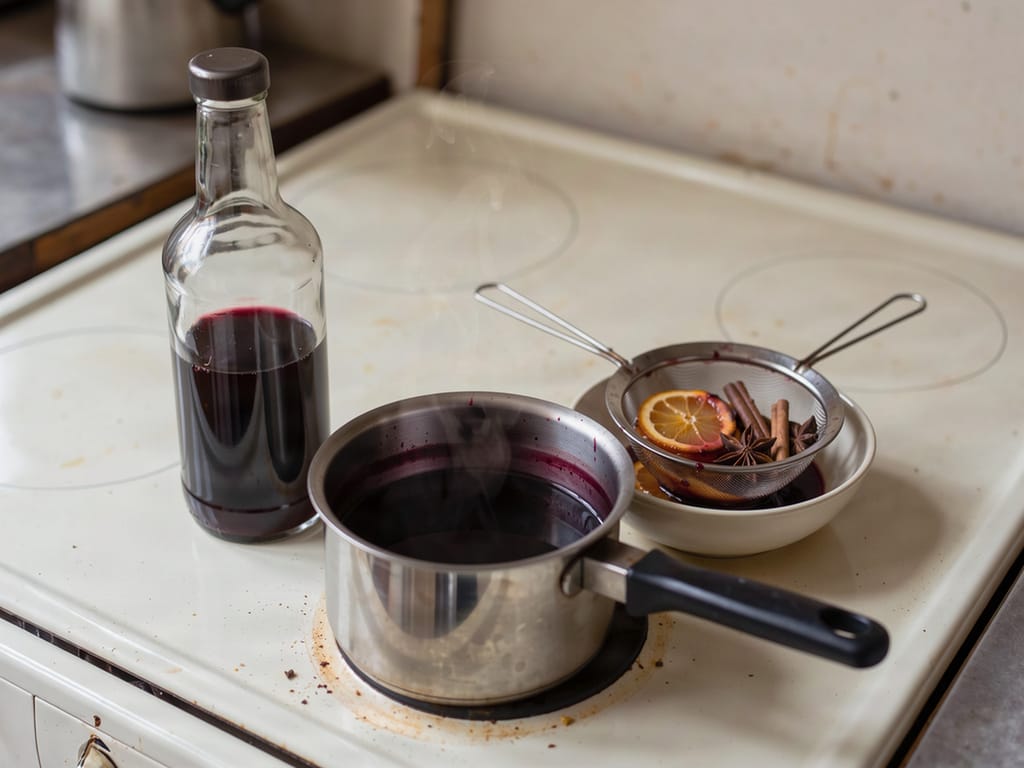
Strain it. Take out the orange slices, cinnamon sticks, cloves and star anise. Left in overnight, citrus pith and whole spices keep steeping and turn the wine bitter. This is the most common reason for bitter mulled wine the next day.
Cool it quickly. Don't leave the pot on the stove overnight. Pour it into smaller containers so it cools faster, and get it into the fridge within 2 hours of turning off the heat (1 hour if the room or outdoor setting is above 32°C / 90°F), as USDA FSIS advises for leftovers. Our guide to storing hot food in the fridge explains how to do this without warming the fridge.
Seal it. Use a clean bottle with a cap or stopper, or a jar with a lid. Less air in the container means less oxidation and better flavor.
Label it with the date, and use it within the 3 to 4 days USDA FSIS gives for refrigerated leftovers.
When to throw it away: once the USDA FSIS 3-to-4-day window is up, pour it out even if it looks and smells fine. USDA FSIS notes that the bacteria that cause food poisoning usually don't change how food looks, smells or tastes, so your nose is not a safety test. If you see any mold, pour out the whole container, not just the top. Fizz or a bulging cap means something is fermenting; open the bottle slowly, pointed away from your face, and pour it out.
Store-bought bottled mulled wine (the kind sold ready to heat) is a different product. Unopened, follow the date on the bottle. Once opened, follow the label's instructions.
USDA FSIS advises reheating leftovers to 74°C (165°F), checked with a food thermometer, and bringing soups and sauces to a rolling boil. For mulled wine, heat it until a thermometer reads at least 74°C; if you'd rather follow the boil rule, bring it briefly to a boil and accept losing some alcohol and flavor. Ethanol boils at about 78°C (173°F), well below water's 100°C (212°F), so the hotter and longer you heat mulled wine, the more alcohol leaves the pot. Boiling also makes the wine taste stewed and brings out bitterness from the spices.
On the stove: heat it over low heat, stirring now and then, until a food thermometer reads at least 74°C (165°F). Steam alone is not a reliable sign, because liquids steam well below that.
In the microwave: cover the mug and heat in short bursts, stirring between bursts, then let it stand briefly. It should reach 74°C (165°F); a mug heats unevenly, so stir before you check.
Not in a slow cooker. Don't reheat cold leftovers in a slow cooker: it warms them too slowly. Heat them on the stove first, then move them to a slow cooker on warm to keep them at 60°C (140°F) or above.
Our main guide to mulled wine and Christmas punch covers which wine to use, how much spice and how hot to heat it the first time.
If you want to freshen the flavor, add a new strip of orange zest or a cinnamon stick while reheating, and take it out before serving. A splash of fresh wine helps if it tastes flat.
Keeping a pot hot for hours slowly cooks off alcohol and flavor. A few habits help:
Keep it just below a simmer, on the lowest setting of the stove or a slow cooker on warm. Whatever you use, keep it steaming hot, at least 60°C (140°F), the hot-holding temperature USDA FSIS gives.
Keep a lid on between servings.
Heat in batches. Keep half the batch cold in the fridge, reheat it on the stove until a thermometer reads at least 74°C (165°F), then add it to the pot, rather than holding the whole lot hot all evening.
Add the spirit last. If your recipe includes rum or brandy, add it to the pot near serving time, or to the glass.
At the end of the party, strain, cool and refrigerate what's left within 2 hours of turning off the heat (1 hour above 32°C / 90°F), as USDA FSIS advises.
Yes. USDA FSIS says food kept frozen at 0°F (−18°C) stays safe indefinitely, and recommends using frozen leftovers within 3 to 4 months for best quality. Mulled wine follows the same pattern: it is safe in the freezer, but the spice flavor fades over time.
Strain it first, then cool it completely.
Use plastic containers or freezer bags, not glass bottles. Liquids expand as they freeze and glass can crack.
Leave space at the top of the container.
Expect a slushy texture. Because of the alcohol and sugar, mulled wine may not freeze rock-solid in a home freezer.
Ice cube trays are handy. Frozen cubes of mulled wine are useful in cooking, for example in braised red cabbage, a pan sauce for duck or a fruit compote. Alcohol stirred into cooking doesn't all cook off, so use cubes of the non-alcoholic batch for anyone avoiding alcohol.
Thaw it in the fridge, then reheat it to 74°C (165°F) on a food thermometer, as above.
Mulled wine made with grape juice, apple juice, tea or non-alcoholic wine has little or no alcohol to slow spoilage, so treat it like a fresh cooked leftover too:
Strain out the fruit and spices.
Refrigerate within 2 hours (1 hour above 32°C / 90°F) and use within 3 to 4 days, following the USDA FSIS leftovers advice.
Freeze it if you won't use it in time.
Reheat it until a food thermometer reads at least 74°C (165°F), as USDA FSIS advises for leftovers. Boiling isn't needed, and it dulls the flavor.
Keep alcoholic and non-alcoholic batches in clearly labeled containers, so nobody gets the wrong one. Our article on warm winter drinks at home has ratios for alcohol-free punch, and non-alcoholic New Year's Eve drinks has more ideas.
Reheating removes only part of the alcohol, so gentle reheating does not make regular mulled wine alcohol-free. For children or anyone avoiding alcohol entirely, make the batch with juice or tea; non-alcoholic wine can still contain up to 0.5% alcohol, so check the label.
Use leftover homemade mulled wine within 3 to 4 days, following USDA FSIS advice for refrigerated leftovers; strain it and get it into the fridge within 2 hours of cooking, or 1 hour above 32°C (90°F).
Yes. Reheat it over low heat until a food thermometer reads at least 74°C (165°F), the USDA FSIS figure for leftovers. The hotter and longer it heats, the more alcohol it loses, since ethanol boils at about 78°C (173°F), well below water, and boiling makes it taste stewed.
Yes, in plastic containers with space at the top. USDA FSIS recommends using frozen leftovers within 3 to 4 months for best quality.
Mulled wine usually turns bitter when citrus pith and whole spices steep too long or the wine boils. Strain out the fruit and spices before storing, and reheat over low heat rather than at a hard boil.
No. USDA FSIS advises refrigerating leftovers within 2 hours (1 hour above 32°C / 90°F), so strain and chill mulled wine at the end of the evening.
Treat it like any cooked leftover: refrigerate within 2 hours (1 hour above 32°C / 90°F) and use within 3 to 4 days, as USDA FSIS advises.
One recipe worth heating the oven for, one tip, and one deal from the shop. Nothing else.