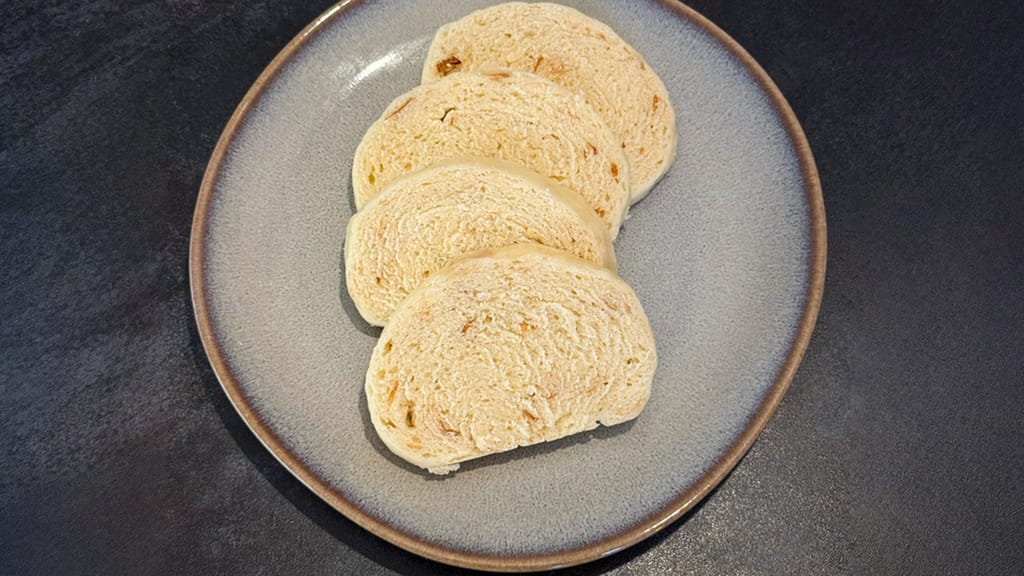
Steamed czech bread dumplings (houskové knedlíky)
Czech Dumplings (Knedlíky): Bread, Yeast, Quark and Potato Dumpling Recipes
Updated Nov 20, 2026
Czech dumplings (knedlíky) fall into five main types, depending on the dough: bread, yeast, quark, potato and choux-style. Savory dumplings are a side dish made to soak up sauce. Sweet ones are filled with fruit and served with butter, quark or poppy seeds. The dough decides everything: how long the dumpling takes, whether you steam it or boil it, and whether it turns out fluffy or dense. Below, for each type, you'll find how to make it, a tested recipe from Yumsto or a detailed article, and what makes or breaks the dumpling.
Czech dumplings are most often divided by dough into five types: bread, yeast, quark, potato and choux-style. Here they all are at a glance:
Bread dumplings (houskové knedlíky): dumplings built on cubes of bread, usually folded into a yeast dough made from coarse flour, milk, egg and yeast. This group includes the classic bread dumpling, steamed or boiled, and the bacon dumpling. The Karlovy Vary dumpling is a version without yeast, in which the bread rolls soak up milk and eggs.
Yeast dumplings (kynuté knedlíky): a sweeter yeast dough wrapped around fruit. Typically strawberries, plums, apricots or blueberries.
Quark dumplings (tvarohové knedlíky): a dough of quark (tvaroh, a Czech fresh curd cheese), flour and egg, with no yeast. It's ready in a few minutes and most often wraps around apricots. Buckwheat dumplings belong here too, with buckwheat flour replacing part of the wheat flour.
Potato dumplings (bramborové knedlíky): made from boiled potatoes as a side dish or with plums, from raw potatoes as "hairy" dumplings, and filled with smoked meat.
Choux-style dumplings (odpalované knedlíky): a dough made by cooking flour into water or milk.
The dough defines the type of dumpling, not the filling. You can wrap a plum in potato, quark or yeast dough and get three completely different dumplings: the potato one is delicate and tender, the quark one slightly tangy and springy, and the yeast one fluffy like a sweet bun.
If you can't decide which type to make, think about what you want the dumpling to do on the plate. For a sauce that needs soaking up, reach for bread dumplings. For smoked meat and sauerkraut, potato. For a sweet summer lunch, quark, because it's the fastest, and at the weekend, yeast, which needs time but rewards you with fluffiness.
Recipe of the week, one tip that saves you time and one deal from the shop. Unsubscribe in one click.
The next issue goes out on Thursday, November 26.
A bread dumpling is a yeast dough made from coarse flour, milk, egg and yeast, into which you gently fold cubes of day-old bread at the end, then cook by steaming or in water. It is the most common Czech side dish for sauces. For more on how to buy it and what it goes with, see the page on bread dumplings.
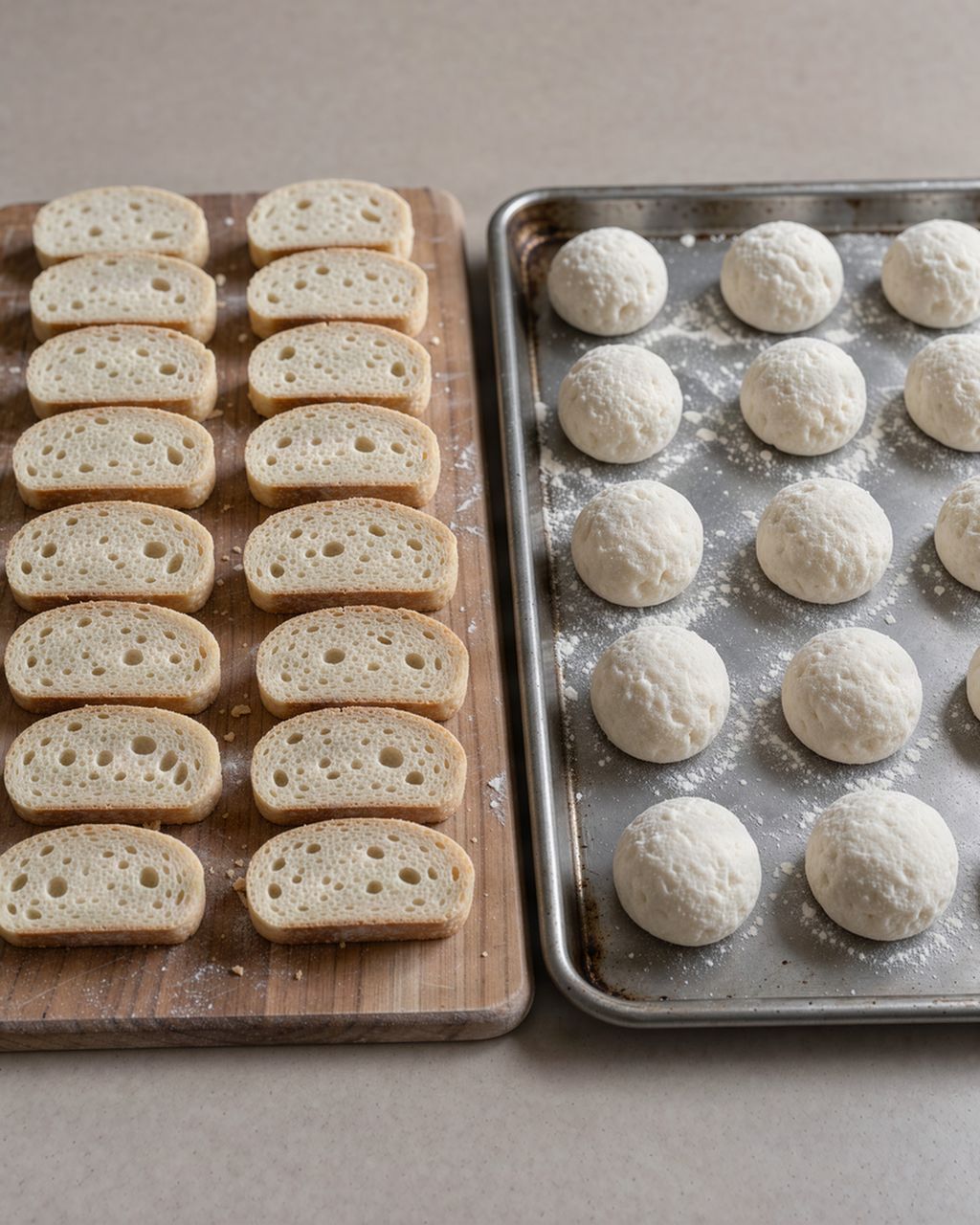
Our steamed bread dumpling uses 500 g coarse flour, 7 g dried yeast, 300 ml lukewarm milk, one egg and 70 g of a day-old roll. Mix the flour with the salt and yeast, pour in the milk, add the egg and knead for about 10 minutes, until the dough is smooth, glossy and pulls away from the bowl. Then gently fold in the roll cubes, crust included, and leave the dough to rise for an hour under a damp kitchen towel. Roll the risen dough into two loaves about 6 cm wide, let them rise for another 30 minutes and steam them for 25 minutes in strong steam. Count on about 2.5 hours in total, most of it rising time when you do nothing.
Why it works:
Coarse flour gives the dough a firmer structure than all-purpose flour, so the dumpling holds its shape and doesn't spread into a pancake.
Long kneading builds an elastic dough that holds on to the bubbles from rising during cooking. That's where the fluffiness comes from.
The bread goes in at the end and only gently. If you kneaded it into the dough from the start, it would break down into mush and the dumpling would turn heavy.
The second rise of the shaped loaves is what makes the difference between a dumpling and a dense roll. Don't skip it.
The recipe uses a roll (rohlík), but the classic is a white bread roll (houska). Either works, as long as the bread is a day or two old. Fresh bread soaks up moisture from the dough, goes soft and disappears into the dumpling. Older cubes hold their shape and show up on the cut surface as pale islands, which is how you recognize a proper bread dumpling.
And then the slicing. Don't cut a hot dumpling with an ordinary knife: it squashes the dumpling and glues it together inside. The recipe suggests a strong thread, which you slide under the dumpling, cross over and pull tight, or a really sharp serrated knife.
Steamed czech bread dumplings (houskové knedlíky)
Steamed bread dumpling: a fluffy dumpling made with coarse flour and a day-old roll
Bread dumplings come in three main variants: the classic boiled one, the Karlovy Vary dumpling and the bacon dumpling. You already know the steamed one, so here are the others.
Boiled bread dumpling: Prepare the dough exactly as for steaming, but put the loaves into a large pot of gently simmering salted water. After a while, carefully turn them with a wooden spoon so they don't stick to the bottom, and cook them covered for 20–25 minutes, until cooked through to the center. It's done when a skewer pushed in comes out clean, with no sticky dough. The surface comes out a little smoother and wetter than from steam. As soon as you take the dumpling out, prick it with a fork so the steam can escape and it doesn't collapse.
Karlovy Vary dumpling: It doesn't rise. It's made without yeast from cubes of bread rolls soaked in milk with eggs, with butter and chopped parsley, and cooked wrapped in a kitchen towel. Traditionally it's made with no flour at all, though some people add a spoonful to help the mixture hold together.
Bacon dumpling: Work cubes of fried bacon or smoked meat, plus some onion browned in the pan drippings, into the bread dumpling dough along with the bread. Shape and cook it like the classic, but make the loaves a bit thinner, because the fat weighs the dough down and it cooks through less easily. It's served with sauerkraut as a dish in its own right, not as a side.
All three follow the same rule as the classic: day-old bread and slicing with thread.
A steamed dumpling is fluffier than a boiled one because it doesn't soak up water and has no soggy surface. Steam cooks it evenly, and you don't have to worry about a loaf sticking to the bottom or falling apart in the pot.
What you need:
A wide pot with about 2 cm of water. Don't add more: the water must not reach the dumplings.
A steamer insert that sits in the pot, with a clean kitchen towel on top so the dough doesn't stick.
Space between them. Loaves swell a lot in the steam, so don't place them close together or they'll fuse.
A tight lid. The steam has to stay in the pot. Without a lid, you only cook the dumpling from below.
Following the bread dumpling recipe, you steam for 25 minutes in strong steam and check meanwhile that the water hasn't boiled away. If it's running low, top up with boiling water, not cold. Cold water would stop the boil and the dumpling would stop cooking halfway.
No steamer insert? A metal colander or sieve hung over a pot of boiling water and covered with a lid will do. It also works for yeast fruit dumplings. Quark and potato dumplings, however, are boiled in water: their dough doesn't rise, so steam wouldn't add any fluffiness and the surface would stay sticky.
Yeast dumplings are sweet dumplings made from yeast dough wrapped around whole fruit and boiled in water until they float. On the table they're the fluffiest of all fruit dumplings and soak up melted butter best.
On Yumsto you'll find two recipes that differ in the details:
Yeast dumplings with fruit are built on 500 g semi-coarse flour, 400 ml milk and 20 g fresh yeast, with no egg. You make a yeast sponge from lukewarm milk, sugar and yeast, work it with the flour and salt into a smooth dough and leave it to rise for an hour. Then you pull off pieces, roll each into a thin flat round, wrap a strawberry in it and press the seams firmly shut. Sprinkle the cooked dumplings with quark and powdered sugar and pour melted butter over them.
Yeast strawberry dumplings have coarse flour and egg in the dough and 500 g of strawberries. They show two ways of shaping: roll out the dough and cut rounds with a glass, or pull off pieces and wrap each strawberry separately. Leave the finished dumplings to rise for another 20 minutes and boil them in boiling water until they float. Then cut one open to test: the dough around the fruit should be fluffy, not raw and sticky.
Three things yeast dumplings depend on:
Lukewarm milk, not hot. Hot milk kills the yeast and the dough won't rise. The yeast sponge is ready when bubbles appear on the surface.
A firmly sealed seam. Every gap opens up during cooking, water flows in and the fruit leaks out.
A gentle simmer. A hard boil tears the dumplings. Turn the heat down when you put them in.
How long to let the dough rise, what ratio of flour to yeast to choose and what to do when the dough won't rise are covered in our article on yeast dough for buchty and dumplings. Yeast dumplings don't have to be only with strawberries. You can just as well wrap plums, apricots or blueberries in them, just give larger fruit a bigger flat round of dough.
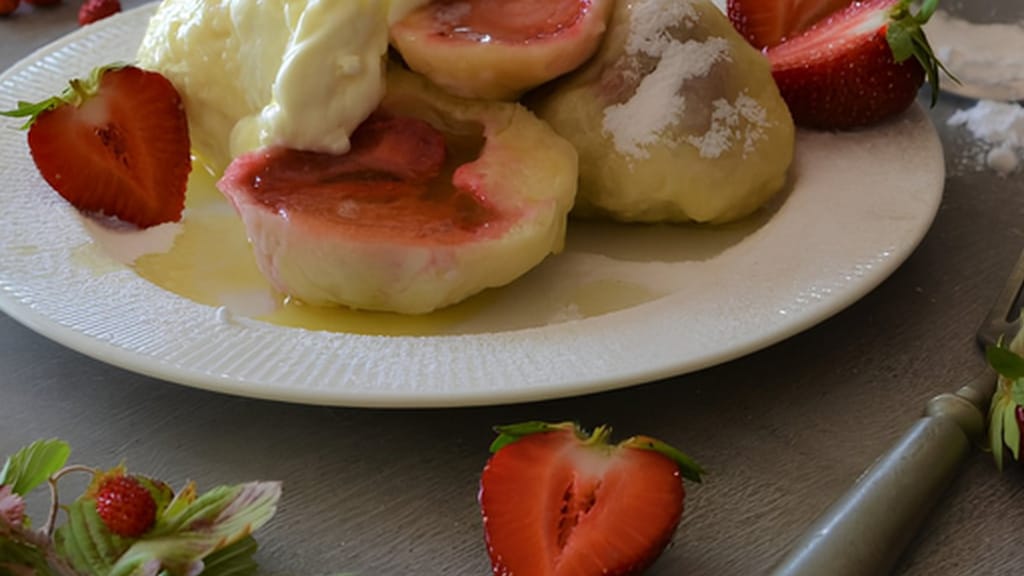
Yeast dumplings with fruit
Yeast dumplings with fruit: strawberries in fluffy yeast dough, with quark and butter
You can make dumplings without yeast from four doughs: quark, potato, choux-style, and bread dumpling dough with baking powder. None of them rises, so they're ready much faster than yeast dumplings.
Quark dough is the fastest. You combine flour, quark, egg and butter until smooth and wrap the fruit right away. We cover it in detail below.
Potato dough needs potatoes cooked ahead and well cooled, otherwise it's simple. It suits a savory side dish and plum dumplings.
Choux-style dough is made by cooking flour into boiling liquid with butter, then mixing eggs into the lukewarm mass. It holds its shape and doesn't fall apart in cooking, which is why it's popular for fruit dumplings.
Bread dumplings without yeast are a quick substitute for the yeast version: baking powder replaces the yeast, so the dough doesn't rise and you shape it straight away. It comes out denser and less airy, but you'll make it in a fraction of the time.
The method, ratios and the reason choux-style dough doesn't fall apart when boiled are in our article on choux-style dough for fruit dumplings.
What not to expect: a dumpling without yeast will never be as fluffy as a yeast one. You pay for the speed with a denser structure. In sweet fruit dumplings that doesn't matter, as a thin, springy dough is more of an advantage. With a bread dumpling for svíčková (Czech beef in a root-vegetable cream sauce) you'll notice the difference, so for a festive lunch the rising is worth it.
Quark dumplings are fruit dumplings made from a dough of quark, flour, egg and butter, with no yeast, ready in a few minutes and boiled in water for 5 to 8 minutes. They're the fastest route to a fruit dumpling, and their slightly tangy flavor goes wonderfully with apricots.
The dough for apricot dumplings made with quark dough uses 500 g semi-coarse flour, 250 g semi-fat quark, an egg, 150 ml milk, salt and 80 g softened butter. You combine everything into a smooth dough that doesn't stick to your fingers, cut the apricots along the seam, remove the stone and close the halves back together. Flatten pieces of dough into rounds in your palm, put an apricot in the middle, bring the edges together and roll the dumpling into a smooth ball. Boil them for 5 to 8 minutes in gently simmering salted water, and with larger apricots cut one dumpling open to test. Serve them sprinkled with ground poppy seeds and powdered sugar and drizzled with melted butter. The batch makes roughly 20 dumplings and the whole thing takes about 45–50 minutes.
The most common mistake is adding too much flour. The recipe says that if the dough sticks, add just a little and work it in briefly. With every extra spoonful of flour the dumplings get tougher, and instead of a springy coating you have a rubbery one.
Traditional quark dumplings without fruit, sprinkled with breadcrumbs or gingerbread, and tips for keeping the dough from falling apart are in our article quark dumplings: traditional recipe and tips.
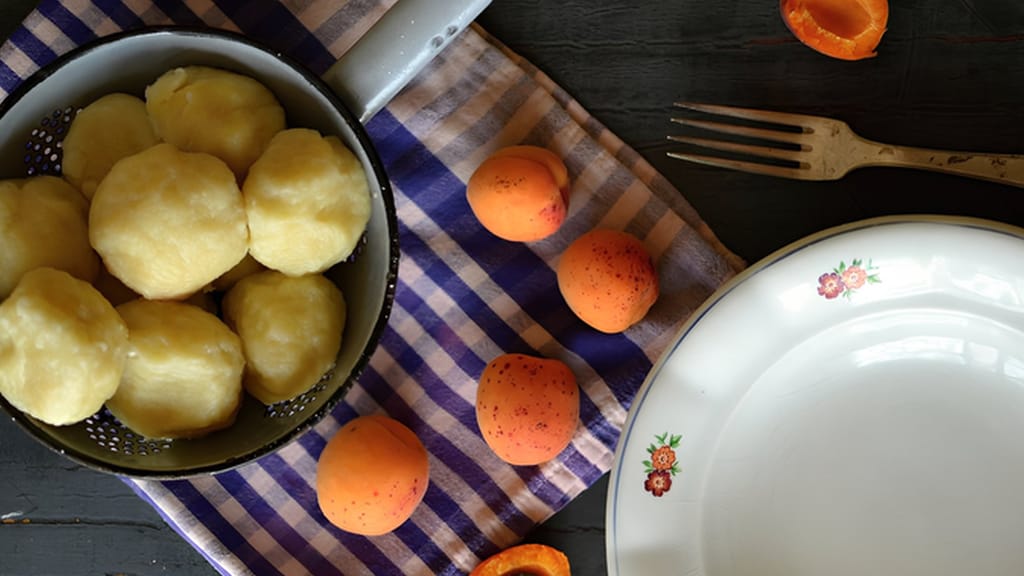
Apricot dumplings with curd cheese dough
Apricot dumplings made with quark dough, with poppy seeds and butter
Buckwheat dumplings are a variation on quark dumplings in which buckwheat flour replaces part of the wheat flour. It gives them a nutty flavor and a darker color. The dough for buckwheat dumplings with peaches and quark has an egg, 200 g low-fat quark, sugar, cinnamon, 130 g coarse wheat flour and 100 g buckwheat flour. You wrap a few pieces of peach in each piece of dough and seal it into a ball with no cracks in your palms. Sprinkle the cooked dumplings with grated hard quark, or serve them with yogurt. You can have the whole dish done in about 30 minutes.
Note that the recipe also includes wheat flour, so buckwheat dumplings are not gluten-free. The buckwheat is there for flavor.
Potato dumplings come in three main types: made from boiled potatoes as a side dish or with fruit, "hairy" dumplings from raw potatoes, and dumplings filled with smoked meat. In every case the star is floury potatoes, which hold the dough together with less flour.
Potato dumpling from boiled potatoes: A smooth dumpling made from boiled, cooled potatoes, flour and egg, cooked in water. It suits roast pork and sauerkraut better than a bread dumpling. Plum dumplings, the most popular sweet potato dumpling, are made from boiled potatoes too. The method is below.
Hairy dumplings (chlupaté knedlíky): Smaller dumplings made from grated raw potatoes, often combined with boiled ones, with bits of potato sticking out, hence the name. They're served with sauerkraut, with cracklings or with fried bacon and onion.
Dumplings filled with smoked meat: Potato dumplings with a filling of smoked meat, more about them below.
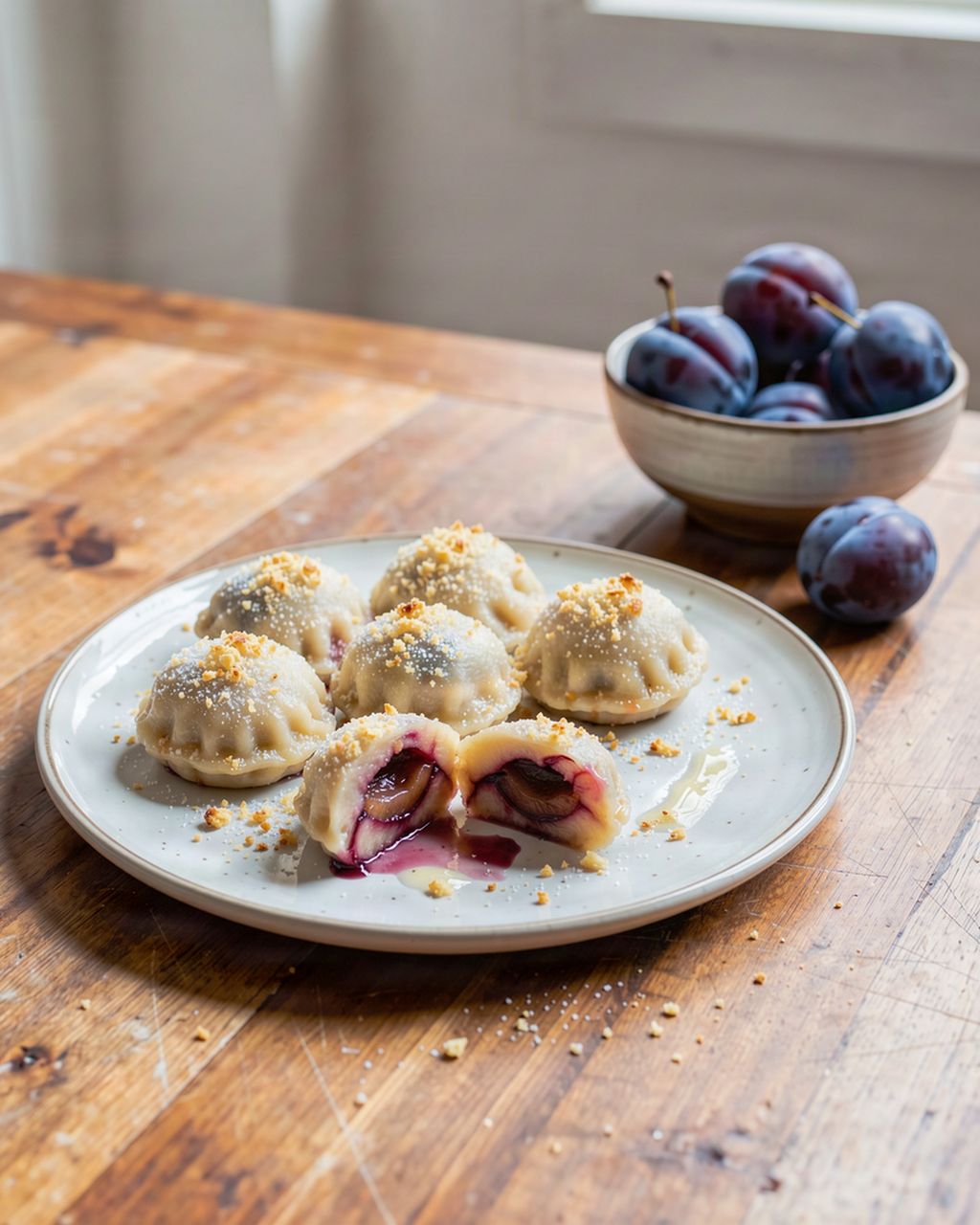
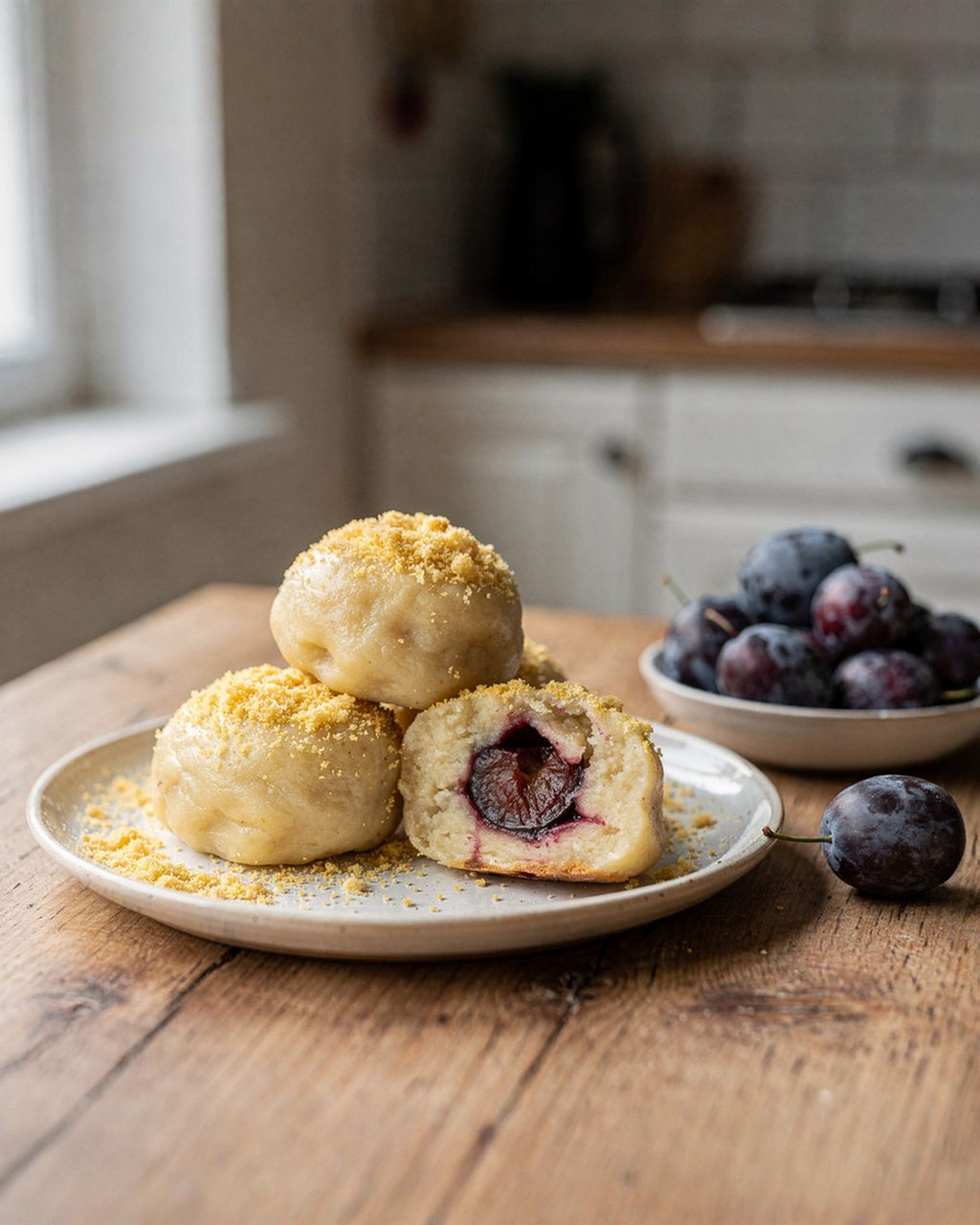
Plum dumplings made from potato dough are delicate, thin-skinned and tender. Plum dumplings made from potato dough call for 500 g floury potatoes boiled in their skins the day before, 125 g coarse flour, 50 g fine semolina, an egg and 15 pitted plums. Peel the cold potatoes, grate them finely, quickly mix with the flour, semolina and egg, and shape the sticky dough into flat rounds, wrapping a plum in each, even with a teaspoon of sugar inside. Drop the dumplings into boiling salted water as you go and take them out as soon as they float. Serve them drizzled with melted butter and sprinkled with sugar, poppy seeds and grated quark.
Potato dough has one golden rule: speed. The dough gets thinner as it stands, so don't let it rest, and don't leave cooked dumplings sitting on the table, as they'd get soggy. Why plum dumplings fall apart in the water and which dough is best for them are compared in our article plum dumplings: which dough to choose.
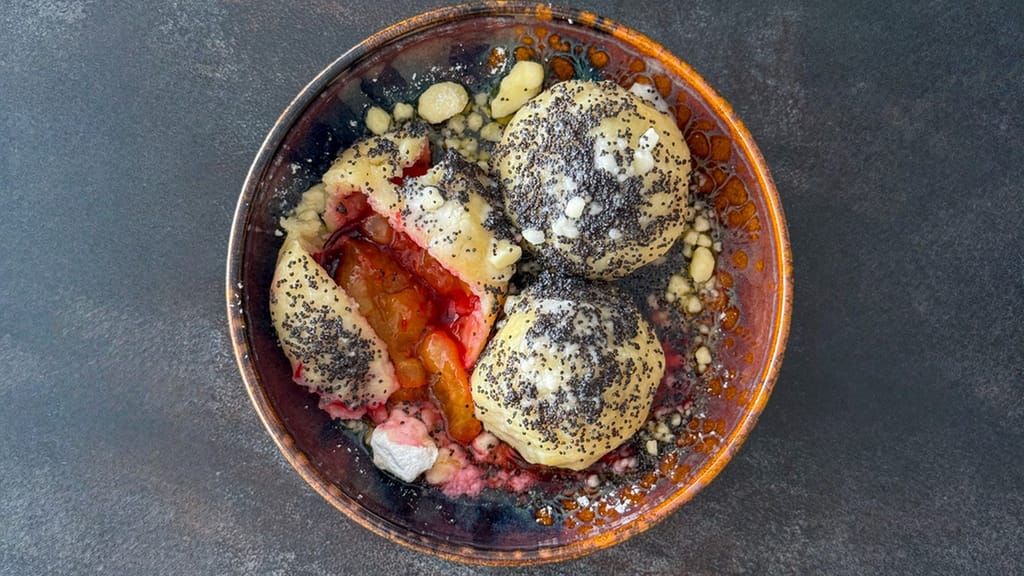
Plum dumplings with potato dough
Plum dumplings made from potato dough with butter, poppy seeds and quark
Dumplings filled with smoked meat are potato dumplings with a filling of finely chopped smoked meat and browned onion, served as a main dish with braised sauerkraut. The filling should be on the dry side, because a juicy one softens the dough from the inside and the dumpling splits during cooking.
Dumpling with eggs (knedlík s vejci) is a quick dish made from yesterday's bread dumpling, cut into cubes, fried until golden and covered with eggs. It works best with a dumpling that has spent a day in the fridge: it's firmer, doesn't fall apart in the pan and doesn't soak up as much fat as a fresh one.
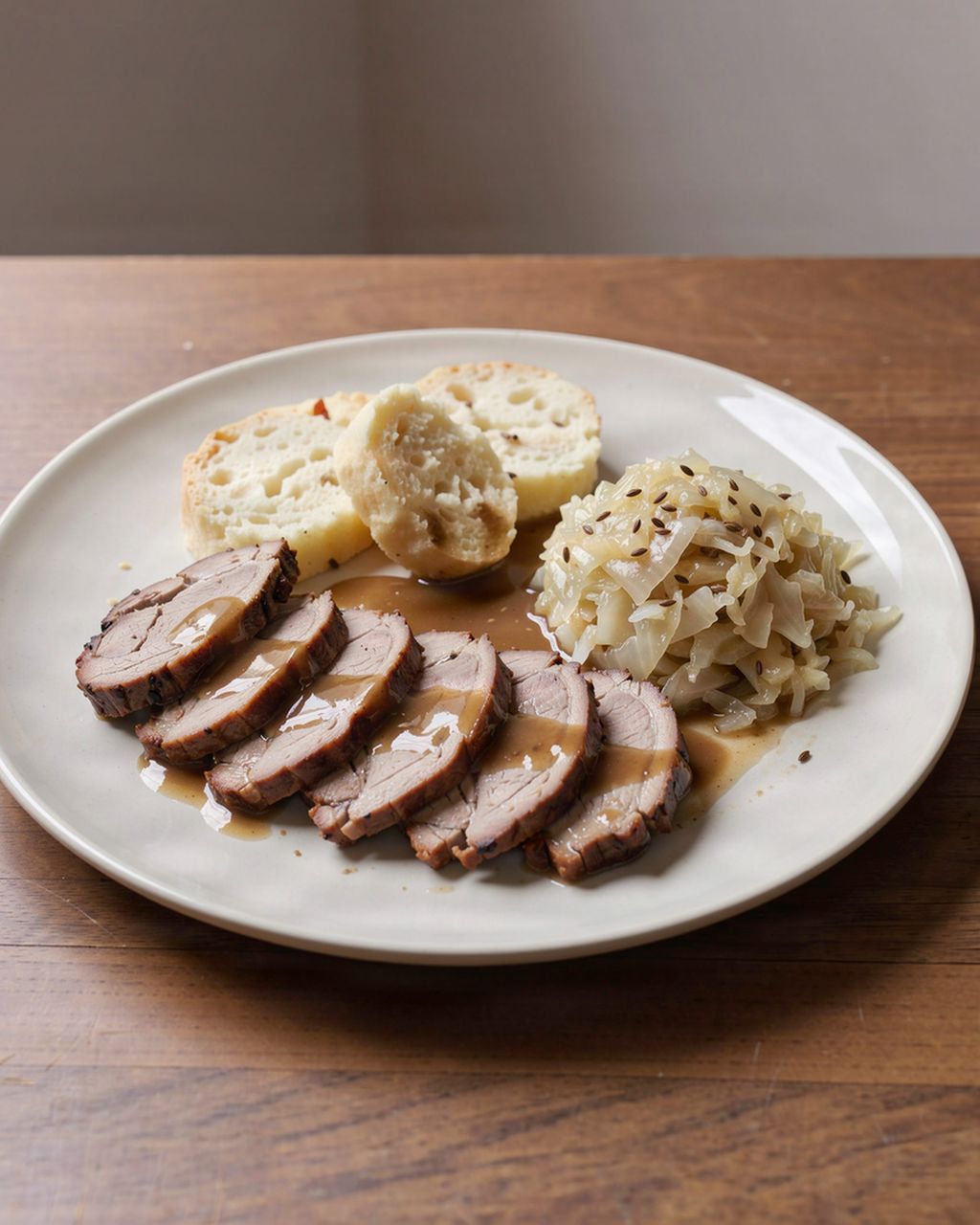
Bread dumplings belong with sauces that have something to soak up: goulash, svíčková, dill sauce, "vepřo knedlo zelo" (roast pork with dumplings and sauerkraut) and dishes in cream sauce. The more sauce, the more sense the dumpling makes.
Classic beef goulash with chili and a bread dumpling: The thick paprika-and-onion gravy from slowly braised shin is exactly what a bread dumpling soaks up to the last drop.
Svíčková in cream sauce: The velvety vegetable cream sauce and a bread dumpling are a Czech pairing where one makes no sense without the other.
Dill sauce with slow-roasted beef: Creamy dill sauce is delicate and thin, so it needs an airy dumpling to take it up, and the recipe serves it with one right away.
Vepřo knedlo zelo: A national classic in which roast pork meets both bread and potato dumplings and braised sauerkraut, covered in our article vepřo knedlo zelo. Instead of white cabbage, try sweet-and-sour braised red cabbage, whose acidity balances the fatty roast.
Rabbit in cream sauce: Another dish where, without a dumpling, half the sauce would be left on the plate. You'll find versions in cream sauce, with garlic and from the slow cooker in our article rabbit in cream sauce, roasted and slow-cooked.
And if you want more braised dishes that go with a dumpling, check out one-pot meals for winter evenings.
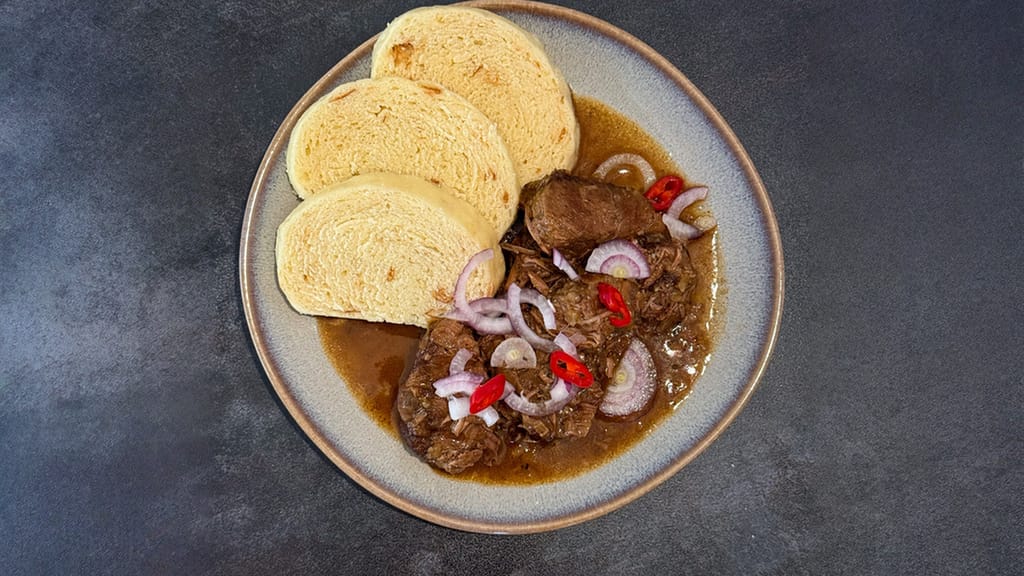
Classic czech beef goulash with chilli and bread dumplings
Beef goulash with chili and a steamed bread dumpling in one recipe
Most failed dumplings come down to one of five causes: too much flour, hot milk, a leaky seam, a hard boil, or slicing with a knife.
Too much flour. This applies to both quark and potato dough. Sticky dough is normal, so just flour your hands. Extra flour makes dumplings tough.
Hot milk in yeast dough. It kills the yeast and the dough won't rise. The milk should be only lukewarm.
A leaky seam on fruit dumplings. Water flows in, the fruit leaks out and the dumpling falls apart. Always press the edges firmly together and roll into a smooth ball.
A hard boil. Cook quark, yeast and potato dumplings in gently simmering water. A hard boil tears them.
Slicing a hot bread dumpling with a knife. It squashes it and glues it together. Use thread or a serrated knife.
One more thing with potato dumplings: the potatoes must be completely cooled and dried out. Warm potatoes release water, the dough needs more flour and the result is tough. That's why the plum dumpling recipe boils the potatoes the day before.
Bread dumplings reheat best in steam. Put the slices on a steamer insert over boiling water and in 3–5 minutes, once they're hot all the way through (at least 70 °C / 158 °F), they're like fresh. The microwave is quicker but dries the dumpling out, so cover it, sprinkle with water and heat until it's steaming in the middle too. Leftovers you don't want to reheat can be cut into cubes and turned into dumpling with eggs the next day.
Fruit dumplings are best right away. Reheated in steam they're edible, but the dough is no longer as springy. If you have more than you can eat, freezing them is worthwhile. Whether to freeze them raw or cooked, how to wrap them and how to cook them afterward are described in our article on how to freeze dumplings.
Bread dumplings use coarse wheat flour (Czech hrubá), which gives the dough enough strength to hold its shape. Sweet yeast dumplings work with semi-coarse flour (Czech polohrubá, slightly grittier than all-purpose) or coarse flour. Semi-coarse flour suits quark dumplings, and potato dumplings use coarse flour combined with fine semolina. All-purpose (plain) flour makes the dough stickier, and the dumplings fall apart more easily.
500 g of flour makes two loaves of bread dumpling, enough for about four people. The same amount of flour in quark dough makes roughly 20 apricot dumplings. The exact number of fruit dumplings depends on the size of the fruit.
Quark fruit dumplings cook for 5 to 8 minutes in gently simmering water, depending on size. With larger apricots, cut one dumpling open to test. Potato plum dumplings come out as soon as they float to the surface. Cook yeast dumplings until they float, then cut one open to check that the dough around the fruit is cooked through.
A gummy center in a bread dumpling usually has one of two causes: it was undercooked, or it was cut with a knife while still hot. Shape loaves about 6 cm wide, steam them under a lid the whole time, and slice them with thread or a sharp serrated knife. It also helps to prick the dumpling with a fork after taking it out, so the steam can escape.
Fruit dumplings are classically sprinkled with quark and powdered sugar and drizzled with melted butter. Ground poppy seeds with sugar, toasted breadcrumbs or grated gingerbread work just as well. Buckwheat dumplings go well with grated hard quark or yogurt.
One recipe worth heating the oven for, one tip, and one deal from the shop. Nothing else.