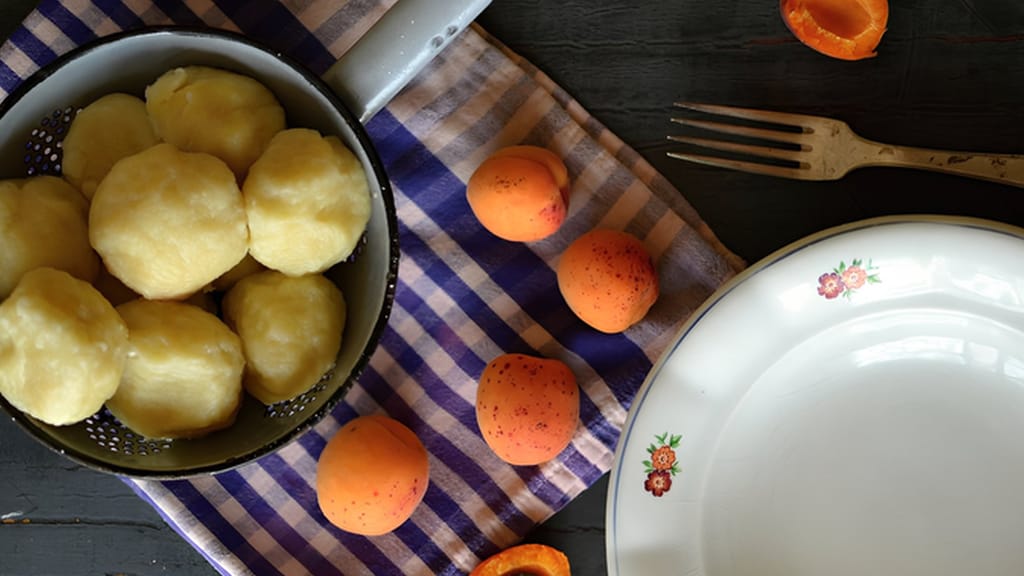
Apricot dumplings with curd cheese dough
Choux Pastry Dough for Fruit Dumplings: Method, Ratios and Why They Don't Fall Apart
Updated Nov 17, 2026
You make choux dough for fruit dumplings from milk, butter, semi-coarse flour (Czech polohrubá, slightly grittier than all-purpose) and an egg: scald the flour in boiling milk with butter, let the dough cool, work in the egg and wrap it around the fruit. The scalded starch holds its shape even in boiling water, which is why these dumplings almost never fall apart. The dough is ready in a quarter of an hour, needs no rising and doesn't call for potatoes you have to cook the day before. Below you'll find one basic ratio, a step-by-step method, cooking times by size, and how this dough differs from the choux pastry of the same name used for cream puffs.
The basic ratio is 250 ml milk, 250 g semi-coarse flour, 50 g butter, 1 egg and a pinch of salt. So milk and flour are roughly equal (1 : 1), the butter is about a fifth of the flour's weight, and one egg is enough for this amount.
250 ml whole milk: the fat makes the dough more supple, though low-fat milk works too
250 g semi-coarse flour: see below for why semi-coarse
50 g butter
1 egg (size M or L; US medium or large)
a pinch of salt
This batch wraps around roughly 12–14 plums or apricots, a main course for 3–4 people. For more dumplings, simply multiply the ratio.
Recipes differ mainly in the number of eggs: some use two to three for the same amount of flour. More eggs give a softer, stickier dough that is harder to shape and swells more in the water. For fruit dumplings, where what you mainly need is a sturdy wrapper, one egg gives the most reliable result.
Recipe of the week, one tip that saves you time and one deal from the shop. Unsubscribe in one click.
The next issue goes out on Thursday, November 26.
The method has five steps: heat the milk with the butter, add the flour, scald the dough, cool it and work in the egg.
Bring the milk, butter and salt to a boil. The butter must melt completely before the milk starts to rise.
Turn the heat down to the minimum and tip in all the flour at once. Adding it gradually would make lumps, because the first portion of flour turns pasty immediately.
Scald the dough. Stir energetically with a wooden spoon for 1–2 minutes, until the dough becomes a smooth ball that pulls away from the sides and bottom and leaves a thin whitish film on the bottom of the pot. This is why it's called choux (scalded) dough: the heat gelatinizes the starch, and the dough then holds its shape.
Let it cool. Transfer the dough to a bowl and let it cool until you can touch it with your palm without it burning. If you added the egg to hot dough, it would start to curdle into tiny lumps and the dough would turn grainy.
Work in the egg. Mix in the beaten egg with a wooden spoon or your hand. At first the dough loosens and looks ruined, but after a minute of kneading it comes back together into a smooth, slightly sticky dough. If it's very sticky, knead it on a floured surface with an extra spoonful of flour.
The finished dough is smooth and elastic and leaves no sticky residue on your finger. Use it right away while it's lukewarm. Cooled dough stiffens and is harder to shape.
Semi-coarse flour works best: it makes a dough that is firm yet fine. Coarse flour (Czech hrubá) gives a slightly firmer, lightly grainy wrapper that holds even better in the water. It's useful when you want a very thin wrapper. All-purpose (plain) flour scalds into a gummier dough that sticks more and is harder to roll out.
You can replace part of the flour with fine semolina, for example 200 g semi-coarse flour and 50 g semolina. The dough will be a little firmer and the wrapper gets a delicate semolina texture, which some people like from quark dumplings. Semolina alone instead of flour doesn't work, though, because the dough won't come together into a supple mass.
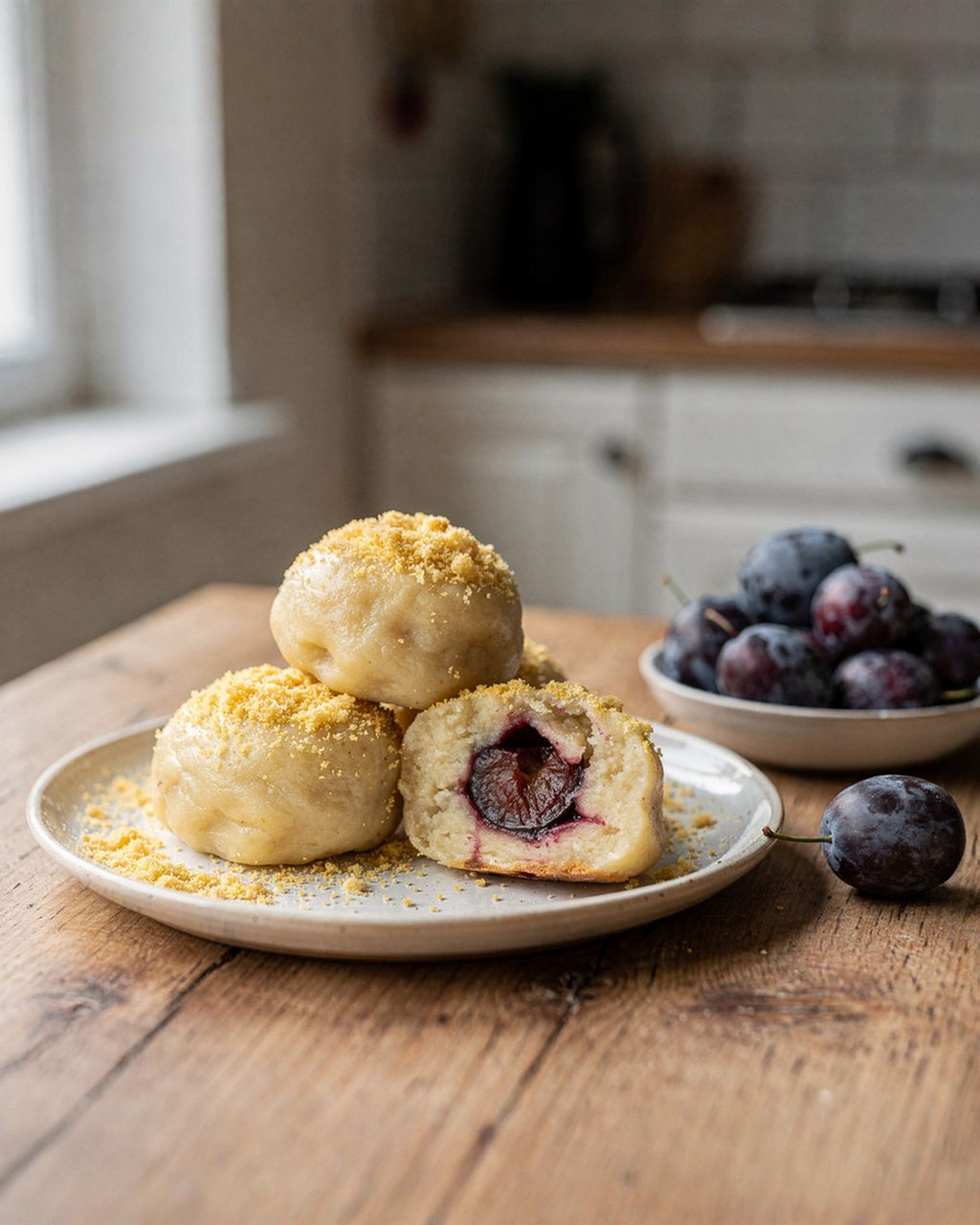
Apricot dumplings with curd cheese dough
Apricot dumplings made with quark dough
Dumplings made from choux dough don't fall apart because the starch in the flour is already gelatinized when you scald it in the pot. It still absorbs a little water as it cooks, but it holds together and doesn't disintegrate. The egg also firms the dough during cooking, as its proteins set.
Potato dough is different. Its strength depends on how floury your potatoes are and how much flour you add to them. That's why potato dumplings are the ones that fall apart most often. For a comparison of potato, quark and yeast dough, see the article Plum Dumplings: Which Dough to Choose and Why They Fall Apart.
If a choux dough dumpling still falls apart, the cause is usually one of these:
the dough wasn't scalded enough: it was still sticking to the sides of the pot
too many eggs: the wrapper is soft and swells
a crack or thin spot at the seam: water gets to the fruit and the juice softens the dough from the inside
the water boils too hard: the dumplings knock into each other and the wrapper gets rubbed off
Roll the dough out on a floured surface into a sheet about 5 mm thick and cut it into squares. Place a piece of fruit on each, pull the corners of the dough up and carefully seal and roll the dumpling into a ball in your palms. The seam must be pinched shut properly, with no thin spots.
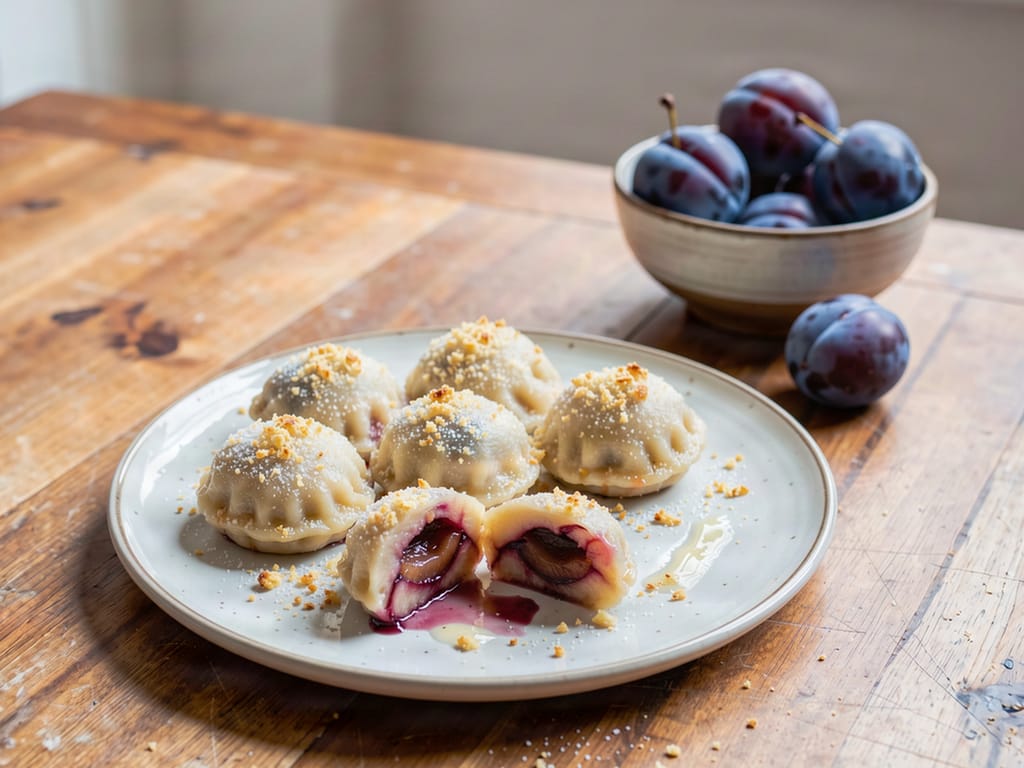
Plums: you can leave the pit in, or take it out and put a sugar cube in its place, or a pinch of cinnamon. Without the pit you have to seal the dumpling more carefully, because the juice from a cut plum runs more. Late plums in autumn have firm flesh and hold their shape best.
Apricots: they're larger, so they need a bigger square of dough. Use small apricots whole; halve large ones and replace the pit with a sugar cube. Soft, overripe apricots release a lot of juice, so choose firmer ones.
Strawberries: they're the most delicate. Pick smaller, firm ones, don't wash them right before wrapping (or dry them well) and wrap them in slightly thicker dough. Strawberries cook faster than plums, so the total cooking time is determined mainly by the dough.
Put frozen fruit into the dough still frozen; don't thaw it. Thawed fruit releases juice and softens the dough. Just keep in mind that the dumpling will take longer to cook, because the frozen center has to heat through too.
Cook choux dough fruit dumplings for 6–12 minutes from the moment they float to the top, depending on size (3–5 minutes longer with frozen fruit). The water should be salted and only gently bubbling. Approximate times from kitchen practice:
small dumplings (strawberries, small plums): about 6–8 minutes
medium (regular plums, small apricots): about 8–10 minutes
large (large apricots): about 10–12 minutes
with frozen fruit: roughly 3–5 minutes longer
The time is only a guide. What matters is whether the dumpling is heated all the way through: cut open the first cooked dumpling and check that the dough next to the fruit is cooked, not raw, and that the fruit is hot. Cook in a single layer so the dumplings have room around them. Lift them out with a slotted spoon, prick them with a fork to let the steam escape, and serve right away.
Choux dough for dumplings is firm and rolled out (1 egg to 250 g flour), whereas choux pastry for cream puffs (větrníky) is runny, piped from a pastry bag and has significantly more eggs. Dumpling dough needs plenty of flour so you can roll it out and wrap it around the fruit. With větrníky and věnečky (Czech cream-filled choux rings), on the other hand, steam from the moist, eggy dough puffs the shells into hollow shapes in the oven.
So you can't bake a cream puff from dumpling dough, and you can't wrap cream puff dough around a plum. To learn how to recognize the right consistency for cream puff dough, read the article Choux Pastry: How to Tell the Right Consistency and Why It Collapses After Baking.
Put cooked dumplings you don't eat in the fridge within 2 hours of cooking. They keep there for 3–4 days, then throw them out. In the freezer they keep good quality for 3–4 months. That's what USDA/FSIS gives for cooked leftovers. Frozen, they stay safe for longer, but they dry out and lose flavor.
Freeze them individually on a tray, and only once they're firm transfer them to a bag so they don't stick together. Reheat them in boiling water or steam until they're hot all the way through. FSIS recommends reheating leftovers to 74 °C (165 °F).
Don't leave raw wrapped dumplings sitting at room temperature. The dough contains raw egg and the fruit releases juice into it, so cook them as soon as you've wrapped them.
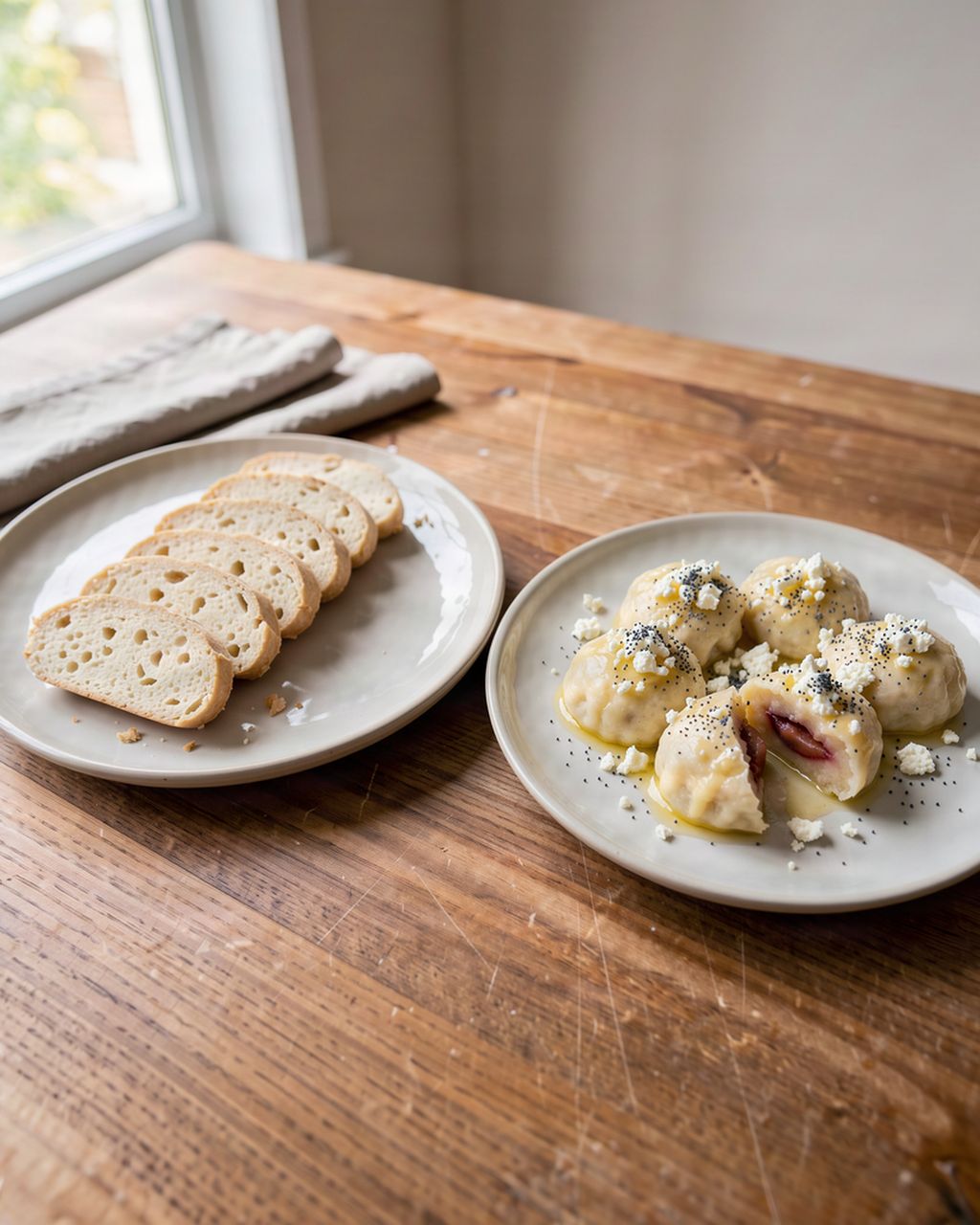
The classic is melted butter, quark and sugar. Toasted breadcrumbs or ground poppy seeds with sugar are often added too. Homemade plum povidla (Czech plum butter) is also good drizzled over plum dumplings. If you'd like dumplings made from a different dough, we have a recipe for plum dumplings made with potato dough and for yeast dumplings with fruit. For ratios and rising of yeast dough, see the article Yeast Dough for Buchty and Dumplings.
Choux dough made with 250 g semi-coarse flour, 250 ml milk, 50 g butter and one egg makes roughly 12–14 dumplings with plums or apricots. That's a main course for 3–4 people. With strawberries you'll get a few more, because they're smaller.
It's better not to make choux dumpling dough a day ahead, because it stiffens as it cools and contains raw egg. Stiff dough is harder to shape and shouldn't sit at room temperature. You can prepare the fruit in advance. If you want dumplings in stock, cook them and freeze them already cooked.
Yes, you can add quark (tvaroh, a Czech fresh curd cheese) to choux dough. Mix it into the cooled dough together with the egg, for example 100–125 g per basic batch. The dough will be smoother and softer, so it may stick more. Add a tablespoon or two of flour as needed and seal the dumplings carefully.
Yes, use a gluten-free baking blend instead of wheat flour. It scalds in a similar way, but the dough is more fragile and breaks more easily, so roll it a bit thicker and seal it gently. Without gluten, dumplings usually hold together less well, so cook them in gently simmering water.
Choux dough always loosens for a moment after the egg goes in, then comes back together as you knead it. If it stays runny, either it wasn't cooked (scalded) long enough in the pot or the egg was large. Work a tablespoon or two of semi-coarse flour into it on the work surface until it's smooth and elastic.
One recipe worth heating the oven for, one tip, and one deal from the shop. Nothing else.