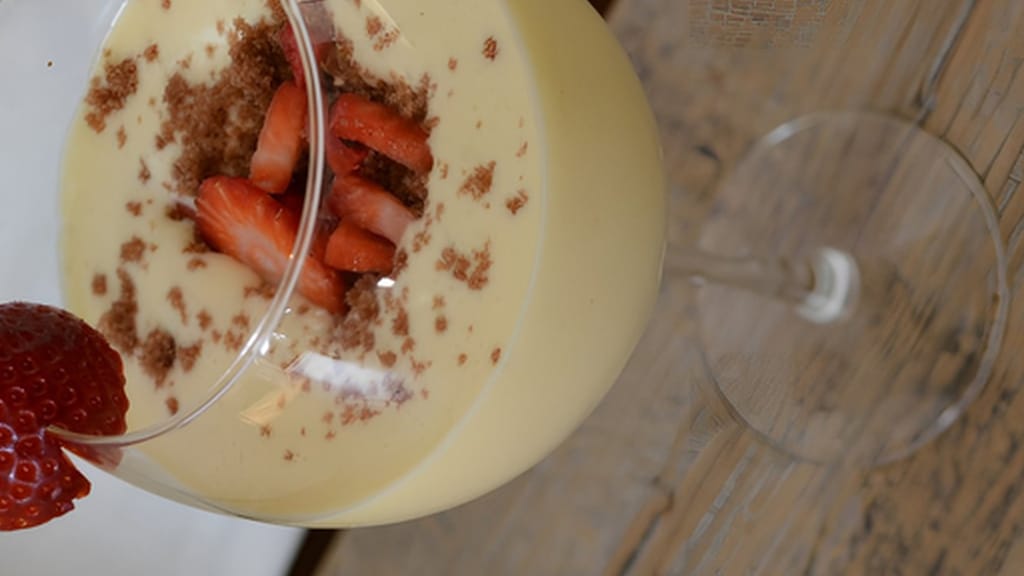
White chocolate mousse – light and fluffy
What to Substitute for Cocoa Butter: What Works in Ganache, Coating & Tempering
Updated Oct 4, 2026
The usual stand-ins for cocoa butter are white chocolate, refined coconut oil, or plain butter – which one works depends on what job the cocoa butter is doing in the recipe. Cocoa butter has one trick no other everyday fat can pull off: it's hard and brittle at room temperature, yet melts away in seconds in your mouth. As long as you don't need that exact property (ganache, cream fillings, thinning out a coating), finding a substitute is easy. But once a recipe depends on it – think tempered chocolate with that glossy shine and crisp snap – there's no real substitute. Only chocolate itself will do.
Pick your cocoa butter substitute based on what job it needs to do in the recipe: firm up a mixture (white chocolate), thin out chocolate (coconut oil), or seed crystals during tempering (chopped chocolate). Here's the breakdown by purpose:
Ganache, creams, mousses, truffles: white chocolate (it carries cocoa butter within it), or butter as an alternative.
Thinning chocolate for a coating or fondue: refined coconut oil, 5–10 g per 100 g of chocolate.
Seeding during tempering: chopped, already-tempered chocolate instead of cocoa butter powder.
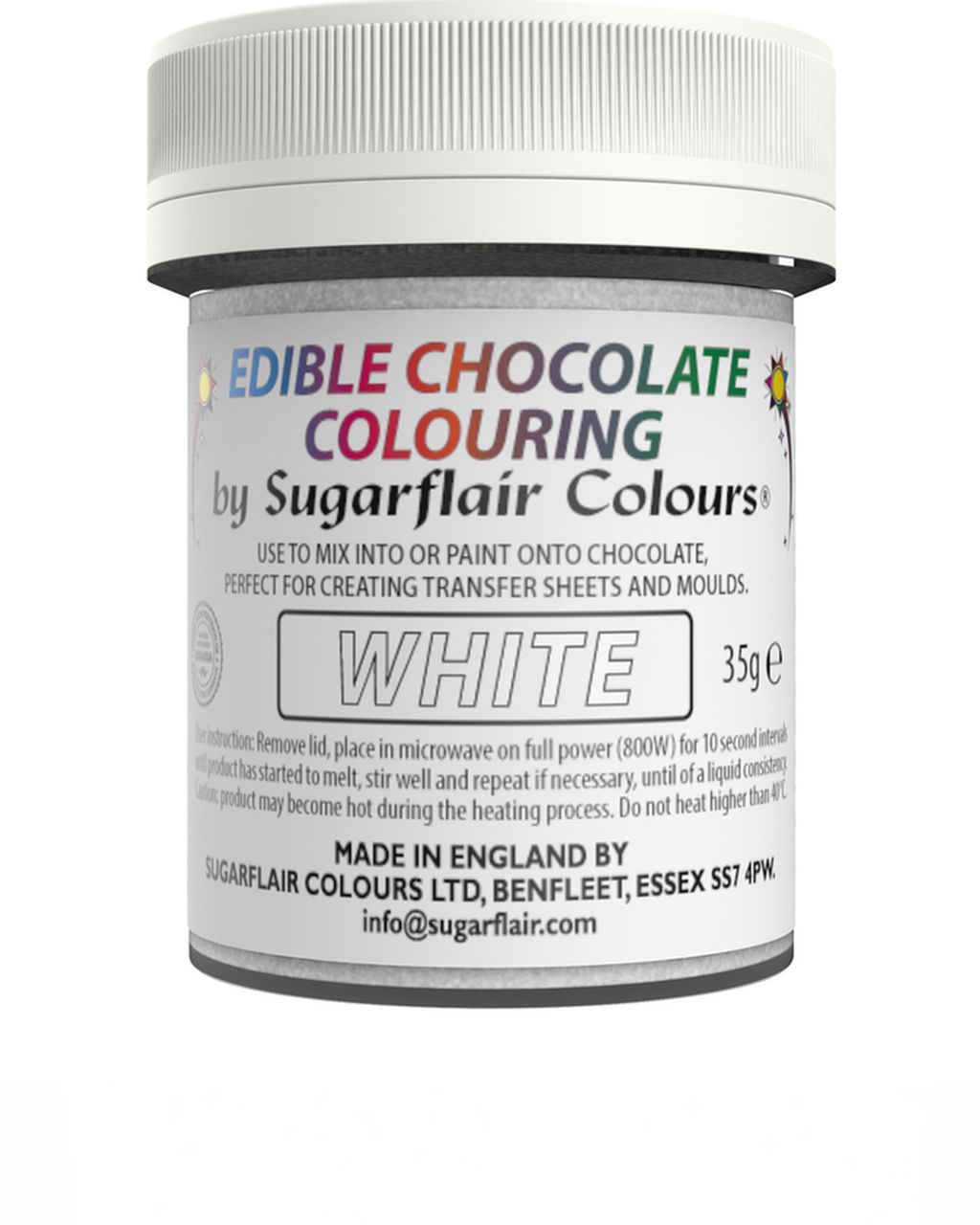
Colouring chocolate instead of using coloured cocoa butter: oil-based (fat-soluble) chocolate colouring.
Homemade "white chocolate" or raw chocolate: there's no real substitute here – without cocoa butter, it's simply a different product.
Flavour barely matters here, since deodorised cocoa butter is nearly tasteless – what matters is how it behaves with temperature.
Cocoa butter is tricky to substitute because, unlike any other common fat, it's hard and brittle at room temperature yet melts within seconds in your mouth. The cocoa butter in chocolate (Form V) melts at around 34°C (93°F) – just under mouth temperature – and below that, it's as hard as wax. According to food science literature, this kind of sharp melting point is practically unique among natural fats. That's exactly why chocolate snaps on the counter and melts away on your tongue.
The second trick is crystallisation. Cocoa butter can set into several different crystal forms, and only one of them (that same Form V) gives you the shine, the snap, and resistance to fingerprints. Tempering is really nothing more than steering the chocolate toward forming that one specific crystal structure.
Everyday fats simply can't do this:
Coconut oil already melts around 24–26°C (75–79°F) – it softens in a warm kitchen and melts in your hand.
Butter is only about 80–82% fat, with the rest mostly water. It starts softening at room temperature and melts gradually over a wide range (roughly 28–35°C/82–95°F), while cocoa butter melts sharply right around 34°C (93°F).
Oil is already liquid at room temperature, so it won't firm anything up at all.
That's why the food industry relies on specialised fats: EU regulations allow only six vegetable fats in chocolate (among them shea butter, palm oil, or mango kernel fat), and even those only up to 5% by weight. You won't find them in food-grade quality at home, so stick to the substitutes below instead.
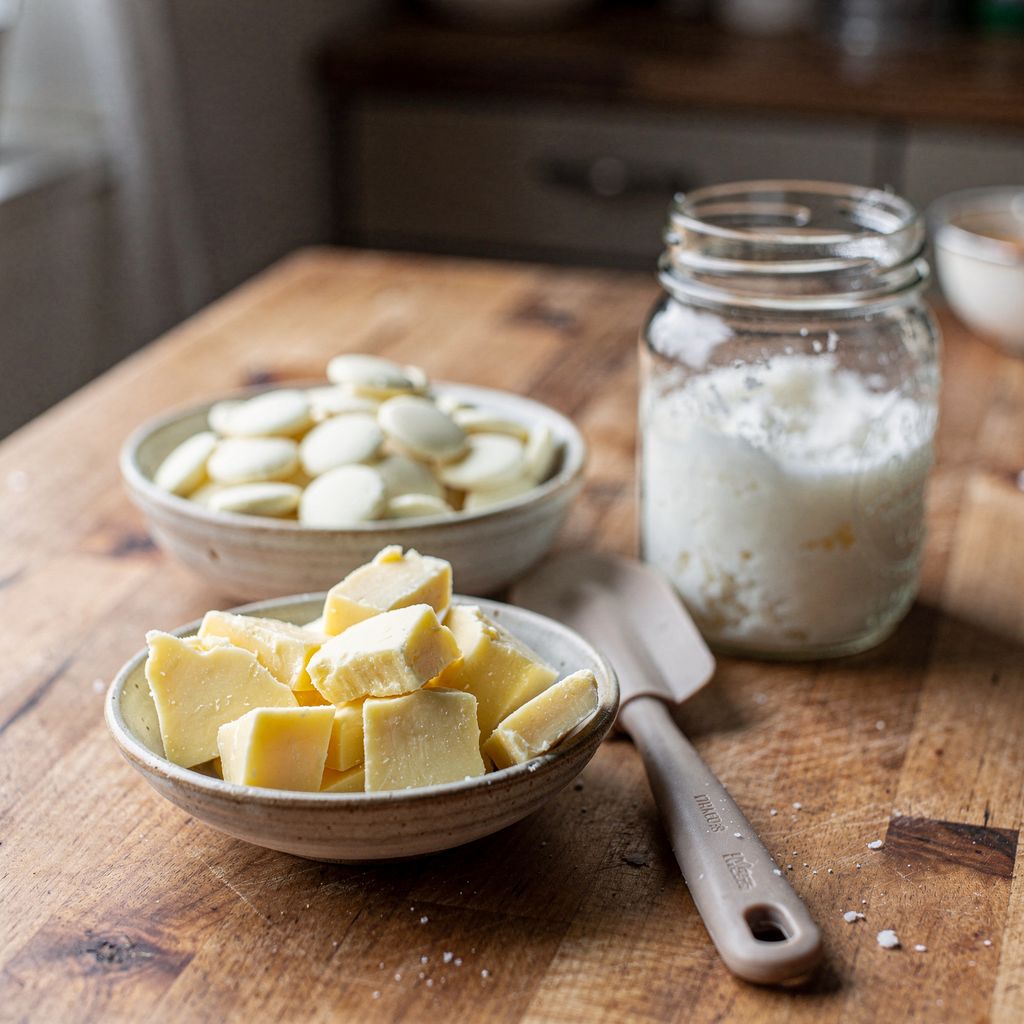
White chocolate is the closest substitute for cocoa butter simply because it already contains it – good-quality white chocolate is roughly a quarter to a third cocoa butter by weight, with the rest made up of sugar and milk solids.
When to use it: ganache, macaron filling, mousse, truffles, cake glaze – anywhere cocoa butter's job is to help a mixture set firm once it cools.
How to convert: for every 10 g of cocoa butter, use roughly 30–40 g of white chocolate instead. But since this also adds sugar and milk, you should:
cut back on sugar elsewhere in the recipe (start by halving the weight of the added chocolate),
expect a creamier, more milky flavour,
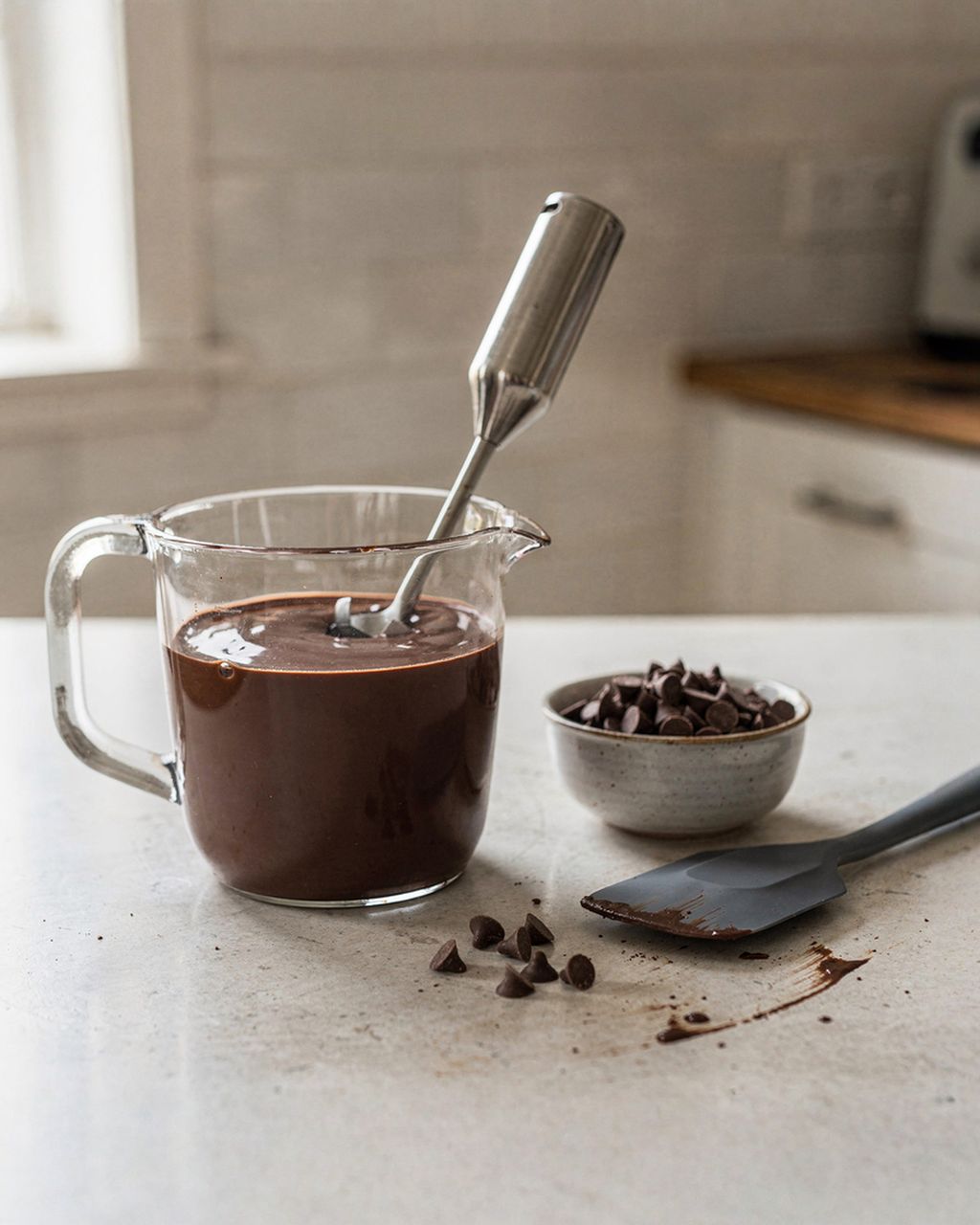
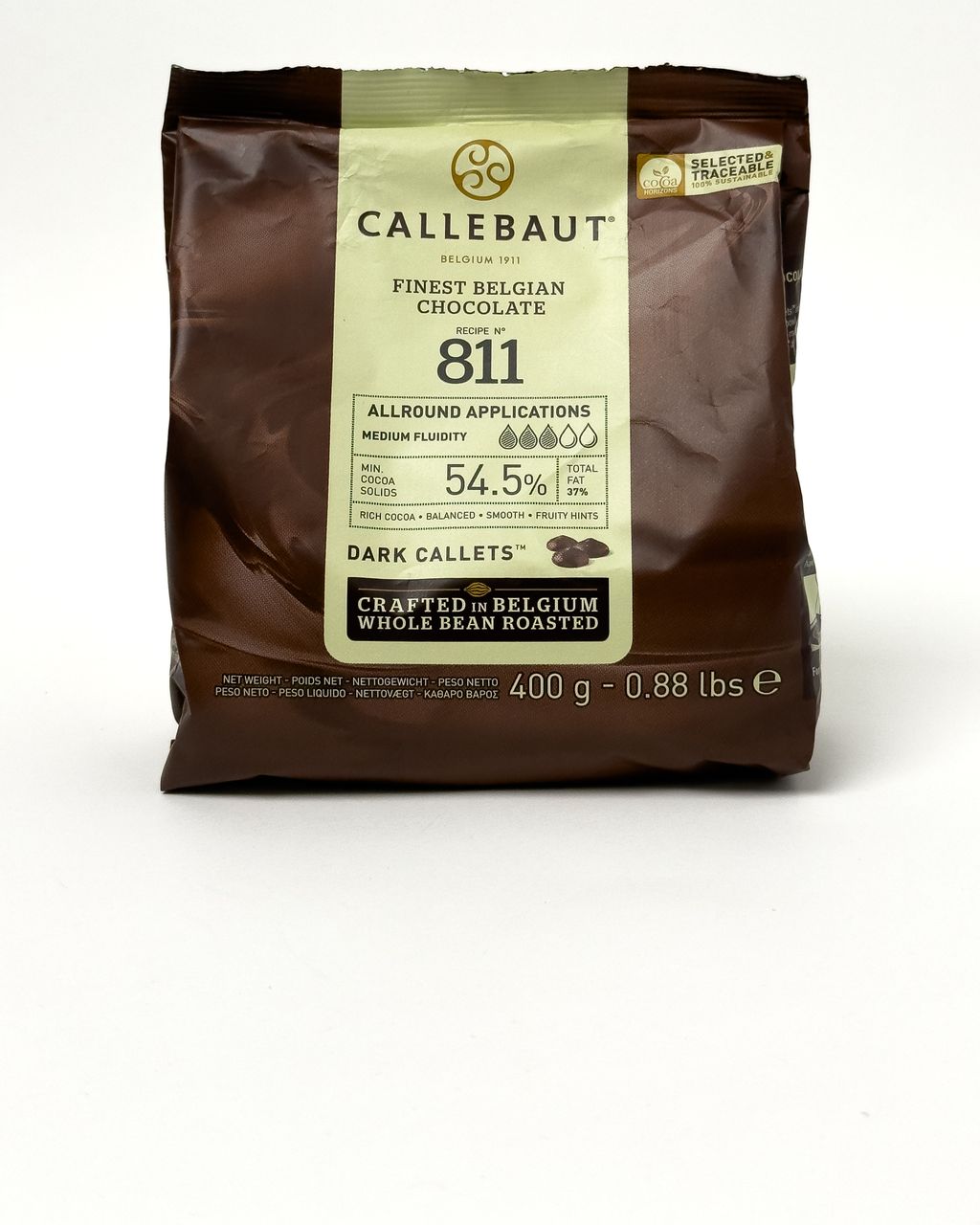
swap in dark chocolate instead of white for a dark-chocolate recipe – it has a similar cocoa butter content and won't throw off the flavour.
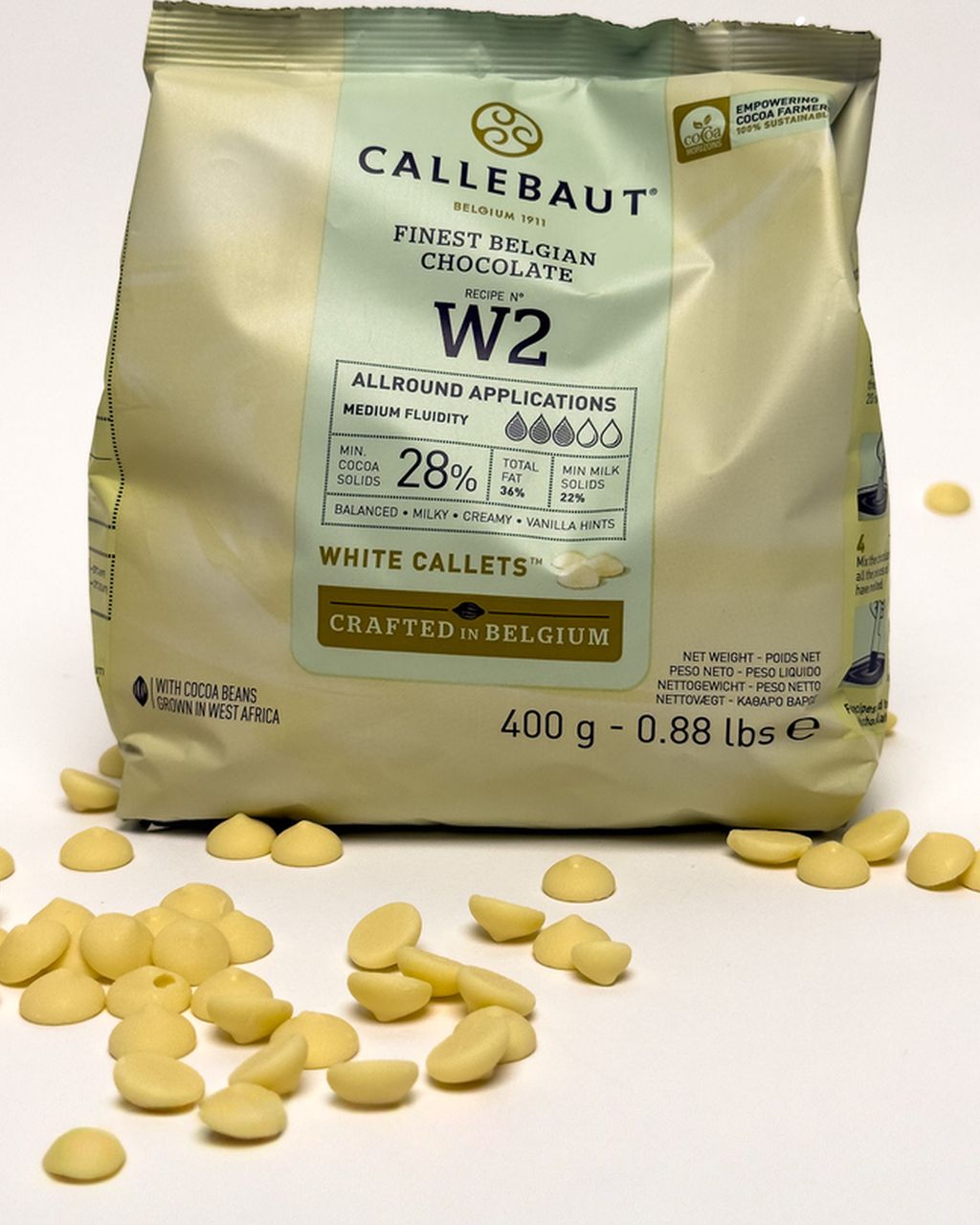
White chocolate is sensitive to heat, though. Melt it gently up to 40–45°C (104–113°F), or it will seize and turn grainy. For reliable results in ganache and coatings, check our baking white chocolate range – look for pastry-grade white chocolate with a higher cocoa butter content (the percentage is usually listed on the pack, often above 30%), as it flows the best.
To see it in action, take a look at our white chocolate mousse or white chocolate and coffee macaron filling – both rely on exactly this: the cocoa butter already present in the white chocolate.
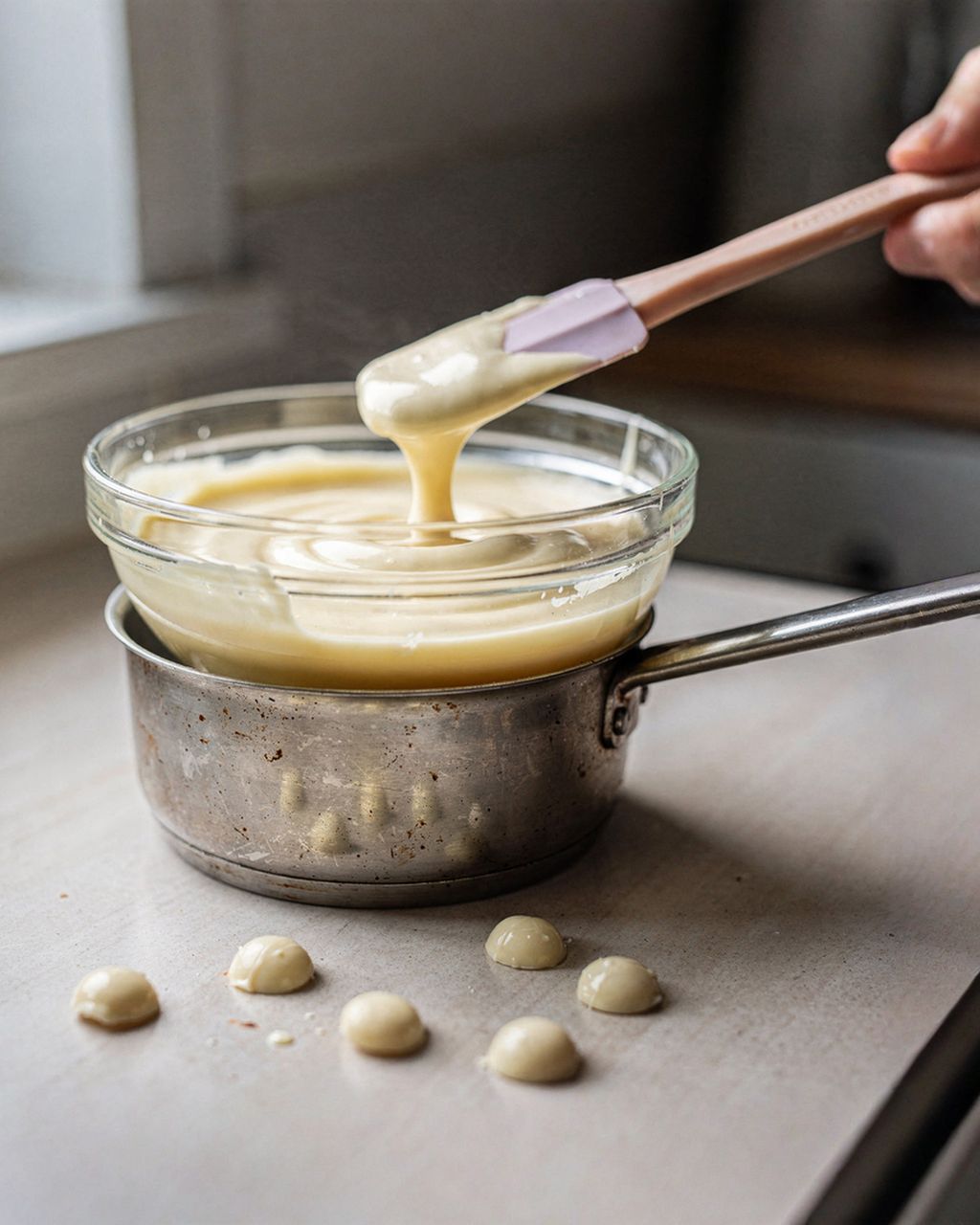
White chocolate mousse – light and fluffy
White chocolate mousse – held together by the cocoa butter from the chocolate itself

White chocolate and coffee cream - great in macarons and beyond
White chocolate and coffee macaron filling – sets firm thanks to the cocoa butter in white chocolate
Refined coconut oil is the best substitute for cocoa butter when you need to thin chocolate out – for a cake coating, dipping fruit, a chocolate fountain, or a "shell"-style crunchy ice cream coating.
Ratio: 5–10 g of coconut oil per 100 g of chocolate. Don't go higher – above 10–15%, the coating stays soft and leaves your fingers greasy once set.
What to watch out for:
Use refined (deodorised) coconut oil – virgin coconut oil smells distinctly of coconut.
A coating made with coconut oil won't snap or shine like properly tempered chocolate. Coconut oil lowers chocolate's melting point, so the coating softens sooner.
Keep it cool. At room temperature around 25°C (77°F), it will start to soften.
Coconut oil doesn't "play nicely" with cocoa butter in larger amounts – the mixture can turn greyish after a few days (fat bloom). That's not an issue for a coating that's eaten within 2–3 days, though.
Yes, but only where the extra water and softer result won't be a problem – in ganache, truffles, creams, and baking. Butter doesn't belong in melted chocolate meant for tempering or in chocolate moulds for pralines.
Ratio for ganache, truffles, and creams: for every 10 g of cocoa butter, use roughly 12 g of butter (82% fat). The extra 2 g makes up for the fact that butter is only about 82% fat, with the remaining 16% or so being water.
What this means for the result:
the ganache will be softer and will soften faster at room temperature – keep it refrigerated,
truffles will be harder to shape, so let them firm up in the fridge for at least 2 hours,
in baked goods (cookies, brownies), the water in butter isn't an issue, so you don't need the extra grams – a straight 1:1 swap works fine, since cocoa butter is only acting as fat there.
If your butter-based ganache splits into fat and solids, that's not a problem with the substitution – it's a broken emulsion. Fix it with an immersion blender and a spoonful of warm cream.
The best way to temper chocolate without cocoa butter powder is the seeding method using chopped chocolate – it produces crystals just as stable as powdered cocoa butter (like Mycryo), just in a larger dose.
Melt two-thirds of the chocolate: dark to 45–50°C (113–122°F), milk to 40–45°C (104–113°F), white to 40°C (104°F).
Stir in the remaining third as chopped chocolate or chocolate chips/wafers – these are already tempered from the factory.
Keep stirring until it drops to working temperature: dark 31–32°C (88–90°F), milk 29–30°C (84–86°F), white 28–29°C (82–84°F).
Run a test: dip the tip of a knife in and leave it at room temperature for 5 minutes. If it sets glossy with no streaks, you're done.
Why it works: store-bought chocolate already contains stable cocoa butter crystals, which it "passes on" to the rest of the batch. Cocoa butter powder does the same job, just at around 1%.
You can replace coloured cocoa butter for painting praline moulds with oil-based chocolate colouring mixed with a little melted white chocolate.
Stir the colouring into white chocolate warmed to 28–29°C (82–84°F), starting with just 1–2% of the weight.
Apply it with a brush or your finger into a clean mould, let it set, and only then fill the mould with chocolate.
Never use gel or liquid food colouring – it contains water and will instantly make the chocolate seize into a stiff paste.
The result is a touch less glossy than with coloured cocoa butter, but it's more than good enough for homemade pralines.
Cocoa butter can't be replaced where it's the main structural ingredient of the product itself:
homemade white chocolate (cocoa butter + sugar + milk powder) – swap in coconut oil and you get a soft "coconut bar," not chocolate,
raw chocolate made from cocoa powder and fat – without cocoa butter, it won't snap or hold its shape outside the fridge,
hollow chocolate figures or praline shells – these need properly tempered chocolate, not a substitute fat.
In these cases, the simplest approach is to skip cocoa butter altogether and just use good-quality chocolate – it already has cocoa butter in the right proportion, so all you need to do is temper it.
Yes, cocoa butter and cacao fat are just two names for the same thing – the fat pressed out of cocoa beans. Don't confuse it with "cocoa coating" or "compound coating," which usually replace cocoa butter with cheaper vegetable fats instead. One catch: "chocolate coating" (couverture) is actually the legal term for confectionery chocolate with a high cocoa butter content.
Yes, clarified butter (ghee) is a better substitute for cocoa butter than regular butter, since it has no water in it. It melts softly and gradually though, so while it will firm up a ganache just fine, it won't replace cocoa butter for tempering.
Food-grade cocoa butter keeps for roughly 2 years stored dry and dark at 15–20°C (59–68°F), since it turns rancid only very slowly. Keep it tightly sealed so it doesn't pick up smells from around it, and skip the fridge – condensation there will introduce moisture.
No, cocoa powder won't substitute for cocoa butter – it's actually what's left of the cocoa after the fat has been pressed out, and it only contains about 10–24% fat (defatted cocoa around 10–12%, standard cocoa at least 20%). Powder will add flavour and colour, but it won't firm up a mixture; you still need to add fat separately.
You can find food-grade cocoa butter at specialist baking and confectionery suppliers, health food shops, or online – usually as drops/wafers (chips), a solid block, or a powder for tempering. Look for a "food grade" label, and check that it's hard at room temperature and snaps cleanly when broken; soft or waxy butter is probably a different fat altogether. Scent isn't a reliable test of authenticity – unrefined cocoa butter smells of cocoa, while deodorised butter is nearly scentless. A white bloom on the surface is just fat bloom, not proof it's a different fat.
One recipe worth heating the oven for, one tip, and one deal from the shop. Nothing else.