Can You Freeze Cheese? Edam, Parmesan, Hermelín, Blue Cheese, Quark and Mascarpone
Can You Freeze Ham, Salami and Bacon? Which Cured Meats Handle the Freezer
Updated Nov 17, 2026
You can freeze ham, salami and bacon, along with most cooked and raw cured meats, such as gothaj (a Czech cooked sausage), hot dogs, fresh sausage, and also bacon and speck-style fatback (špek). They stay safe, but flavor and texture only hold up for so long: the US food safety agency USDA/FSIS gives 1–2 months in the freezer for sliced ham and salami, and just 1 month for bacon. Dry-cured salamis and guanciale don't need the freezer: hunter's salami (lovecký salám) and fuet keep in a cool pantry, and guanciale in the fridge. Below you'll find what goes where, how to wrap, thaw and use cured meats, and when it's better to simply eat them.
Cooked and raw cured meats with a higher water content handle the freezer well, while dry-cured salamis don't need it.
Freeze well: fresh sausage (raw or cooked).
Freeze well, but keep only about 1 month: bacon and špek (Czech smoked fatback) – because of the salt and high fat content, they go rancid faster than fresh meat.
Can be frozen, but the texture suffers: ham, gothaj, hot dogs and other soft sausages – after thawing they release water and are better suited to cooking than to sandwiches.
Not worth freezing: hunter's salami (lovecký salám), fuet and other dry-cured salamis – they keep in the fridge or pantry, and freezing adds nothing.
Doesn't need the freezer, but leftovers can go in: guanciale – it belongs in the fridge, but you can freeze leftover pieces cut into strips.
The general rule from USDA/FSIS: at 0°F (−18°C) in the freezer, food stays safe indefinitely, but quality gradually declines. The times below are therefore for good flavor, not safety limits. Salt also plays a role with cured meats – according to the US National Center for Home Food Preservation (NCHFP), it speeds up fat rancidity, which is why salted and smoked products have a shorter freezer life than fresh meat.
Seasonal baking plans, tested recipes and kitchen tricks that save you time. Unsubscribe in one click.
You can freeze ham, gothaj and hot dogs – they keep 1–2 months in the freezer, but they'll be softer and wetter after thawing.
Times according to USDA/FSIS:
Sliced ham and salami (opened package or from the deli counter): 3–5 days in the fridge, 1–2 months in the freezer.
Unopened package of salami: 2 weeks in the fridge, 1–2 months in the freezer.
Hot dogs: unopened 2 weeks in the fridge, opened 1 week, 1–2 months in the freezer.
Why the texture changes: ham and gothaj contain a lot of water. When frozen, ice crystals form and break up the protein structure, and the water is released after thawing. The slices then tend to look shiny and a little rubbery, and gothaj can crumble. It's not ideal for a sandwich, but it doesn't matter in baked dishes. So use thawed ham right away in šunkofleky with sauerkraut or in croque monsieur with ham and cheese.
Freeze it fresh, not on its "last day." The freezer pauses the clock; it doesn't turn it back. Ham you freeze on day three after opening will be three days old again once thawed. We cover how long cured meats keep in the fridge alone in a separate article, smoked meat in the fridge: how long it lasts.
You can freeze fresh sausage without worry – it's raw ground meat in a casing and freezes just as well as fresh meat.
Times according to USDA/FSIS:
Raw fresh sausage: 1–2 days in the fridge, 1–2 months in the freezer.
Cooked sausage: 3–4 days in the fridge, 2–3 months in the freezer.
Freeze raw sausage right after buying it, ideally in single pieces side by side so they don't freeze into one block. Then cook it thawed – frozen in the pan, it bursts and browns on the outside before it cooks through inside. Cook the sausage to 71°C (160°F) inside, the temperature USDA/FSIS gives for ground pork. Let cooked sausage cool, wrap it airtight and reheat it until piping hot.
You can freeze bacon and špek, but expect a shorter time: USDA/FSIS gives bacon 7 days in the fridge and 1 month in the freezer.
The reason is the combination of salt and fat. Salt speeds up rancidity in the freezer (NCHFP), and bacon and špek are high in fat. After a long time in the freezer they aren't dangerous, but they taste stale, papery or even soapy. FSIS doesn't list špek separately; treat it like bacon.
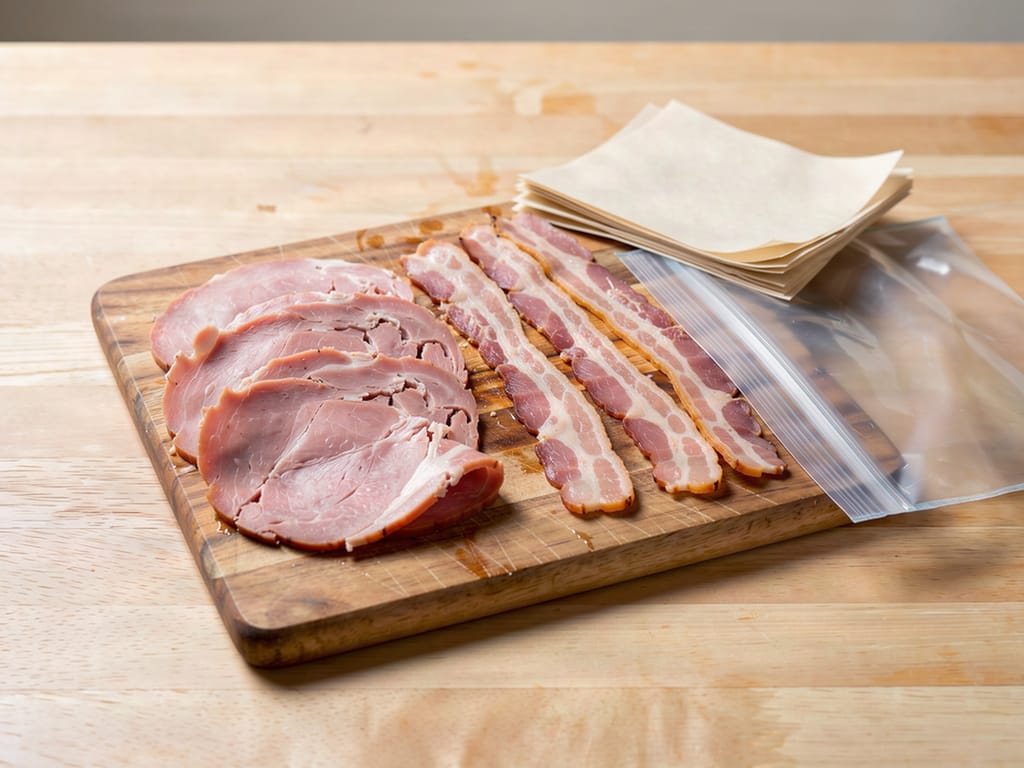
Practical trick: cut or separate the bacon into slices, lay them on parchment paper, freeze them loose and only then tip them into a bag. That way you take exactly as much as you need, and you can put it straight into the pan frozen – unlike sausage, it doesn't mind. It's handy for pumpkin soup with crispy bacon, for wrapping pork tenderloin with plums and bacon, and diced špek goes into hearty garlic soup with špek.
Wrap cured meats as tightly as you can and without air – air is what causes freezer-burned edges and a rancid taste.
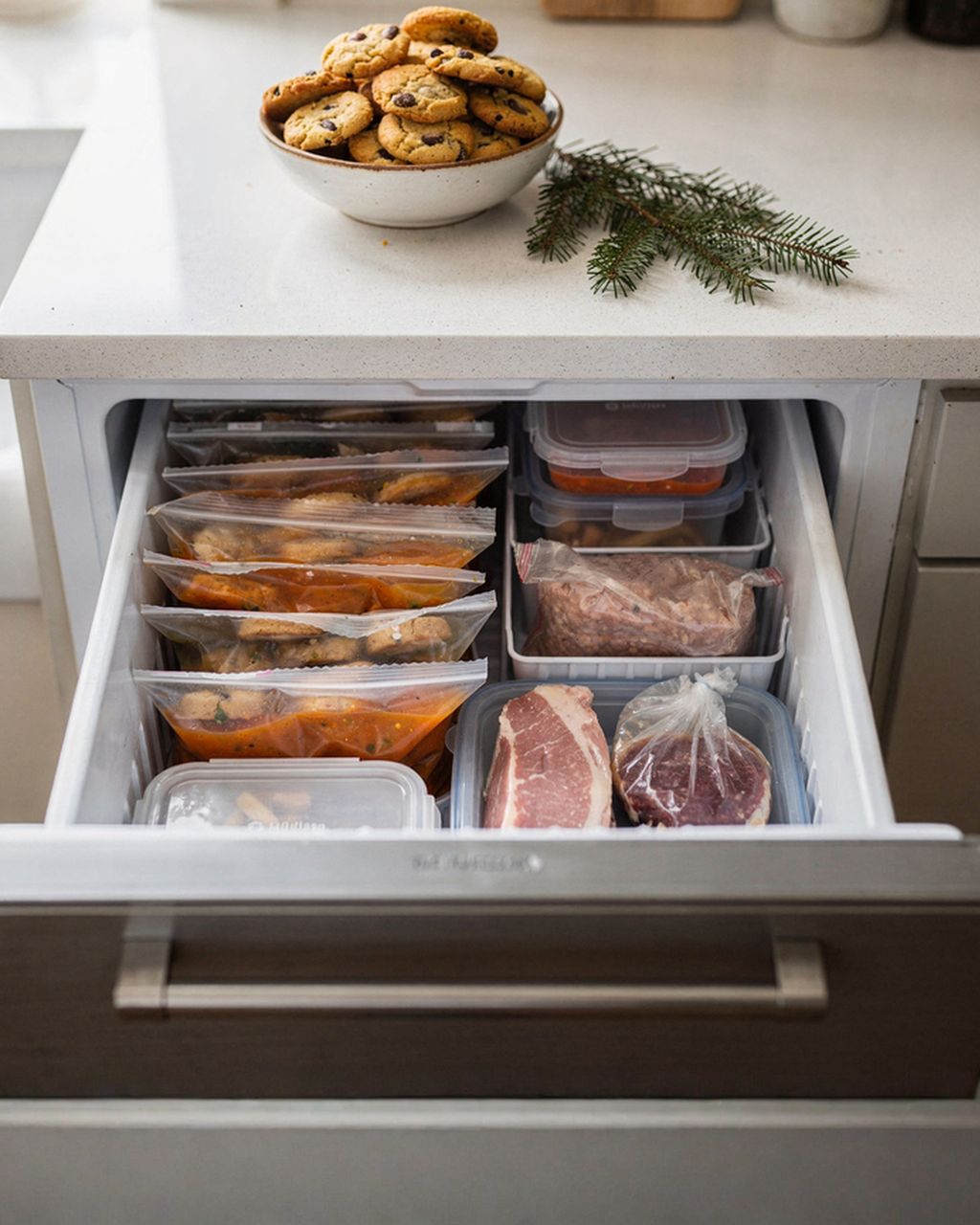
Divide into portions you'll use at once. Layer slices of ham or bacon with parchment paper so they can be separated.
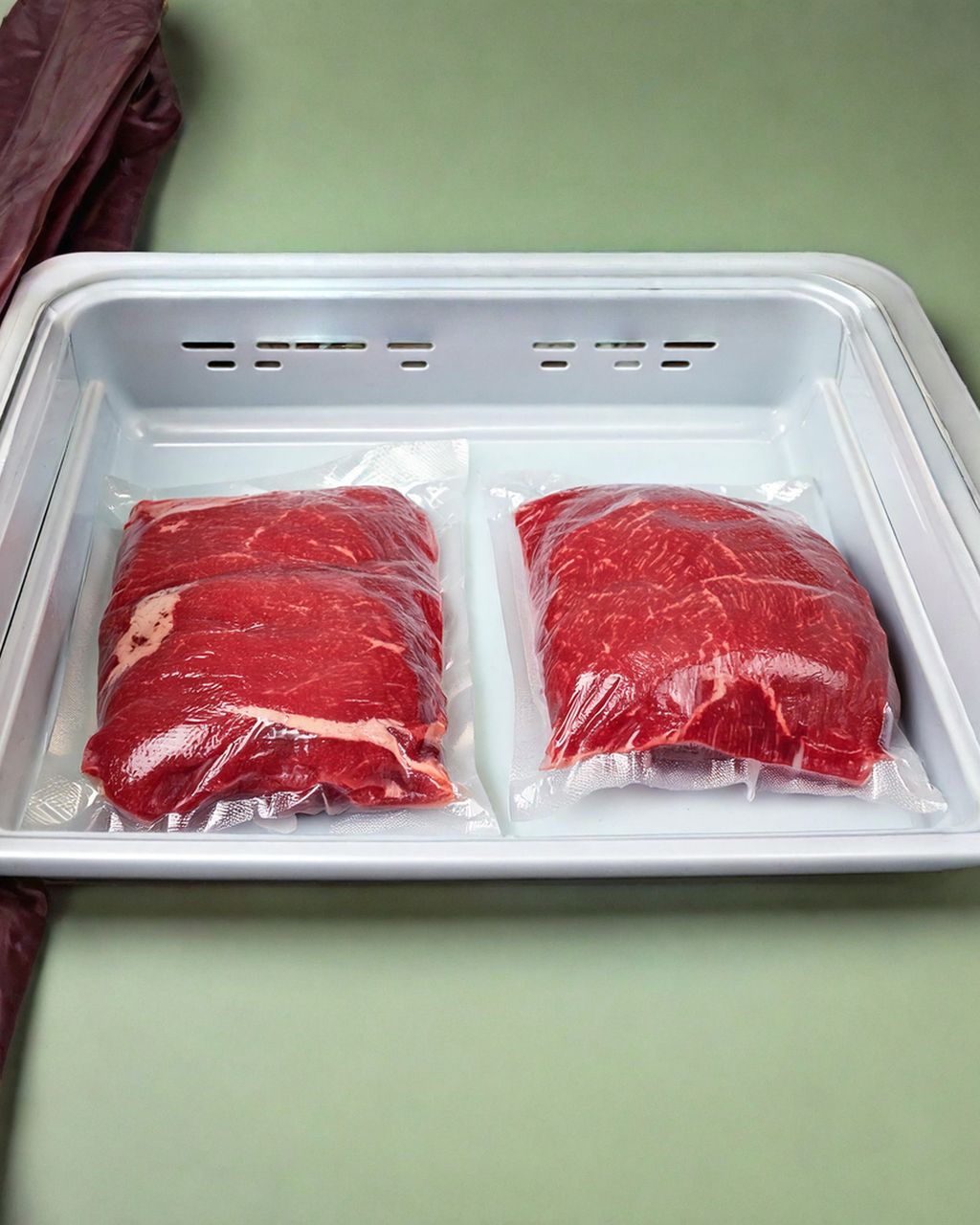
Press out the air. Use a freezer bag and squeeze the air out, or vacuum-seal the meat. An unopened store package can be frozen as is for a short time; for longer storage, USDA/FSIS says to add a layer of wrap or put it in a freezer bag. What vacuum packing can and can't do is covered in the article on vacuum-packed meat in the fridge.
Label with the date and contents. In two months you won't know whether it was gothaj or ham salami.
Freeze quickly and flat. A thin layer freezes faster, the ice crystals are smaller and the texture suffers less.
Thaw cured meats in the fridge, not on the counter – that's what both USDA/FSIS and the UK's FSA recommend.
In the fridge: thin slices overnight, a whole piece or sausages about a day.
In cold water: in a sealed bag, changing the water every 30 minutes (USDA/FSIS). Then cook right away.
Without thawing: bacon and špek go straight into the pan, and ham cut into strips goes straight into a sauce or bake.
According to the FSA, use thawed cured meats within 24 hours.
Hunter's salami (lovecký salám) and fuet are fermented, dried salamis – store them somewhere cool and dry, whole ones can even stay out of the fridge, and cut ones belong in the fridge.
USDA/FSIS gives this for hard dry salamis:
Whole, unopened: 6 weeks in the pantry at room temperature, indefinitely in the fridge.
Opened: 3 weeks in the fridge, or as long as it smells and tastes good.
Always follow the manufacturer's date and conditions on the package, though – hunter's salami in a protective atmosphere or sliced fuet in a tray belongs in the fridge from the start.
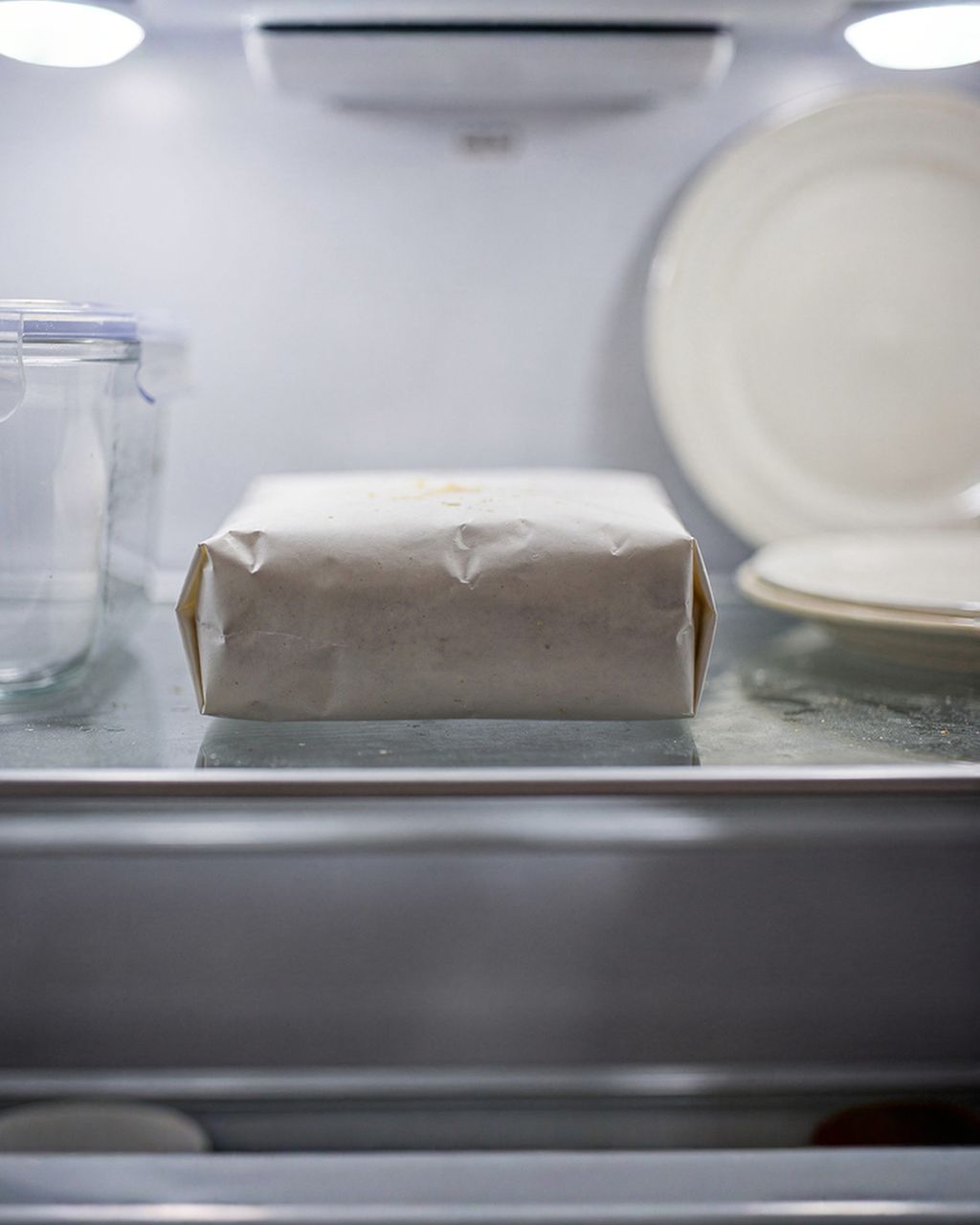
Keep a whole salami in its original wrapping or wrap it in paper (parchment, a paper bag), not plastic. Salami needs to breathe; in plastic it sweats and molds.
Wrap an opened salami in paper cut side down and put it in the fridge. The paper and the board cover the cut surface so it doesn't dry out.
The white coating on fuet is, on traditional products, a noble mold that belongs to the salami (the producer usually notes it on the package). Unfamiliar green, black or fuzzy mold does not.
You don't need to freeze hunter's salami or fuet – they keep a long time without it, and after thawing they tend to be less firm and harder to slice.
Store guanciale, cured and dried pork jowl, in the fridge wrapped in paper, and follow the manufacturer's date on the package.
Unlike bacon, it isn't smoked, just salted and dried, so it behaves more like dry-cured ham than like bacon. Wrap a whole piece in parchment paper so it doesn't dry out or absorb fridge odors. Put sliced pieces or cubes in a container and use them within the time the manufacturer gives for an opened package.
If you have more than you can use: cut it into strips, freeze them loose on paper and tip them into a bag. They then go straight from the freezer into the pan, for example for spaghetti carbonara or Roman pasta all'amatriciana, where the guanciale renders down with tomatoes and pecorino.
Use opened špek within about 7 days. USDA/FSIS doesn't list it separately, but gives exactly this time for bacon, which it resembles. Unopened vacuum-packed špek keeps until the manufacturer's date on the package. Wrap it in paper or put it in a container so it doesn't absorb odors, and throw it out if it tastes rancid or soapy.
Rancid bacon smells and tastes sharp, papery or soapy, and its fat turns yellowish instead of white. Dry grayish-white patches on the surface are freezer burn: they aren't dangerous, just dry and flavorless, so cut them off. Rancid bacon usually isn't dangerous, but it will ruin the whole dish, so it's best to throw it out.
Yes, you can freeze a whole cooked ham, and according to USDA/FSIS it keeps its quality for 1–2 months in the freezer; in the fridge a whole cooked ham lasts about 7 days, and a cut one 3–5 days. FSIS doesn't list a piece of smoked meat separately, so treat it like cooked ham. Cut a large piece into portions, wrap them airtight and thaw in the fridge; a piece frozen whole freezes and thaws more slowly, and the texture suffers more.
Yes, you can freeze unopened hot dogs or fresh sausage right in the original package, which USDA/FSIS says is safe. But the thin store wrap lets air through, so for longer storage add a layer of wrap or put the package in a freezer bag. Rewrap fresh sausage from the deli counter right away, since paper or a bag won't do. Freeze the links side by side so they don't freeze into one block.
Don't refreeze thawed ham or bacon until you've cooked or baked it (FSA). Refreezing gives bacteria such as listeria more time to grow, and the texture gets worse each time. But if you bake the ham into a dish such as šunkofleky (a Czech ham-and-pasta bake) or cook the bacon, you can freeze the finished dish again.
One recipe worth heating the oven for, one tip, and one deal from the shop. Nothing else.