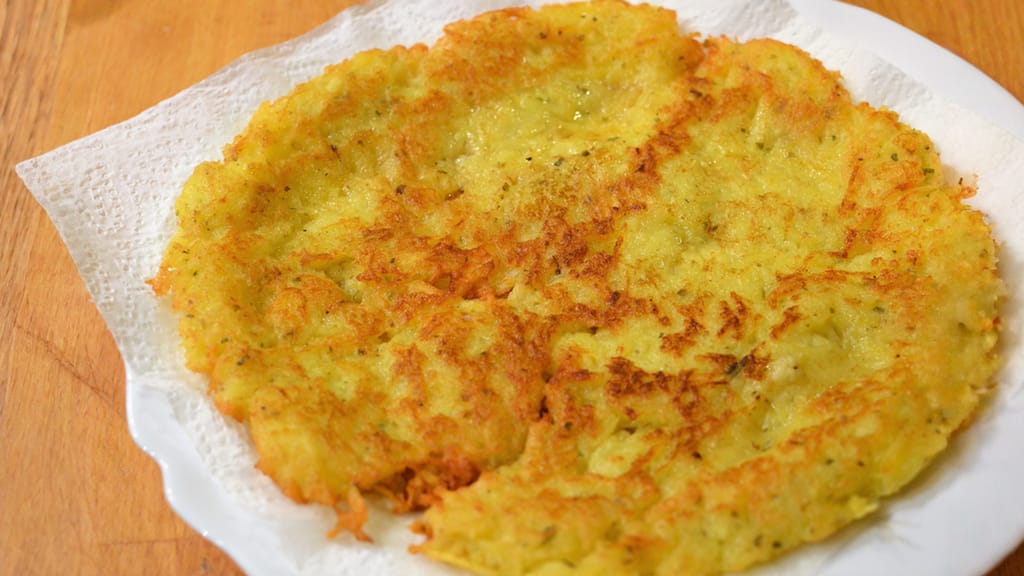
Traditional crispy garlic potato pancakes
Potato Pancakes (Bramboráky): Recipe, Plus Lokše, Patenty and Oven-Baked
Updated Nov 20, 2026
Bramboráky are Czech potato pancakes made from raw grated potatoes with garlic, marjoram and caraway, fried thin and hot in lard or oil until the edges are crisp and golden. An egg and a little all-purpose (plain) flour hold the batter together. The whole secret lies in how much water you squeeze out of the potatoes, how thin you spread the batter and how hot the pan is. Below you'll find the traditional method and why it works, plus more Czech potato flatbreads and cakes: lokše and patenty made from boiled potatoes, potato lívance (small pancakes), baked potato patties, a zucchini version and oven-baked bramboráky.
Bramborák is made from raw grated potatoes, while a potato flatbread (lokše, patent) is made from boiled ones. Everything else follows from that: flavor, texture and method.
Bramborák (in some regions called cmunda, vošouch or strouhanec): raw potatoes, garlic, marjoram, caraway, egg, flour. The thin batter is spooned into a pan with hot fat and fried. It's crisp at the edges and tender inside.
Lokše: boiled, cooled and riced potatoes, all-purpose (plain) flour and salt. The dough is rolled into thin flatbreads and cooked in a dry pan. It's soft, pliable and can be wrapped around a filling.
Patenty: the same dough as lokše, but the flatbreads are spread with plum butter (povidla), sprinkled with poppy seeds and rolled up. This is the sweet version.
Potato lívance and patties: boiled potatoes, flour and usually an egg. The dough is shaped by hand or cut out, and the cakes are thicker than lokše.
In practice, that means you can make bramboráky in under an hour from ingredients you already have at home. Lokše and patenty need potatoes boiled and cooled ahead, ideally the day before. If you're looking for more ideas for what to cook with potatoes, check out our guide to what to cook with potatoes.
Seasonal baking plans, tested recipes and kitchen tricks that save you time. Unsubscribe in one click.
For bramboráky, use late-season, firm all-purpose potatoes (type B), or the starchier type C. Early (new) potatoes aren't suitable. Late potatoes have more starch and less water, so the batter holds together better and the pancakes turn golden more easily.
Late potatoes (from September onward) are the best for bramboráky. The starch they release when grated naturally thickens the batter, so you don't need as much flour.
Type B (all-purpose, semi-firm) is the universal choice. Our traditional recipe below uses it too.
Type C (starchy, floury) has the most starch and gives the silkiest center. After squeezing, the batter tends to be thicker, so add the flour carefully.
Early potatoes are watery. The batter thins out, the pancakes spread and they crisp less.
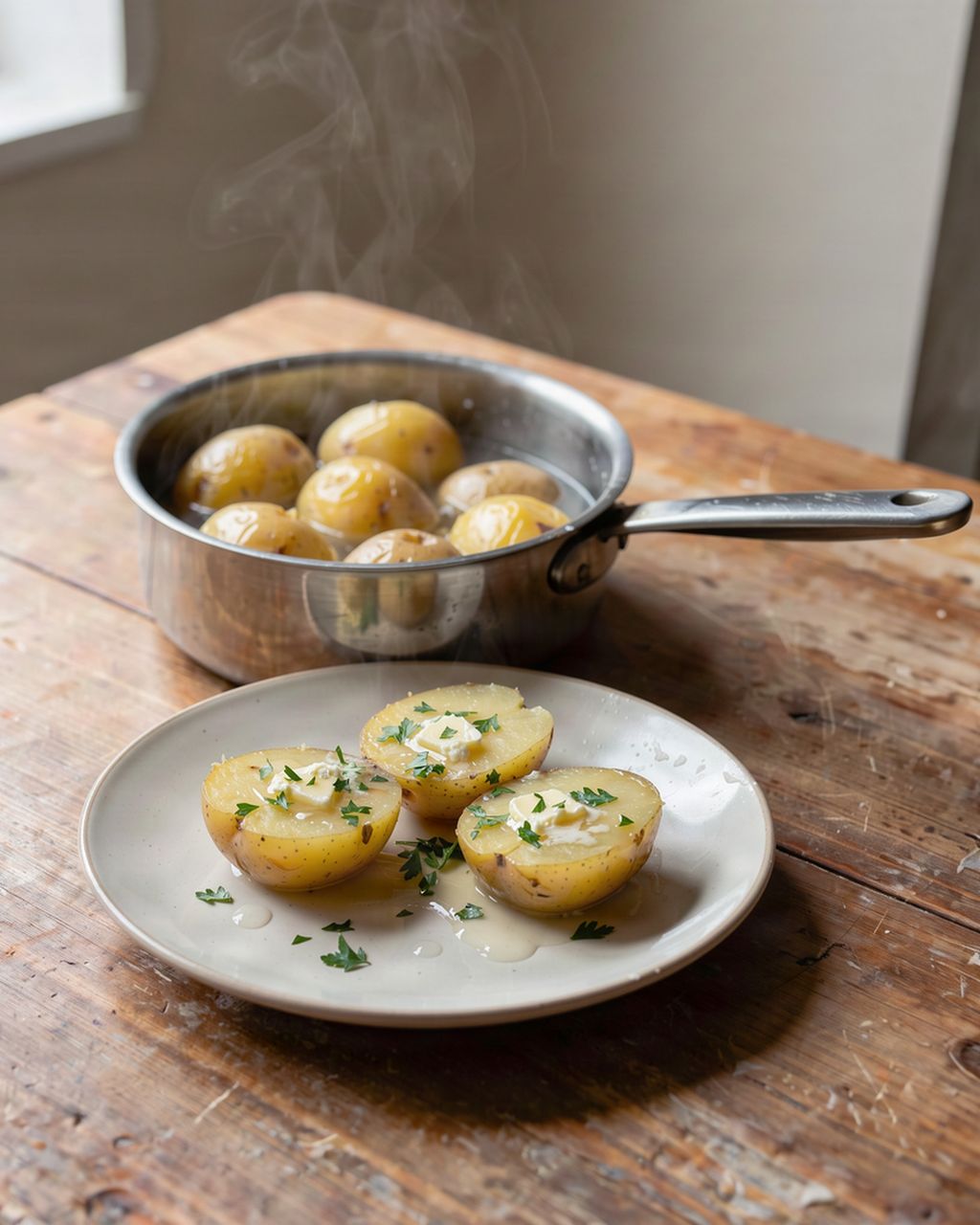
The same goes for lokše and patenty, only more so. Boil the potatoes in their skins so they don't absorb water, and let them cool completely. For how to cook them just right, see our article on how to boil potatoes in their skins. The drier the potatoes, the less flour the dough needs and the more it tastes of potato rather than dough.
Traditional bramboráky = 1 kg potatoes, 6 cloves garlic, 150 ml hot milk, an egg, salt, pepper, caraway, marjoram and about 100 g all-purpose flour, fried thin in lard. That's how our recipe Traditional Crisp and Fragrant Bramboráky works, and it makes 4 servings in about 55 minutes.
Peel and grate. Peel, wash and dry the potatoes. Grate half finely and half coarsely. The fine part thickens the batter and holds it together, while the coarse part gives the pancake texture and crisp "frills" at the edges.
Squeeze out the water. Squeeze the grated mixture in your hands or through a clean kitchen towel. Any water left in the batter turns to steam in the pan, and the pancake steams instead of frying.
Pour hot milk over right away. Immediately pour hot milk over the squeezed potatoes. The recipe does this so the potatoes don't darken, and the milk also gives the batter a pleasantly softer texture.
Season. Add salt, pepper, caraway, dried marjoram, pressed garlic and the egg. Six cloves per kilo of potatoes sounds like a lot, but a bramborák should smell of garlic, not merely hint at it.
Adjust with flour little by little. Don't add the flour all at once. Add only enough that the batter pours well but doesn't run into a thin mush in the pan.
Heat two pans. Heat rendered lard in two large nonstick skillets. Two pans mean one is frying while you fill the other, and the work goes faster.
Thin and hot. Spread the batter as thin as you can. The thinner the bramborák, the crisper it is. Fry over higher heat until the edges turn golden and start to lift, then flip.
Bramboráky are best straight from the pan, hot. As they cool they lose crispness, but they still taste great. If you don't want lard, use an oil with a higher smoke point. The flavor will be more neutral, but the method stays the same.
Traditional crispy garlic potato pancakes
Traditional crisp bramboráky with garlic, marjoram and caraway, fried in lard
You'll make the best bramboráky by following seven rules: squeeze out the water, grate to two textures, add flour by the spoonful, heat the pan well, don't skimp on fat, don't overcrowd the pan and fry only until golden. Most failed bramboráky (rubbery, greasy, falling apart) break at least one of them:
Squeeze out as much as you can. Water is the biggest enemy of crispness. You can let the squeezed-out liquid stand for a while. White starch settles at the bottom; pour off the water and return the starch to the batter. It thickens it better than extra flour.
Grate to two textures. Half fine, half coarse. Fine only gives you a dense pancake with no texture, coarse only and your bramborák will fall apart.
Add flour at the end, a spoonful at a time. Every extra spoonful moves the bramborák closer to a pancake batter. The batter should flow slowly off the spoon, not stand like porridge.
Get the pan properly hot. The fat must be hot before the batter goes in, and a drop of batter should sizzle immediately. In lukewarm fat the bramborák soaks up the fat and stays pale and greasy.
Don't skimp on fat, but the bramborák shouldn't swim in it. The bottom of the pan should be covered with a continuous thin layer of fat so the edges really fry. Top up the fat after each batch so the pan never runs dry.
Don't overcrowd the pan. Two to three bramboráky at a time. More batter cools the pan down and the pancakes start to steam in their own vapor.
Fry until golden, not brown. A golden color and crisp edge is the goal. Dark brown to black spots are bitter and also mean more acrylamide (explained below).
One more practical tip: don't stack finished bramboráky on a plate, as the bottom ones would go soft in the steam. Spread them side by side on a wire rack or paper towel and serve as soon as possible. Sauerkraut, beer or just a sprinkle of salt are the classic accompaniments. A modern variation is sour cream with chives.
Bake bramboráky in the oven on a baking sheet lined with parchment paper at 200–220°C (400–425°F) for about 25–30 minutes, flipping halfway. You don't have to stand at the stove topping up fat in the pan. In return you lose some crispness, because an oven never fries as fiercely as a pan.
Method with raw potatoes (we don't have our own recipe for this version yet):
Prepare the same batter as for classic bramboráky, just make it a touch thicker and squeeze out the water even more thoroughly. A thin batter spreads on the baking sheet and the bottom won't set.
Line the baking sheet with parchment and brush the paper with oil. Spread the batter into thin pancakes and lightly brush or spray the tops with oil too. Without fat on the surface, the bramborák won't brown, it will just dry out.
Bake in the upper third of the oven, flipping the pancakes halfway through. They're done when the edges are golden and they come away from the paper.
For a crisper bottom, a perforated mat that lets hot air circulate helps. On Yumsto you'll find a perforated silicone baking mat, and the pancakes on it need less watching.
You can also finish potato patties made from boiled potatoes in the oven: our recipe baked potato patties with vegetables and cottage cheese tops them with sautéed vegetables and cottage cheese and bakes them briefly. For a whole tray of other oven dishes, see our article on baked potatoes and pasta bakes.
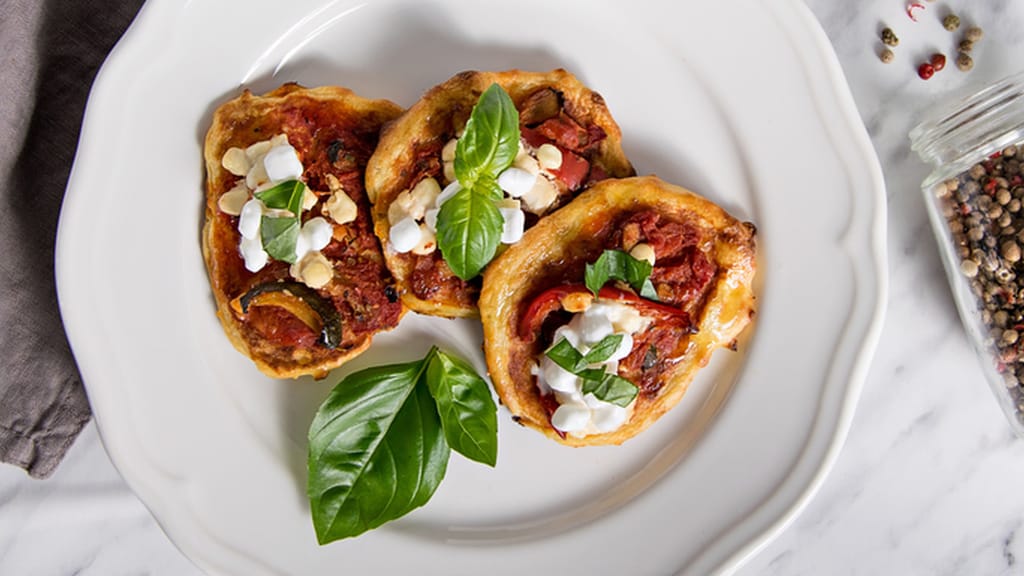
Baked potato patties with vegetables and cottage cheese
Oven-baked potato patties with vegetables and cottage cheese
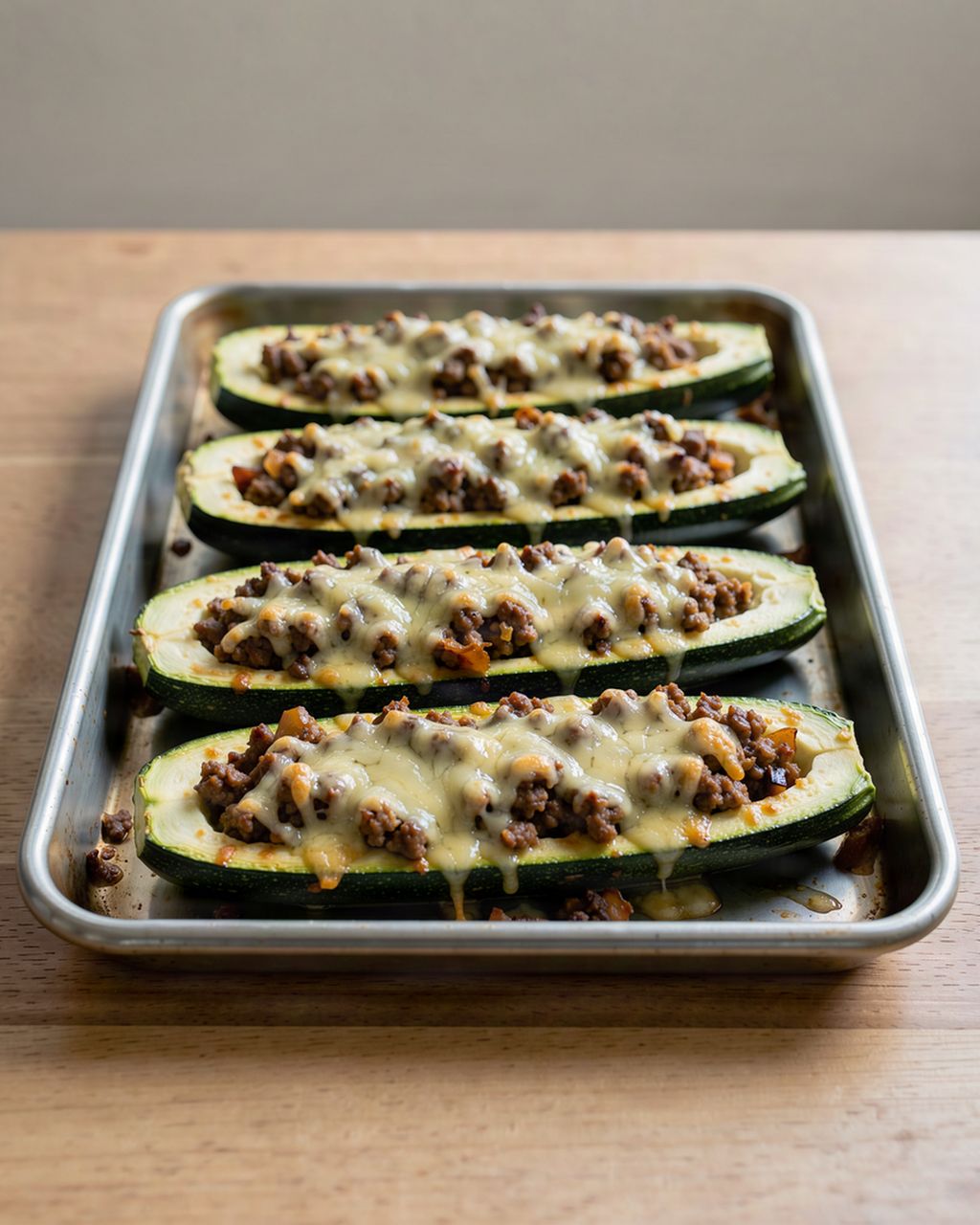
Bake zucchini bramboráky in the oven just like the classic ones, except that you have to salt and squeeze the zucchini even more than the potatoes, because it releases water in the oven too. Mix roughly 2 parts grated potatoes with 1 part squeezed zucchini, season with garlic, marjoram and pepper, add an egg and a few tablespoons of flour. Spread on oiled parchment and bake at 200–220°C (400–425°F), flipping halfway. The zucchini version is milder, juicier and a little sweeter.
Make zucchini and potato bramboráky from the classic batter, replacing about a third of the potatoes with grated zucchini. The zucchini adds summery juiciness and a mild flavor, while the potatoes with their starch keep the structure and crispness. We don't have our own recipe for this combination yet, so here it is in a nutshell:
Grate the zucchini coarsely, salt it and leave it for 10 minutes. The salt draws out the water. Then wring it out in a kitchen towel, really thoroughly. Zucchini is over 90% water, which would thin the batter.
Grate and squeeze the potatoes separately, then mix both with the egg, garlic, marjoram, pepper and flour. Be careful with the salt from here on, as the zucchini is already salted.
Fry in hot fat just like classic bramboráky, only a little longer over slightly lower heat so the zucchini cooks through inside.
Adjust the ratio to your liking. Half and half is still a bramborák, but with more than half zucchini you're getting close to zucchini fritters (see below). For more zucchini ideas, with or without potatoes, see what to cook with zucchini.
Zucchini bramboráky without potatoes are really zucchini fritters. Rolled oats and eggs take over the role of starch and flour. Our recipe flourless zucchini fritters uses 500 g zucchini, three eggs, 100 g rolled oats and 80 g Gouda for 4 servings, in about 55 minutes.
You grate the zucchini coarsely, toss it with salt, leave it for a few minutes and then wring it out thoroughly by the handful or in a kitchen towel. Add the eggs, oats, finely grated Gouda, pepper, chopped parsley and fresh thyme leaves. Then comes the key step: let the batter stand for half an hour so the oats absorb the moisture and the batter thickens enough to be shaped. Fry the fritters in sunflower oil.
They taste different from bramboráky. They're cheesier, more herby and milder, without the garlic-and-marjoram character. The recipe recommends them with boiled potatoes, mash or a salad, and cold they work as a snack too. They're vegetarian, but not gluten-free. Rolled oats aren't automatically gluten-free.
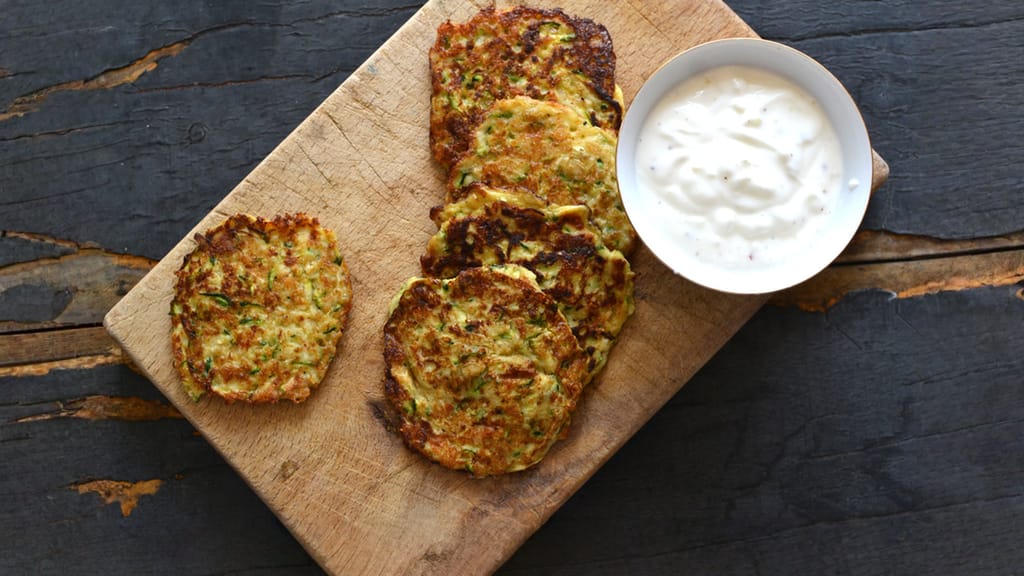
Flourless zucchini fritters
Flourless zucchini fritters with rolled oats, Gouda and thyme
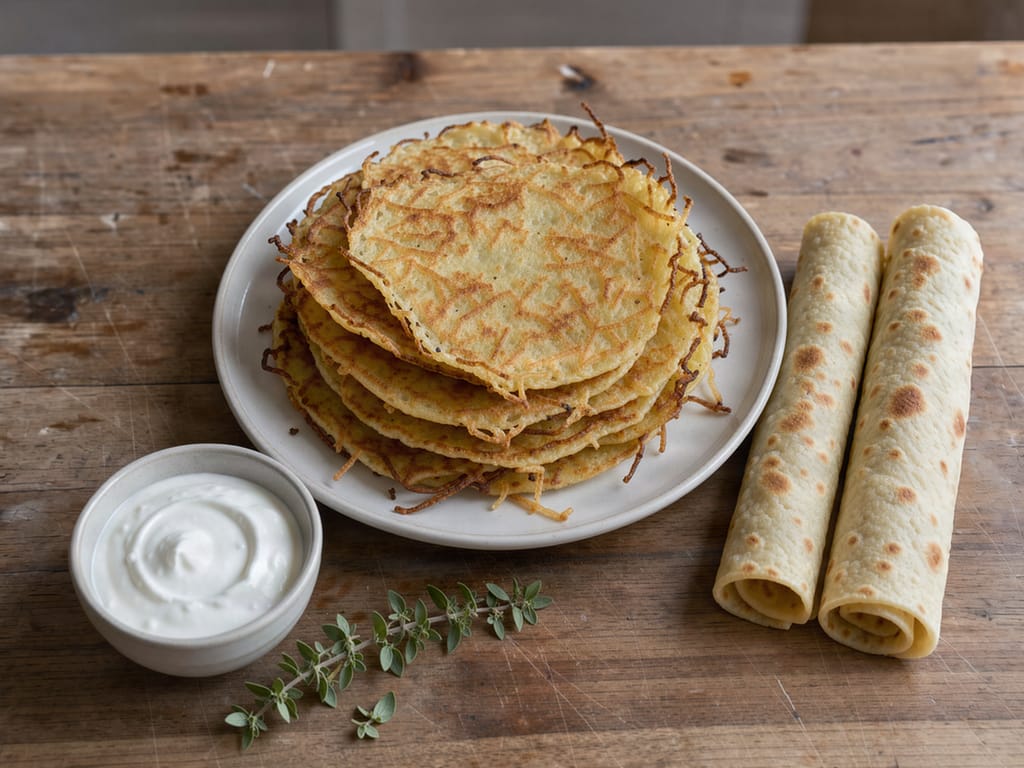
Lokše are thin flatbreads made from boiled potatoes, all-purpose (plain) flour and salt, cooked in a dry, nearly full-heat pan with no fat. They're made mostly in Slovakia and Moravia and are traditionally served with roast goose or duck.
Our recipe lokše – savory potato flatbreads is based on 1.5 kg potatoes and 300 g all-purpose flour and makes about 10 servings:
Boil the potatoes in their skins in salted water, drain and let them cool completely. Then peel them and rice them or put them through a meat grinder so the dough is smooth and lump-free.
Combine the potatoes with the flour by hand on a floured surface, quickly and only briefly. The longer you knead, the stickier it gets. It doesn't have to be completely non-sticky.
Roll small pieces into thin round flatbreads, dusting them with flour underneath and on top.
Heat a cast-iron or nonstick pan almost full blast (the recipe gives setting 12 out of 14) and don't add any fat. As soon as brown spots appear on the flatbread, flip it. Roll out the next one in the meantime.
Hot lokše are traditionally brushed with lard. The recipe also offers a version without it: pour the drippings from roast duck over the flatbreads on the plate. If you don't brush them with lard, they contain no animal ingredients on their own. For the whole duck feast that lokše suit best, see our article duck: roast duck recipes.
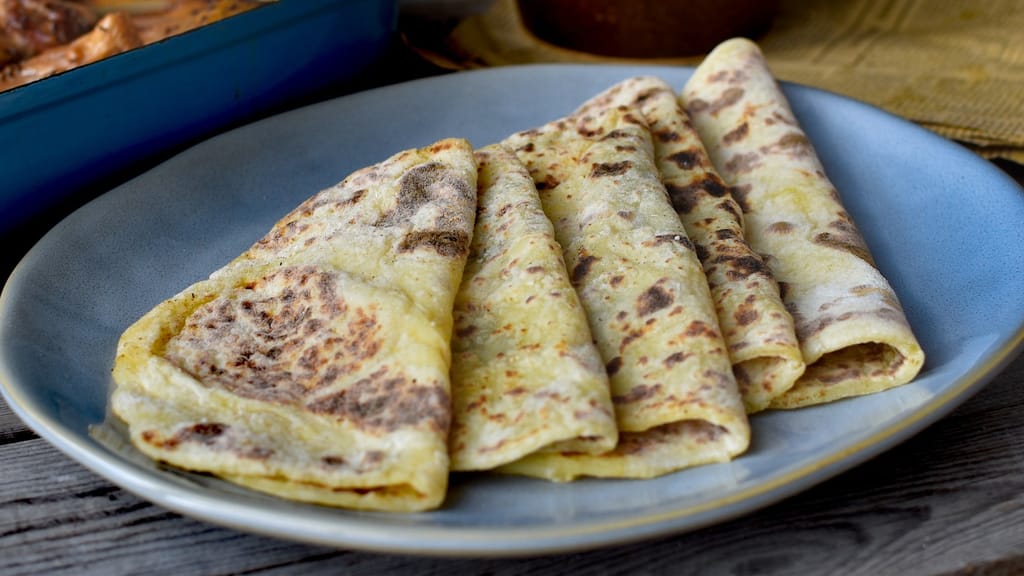
Lokše - savory potato flatbreads
Savory potato lokše cooked in a dry pan
Patenty are sweet lokše. The dough is the same (boiled potatoes, all-purpose flour, salt), and the finished flatbreads are spread with plum butter (povidla), sprinkled with ground poppy seeds and powdered sugar and rolled up tightly.
The recipe patenty – sweet potato flatbreads uses 1.5 kg potatoes, 300 g flour, 80 g plum butter, 40 g ground poppy seeds and 20 g powdered sugar for 8 servings. You boil the potatoes in their skins in salted water, let them cool completely (cooled potatoes are drier and the dough sticks less), then peel and rice them. On a floured surface, quickly combine them with the flour, roll out thin flatbreads and cook them in a dry, very hot pan until brown spots appear. Then flip them.
You can spread the filling on warm or cooled flatbreads. Warm ones roll more easily, cooled ones cut better into pieces for a lunchbox. Patenty make a sweet lunch in the spirit of plum dumplings, just without boiling in water.
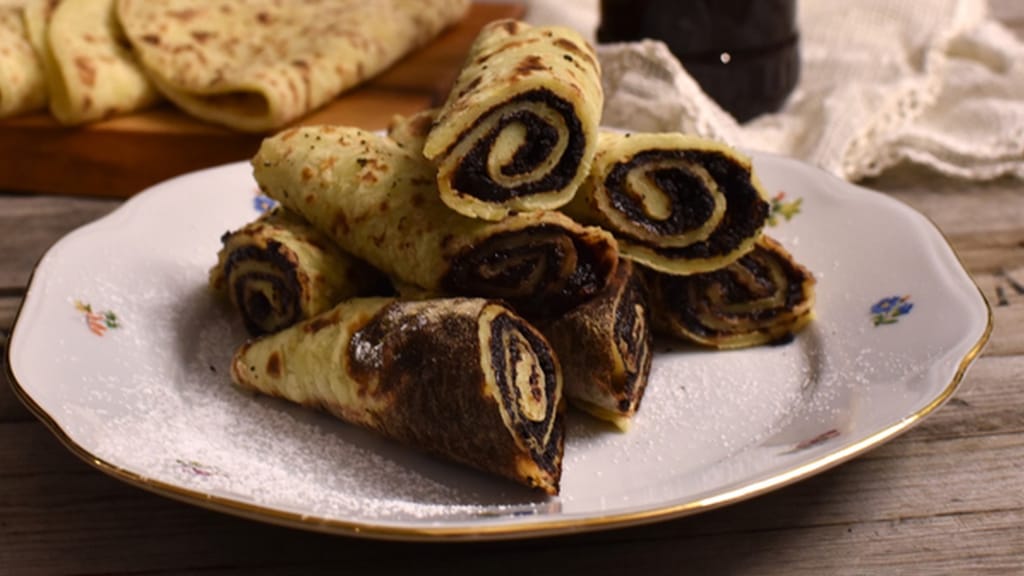
Patenty – sweet-filled potato flatbreads
Patenty: potato flatbreads with plum butter, poppy seeds and sugar
Potato lívance are thicker rounds of boiled potato dough with butter and flour, fried until golden. Our recipe potato lívance with trout turns them into bite-size appetizers with sour cream, dill and trout marinated in lemon juice.
One thing to watch: the recipe itself warns that a lemon marinade firms up and whitens the fish, but it isn't cooking, and it doesn't reliably kill bacteria or parasites. Don't serve it to pregnant women, small children, older people or people with weakened immunity. Freeze raw trout before marinating (at least 24 hours at −20°C / −4°F) unless it's sold as suitable for eating raw. If you're more interested in sweet, fluffy flour-based lívance, see the article lívance: fluffy pancake recipe.
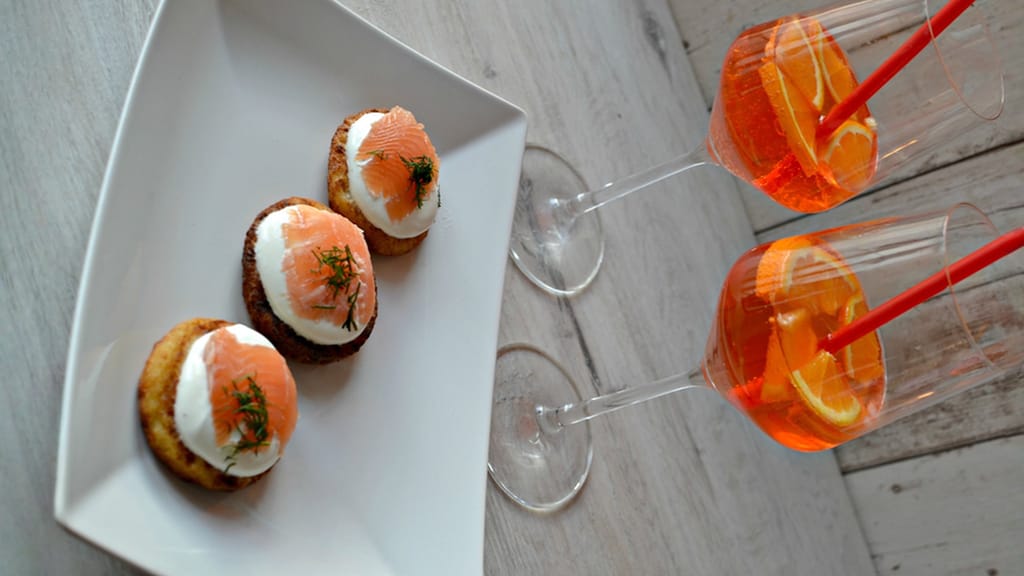
Potato pancakes with marinated trout
Potato lívance with sour cream and marinated trout
Green potatoes and burnt bramboráky can be an unnecessary risk: green areas and sprouts tend to contain more solanine, and dark spots more acrylamide. You can easily guard against both. Cut off green parts and sprouts from potatoes and throw away very green potatoes. Fry bramboráky until golden, not brown.
Green potatoes and sprouts: The German Federal Institute for Risk Assessment (BfR) recommends cutting out generously green areas and "eyes" from potatoes, because the most glycoalkaloids (solanine) are in and around the sprouts. According to the BfR, old, shriveled, green or heavily sprouted potatoes are not suitable for eating. With bramboráky, where you grate the potatoes whole, this applies doubly, because once the potatoes are grated you can no longer spot a green patch.
Acrylamide: The European Food Safety Authority (EFSA) points out that acrylamide forms when starchy foods are fried or baked at high temperatures, in the same reaction that browns them, and recommends not letting them burn. In its "Go for Gold" campaign, the UK Food Standards Agency advised frying and baking potato products to golden yellow, not brown. For bramboráky, that gives a simple rule: golden color and crisp edge yes, black burnt spots no.
With the cooled potatoes for lokše and patenty, it's easier to cut away green areas because you see them while peeling. Store potatoes in a cool, dark, dry place. The BfR recommends this too, and potatoes there don't turn green or sprout as quickly.
Reheat bramboráky in a dry, hot skillet, or in the oven at 200°C (400°F) for about 5 to 8 minutes, spread side by side on a wire rack. In the microwave they turn soft and rubbery. You can't fully bring back the crispness of freshly fried ones, but the edges will firm up again.
Don't make the batter ahead. Grated raw potatoes quickly turn gray in the air and release water. If you have to wait, pour hot milk over them right after squeezing, as the traditional recipe does, and fry within half an hour. Lokše and patenty are the opposite: boil the potatoes for them the day before if you like.
Bramboráky without eggs hold together thanks to starch, so let the squeezed-out potato liquid settle, pour off the water and return the white starch to the batter. Add a tablespoon or two more flour and fry thin pancakes, which tear less. They'll be a little more delicate when flipping, but taste almost the same.
Classic bramboráky are not gluten-free, because they contain wheat flour. For a gluten-free version, replace the flour with potato or corn starch or rice flour and make good use of the starch squeezed out of the potatoes. Also check the seasonings and the fat if you're cooking for someone with celiac disease.
You can freeze fried bramboráky, ideally cooled, layered with parchment paper and in a closed container. There's no need to thaw them: put them straight into a 200°C (400°F) oven or into a skillet. Don't freeze the raw batter, because after thawing it turns gray and releases water.
Bramboráky are traditionally served with sauerkraut, beer or just salt, and more recently with sour cream and chives or a garlic yogurt dip. As a main course you can fill them with sautéed meat and vegetables or serve them with a salad. Sweet potato flatbreads, known as patenty, are served with plum butter (povidla) and poppy seeds.
One recipe worth heating the oven for, one tip, and one deal from the shop. Nothing else.