Why Is My Gravy Not Thickening? Flour vs Cornstarch Amounts per Cup
Why Is My Gravy Greasy or Separating? How to Skim and Rescue It
Updated Nov 20, 2026
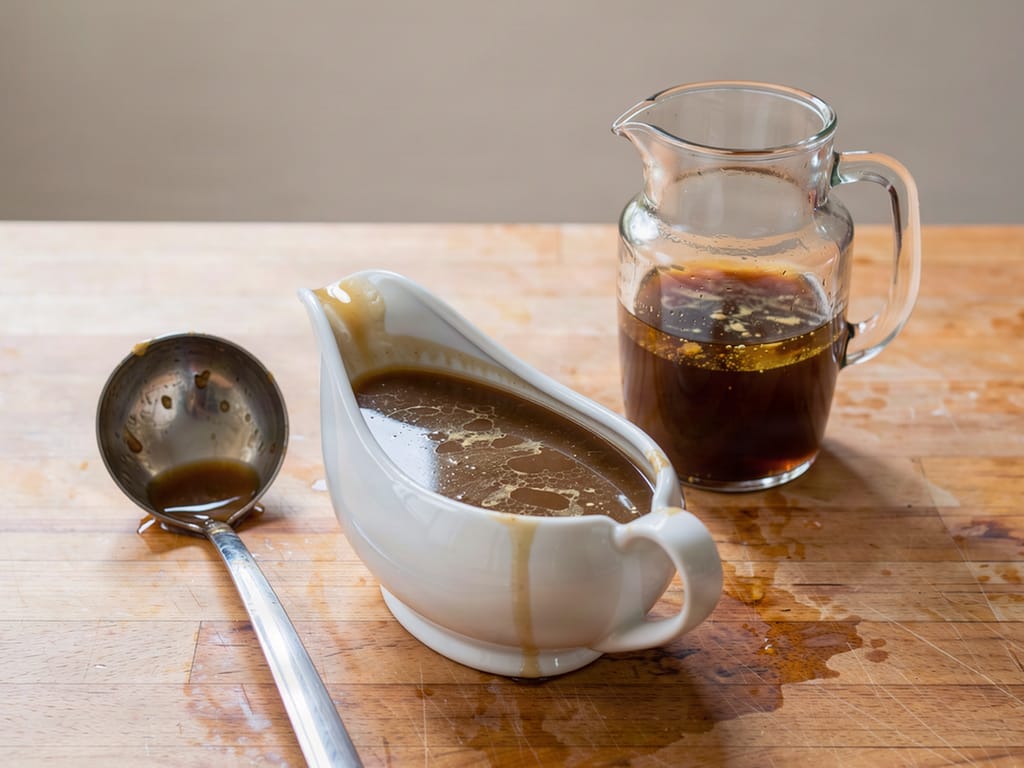
Gravy turns greasy or separates when it holds more fat than the flour can bind, so the extra fat floats to the top as an oily layer. Keep the roux to roughly equal parts fat and flour, about 2 tablespoons of each per US cup of liquid, and skim the rest of the drippings fat off before you start. A separated gravy can usually be saved by skimming, whisking in a little hot stock and a spoonful of starch slurry.
A gravy is a loose emulsion: fat held in a starch-thickened liquid. Flour cooked in fat (a roux) binds that fat into the gravy. If there is more fat than the flour can hold, the extra separates and floats as an oily layer, or pools in shiny beads on the plate.
The usual causes:
All the pan fat went in. A turkey, goose or duck can release far more fat than a gravy needs.
Too little flour for the fat, or flour that was not cooked into the fat before the liquid went in.
A hard boil. Fast boiling can knock fat out of the gravy.
Cream or milk boiled after adding. Dairy can curdle and split. Our guide on cream sauce curdled explains why.
A cornstarch gravy with lots of fat. Cornstarch thickens the liquid but does not bind fat the way a roux does.
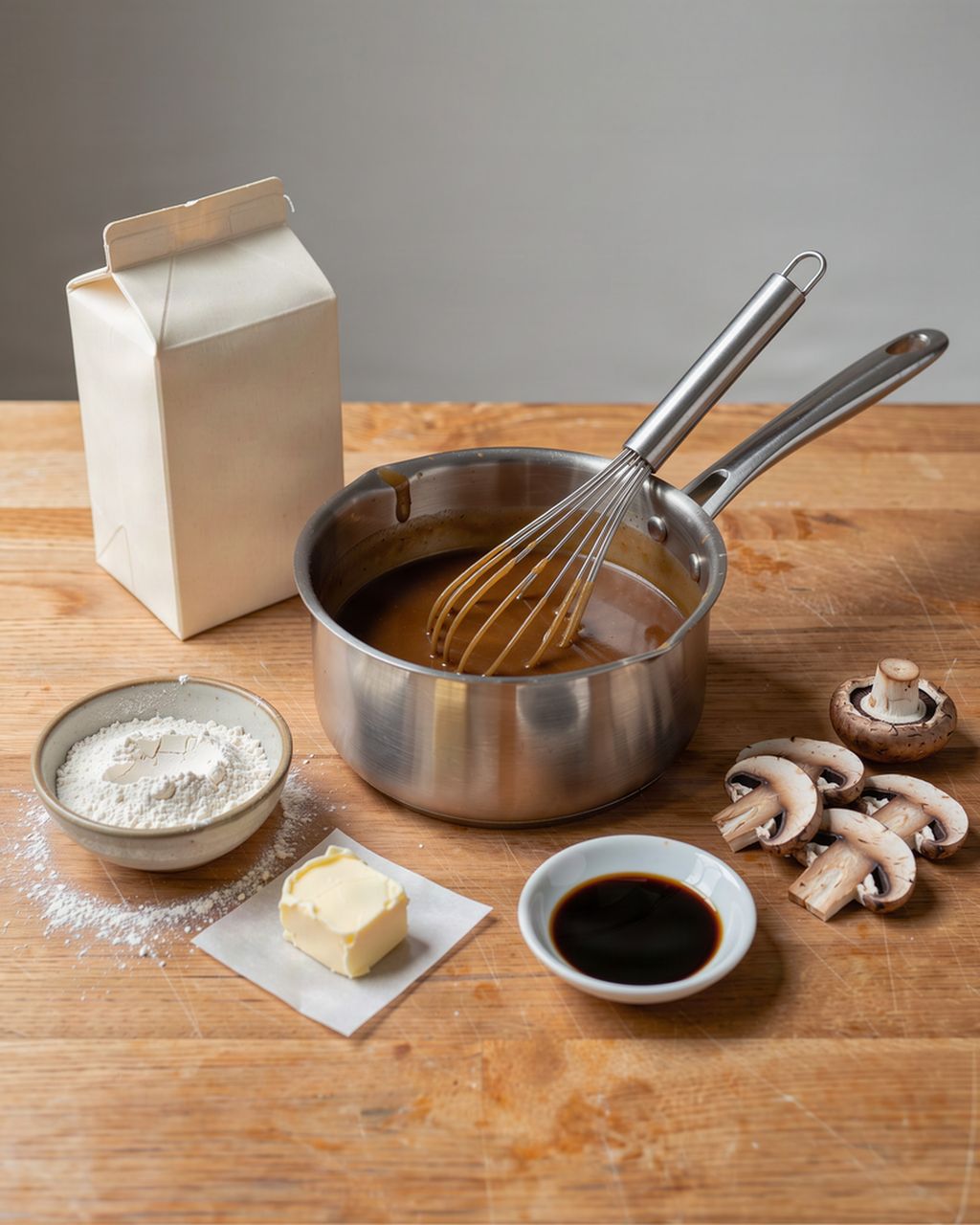
A classic roux is equal parts fat and flour by weight. For gravy, most American recipes simply use equal spoons:
About 2 tablespoons of fat and 2 tablespoons of flour per US cup (236.6 ml) of liquid for a medium gravy.
That means about 4 tablespoons each for 2 US cups (473 ml), and so on.
Equal spoons means noticeably more fat than flour by weight (about 14 g of butter against about 8 g of flour), which is still within what the flour can hold.
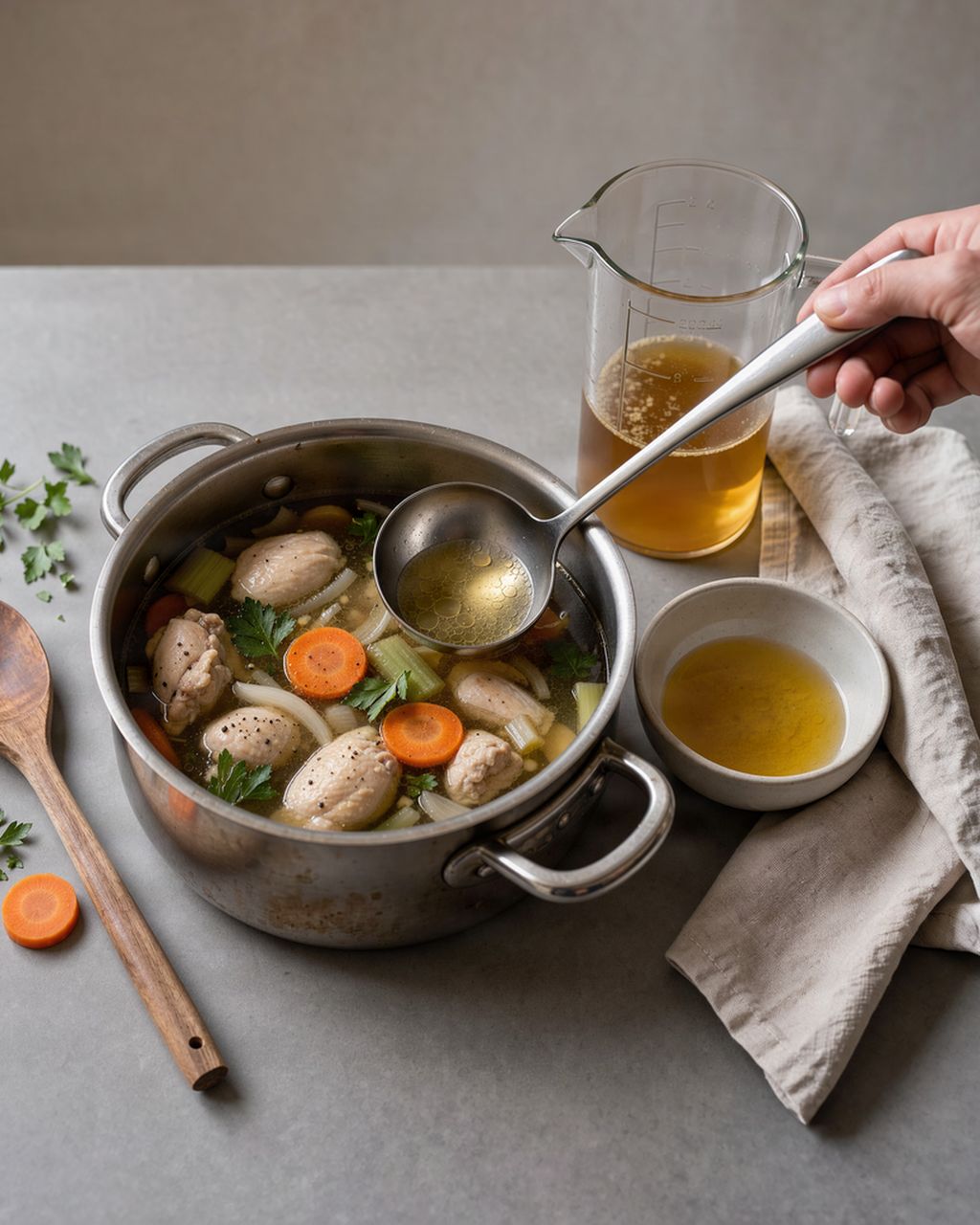
The trick is to measure the fat instead of using everything in the pan. Pour the drippings into a heatproof jug, let the fat rise, then spoon back only what you need. Keep the juices under the fat: that is where most of the flavor is.
Fat is lighter than the juices, so it always rises if you give it time. Let the drippings stand for 5 to 10 minutes first, then pick a method:
Fat separator. A jug with a spout that starts at the bottom. Pour the drippings in, wait, then pour the juices out through the spout and stop before the fat reaches it.
Spoon and tilt. Tilt the pan so the fat pools on one side and spoon it off. Slow, but it needs no gear.
Paper towel. Lay a sheet briefly on the surface and lift it off. It picks up the last thin film of fat.
Ice in a ladle. Fill a metal ladle with ice and skim its underside across the top. The fat firms on the cold metal and you wipe it off.
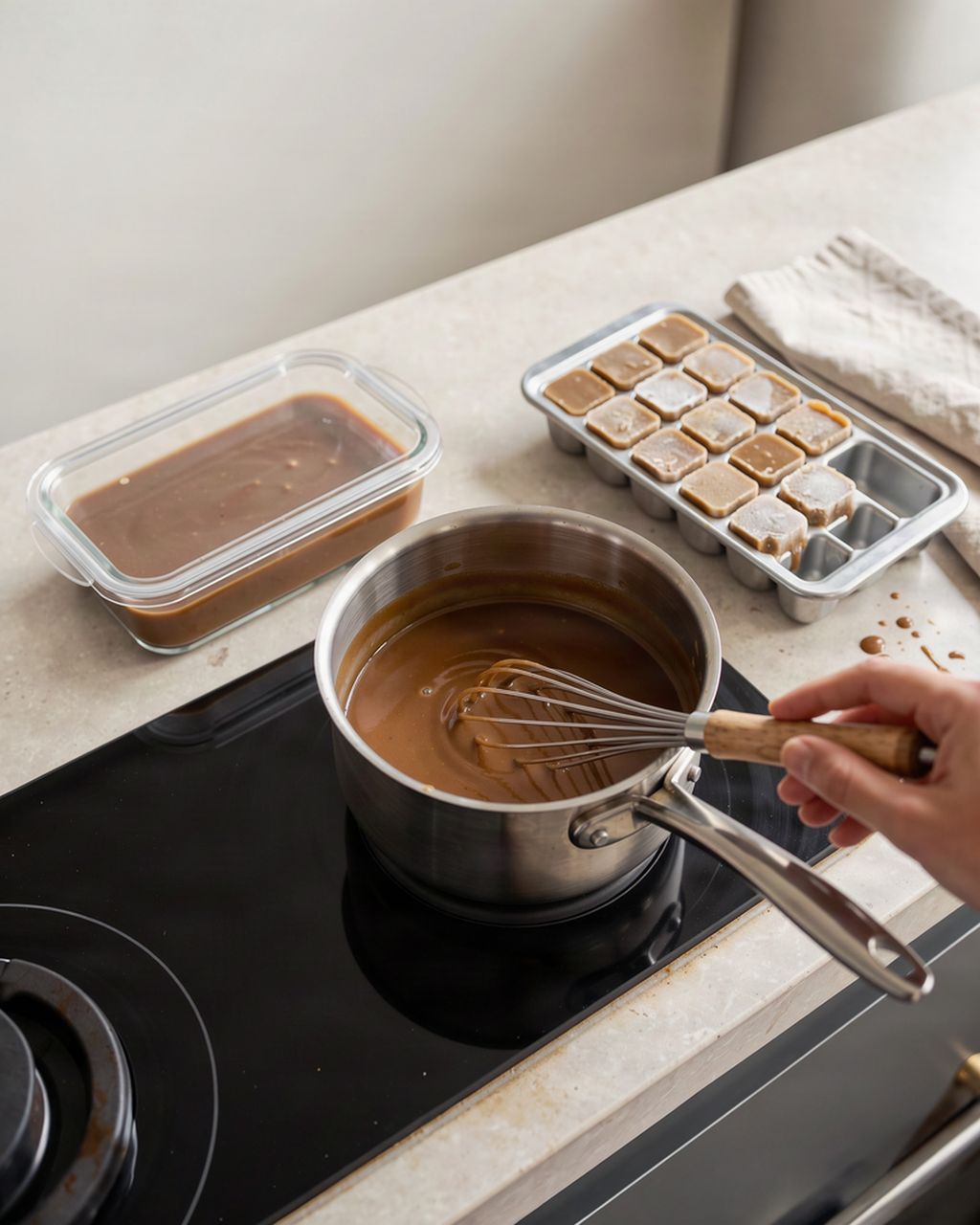
Chill it. If you make the drippings ahead, refrigerate them within 2 hours of cooking, as USDA FSIS advises, keep them covered, and use them within 1 to 2 days, the FDA's figure for gravy and meat broth, or freeze them. The fat sets into a solid layer you can lift off in one piece.
Don't throw out goose or duck fat. It is excellent for roasting potatoes; our guide to leftover roast goose and duck shows what to do with it.
Most separated gravies come back together.
Take it off the heat and let it settle for a minute.
Skim off as much loose fat as you can.
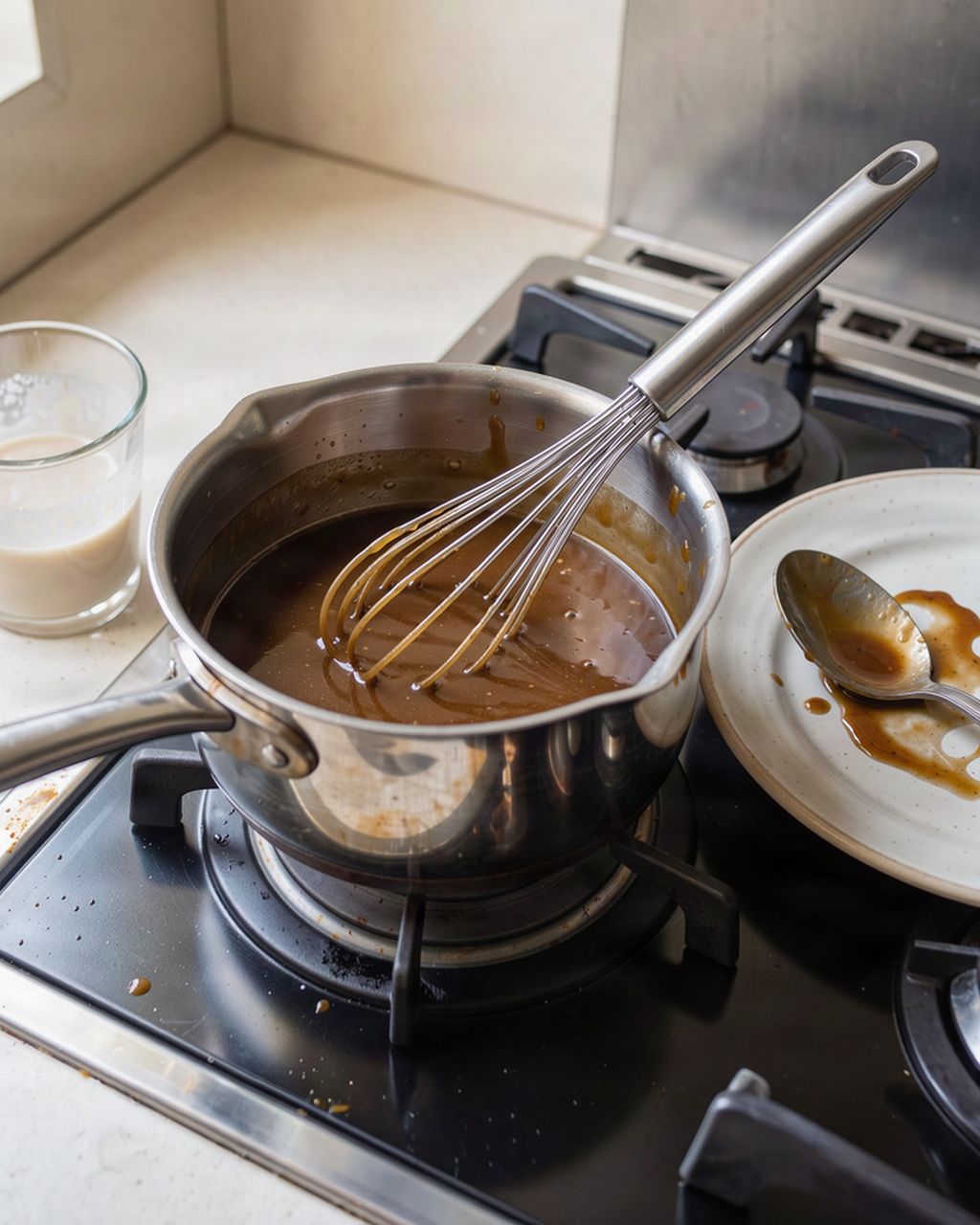
Whisk hard while adding a splash of hot stock or water. Often that is enough to bring it back.
Bind it with starch if it is still oily. Whisk a teaspoon of cornstarch into a tablespoon of cold water, stir it in and bring the gravy to a boil, then let it bubble gently for about a minute until it thickens and turns glossy. Or whisk in a small knob of beurre manié (equal parts soft butter and flour mashed together) and simmer for a couple of minutes.
Use a stick blender for a stubborn gravy. A few seconds pulls it together into a smooth sauce.
If your gravy is lumpy rather than oily, our guide to lumpy sauce covers that. If it caught on the bottom of the pan, see how to save a scorched sauce.
Recipe of the week, one tip that saves you time and one deal from the shop. Unsubscribe in one click.
The next issue goes out on Thursday, November 26.
Cream gravies, like those for Czech svíčková (beef sirloin in cream sauce) or a creamy chicken gravy, split more easily than stock gravies.
Use cream with enough fat. US heavy cream (at least 36% fat), UK double cream (at least 48%) or whipping cream (at least 35% in the UK, 30–36% in the US; Czech smetana ke šlehání is usually 30–33%) survives heat far better than single cream or milk.
Add it at the end, over low heat, and warm it through without boiling.
Temper it. Stir a ladle of hot gravy into the cream first, then pour the mix back into the pan.
Watch the acid. Wine, lemon or vinegar in the gravy makes cream more likely to curdle.
If it does split, take it off the heat and blend it smooth, or whisk in a little more cold cream.
Oily gravy has more fat than the flour can absorb, usually because all the fat from the roasting pan went into it. Skim the fat off the top with a spoon or fat separator, and next time measure about 2 tablespoons of fat per US cup of liquid.
Gravy separates when there is too much fat for the thickener to hold, when it boils hard for a long time, or when cream or milk in it curdles. Skim off the loose fat, take it off the heat and whisk in a splash of hot stock and a little starch slurry.
Skim the drippings before making gravy, cook the flour in an equal amount of fat, and whisk the liquid in gradually. Keep the finished gravy at a gentle simmer rather than a hard boil, and add cream at the end without boiling it.
Let the gravy or drippings settle for a few minutes so the fat rises, then tilt the pan and spoon it off from the low side. A fat separator jug, a paper towel laid briefly on the surface or a ladle filled with ice skimmed across the top all work too.
Gravy made from roasting juices contains gelatin from the meat and fat that hardens when cold, so it sets almost solid in the fridge. That is normal, and it turns back into gravy when you bring it to a boil and whisk it.
One recipe worth heating the oven for, one tip, and one deal from the shop. Nothing else.