Why Is My Gravy Greasy or Separating? How to Skim and Rescue It
Why Is My Soup Greasy? How to Skim, Chill and Remove the Fat
Updated Nov 21, 2026
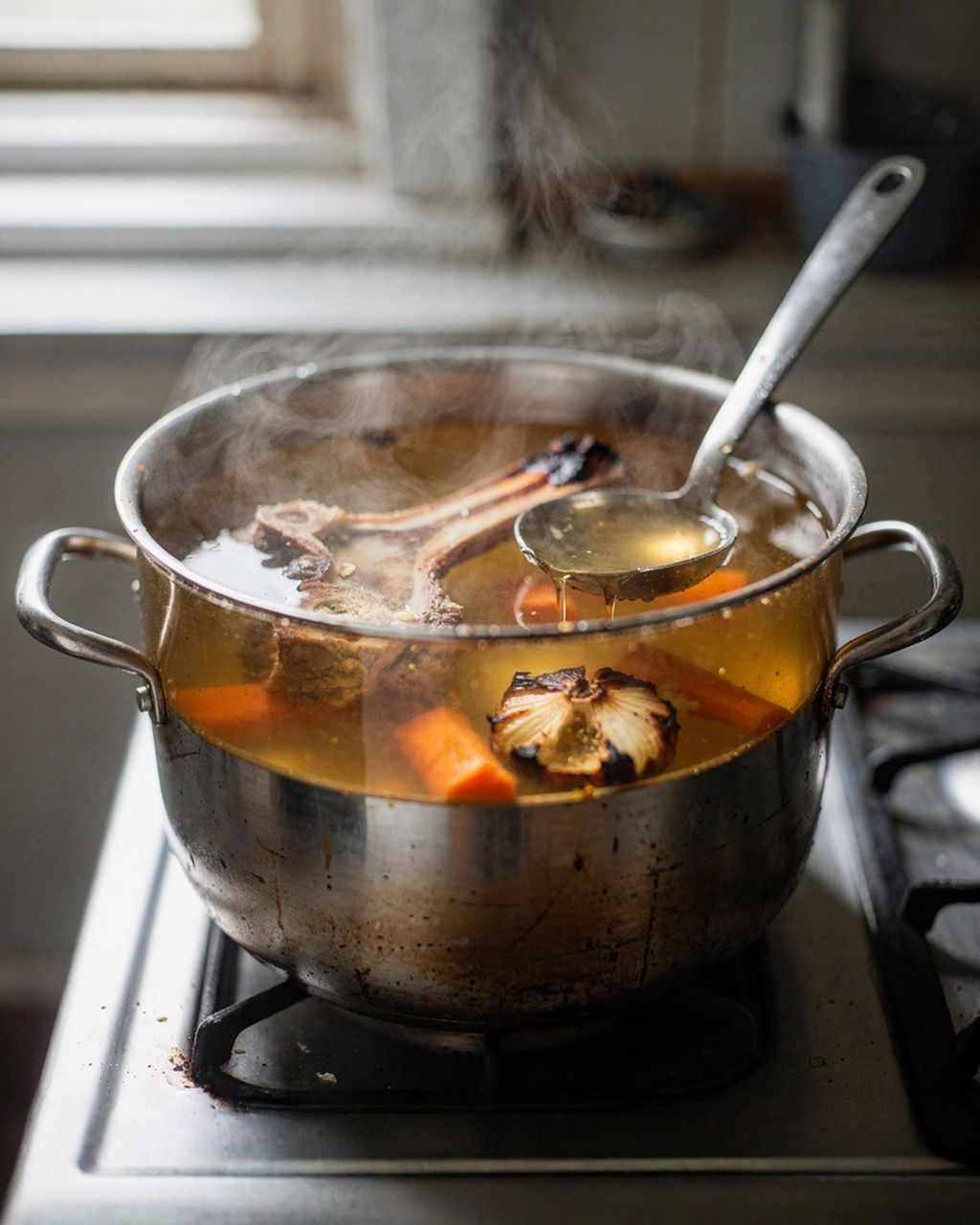
Soup turns greasy when fat from meat, bones, skin, sausage or butter melts out and floats on top, and a hard boil can churn it through the broth. Skim it with a ladle, blot it with paper towel, or chill the soup so the fat sets into a layer you can lift off. Trimming and browning the meat first prevents most of it.
Fat is lighter than water, so any fat that melts out of your ingredients floats up and spreads across the surface. Common sources:
Fatty cuts and skin: chicken skin, pork belly, oxtail, beef short ribs, duck and goose.
Bones with marrow in a long-cooked stock.
Sausage, bacon and smoked meat. Czech potato soup (bramboračka) and goulash soup (gulášová polévka) often include sausage, which releases a lot of red, paprika-tinted fat.
Oil or butter used to cook the base, especially if you were generous.
Cream or cheese that split in a hot soup.
A thin film of fat is normal and carries flavor. A layer you can see wobbling on top is too much.
Recipe of the week, one tip that saves you time and one deal from the shop. Unsubscribe in one click.
The next issue goes out on Thursday, November 26.
At a gentle simmer, fat floats on top where you can skim it. At a rolling boil, the bubbles break the fat into tiny droplets and churn them through the liquid. Some of that fat gets emulsified into the broth, so it never floats back up. The soup turns cloudy and tastes oily, even if the top looks clear.
That is why stock and clear soups are kept at a bare simmer, with only a few bubbles breaking the surface. Our guide to clear, rich beef broth explains the method.
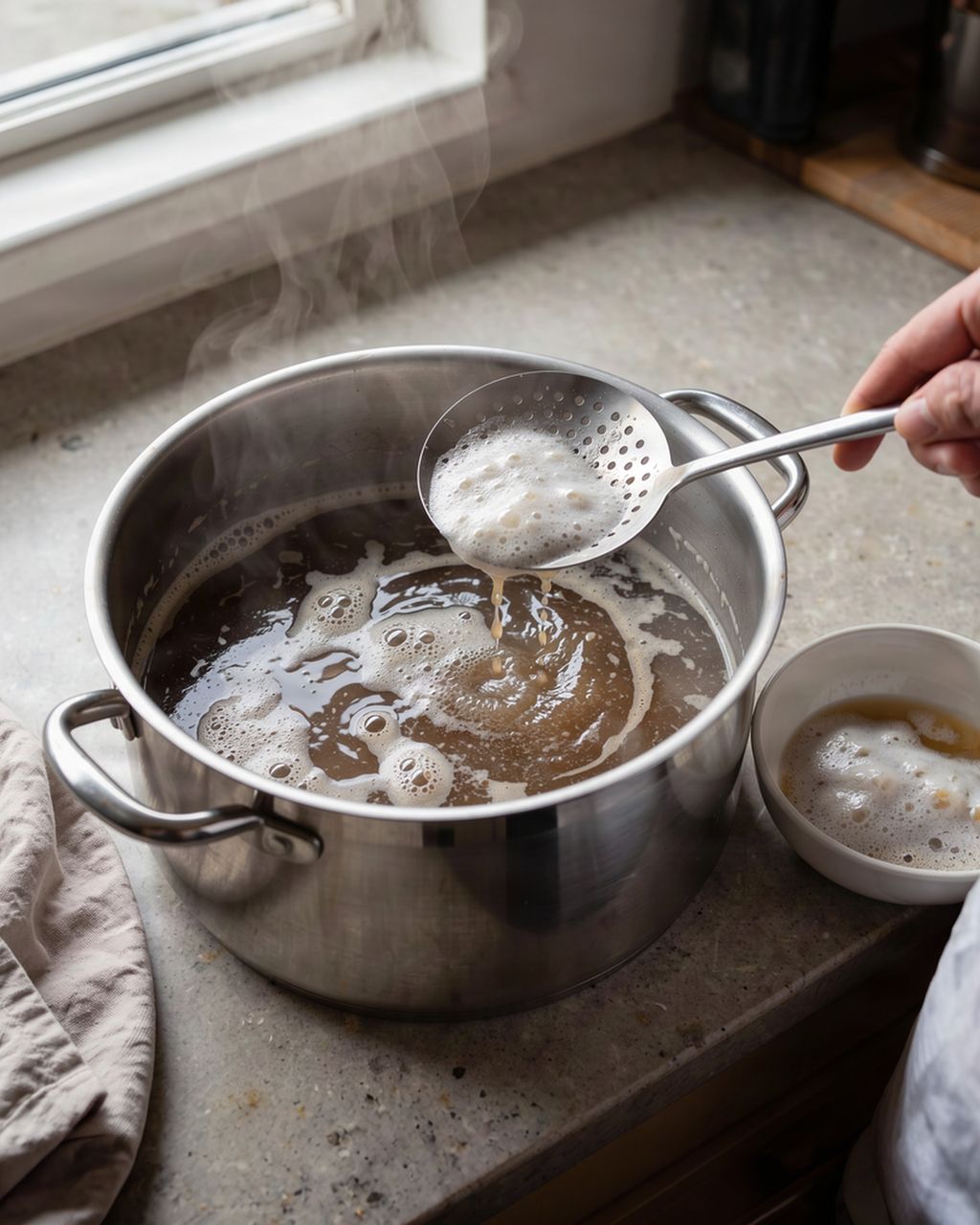
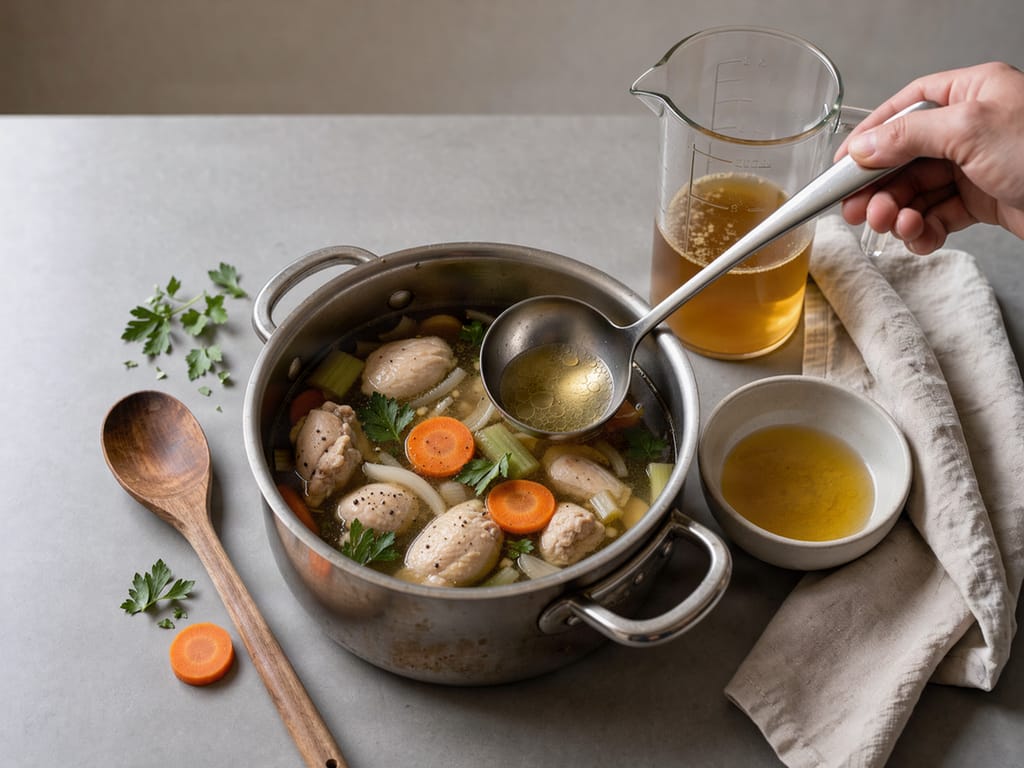
Ladle or wide spoon. Turn the heat off, wait a minute for the fat to rise, then tilt the pot slightly so the fat gathers on one side. Skim with the edge of the spoon just under the surface.
Fat separator. A jug with a spout that starts at the bottom. Pour in the broth, let the fat rise, then pour the broth off from underneath. It works best for stock and clear soups.
Paper towel. Lay a sheet of paper towel flat on the surface for a second and lift it off. It takes the last thin film. Use a fresh sheet each time.
Ice in a ladle. Fill a metal ladle with ice cubes and skim it gently across the surface. The cold sets the fat onto the bottom of the ladle; wipe it off and repeat.
Skim before you add cream, cheese or noodles. They make it much harder to separate the fat out.
The most thorough way to defat soup is to let the fat set solid.
Cool it safely first. USDA FSIS advises refrigerating cooked food within 2 hours (1 hour above 32 °C / 90 °F), and dividing a large pot of soup into smaller, shallow containers so it cools quickly.
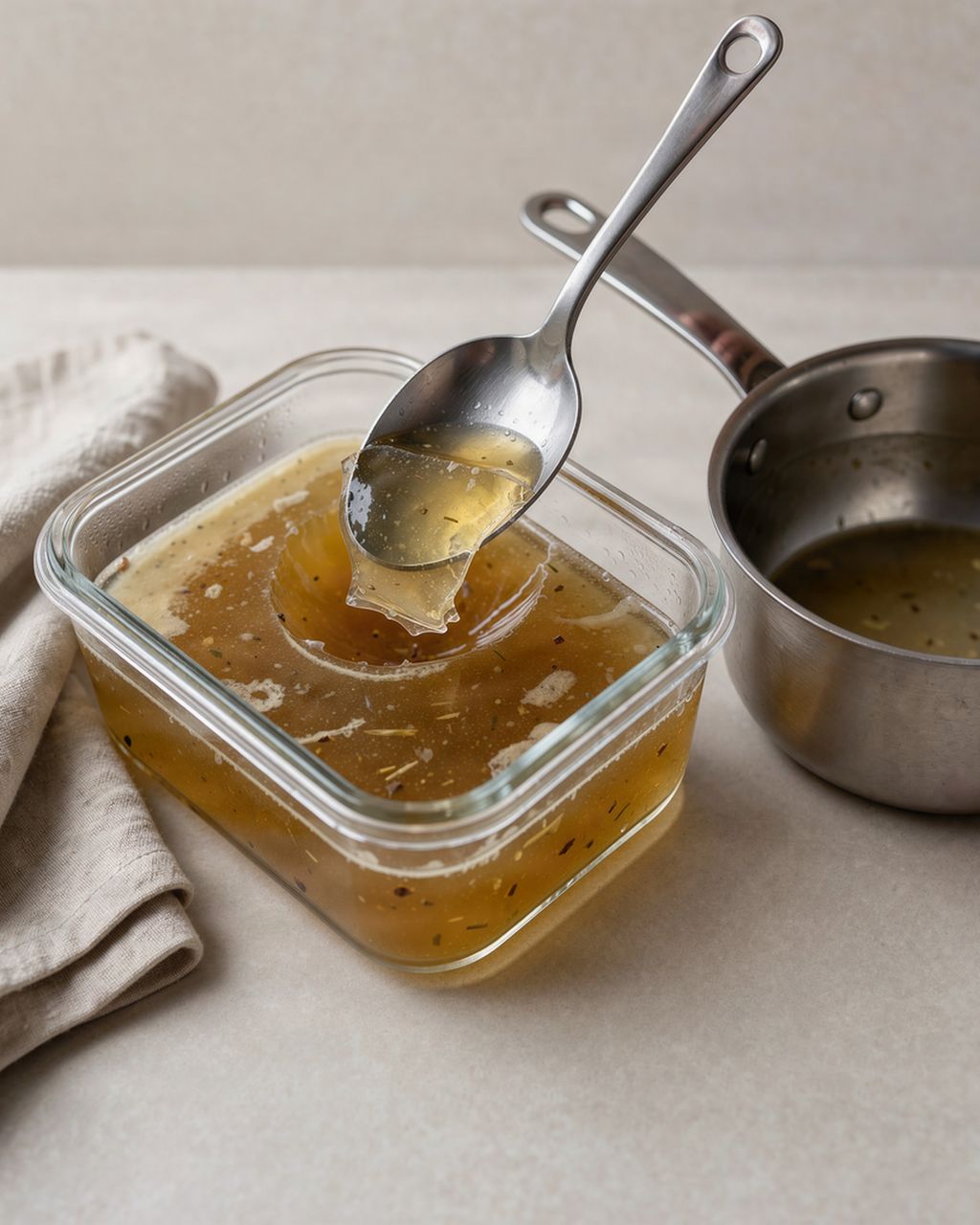
Refrigerate it covered. The fat rises and sets into a pale layer on top.
Lift the layer off with a spoon. It comes away in pieces.
Reheat the soup until it comes to a rolling boil, as USDA FSIS advises for soups and sauces, and check it reaches 74 °C (165 °F) with a food thermometer.
Under the fat, a good bone stock may have set to jelly. That is gelatin from the bones and a good sign. For how long stock keeps, see broth in the fridge.
If the soup tastes oily but there is little to skim, the fat is mixed into the broth. You can still help it:
Chill it. Even emulsified fat partly separates and sets when the soup is cold.
Bind it. A blended potato, a spoonful of cooked rice or a little starch slurry gives the fat something to cling to, so the soup tastes creamy rather than greasy. Cornstarch only thickens fully once the liquid comes to a simmer or gentle boil.
Cut it. A squeeze of lemon, a dash of vinegar or a spoonful of sauerkraut juice makes rich soup taste lighter.
Serve it with bread. Czech soups often come with rye bread, and goulash soup is happily mopped up.
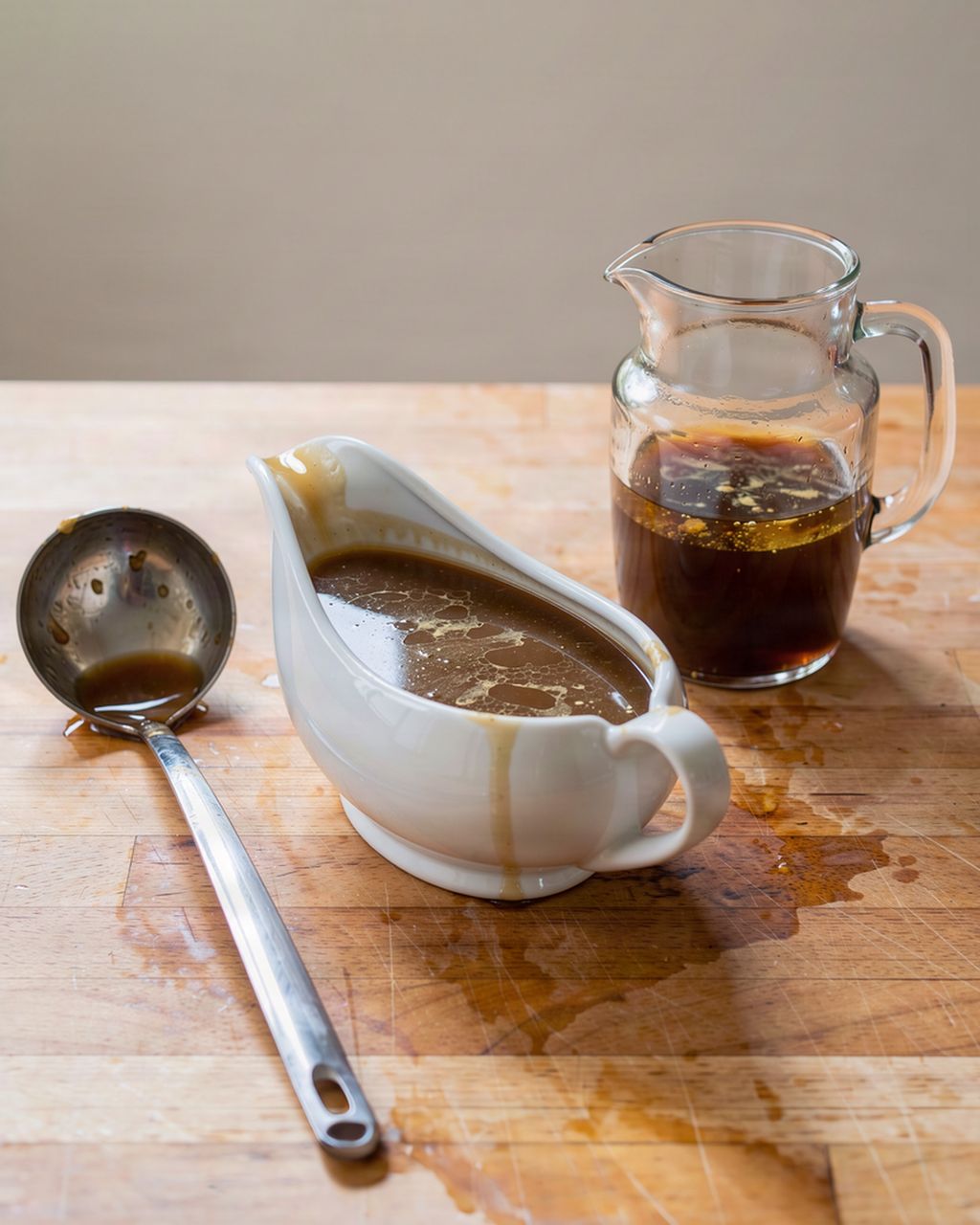
Gravy follows the same rules; see greasy or separating gravy.
Trim visible fat from meat before it goes in, and remove chicken skin, or brown it and pour off the fat.
Brown sausage or bacon first and pour off most of the rendered fat before adding liquid.
Use less oil or butter for the base. A tablespoon or two is plenty for most pots.
Simmer, don't boil.
Skim early, before the vegetables, noodles or dairy go in.
Make stock a day ahead, chill it and lift off the fat before you build the soup.
The fat you lift off a soup or stock is often worth keeping, especially chicken, goose or duck fat, which has a lot of flavor.
Fry potatoes or onions in it. Goose and duck fat are prized for roast potatoes, and Czech cooks keep goose fat for spreading on bread with a pinch of salt.
Use it to start the next soup or stew instead of oil or butter.
Store it like the soup. Scrape any broth or jelly off the underside, keep the fat covered in a clean jar in the fridge and use it within 3 to 4 days, the time USDA FSIS gives for leftovers, or freeze it for longer.
Don't pour fat down the sink. It sets in the pipes. Let it cool and solidify, then scrape it into the bin. Our guide to leftover goose and duck has more ideas for rendered fat.
Soup gets greasy when fat from the meat, skin, bones, sausage or cooking oil melts into the liquid and floats on top. Boiling it hard mixes that fat through the broth and makes it taste oily. Skim the fat off and keep the soup at a gentle simmer.
Skim the fat off the surface with a wide spoon or ladle, then blot what is left with a folded paper towel laid on the surface for a second. For the most thorough result, chill the soup covered in the fridge; the fat sets into a solid layer you can lift off.
Tilt the pot so the fat pools at one side and spoon it off, use a fat separator jug, or drag a ladle with a few ice cubes in it across the surface so the fat sets onto it. Blotting with a paper towel picks up the last thin film.
Oil on top of soup is melted fat that has risen because fat is lighter than water. Some fat carries flavor and is normal, but a thick layer means the meat was fatty or the soup needs skimming.
Yes, as long as you cool it safely first. USDA FSIS advises getting cooked food into the fridge within 2 hours and dividing a large pot into shallow containers. Next day, lift off the solid fat, then reheat the soup.
Soup tastes oily after skimming when the fat has been emulsified into the broth by hard boiling, so it no longer floats. Chill the soup to set the fat, blend in a little potato or starch, or add acid such as lemon juice to cut the richness.
One recipe worth heating the oven for, one tip, and one deal from the shop. Nothing else.