Why Is My Gravy Greasy or Separating? How to Skim and Rescue It
Can You Make Gravy Ahead? Fridge, Freezer and Reheating Without a Skin
Updated Nov 20, 2026
Yes, gravy can be made ahead: the FDA's storage chart gives gravy 1 to 2 days in the fridge and 2 to 3 months in the freezer. Cool it quickly and refrigerate it within 2 hours, then reheat it to a rolling boil, as USDA advises for gravies. Gravy thickened with waxy rice or corn flour, or plain stock you thicken on the day, freezes best; whisk in a splash of stock to loosen it and cover the surface to stop a skin forming.
Yes, and for a holiday meal it is one of the best jobs to get out of the way. You can make the whole gravy from stock days or weeks ahead and freeze it, then add the juices from the roast on the day.
The figures, from the FDA's refrigerator and freezer storage chart, are:
Fridge: 1 to 2 days for gravy and meat broth.
Freezer: 2 to 3 months.
The freezer time is about quality. The FDA notes that food kept frozen at -18°C (0°F) stays safe indefinitely, but gravy kept longer tastes stale and may separate more. The FDA gives 1 to 2 days; USDA allows 3 to 4. We use the stricter figure, because gravy is a moist, low-acid food that bacteria grow in easily. If you won't use it within 2 days, freeze it.
USDA FSIS advises refrigerating leftovers within 2 hours of cooking, or within 1 hour if the room is above 32°C (90°F). A big pot of gravy cools slowly, so help it along:
Divide it into shallow containers, as FSIS recommends. A few small tubs cool much faster than one deep pot.
Let the steam out for a few minutes, then cover and refrigerate. Don't leave it on the stove to cool for the evening.
Keep the fridge at 4°C (40°F) or below. Our guide to storing hot food in the fridge covers fast cooling in more detail.
Label it with the date.
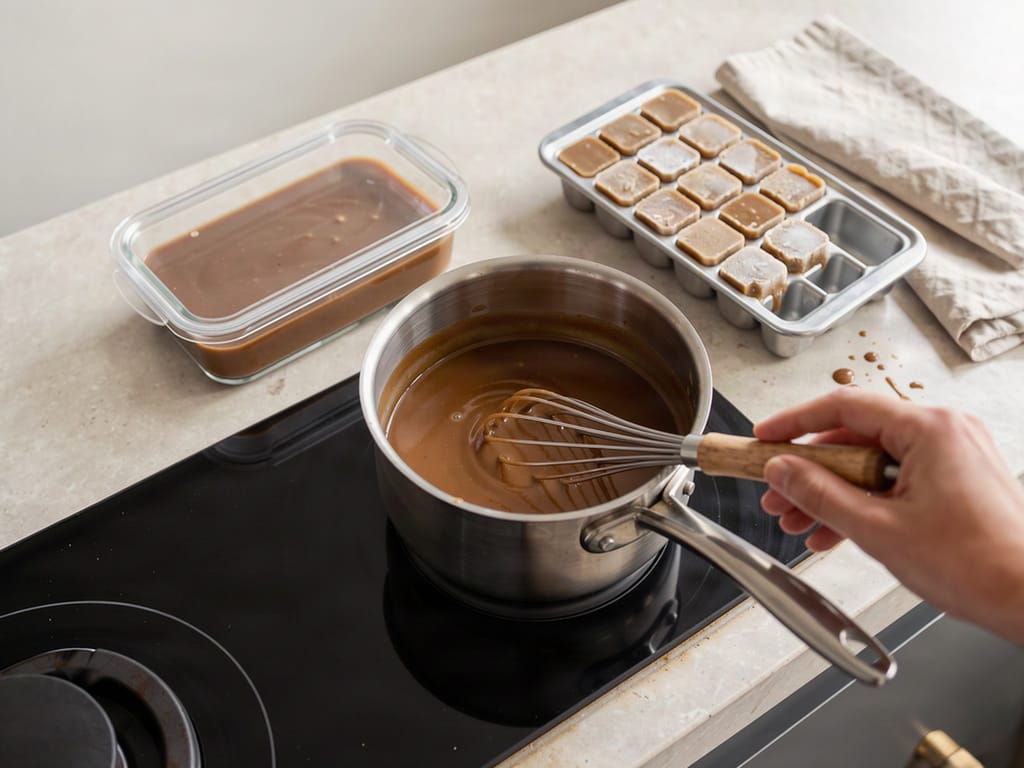
For freezing, use freezer bags laid flat, rigid tubs with about 2–3 cm of space at the top, or ice-cube trays. Gravy cubes are handy: freeze them, tip them into a bag, and reheat only what you need. Our guide on how to freeze soup and sauce covers packing in more detail.
The thickener and the dairy decide how well it comes back.
Flour or roux gravy: often separates or turns grainy when thawed; Clemson University's extension service lists gravies made with wheat flour among foods that do not freeze well. Whisking hard while reheating usually brings it back. If you know you will freeze it, thicken it with waxy rice flour or waxy corn flour, which hold up better.
Cornstarch gravy: tends to weep and go thin or spongy after freezing, because the starch releases water as it thaws. You can freeze it, but plan to re-thicken it.
Cream or milk gravy: prone to splitting. Clemson University's extension service notes that gravy tends to separate and curdle when thawed, and that milk sauces can curdle, with stirring during reheating helping keep them smooth. For a cream gravy, freeze the base and add the cream on the day.
Stock only: the safest bet. Clemson suggests freezing the broth and making the gravy just before serving. Our guide to stock in the fridge covers storing it.
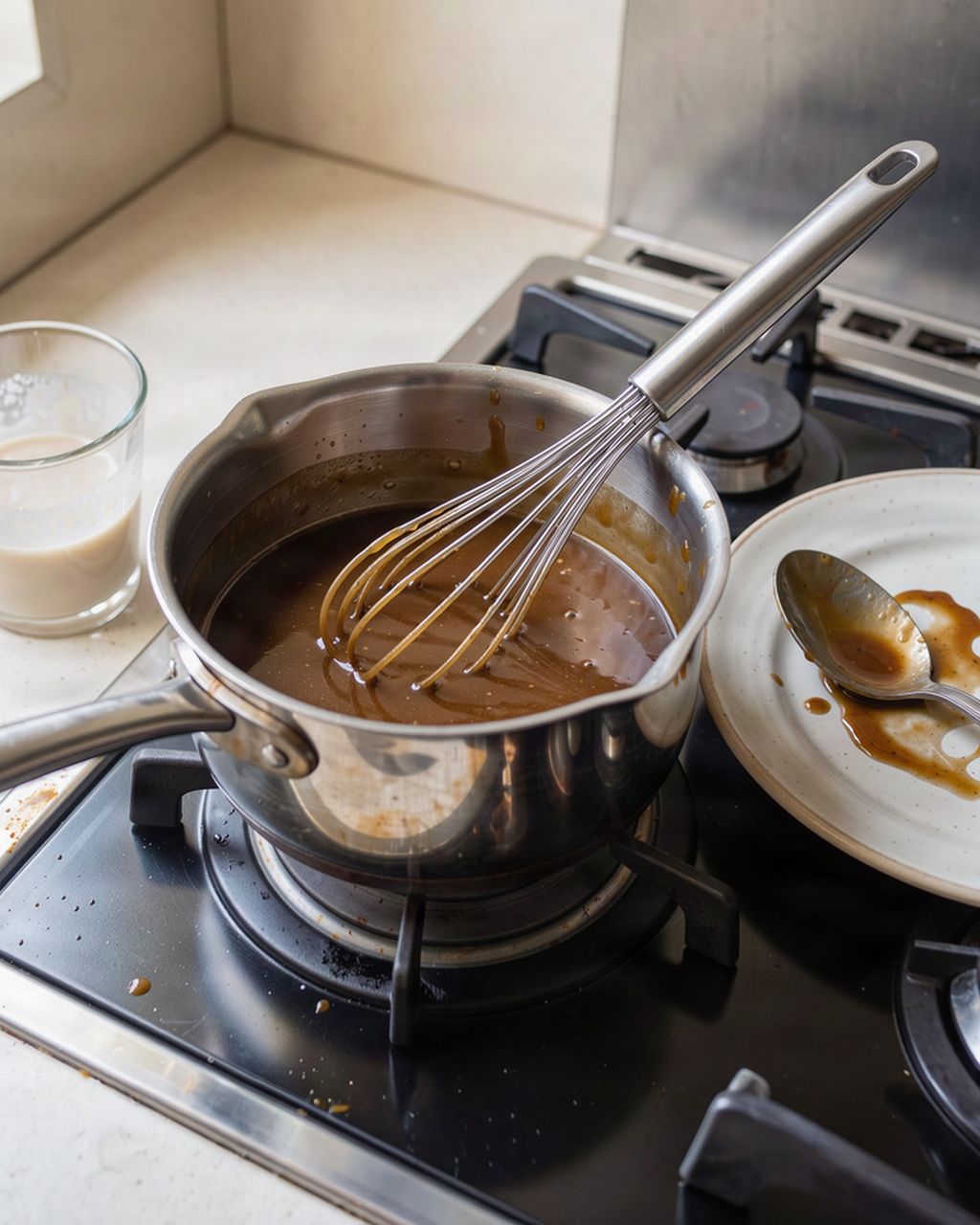
From the fridge: spoon the gravy into a saucepan. It may be a solid jelly; that is gelatin from the meat, and it melts as it warms. Heat over medium heat, whisking often. USDA FSIS advises bringing sauces, soups and gravies to a rolling boil when reheating, so let it bubble properly before serving, then turn it down.
From the freezer: thaw it covered, in the fridge overnight, or put the frozen block straight into a saucepan over low heat with a splash of stock and a lid. Stir as it melts, then bring it to a rolling boil. To thaw it faster, seal it in a leak-proof bag and submerge it in cold water, changing the water every 30 minutes, as USDA FSIS advises. Gravy thawed in the microwave or in cold water should be heated and served straight away.
In the microwave: use a covered microwave-safe bowl and heat in short bursts, stirring between each, until it boils all the way through. Microwaves heat unevenly, and gravy can erupt, so stir well and handle it carefully.
Reheat only what you will use, and don't save gravy that has already been reheated and then sat out.
A skin forms as the surface of the gravy cools and dries out, and the starch and proteins set into a film.
Cover it. A lid is the easiest fix while it waits on the stove.
Press baking paper or parchment onto the surface while it cools. It keeps air off the gravy.
Dot the top with butter or a spoon of stock, which makes a thin layer that stops it drying.
Whisk it in. If a skin has formed, whisk it back into the hot gravy, or strain the gravy through a sieve.
A gravy boat on the table forms a skin within minutes, so serve smaller amounts and top it up from the hot pan.
Recipe of the week, one tip that saves you time and one deal from the shop. Unsubscribe in one click.
The next issue goes out on Thursday, November 26.
Chilled gravy almost always looks thicker than it was, because gelatin and starch firm up as they cool.
Too thick: whisk in hot stock or water, a couple of tablespoons at a time, until it pours the way you like.
Too thin, often after freezing a cornstarch gravy: whisk 1 teaspoon of cornstarch into 1 tablespoon of cold water for each US cup (about 240 ml) of gravy, stir it in and keep it at a simmer or gentle boil, about 95°C (203°F), for about a minute.
Lumpy or grainy: whisk hard, use a stick blender for a few seconds, or push it through a sieve. Our guide to lumpy sauce has more fixes.
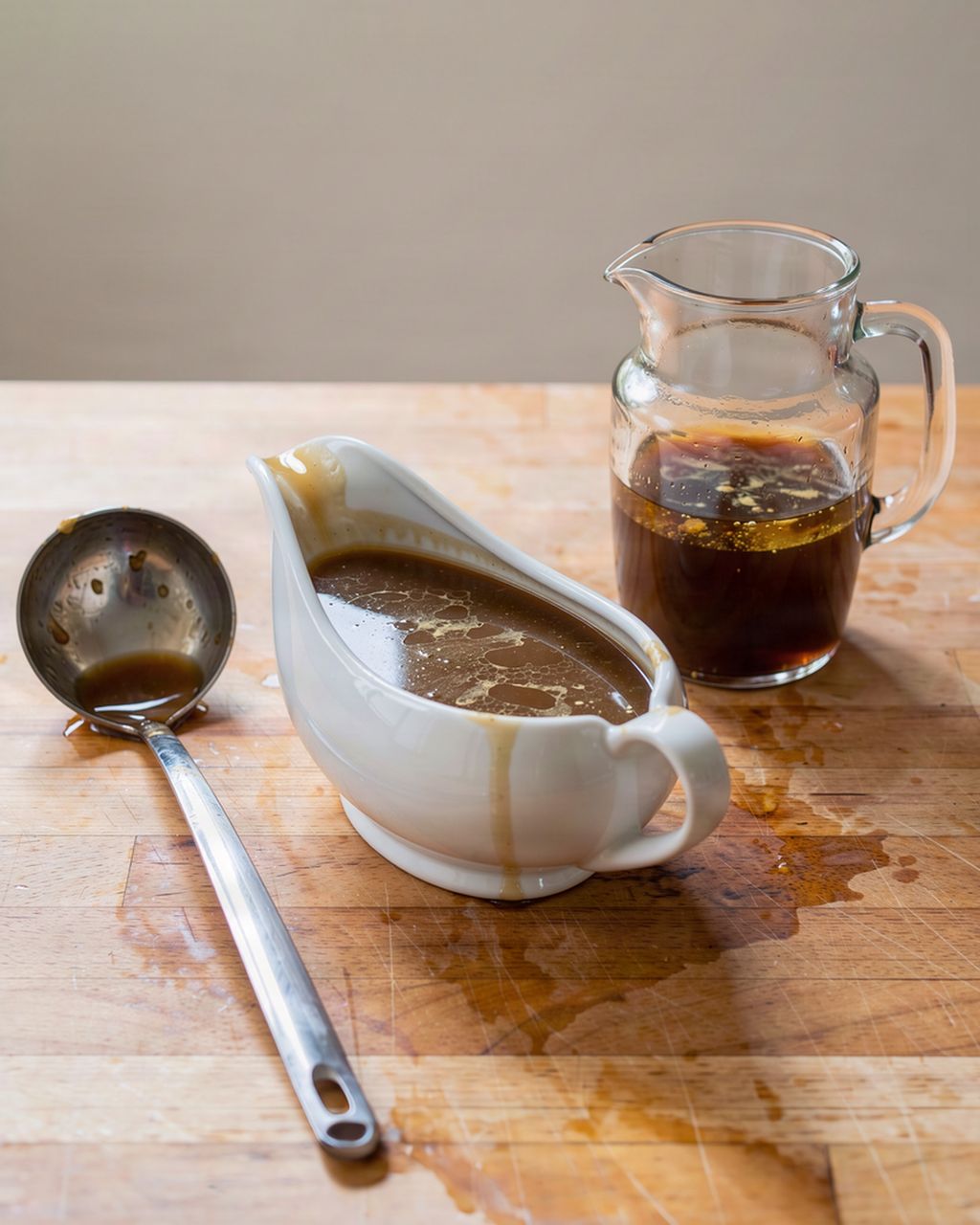
Separated with an oily top: skim off the fat, then whisk in a little hot stock.
Taste again at the end. Reheated gravy often needs a pinch of salt or pepper, or a splash of the fresh roasting juices.
Homemade gravy keeps for 1 to 2 days in the fridge, according to the FDA's refrigerator and freezer storage chart. Keep it covered, in the fridge at 4°C (40°F) or below, and reheat it to a rolling boil before serving.
Yes, the FDA lists gravy at 2 to 3 months in the freezer for best quality. Flour, cornstarch and cream gravies can all separate or weep when thawed. For the best result, freeze the stock and make the gravy on the day, or thicken it with waxy rice or corn flour.
You can, but cornstarch gravy often turns watery or spongy after thawing because the starch releases water. Whisk it hard while reheating and add a fresh cornstarch slurry if it is thin, or freeze the stock and thicken it on the day.
Reheat it in a saucepan over medium heat, whisking often, and bring it to a rolling boil as USDA advises for gravies. To stop a skin while it waits, keep a lid on or press a piece of baking paper onto the surface.
Gravy made with roasting juices or homemade stock contains gelatin from the meat, which sets when cold. It melts back into a smooth gravy when reheated and whisked, so nothing is wrong with it.
Bring it to a rolling boil on the stove first, then keep it hot at 60°C (140°F) or above, the USDA guideline for holding hot food, on a low burner or in a slow cooker set to warm. Don't use the slow cooker to reheat cold gravy. A thermos works only for short periods: preheat it with boiling water, fill it with boiling gravy and use it within 2 hours, the same limit USDA sets for any food that has dropped below 60°C (140°F). Gravy that has sat out at room temperature for more than 2 hours (1 hour if the room is above 32°C / 90°F) should be thrown away, according to USDA FSIS.
One recipe worth heating the oven for, one tip, and one deal from the shop. Nothing else.