Why Is My Gravy Not Thickening? Flour vs Cornstarch Amounts per Cup
Gravy Without Drippings: How to Make It from Stock and Butter
Updated Nov 20, 2026
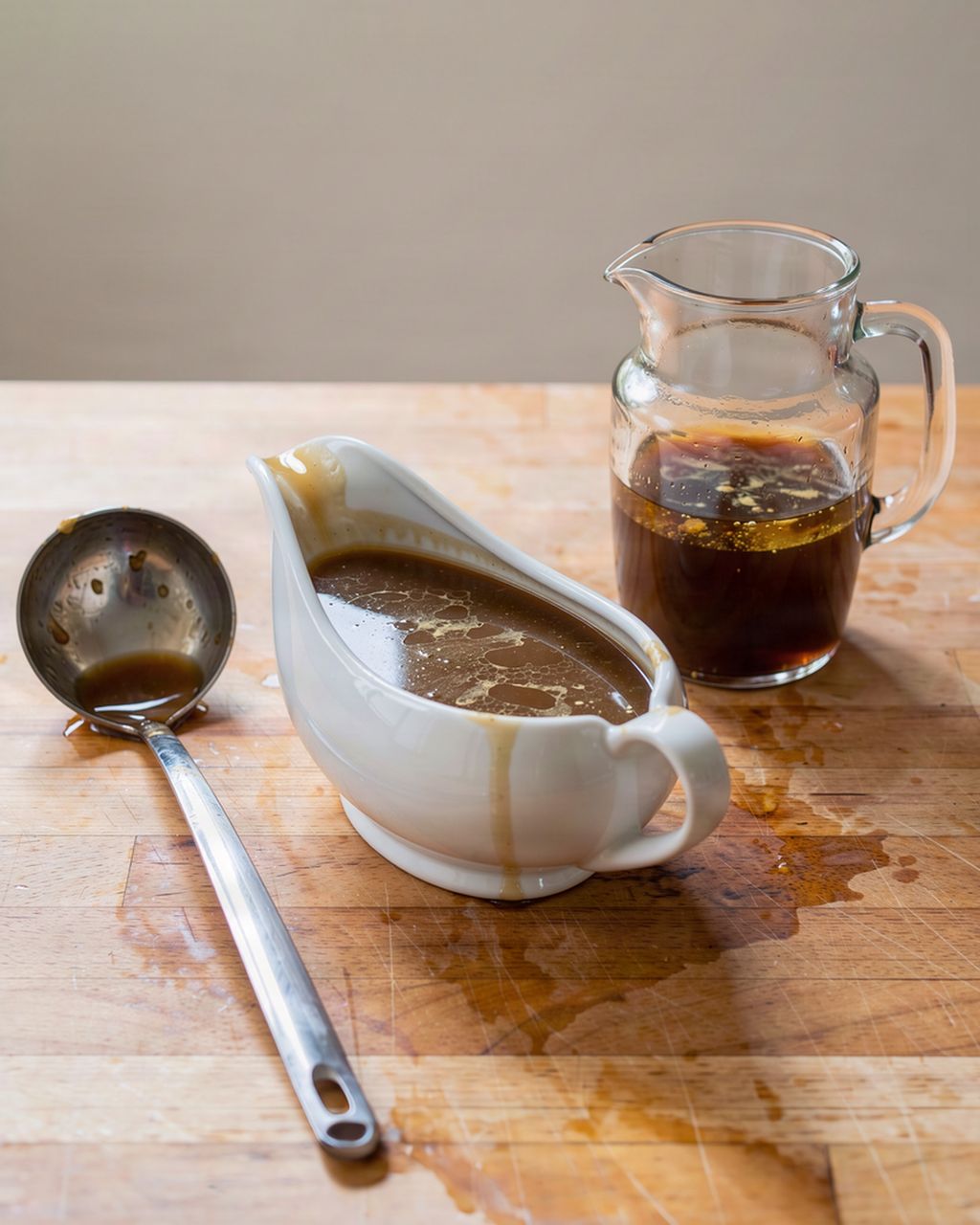
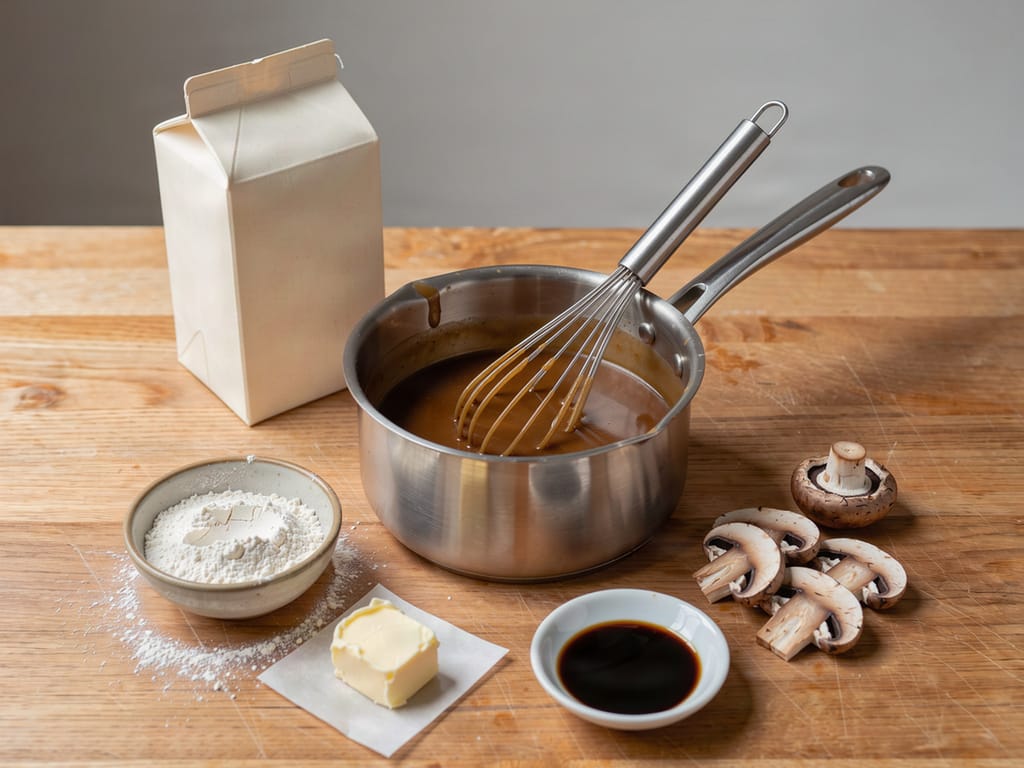
You can make a good gravy without drippings by cooking butter and flour into a roux and whisking in a well-flavored stock, at about 2 tablespoons each of butter and flour per US cup (236.6 ml) of stock. What drippings normally add is browned, savory depth, so the trick is to put that back with browned onion, mushrooms, tomato paste, soy sauce or a dash of Worcestershire. It also works with oil instead of butter, and with cornstarch instead of flour.
Drippings are the fat and the browned, sticky juices left in a roasting pan. They give a gravy three things:
Fat to make the roux.
Browned flavor from meat juices caramelizing on the hot pan.
Body from gelatin, which makes gravy feel rich and coat the spoon.
Without a roast, you replace each one. Butter or oil stands in for the fat. A good stock brings meat flavor and some body. Browning and umami boosters put back the roasted depth. Done well, most people at the table will not know the difference.
This is an outline, not a fixed recipe. Scale it to the amount you need.
Ratio for a medium gravy: about 2 tablespoons of butter (about 28 g) and 2 tablespoons of flour (about 16 g) per US cup (236.6 ml) of stock. For 2 US cups, which is close to 500 ml, use half a US stick of butter (56 g) and 4 tablespoons of flour.
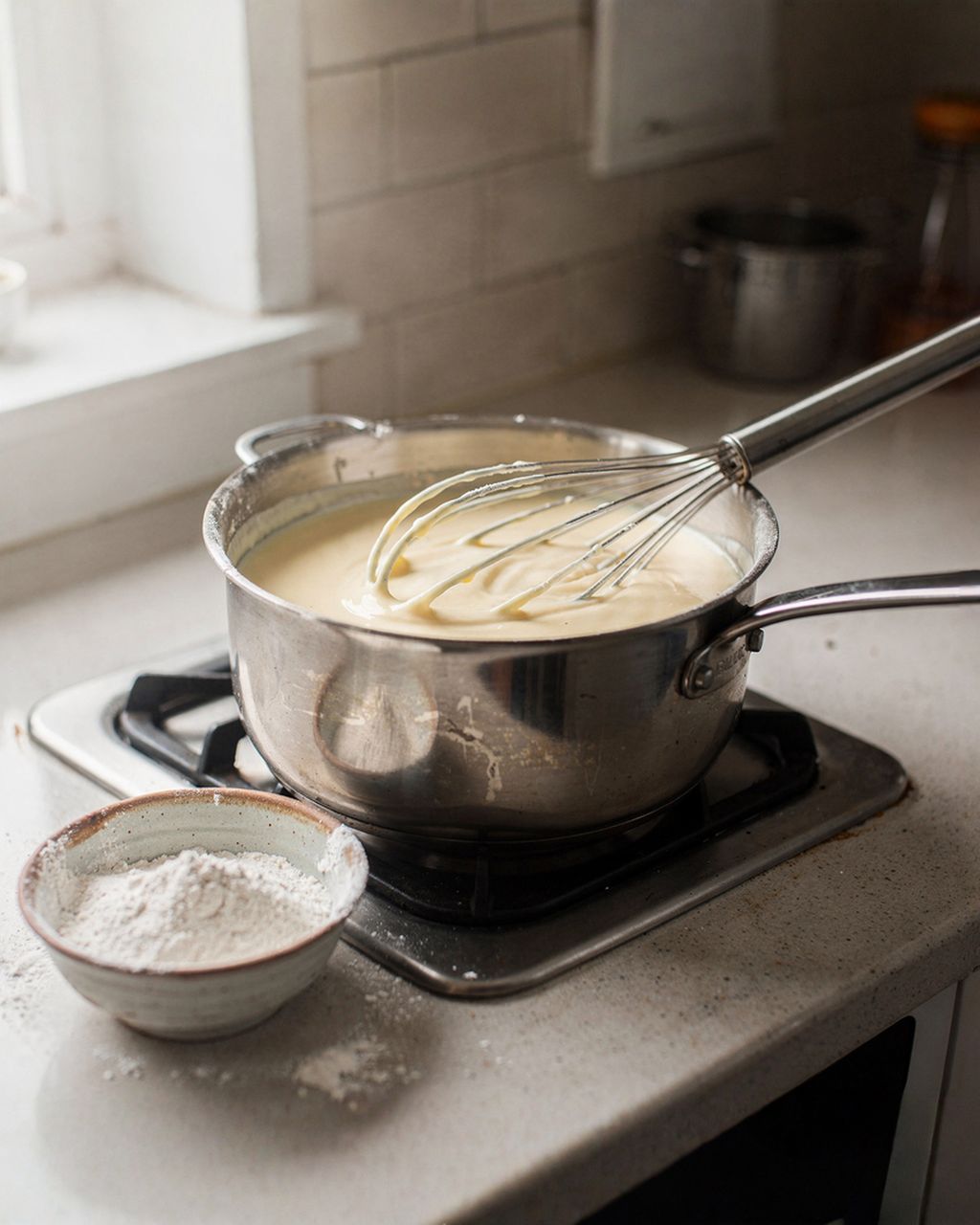
Make the roux: melt the butter over medium heat, stir in the flour and cook, stirring, for 3 to 5 minutes, until it smells nutty and turns light golden or light brown. The darker it goes, the more flavor and color, but the less it thickens.
Add the stock: warm the stock first, then whisk it in a little at a time. Add the first splash and whisk it to a smooth paste before adding more. That avoids lumps.
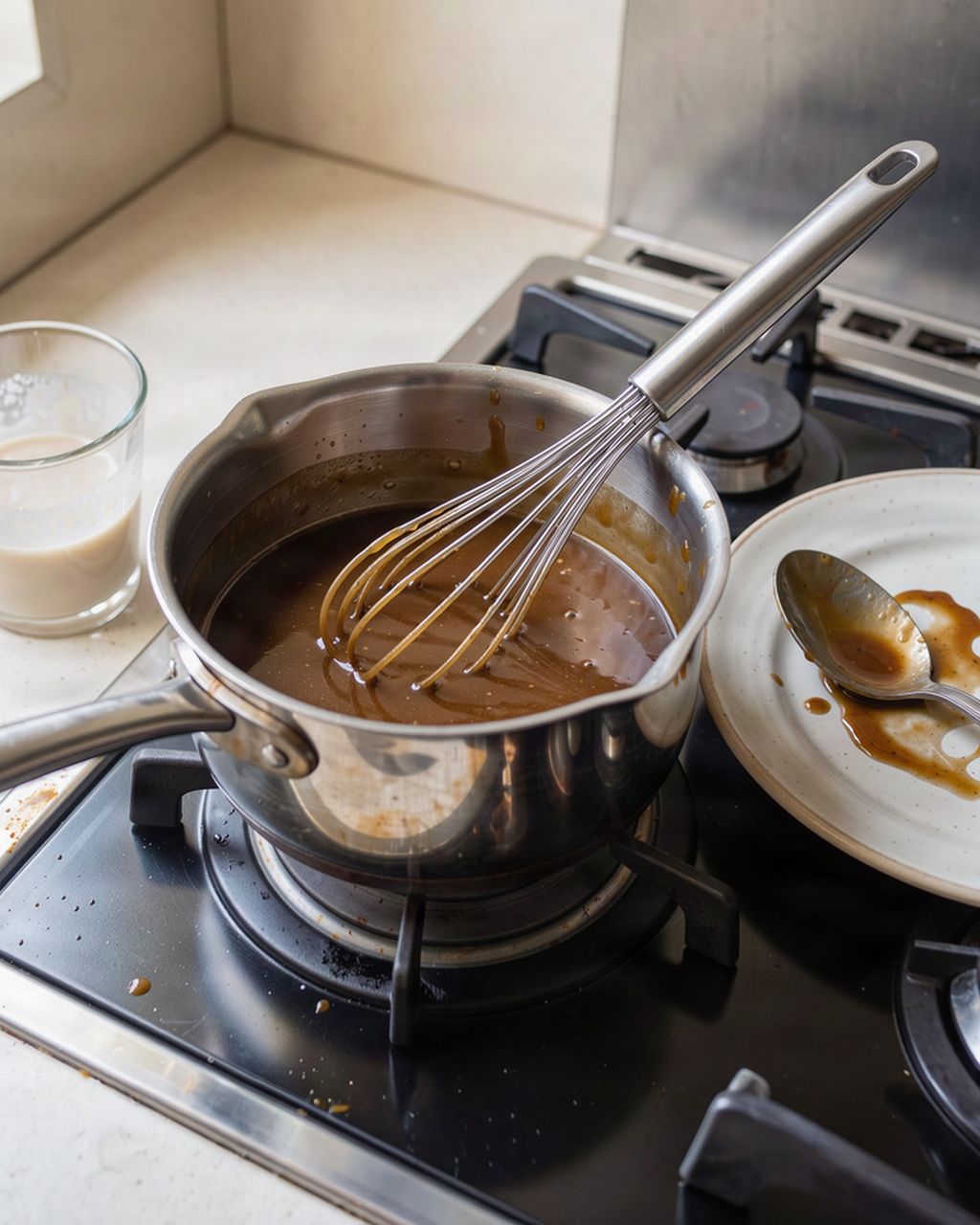
Simmer: let it bubble gently for 5 minutes or so, until it coats a spoon. It thickens more as it cools.
Season last. Store-bought stock is often salty, so add salt only after tasting.
Our tool converts butter: see how many grams in a tablespoon of butter. If lumps do form, our guide to lumpy sauce shows how to rescue it.
The stock does most of the work, so use the best you have.
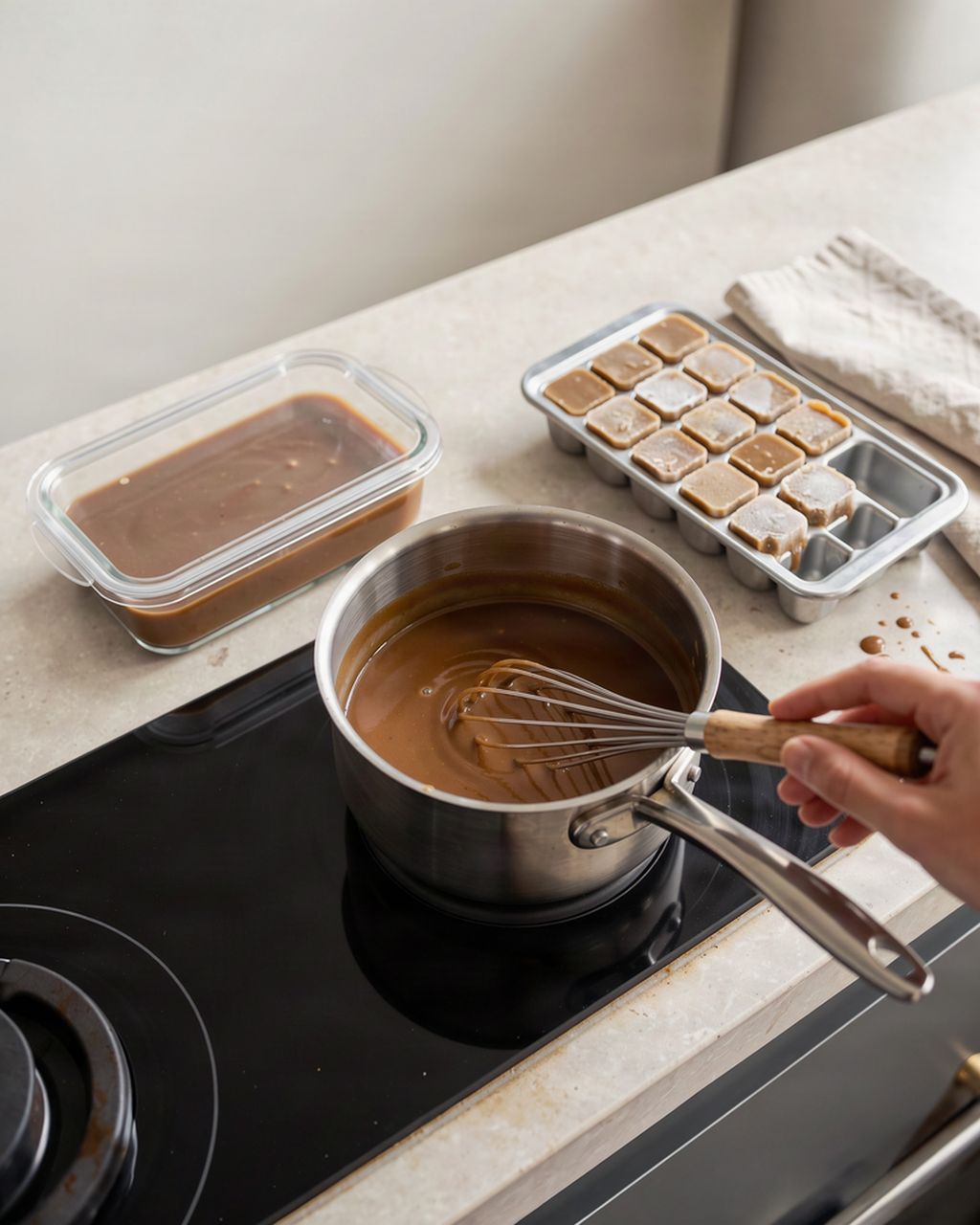
Homemade stock has the most body, because simmered bones release gelatin. Our guide on how to make beef stock clear and rich shows how. Leftover stock keeps for a limited time; our guide to stock in the fridge gives the storage times.
Store-bought stock or broth: choose a low-salt one. Gravy reduces as it simmers, and a salty stock gets saltier.
Stock cubes or bouillon powder: fine in a pinch. Use a little less than the pack says and taste before salting.
Match the stock to the meal: chicken stock for turkey or chicken, beef stock for beef and dumplings, vegetable stock for a vegetarian table.
Add these a little at a time and taste between additions. Amounts are for about 2 US cups (roughly 500 ml) of gravy.
Browned onion: cook a finely chopped onion slowly in the butter until deep golden before adding the flour. This is how many Czech brown sauces start.
Mushrooms: brown sliced mushrooms in the butter, or soak a small handful of dried porcini in hot water and add both the chopped mushrooms and the strained soaking liquid.
Tomato paste: about 1 teaspoon, stirred into the roux for a minute so it darkens.
Soy sauce: 1 to 2 teaspoons for color and savoriness.
Worcestershire sauce: ½ to 1 teaspoon. Most brands contain anchovies, so check the label if anyone avoids fish.
Miso or yeast extract (Marmite, Vegemite): ½ teaspoon, whisked in well. Both are salty.
A splash of wine or sherry, simmered for a minute to cook off the raw edge. For an alcohol-free gravy, skip it and add a few drops of vinegar at the end.
Herbs: a sprig of thyme or sage simmered in the gravy, then removed, and plenty of black pepper.
Soy sauce and many stock cubes contain wheat, and some contain celery, so read the labels if you are cooking for allergies.
Recipe of the week, one tip that saves you time and one deal from the shop. Unsubscribe in one click.
The next issue goes out on Thursday, November 26.
Without butter: use the same amount of oil, lard, bacon fat or a plant-based block butter. Oil makes a slightly less rich but perfectly good roux.
Without flour: bring the stock to a simmer and whisk in a cornstarch slurry, about 1 tablespoon of cornstarch mixed with 2 tablespoons of cold water per US cup of stock. Cornstarch only thickens fully once the gravy comes to a simmer or gentle boil, about 95°C (203°F); give it about a minute, then stop. Potato starch works too, but whisk it in off the boil and do not let it boil, or it can thin out again. Cornstarch is called cornflour in the UK.
Gluten-free: cornstarch or potato starch instead of flour, and a gluten-free tamari instead of soy sauce. Check that the stock is gluten-free too. Also check miso, yeast extract, Worcestershire sauce and gravy granules, which often contain barley or wheat.
Vegetarian or vegan: vegetable stock, mushrooms, browned onion, miso and soy sauce, with oil or plant butter.
Without stock: water plus mushroom soaking liquid, browned onion and a spoon of miso or yeast extract. It is lighter than stock gravy, but tasty.
In the UK and Australia, gravy granules (Bisto, Gravox and others) are the shortcut. You can stir a spoonful into a homemade gravy that tastes flat, as long as you taste for salt.
Melt butter, stir in the same amount of flour and cook it for a few minutes, then whisk in warm stock and simmer until thick. Use about 2 tablespoons each of butter and flour per US cup of stock, and season with soy sauce, Worcestershire or browned onion for depth.
Yes, use the same amount of oil, bacon fat, lard or a plant-based butter to make the roux. Or skip the fat and thicken the stock with a cornstarch slurry, about 1 tablespoon of cornstarch per US cup of stock.
Yes, but it needs more seasoning: use water with soaked dried mushrooms and their soaking liquid, a spoon of miso or yeast extract, and well-browned onions. A stock cube or bouillon powder dissolved in water is the quick option.
Cook the roux until it is light brown, brown the onions well, and add a little soy sauce or tomato paste. In the UK and Australia, a few drops of gravy browning also darken it without changing the taste much.
Yes, you can thicken it with potato starch, arrowroot or a cooked, blended vegetable such as onion or carrot. Reducing the stock alone makes a thinner jus rather than a thick gravy.
One recipe worth heating the oven for, one tip, and one deal from the shop. Nothing else.