Why Did My Dutch Oven Crack or Chip? Thermal Shock, Empty Heat and Safety
Why Is My Dutch Oven Burning on the Bottom? Stews, Sauces and Bread
Updated Nov 21, 2026
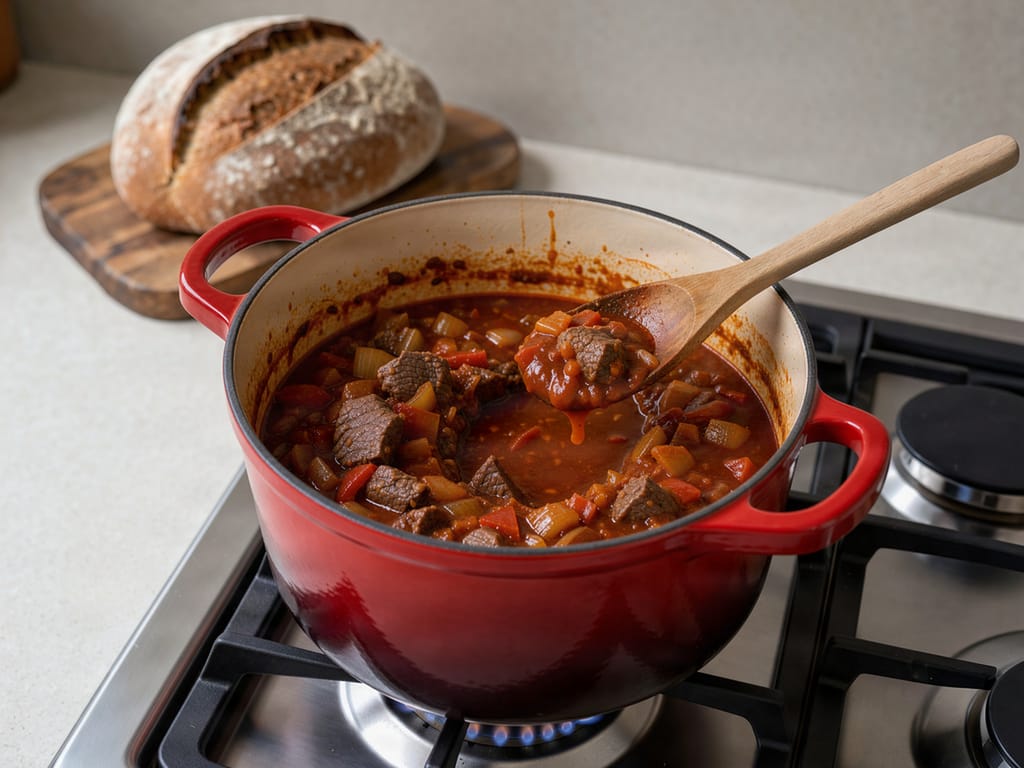
A Dutch oven burns on the bottom when the heat is too high for cast iron, which stores heat and keeps getting hotter, or when a thick stew sits unstirred with too little liquid. Le Creuset advises low to medium heat for nearly all cooking. Bread burns on the bottom for a different reason: the base sits too close to the oven's bottom heat, which a baking sheet under the pot usually fixes.
A Dutch oven is a heavy pot, usually cast iron, either bare or coated in enamel. That weight is why it is so good for slow braises, and also why it scorches food when you treat it like a thin steel pan.
Cast iron heats slowly, then holds and stores heat. If you leave the burner where you'd use it for a light pan, the base keeps getting hotter long after the food needs it. Le Creuset's own cooking guide says medium or low heat gives the best results, and that cast iron retains heat so efficiently that overheating will cause food to burn or stick.
The usual causes:
Too high a heat setting. Le Creuset says high heat is only for boiling water for pasta or vegetables, or for reducing stocks and sauces.
A burner bigger than the pot. Le Creuset says gas flames must stay under the base and never lick up the sides.
Too little liquid. A braise that reduces too far, or a lid left off, leaves the bottom layer to fry.
Thick, sugary or starchy food. Goulash, chili, tomato sauces, bean dishes and anything with flour or dairy settles on the base and catches.
Not stirring. In a thick stew, the bottom layer doesn't move unless you move it.
Heat gradually, then turn it down. Bring the pot up to temperature on medium. Once it is hot, Le Creuset says almost all cooking can carry on at lower settings.
Cover the base before heating. Le Creuset says the oil, fat, butter or liquid should cover the base before the heat goes on, and that the pot should never boil dry.
Stir from the bottom. Use a flat-ended wooden or silicone spatula and scrape across the base every 10 to 15 minutes for thick dishes.
Keep enough liquid. Top up with a splash of water or stock when the level drops below the meat.
Move long braises into the oven. An oven heats the pot from all sides, not just the base. Many Czech and Hungarian stews, from guláš (Czech goulash) to braised beef, are easier to keep from catching this way. Our guide on what to cook with beef for goulash and braises has ideas.
Add thickeners late. Flour-thickened sauces and dishes with cream or cheese catch faster, so stir them in toward the end where you can.
Act quickly, and don't stir:
Take the pot off the heat.
Ladle out everything that hasn't touched the bottom into a clean pot. Stop before you reach the burnt layer.
Taste it. If it tastes smoky or bitter, it has picked up the burnt flavor, and a little sugar, acid or cream may soften it. If it tastes clean, carry on cooking it gently.
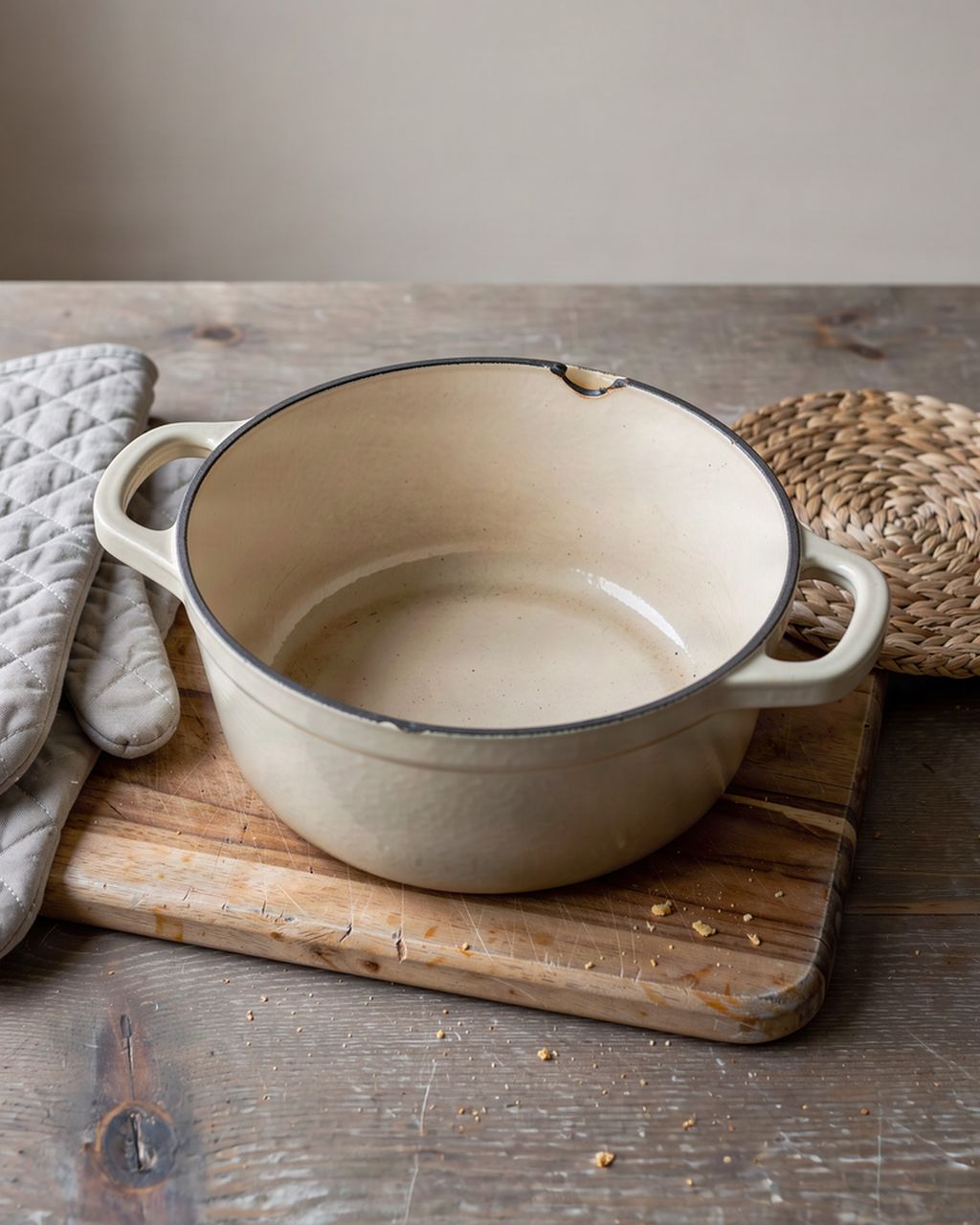
Leave the burnt pot to cool before washing. Le Creuset says to cool a hot pan for a few minutes first, because sudden temperature change (thermal shock) can crack the enamel.
For bitter-tasting goulash in general, see our guide to bitter, sour or sweet goulash.
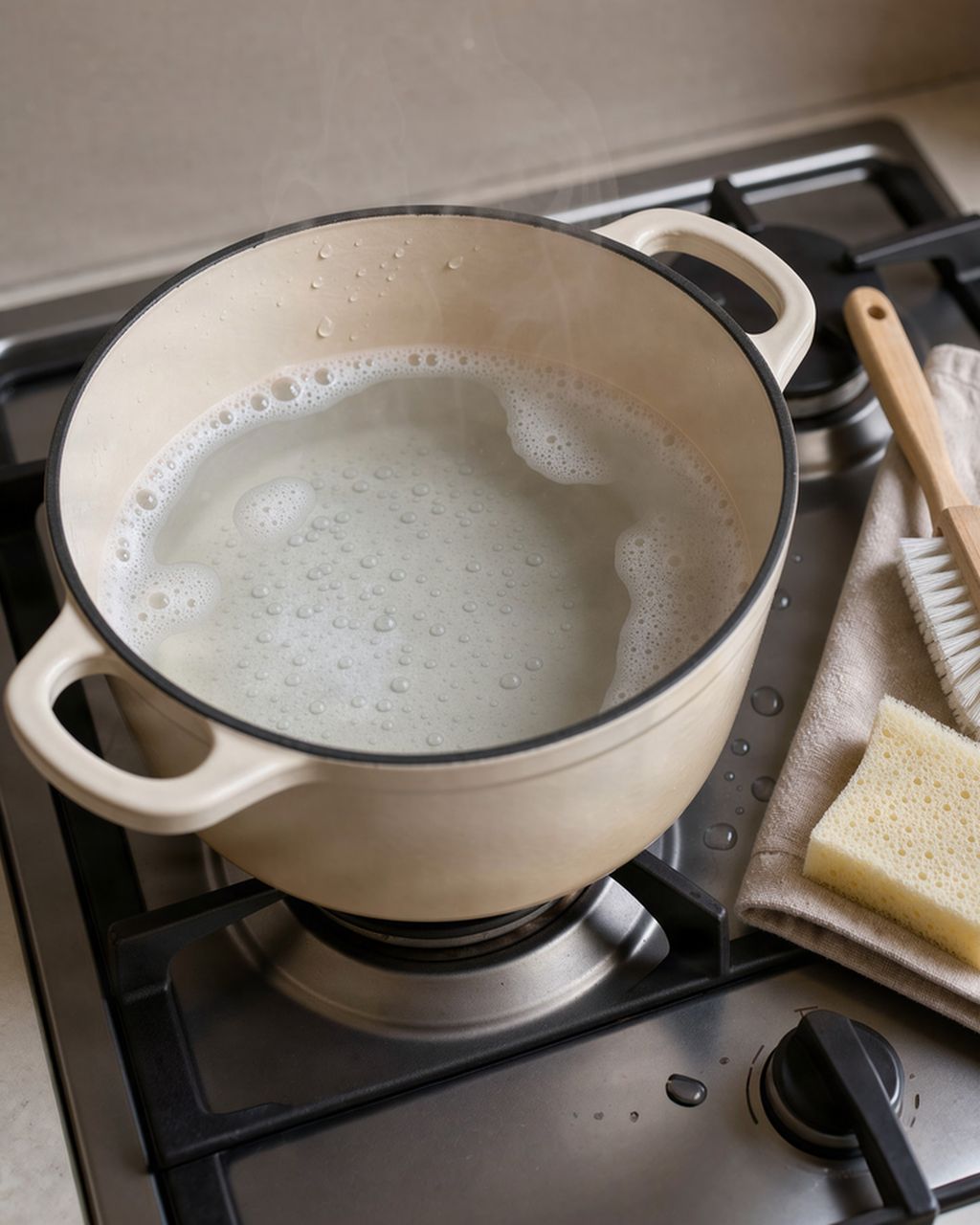
For stubborn residue, Le Creuset suggests filling the pot with water, adding baking soda (30 g per liter) and boiling gently until it loosens. Avoid metal scourers on enamel.
Bread in a Dutch oven is baked hot, often around 230–250 °C (450–480 °F), with a lid on for the first part to trap steam. The heavy base stores a lot of heat, and in most ovens it sits close to the main heat source. The bottom of the loaf gets the most heat for the longest time.
Fixes, roughly in the order to try them:
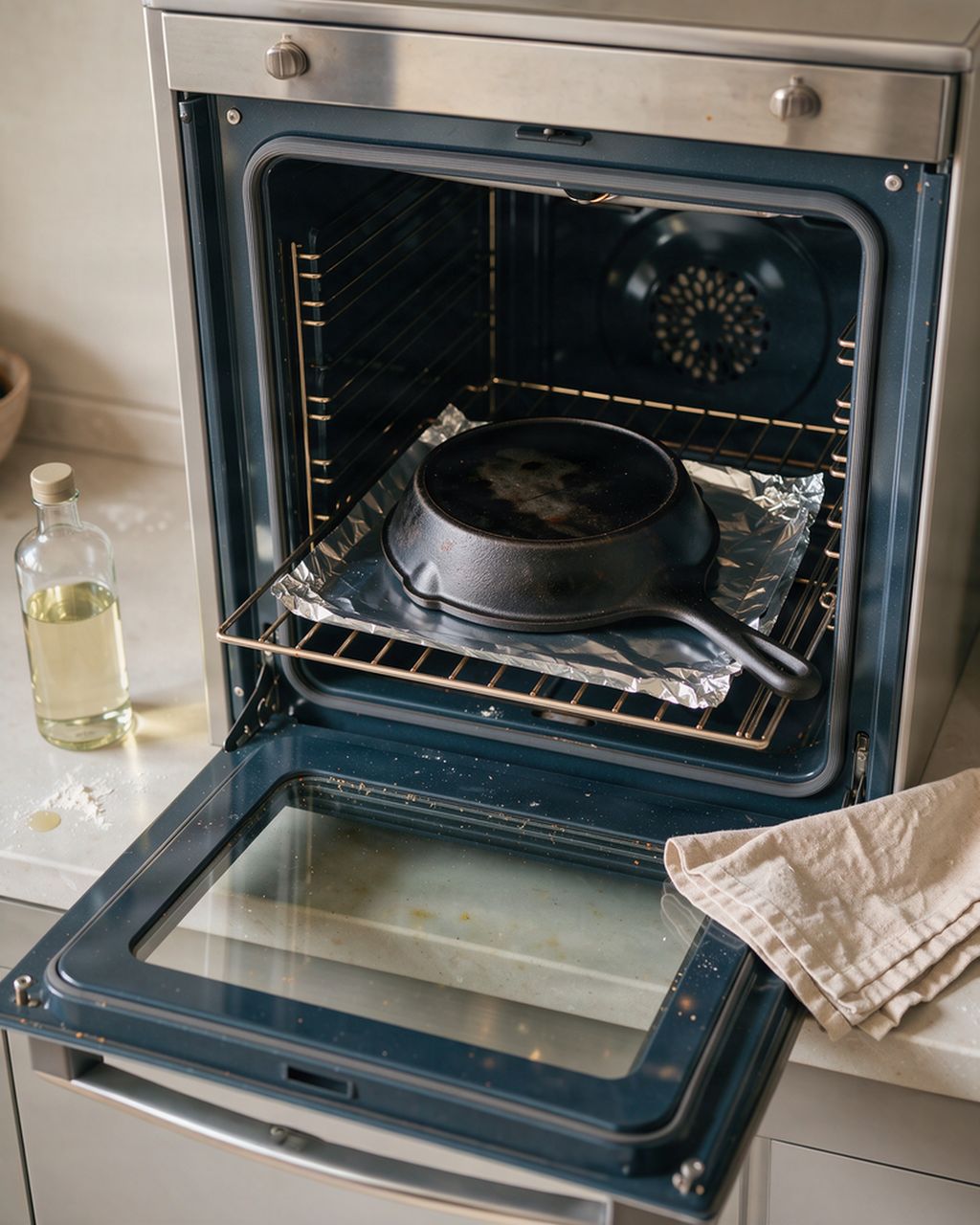
Put a baking sheet on the rack below the pot. It shields the base from direct heat. Many bakers find this alone is enough.
Move the pot up a rack. The lowest rack is the hottest for the base in many ovens.
Use parchment, or semolina or polenta under the loaf. Parchment makes it easier to lift the loaf in and out; check the heat rating on the box, since many papers are rated to about 220 °C (425 °F) and will darken or turn brittle above that. Semolina adds a little insulation.
Take the loaf out of the pot for the last part. Once the lid comes off, lift the loaf out and finish it directly on the oven rack or a baking sheet.
Check your oven. Ovens can run hotter or cooler than the dial, and bottom-heat-only settings scorch bases. Use conventional top-and-bottom heat or fan, not the bottom element alone.
Watch sugar and dairy. Enriched doughs with milk, honey or sugar brown much faster than a lean sourdough.
Our guides to how long to bake bread and how to tell it's done and baking sourdough without a Dutch oven cover the rest of the bake.
Recipe of the week, one tip that saves you time and one deal from the shop. Unsubscribe in one click.
The next issue goes out on Thursday, November 26.
It depends on where:
In the oven: Lodge says it is safe to preheat its enameled cast iron empty in the oven, which is how most bread recipes work.
On the stove: Lodge advises against heating empty enameled cookware on the stovetop. Le Creuset says the base should be covered with oil, fat or liquid before heating.
Bare cast iron tolerates dry heat better, but it still scorches food if it is overheated.
Le Creuset's instructions also say never to preheat on maximum or high heat, and to let the pot heat gradually. Use dry oven mitts: Le Creuset warns that handles and lid knobs get hot during stovetop and oven use.
Both store heat the same way, so both burn food when overheated. The differences:
Enameled pots (Le Creuset, Staub, Lodge enameled) have a glass coating that doesn't need seasoning. A light interior shows browning and scorch marks clearly. Le Creuset says high heat causes discoloration, so a stained base is often a sign the heat has been too high.
Bare cast-iron pots need seasoning, and acidic, long-simmered dishes can wear it thin, which makes sticking and scorching more likely.
Whichever you have, the cure is the same: moderate heat, enough liquid or fat, and a spatula across the bottom.
Food burns on the bottom of a Dutch oven when the heat is too high, the liquid runs low, or a thick dish isn't stirred. Le Creuset recommends low or medium heat and warns that higher settings cause burning, sticking and discoloration.
Dutch oven bread burns on the bottom because the heavy base absorbs heat from the oven floor or lower element. Put a baking sheet on the rack under the pot, move the pot up a rack, or lift the loaf out of the pot for the last part of the bake.
Use low to medium heat for enameled cast iron, as Le Creuset and Lodge both advise. Le Creuset says high heat is only for boiling water or reducing liquids, and should never be used to preheat the pan.
Don't stir the burnt layer in. Ladle the stew that hasn't touched the bottom into a clean pot, taste it, and leave the scorched base behind to soak.
Keep bread from burning by baking with the pot on a middle rack over a baking sheet, using parchment or a sprinkle of semolina under the loaf, and taking the loaf out of the pot once the lid comes off if the base is already dark.
Lodge says it is safe to preheat its enameled cast iron empty in the oven, but not empty on the stovetop. Check your own pot's instructions, including the lid knob's temperature limit.
One recipe worth heating the oven for, one tip, and one deal from the shop. Nothing else.