How Long to Bake Bread, at What Temperature, and How to Tell It's Done
How to Bake Sourdough Without a Dutch Oven: Covers, Steam and Safety
Updated Nov 21, 2026
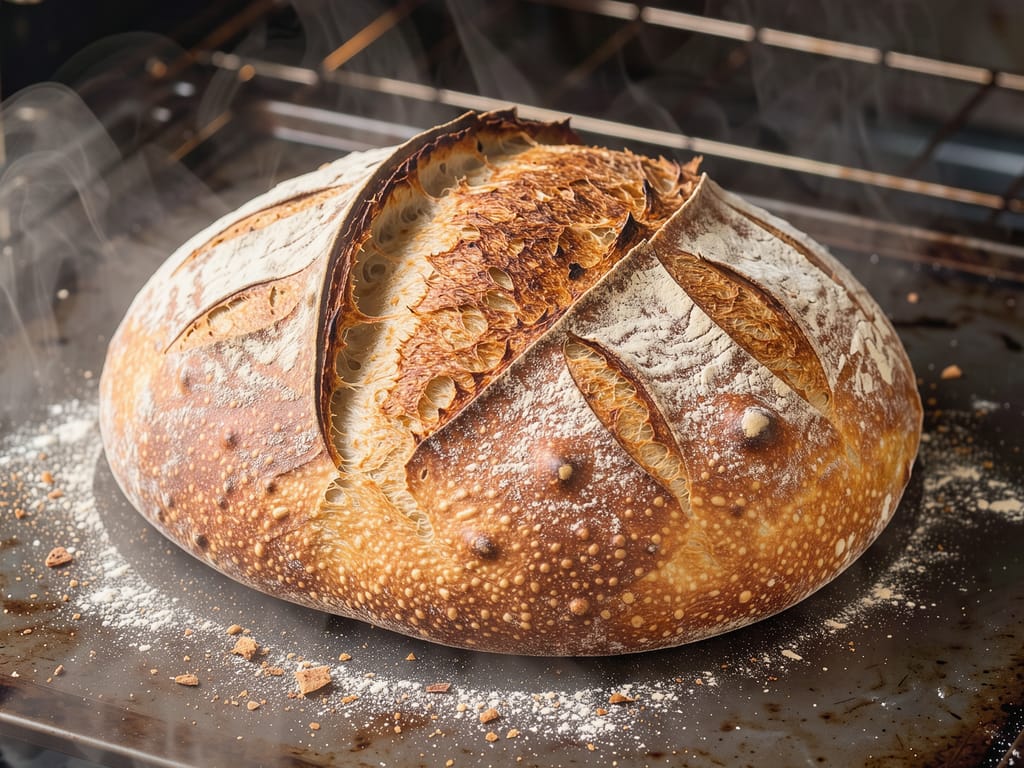
You can bake sourdough without a Dutch oven by baking it on a hot stone or heavy tray and either covering it with an upturned oven-safe pan or adding steam with a tray of boiling water for the first 20 minutes. The point of a Dutch oven is to trap steam so the loaf can rise before the crust sets, and these methods do the same job.
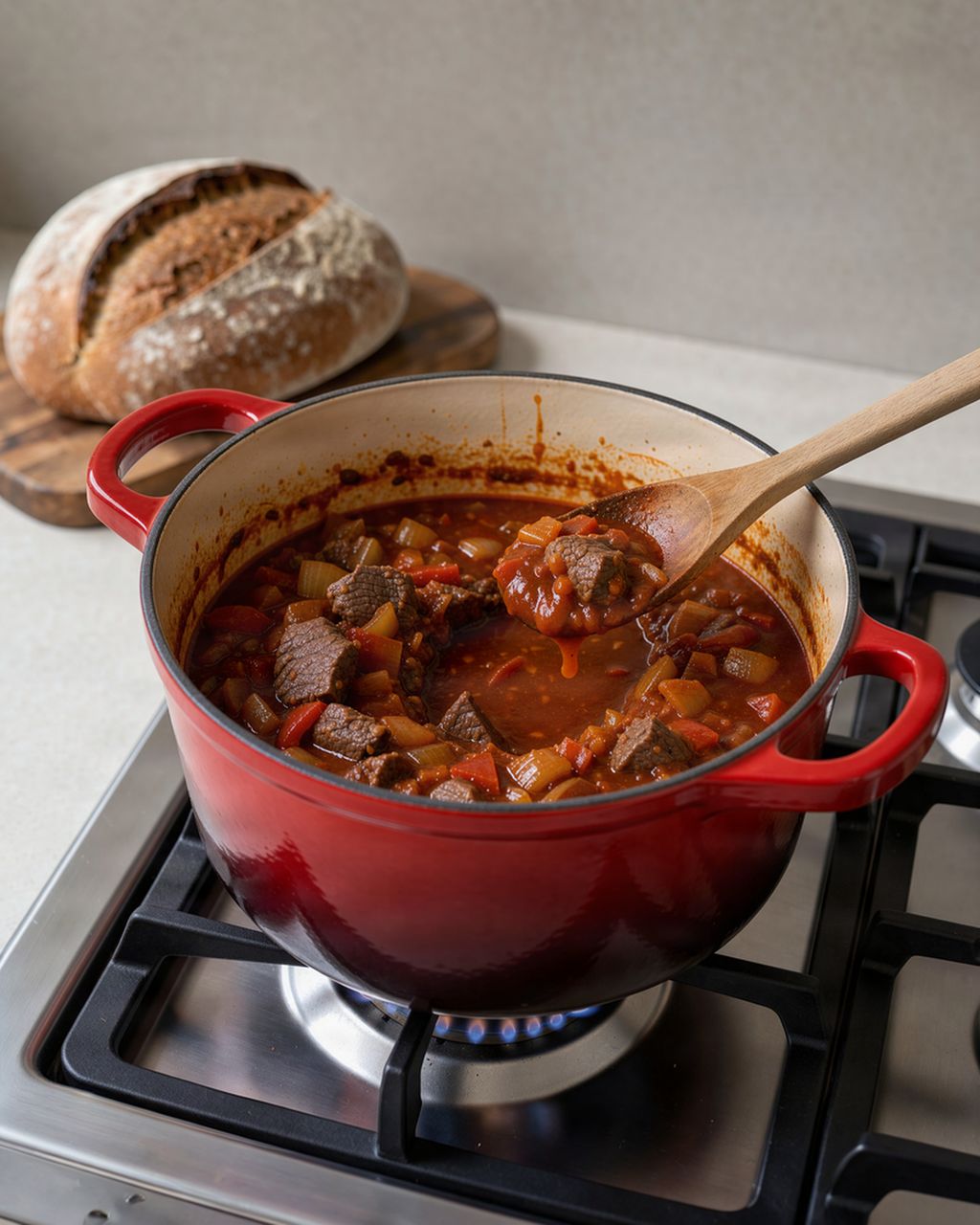
A Dutch oven does one main job: it traps the steam that comes off the dough in the first part of the bake. That moist air keeps the crust soft for longer, so the loaf can expand fully (oven spring) before the crust sets. Then the lid comes off and the crust browns and crisps.
Without steam, the crust sets early, the loaf rises less, and you get a dense, pale loaf with a tight, dull crust. So any substitute needs two things: strong heat from below and steam for the first 20 minutes or so.
Our guide to baking bread at home covers the Dutch oven method itself.
Seasonal baking plans, tested recipes and kitchen tricks that save you time. Unsubscribe in one click.
This is the closest copy of a Dutch oven. King Arthur Baking notes that any oven-safe vessel big enough to cover the loaf without touching it will trap steam, as long as the bread sits on a flat, solid surface so steam doesn't leak out underneath.
Preheat a baking stone, steel or heavy baking sheet.
Turn the loaf onto parchment, score it and slide it onto the hot surface.
Cover it with a deep metal roasting pan, a large stainless steel bowl, or a second baking tin turned upside down.
After about 20 minutes, lift the cover off with oven gloves and bake until done.
In Czech kitchens many people use a pekáč (a lidded enamel roasting pan) for bread. An oval one suits a long loaf, and an oven-safe casserole with a lid works the same way. Check the maker's temperature limit: some lids have knobs or handles rated lower than the pot.
If you have no cover big enough, put the steam into the oven instead.
Put a heavy metal pan (an old roasting tin or cast iron pan) on the lowest rack while the oven heats.
Load the loaf onto the hot stone or sheet, pour boiling water from a kettle into the pan, and shut the door quickly.
King Arthur Baking suggests keeping the water a few inches deep and taking the pan out after about 20 minutes, once the crust has started to color.
Variations from the same guide: rolled towels soaked in boiling water in a second pan for steadier steam, or lava rocks in an old skillet, which King Arthur notes can warp and damage the pan. Spraying the oven walls with water works less well, because steam escapes each time you open the door.
Turn off the fan for the first part of the bake if your oven allows it; fan ovens are designed to dry the air.
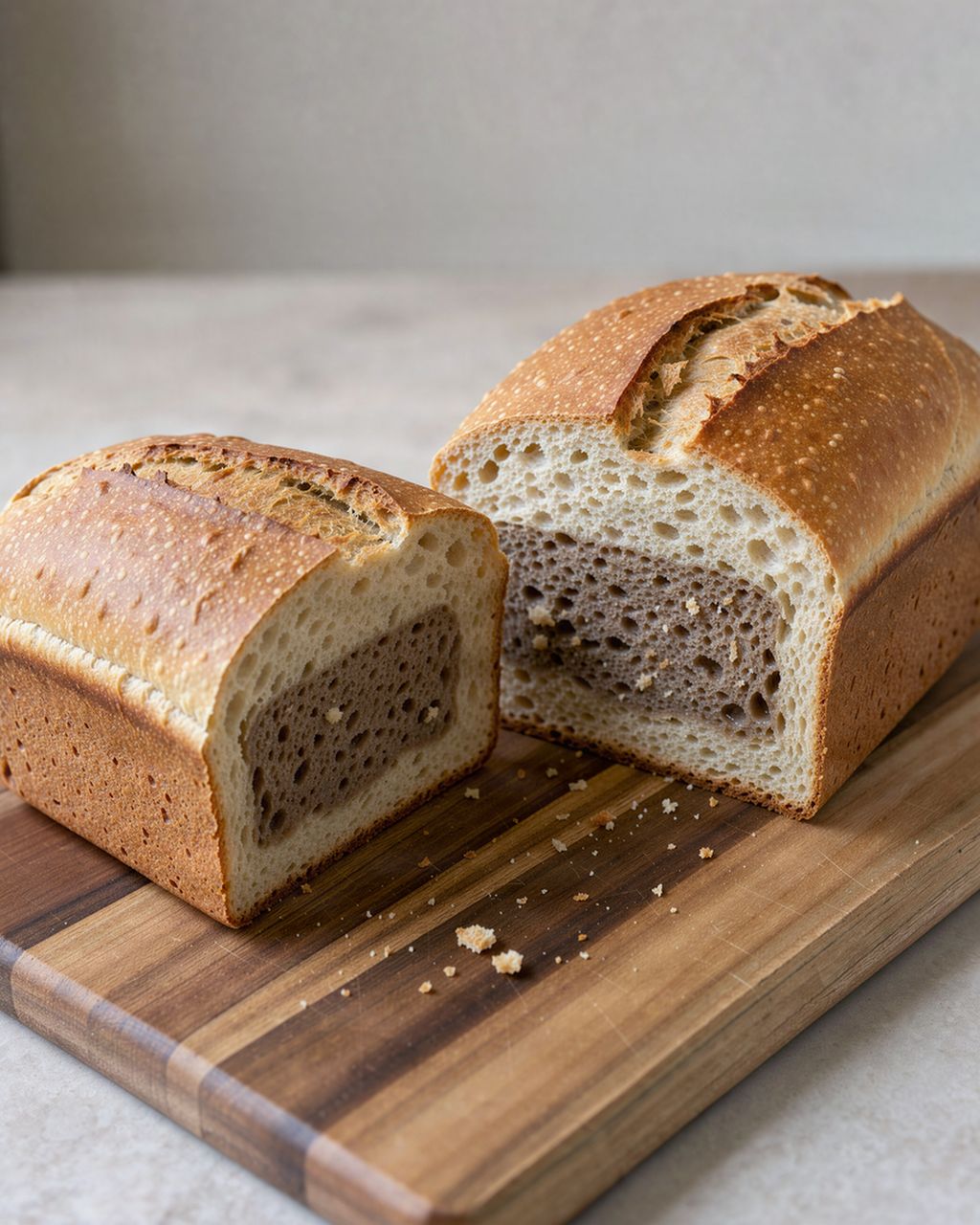
A wetter or flatter dough holds its shape better baked in a loaf tin. Cover it with a second tin of the same size, upside down, or with foil for the first 20 minutes. You get a sandwich-shaped loaf with a softer crust, which is useful for toast.
Strong heat from below gives the loaf its first push upward. A Dutch oven stores that heat in its heavy base, so the replacement needs mass too.
Baking steel: heats fast and holds the most heat. The best option if you bake bread or pizza often.
Baking stone: slower to heat but very even. Give it a long preheat, at least as long as your oven takes to reach temperature and then some.
Heavy baking sheet, upside down: the cheapest option. Turned over, it is easy to slide the loaf on and off.
Cast iron skillet: fine for a small round loaf.
Slide the loaf on with its parchment, but check the box for the paper's maximum temperature first. If your bake is hotter than that, dust the hot surface with semolina instead and slide the loaf on from a floured board or tray.
Most sourdough recipes bake hot, usually at around 230–250 °C (450–480 °F) in a conventional oven. Follow your recipe; if it is written for a fan oven, the oven temperature converter helps. Ovens can run hotter or cooler than the dial, which an oven thermometer shows.
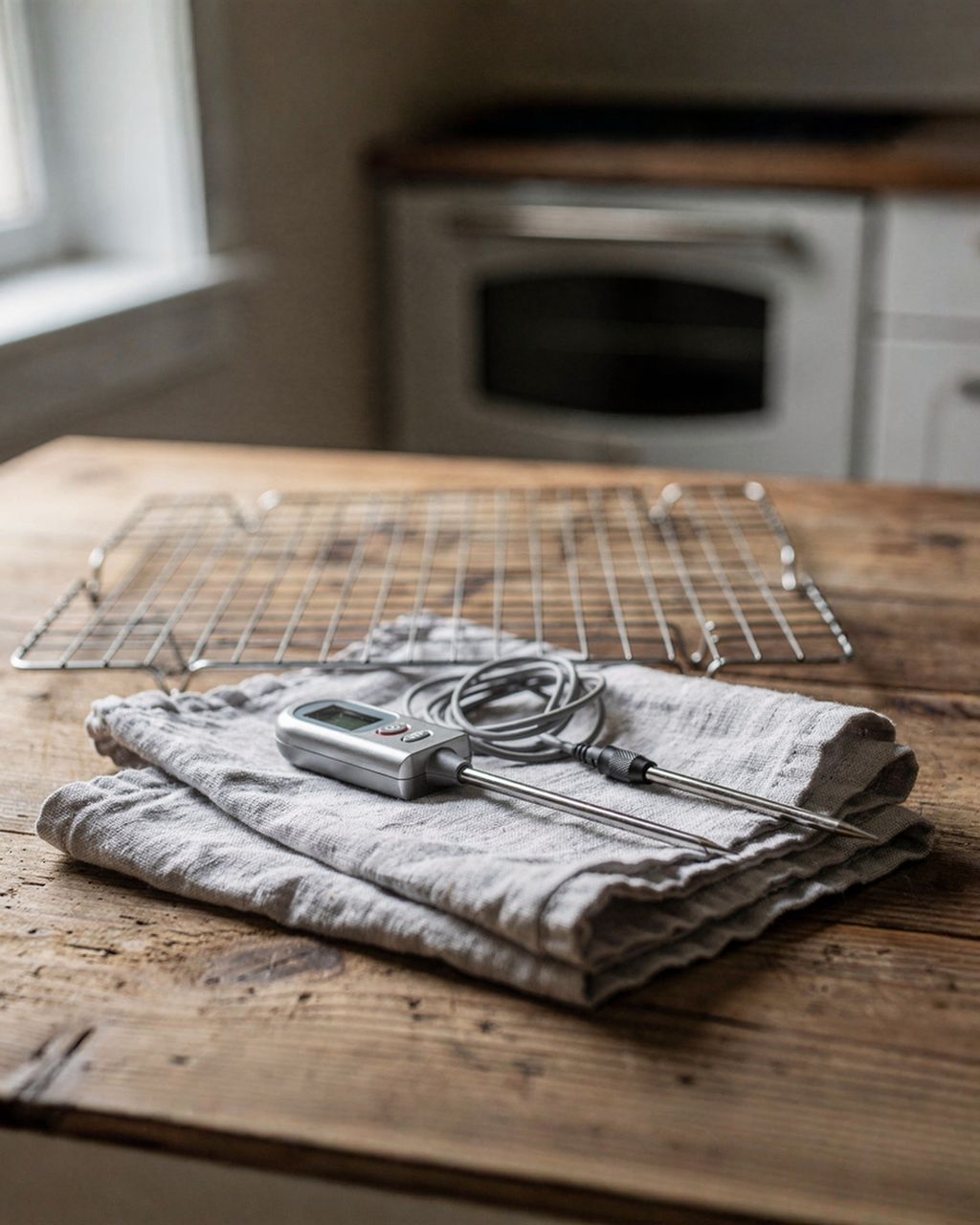
Preheat the stone or sheet with the oven so it is fully hot when the loaf goes in. King Arthur Baking gives about 88–91 °C (190–195 °F) in the center for most sourdough loaves that aren't very dense, and 96–99 °C (205–210 °F) for rye. Our article on how long to bake bread covers the other signs.
Every one of these methods means reaching into a very hot oven, and steam burns as badly as the pan.
Use dry, thick oven gloves that cover your wrists. A damp cloth lets heat straight through.
Pour boiling water from a kettle at arm's length, and close the door at once. Keep the water off the oven door glass and the light.
Never add water to a hot glass or ceramic dish. Pyrex warns that liquid added to hot glass can make it break. Use a metal pan for steam.
Open the door, then step back. A cloud of steam comes out when you remove a cover or the water pan, especially at face height.
Carry the water pan out slowly, or leave it in until the oven cools. A full pan of boiling water is the most dangerous part of the whole bake.
Keep children and pets out of the way while the oven is open.
If you do get burned, the NHS advises holding the burn under cool running water for 20 minutes, as soon as possible and ideally within 3 hours. NHS 111 Wales adds that the water can be cool or lukewarm, and says not to use ice, iced water, creams or greasy substances such as butter. Get urgent medical help for large or deep burns, burns to the face, burns to a young child, or any burn you are unsure about.
Yes. Bake it on a preheated baking stone, steel or heavy baking sheet and give it steam for the first part of the bake, either by covering it with an upturned oven-safe pan or by adding a tray of boiling water below it.
An upturned roasting pan or large metal bowl over the loaf, a lidded enamel roasting pan, an oven-safe casserole dish with a lid, or a baking stone with a steam tray. Anything oven-safe that covers the loaf without touching it can trap steam.
Preheat a heavy metal pan on the lowest rack, then pour boiling water into it as the loaf goes in and close the door quickly. King Arthur Baking suggests removing the water pan about 20 minutes into the bake so the crust can brown and crisp.
About 20 minutes, then uncover it for the rest of the bake. King Arthur Baking gives this timing for Dutch ovens and cloches, and the same applies to an upturned pan.
NHS 111 Wales advises cooling the burn under cool or lukewarm running water for 20 minutes, without ice, iced water, creams or greasy substances such as butter. Get urgent medical help for large, deep or facial burns, and for any burn to a young child.
One recipe worth heating the oven for, one tip, and one deal from the shop. Nothing else.