Why Did My Dutch Oven Crack or Chip? Thermal Shock, Empty Heat and Safety
How to Clean a Stained Enameled Dutch Oven Without Damaging It
Updated Nov 21, 2026
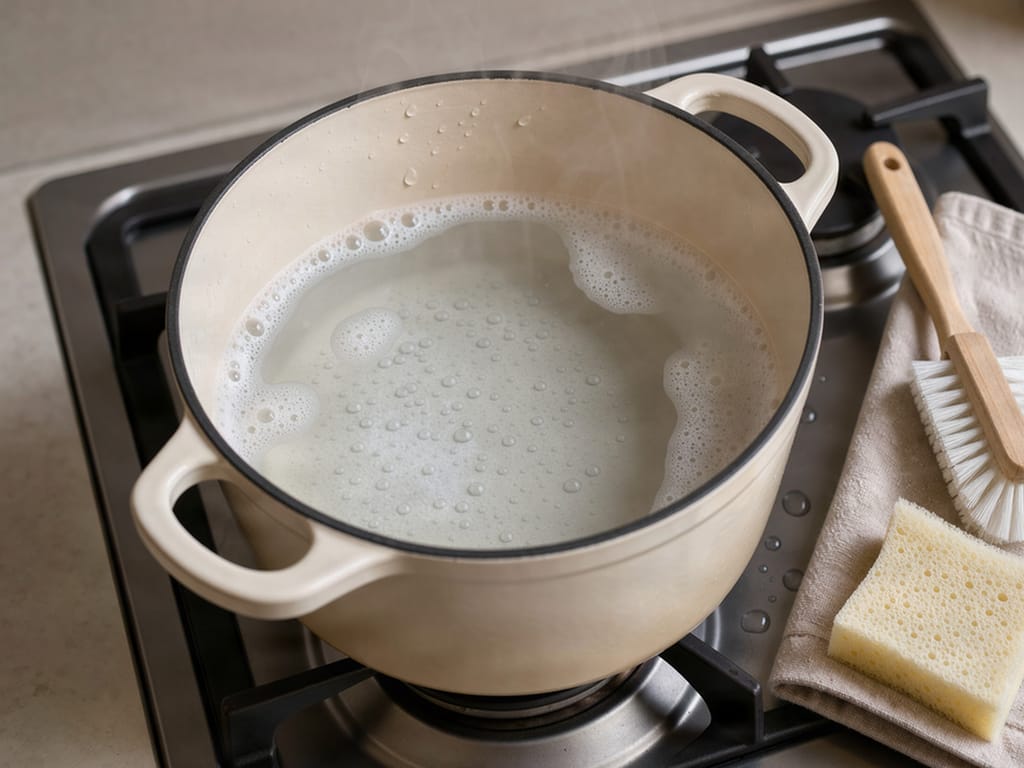
To clean a stained enameled Dutch oven, fill it with water, add baking soda (Le Creuset suggests about 30 g per liter), boil it gently until the residue loosens, then wash it with a soft sponge or nylon brush. For stains that stay, use the maker's enamel cleaner. Never use metal scourers or harsh abrasive powders, which scratch the enamel.
The inside of an enameled Dutch oven is a layer of glass fused to cast iron. It is tough and doesn't need seasoning, but it stains with use, especially the light cream interiors of Le Creuset and Lodge pots.
The usual causes:
High heat. Le Creuset says higher heat settings cause burning, sticking and discoloration, and advises medium or low heat to prevent staining. A pot that is regularly used on high turns brown faster.
Baked-on fat. A thin film of oil heated again and again polymerizes into a brown, varnish-like layer, the same process that seasons bare cast iron.
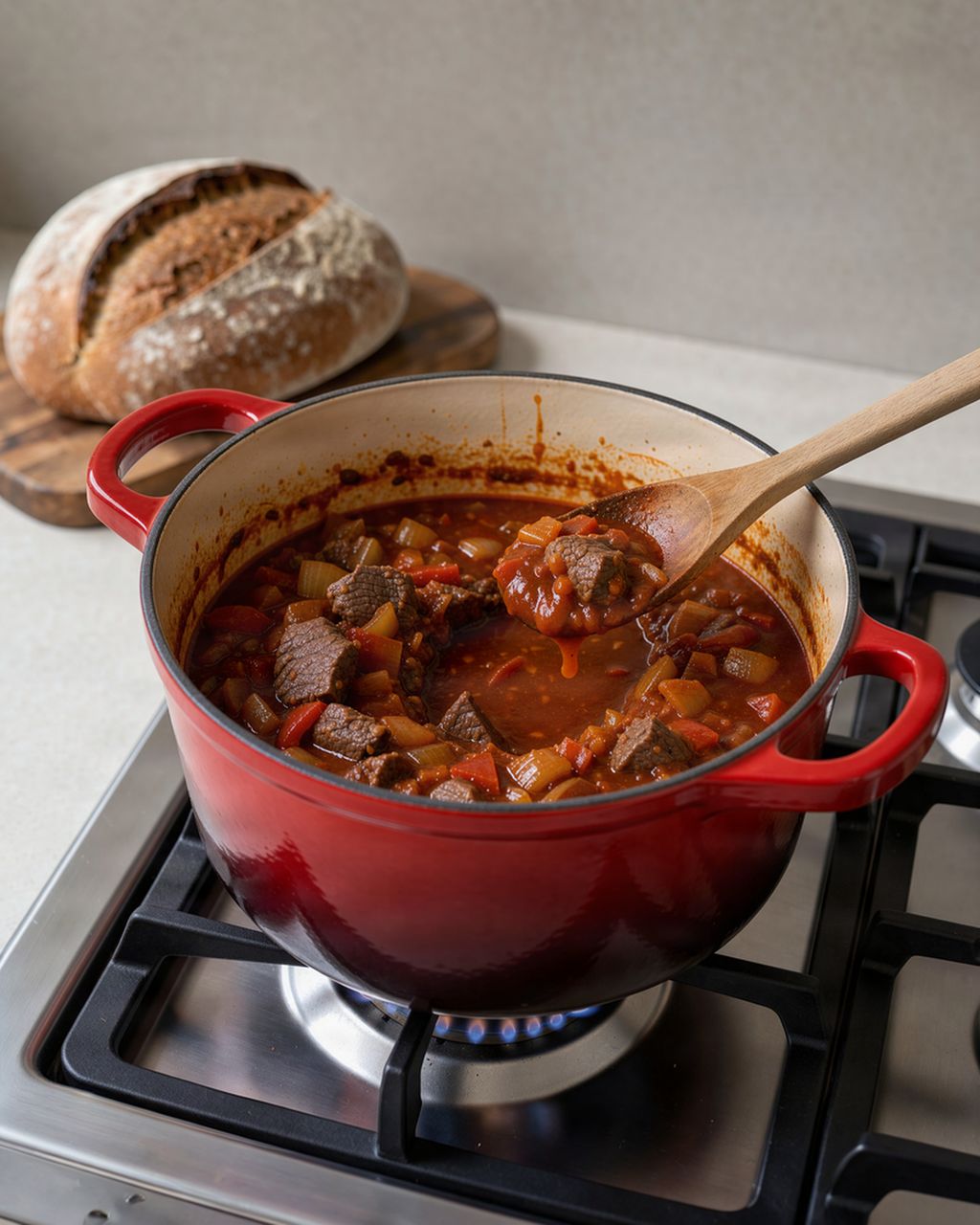
Strongly colored food. Tomato, tomato paste, ground turmeric, red wine and paprika-heavy dishes like goulash all leave color behind.
Metal tools. Le Creuset notes that metal tools can leave marks on the enamel.
Hard water. Chalky white or rainbow-tinted marks are often mineral deposits rather than food stains.
Seasonal baking plans, tested recipes and kitchen tricks that save you time. Unsubscribe in one click.
Start gentle and work up. Let the pot cool for a few minutes first. Le Creuset warns that sudden temperature changes can crack the enamel.
Soak. Fill the pot with warm water and a little dish soap and leave it for 15 to 20 minutes, as Le Creuset's care guide suggests. Then wash with a soft sponge or nylon brush.
Boil with baking soda. Le Creuset's suggestion: fill the pot with water, add baking soda at about 30 g per liter, and boil gently until the residue loosens. Lodge uses a much stronger mix for baked-on food: 4 tablespoons of baking soda in 2 US cups (473 ml) of water, then loosens the food with a pan scraper. Keep an eye on the pot so it doesn't boil dry.
Scrub while it is warm. Pour off the water, let it cool enough to handle, and scrub with a nylon brush, a non-scratch pad or a wooden or plastic scraper.
Use a baking soda paste on what's left. Mix baking soda with a few drops of water, rub it onto the stain with a soft sponge, leave it for a while, then rinse.
Repeat if the stain has faded but not gone.
For stains that survive baking soda, the makers sell their own products:
Le Creuset Cookware Cleaner: Le Creuset says it removes light stains and metal marks. Apply as directed on a dry pot.
Lodge Enamel Cleaner, or another ceramic cleaner: Lodge recommends rubbing it on with a damp cloth, following the bottle.
Bleach is a last resort and only if your pot's maker allows it. Lodge's care page gives a soak of 3 tablespoons of household bleach per US quart (946 ml) of water for 2 to 3 hours, for persistent stains in its own enameled cast iron. If you use it:
never mix bleach with vinegar, ammonia or any other cleaner;
ventilate the room and wear gloves;
rinse the pot thoroughly afterward and wash it once more with soapy water.
Le Creuset's care information doesn't list bleach, so for a Le Creuset pot, stick to baking soda and its own cleaner, or ask the company.
A brown interior is almost always a thin layer of baked-on oil and food. It builds up slowly, especially if you brown meat or fry onions on medium-high to high heat.
Light browning comes off with the baking soda boil above, sometimes in two rounds.
A darker, glossy layer needs the boil plus a paste, or the maker's cleaner.
To stop it coming back, cook on medium or low heat, as Le Creuset advises. Cast iron stores heat, so medium on the dial is plenty for browning. Wash the pot properly after each use so a fat film doesn't build up.
A pot doesn't need to look new to cook well. Light, even staining is normal with years of use. What matters is that the enamel stays smooth and intact.
Use medium or low heat for almost everything. Le Creuset says high heat is only for boiling water or reducing liquids.
Cover the base with fat or liquid before heating. Le Creuset says the enamel surface isn't ideal for dry cooking.
Use wooden, silicone or heat-resistant plastic tools, and don't knock metal spoons on the rim.
Wash after each use, and don't let food dry on overnight.
Hand wash if you can. Le Creuset says frequent dishwashing can dull the finish, which is not harmful. Lodge says it can lead to rust on the rim.
Dry the pot fully, especially the bare iron rim, and store it with the lid off or propped open.
Goulash, braised red cabbage and other paprika- or tomato-heavy Czech dishes are worth a quick wash soon after serving. Our guide to sweet, smoked and hot paprika explains why paprika colors everything it touches.
Some marks are not stains:
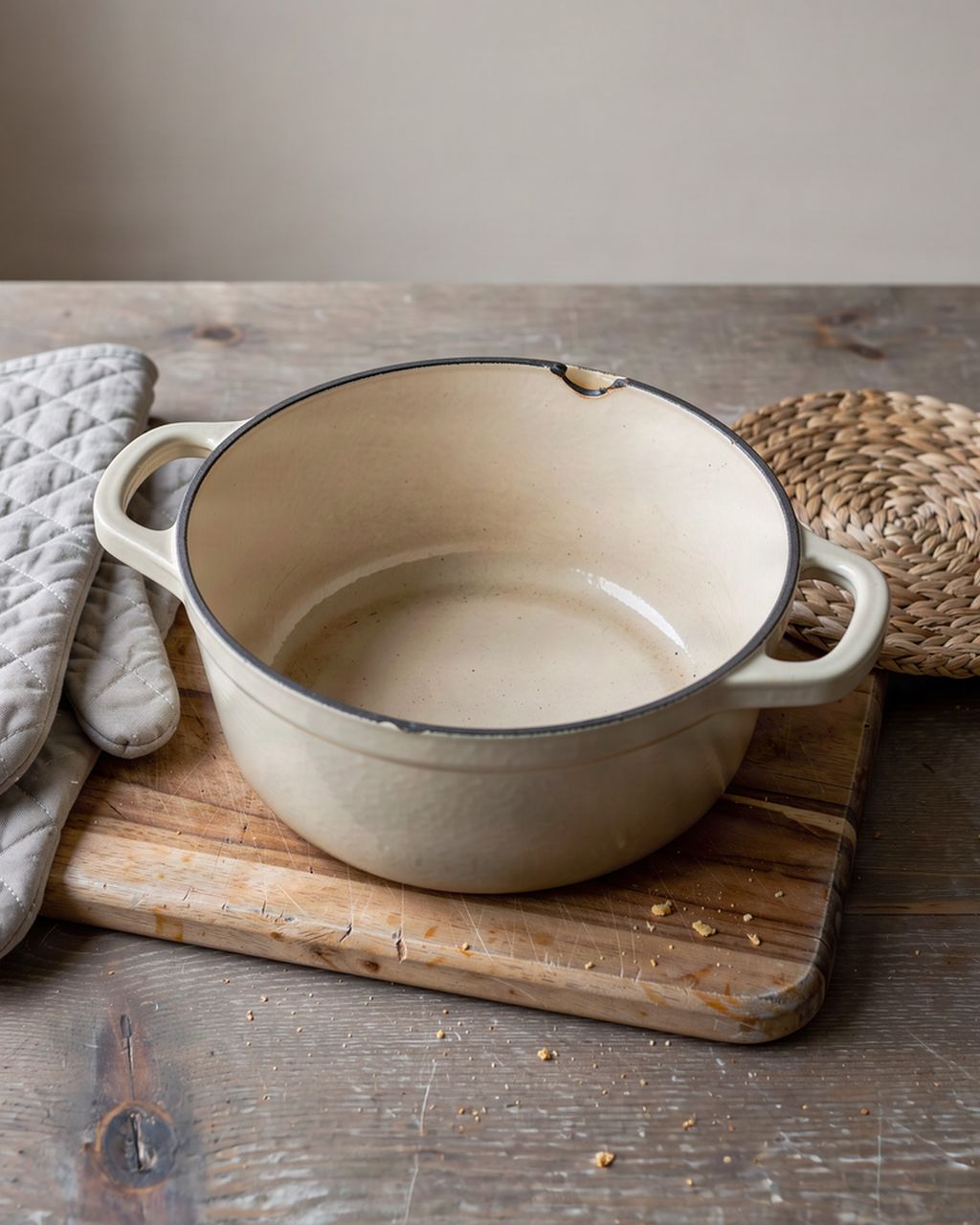
Chips inside the pot: Le Creuset's safety instructions say never to use a product whose interior enamel has chipped, because chips could cause injury if swallowed. Le Creuset's FAQ suggests a warranty claim so the piece can be evaluated.
Chips on the outside: Le Creuset's FAQ says a chip on the outside of the pot is still safe to use.
A rough, dull patch that catches food may be worn enamel. Contact the maker.
Cracks in the enamel or iron: stop using the pot and contact the manufacturer.
If the pot is fine, put it back to work on a slow braise, like the ones in our guide on what to serve with Czech goulash.
Boil water with baking soda in the pot, about 30 g per liter as Le Creuset suggests, until the residue loosens, then scrub with a nylon brush or soft sponge. For stubborn stains, use the manufacturer's enamel cleaner as directed.
An enameled Dutch oven turns brown from a thin layer of baked-on fat and food, usually from cooking on heat that is too high. Le Creuset says higher settings cause burning, sticking and discoloration, and advises medium or low heat to prevent staining.
Lodge gives a diluted bleach soak for persistent stains in its own enameled cast iron, so check your pot maker's instructions first. Never mix bleach with vinegar or other cleaners, keep the room ventilated, and rinse thoroughly.
No. Le Creuset and Staub both advise against metal pads and harsh abrasive cleaners on enamel because they scratch and damage the surface. Use a nylon brush, a soft pad or a non-scratch sponge.
Le Creuset says its enameled cast iron can go in the dishwasher, but frequent dishwashing can dull the enamel finish. Lodge prefers hand washing and says dishwashing can contribute to rust on the bare rim.
A stained but smooth enamel interior is a cosmetic issue. If the enamel inside is chipped, Le Creuset's safety instructions say to stop using the pot, because chips could cause injury if swallowed.
One recipe worth heating the oven for, one tip, and one deal from the shop. Nothing else.