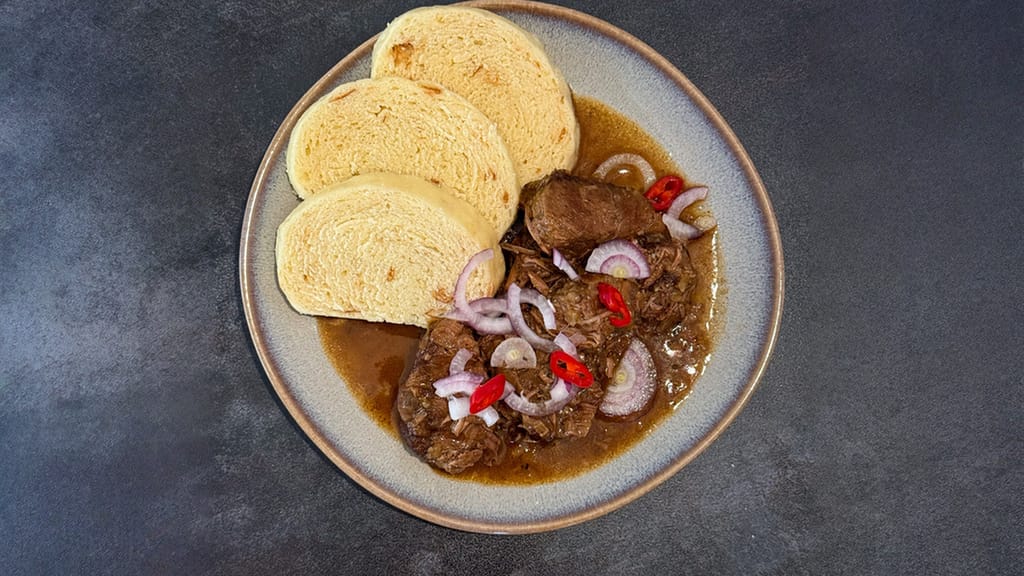
Classic czech beef goulash with chilli and bread dumplings
Bitter, Sour or Sweet Goulash: Why It Tastes Off and How to Fix It
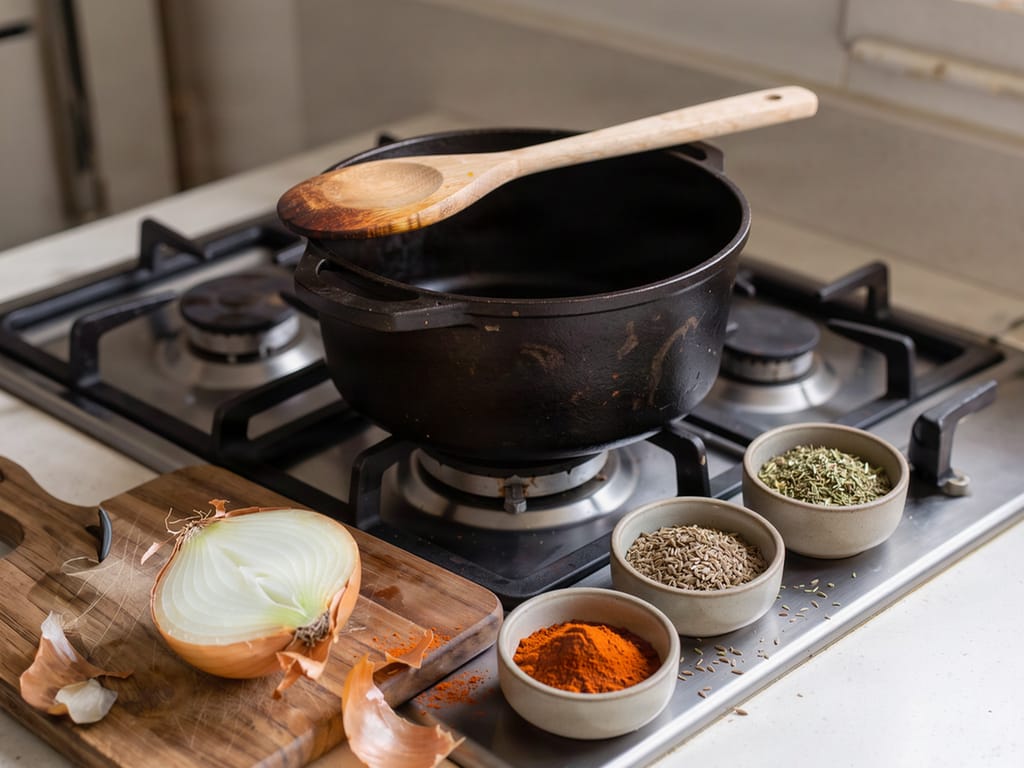
Updated Nov 17, 2026
Bitter goulash almost always means burnt paprika or onion, sour goulash means too many tomatoes, too much wine or vinegar, and sweet goulash means a lot of caramelized onion or sweet paprika. All three flavors can be balanced, as long as the goulash hasn't spoiled. A sour smell, bubbles and fizzing don't point to a seasoning mistake but to spoiled food, and that isn't something you rescue, it's something you throw out. Below you'll find the cause and the fix for each flavor.
Goulash tastes off for four typical reasons. Three can be fixed, the fourth can't:
Bitter goulash – burnt paprika, scorched onion or garlic, a stuck-on pot bottom, or dark beer cooked for too long.
Sour goulash – too much tomato paste or too many tomatoes, wine or vinegar that wasn't cooked off, pickles or ketchup.
Sweet goulash – lots of onion cooked down until dark, only sweet paprika, carrot, ketchup or sweet beer.
Spoiled goulash – a sour smell, bubbles and foam after a few days. This isn't a flavor problem, it's spoiled food: throw it out.
If the problem is that the meat stayed tough rather than the flavor, see the article on why goulash turns out tough and the meat won't soften.
Seasonal baking plans, tested recipes and kitchen tricks that save you time. Unsubscribe in one click.
Goulash is most often bitter because the ground paprika burnt in the hot fat. Paprika contains sugars and pigments that scorch on hot fat within seconds, and burnt paprika tastes bitter and acrid rather than sweet and round.
Other culprits:
Overcooked onion. For goulash, onion should go golden to brown, not black. Black edges mean bitterness throughout the pot.
Burnt garlic. It turns bitter faster than onion, so add it near the end or into the liquid.
A scorched pot bottom. If goulash sticks during long braising, the bitterness spreads through the whole sauce, especially if you then stir it in.
Dark beer or too much caraway. Hops and roasted malt concentrate with long cooking, and caraway is easy to over-toast in a dry pan.
Too much marjoram. Used in large amounts and cooked for a long time, marjoram can turn bitter. It belongs in goulash only for the last 10–15 minutes.
You can rescue bitter goulash in four steps: don't stir it and pour it into a clean pot, balance mild bitterness with salt, fat and a touch of sweetness, dilute it, and if the whole sauce is bitter, move the meat into a new base. Here's how:
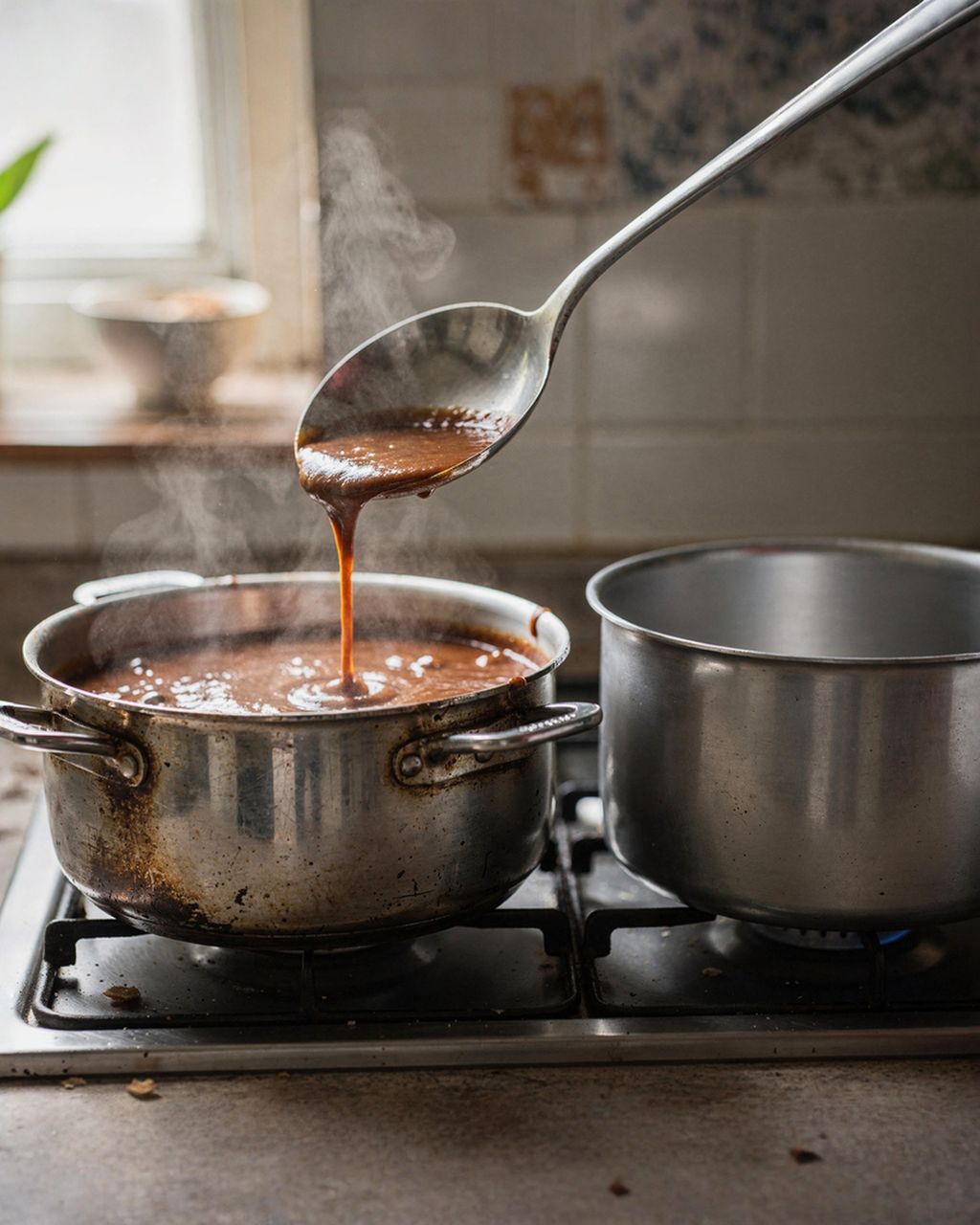
Don't stir, and taste. If the goulash has burnt on the bottom, carefully pour it into a clean pot and leave the bottom layer behind. The article how to rescue a burnt sauce covers this in detail.
Mild bitterness: salt, fat, a touch of sweetness. Salt dampens bitterness. According to a study in Nature (Breslin and Beauchamp, 1997), it suppresses bitter taste more strongly than pleasant tastes, so the sweeter notes stand out. Add a pinch of salt, a spoonful of butter or lard, and possibly half a teaspoon of sugar or honey per 2 liters. Taste after each step.
Dilution. Add stock or water with a little tomato paste and simmer briefly. The bitterness spreads out over a larger volume.
Strong bitterness: a new base. If the whole sauce is bitter, neither sugar nor cream will fix it. Fish out the meat and rinse it briefly with hot stock. Fry fresh onion, stir the paprika into it off the heat, add fresh stock and return the meat. Simmer a few more minutes so the flavors come together.
Freshly cooked goulash turns out sour when it contains more tomato or acidic liquid than the onion, fat and salt can balance. Typically:
Too much tomato paste, or paste added at the end without frying it first. Raw paste is sharp and sour, while paste fried in fat caramelizes and mellows.
Wine or vinegar that wasn't cooked off. Wine needs to simmer uncovered for at least a few minutes to lose its sharp acidity.
Pickles, pickle brine or ketchup added "for flavor."
Too little salt and fat. Without them, every sour note stands out.
Note the difference: a sour taste in freshly made goulash is a recipe mistake. A sour smell in goulash that has sat for a few days is a sign of spoilage, more on that below.
You can balance sour goulash in six steps: simmer it uncovered, sweeten it, add fat, add fried onion, add a pinch of baking soda, and finally dilute it.
Simmer it uncovered. 10–15 minutes at a gentle simmer drives off the sharp acidity of wine and vinegar.
Sweeten it. A pinch of sugar, a teaspoon of honey or some grated carrot. Add a little at a time, since goulash shouldn't turn sweet.
Add fat. A spoonful of butter or lard rounds off the acidity.
Fry more onion. Onion fried golden in butter and stirred into the goulash brings sweetness and body at once.
Baking soda as a last resort. It neutralizes acid chemically, but too much gives goulash a soapy aftertaste, so use only a pinch.
Dilution. If none of that is enough, add stock and thicken the goulash again. You'll find how in the article how to thicken goulash.
Goulash turns sweet when onion cooked down until dark and sweet paprika dominate, and there's too little heat, acidity and spice to offset the sweetness. Onion at roughly 1:1 with the meat is classic, and a little sweetness belongs there. But it overpowers everything else when you add other sweet ingredients:
Carrot. Long braising releases its sugars, and more than one small carrot per kilo (2.2 lb) of meat shows in the goulash.
Ketchup. It's high in sugar, so instead of the acidity of tomatoes it mostly brings sweetness. For depth and color, fried tomato paste is better.
Sweet beer. Amber and dark beers with residual sugar reduce with long cooking into a sweet, syrupy note.
What balances sweetness:
A touch of acid: a few drops of vinegar, a teaspoon of lemon juice or a spoonful of fried tomato paste.
Heat: hot paprika, chili, black pepper. Add carefully and a little at a time, since heat is harder to remove from goulash than sweetness.
Mustard: a teaspoon of full-fat mustard adds both acidity and sharpness.
Salt: often all it needs is more salt, because underseasoned goulash tastes flat and sweet. If you overdo it, the article how to rescue oversalted food will help.
Caraway and marjoram: their herbal bitterness naturally works against sweetness.
You'll recognize spoiled goulash by nose before tongue: it smells sour, even fermented. Other signs:
bubbles on the surface or fizzing when you stir, even if the goulash is cold,
foam, a slimy surface or strands when you lift it with a spoon,
a bulging container lid or a hiss when you open it.
The same signs apply to any soup or sauce. Don't taste it if the smell is off, because even a small bite of spoiled food can make you ill.
A balanced goulash rests on five things: sweet ground paprika, caraway, marjoram, garlic and salt.
Sweet paprika: the base of both flavor and color. Stir it into the onion off the heat so it doesn't burn.
Caraway: ground or whole, add it with the onion. It gives goulash its typical aroma.
Marjoram: for the last 10–15 minutes, crushed in your palm.
Garlic: pressed or chopped, also near the end so it doesn't turn bitter.
Salt: some at the start with the onion, the rest at the end to taste.
Everything else is fine-tuning:
a little hot or smoked paprika,
1–2 tablespoons of tomato paste, fried in the fat, for depth and color,
a few bay leaves and allspice berries during braising (fish them out before serving),
a splash of vinegar or mustard at the end if the goulash seems flat,
black pepper and chili to taste.
Always season at the end of braising, because the sauce reduces and both salt and spices get stronger.
You can avoid bitterness and sourness with three habits: stir in the paprika off the heat, fry the tomato paste and cook off the wine, and stir from the bottom. Specifically:
Paprika off the heat. Take the pot off the heat, stir the paprika into the onion and add stock right away. In hot fat it burns within seconds.
Fried paste and cooked-off wine. Add both at the start, not at the end: fry the paste briefly in the fat and let the wine simmer uncovered for a few minutes.
Stirring from the bottom. Braise goulash gently, covered, stir all the way to the bottom now and then, and add liquid before it starts to stick.
You'll find a proven method in the recipe for classic beef goulash with bread dumplings. And if you want a meatless version, try zucchini goulash.
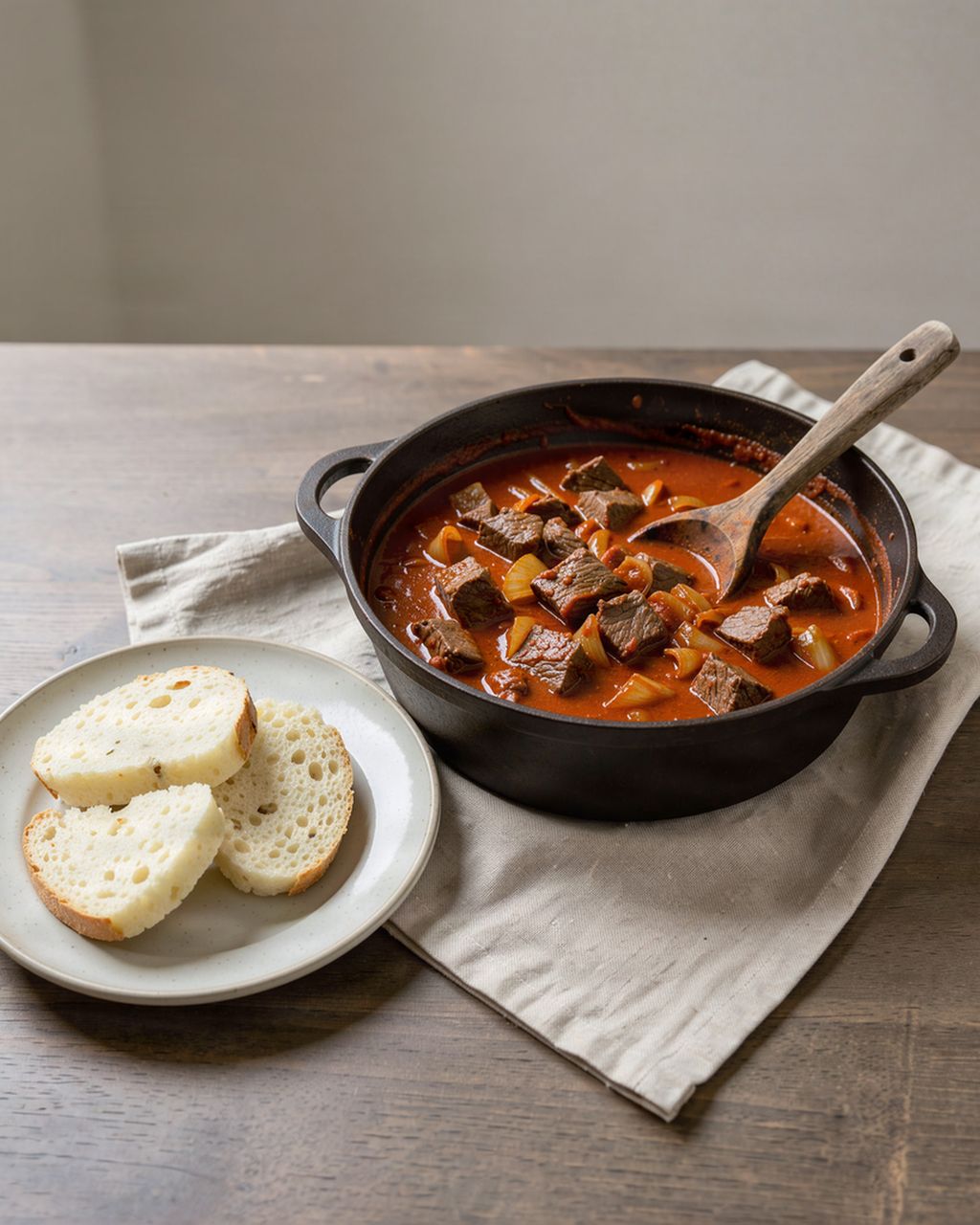
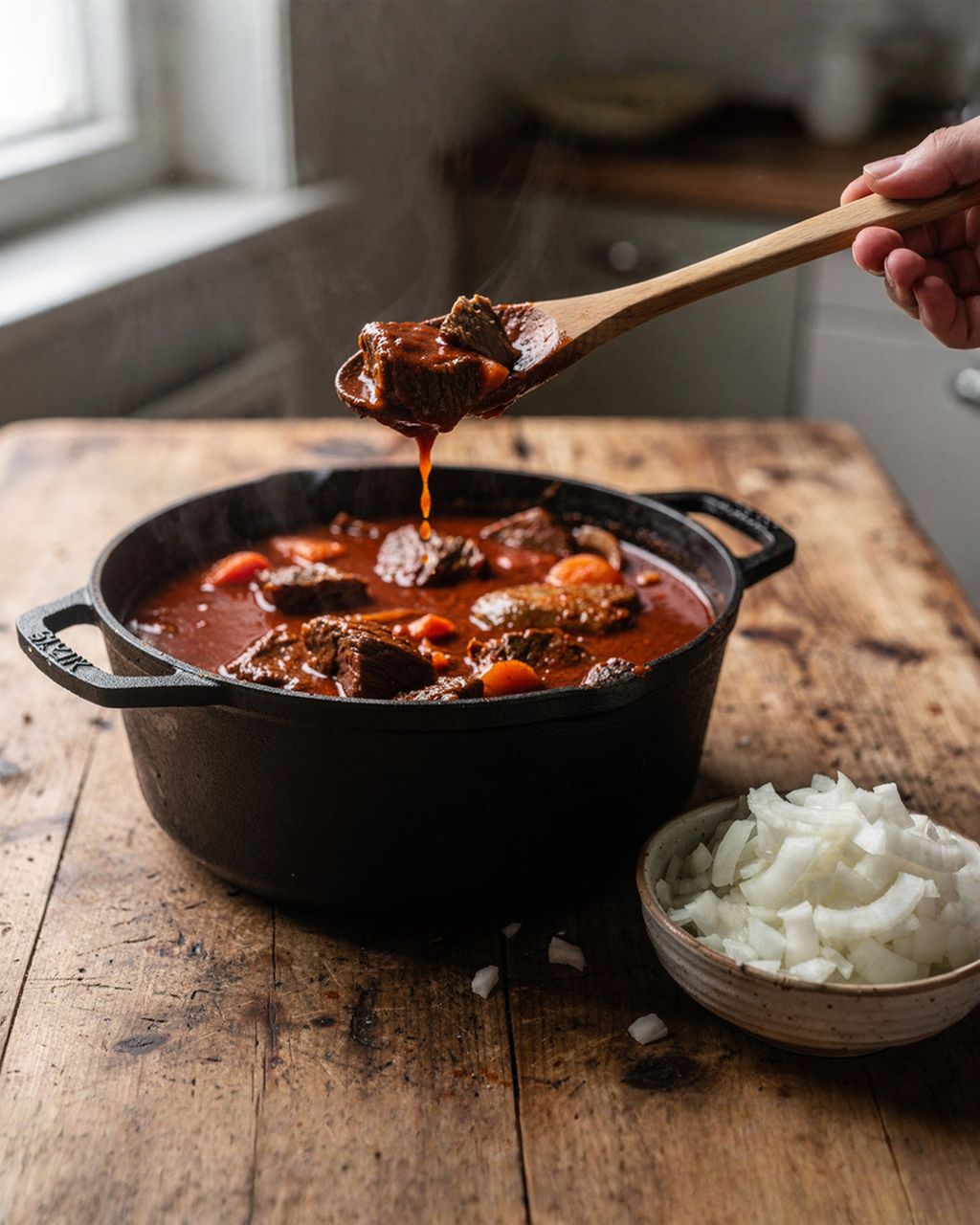
Classic czech beef goulash with chilli and bread dumplings
Classic beef goulash with bread dumplings – a method where the paprika doesn't turn bitter
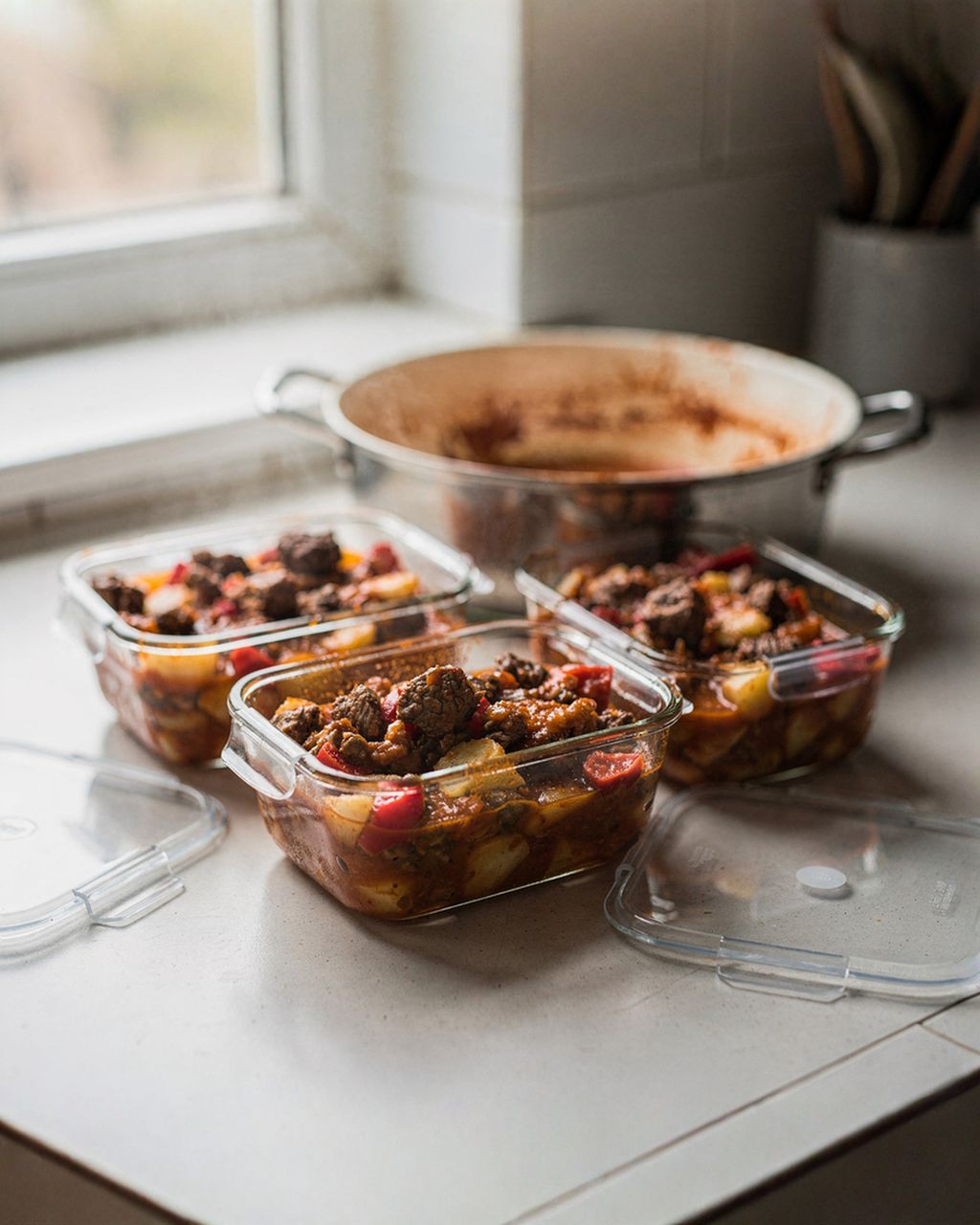
Leave cooked goulash on the stove for 2 hours at most, or 1 hour at most if it's hotter than 32°C (90°F). After that it belongs in the fridge. Sitting at room temperature for longer is the most common reason goulash spoils. Divide a big pot into shallow containers so it cools faster.
Goulash most often spoils early in the fridge because it cooled too slowly. A big pot left on the stove overnight stays warm inside for hours, and bacteria multiply in the meantime. Divide it into shallow containers, get it into the fridge within 2 hours, and make sure your fridge is at 4°C (40°F) or colder. Don't taste it repeatedly with the same spoon, and reheat only the portion you'll eat.
Add only a pinch of baking soda to sour goulash, about a quarter teaspoon per 2–3 liters. Stir it in and taste. The goulash will foam briefly as the soda reacts with the acid. Don't add more: too much soda gives goulash a soapy aftertaste that you can't fix. Try sugar, butter and longer simmering without the lid first.
Goulash most often turns bitter when reheated because the thick sauce has stuck to the bottom and burnt. Thickened, chilled goulash is stiffer than fresh, so reheat it over low heat, loosen it with a little water or stock and stir from the bottom. If it has already burnt, don't stir it. Pour it into a clean pot instead.
A raw potato won't reliably remove bitterness. It mostly just thickens the sauce a little. For mild bitterness, salt and a spoonful of fat work. For strong bitterness, the only fix is moving the meat into a new base.
One recipe worth heating the oven for, one tip, and one deal from the shop. Nothing else.