How to Season Cast Iron in the Oven: Oil, Temperature and Time
Why Is My Cast Iron Rusting? Orange Spots, Causes and How to Fix It
Updated Nov 21, 2026
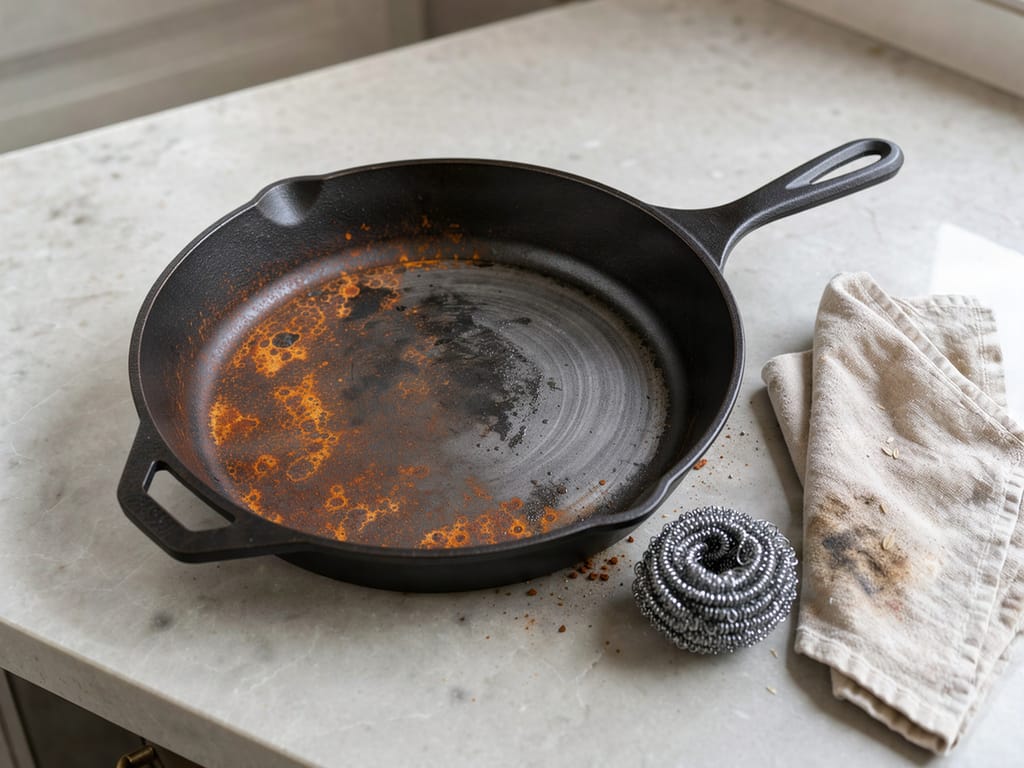
Cast iron rusts when water sits on bare or thinly seasoned iron: soaking it, putting it in the dishwasher, letting it air-dry or storing it somewhere damp. Lodge's fix is to scrub the rust off with steel wool, wash and dry the pan completely, and re-season it in the oven. A rusty pan is almost never ruined.
Cast iron is mostly iron, and iron rusts when it meets water and air. What protects it is the seasoning: layers of oil baked into a hard, dark coating. Where the seasoning is thin, worn or missing, water reaches the metal.
Lodge lists the usual ways that happens:
Soaking it in the sink. Even a well-seasoned pan rusts if it sits in water.
The dishwasher. Hot water, detergent and a long wet cycle strip seasoning and leave the pan damp.
Air-drying. Left on a rack, the pan stays wet long enough to rust.
Damp storage. A humid cupboard, a pan stored with its lid on, or a pan stacked while still warm and steamy.
Other common reasons:
The seasoning is new or thin. A new or freshly stripped pan has very little protection at first.
Acidic food. Lodge advises against long-simmered tomato sauces and lemony dishes in new cast iron, and suggests keeping acidic cooking under 45 minutes even in seasoned pans. Acid wears seasoning thin.
Boiling water in it. Boiling pasta or blanching vegetables in cast iron soaks the seasoning for a long time.
Recipe of the week, one tip that saves you time and one deal from the shop. Unsubscribe in one click.
The next issue goes out on Thursday, November 26.
This is common with new and newly re-seasoned pans. The seasoning is still thin, so a single wash followed by air-drying, or a pot of tomato sauce, is enough to expose bare iron.
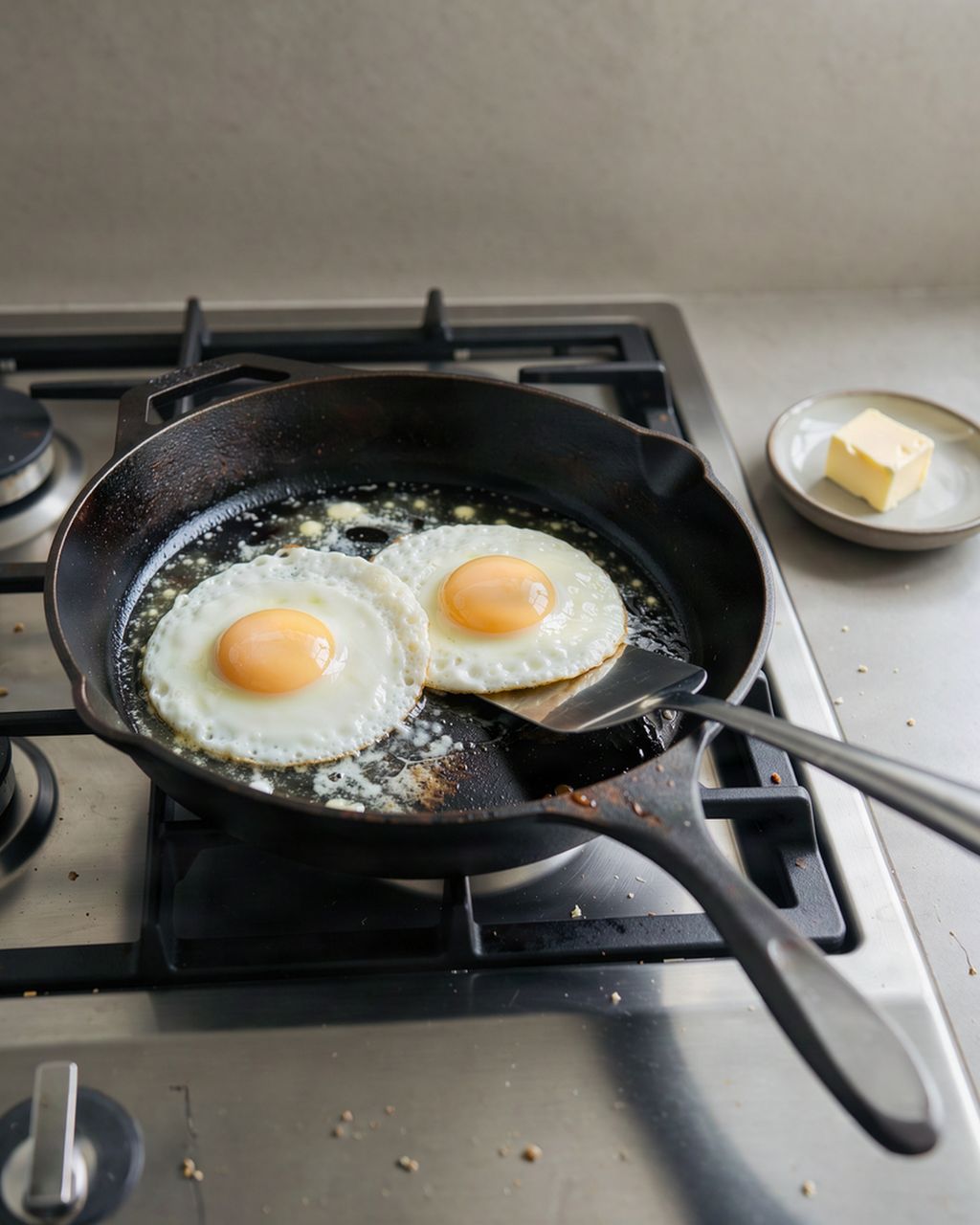
It doesn't mean the pan is bad. Scrub off the rust, re-season, and for the first few weeks cook fatty things in it: fried potatoes, sautéed onions, shallow-fried schnitzel, bacon. Each round of cooking with fat builds the seasoning.
Before you panic, check the color. Lodge notes that new pans can show a brownish spot that isn't rust, and black residue on a towel is carbonized oil, which is normal. Rust is orange to reddish-brown and feels rough or powdery.
Lodge's restoration method:
Scrub the rust with steel wool or a rust eraser until you see dark gray iron. Lodge says this may remove some seasoning, and that is fine.
Wash with warm soapy water and a brush to remove the loosened rust.
Dry it completely with a paper towel or lint-free cloth, then warm it on low heat on the stove for a few minutes to drive off the last moisture.
Wipe on a very thin coat of oil all over, inside and out. Lodge's test: it shouldn't drip or run when you tilt the pan. Vegetable oil, melted shortening or canola oil are what Lodge's test kitchen uses.
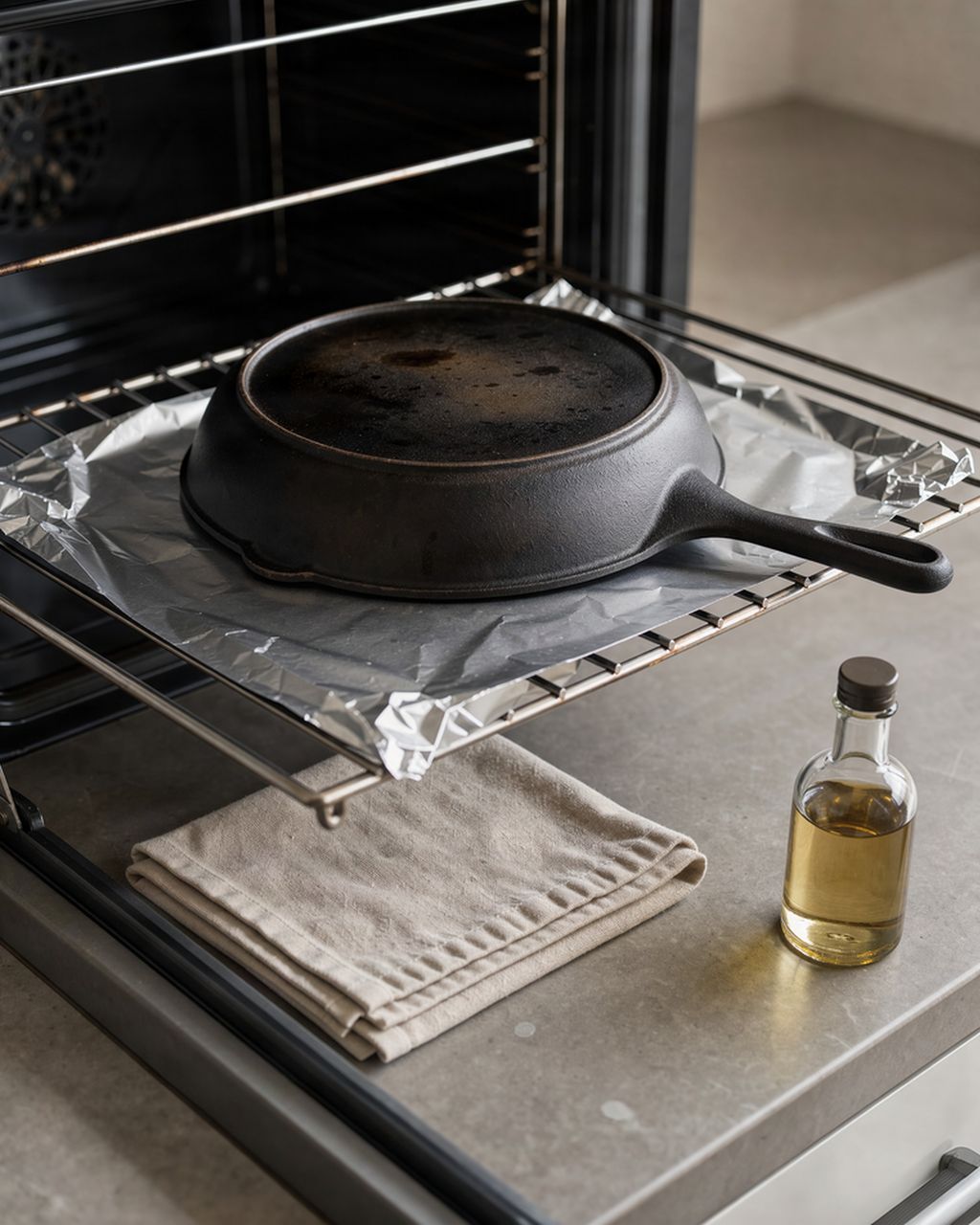
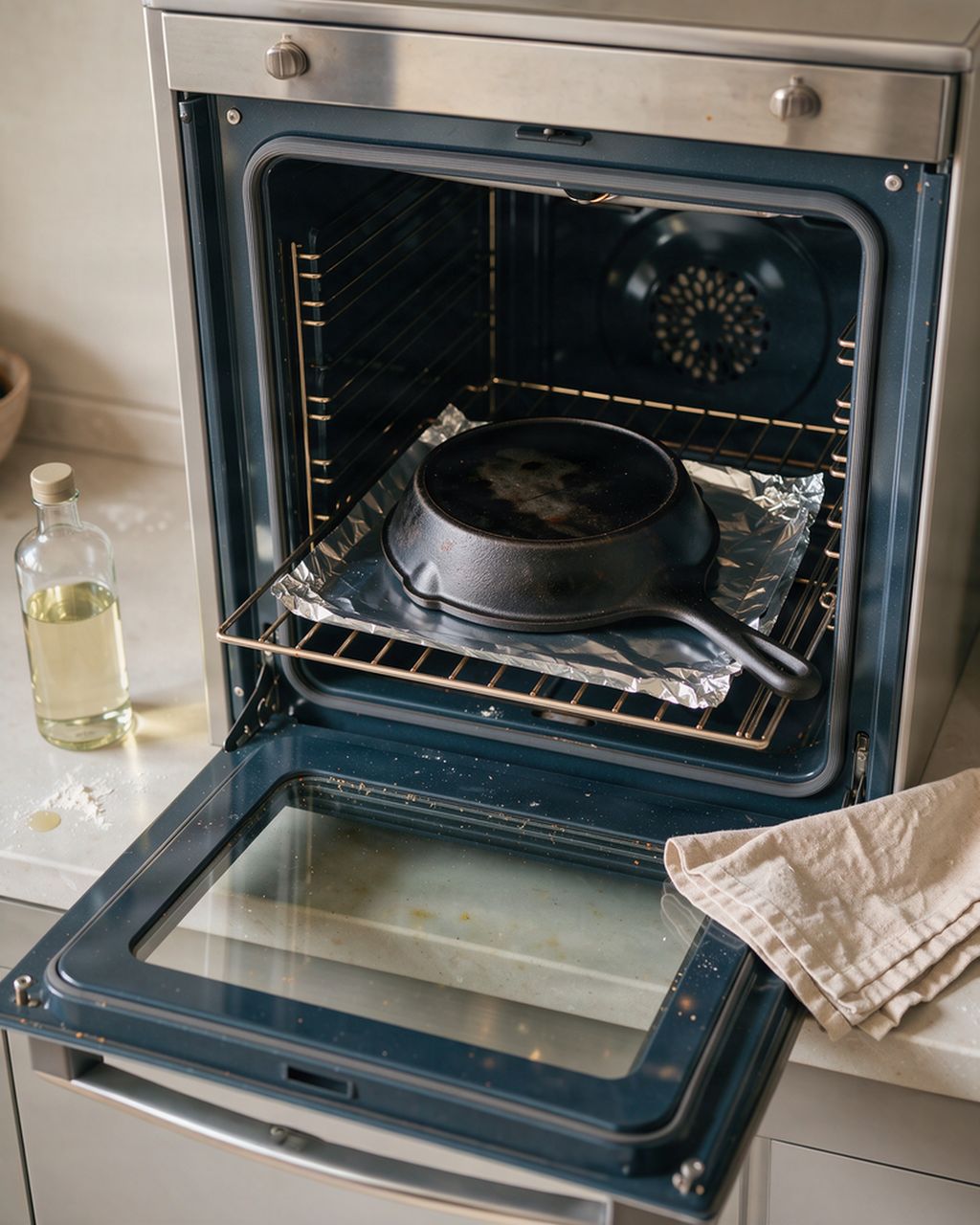
Bake it upside down at 230–260 °C (450–500 °F) for one hour, with foil on the rack below. Lodge gives 230–260 °C (450–500 °F) and doesn't say whether that means a fan or conventional oven. If your oven tops out lower, use its highest setting. Our oven temperature converter helps with °F, °C and gas marks.
Let it cool in the oven.
For a lightly rusted pan, one round is usually enough. For a pan that was stripped back to bare gray iron, repeat the oil-and-bake step two or three times to build up a good base. Don't cook in a pan with rust on its cooking surface; scrub it off first.
A few habits keep a pan rust-free:
Wash it soon after cooking. Hot water and a brush handle most things. A little dish soap is fine on seasoned cast iron.
Never soak it, and keep it out of the dishwasher.
Dry it at once, with a towel and then a few minutes on low heat.
Oil it thinly while it is warm. A few drops rubbed in and wiped back until it looks dry. Too much oil turns sticky.
Store it dry. Keep it in a dry cupboard, not near the kettle or dishwasher steam. If you stack pans, put a paper towel between them. Store a cast-iron pot with its lid off or propped open so air can move.
Cook with fat often. A pan that is used regularly for frying rarely rusts.
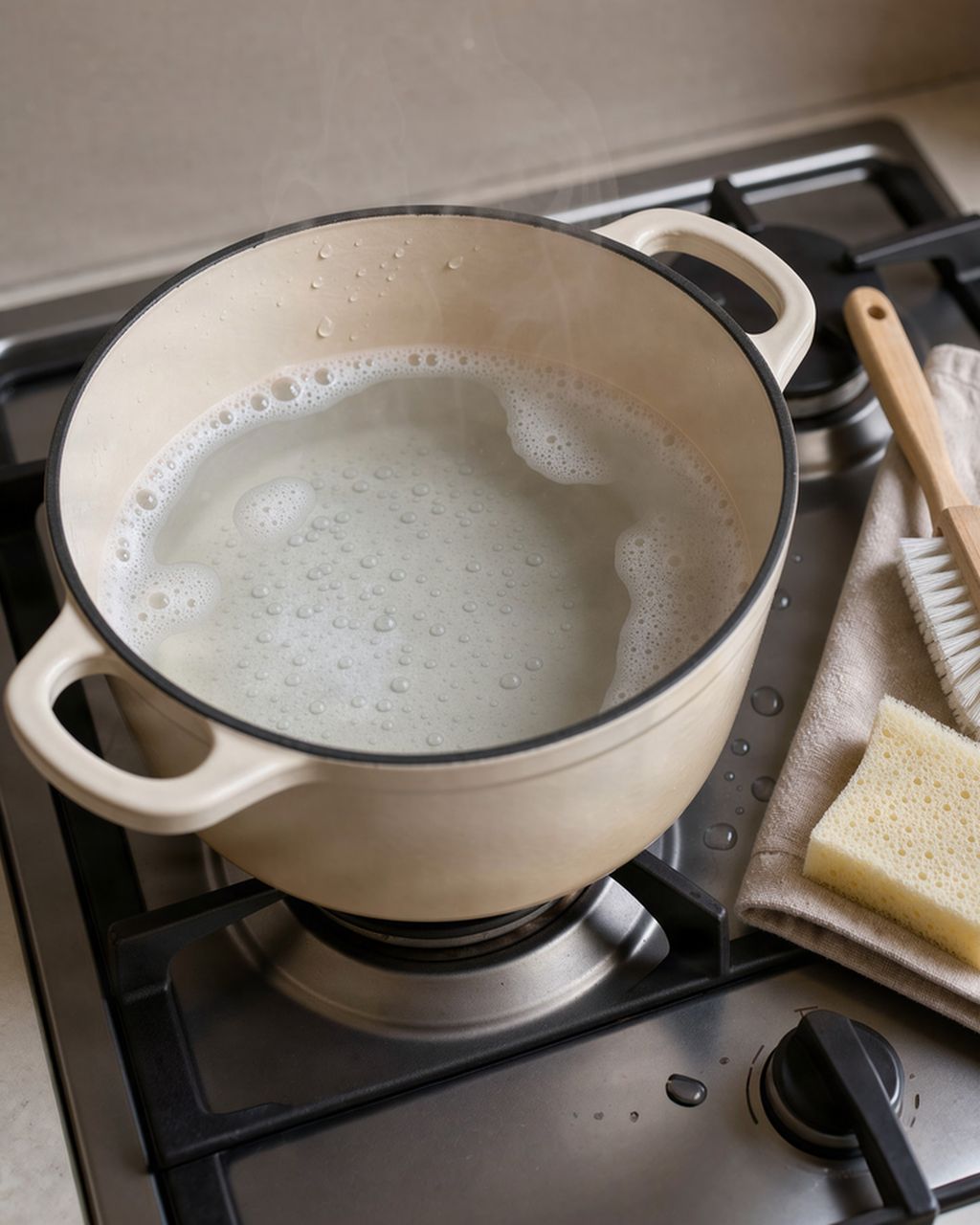
Enameled cast iron, such as Le Creuset, Staub or Lodge's enameled pots, is coated in glass enamel inside and out. The rim, though, is often bare black iron, and that thin edge can rust.
Lodge says putting enameled pieces in the dishwasher can contribute to rust on the rim. To prevent it, dry the rim well by hand, and now and then rub a drop of oil into it. For light rust on the rim, scrub it with a nylon sponge and a little dish soap, dry it thoroughly, then rub in a drop of oil to seal it.
If the enamel inside the pot is chipped, rust is the lesser problem. Le Creuset's safety instructions say to stop using a pot whose interior enamel has chipped, because chips could cause injury if swallowed.
Nearly every rusty pan comes back. A few signs say otherwise:
A crack anywhere in the iron. Cracked cast iron can break under heat. Retire it.
Deep pitting on the cooking surface that stays rough after scrubbing. The pan still works, but food will catch in the pits.
A warped base that rocks on the stove and heats unevenly.
Most of the time, though, an afternoon with steel wool and the oven gives you a pan that cooks like it always did. In Czech kitchens, a well-used cast-iron pan for bramboráky (potato pancakes) is often passed down. Our bramborák vs latkes guide is a good reason to put a restored pan to work.
Cast iron rusts when water stays on iron that isn't fully protected by seasoning. Lodge names soaking, the dishwasher, air-drying and damp storage as the usual causes, and says even well-seasoned pans can rust that way.
Cast iron rusts after washing when it is left wet, even for a short while, or put away before it is completely dry. Towel it dry straight away, warm it on low heat for a few minutes, and wipe on a very thin coat of oil.
Scrub the rusty areas with steel wool or a rust eraser, then wash the pan with warm soapy water, as Lodge advises. Dry it completely and re-season it in the oven with a very thin coat of oil.
A rusty cast-iron pan is almost never ruined; surface rust scrubs off and the pan can be re-seasoned. A pan that is cracked or has deep pits that won't come clean is a different matter and is better retired.
Orange patches on cast iron are rust, usually where the seasoning was thin or washed away and the pan stayed damp. Scrub them back to dark iron and re-season.
Black residue on a towel is normal for cast iron, Lodge says, especially with new pans, acidic foods or high heat. It is carbonized oil from the seasoning, not rust, which is orange-brown.
One recipe worth heating the oven for, one tip, and one deal from the shop. Nothing else.