Why Is My Cast Iron Sticky After Seasoning? Causes and the Fix
How to Season Cast Iron in the Oven: Oil, Temperature and Time
Updated Nov 21, 2026
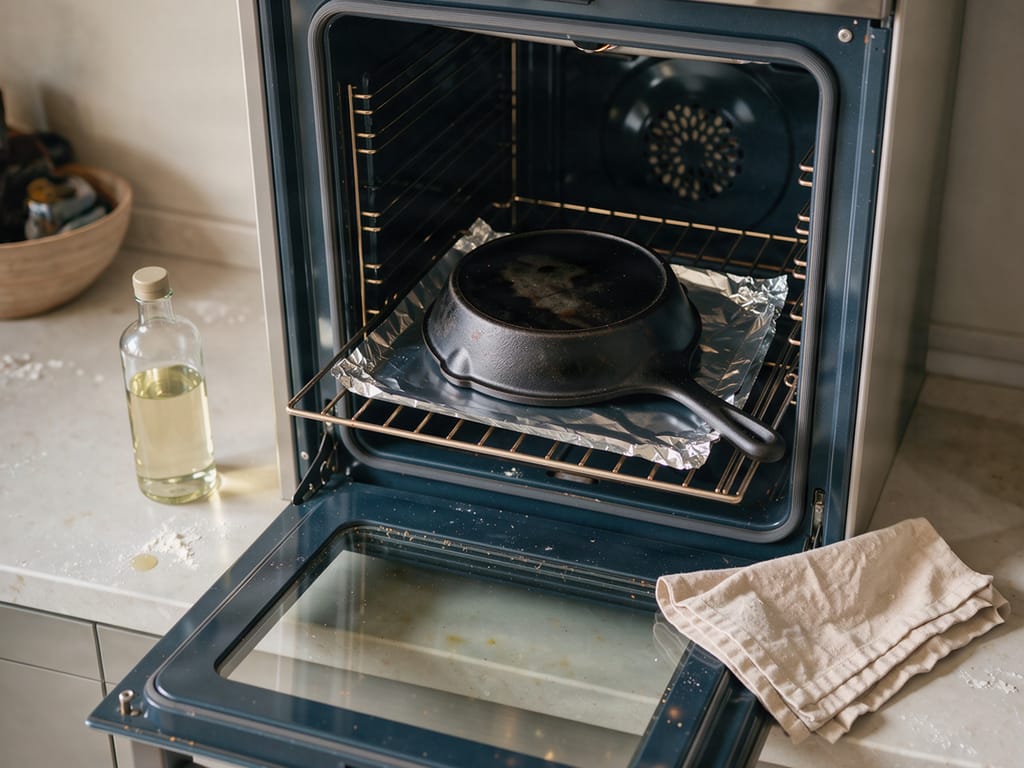
To season cast iron in the oven, wash and dry the pan, rub on a very thin coat of oil, and bake it upside down at 230–260 °C (450–500 °F) for one hour, then let it cool in the oven, which is Lodge's method. The thin coat matters most: too much oil turns sticky. Seasoning smokes, so ventilate the kitchen and stay nearby.
Seasoning is oil baked onto iron until it turns into a hard, dark, slightly slick coating. The heat changes the oil from a liquid into a solid layer bonded to the metal, which food scientists call polymerization. That layer protects the pan from rust and helps food release.
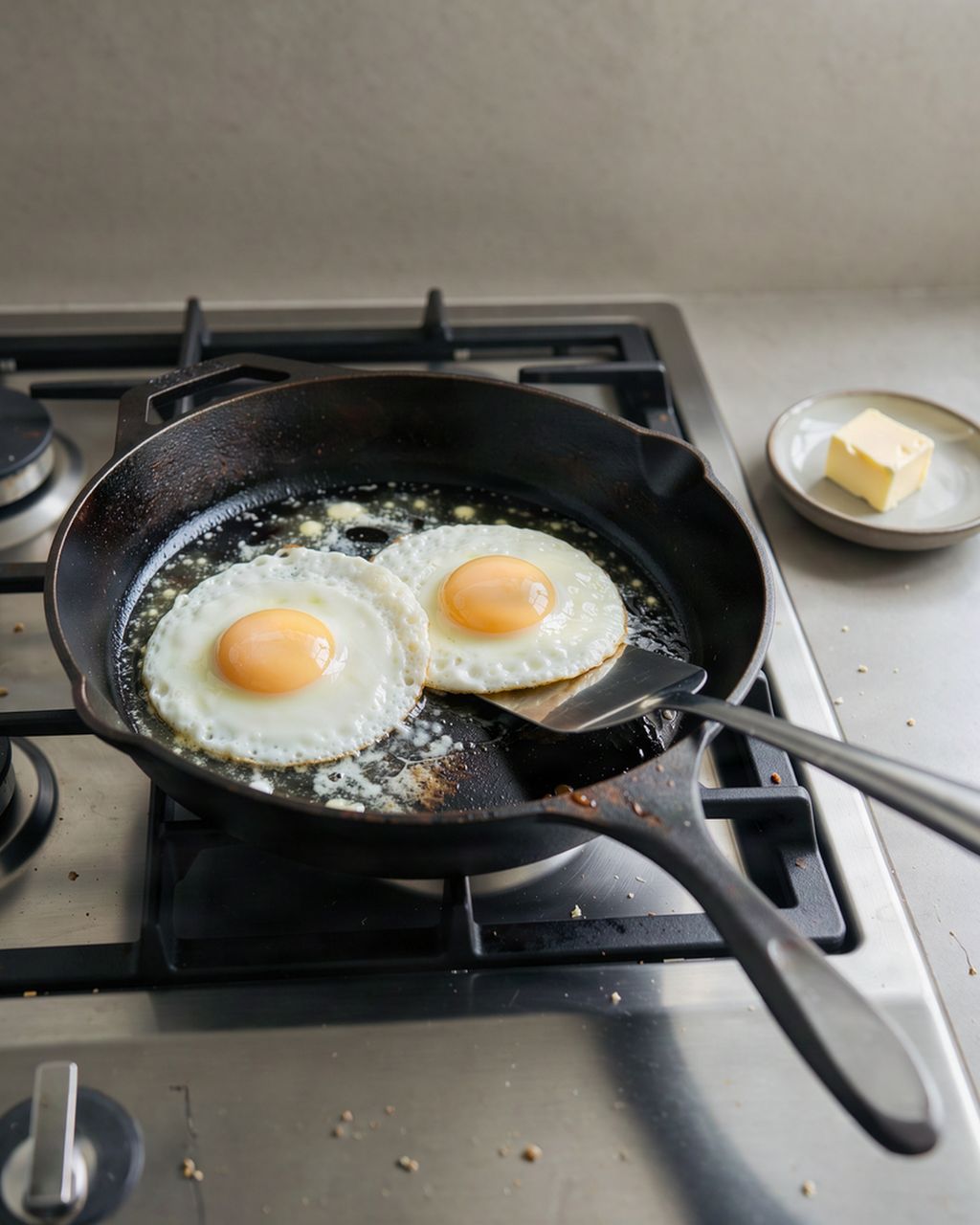
You don't season in the oven every week. Lodge pans come pre-seasoned, and everyday cooking with fat keeps building the layer. Oven seasoning is for:
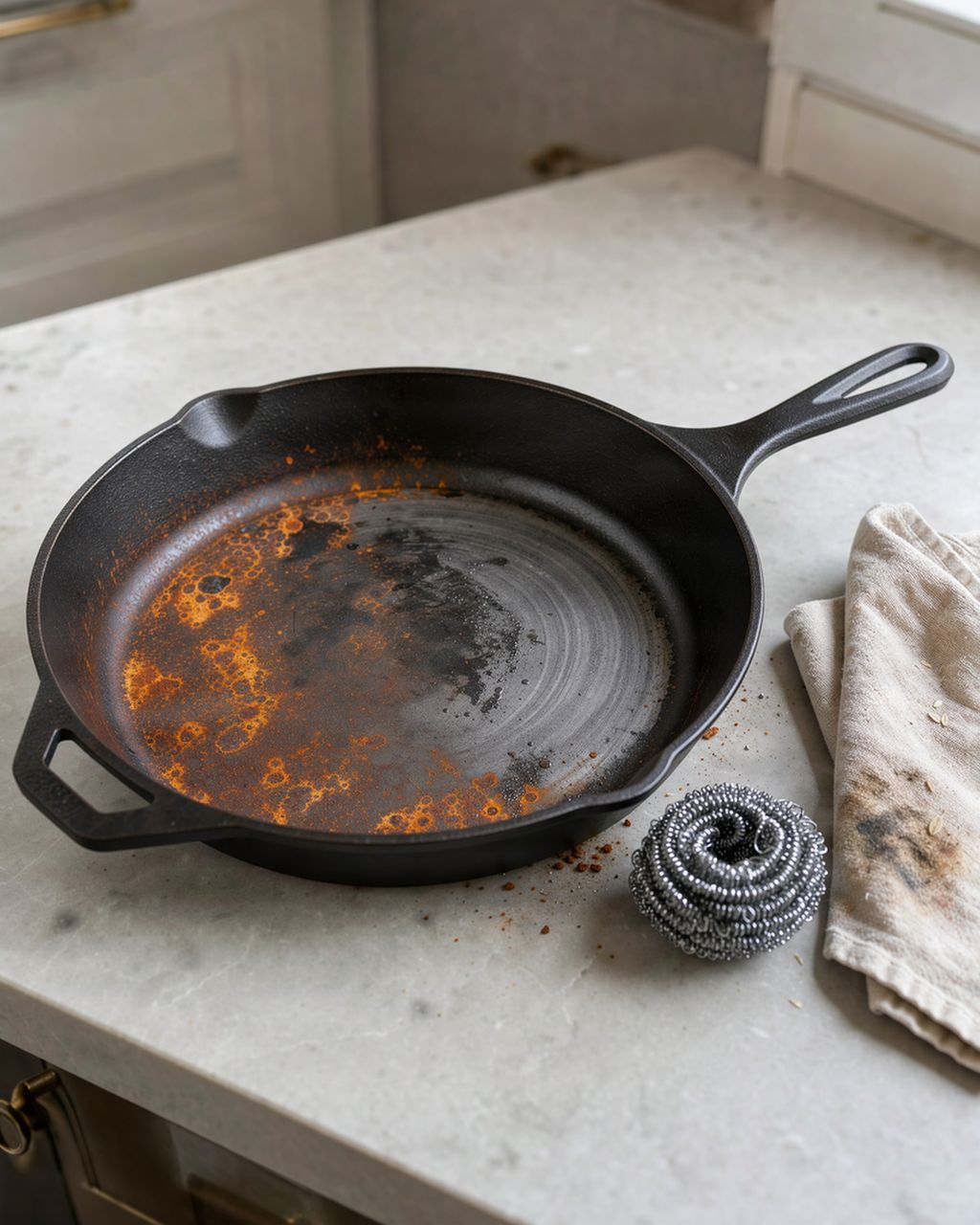
a pan you have just scrubbed back after rust;
a secondhand or neglected pan;
a pan whose seasoning is patchy, dull or flaking;
a sticky pan that needs another bake.
This is Lodge's method:
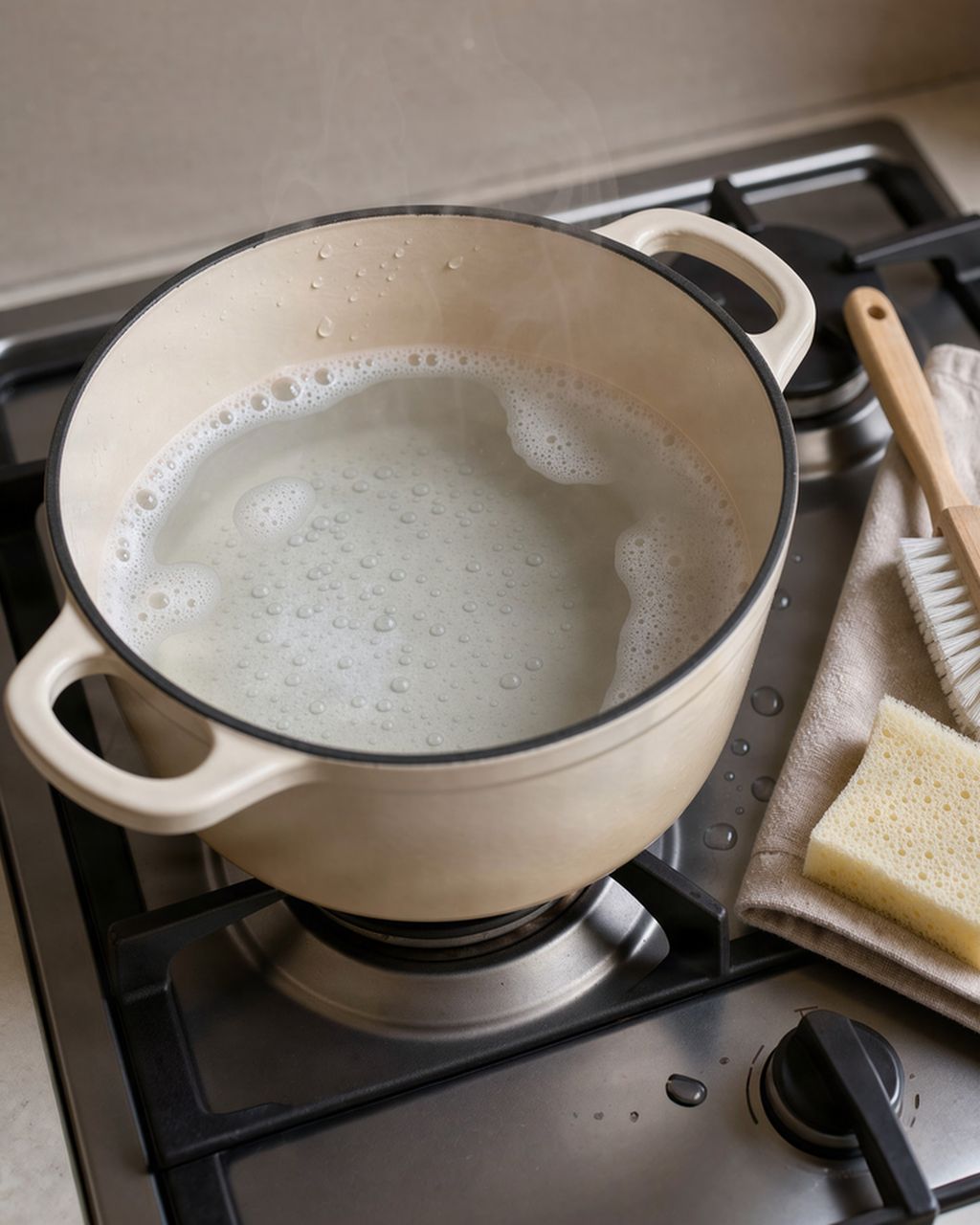
Wash the pan with warm, soapy water. If it is rusty, scrub the rust off with steel wool first.
Dry it completely with a paper towel or lint-free cloth. Warm it on low heat on the stove for a few minutes to drive off the last moisture.
Heat the oven to 230–260 °C (450–500 °F). Lodge gives 230–260 °C (450–500 °F) and doesn't say whether that means a fan or conventional oven. If your oven tops out lower, use its highest setting. Our oven temperature converter helps with °F, °C and gas marks.
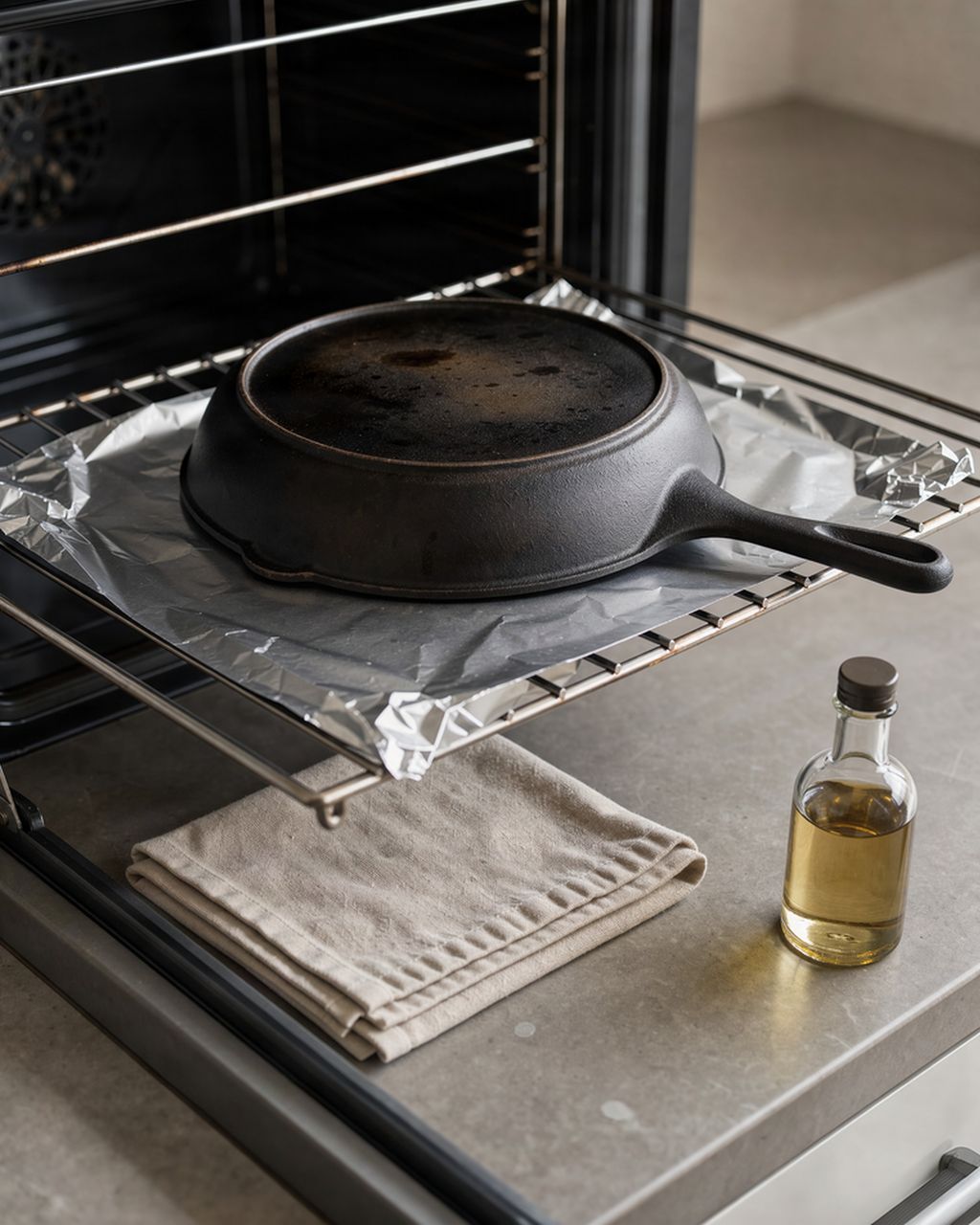
Put a sheet of foil on the lower rack to catch drips.
Oil the pan thinly, inside, outside and on the handle. See the next section for how thin.
Bake it upside down on the middle rack, so excess oil runs off instead of pooling.
Bake for one hour.
Turn the oven off and let the pan cool inside. Lodge says this helps the seasoning set.
The pan should come out darker, dry to the touch and evenly satin. Lodge says early seasoning can look patchy, and that this is normal.
Less than feels right. Lodge's rule: a coat thin enough that it doesn't drip or run when you tilt the pan.
Start with about a teaspoon of oil for a standard skillet.
Rub it over every surface with a cloth or paper towel.
Then take a clean cloth and wipe it off again, as if you had overdone it. What stays behind is a microscopically thin film, which is what you want.
Too much oil is the single biggest cause of failed seasoning. Thick oil can't harden all the way through, so it comes out sticky, blotchy or with drip marks. It also smokes far more.
Lodge's test kitchen uses vegetable oil, melted shortening or canola oil, and recommends oils with a high smoke point. Lodge pre-seasons its pans at the factory with a soy-based vegetable oil.
Neutral oils: canola, sunflower oil and generic vegetable oil are cheap, easy to find and forgiving.
Shortening and lard: traditional choices. In Czech kitchens, rendered pork lard is the old standby. Melt them and apply as thinly as oil.
Flaxseed oil: popular online for a very hard finish, but some cooks report it flaking later, and Lodge doesn't list it.
Olive oil and butter: fine for cooking in the pan, but not first choices for oven seasoning. Butter's milk solids burn.
Whatever you pick, apply it thinly. A thin coat of any neutral oil beats a thick coat of the "best" one.
Each coat takes one hour in the oven, plus cooling time.
Refreshing a pan in good shape: one coat.
After light rust or a sticky patch: one or two coats.
A bare, gray, fully stripped pan: two or three coats, each one thin and fully baked before the next.
Let the pan cool enough to handle safely between coats, then oil, wipe back and bake again. After that, the best seasoning comes from cooking: frying, roasting and shallow-frying with fat build the layer every time.
Recipe of the week, one tip that saves you time and one deal from the shop. Unsubscribe in one click.
The next issue goes out on Thursday, November 26.
Check the pan once it is cool:
Sticky or tacky: too much oil, or not enough time in the oven. Lodge's fix is to bake it upside down for another hour, or until the stickiness is gone.
Dull, dry or burnt-looking: Lodge says this usually means the oil burned off because there was too little on the pan. Cook with some fat, or re-season with another thin coat, until it has a slight sheen.
Drip marks or bumps: oil pooled before it set. Scrub the bumps down with steel wool, wipe the next coat thinner, and bake upside down.
Patchy color: normal for new seasoning, Lodge says. It evens out as you cook with fat.
Black flakes: Lodge says these are carbonized bits of oil and not harmful. Scrub them off, dry the pan, oil it and bake it.
A 260 °C (500 °F) oven and a pan of hot oil call for some care:
Ventilate before you start, not once the smoke alarm goes off. Heavy smoke usually means too much oil, so wipe the next coat thinner.
Use the foil. Oil dripping onto the oven floor or heating element smokes and can catch fire. Lodge's foil sheet on the lower rack stops that.
Stay in or near the kitchen while the oven is on. If you warm the pan on the stove to dry it, never leave it there with oil in it.
Use dry, thick oven mitts. The whole pan, handle included, stays hot long after the oven is off. Damp cloths conduct heat straight to your hand.
Let it cool in the oven, so you never have to carry the pan at its hottest. When you do move it, set it on a trivet or wooden board.
For a burn, the NHS advises holding it under cool running water for 20 minutes as soon as possible, and not putting any creams, oils or butter on it. Get urgent help for large or deep burns.
Never season enameled cast iron (Le Creuset, Staub and similar) this way. Its glass enamel doesn't need seasoning, and Le Creuset advises low to medium heat settings for it.
Lodge recommends 230 to 260 °C (450 to 500 °F) for seasoning cast iron in the oven. The heat has to be high enough for the oil to harden into a dry coating instead of staying sticky.
Bake it for one hour, then turn the oven off and let the pan cool inside, as Lodge advises. For a stripped or bare pan, repeat the oil-and-bake round two or three times.
Lodge's test kitchen uses vegetable oil, melted shortening or canola oil, all neutral oils with a high smoke point. Sunflower oil works the same way. The amount matters more than the type.
Yes, bake it upside down so excess oil drips off instead of pooling inside the pan. Put a sheet of foil on the rack below to catch the drips.
Yes, some smoke is normal, because the oil is heated past its smoke point to harden. Turn on the extractor, open a window and stay nearby; heavy smoke usually means too much oil was left on.
One round refreshes a pan that is already in good shape. A rusty, stripped or bare pan needs two or three thin coats, each baked for an hour, before it is ready to cook in.
One recipe worth heating the oven for, one tip, and one deal from the shop. Nothing else.