Why Is My Cheesecake Grainy or Lumpy? Batter and Texture Fixes
Why Is My Cheesecake Cracking? Causes, Fixes and the Water Bath
Updated Nov 21, 2026
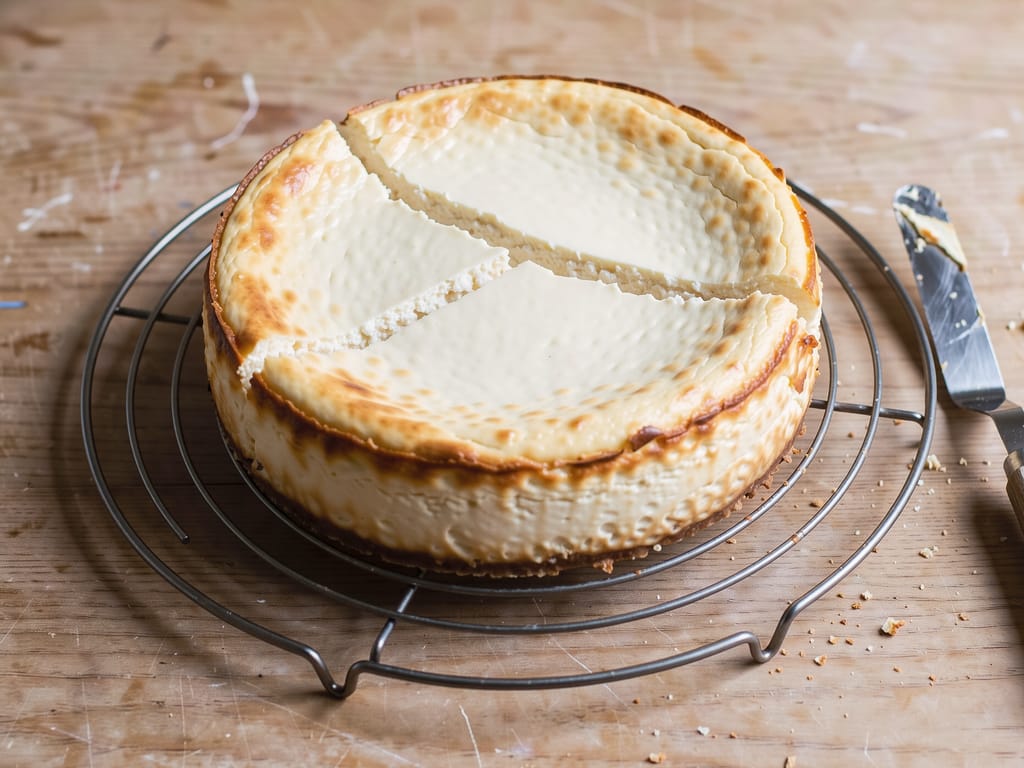
A cheesecake usually cracks because it was overbaked, the batter was beaten with too much air, or it cooled too fast and the shrinking filling stuck to the pan. Where and when the crack appears tells you which. Here is how to read the crack, how to prevent the next one, and how to hide the one you have.
A baked cheesecake is really a custard made with cheese. Its eggs set gently with heat, and it shrinks a little as it cools. Cracks come from four things:
Overbaking or an oven that runs hot. The most common cause by far.
Too much air in the batter. Fast beating after the eggs go in whips in air that expands, then collapses.
Cooling too fast. A sudden temperature drop makes the outside contract faster than the center.
Filling stuck to the pan. As the cheesecake shrinks, a stuck edge pulls the top apart.
If your cheesecake has the opposite problem and stays soft or runny, see why your cheesecake won't set.
A crack that opened in the oven, often with a domed, puffed top: too much heat or too much air in the batter.
A crack right across the middle after cooling: overbaked. The center was fully set when it came out.
Cracks that run from the edge inward while cooling: the cheesecake stuck to the side of the pan, or it cooled too quickly.
Fine cracks plus a dry, slightly grainy edge: baked too hot. The outside overcooked before the middle was done.
Most cracked cheesecakes have two causes at once, so it is worth fixing all of them next time.
Most cheesecakes are overbaked because the baker waits for the center to look firm. It shouldn't. The filling keeps cooking from stored heat after you take it out, and it firms up a lot more in the fridge.
The wobble test: gently nudge the pan. The outer ring should be set and only slightly puffed, while a smaller patch in the middle still wobbles like set jelly, not like liquid. If the whole surface is firm and the edges have pulled away from the pan, it is overbaked.
The wobble shows texture, not safety. A baked cheesecake is a cooked egg dish, and FDA advises cooking dishes that contain eggs to 71 °C (160 °F), checked with a food thermometer in the center. Many cheesecake recipes stop a little earlier for a creamier middle. If yours does, FDA's advice for dishes where eggs stay undercooked is to use pasteurized eggs or pasteurized egg products, especially when you are feeding young children, pregnant women, older adults or anyone with a weakened immune system.
Oven heat matters as much as time. Many cheesecake recipes bake at a moderate 150–160 °C (300–320 °F) in a conventional oven. Ovens can run hotter or cooler than the dial, so check yours with an oven thermometer. A fan oven dries the top faster; see fan or conventional and our oven temperature converter.
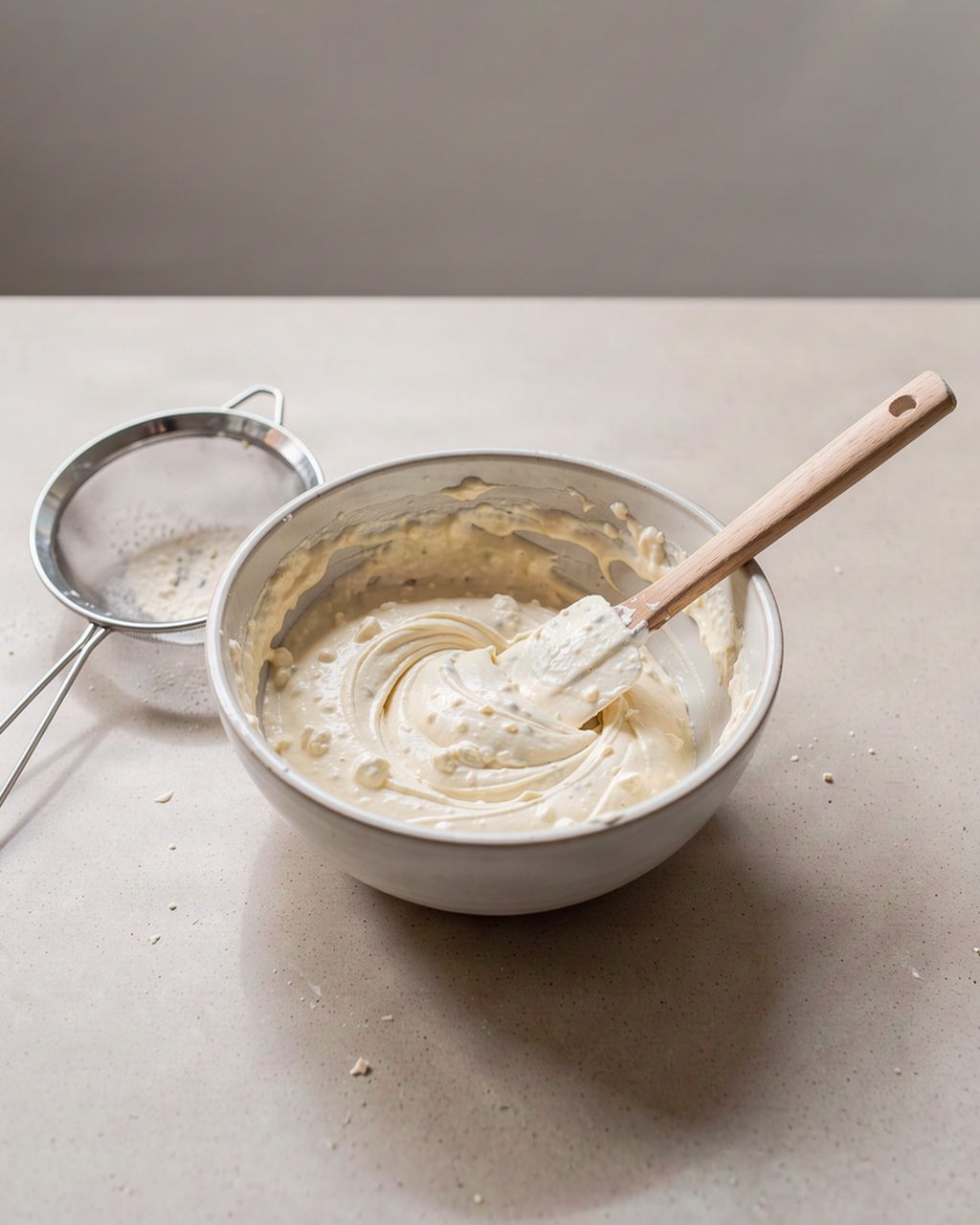
Cheesecake batter should be dense and smooth, not fluffy. Air bubbles expand in the oven, lift the filling and then sink, and the top tears.
Start with soft cream cheese and beat it with the sugar until completely smooth before anything else goes in. Lumps tempt you to beat harder later.
Add the eggs one at a time on low speed, mixing only until each one disappears.
Use a paddle or a spatula rather than a whisk attachment.
Before baking, tap the pan on the counter a few times to bring bubbles to the surface, and pop them.
If your batter is lumpy rather than airy, that is a different problem with its own fixes.
A water bath (bain-marie) is the most reliable crack insurance. The water around the pan cannot get much hotter than its boiling point, so the edge of the filling cooks gently and evenly, and the steam keeps the surface from drying out.
How to do it without a soggy crust:
Wrap the outside of a springform pan in two or three layers of wide, heavy foil, or set it inside a slightly larger solid cake pan.
Put the pan in a roasting tin and pour hot water about halfway up the side of the cheesecake pan.
Pour the water in once the tin is on the oven rack, so you don't carry a full tin of hot water.
No water bath? Put a roasting pan of hot water on the rack below the cheesecake for steam, and bake at the lower end of your recipe's range. It helps, though less than a true water bath.
Cracks that appear after baking come from cooling too fast or from the filling sticking to the pan.
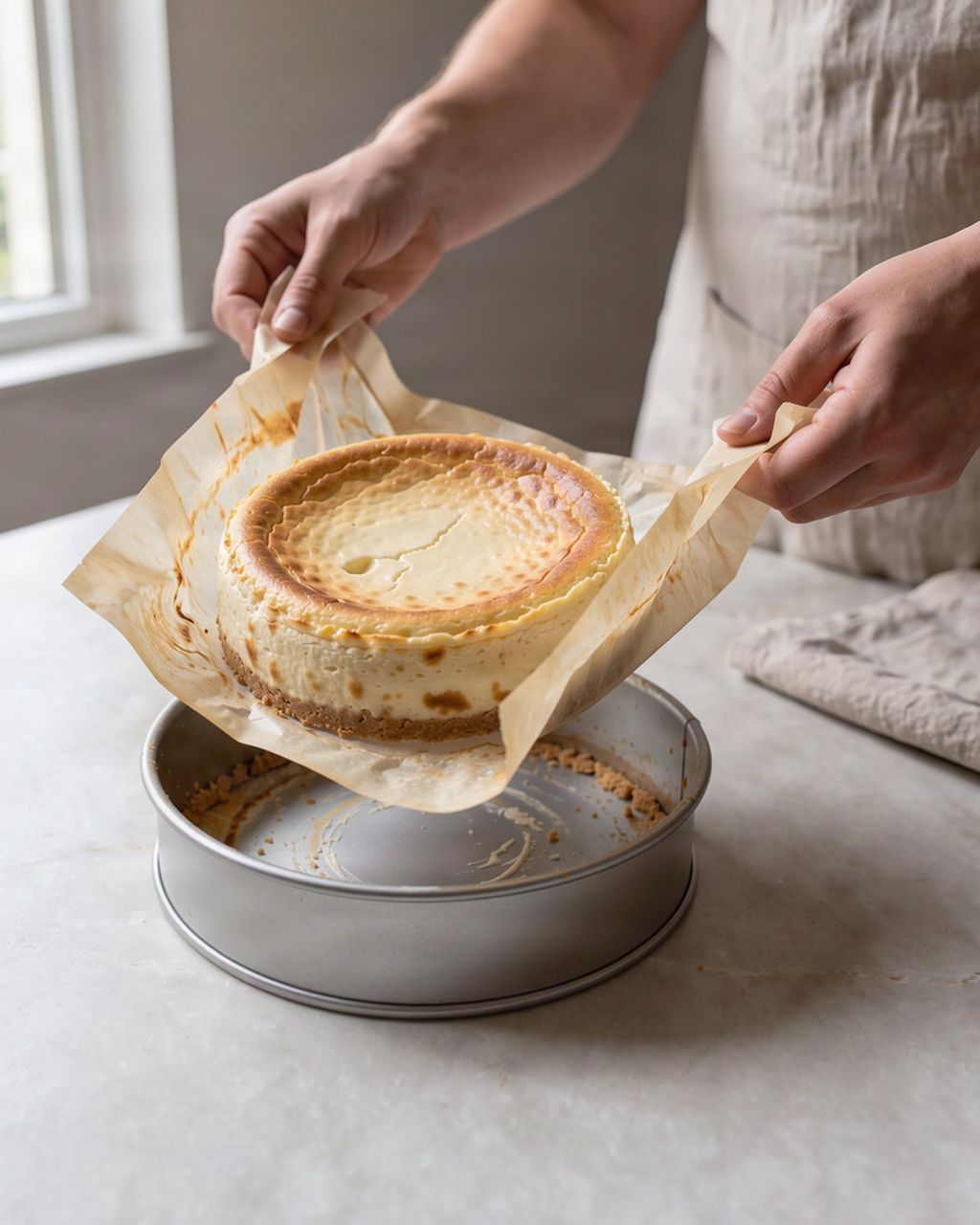
Free the edge. About 10 minutes after baking, run a thin knife around the inside of the pan. A greased or lined side helps it release.
Cool gradually. Switch off the oven and leave the cheesecake inside with the door ajar, then move it to a rack. No fridge straight from a hot oven, and no cold drafts.
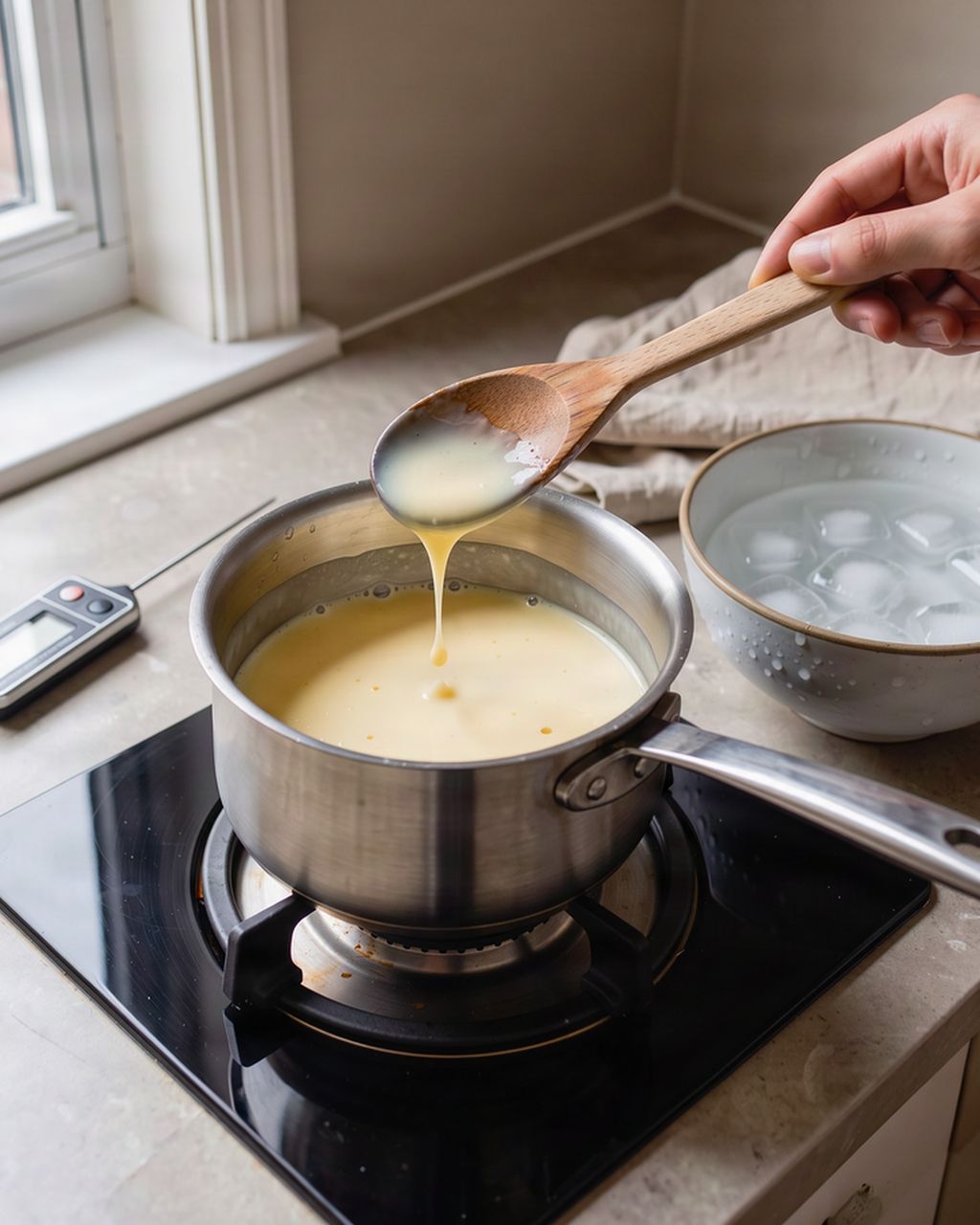
Mind the clock. A baked cheesecake is an egg and dairy dish. FDA advises never leaving cooked egg dishes out of the refrigerator for more than 2 hours (1 hour above 32 °C / 90 °F), so count the oven cooling time in those 2 hours. Then refrigerate it, covered, in the fridge. USDA FSIS says hot food can go straight into the refrigerator, so if time is running out, chill it slightly warm rather than leaving it out longer.
Slice it only once it has chilled thoroughly, ideally overnight.
Recipe of the week, one tip that saves you time and one deal from the shop. Unsubscribe in one click.
The next issue goes out on Thursday, November 26.
A crack is cosmetic. Some quick covers:
Smooth it warm. While the cheesecake is still warm, push a small crack together from the sides with a wet offset spatula.
Sour cream topping. Many New York-style recipes spread a thin layer of sweetened sour cream over the top and return it to the oven briefly to set. It covers the whole top.
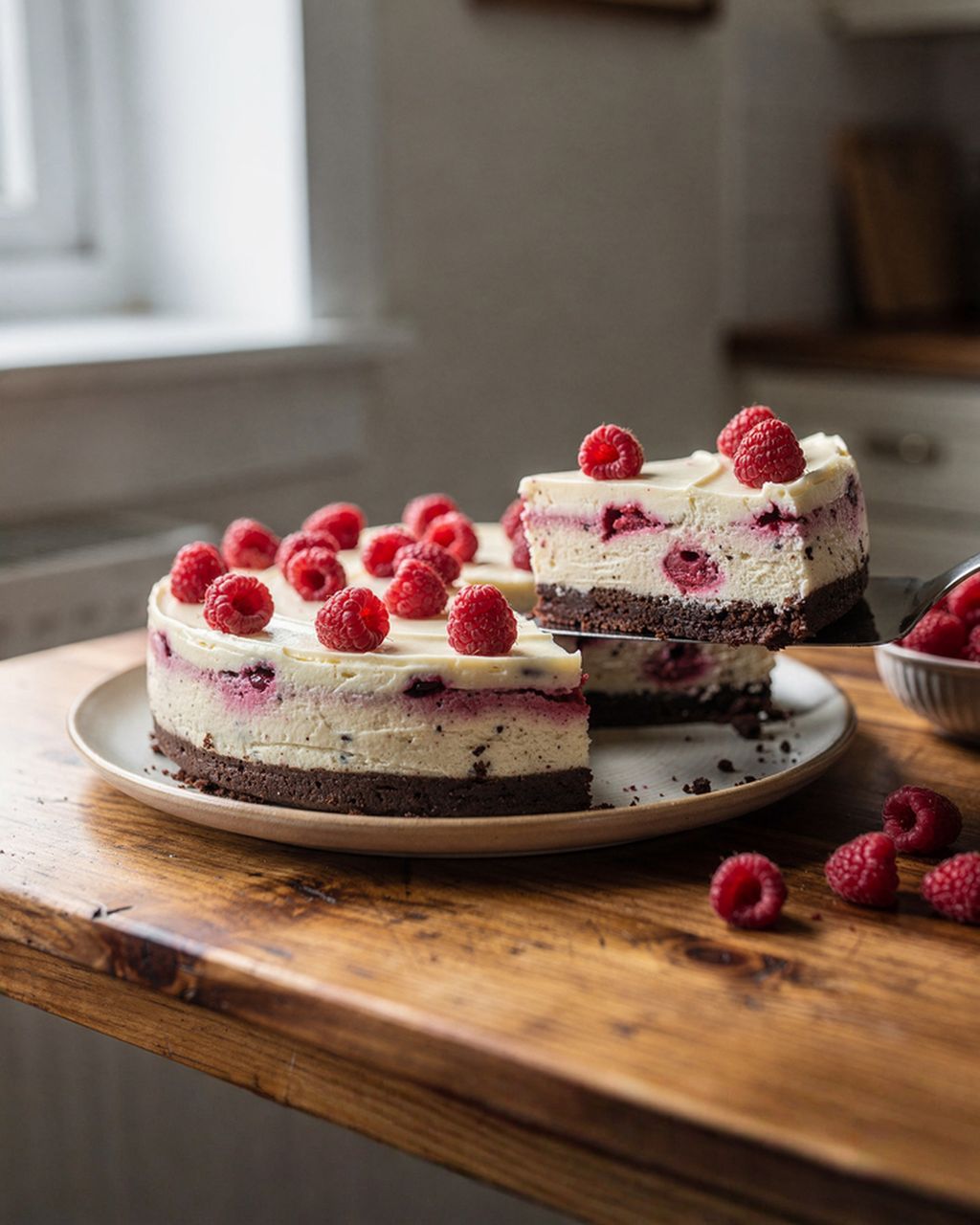
Fruit, ganache or caramel. Any of these hides a crack completely. See how to decorate a cheesecake.
Slice in the kitchen. Cut it, plate it, add a spoon of fruit sauce, and nobody sees the top.
A crack across the middle almost always means the cheesecake was overbaked or the oven ran too hot. The eggs set too firmly, the center puffs and then drops, and the top splits. Take it out while the center still wobbles, and check your oven with an oven thermometer.
A cheesecake that cracks while cooling has usually cooled too quickly or stuck to the sides of the pan. As it cools it shrinks; if the edge is glued to the pan, the top tears. Run a thin knife around the edge soon after baking and cool it gradually in the switched-off oven. FDA advises refrigerating cooked egg dishes within 2 hours, or 1 hour if the room is above 32 °C (90 °F), so count the oven time in that.
A water bath greatly lowers the risk of cracks, though it cannot save an overbaked cheesecake. The water keeps the heat around the pan gentle and even, and the steam keeps the surface moist. Wrap the pan well in foil or set it inside a slightly larger pan so no water seeps in.
The easiest fix for a cracked cheesecake is to cover it with a topping. Sour cream topping, fruit, ganache or caramel all hide cracks. For a small crack, smooth it while the cheesecake is still warm with a wet offset spatula, then chill it.
Yes, a crack is only cosmetic. Food safety depends on the eggs, not the crack: either the center reached 71 °C (160 °F), or you used pasteurized eggs, and the cheesecake went into the fridge within 2 hours. A big crack does hint that the texture may be a little dry or firm near the edge.
Cracks that open in the oven come from too much heat or too much air in the batter. The trapped air expands, the filling rises like a soufflé, and the top splits. Mix on low speed after the eggs go in and bake at a moderate temperature.
One recipe worth heating the oven for, one tip, and one deal from the shop. Nothing else.