No-Bake Cheesecake in a Ring: How to Get Straight Sides and Clean Slices
How to Make Cheesecake Without a Springform Pan: Tins, Slings and Rings
Updated Nov 21, 2026
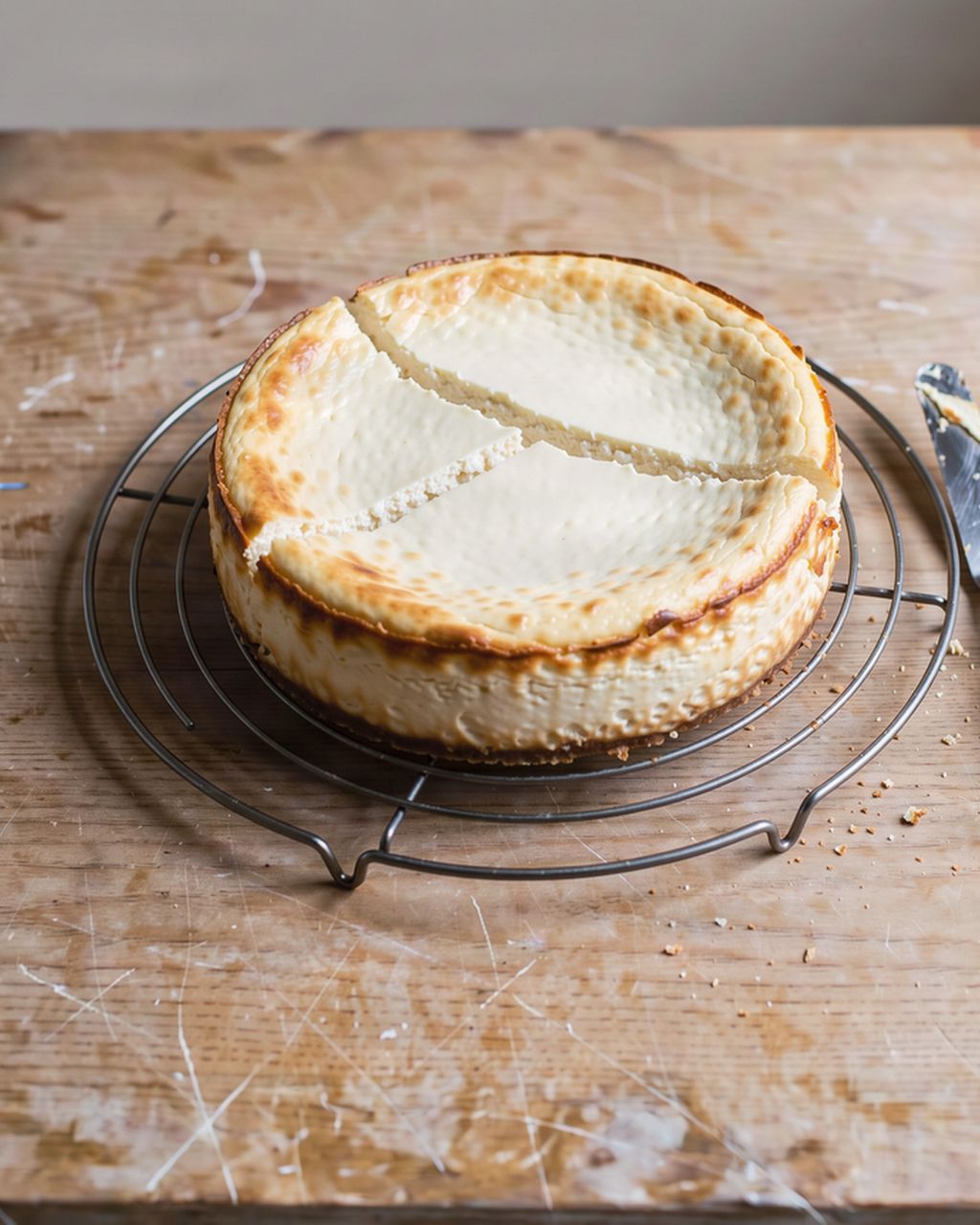
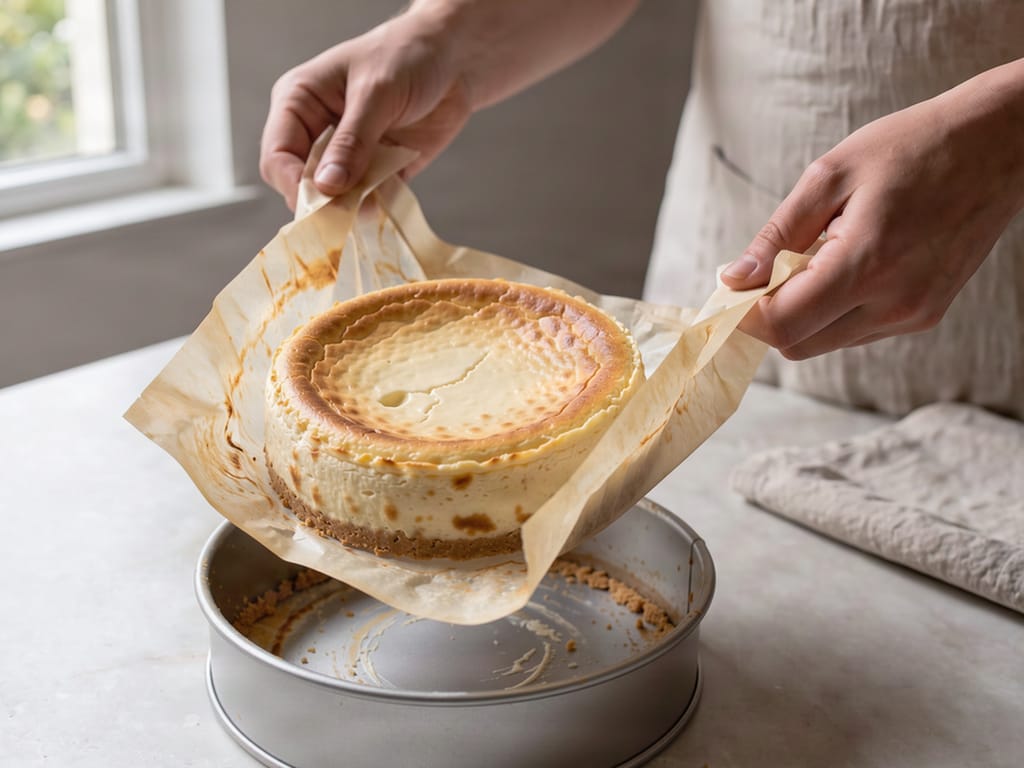
You can bake a cheesecake without a springform pan in an ordinary round cake tin lined with a parchment sling, in a loose-bottomed tin, in a cake ring on a baking sheet, or in a square pan to cut as bars. The key is lining the pan so you can lift the cheesecake out once it is fully chilled. Here is which pan to use, how to line it, and how to get the cheesecake out in one piece.
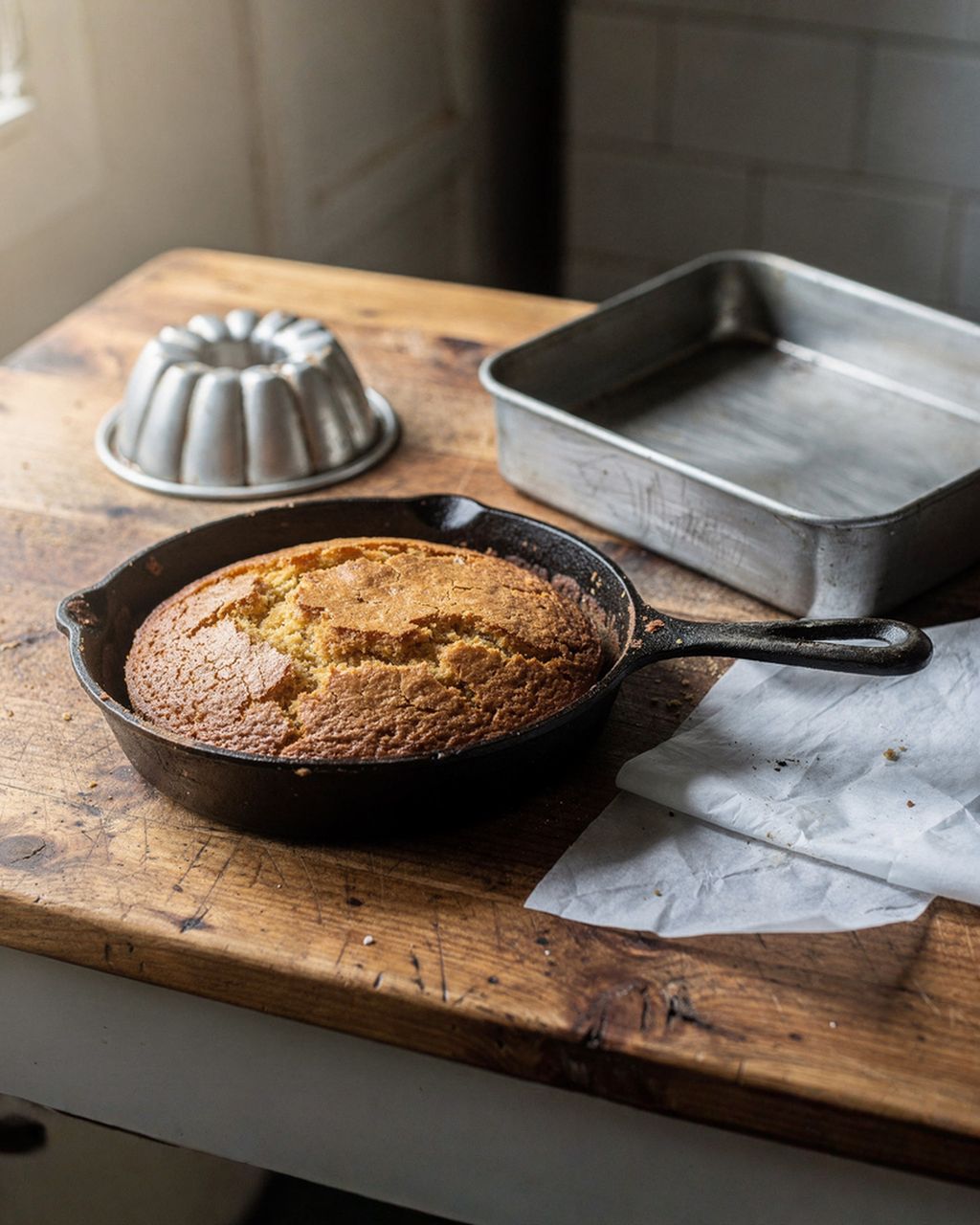
Choose by how you want to serve it.
Round cake tin with a solid base, same diameter: the most common swap. Line it with a parchment sling and lift the cheesecake out once chilled.
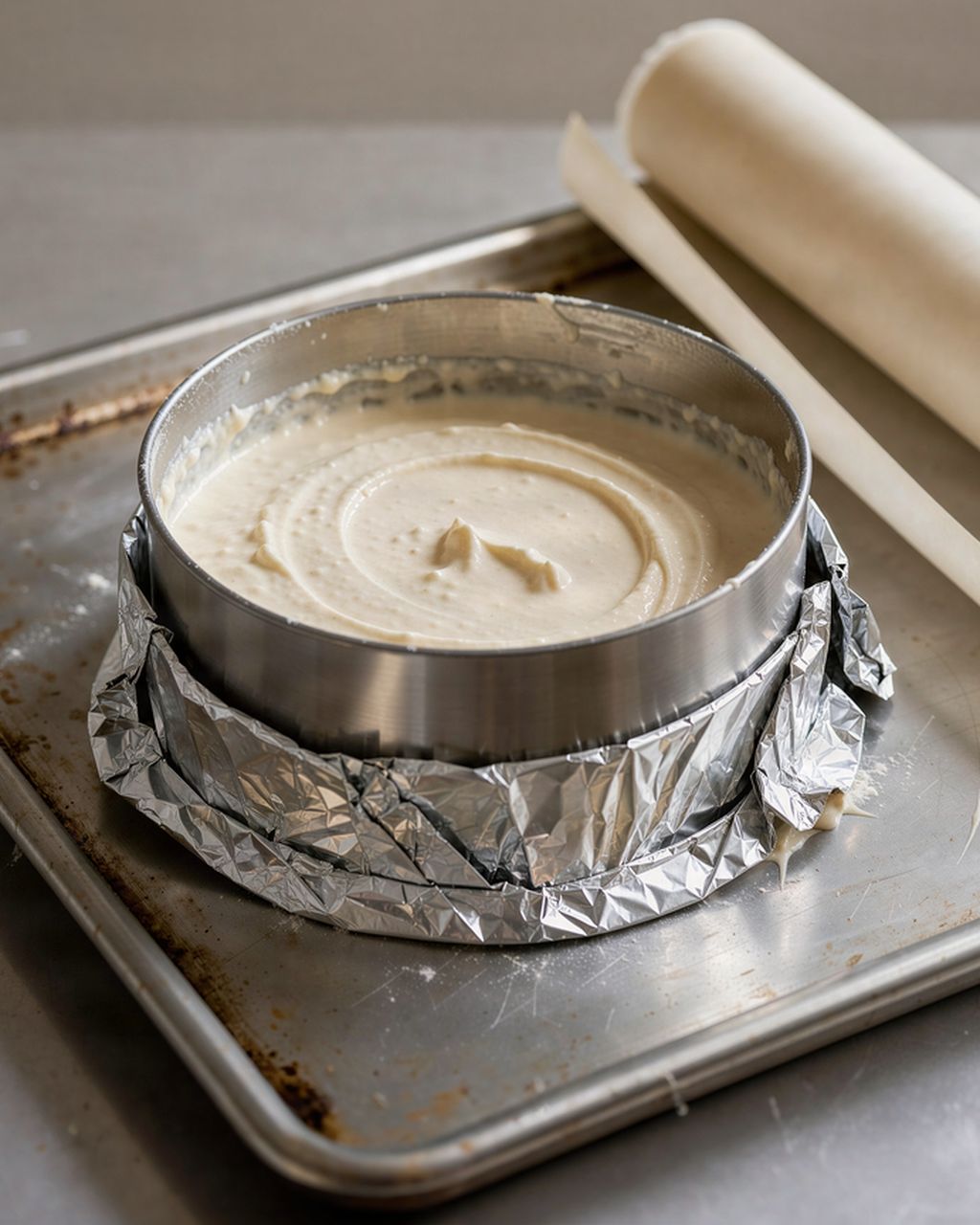
Loose-bottomed cake or tart tin: almost as easy as a springform. Push the base up from below. Wrap the outside in foil if you use a water bath, because the seam leaks.
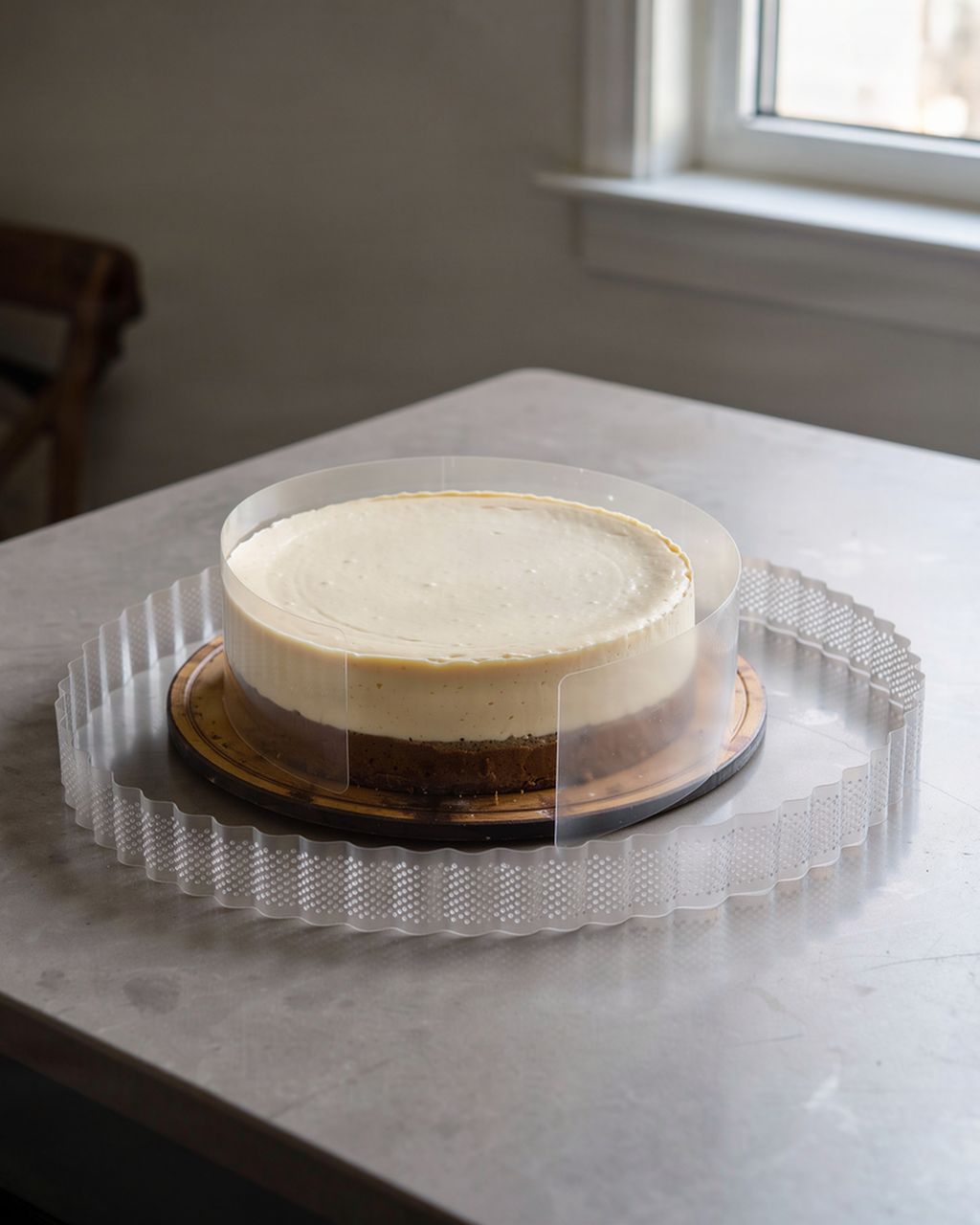
Adjustable cake ring on a lined baking sheet: gives straight sides and is easy to remove. See baking a cake in a cake ring for how to seal it so the batter doesn't run out.
Square or rectangular pan: bake it as cheesecake bars and lift it out with a parchment sling, or cut it in the pan.
Pie dish, glass or ceramic baking dish: serve straight from the dish with a spoon or cake server.
Muffin tin with paper cases: mini cheesecakes that need no turning out at all.
Disposable foil pan: cut the sides away once the cheesecake is chilled.
A no-bake cheesecake is easier still: it sets in the fridge, so any ring or lined tin works. See no-bake cheesecake in a ring.
Seasonal baking plans, tested recipes and kitchen tricks that save you time. Unsubscribe in one click.
The sling is what makes a solid tin work.
Cut two long strips of parchment (baking paper), each about 5–8 cm (2–3 in) wide and long enough to run under the base and up both sides with some to hold.
Lightly grease the tin so the paper sticks.
Lay the strips across the tin in a cross, pressing them into the corners and up the sides.
Put a circle of parchment on top of the strips, on the base.
For straight, clean sides, add a collar: a strip of parchment around the inside wall, standing a little above the rim.
The crust goes in on top of the circle. Once the cheesecake is baked and fully chilled, you lift it out by the four ends of the strips. Parchment is better than foil here because it doesn't tear or stick; more on when to use which in silicone mat, parchment or a greased pan.
Match the diameter if you can. A recipe written for a 23 cm (9 in) springform fits a 23 cm round cake tin with sides at least 7.5 cm (3 in) tall.
Shallower tin, same size: the batter may not fit; bake any extra as mini cheesecakes.
Wider tin: the cheesecake is thinner and bakes faster. Check it earlier.
Smaller or deeper tin: the middle takes much longer; bake at the recipe temperature and wait for the wobble.
Square pan: a 20 cm (8 in) square has about the same base area as a 23 cm (9 in) round; if it is shallower than your springform, bake the extra batter as mini cheesecakes.
The cake pan size converter works out how much batter a different pan holds, and cake pan substitutes covers adjusting the bake.
Whatever the pan, judge doneness the same way: the edges look set and slightly puffed, and the center 5–8 cm (2–3 in) still wobbles like set jelly when you nudge the pan. It firms up as it cools and chills.
Many baked cheesecakes go into a water bath (a roasting pan of hot water) so they bake gently and evenly.
A solid cake tin is ideal: no seams, no leaks. You don't need to wrap it in foil.
A loose-bottomed tin or cake ring must be wrapped well in a double layer of heavy-duty foil, or set inside a slightly larger solid pan, because water seeps in and makes the crust soggy.
Pour the hot water into the roasting pan once it is on the oven rack, to come about halfway up the sides of the cheesecake pan. Hot water and a heavy pan are a burn risk, so move it carefully.
If your cheesecake came out runny in the middle, the pan is rarely the cause; see why your cheesecake won't set.
Lifting with a sling (best for most tins):
Chill the cheesecake fully, covered, in the fridge.
Run a thin knife, dipped in hot water and wiped dry, around the edge.
Lift by all four ends of the parchment strips at once and slide it onto a plate.
Slide the parchment circle out from underneath with a long spatula, or leave it in place.
Turning it out (no sling):
Chill it fully. Warm the outside of the tin for a few seconds in a sink of hot water to loosen the base.
Cover the top with plastic wrap, put a flat plate on it and invert.
Lift off the tin, peel away any paper, put the serving plate on the base and turn it right side up.
Smooth the top with a warm knife if the wrap marked it.
Turning out works best with a firm, dense cheesecake and a crumb crust pressed in well. Soft or very tall cheesecakes are better served from the dish. Any marks on top disappear under a topping; see how to decorate a cheesecake.
Sometimes the easiest answer is a different shape.
Bars: bake in a square or rectangular pan lined with a parchment sling. Chill, lift out and cut into squares with a hot, wiped knife. Bars bake faster than a deep round cheesecake.
Mini cheesecakes: line a muffin tin with paper cases, press a spoon of crumb base into each, fill about three-quarters full and bake until the centers just wobble. They bake much faster than a full cheesecake.
In Czech kitchens, the closest everyday equivalent is tvarohový koláč, a sheet cake with a sweet curd-cheese layer, baked in a large tray and served straight from it. If you are swapping cream cheese for a European fresh cheese, see what to use instead of cream cheese in cheesecake and what tvaroh is.
Yes. A solid round cake tin of the same size, lined with a parchment sling, works for baked cheesecake, and a loose-bottomed tin, a cake ring or a square pan work too. Lift or turn it out only after it has chilled and firmed up.
Use a round cake tin with a parchment sling, a loose-bottomed tart or cake tin, an adjustable cake ring on a lined baking sheet, a square or rectangular pan for bars, a pie dish to serve from, or a muffin tin for mini cheesecakes.
Line the pan with two long crossed strips of parchment and a parchment circle before baking, chill the cheesecake fully, run a thin knife around the edge, then lift it out by the strips. Alternatively, invert it onto a plate covered with plastic wrap and turn it right side up onto the serving plate.
Yes, and a solid cake tin is better for a water bath than a springform because it cannot leak. Set it in a larger roasting pan and pour hot water around it.
Yes, but serve it straight from the dish rather than trying to turn it out. Glass and ceramic heat more slowly than metal, so check for doneness by the wobble rather than by the recipe's time.
One recipe worth heating the oven for, one tip, and one deal from the shop. Nothing else.