Why Is My Cheesecake Cracking? Causes, Fixes and the Water Bath
Why Is My Cheesecake Grainy or Lumpy? Batter and Texture Fixes
Updated Nov 21, 2026
Lumpy cheesecake batter almost always comes from cream cheese that was too cold, or from liquids added before the cheese was smooth. A grainy baked cheesecake is different: it was usually overbaked until the eggs curdled, or it was made with a grainy cheese such as quark that wasn't sieved. Here is how to tell them apart and fix each one.
These are two different faults that people describe with the same words.
Lumpy batter (before baking): small white specks or pellets of cream cheese that won't mix in. The baked cheesecake has little dense spots. Cause: cold cheese or the wrong mixing order.
Grainy texture (after baking): the batter looked smooth, but the baked cheesecake feels sandy or curdled on the tongue, sometimes with a little liquid. Cause: overbaking, too much heat, or a naturally grainy cheese.
Work out which one you have, then go to that section.
Seasonal baking plans, tested recipes and kitchen tricks that save you time. Unsubscribe in one click.
Cold cream cheese is firm. When you beat it, it breaks into small pieces rather than turning creamy, and once eggs or cream go in, those pieces are coated in liquid and won't break down any further.
Soften it properly. The cheese should give easily when pressed. Cutting the block into cubes and spreading them on a plate speeds this up a lot. Cream cheese is perishable; USDA FSIS advises not leaving perishable food out for more than 2 hours (1 hour above 32 °C / 90 °F), so plan the softening inside that window. Eggs and sour cream soften quickly enough on the counter in the same time, and cold eggs straight from the fridge can make softened cheese seize again.
Short of time? Warm the cheese in short bursts in the microwave, stirring between bursts, until just soft. Don't let it melt or turn oily.
The order matters more than speed.
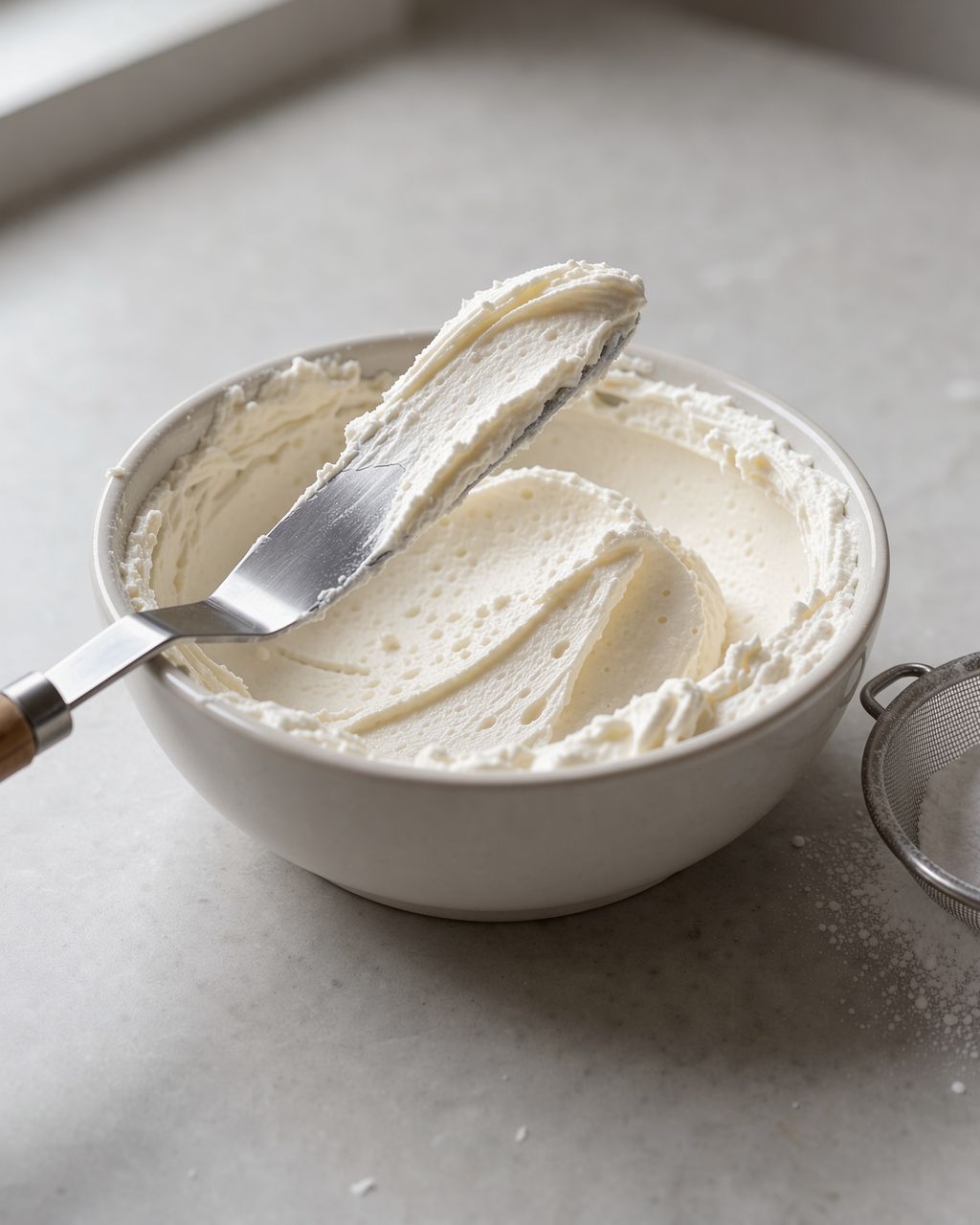
Beat the softened cream cheese alone, or with the sugar, until completely smooth. Scrape the bowl and the beater, because the stubborn lumps hide there.
Add any flour or starch with the sugar, so it can't clump.
Add sour cream, cream or yogurt and mix until smooth.
Add the eggs one at a time on low speed, mixing only until each one disappears.
Once the eggs are in, fast beating whips in air, and air is a main cause of cracking. Get the cheese smooth early so you are not tempted to beat hard at the end.
You can almost always rescue lumpy batter before it goes in the oven.
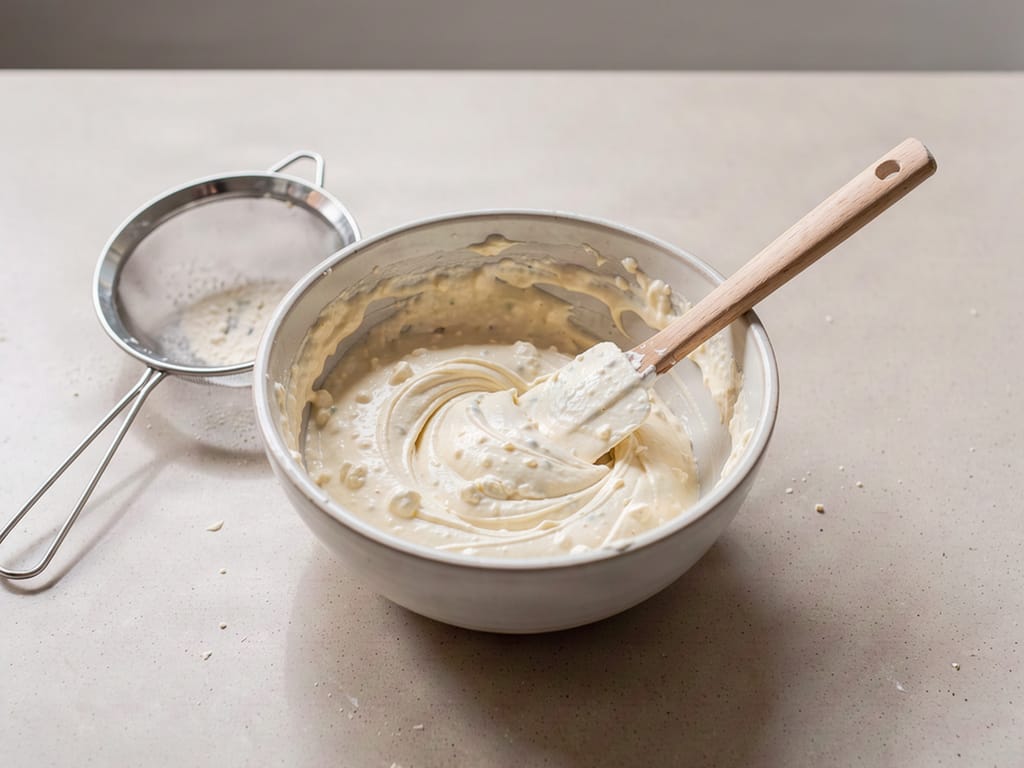
Sieve it. Push the batter through a fine-mesh sieve with a spatula. Slow, but it gives the silkiest result.
Blend it. A stick blender or a food processor breaks the lumps down in seconds. Keep a stick blender's head under the surface so it doesn't pull in air, then tap the bowl to release bubbles.
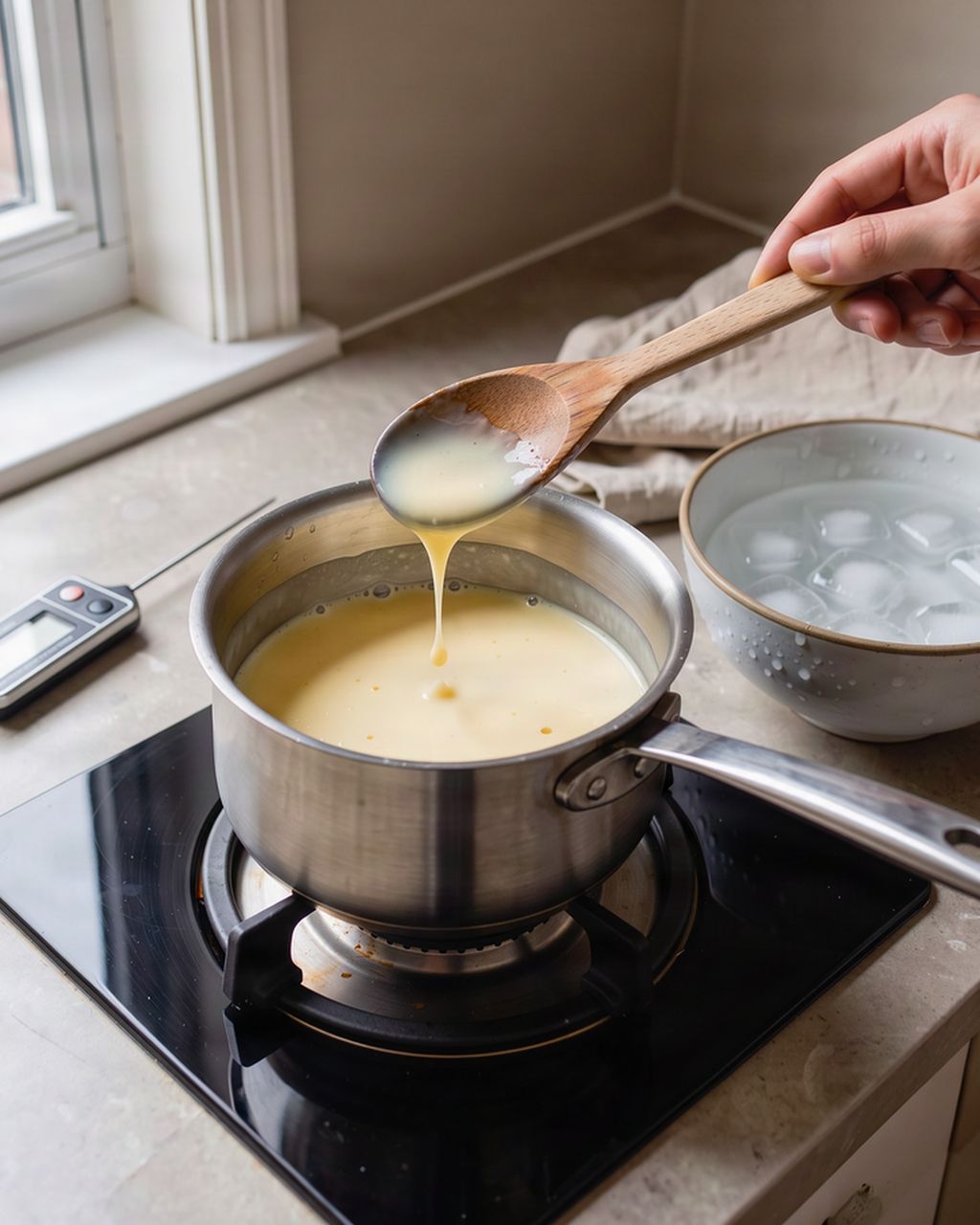
Warm it gently. Set the bowl over a pan of warm (not simmering) water for a minute or two, stirring, until the lumps soften, then mix again. Don't let it get hot, or the eggs start to cook.
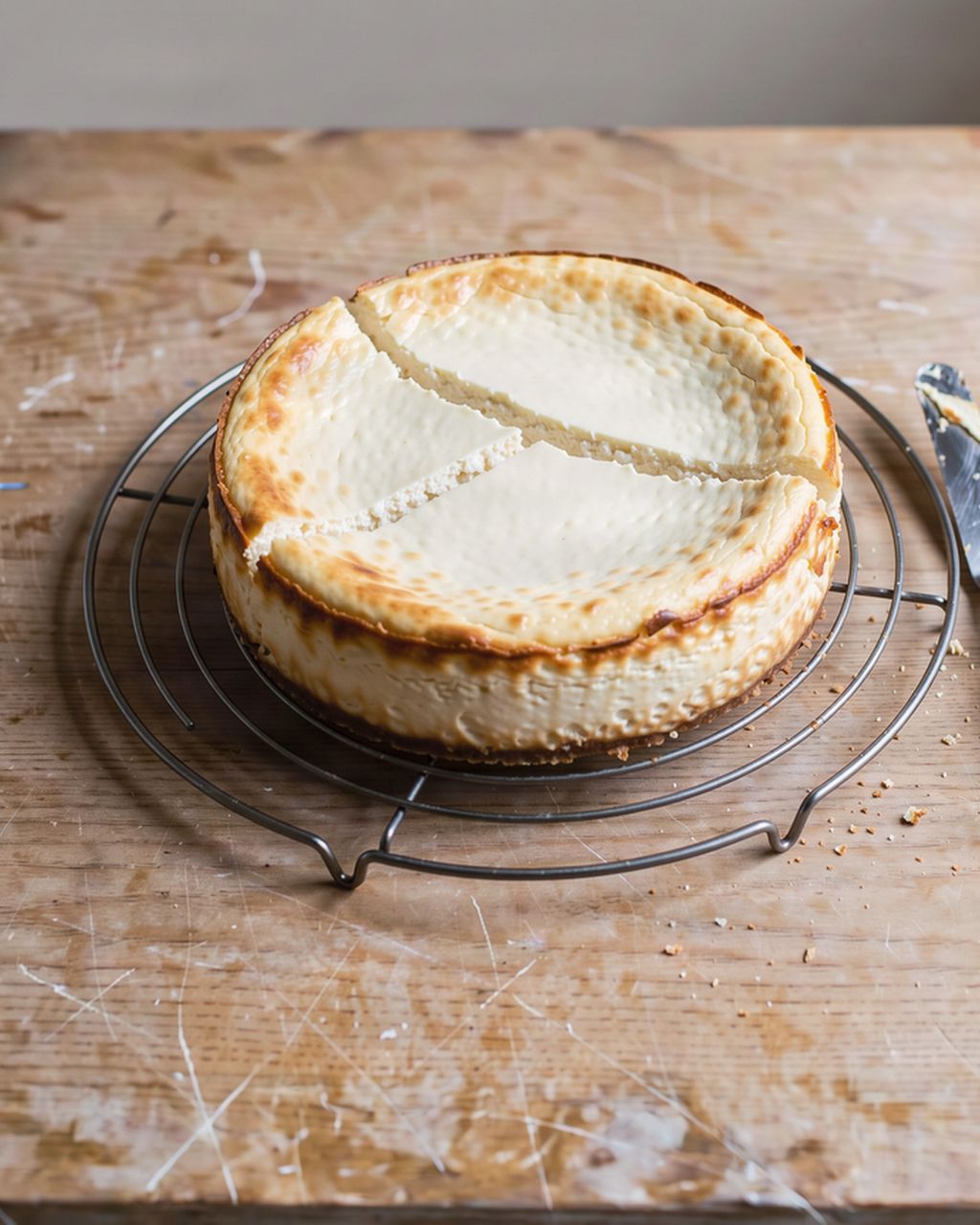
If the batter was smooth and the baked cheesecake is grainy, the eggs overcooked. Egg proteins set gently at first. Past that point they tighten, squeeze out liquid and turn the cheese custard sandy. The edge goes first, which is why a grainy cheesecake is often fine in the middle and dry near the pan.
Lower the heat. Many cheesecake recipes bake at a moderate 150–160 °C (300–320 °F) in a conventional oven. Ovens can run hotter or cooler than the dial; an oven thermometer tells you the truth.
Use a water bath. It keeps the edge from overcooking while the middle catches up.
Stop while the center wobbles. The middle should still jiggle like set jelly when you nudge the pan. It firms as it cools and chills. Check the center with an instant-read thermometer; if you take it out before 71 °C (160 °F), make it with pasteurized eggs.
Baked cheesecake is a cooked egg dish, so it still needs to be cooked through: FDA advises cooking dishes that contain eggs to 71 °C (160 °F), checked with a food thermometer. A gentle oven and a water bath let the center get there without the edge curdling. Many recipes stop earlier for a creamier middle; if yours does, FDA's advice for dishes where eggs stay undercooked is to use pasteurized eggs or egg products. If your cheesecake stays soft instead, see why your cheesecake won't set.
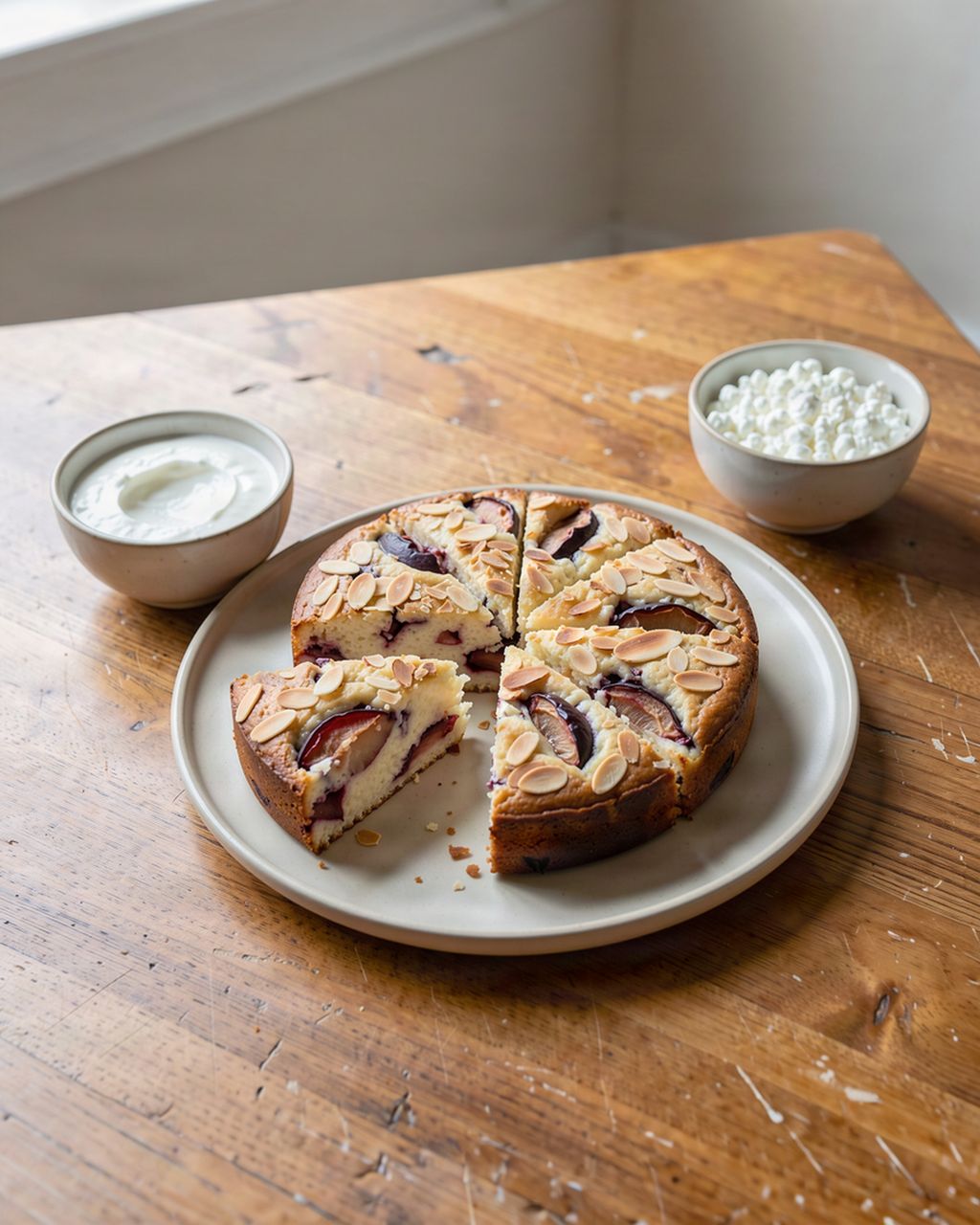
Some cheeses are grainy before you start. In Czech kitchens, cheesecake and tvarohový koláč (quark cake) are often made with tvaroh (Czech curd cheese), which is crumbly and slightly grainy straight from the pack.
Tvaroh and quark: press them through a sieve, or blend until smooth, before mixing. Drain very wet quark first. More in what is tvaroh and what is quark cheese.
Ricotta: naturally curdy. Blend it smooth, or accept a lighter, more textured Italian-style cheesecake.
Low-fat or tub cream cheese: spreadable cheeses in tubs have more water and stabilizers and can bake up looser or slightly grainy. Full-fat block cream cheese gives the smoothest result.
Our guide to cream cheese substitutes in cheesecake covers which swaps behave best.
Not really. Overcooked egg proteins can't be made smooth again. What you can do:
Chill it well. A grainy cheesecake tastes noticeably smoother cold than at room temperature.
Cover it. A sour cream layer, fruit sauce or ganache distracts from the texture.
Reuse it. Crumble it into layered dessert cups with whipped cream and fruit.
As long as it was cooled and in the fridge within FDA's 2 hours for cooked egg dishes, a grainy cheesecake is a texture problem, not a safety one.
Cheesecake batter turns lumpy when the cream cheese is too cold or when eggs, cream or sour cream go in before the cheese is completely smooth. Cold cheese firms into small pellets that liquids cannot dissolve. Beat the softened cheese with the sugar until smooth first, then add the rest.
A grainy baked cheesecake was usually overbaked or baked too hot, so the egg proteins tightened and curdled. Grainy cheese, such as unsieved quark or ricotta, gives the same texture. Bake gently, ideally in a water bath, and take it out while the center still wobbles.
Yes, lumpy cheesecake batter can usually be fixed before baking. Push it through a fine sieve with a spatula, or blend it briefly with a stick blender, keeping the blade under the surface so you don't whip in air.
Cut the cream cheese into cubes and spread them out on a plate; they soften much faster than a whole block. USDA FSIS advises not leaving perishable food out of the fridge for more than 2 hours (1 hour above 32 °C / 90 °F), so stay well within that.
A cheesecake curdles when the eggs in it overcook, which happens from too hot an oven, too long a bake, or no water bath. The texture turns grainy or weepy instead of creamy. It cannot be reversed once baked, but it is still edible if it was cooled and refrigerated properly.
One recipe worth heating the oven for, one tip, and one deal from the shop. Nothing else.