Brioche Dough Too Sticky? Why It's Normal and What to Do Instead
Why Is My Brioche Dense or Dry? Gluten, Butter and Proofing Fixes
Updated Nov 20, 2026
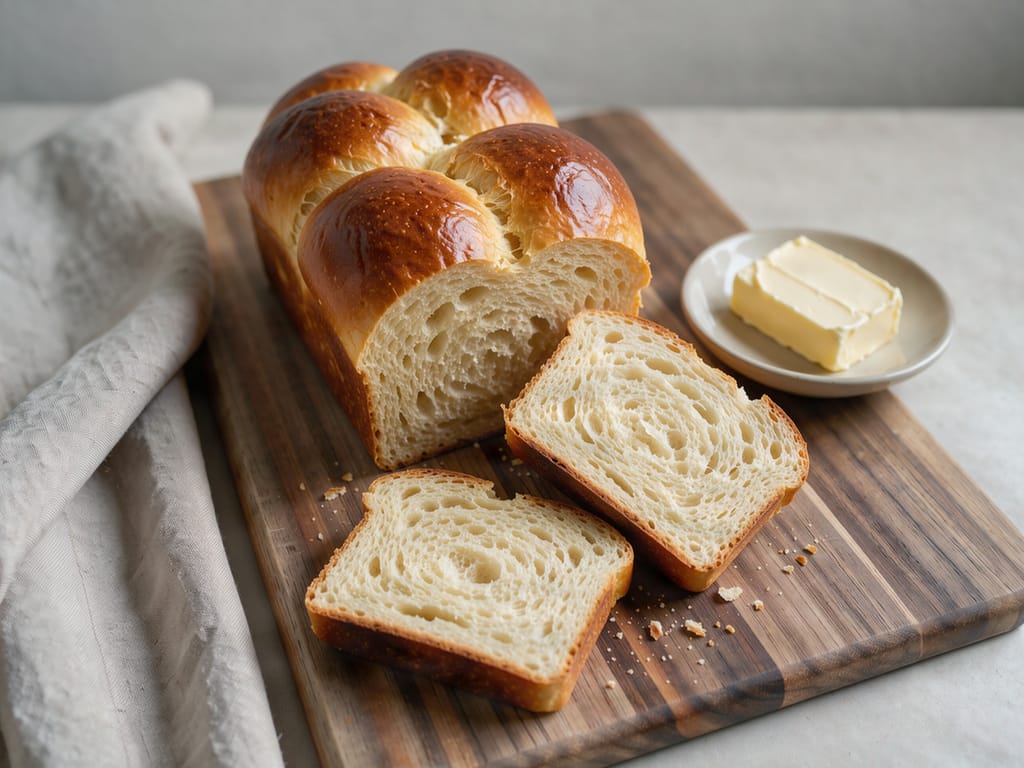
Brioche turns out dense mostly because the gluten was not developed enough before the butter went in, the butter was added too fast or too warm so it broke out of the dough, or the loaf was baked before it had fully risen. Dry brioche usually means too much flour or too long in the oven. Here is how to spot which one happened and what to change next time.
Brioche is a bread dough carrying a lot of butter, eggs and sugar. To be light, it needs strong gluten to hold all that richness up. Most dense or dry loaves trace back to one of these:
Under-developed gluten. The dough was not mixed long enough, or the butter went in too early.
Butter added too fast or too warm. The dough turned greasy and lost its structure.
Underproofing. The loaf went into the oven before it had risen enough.
Too much flour. Added to make the sticky dough easier to handle.
Overbaking. A dark crust and a dry, crumbly slice.
A dense and greasy crumb points to the butter. Dense and tight points to gluten or proofing. Dry and crumbly points to flour or baking time.
Butter coats the flour proteins and gets in the way of gluten forming. That is why most methods build the gluten first and add the butter later. Modernist Cuisine advises starting the butter once the gluten is at low to medium development: too early and the mix takes forever, too late and the fat is hard to work in.
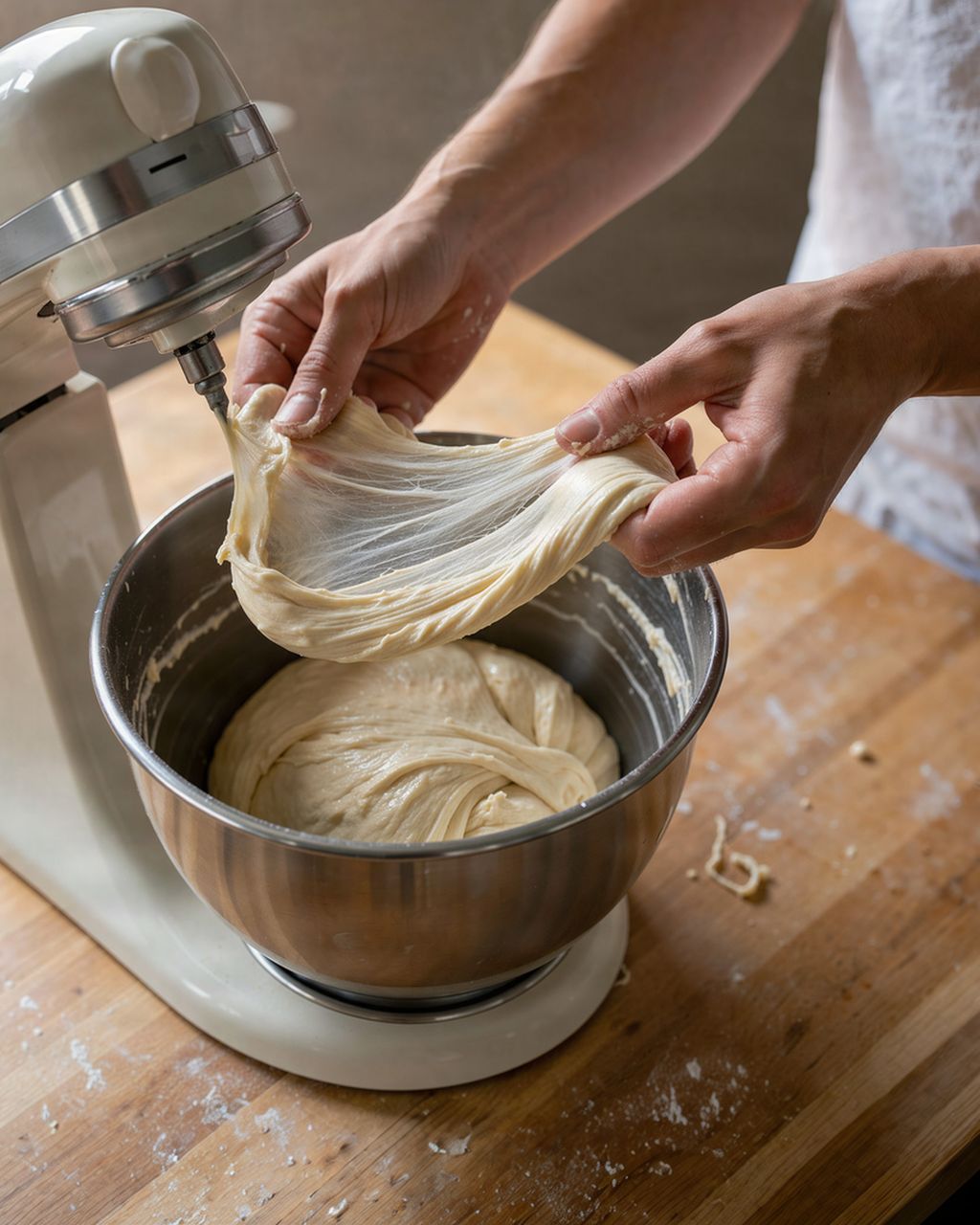
After the butter is in, keep mixing. Brioche needs a long mix, often 15 to 25 minutes in a stand mixer in total. It is ready when:
the dough is smooth and glossy and pulls away from the sides of the bowl
a small piece stretched between your fingers turns thin enough to let light through without tearing (the windowpane test)
If it tears early, mix a few minutes more and test again. Kneading brioche by hand is possible but slow; our guide to stand mixer and bread machine dough has mixing times and speeds.
Brioche is an emulsion, a bit like mayonnaise. Modernist Cuisine compares adding the butter to making mayonnaise: in portions, letting each one blend in before the next.
What goes wrong:
Too fast: a big lump of butter slides around the bowl, the dough breaks into greasy pieces, and the gluten gets torn.
Too warm: long mixing heats the dough by friction. Some bakers set a ceiling of about 24°C (75°F) for the dough; above that the butter starts to separate and the dough turns slack and oily.
Melted butter: most classic brioche methods use soft, plastic butter rather than melted, because melted butter doesn't hold air or form the same emulsion.
The fix if your dough turns greasy: stop the mixer and chill the bowl, covered, in the fridge for about 15 to 20 minutes, until the butter firms up again, then mix again. Use cold eggs and milk to keep the dough cool from the start.
Brioche rises slowly, and many recipes chill the dough, covered, in the fridge overnight. A cold dough can take a long time to rise after shaping, and it is tempting to bake it too soon. The result is a tight, heavy loaf that may split along the sides.
Before baking, the shaped brioche should:
look clearly puffy and domed, in a loaf pan often close to the rim
feel light and wobbly when you nudge the pan
leave a dent that springs back slowly when pressed gently with a floured finger
Our guide to proofing dough explains the poke test. If the dough barely rises at all, check the yeast with the quick test in our guide to proofing yeast.
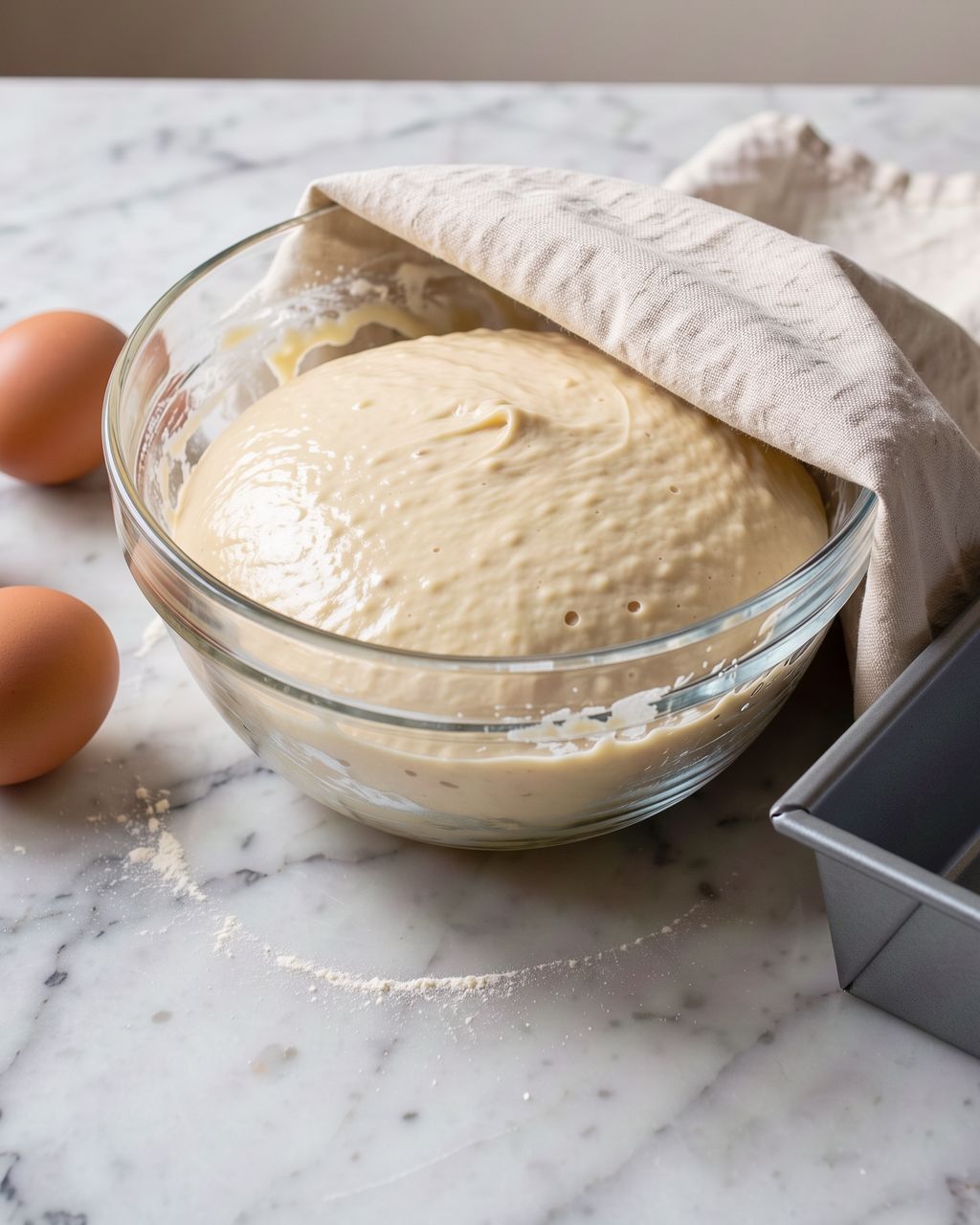
Brioche dough is sticky, and that is normal. The most common mistake is fixing that with extra flour. Every spoonful makes the bread drier and denser.
Weigh the flour. Our tool uses 125 g of all-purpose flour per US cup (236.6 ml) and 132 g per metric cup (250 ml); if your recipe states its own cup weight (King Arthur uses 120 g), use that. The cups and spoons to grams calculator converts other amounts.
Chill the dough instead of adding flour. Cold butter makes it firm enough to shape.
Use a bench scraper and lightly oiled hands rather than a heavily floured counter.
A stronger flour, about 11–13 g of protein per 100 g, gives brioche more structure. Our article on flour numbers helps you choose in Europe.
Recipe of the week, one tip that saves you time and one deal from the shop. Unsubscribe in one click.
The next issue goes out on Thursday, November 26.
Brioche browns fast because of the sugar, butter and egg wash. Dark color is not a reliable sign that it is done, and the opposite mistake, baking it far past done, gives a dry slice.
Use a thermometer. King Arthur Baking says most loaves and rolls are done at about 88°C (190°F) in the center, and America's Test Kitchen uses the same figure for enriched breads. If the crust darkens before then, lay foil loosely over the top.
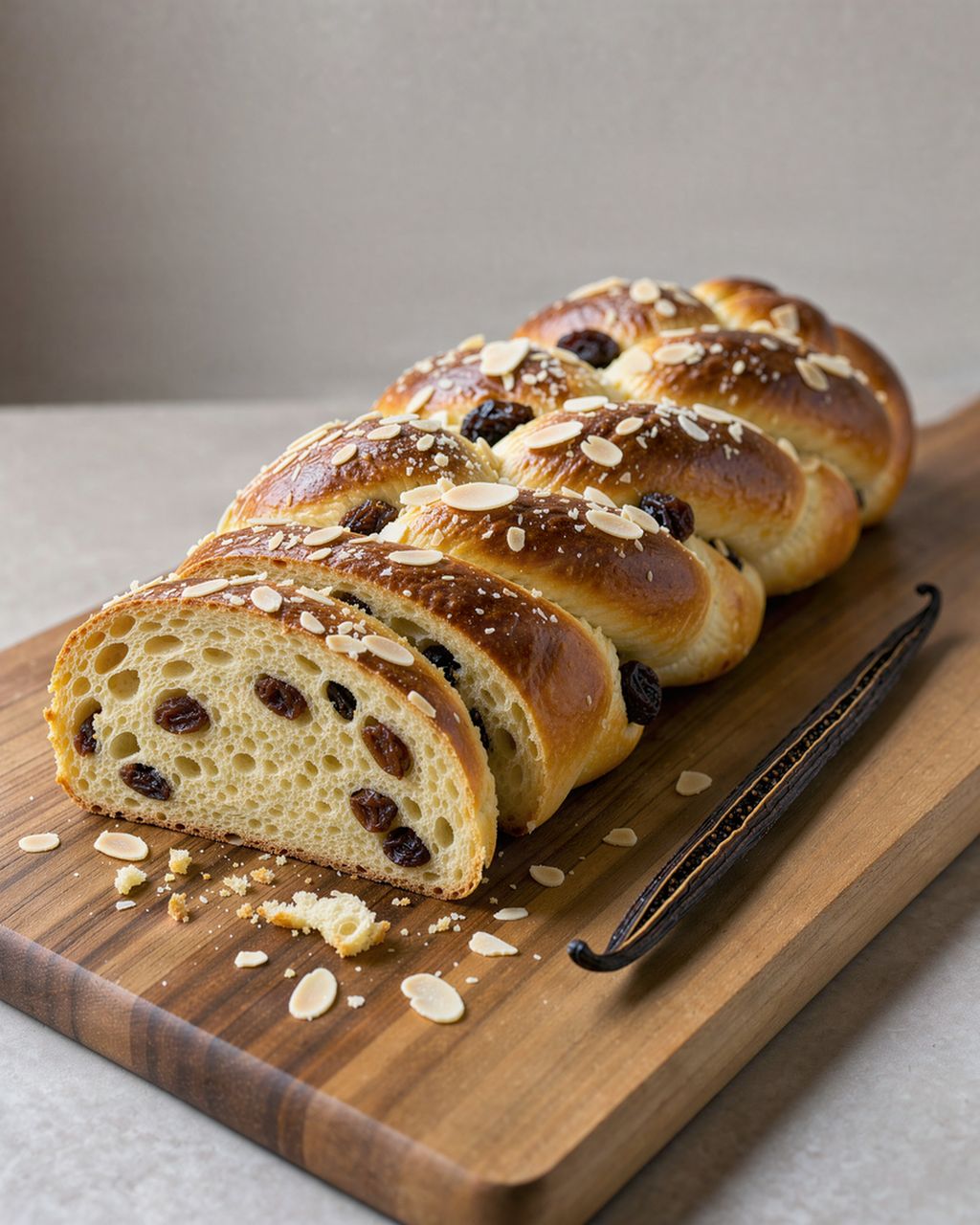
In Czech kitchens we judge vánočka (braided Christmas bread), a close cousin of brioche, the same way; see how to tell vánočka is done. Once baked, cool the loaf on a rack and wrap it as soon as it is cool, so it doesn't dry out.
Dense brioche usually comes from under-developed gluten, butter that was added too quickly or too warm and turned the dough greasy, or underproofing. Mix until the dough passes the windowpane test, add soft but cool butter a little at a time, and let the shaped loaf rise until clearly puffy.
Dry brioche usually has too much flour in it, often added to fight the sticky dough, or it was baked too long. Weigh the flour, accept a sticky dough, and take the loaf out when the center reaches about 88°C (190°F).
Much longer than plain bread, often 15 to 25 minutes in a stand mixer in total, because the butter slows gluten forming. Knead until the dough is smooth, pulls away from the bowl and stretches into a thin windowpane.
Soft enough to bend without breaking, but still cool, not greasy or melted. Bakers' guides give different advice, but the aim is the same: butter that blends in without warming the dough so much that it melts out.
Brioche that collapses was usually overproofed, so the gluten could not hold the gas, or it was underbaked and sank as it cooled. Bake it when it is puffy but still springs back slowly, and bake until the center is done.
One recipe worth heating the oven for, one tip, and one deal from the shop. Nothing else.