Why Is My Brioche Dense or Dry? Gluten, Butter and Proofing Fixes
Why Are My Cinnamon Rolls Hard or Dry? Flour, Baking Time and Storage
Updated Nov 20, 2026
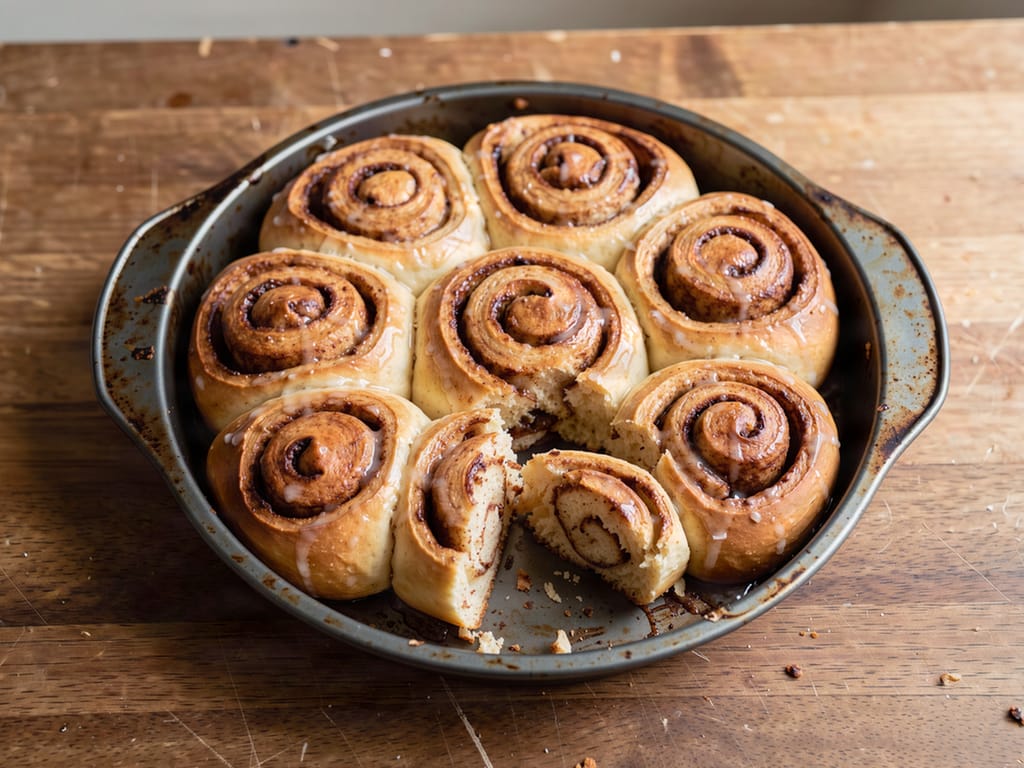
Cinnamon rolls turn out hard or dry mostly because the dough got too much flour, usually from scooping cups or flouring the counter heavily, or because they baked too long or too hot. Underproofed rolls are also tight and tough, and even good rolls go dry fast if they are stored uncovered or in the fridge. Here is how to find your cause, plus the milk roux (tangzhong) trick for rolls that stay soft.
In our experience the causes, roughly from most to least common, are:
Too much flour. The dough got stiff, so the rolls bake up firm and dry.
Overbaking. Too long, too hot, or a dark metal pan.
Underproofing. Rolls baked before they puffed up are tight and chewy.
Too little fat or a lean recipe. A recipe close to plain bread dough gives a firmer roll.
Storage. Rolls left uncovered, or kept in the fridge, go dry and hard within a day.
Each one has a simple fix.
Seasonal baking plans, tested recipes and kitchen tricks that save you time. Unsubscribe in one click.
Flour is the number one cause. A US cup of flour scooped straight from the bag and packed can weigh far more than the cup the recipe writer meant. Over three or four cups, that adds up to a much stiffer dough.
Our tool uses 125 g of all-purpose flour per US cup (236.6 ml) and 132 g per metric cup (250 ml); published figures range from about 120 to 140 g, which is exactly why weighing matters. If you only have cups, spoon the flour into the cup and level it off; don't scoop. The cup of flour in grams page has other amounts.
Extra flour also sneaks in on the counter. Cinnamon roll dough should be soft and a little tacky. Knead with oiled hands or a scraper instead of adding handful after handful of flour, and roll it out on a lightly floured surface.
Rolls keep losing moisture every minute they stay in the oven. Most rolls in a 23 × 33 cm (9 × 13 inch) pan bake in roughly 20 to 30 minutes at about 175–190°C (350–375°F) in a conventional oven. In a fan (convection) oven, set it about 20°C lower (in US terms, about 25°F lower), or use our oven temperature converter.
Instead of baking until the tops are deep brown, check the center roll. King Arthur Baking says most loaves and rolls are done at about 88°C (190°F) in the center, and America's Test Kitchen uses the same figure for enriched breads. Rolls taken out there are baked through but still moist; rolls pushed far past that are drier. If the tops brown before the middle is done, lay foil loosely over the pan rather than baking hotter.
Glass and dark metal pans brown faster than light aluminum, so check those pans earlier.
If the rolls go into the oven before they have risen enough, the gluten is still tight. They puff up hard in the oven, sometimes split, and bake up chewy and bready.
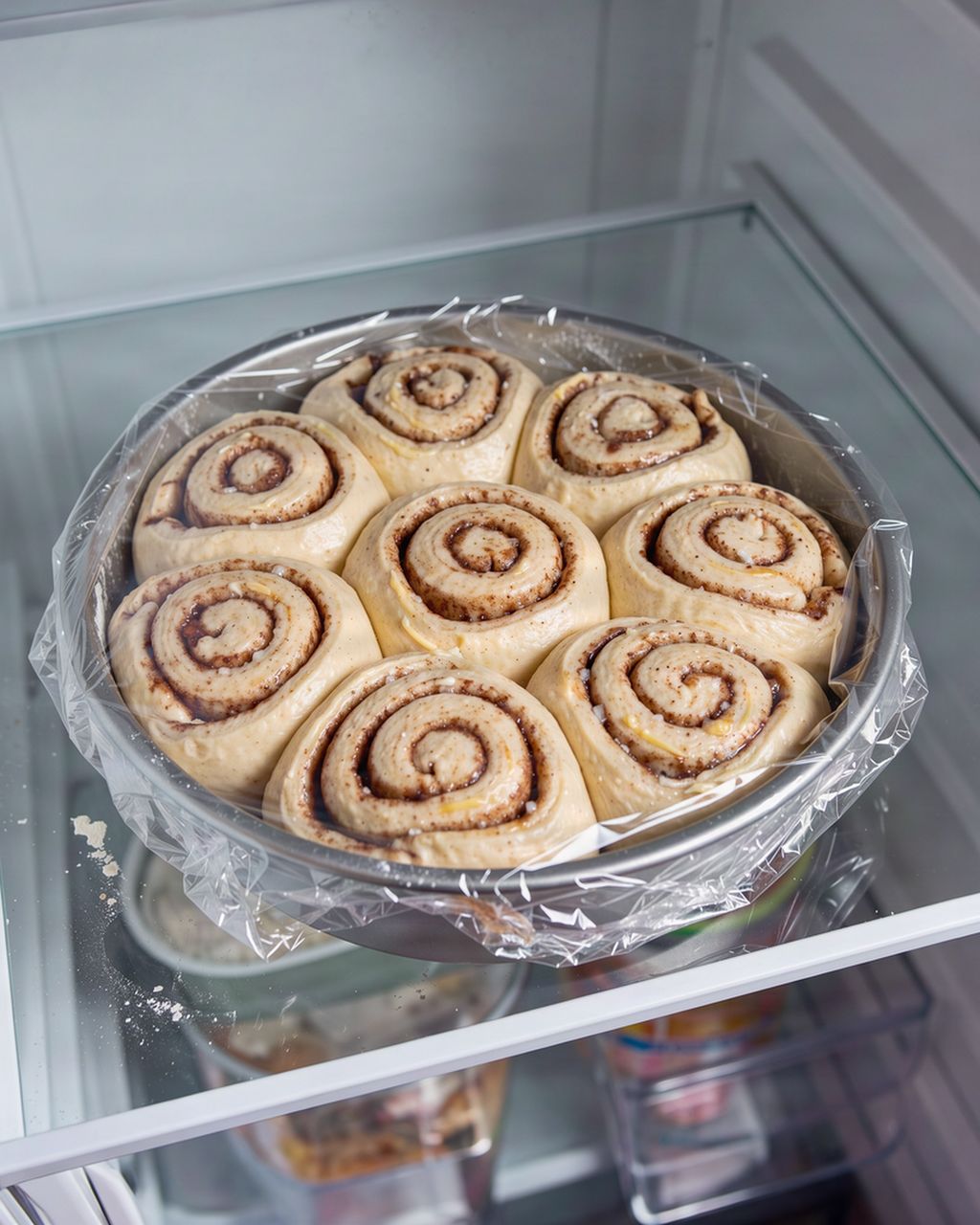
Before baking, the shaped rolls should look puffy, have grown by about half to two-thirds and touch each other. A floured fingertip pressed gently into the side should leave a dent that springs back slowly. Our guide to proofing dough explains the poke test in more detail.
Baking rolls snug in a pan, rather than spaced out on a sheet, also keeps their sides soft, because they steam each other.
Tangzhong (also called a water roux or milk roux) is a technique known from Asian milk breads, and it works very well for cinnamon rolls. You take a small part of the recipe's flour and liquid, cook it into a paste, cool it and mix it into the dough.
The usual ratio and amount, as King Arthur Baking describes them, are:
about 1 part flour to 5 parts liquid by weight (milk or water)
using about 5–10% of the recipe's total flour
Cook it over medium heat, stirring, until it thickens to a pudding-like paste (around 65°C/150°F, if you use a thermometer).
For a dough with 500 g of flour, that might be 25 g of flour cooked in 125 g of milk. Take both amounts out of the recipe; don't add them on top. Cooked starch holds more water, so the dough feels softer and the baked rolls stay tender a day or two longer.
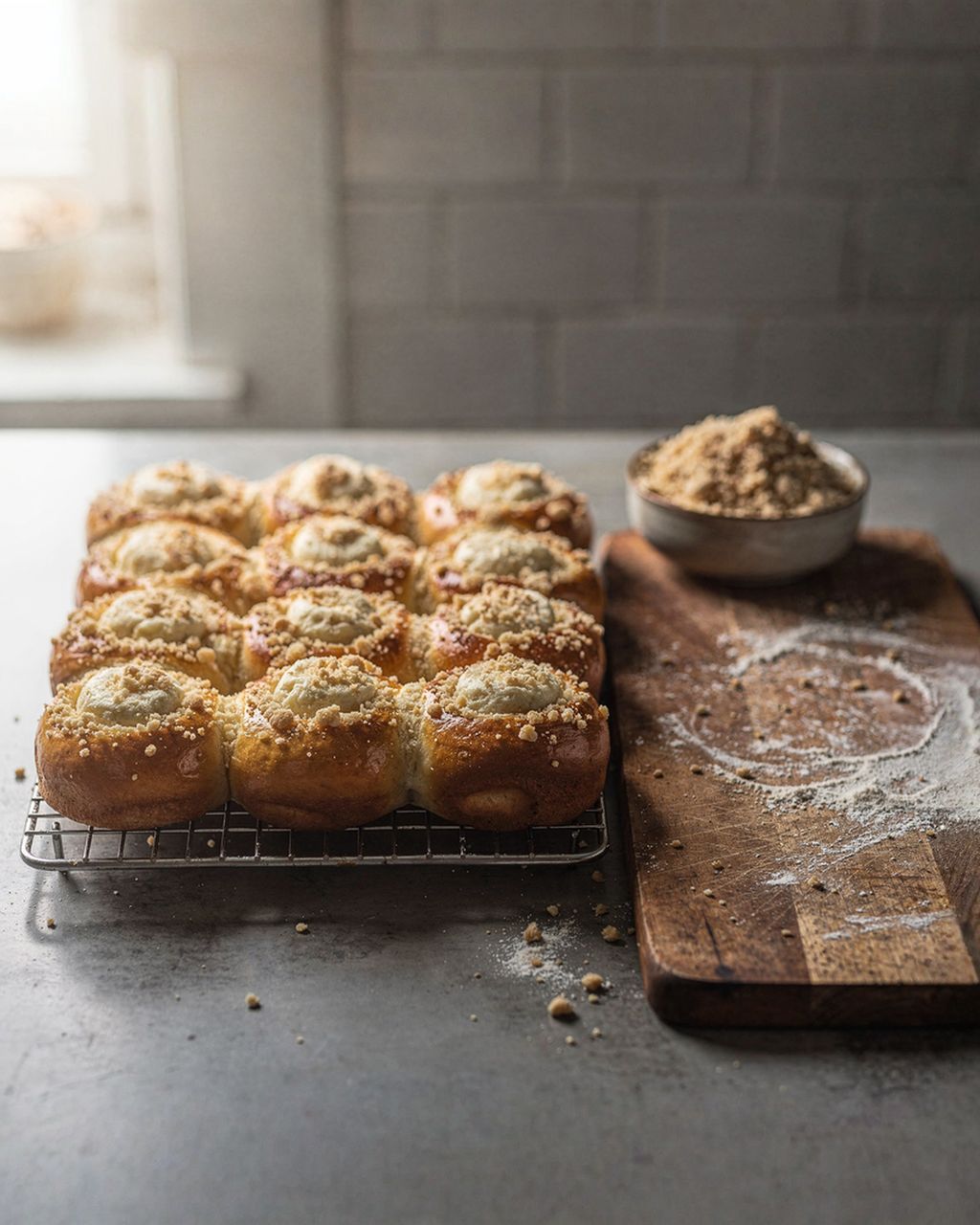
The Czech idea is similar: for soft vánočka (braided Christmas bread) and kolache, cooks add milk, egg yolks and enough butter. Our guides to softer vánočka and soft kolache dough show what each one does.
Bread goes stale because its starch slowly firms up again after baking. This happens fastest at fridge temperature, so the fridge is the worst place for plain rolls.
Unfrosted or glaze-only rolls: cool them, then cover the pan tightly or put them in an airtight box at room temperature for next-day eating.
For longer: freeze them, wrapped tightly, unfrosted. Thaw in the wrapping so the moisture goes back into the bread, then warm briefly. Our guide to thawing bread and rolls covers the steps.
Rolls with cream cheese frosting: once frosted, refrigerate them in a covered container within 2 hours (1 hour on a day above 32°C/90°F), in line with USDA guidance for perishable food. The fridge firms the bread, so warm them briefly before eating. Or store and freeze rolls unfrosted and frost them just before serving.
To refresh a hard roll, wrap it loosely in foil and warm it in a low oven, or microwave it for 10 to 15 seconds next to a cup of water and eat it straight away.
Hard cinnamon rolls usually come from too much flour in the dough, baking too long or at too high a temperature, or not letting the rolls rise enough before baking. Weigh the flour, keep the dough soft and slightly tacky, and take the rolls out as soon as they are done in the center.
Bread stales as its starch firms up, and it does so fastest at fridge temperature. Keep rolls without cream cheese frosting wrapped airtight, freeze any you won't eat soon, and warm them briefly before serving. Rolls with cream cheese frosting go in a covered container in the fridge within 2 hours (1 hour above 32°C/90°F), in line with USDA's general rule for perishable food, and need a brief warm-up before eating.
Use less flour so the dough stays soft and a little tacky, let the rolls rise fully, bake them close together in a pan, and stop baking as soon as the center is done. A tangzhong, a cooked paste of flour and milk, keeps the crumb softer for longer.
Tangzhong is a cooked paste made from part of the recipe's flour and liquid, usually about 1 part flour to 5 parts liquid by weight. Cooked until it thickens, it holds extra water in the dough, which gives a softer roll that stays fresh longer.
Wrap them loosely in foil and warm them in a low oven for a few minutes, or warm one at a time in the microwave for 10 to 15 seconds next to a cup of water. Eat them right away, as microwaved bread firms up again quickly.
One recipe worth heating the oven for, one tip, and one deal from the shop. Nothing else.