Why Did My Banana Bread Sink in the Middle or Not Rise?
Why Did My Pound Cake Sink in the Middle? Causes and a Doneness Check
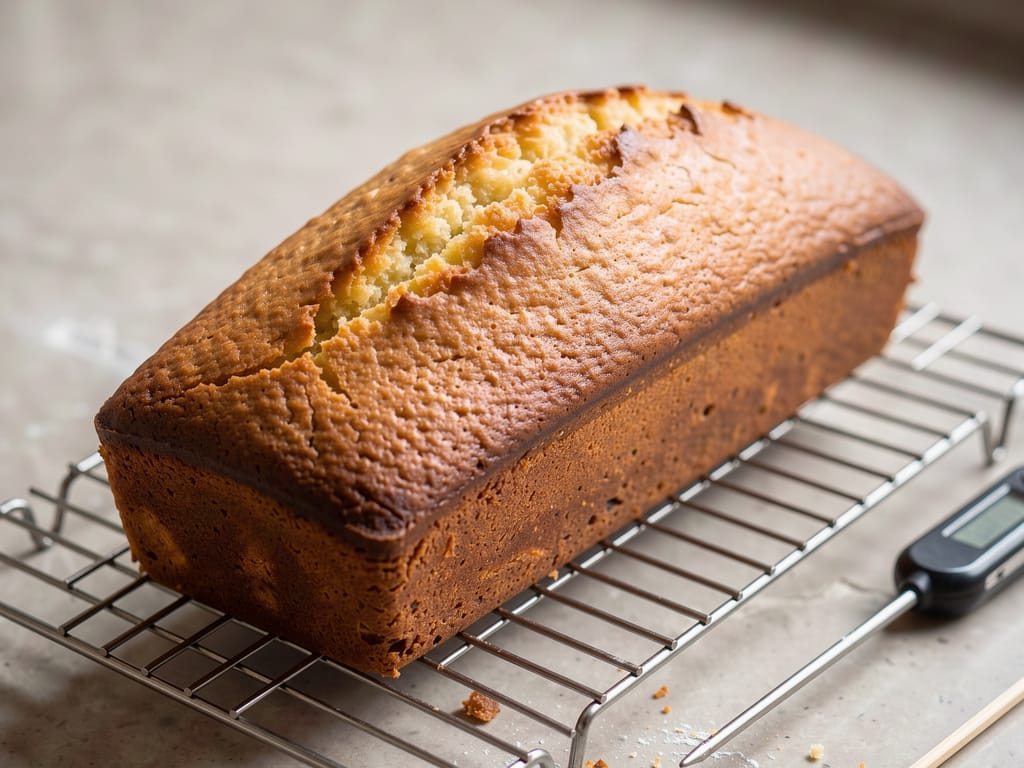
Updated Nov 20, 2026
A pound cake sinks in the middle mostly because it came out of the oven underbaked, and less often because it rose on too much leavening or too much beaten-in air and then collapsed, or because the oven door opened before the crumb had set. Here is how to tell which one it was, how to check that a pound cake is really done, and what to do with one that has already fallen.
The shape of the dip tells you a lot.
A deep, wet dip with a gummy band under it: underbaked. This is the most common cause by far.
A dome that rose high in the oven, then fell, with a coarse, holey crumb: too much leavening or too much air from overcreaming.
A sudden drop partway through baking: the oven door was opened, or the pan was moved, before the structure set.
A dip plus batter spilling over the sides: the pan was too small or too full.
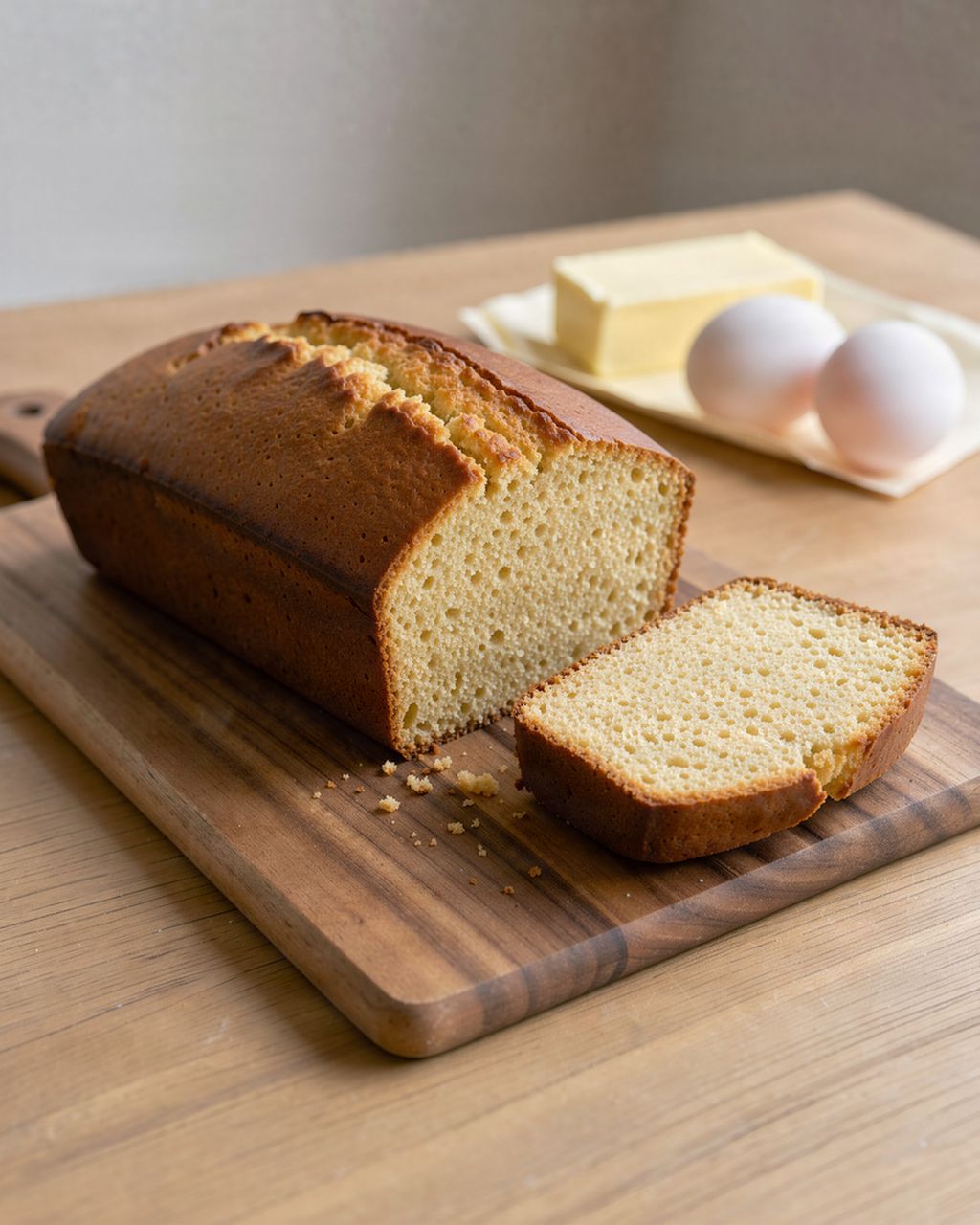
A slightly sunken top over a fully cooked crumb: the cake was fine, just rich. Some sour cream and cream cheese pound cakes settle a little as they cool.
Cut the cake in half from top to bottom before you change anything. A wet streak and a dry, coarse crumb point in different directions.
Seasonal baking plans, tested recipes and kitchen tricks that save you time. Unsubscribe in one click.
Pound cake is heavy with butter, sugar and eggs. That richness means it sets later than a sponge does. ThermoWorks puts a done pound cake at about 99 °C (210 °F) in the center, higher than the 93–98 °C (200–209 °F) they give for ordinary cakes. Pull it at 93 °C (200 °F) and the middle is still soft enough to sink as it cools.
Underbaking happens when:
the cake is taken out by the clock or the color of the crust rather than by a test;
the oven runs cooler or hotter than the dial says (a hot oven browns the outside early and tempts you to stop);
the batter is in a deeper pan than the recipe was written for.
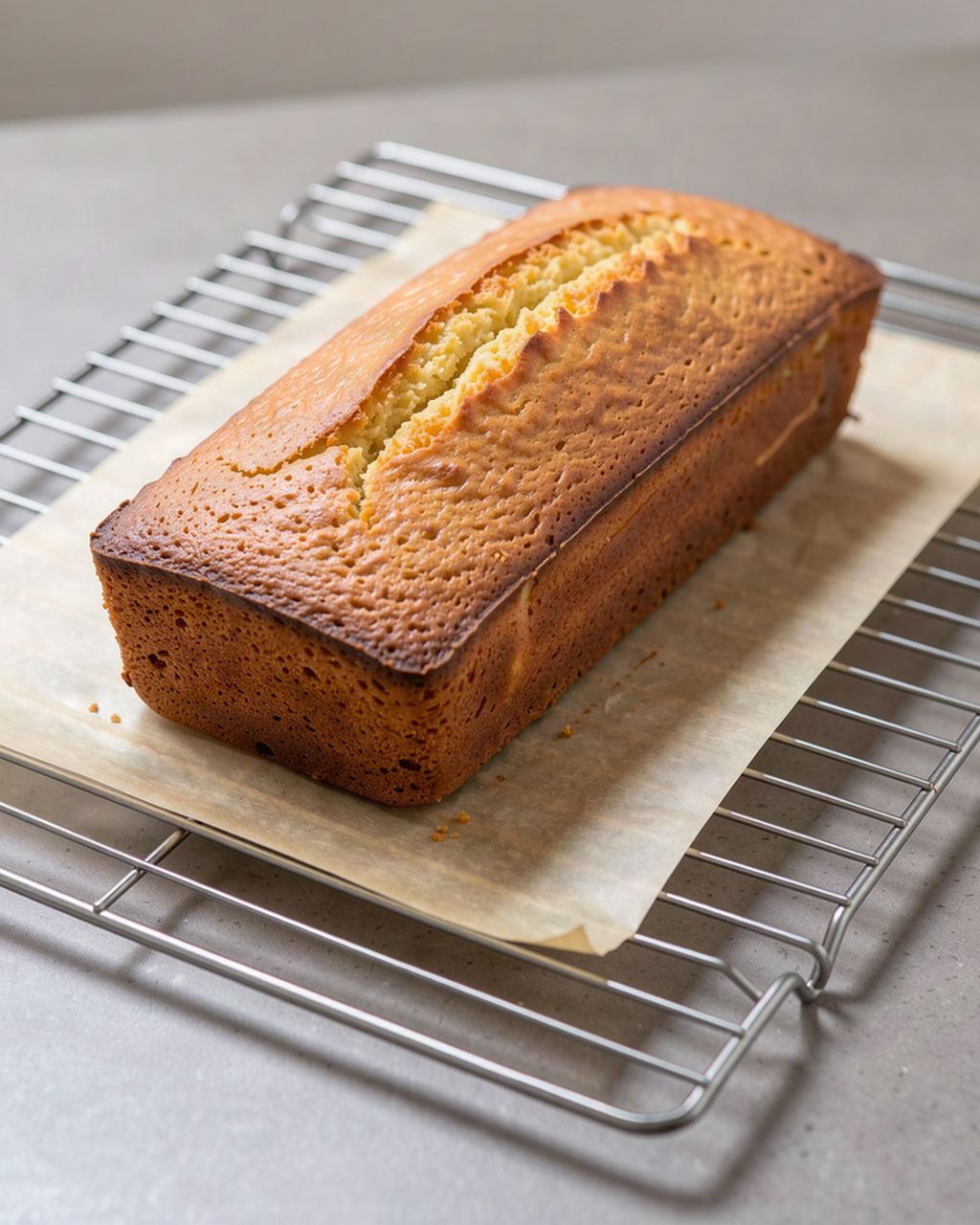
A long loaf or tube pan at about 160–165 °C (325 °F) in a conventional oven can easily take more than an hour. If the top browns too early, lay a loose sheet of foil over it and keep baking. For more on cakes that stay raw inside, see underbaked Bundt cake.
Many modern pound cakes add a little baking powder. More is not better.
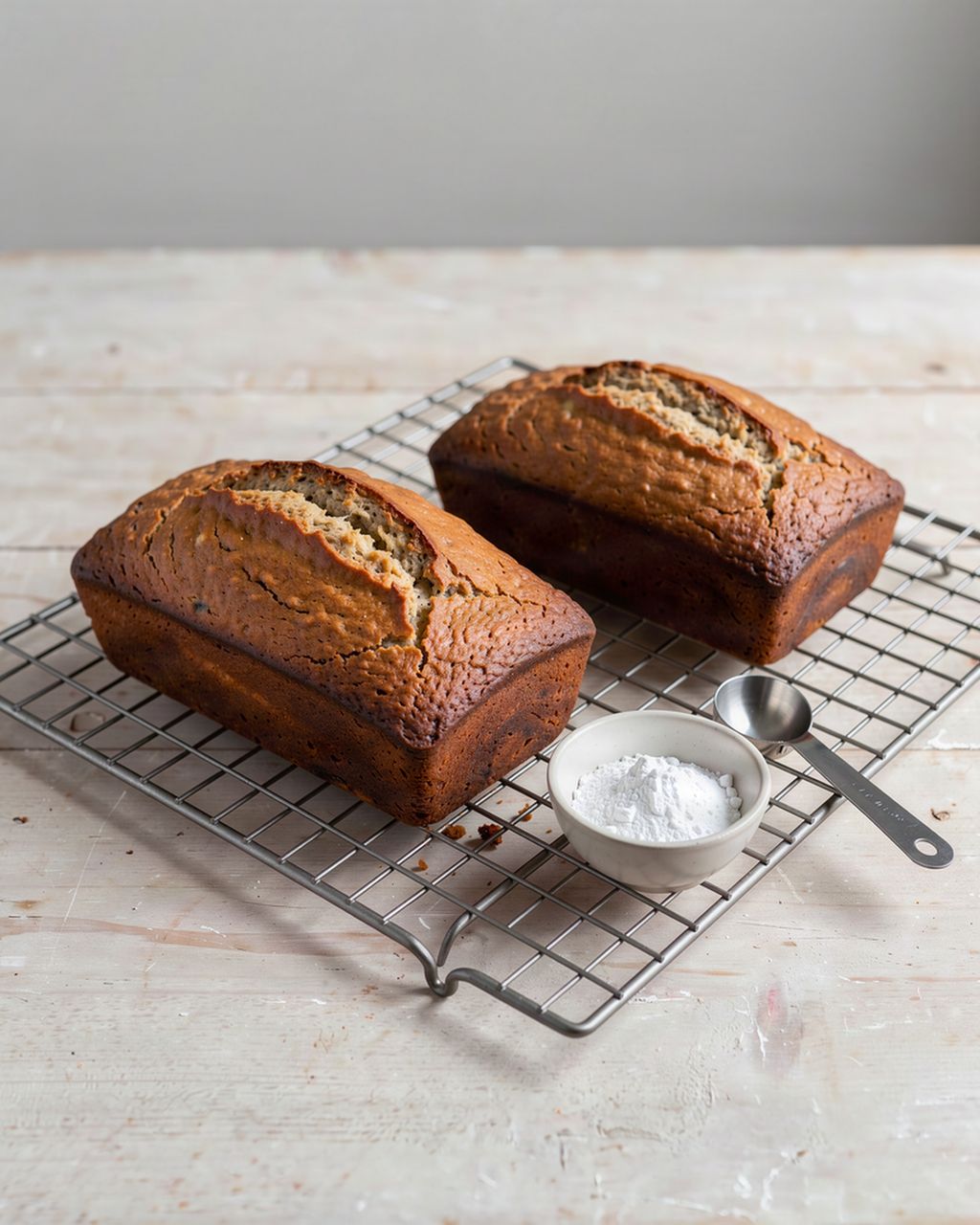
Too much baking powder or baking soda makes big bubbles that grow faster than the crumb can set. The cake domes high, then the bubbles burst and the middle falls. The crumb is coarse, and the cake can taste slightly soapy or bitter.
Stale leavening gives the opposite: a cake that never rises properly and has a dense band at the bottom.
Overcreaming also overloads the batter with air. King Arthur Baking warns that overcreamed batter rises too high and then sinks. Cream until pale and fluffy, and stop before it looks white and whipped-cream soft.
Measure leaveners with proper measuring spoons, level, and check the date. If you need a stand-in, see what to substitute for baking powder.
For the first two-thirds of baking, the batter is a foam held up by steam and expanding air. Opening the door drops the oven temperature, the gas inside the cake contracts, and the soft middle can fall and never come back.
Keep the door shut until the top looks set and no longer wobbles. On a long pound cake bake, that is usually at least the first 45 minutes.
Use the oven light to watch it.
If you need to rotate the pan, do it once the top has set and is lightly golden.
Banging the oven door or moving the pan around early has the same effect.
A recipe written for a 23 × 13 cm (9 × 5 in) loaf pan can overflow and sink in a smaller 22 × 11 cm (8½ × 4½ in) pan if you put all the batter in it. The batter rises above the rim, the sides that spill over have nothing to cling to, and the center is too deep to bake through in time.
Fill a loaf or tube pan no more than about two-thirds. If you have extra batter, bake a few cupcakes from it. Our cake pan size converter shows how much batter a different pan needs, and how much batter to put in a Bundt pan covers tube and Bundt pans.
A recipe that worked before can sink after a small change. Pound cake is a tight balance of fat, sugar, egg and flour, and the fat and sugar weaken the structure while egg and flour build it.
More sugar or butter than the recipe says makes a more tender crumb that may not hold its own weight.
Swapping butter for margarine, spread or oil changes the water and fat content. Spreads with less fat add water and make the batter loose.
Extra sour cream, yogurt or fruit puree adds moisture and weight.
Smaller eggs than the recipe assumes mean less structure. US recipes usually mean a large egg, about 50 g without the shell according to USDA FoodData Central.
If you change one of these, expect to adjust the bake too.
If the cake sank but is cooked through, it is just a looks problem. Turn it upside down or slice it level and nobody will know.
If the middle is gummy:
Still hot? Put it straight back in the oven for 10–15 minutes and test again. This can save a cake you caught early, but it will not lift a dip that has already formed.
Already cool? Cut away the wet part. Cube the good parts for a trifle, toast slices in a dry pan, or layer them with fruit and cream.
Next time, change one thing: bake to temperature, use a pan of the right size, and keep the door shut early on. If the same thing happens with sponge cakes, see 7 causes of a sunken sponge cake.
A pound cake that falls as it cools was almost always underbaked: the middle had not set, so it could not hold its own weight once the steam inside condensed. Bake it longer and check that the center reaches about 99 °C (210 °F).
If it sank while still in the oven, the usual causes are too much baking powder or baking soda, overcreamed batter full of large air bubbles, or the oven door opened early. The cake rose faster than its structure could set and then collapsed.
A pound cake is done when a skewer in the deepest part comes out with no wet batter, the top springs back when pressed, and the center reads about 99 °C (210 °F) on a probe thermometer, the figure ThermoWorks gives for pound cake.
Only if you notice right away, while it is still hot; return it for 10–15 minutes and test again. Once a cake has cooled and sunk, baking it again will not raise it, so cut away the dip and use the rest.
The middle stays raw when the oven is too hot, so the crust sets and browns before heat reaches the center, or when the pan is deeper or fuller than the recipe expects. Lower the heat, check it with an oven thermometer and tent the top with foil if it browns early.
One recipe worth heating the oven for, one tip, and one deal from the shop. Nothing else.