Grandma's two-fifty cottage cheese bundt cake
How Much Batter to Put in a Bundt Pan: Pan Volume and Recipe Scaling
Updated Oct 15, 2026
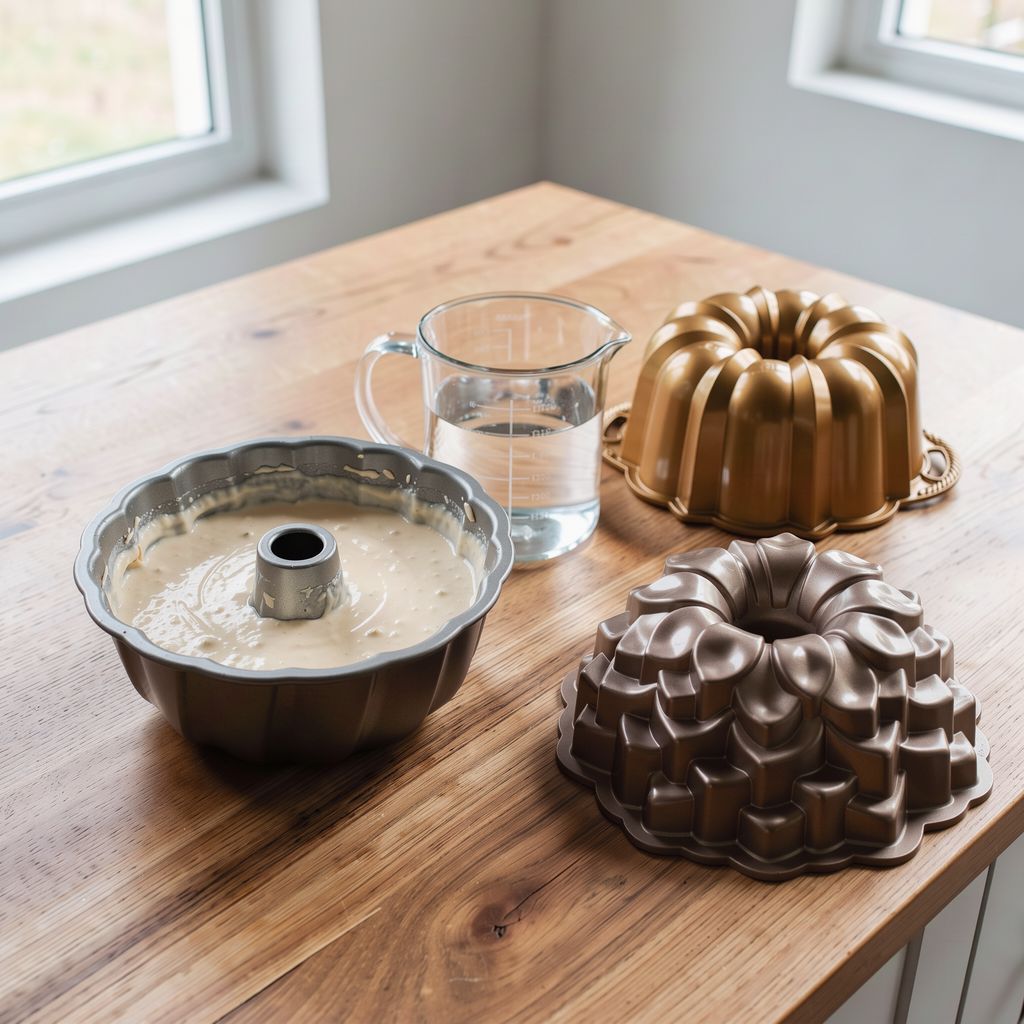
Fill a Bundt pan with batter to about two-thirds of its height, and no more than three-quarters. In litres, that's roughly 0.65–0.75 L of batter for every litre of pan volume. The rest of the space is where the cake rises in the oven. To use that number, you need to know your pan's volume. It's usually not printed on the pan, but you can measure it in two minutes with water and a measuring jug. After that, you just find the right row in the chart and scale the recipe with a single multiplier.
Fill a Bundt pan with batter to 2/3 of its height, and no more than 3/4. Nordic Ware, the maker of the original Bundt pan, gives the same rule, and it applies to both creamed and whisked batters baked with baking powder.
Less than 1/2 full: the cake won't rise up to the rim (it stays at about 2/3 of the pan's height), comes out low and dries out quickly on the surface.
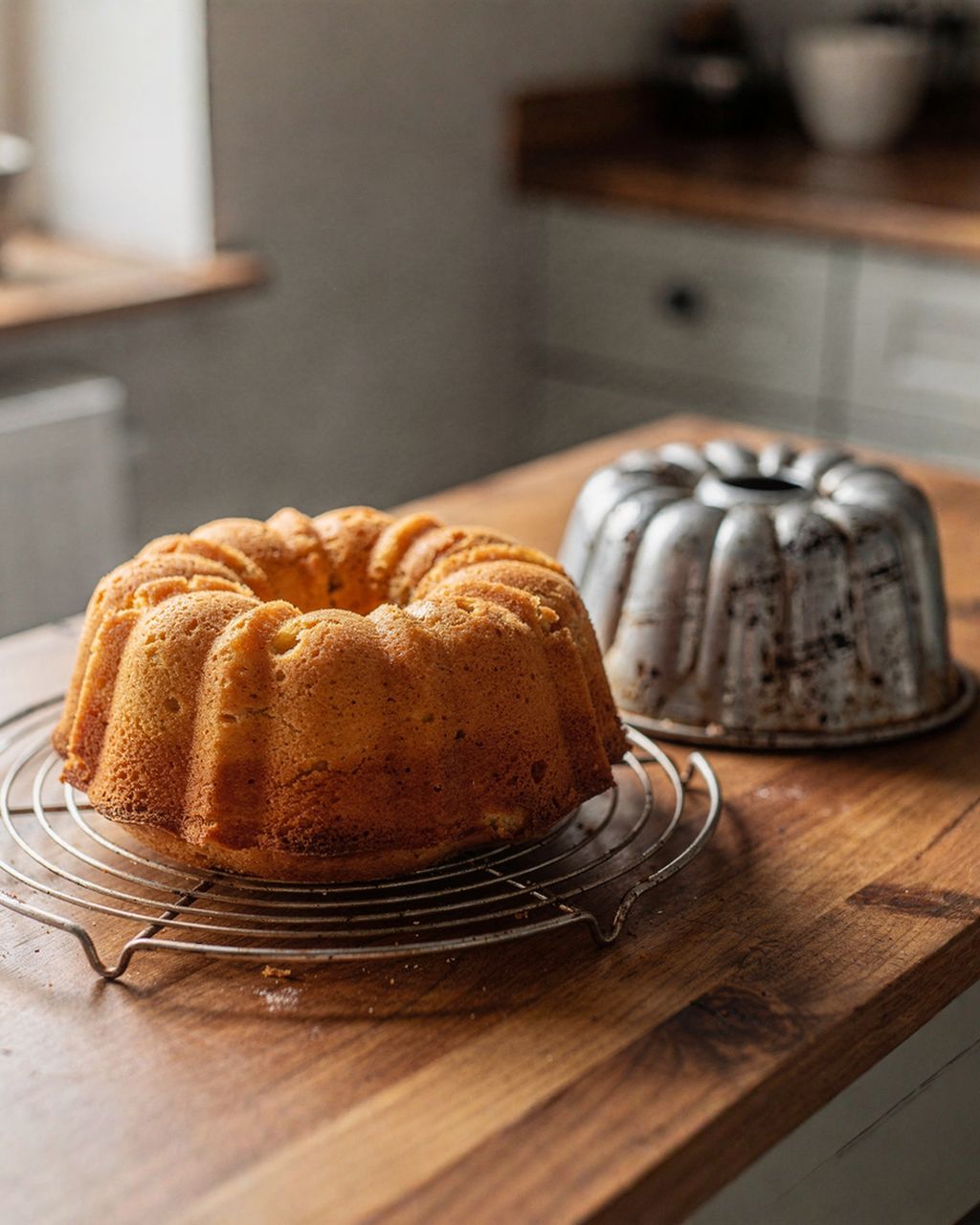
2/3 full: the cake rises level with the rim, has an even shape and sharp, defined detail.
3/4 full: the cake rises over the rim. With a thick creamed batter you can usually get away with it, but a thinner batter may well overflow.
Filled to the rim: the batter spills onto the bottom of the oven, the center doesn't bake through and the cake often sinks.
If this has already happened to you, also read why a Bundt cake sinks in the middle. An overfilled pan is one of the most common causes.
Put 0.65–0.75 L of batter into a Bundt pan for every litre of its volume, so about 1.6–1.8 L (1.3–1.6 kg) for a standard 2.4 L pan. The batter volumes in the chart correspond to 2/3–3/4 of the pan. The weights apply to a standard creamed batter, which has a density of roughly 0.8–0.9 g/ml. Treat them as a guide: a lighter, airier batter will land nearer the lower end.
1.2 L (small pan, about 5 cups) → 0.8–0.9 L of batter, about 650–800 g
1.5 L → 1.0–1.1 L of batter, about 800–1,000 g
2.0 L → 1.3–1.5 L of batter, about 1.05–1.35 kg
2.4 L (about 10 cups, the most common size) → 1.6–1.8 L of batter, about 1.3–1.6 kg
2.8 L (about 12 cups) → 1.9–2.1 L of batter, about 1.5–1.9 kg
3.5 L (about 15 cups, large pan) → 2.3–2.6 L of batter, about 1.85–2.35 kg
For a whisked batter (sponge-style, made with beaten egg whites), go by volume in the chart, not weight. It contains a lot of air, so the same volume weighs noticeably less.
What this means for a typical recipe: a classic 4-egg Bundt cake (about 250 g flour, 200–250 g sugar, 120 ml oil and 120–250 ml milk) makes roughly 0.9–1.2 kg of batter, or about 1.0–1.5 L. That suits a pan of 1.5–2.2 L. For a 2.4 L pan, increase such a recipe by about a quarter to a third.
To measure the pan's volume, fill it with water right up to the rim and work out how much water it took. The whole thing takes two minutes.
Set the pan on a level surface. If it's tilted, you'll measure tens of millilitres too little.
Measure exactly 0.5 L of water into a measuring jug and pour it into the pan. Repeat until the water reaches the rim. Add the last portion slowly and watch how much is left in the jug.
Add up how much water you poured in, and that's the pan's volume in litres.
Then empty the pan and dry it thoroughly, especially in the folds of a decorative design.
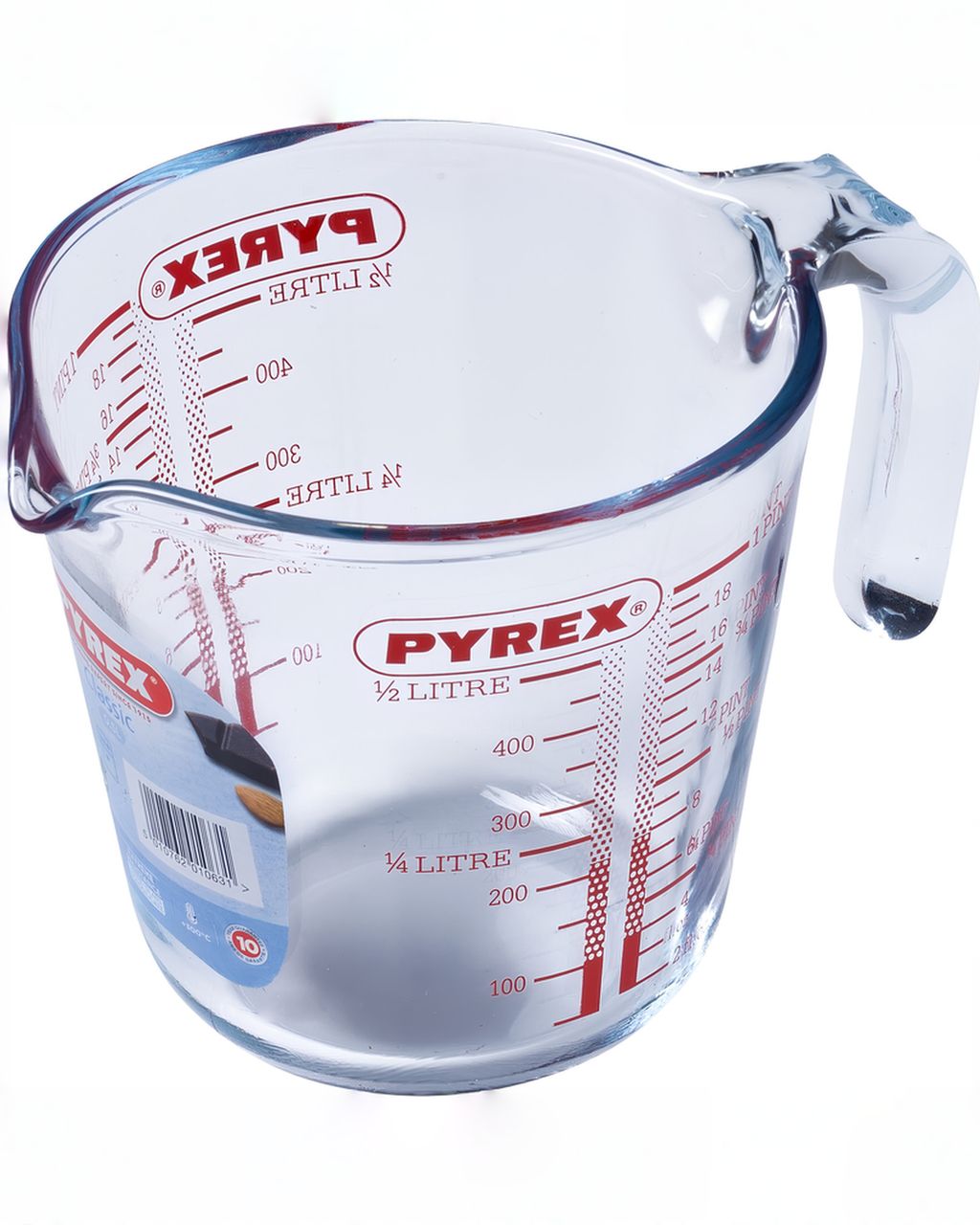
The most practical tool is a glass measuring jug with 100 ml markings, such as a 0.5 L Pyrex measuring cup. You can read the lines easily through the glass, even against the light. If you don't have one, a kitchen scale works just as well: put the pan on the scale, zero it and pour in the water. 1 g of water = 1 ml, so 2,400 g on the display means a 2.4 L pan.
For pans from abroad, the volume is often given in US cups. 1 cup ≈ 0.24 L, so a 10-cup pan holds about 2.4 L and a 12-cup pan about 2.8 L. The figure on the packaging is only a guide, though, so it's best to measure even such a pan once.
To scale a recipe, divide the volume of your pan by the volume of the pan the recipe was written for. Then multiply all the ingredients by that number.
Multiplier = your pan's volume ÷ the recipe pan's volume
Example: the recipe is for a 2.4 L pan and yours is 1.5 L. 1.5 ÷ 2.4 = 0.625. 250 g flour × 0.625 ≈ 156 g, 200 g sugar × 0.625 = 125 g.
If the recipe doesn't give a pan volume (common in older recipes), add up the weight of all the ingredients. That's roughly the weight of the batter. Then look in the chart above for a pan it will fit.
What to watch out for when scaling:
Scale the eggs by weight. One medium (M) egg weighs about 50 g without the shell. If you end up needing 2.5 eggs, beat 3 eggs and weigh out 125 g of them.
Multiply the baking powder and salt by the same multiplier. Don't just tip in a whole packet out of habit. It would be too much for a smaller batch, and the cake would rise and then collapse.
Spices and vanilla: with a small multiplier, feel free to round up. It won't spoil the flavor.
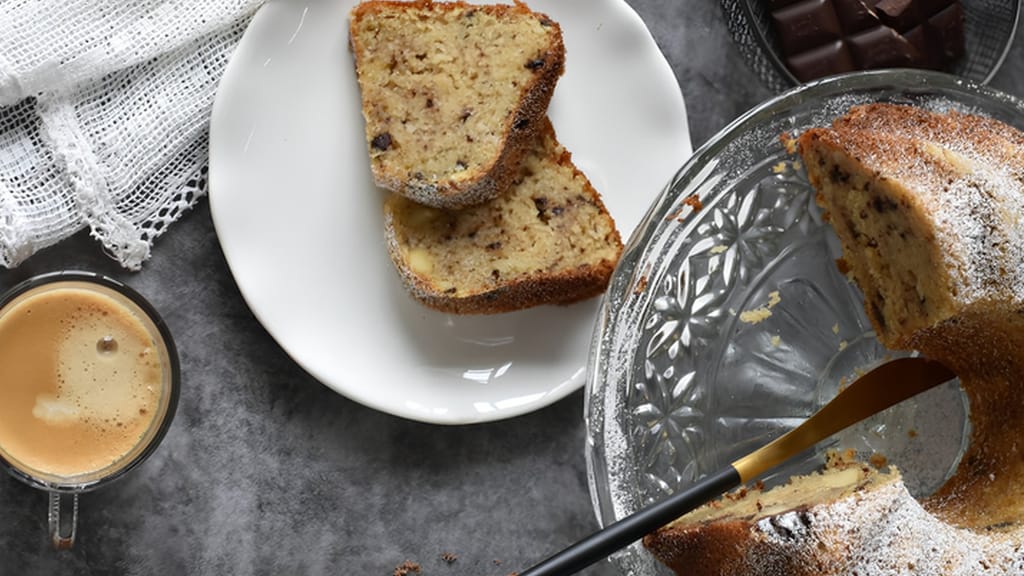
You can try it out on Grandma's quark Bundt cake, the Dvěstěpadesátka ("250 cake"). Its ingredients are counted in 250 g portions, so it's easy to scale.
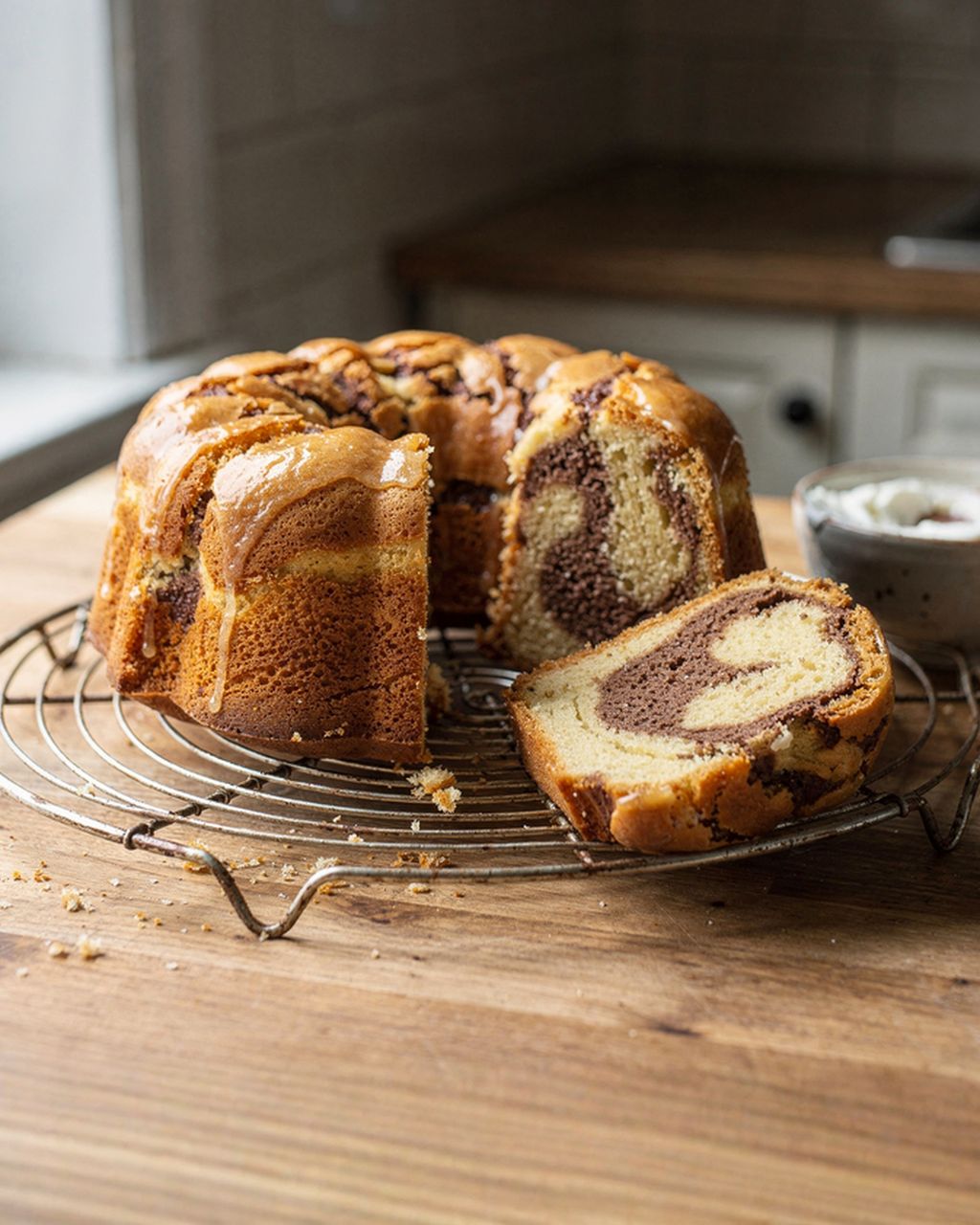
Grandma's two-fifty cottage cheese bundt cake
Dvěstěpadesátka quark Bundt cake – a recipe to practice scaling on
For a smaller Bundt pan (1.2–1.5 L), bake for about 2/3 of the original time; for a larger one (2.8–3.5 L), bake 10–20 minutes longer. Keep the temperature the same as in the recipe. Baking time doesn't change in proportion to volume. What matters is how thick the layer of batter is between the pan wall and the tube in the middle.
Smaller pan (1.2–1.5 L): start testing 15 minutes earlier than the recipe says.
Larger pan (2.8–3.5 L): if the top of the cake is darkening and the inside is still raw, lower the temperature by 10 °C (about 20 °F) and cover the top with foil.
Check doneness with a skewer. Push it into the highest point you can reach and pull it out. It should come out clean or with just a few dry crumbs.
The tube in the middle of a Bundt pan carries heat into the center of the batter. That's why a Bundt cake bakes more evenly than a cake of the same size in a regular cake pan, and why the time doesn't change that much. You'll find starting temperatures and times in our article on what temperature and how long to bake a Bundt cake.
Shape matters less than you'd think – the chart goes by volume, not by pattern. But two pans of the same diameter can differ in volume by up to half a litre. A deep design (a flower, a braid) takes up some of the space that would otherwise be left for batter. That's why every pan is worth measuring individually.
The pan's material mainly affects how the cake bakes through and how sharp the detail comes out:
Cast aluminum (such as Nordic Ware): conducts heat evenly, gives sharp detail and lasts for decades. It's heavier and more expensive. With decorative designs, grease every crevice with fat, or the cake will stick.
Thin stamped metal: cheap and light, but it bakes unevenly and can't handle fine patterns. It's fine for a classic smooth Bundt cake.
Silicone: the cake turns out easily, but silicone conducts heat slowly. The cake browns less on the bottom, and the pan flexes as you fill it, so set it on a baking sheet before you pour in the batter.
Ceramic and glass: they take a long time to heat up, and baking takes longer in them. You can't get a detailed pattern from them, but they look lovely on the table.
For a detailed comparison, see our article Bundt pans: ceramic, silicone, cast iron or Nordic Ware.
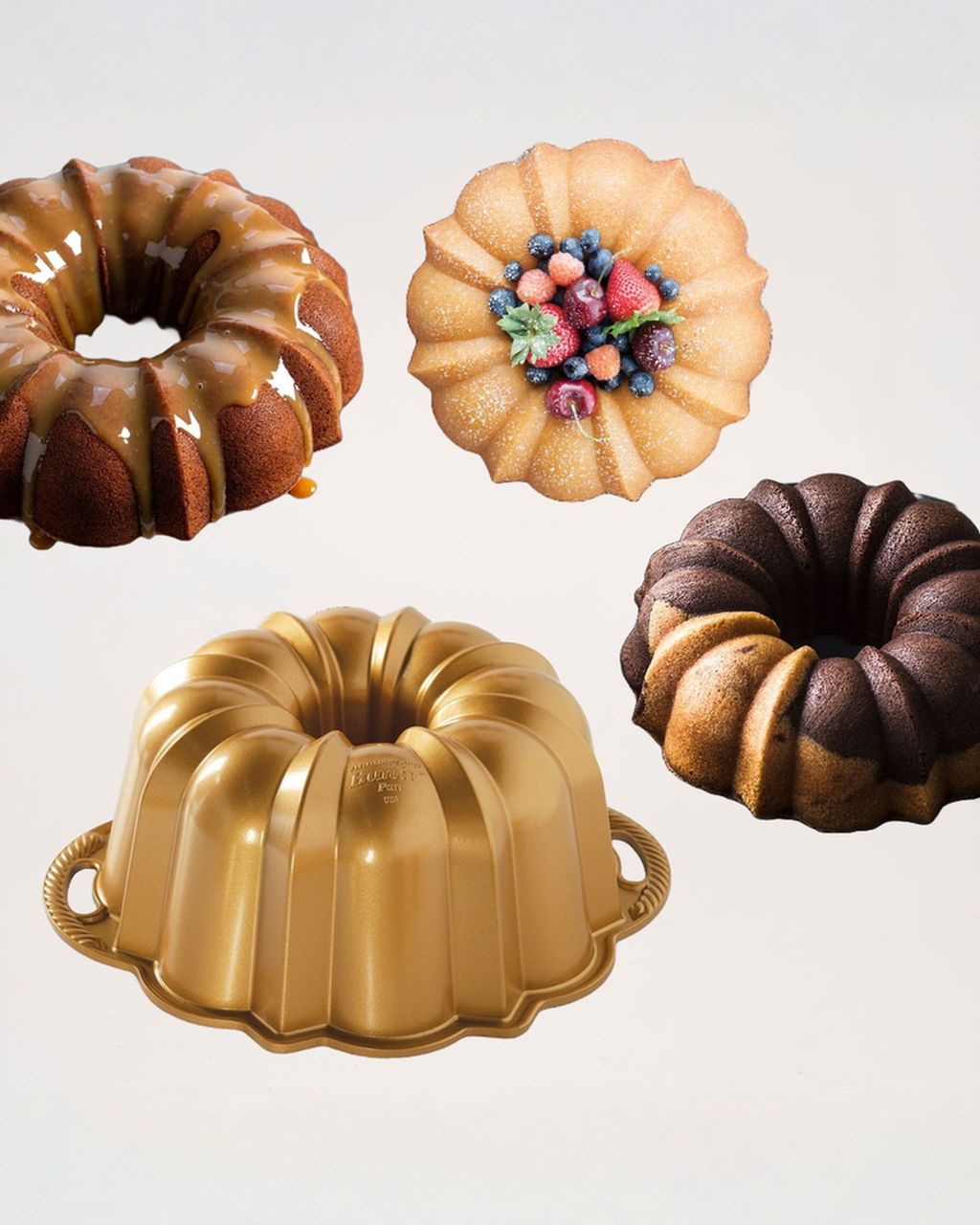
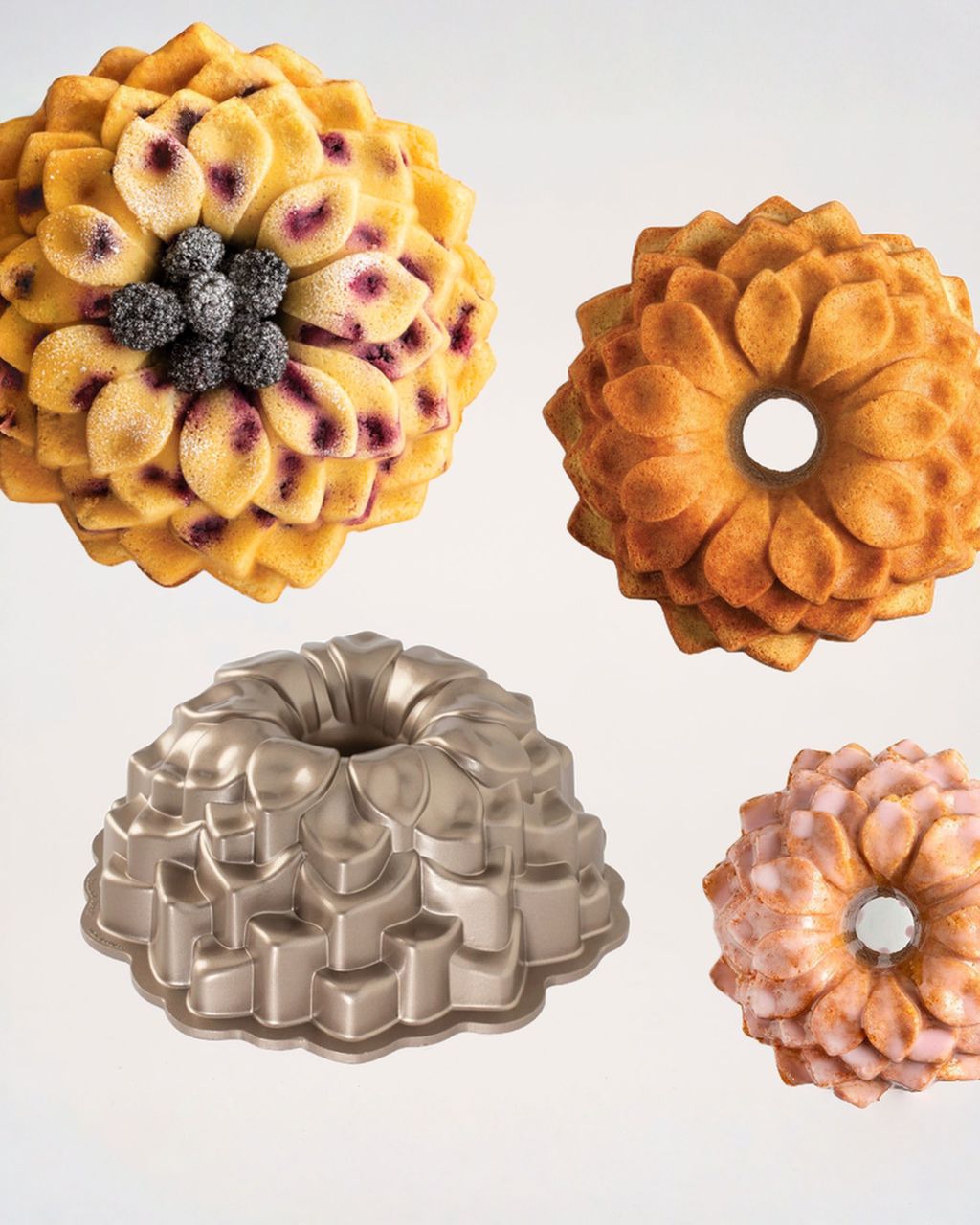
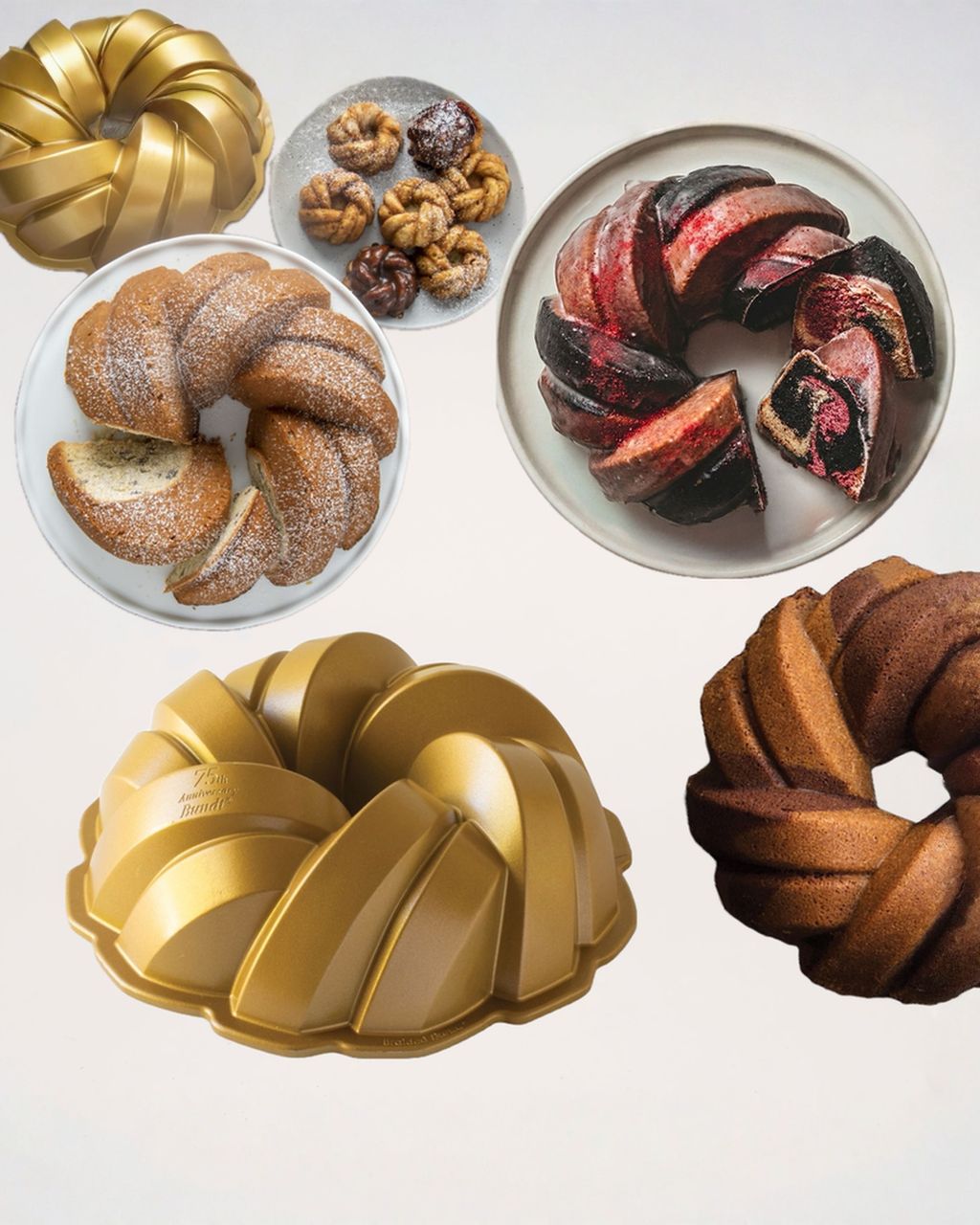
For size, there's a simple rule: for a standard 4-egg recipe, choose a pan of 1.5–2.2 L, and for a bigger pan, increase the recipe. Nordic Ware cast pans are available here in the Tradice (classic large), Květ (flower) and Pletenec (braid) shapes. The whole selection is together in the Bundt pans category. Before you use a new pan for the first time, measure it with water. The figure on the manufacturer's packaging is in American cups, and decorative designs can differ from it a little.
Don't put batter that goes beyond 3/4 of the pan into it. Bake muffins with it instead. Three to four spoonfuls of batter fill a standard paper cupcake liner two-thirds full. They bake at the same temperature in about 18–22 minutes, so you can put them in the oven next to the Bundt cake and take them out after twenty minutes.
With the marbled buttermilk and vanilla Bundt cake, set aside the extra batter before you color part of it with cocoa. That way the pan keeps the same ratio of light to dark batter that the recipe counts on, and the marbling won't come out all one color.
A 10-cup Bundt pan holds about 2.4 litres, because one US cup is roughly 0.24 L. A 12-cup pan holds about 2.8 L and a 6-cup pan about 1.4–1.5 L. Decorative designs can differ a little from the figure on the packaging, so it's safer to measure them with water.
For a Bundt cake made with 4 eggs, you need a pan of roughly 1.5–2.2 litres. A standard 4-egg recipe makes about 0.9–1.2 kg of batter, or 1.0–1.5 L, and that fills 2/3 to 3/4 of a pan this size. In a 2.4–2.5 L pan, the batter would only reach about halfway and the cake would stay low, so increase the recipe by a quarter to a third.
Yes, even a silicone Bundt pan is best lightly greased with fat and dusted with flour or fine breadcrumbs. Smooth silicone does release from the cake on its own, but in the folds of a decorative design the batter clings, and the pattern tears when you turn the cake out. A thin layer of fat barely changes the pan's volume, so it has no effect on how much batter you need.
Yes, you can bake Bundt batter in a cake pan or a loaf pan, and you fill them to 2/3 as well. In a loaf pan the layer of batter is deep and there's no tube in the middle, so expect about 10–20 minutes longer in the oven. In a cake pan the same batter lies in a shallower layer and often bakes in the same time or even faster. In both cases, start testing with a skewer 10 minutes earlier than the recipe says.
One recipe worth heating the oven for, one tip, and one deal from the shop. Nothing else.