Why Did My Pound Cake Sink in the Middle? Causes and a Doneness Check
Why Does Pound Cake Crack on Top? It's Normal, and How to Control It
Updated Nov 20, 2026
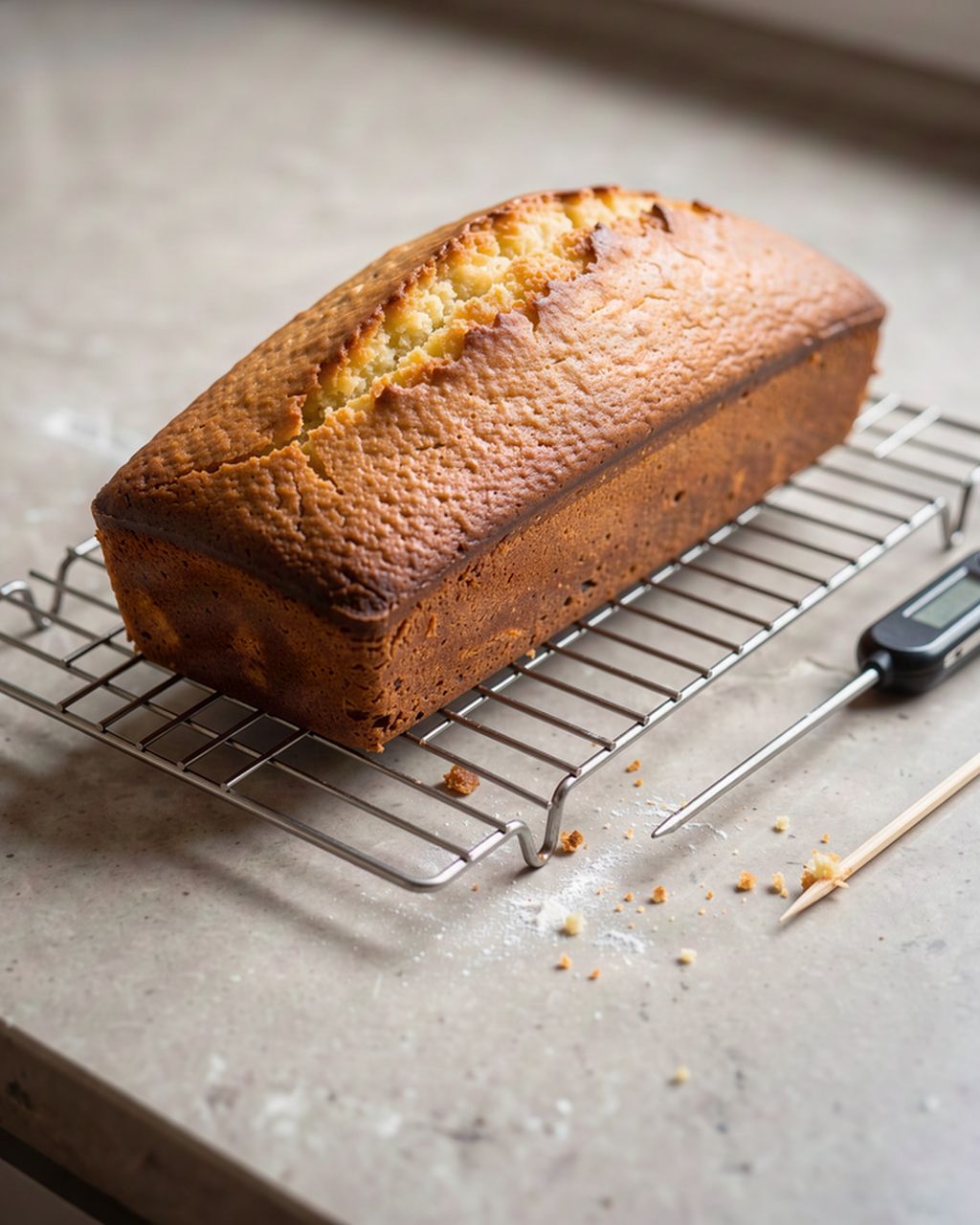
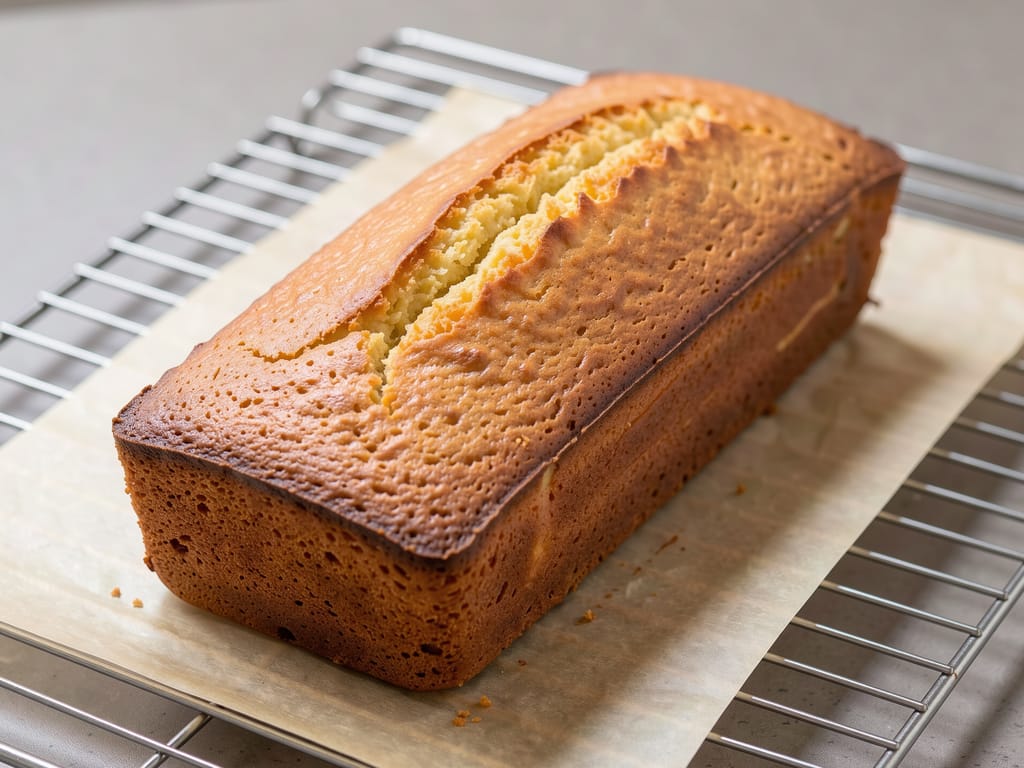
A crack along the top of a pound cake is normal: the crust sets in the oven while the middle is still rising, so the batter underneath pushes up and splits it. You cannot stop it entirely in a loaf pan, but you can decide where it opens and how wide it gets with a line of butter, a score, the right pan and a moderate oven.
In the oven, heat reaches the batter from the outside in. The top and sides set into a crust first, while the middle is still liquid and still rising from steam and expanding air. That rising middle has nowhere to go but up, so it pushes through the weakest line in the crust, usually straight down the center of a loaf.
Pound cake cracks more than most cakes because:
it bakes for a long time in a deep pan, so the crust has plenty of time to set before the center rises;
the batter is thick and rich, so it rises slowly and steadily;
a loaf pan is narrow, so the pressure lines up along the length.
You'll see the same split on any rich loaf cake baked in a narrow pan. A neat crack is a sign the cake rose well.
Seasonal baking plans, tested recipes and kitchen tricks that save you time. Unsubscribe in one click.
Look at the size and at what is underneath.
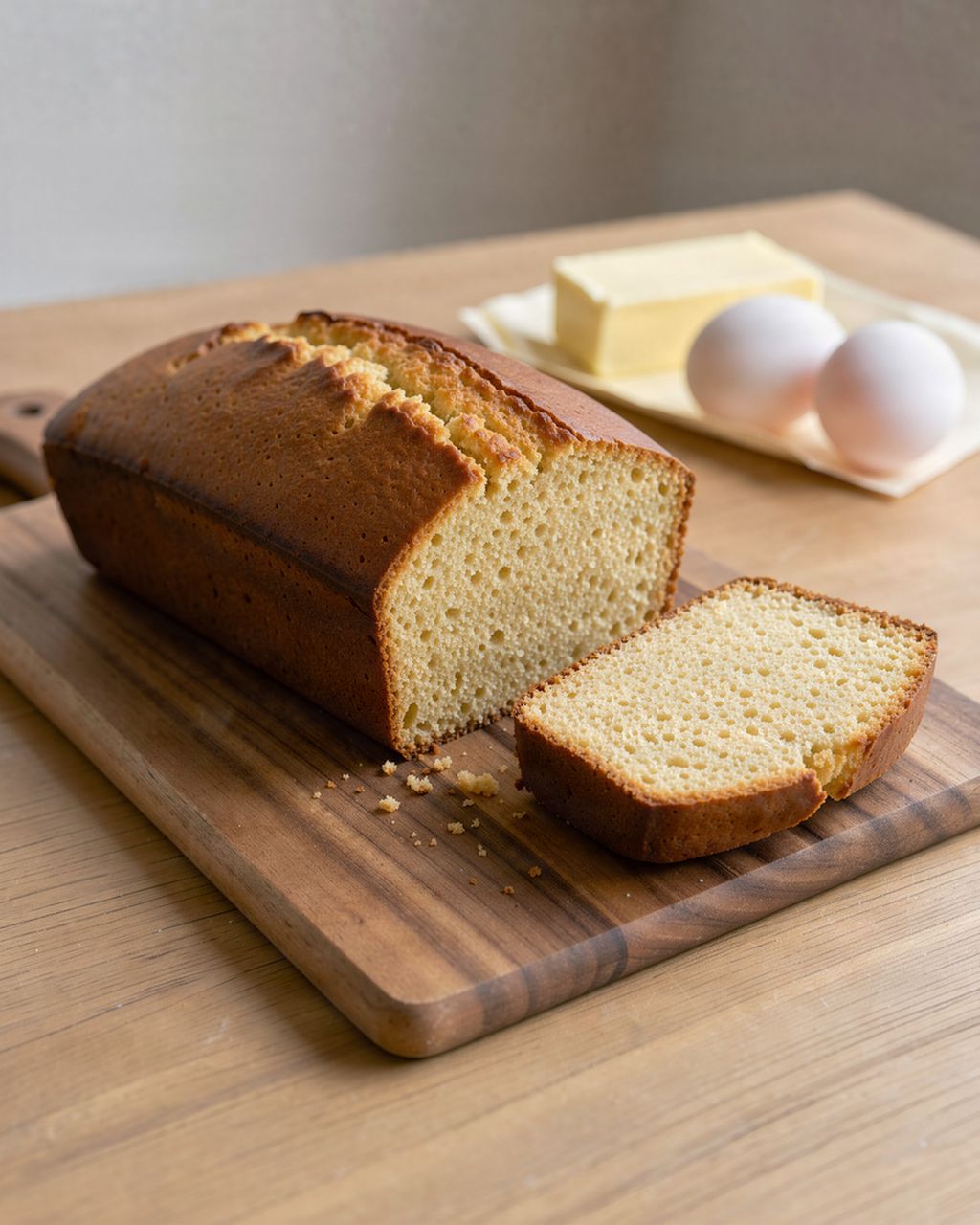
Normal: one crack along the center, golden and dry inside, with a moderate dome.
Too hot or too much leavening: a tall peak, a wide, jagged split, sometimes batter that oozed out and overbrowned. The crumb under it may be coarse.
Underbaked: the crack looks wet and shiny inside, and there is a damp band under it. The cake needs more time; see how to tell an underbaked cake for doneness signs.
Uneven oven: the crack runs off to one side or bursts at a corner.
A cracked top is not a reason to change the recipe. A cracked top over a wet streak is.
The aim is to give the cake a planned weak line, so it opens there neatly instead of wherever it likes.
A line of butter. Before the pan goes in, pipe or spoon a thin line of very soft butter down the length of the batter. The butter keeps that strip from setting as early as the rest of the crust, so the cake opens along it in a tidy, golden seam.
A score. Bake until a thin skin forms on top, usually after the first quarter of the baking time. Open the door quickly and run a sharp knife, dipped in oil or melted butter, along the center, about 1 cm (½ in) deep. Close the door fast. Do it once the top has a skin but before it has set firm.
Both work. The butter line is easier because you don't open the oven, and opening the door too early is one of the reasons pound cakes sink.
Loaf pan: almost always cracks along the center. Use the butter line or a score.
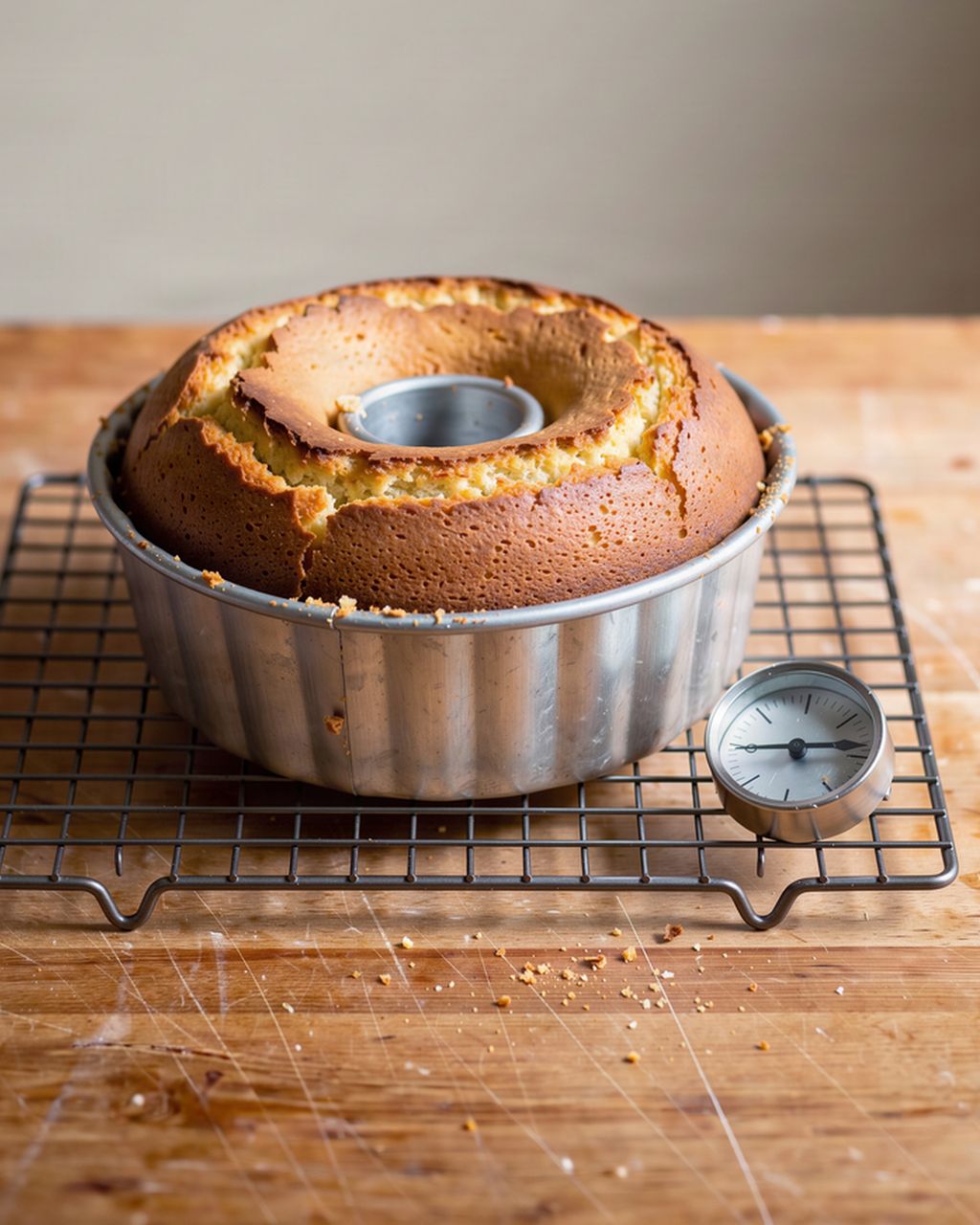
Tube or Bundt pan: the crack forms on what becomes the bottom, so it disappears when you turn the cake out. If you want no visible crack at all, a Bundt pan is the easy answer.
Dark metal pans absorb more heat, set the sides and top faster, and make for a sharper dome and a darker crust. In a truly dark (black or near-black) pan, many bakers lower the oven by about 15 °C (25 °F) and check doneness about 10 minutes early.
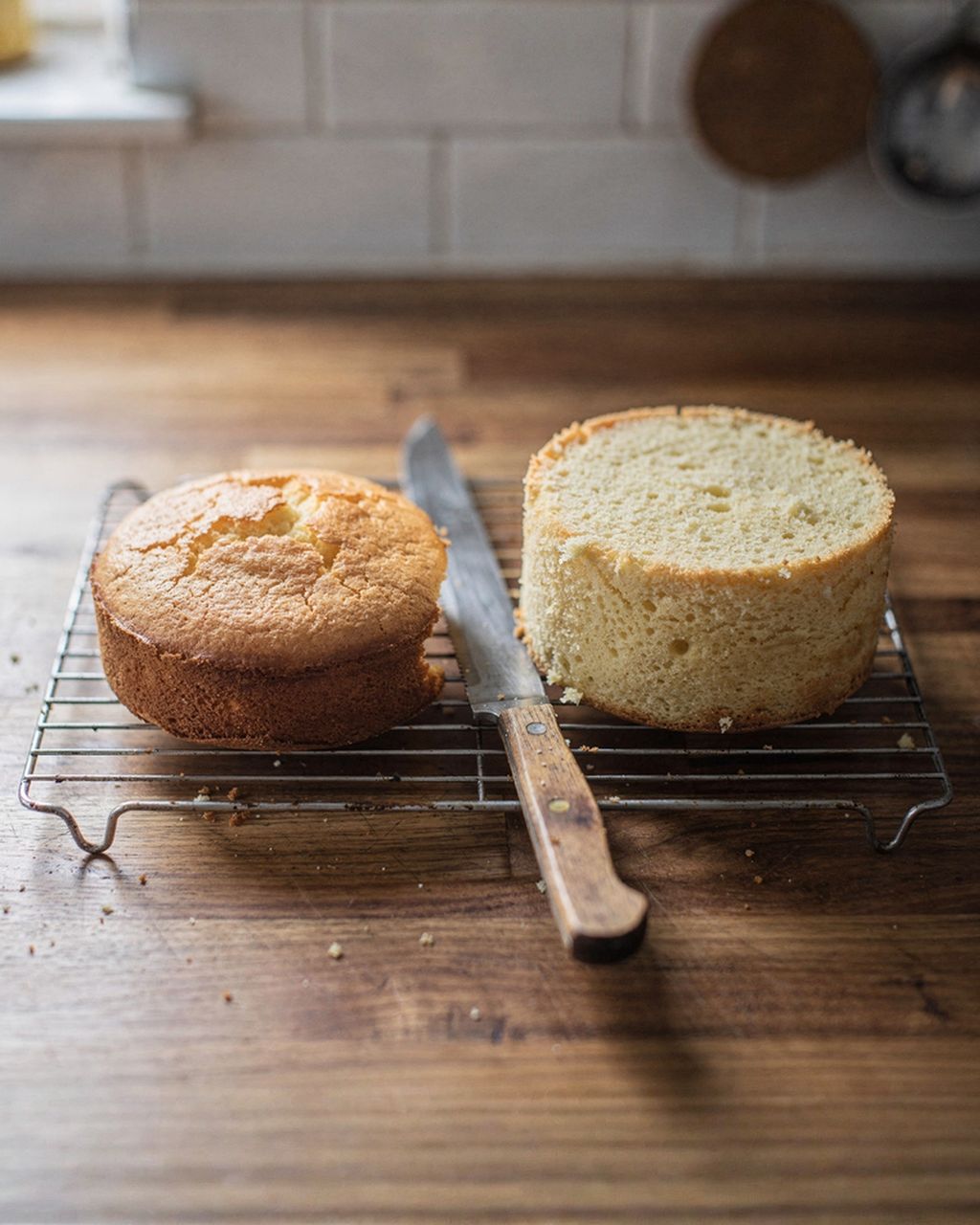
Light aluminum pans bake more gently and evenly.
Glass and ceramic heat slowly and then hold heat, so edges can overbake before the middle is done.
An overfull pan also cracks more, because the middle is deep and keeps rising long after the top has set. Fill loaf pans no more than about two-thirds; our cake pan size converter helps with other sizes.
The hotter the oven, the sooner the crust sets and the more violently the middle breaks through. Pound cake is usually baked at about 160–165 °C (325 °F) in a conventional oven. If your oven runs hot, the cake domes and splits harder than it should.
Check the real temperature with an oven thermometer.
On a fan setting, go about 20 °C lower than the conventional figure, or bake on conventional heat. Our article on fan or conventional baking explains the difference, and the oven temperature converter gives exact numbers.
Measure baking powder level, with proper spoons. Too much makes a tall dome and a wide crack.
Some bakers wrap the pan in damp fabric cake strips so the sides heat more slowly and the cake rises flatter. It gives a lower, flatter crack, not none at all.
A crack is not a problem for glazing. Spoon a lemon or vanilla glaze over the cake while it is still slightly warm and the glaze runs into the crack and sets there, which many people think is the best part.
For neat slices:
let the cake cool completely, ideally wrapped, so the crust softens a little;
slice with a long serrated knife in a gentle sawing motion, not by pressing down, which tears the crust at the crack;
if the crust is very crisp, the cake was likely baked a little hot or a little long. Check your oven before the next one.
A crack that later collapses into a dip means the middle never set. That is an underbaking or leavening problem, not a crack problem. The same causes as for a Bundt cake that cracks, domes or doesn't rise apply: check the oven, check the leavening, and bake until the center is set. ThermoWorks gives about 99 °C (210 °F) in the center for pound cake.
Yes, a crack down the middle of a loaf pound cake is normal and expected. It shows the cake rose well after the crust had set, and many bakers consider it the mark of a good pound cake.
You can't fully stop a loaf pound cake from cracking, but you can make it neat. Pipe a thin line of soft butter down the center before baking, or score the top with a knife once a skin has formed, and bake at a moderate temperature.
A crack that bursts out at one side or corner usually means the oven heats unevenly or the cake rose too fast. Rotate the pan once the top has set, check the oven with a thermometer, and score the top so the cake has a planned place to open.
No, a crack says nothing about doneness. Check the inside of the crack: if it looks wet and shiny, the cake needs more time, and the center should reach about 99 °C (210 °F) according to ThermoWorks.
A very tall dome with a wide, ragged crack points to an oven that is too hot or too much leavening. The crust sets very early and the batter has to force its way out. Lower the oven temperature and measure the baking powder carefully.
One recipe worth heating the oven for, one tip, and one deal from the shop. Nothing else.