Why Is My Banana Bread Gummy or Dense? Causes and How to Fix It
Why Did My Banana Bread Sink in the Middle or Not Rise?
Updated Nov 21, 2026
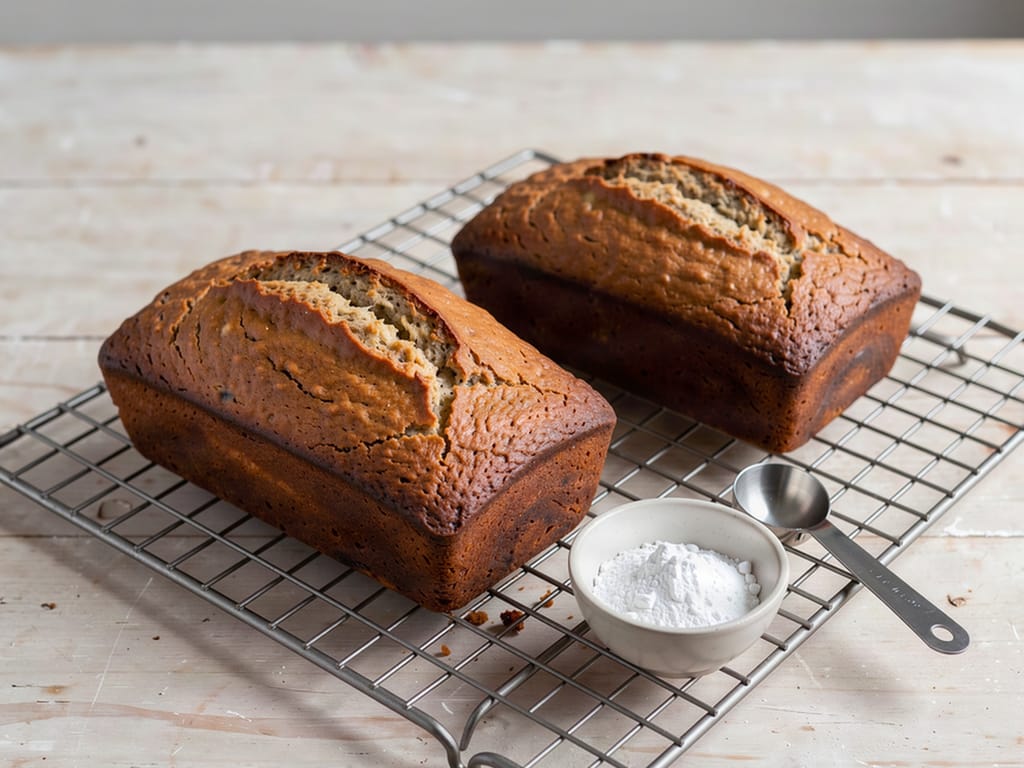
Banana bread sinks in the middle mostly because it came out of the oven underbaked, and less often because it rose on too much baking soda or powder, carried too much banana, or had the oven door opened early. A loaf that never rose at all usually had old leavening, or sat too long before baking. Here is how to tell which happened from the shape of the loaf, and how to get a domed, cooked-through loaf next time.
How the loaf fell tells you why.
Sank as it cooled, with a wet or gummy band under the dip: underbaked. The most common cause by far.
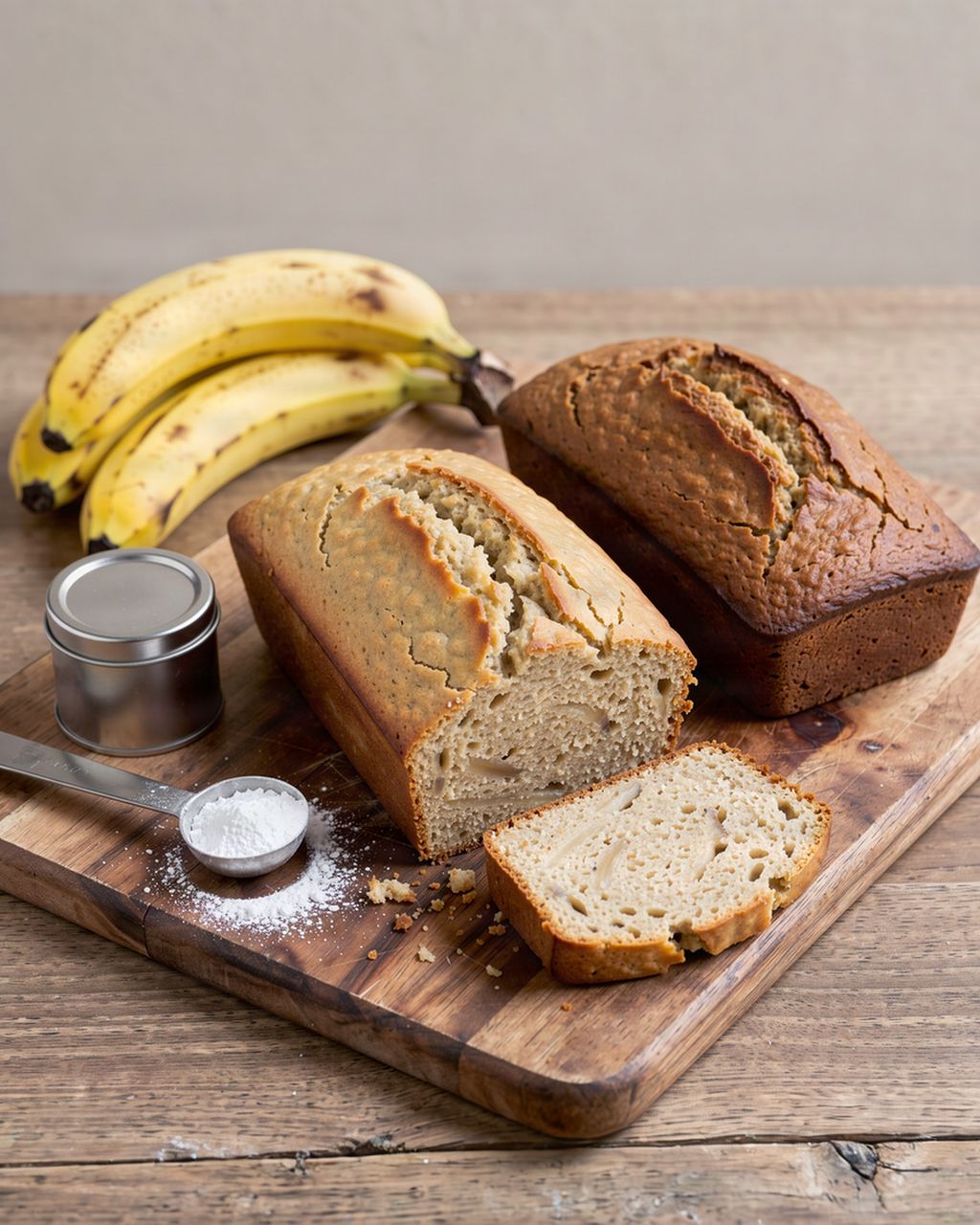
Rose high and domed in the oven, then collapsed, with a coarse, holey crumb: too much baking soda or baking powder.
Sudden drop partway through the bake: the oven door was opened or the pan was moved before the loaf had set.
Low and flat all over, close and heavy: never rose. Old or missing leavening, or batter that stood too long.
Overflowed the sides and sank in the middle: pan too small or too full.
Sunken middle with a dark, sticky top and a heavy base: too much banana, sugar or liquid.
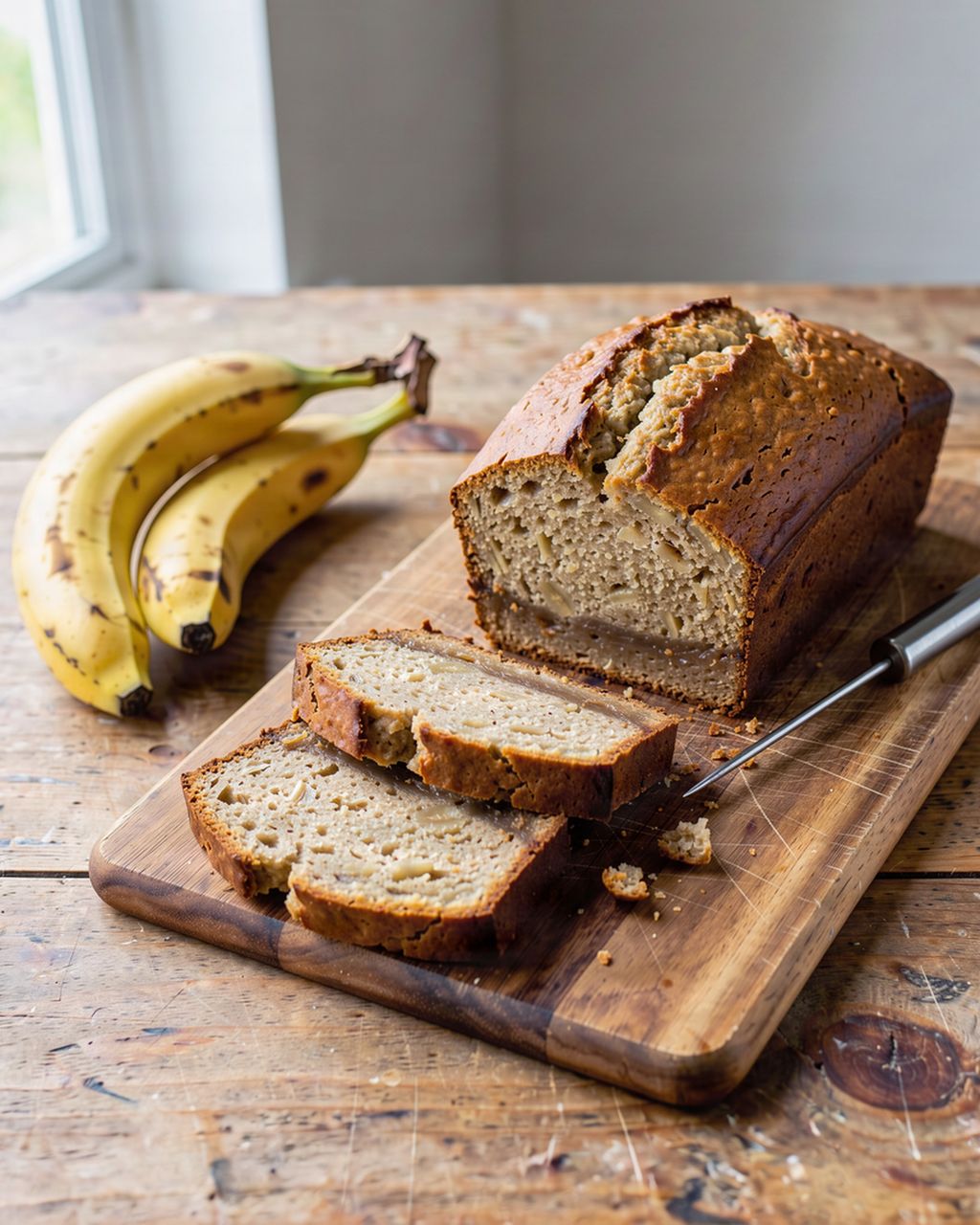
Cut the loaf in half, top to bottom. A wet band and a dry, coarse crumb point to different fixes.
Seasonal baking plans, tested recipes and kitchen tricks that save you time. Unsubscribe in one click.
Banana bread is heavy with fruit and sugar, so it sets late. While the middle is still soft, it is held up by steam and gas. Take it out at that point and, as it cools, the steam condenses and the middle drops.
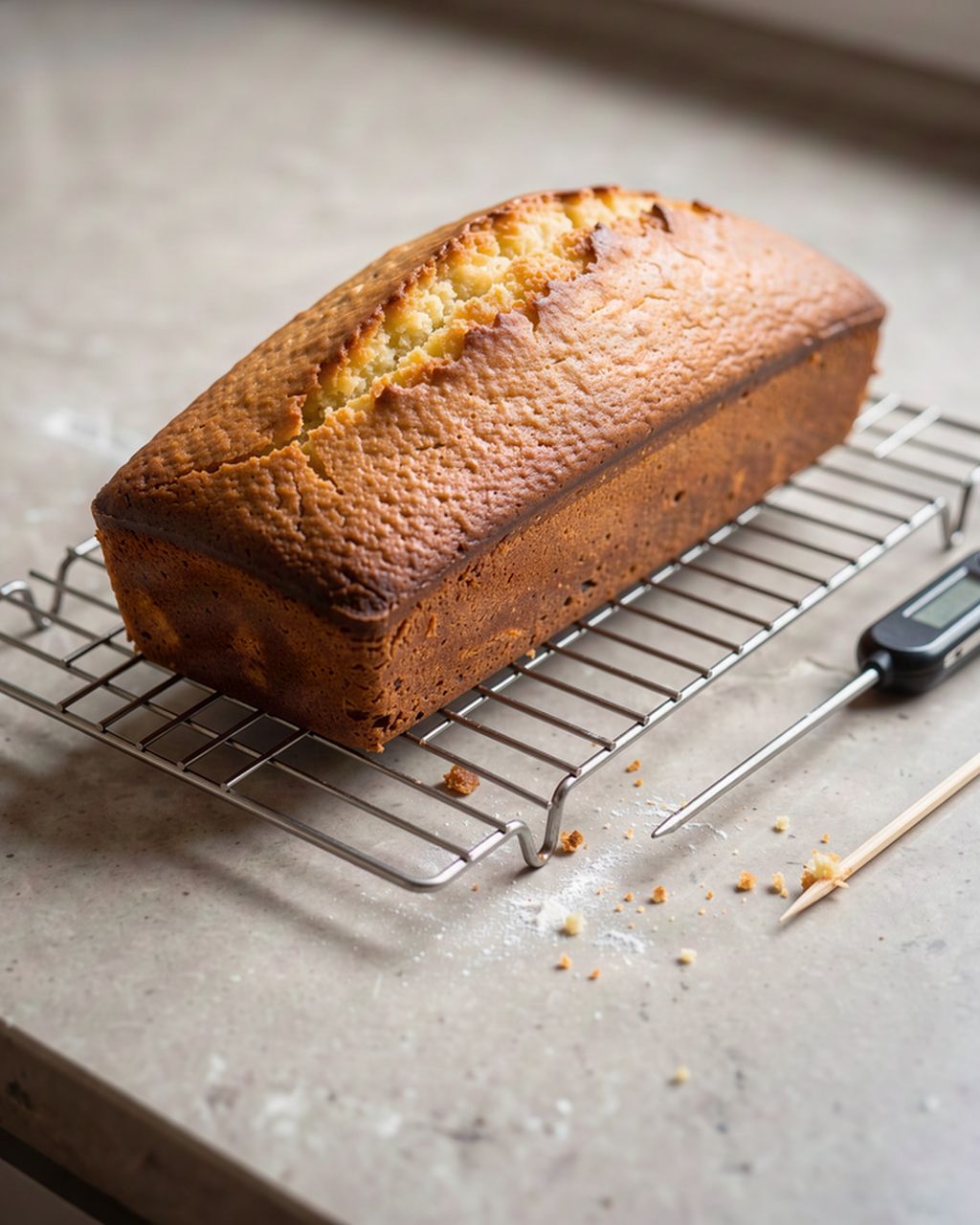
King Arthur Baking puts a done loaf at 93–96 °C (200–205 °F) in the center. Without a thermometer, a long skewer pushed into the very middle should come out with no wet batter, and the top should spring back when pressed.
Things that leave the middle underbaked:
An oven that runs cooler than the dial, or one that was not fully preheated. Ovens can run hotter or cooler than they say, and an oven thermometer shows you how far.
A glass or ceramic pan, which bakes more slowly than metal.
A deep, narrow pan, or a pan filled to the brim.
Pulling the loaf by the clock or by how brown the top is.
If the top browns before the center is done, cover it loosely with foil and keep baking.
More leavening does not mean a taller loaf. Past a point, the bubbles grow faster than the crumb can set, then burst, and the middle falls.
A common rule of thumb is about ¼ teaspoon of baking soda, or about 1 teaspoon of baking powder, per US cup (125 g) of flour. Many banana bread recipes use about 1 teaspoon of baking soda for a 23 × 13 cm (9 × 5 in) loaf, more than the rule of thumb, because the mashed banana and any buttermilk or yogurt add acid for the soda to react with.
Measure with real measuring spoons, level, not heaped.
If you swapped baking powder for baking soda, or the other way round, the amount changes. When substituting, King Arthur Baking recommends about 3 teaspoons of baking powder for every 1 teaspoon of baking soda, and warns that this much powder can taste slightly bitter. See baking soda substitutes and what to use instead of baking powder.
Signs it was the leavening: a soapy or metallic aftertaste, a dark, reddish crumb and lots of large holes.
A flat loaf with a tight, heavy crumb usually means the gas never made it into the oven.
Old baking soda or baking powder. Test them: a pinch of baking soda in a spoon of vinegar should fizz hard, and a little baking powder in hot water should bubble straight away.
Leavening left out or under-measured. It happens. If the loaf tastes flat and pale, check the recipe again.
Batter left standing. Baking soda starts reacting with the banana as soon as they meet. Mix the batter, pour it into the pan, and get it into a fully hot oven.
Overmixing. It builds gluten, which holds the loaf down and gives tunnels instead of an even rise.
Too much banana or fat. A heavy batter cannot lift itself. USDA FoodData Central gives about 225 g for 1 US cup of mashed banana; weigh yours instead of counting bananas.
For a loaf without baking soda in the house, see baking soda substitutes.
Opening the oven door early. For the first half to two-thirds of the bake, the loaf is a soft foam. Opening the door drops the oven temperature and the gas inside contracts. Use the oven light to watch, and only turn the pan once the top has set.
Oven too hot. A very hot oven makes the outside set and crack while the inside races upward, then the middle falls. Bake at the recipe's temperature, usually 165–180 °C (325–350 °F) in a conventional oven. If you use the fan, convert it; the oven temperature converter does fan and conventional in °C and °F.
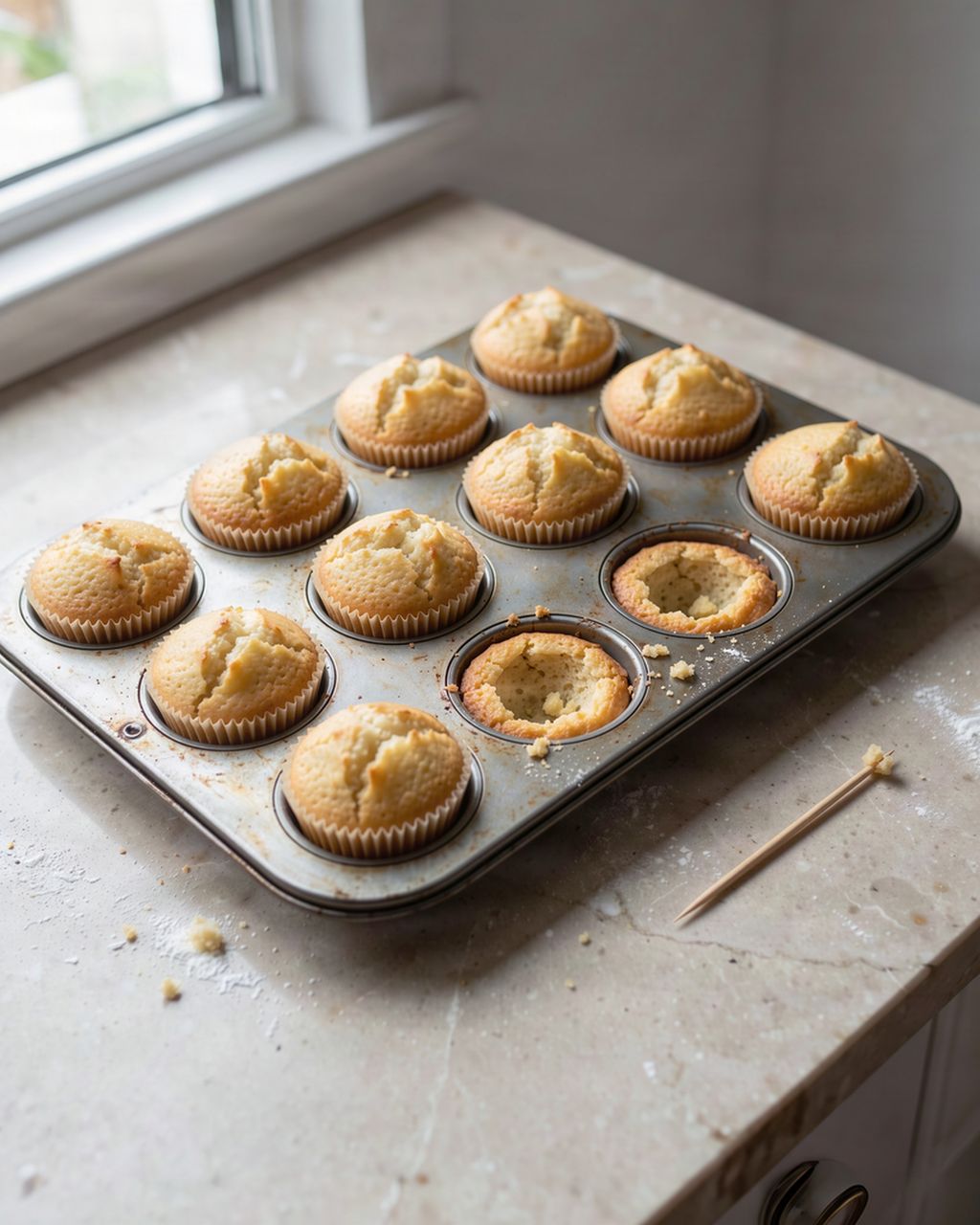
Pan too small. A recipe for a 23 × 13 cm (9 × 5 in) pan overflows a 22 × 11 cm (8½ × 4½ in) one. Fill a loaf pan no more than about two-thirds full and bake any extra batter as muffins. The cake pan size converter works out how much batter a different pan needs.
A short checklist for next time:
Weigh the banana and the flour.
Check that your baking soda or baking powder fizzes.
Preheat the oven fully, and check it with a thermometer.
Mix only until the flour disappears, and bake at once.
Keep the oven door shut until the top has set.
Bake to temperature, not to time.
If your loaf is gummy rather than sunken, the causes overlap; for more ideas on using up ripe fruit, see what to bake with bananas.
Most often it was underbaked, so the soft center could not hold up once the steam inside condensed. Other causes are too much baking soda or baking powder, too much banana, an oven that is too hot, or opening the oven door before the loaf had set.
A loaf that looks fine in the oven and sinks as it cools was almost always pulled too early. Bake it until the center reaches about 93–96 °C (200–205 °F), the range King Arthur Baking gives for banana bread.
Usually the baking soda or baking powder was old or left out, the batter sat on the counter before baking, or the oven was not fully preheated. Test your leavening and bake the batter as soon as it is mixed.
Yes. Extra baking soda makes big bubbles that rise faster than the crumb can set, then burst, so the loaf domes and falls. It also gives a soapy, metallic taste and a dark, coarse crumb.
If it is cooked through, it is a looks problem: slice it, toast it or cover the dip with a glaze. If it sank because the middle is raw and you catch it while it is still hot, put it back in the oven until the center is done.
One recipe worth heating the oven for, one tip, and one deal from the shop. Nothing else.