Why Are My Cupcakes Dense or Dry? Mixing, Flour and Baking Time
Why Is My Pound Cake Dense or Gummy? Causes and Fixes
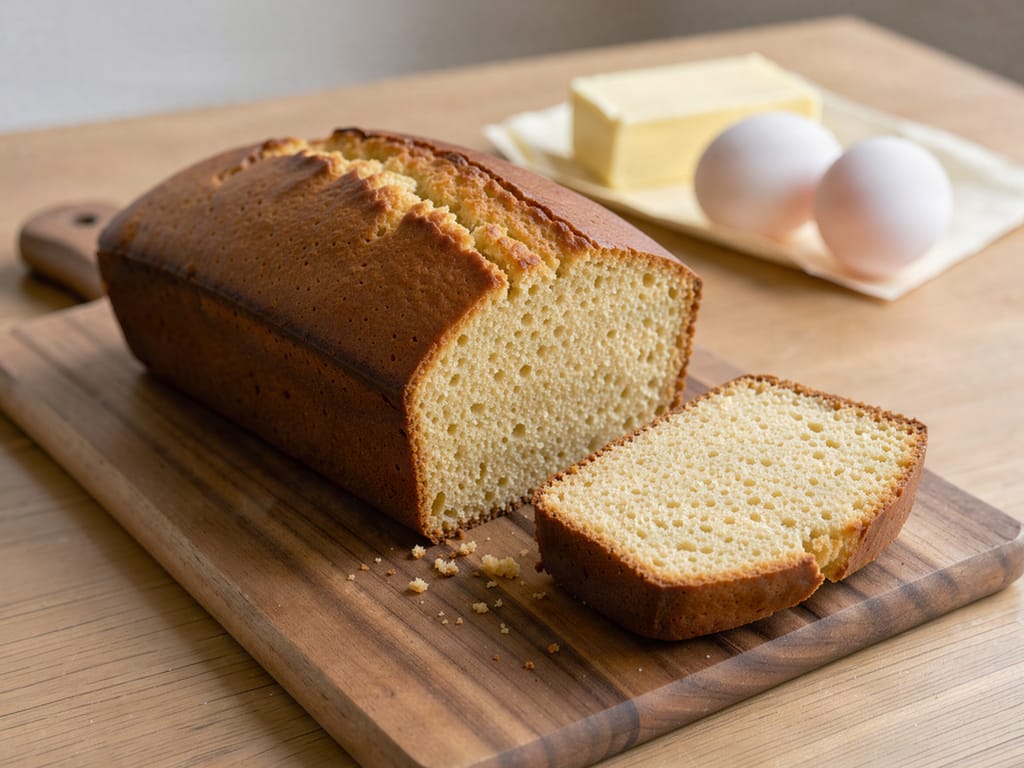
Updated Nov 20, 2026
A pound cake turns dense when the batter holds too little air, usually because the butter was too cold or too warm, the creaming was cut short or the batter curdled, and it turns gummy when the middle is underbaked or a wet streak forms at the bottom. Below we go through each cause, how to spot it in the crumb, and what to change next time.
They feel similar on the fork, but they come from different places, so look at the slice first.
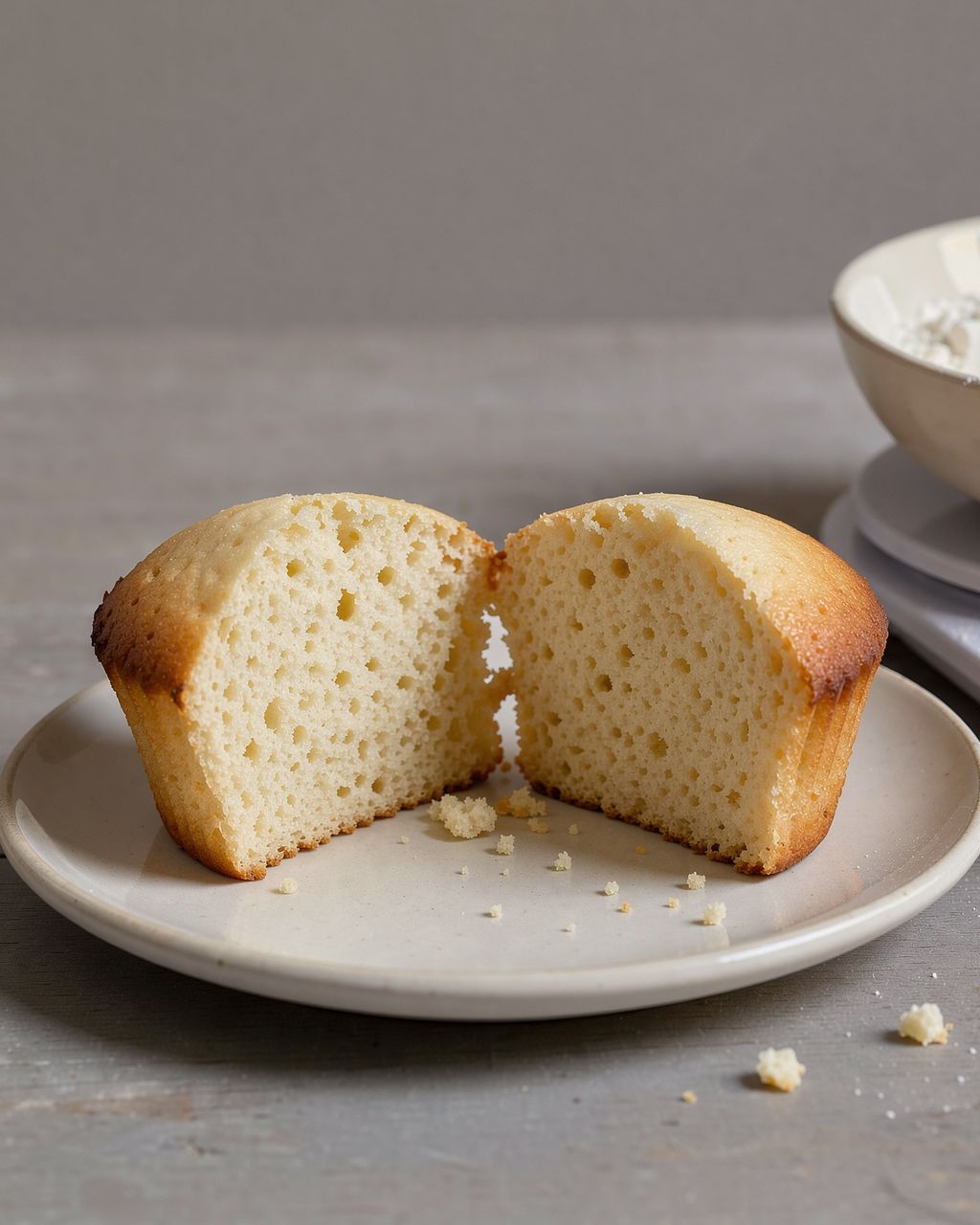
Dense all the way through: a tight, heavy, even crumb with few holes. This is a mixing problem: not enough air went into the batter, or it escaped before the cake set.
Gummy in the middle or in a band: a wet, shiny, almost translucent strip, often just under the crack or near the bottom. This is a baking problem (the middle did not set) or batter that collapsed into a layer.
Dense and dry: a heavy crumb that also crumbles. This usually means too much flour, often from measuring by cup.
Pound cake is made of roughly equal weights of butter, sugar, eggs and flour. Classic versions have little or no baking powder, so almost all of the lift comes from air beaten into the butter. That is why the butter and the creaming decide the result.
Butter too cold. Fridge-cold butter will not hold the sugar crystals, so the mixture stays lumpy and barely lightens. The cake bakes up short and tight.
Butter too warm. Glossy, greasy or partly melted butter cannot hold air bubbles at all. The batter looks loose and the cake comes out heavy and oily at the edges.
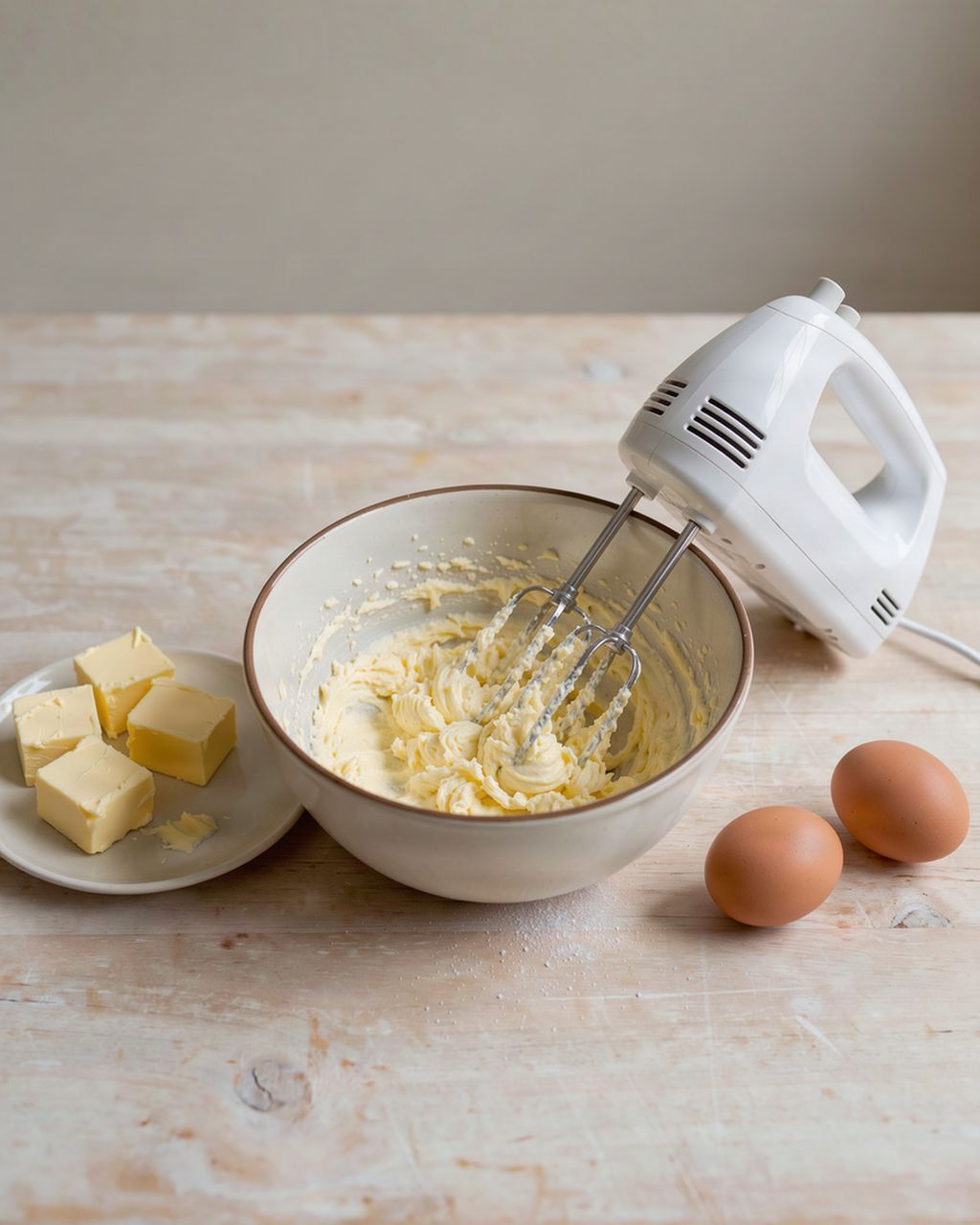
Creaming cut short. Beat butter and sugar until the mixture is clearly paler, fluffy and pulls away from the bowl. With a stand mixer on medium that takes a few minutes; with a hand mixer, longer. Our guide to creaming butter and sugar has the exact signs.
The right butter is cool-soft: around 18–20 °C (64–68 °F). A finger leaves a dent, but the butter still feels slightly cold and is not shiny.
Pound cake carries a lot of egg, so a curdled batter is common. When cold eggs hit the creamed butter, the fat firms up, the emulsion breaks and the batter looks grainy or split. A curdled batter loses much of the air you just beat in, and the cake turns dense with a slightly greasy crumb.
Take the eggs out of the fridge 30–60 minutes ahead, or stand them in a bowl of warm tap water for 5–10 minutes. USDA FSIS advises not leaving refrigerated eggs out for more than 2 hours, or 1 hour if the room is above 32 °C (90 °F).
Add them one at a time and beat each in fully before the next.
If the batter splits anyway, add a spoonful of the measured flour with the next egg. It helps hold the emulsion together.
Other cold ingredients do the same. If your recipe has sour cream, cream cheese or milk, take the chill off them too.
Measuring by cup. A US cup (236.6 ml) of all-purpose flour should weigh about 125 g, and a metric cup (250 ml) about 132 g. Scooping straight from the bag packs it in, and you can easily end up with 150 g or more per cup. In a pound cake that much extra flour makes the crumb dense and dry. Weigh the flour, or spoon it into the cup and level it. Our cups and spoons to grams calculator converts any amount.
Mixing too hard after the flour. Once flour meets the wet batter, gluten starts to form. Beating on high speed at this point tightens the crumb and can give long tunnels through the cake. Add the flour on low speed or fold it in by hand, and stop when the last dry streak disappears.
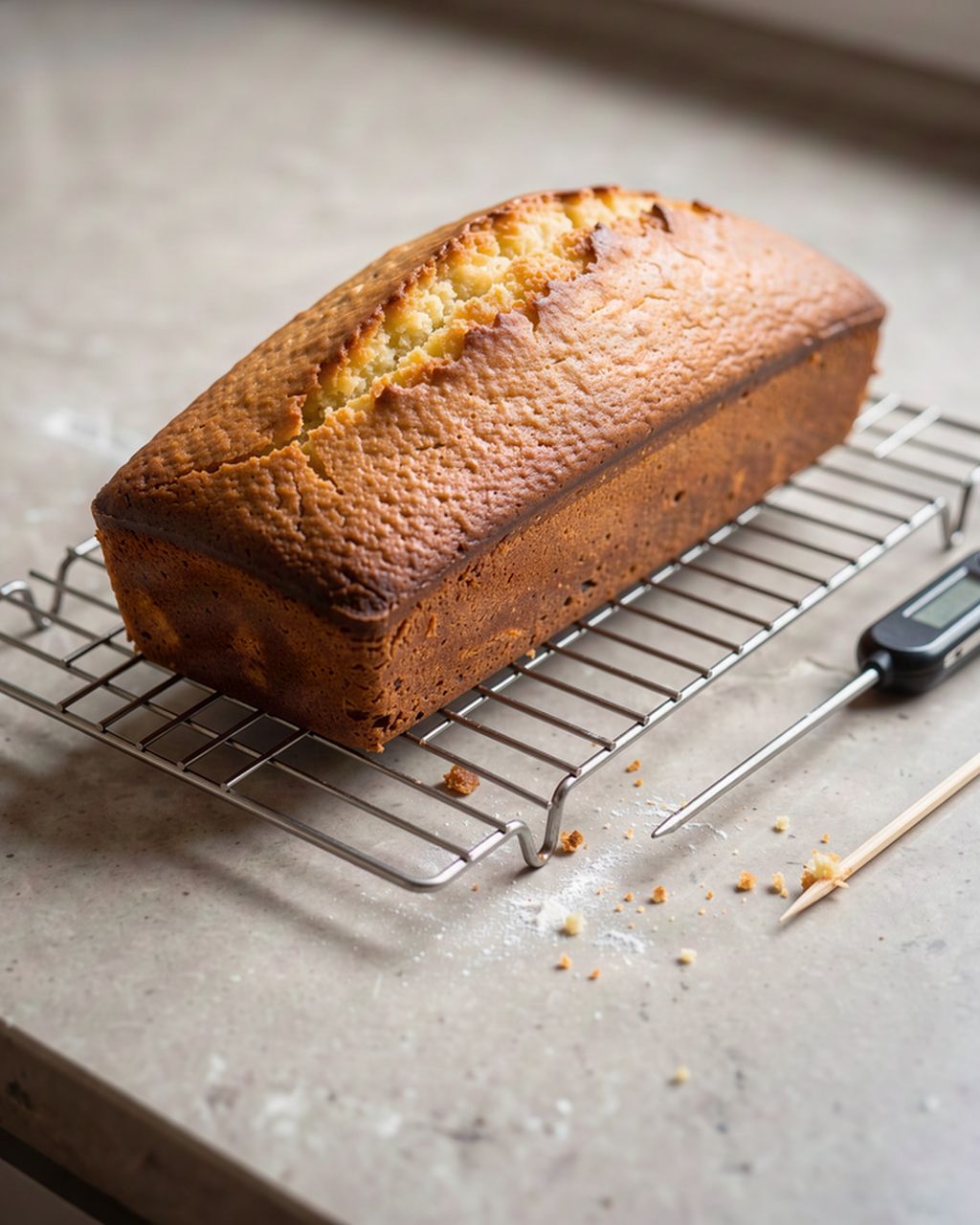
A gummy center is nearly always underbaking. Pound cake is rich in fat and sugar, and it needs a higher internal temperature than a sponge before the crumb sets. ThermoWorks puts pound cake at about 99 °C (210 °F) in the center, against 93–98 °C (200–209 °F) for ordinary cakes. A cake pulled a few degrees early can pass the skewer test and still have a wet band in the middle.
Why it happens:
The oven runs hot. The outside browns fast, you take the cake out on color, and the middle is not done. Many home ovens run hotter or cooler than the dial says, sometimes by 10 °C or more. An oven thermometer settles it.
The oven is set too high. Pound cake is usually baked low and slow, at about 160–165 °C (325 °F) in a conventional oven. Higher settings set the crust long before the center.
The pan is too small or too full. A deep loaf takes far longer to bake through than the recipe expects. Our cake pan size converter helps you scale the batter.
The cake was cut too early. The middle keeps setting as it cools. Slicing a hot pound cake can make a done cake look gummy.
Check doneness three ways: a skewer in the deepest part comes out with no wet batter, the top springs back, and, if you have a probe thermometer, the center reads about 99 °C (210 °F).
Recipe of the week, one tip that saves you time and one deal from the shop. Unsubscribe in one click.
The next issue goes out on Thursday, November 26.
A dense, wet layer along the bottom is a different fault. The batter collapsed into a layer before it set. King Arthur Baking calls it cleaching and lists these causes:
Undermixing. The batter does not have enough structure to hold up. Their fix is a final 1-minute mix on low speed after the flour goes in.
Overcreaming. Too much air makes the cake rise high and then fall.
Too little or stale leavening, or too much leavening, which rises and collapses.
Heavy toppings or layers, such as a streusel, a fruit layer or a second batter spread over the top.
If your recipe uses baking powder, check the date. Our article on what to substitute for baking powder also shows how to test whether it is still active.
Soften butter to cool-soft, about 18–20 °C (64–68 °F), and take the chill off the eggs.
Cream butter and sugar until pale and fluffy, not just combined.
Add the eggs one at a time. Rescue a split batter with a spoonful of flour.
Weigh the flour, then mix it in slowly and briefly.
Bake at the temperature the recipe gives, checked with a thermometer, and bake to about 99 °C (210 °F) in the center.
Let it cool before slicing.
Change one thing at a time, and you will know which one helped. Many of the same causes apply to a Bundt-shaped cake; see why a Bundt cake sinks in the middle.
Pound cake is dense when the butter and sugar did not trap enough air, most often because the butter was fridge-cold, half-melted or creamed for too short a time. Cold eggs that curdle the batter and too much flour from scooped cups do the same.
A gummy middle almost always means the cake is underbaked. ThermoWorks recommends baking pound cake to about 99 °C (210 °F) in the center, so a skewer test alone can pass a cake that is still wet inside.
A dense, wet layer near the bottom is usually batter that sank before it set, from undermixing, too little or stale leavening, or air beaten in and then lost. King Arthur Baking calls this layer cleaching and lists undermixing as its first cause.
Yes. Long, fast mixing after the flour goes in builds gluten and makes the cake tough and tight. Mix the flour in on low speed or by hand, only until no dry streaks remain.
Yes, and it matters more for pound cake than for most cakes. Butter should be cool-soft, around 18–20 °C (64–68 °F), and eggs should not be fridge-cold, or the creamed butter firms up and the batter curdles.
One recipe worth heating the oven for, one tip, and one deal from the shop. Nothing else.