Why Is My Brioche Dough Not Rising? Butter, Sugar, Cold and Time
Why Are My Cinnamon Rolls Not Rising? Causes, Fixes and Proof Tests
Updated Nov 20, 2026
Cinnamon rolls usually fail to rise because the yeast was dead or killed by hot liquid, the kitchen was too cold, or the dough simply needed more time: a rich dough with butter, sugar, egg and milk rises much more slowly than plain bread. Below are the causes in order of likelihood, how to rescue a slow batch, and two quick tests that tell you when the rolls are ready to bake.
Almost every flat batch comes down to one of four things:
The yeast was dead or weak. Old packets, opened jars kept warm, or yeast past its date.
The liquid was too hot. Milk warmed "until it feels warm" is often far too hot for yeast.
The kitchen was cold. Yeast slows right down in a cool room, and in winter many kitchens sit below 20°C (68°F).
The dough needed more time. Cinnamon roll dough is an enriched dough. Butter, sugar, egg and milk all slow yeast, so it rises more slowly than a plain loaf, and recipe times are often optimistic.
Less common causes: too much salt touching the yeast, too much flour (a stiff dough rises less), or cinnamon mixed into the dough itself. We go through each below.
If the dough has not moved at all after an hour in a warm room, suspect the yeast first.
To check active dry yeast, stir a little into lukewarm water with a pinch of sugar and wait 5 to 10 minutes. Foam on top means it is alive. No foam means start again with a fresh packet. Our guide to proofing yeast explains when this test is worth doing, and how long yeast lasts covers storage and dates.
Instant yeast and fresh yeast behave differently from active dry. If your recipe was written for one type and you used another, check the amount with our yeast converter.
Many recipes say to warm the milk with the butter. That is where things go wrong: heating the milk until the butter melts quickly usually takes it well past what yeast likes.
Yeast makers give these figures:
About 38–43°C (100–110°F): the ideal liquid temperature for active dry yeast (Fleischmann's).
About 49°C (120°F) and above: starts to harm yeast dissolved in liquid (Bob's Red Mill).
About 60°C (140°F): kills it.
Without a thermometer, the liquid should feel barely warm on the inside of your wrist, not hot. If you melted butter into hot milk, let the mixture cool before the yeast goes in. Eggs straight from the fridge help bring the temperature down.
If you mix instant yeast straight into the flour rather than dissolving it, the liquid can be warmer; Fleischmann's gives 49–54°C (120–130°F) for that method. Follow the packet.
A dough with plenty of sugar, butter and egg is hard work for yeast:
Sugar pulls water away from the yeast cells. A little sugar feeds yeast; a lot slows it down.
Butter and egg yolk coat the flour and the yeast, and they make the dough heavier to lift.
Cold ingredients (butter, eggs, milk from the fridge) start the dough off cool.
So a first rise that takes an hour for a white loaf can take two hours or more for cinnamon roll dough. This is normal. In Czech kitchens we know it from vánočka (braided Christmas bread) and buchty (filled sweet yeast buns), both rich doughs that are given a warm corner and patience; our buchty dough guide has the rising times.
If you bake a lot of very sweet doughs, osmotolerant yeast (sold as "gold" instant yeast) is made for doughs with high sugar levels; Lesaffre markets it for doughs with about 10–30% sugar to flour.
The fix is warmth, not more yeast:
Aim for a dough temperature of about 24–26°C (75–78°F), the range King Arthur Baking gives for wheat yeast doughs.
Put the covered bowl in the oven with only the light on, or next to (not on) a radiator.
Or set the bowl in the oven, switched off, with a pan of just-boiled water on the rack below. Replace the water when it cools.
Either way, check the dough after 30 minutes, since some ovens get warm with the light on, and take the rolls out before you preheat the oven for baking.
Keep the dough covered so the surface does not dry out and form a skin.
Do not put dough on a hot radiator or in a warm oven. Above about 49°C (120°F) you start harming the yeast, and the butter melts out. More on temperatures in our proofing dough guide.
The filling itself does not stop the rolls rising, but two things in it can slow them.
Cinnamon contains cinnamaldehyde, which slows yeast when a lot of it is in direct contact with the dough. That is why cinnamon usually goes in the filling, not the dough. King Arthur Baking suggests no more than about 1 teaspoon of cinnamon per 3 US cups of flour mixed into the dough.
A thick, wet filling of melted butter and sugar also weighs the spirals down and can leak, especially if the rolls are rolled very tight. Use soft (not melted) butter for the filling, roll the dough snugly but not hard, and leave a little space between rolls so they can grow into each other.
Recipe of the week, one tip that saves you time and one deal from the shop. Unsubscribe in one click.
The next issue goes out on Thursday, November 26.
Watch the rolls, not the timer.
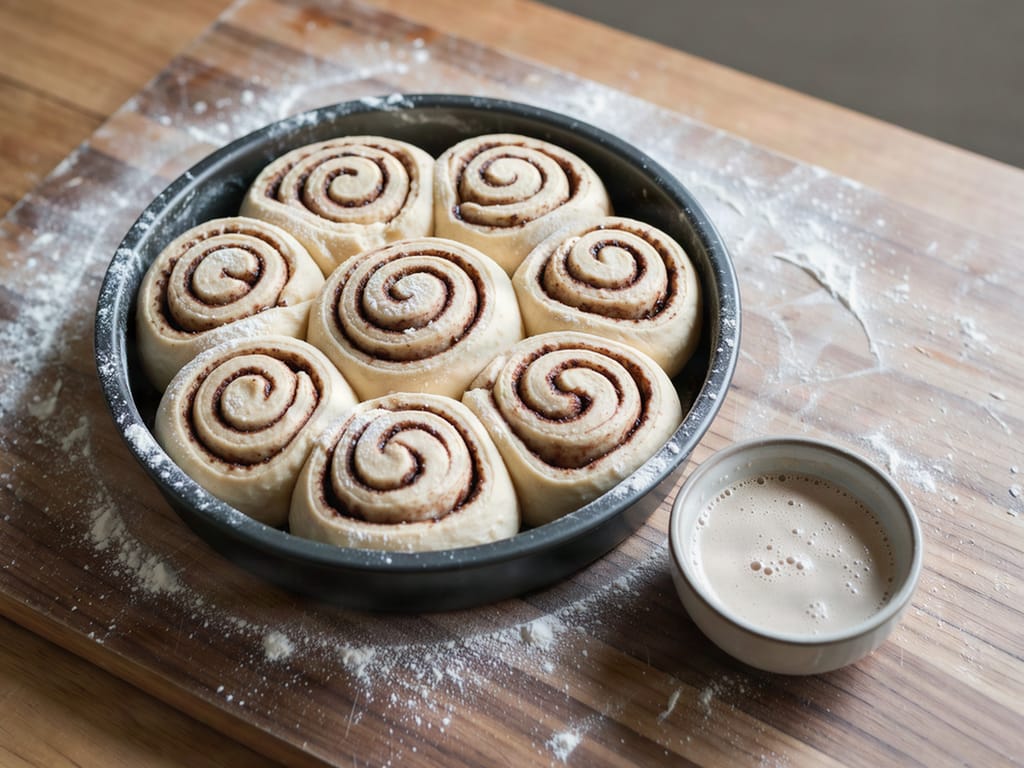
The look test. The shaped rolls should have grown by about half to two-thirds, look puffy and soft, and press against each other in the pan.
The poke test. Flour a fingertip and press gently into the side of a roll, about 1 cm (½ inch) deep. If the dent springs back slowly and leaves a small mark, bake. If it springs back at once, give it more time. If it stays deep and the roll sighs, it is overproofed; bake straight away.
Overproofed rolls still taste good, but they can spread, lose their spiral and bake up with large holes. Next time, check them sooner, especially in a warm kitchen.
The most common reasons are dead or old yeast, liquid that was hot enough to damage the yeast, a cold kitchen, or not enough time, because a dough rich in butter and sugar rises slowly. Test the yeast, use lukewarm liquid and give the rolls a warm spot and more time.
Most recipes plan about 1 to 2 hours for the first rise and 30 to 60 minutes for the second, but go by the dough rather than the clock. The shaped rolls are ready when they look puffy, press into each other and a gentle poke springs back slowly.
Yes, you can bake them, but they will be dense and small. First try giving them more time in a warmer spot; if the yeast is dead and nothing happens after an hour or two, bake them anyway and serve them warm, or start again with fresh yeast.
A lot of cinnamon mixed straight into the dough can slow yeast, which is why cinnamon usually goes in the filling rather than the dough. King Arthur Baking suggests no more than about 1 teaspoon of cinnamon per 3 US cups of flour mixed into the dough.
Lukewarm, about 38–43°C (100–110°F) for active dry yeast. Yeast makers warn that liquid above about 49°C (120°F) starts to harm dissolved yeast and around 60°C (140°F) kills it. If you mix instant yeast into the flour first, follow the packet, as warmer liquid is fine for that method.
One recipe worth heating the oven for, one tip, and one deal from the shop. Nothing else.