Why Did My Cheesecake Sink in the Middle? Causes and How to Stop It
Why Are My Potatoes Green? Solanine, and When to Cut or Throw Out
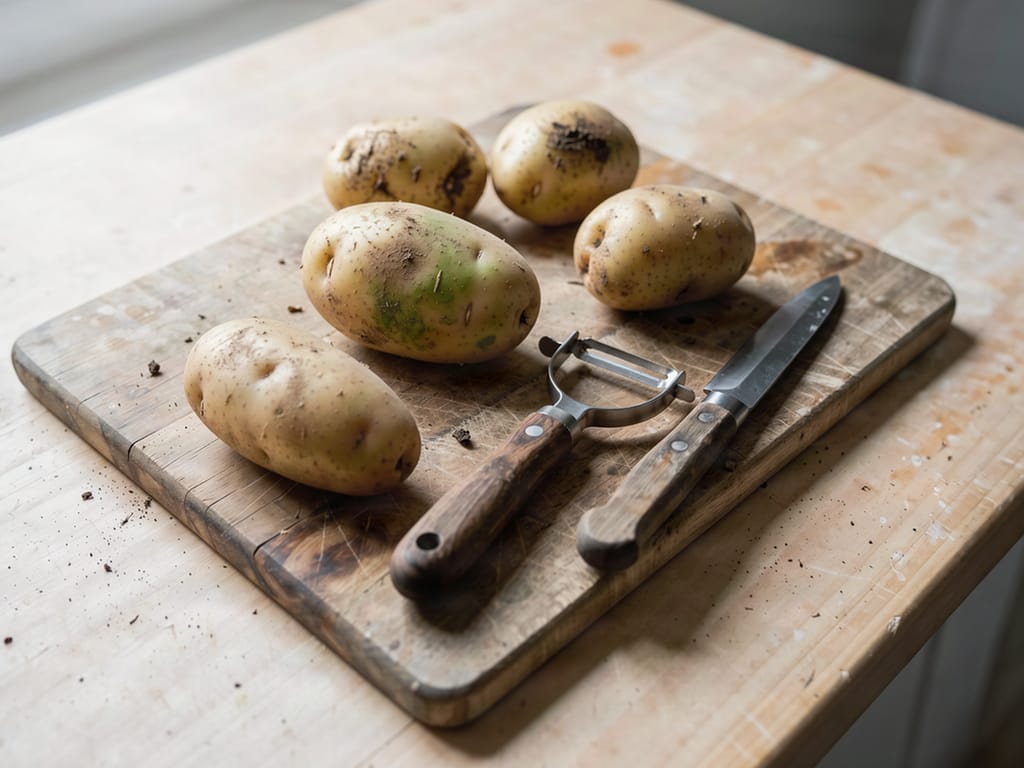
Potatoes turn green because light makes them produce chlorophyll, and the same light also raises solanine, a bitter natural toxin, near the skin. NDSU Extension advises cutting out small green patches and throwing away potatoes with more extensive greening. Here is how to tell which you have, and how to store potatoes so it doesn't happen.
A potato is a living stem that keeps reacting to its surroundings after harvest. When it sits in light, it starts making chlorophyll, the same green pigment as in leaves. That is the color you see.
Chlorophyll itself is tasteless and harmless. The problem is what comes with it. Light also pushes the potato to make more glycoalkaloids, mainly solanine and chaconine, which the plant uses to defend itself against insects and animals. NDSU Extension calls the green color a warning sign for solanine. University of Alaska Fairbanks Cooperative Extension adds that the two form through separate processes, so the amount of green is only a rough guide to the amount of solanine.
Light is the main trigger, but not the only one. NDSU Extension lists light, cold, heat and damage to the tuber as stresses that raise solanine.
One recipe and one tip every Thursday until the end of the year. Unsubscribe in one click.
For the holidays: the morning of December 24, carp roasting times by size and December 31, New Year’s Eve canapés.
Greening can start at any point between the field and your plate:
In the field: potatoes that grow too close to the surface and poke out of the soil turn green on the exposed side. Gardeners prevent this by hilling soil over the plants.
In the shop: potatoes under bright store lights, in clear bags or loose in an open display can green within days.
At home: a bowl of potatoes on a sunny counter, or a clear bag under the kitchen light, is the classic cause.
NDSU Extension notes that white-skinned potatoes green more easily than red or russet ones. The green is also easier to see on pale skin, so a russet can hide it under its brown skin; peel a strip to check if it was stored in light.
It depends on how much green there is. The advice from extension services is consistent:
A small green patch: NDSU Extension says that cutting out the green portions will eliminate most of the toxin. Peel the potato, then cut generously around any green that remains.
Extensive greening: NDSU Extension says to throw the tuber away. If the green covers a large part of the potato, or runs deep into the flesh, you can't cut away enough.
Bitter taste: solanine is bitter. If a cooked potato tastes bitter, stop eating it and discard the rest.
NDSU Extension explains that large amounts of solanine can cause vomiting and diarrhea, and that the bitter taste is what usually stops people from eating enough to get sick. Some extension services, such as Michigan State University Extension, are more cautious and simply advise throwing green potatoes away. When in doubt, discard it. A potato is cheap.
Peeling helps a lot. University of Alaska Fairbanks Cooperative Extension says solanine is most concentrated at and just under the skin, so peeling removes much of the affected tissue. Peel thickly on a greened potato, more than you would normally take off.
Cooking is not the fix. Don't rely on boiling, baking or frying to make a very green or bitter potato safe to eat. Trim or discard first, then cook. For dishes where you cook potatoes in their skins, such as jacket potatoes or new potatoes boiled whole, pick potatoes with no green at all. Our guide on how to boil potatoes covers both skin-on and peeled.
Sprouts are the other place solanine collects. NDSU Extension says small sprouts have the highest levels and should always be removed before cooking.
Firm potato, short sprouts: cut out the sprouts and the eyes around them with the tip of a peeler or a knife, then use the potato.
Soft, wrinkled potato with long sprouts: it has used up much of its starch and water. It will cook poorly, so throw it out.
Sprouted and green: throw it out.
In Czech kitchens, late-winter potatoes from the cellar often have small sprouts, and rubbing them off is a routine job before peeling. We cut the eyes out too.
Darkness is the main thing. NDSU Extension recommends storing potatoes in a cool, dark place with good air circulation and high humidity, away from heat sources such as the fridge motor or a dishwasher. For long storage, NDSU Extension gives 7–10 °C (45–50 °F) with 90 to 95 percent relative humidity, in the dark.
For everyday use:
Keep potatoes in a paper bag, a cardboard box or a closed cupboard, not on the counter.
Take them out of clear plastic bags when you get home. Plastic also traps moisture, which leads to rot.
Buy only what you will use soon if you have no cool, dark spot.
Check them before you buy: skip any with green patches or sprouts.
Our guide on how to store potatoes so they last until spring covers cellars, balconies and what to keep them away from.
Not every odd color is greening.
Green under the skin: chlorophyll from light, with solanine likely nearby. Trim or discard as above.
Purple or blue flesh: natural pigments in varieties like purple potatoes. These are meant to look that way.
Gray or brown flesh after cutting: the cut surface oxidizing in air, which is a cosmetic change. Keep cut potatoes under water until you cook them.
Black spots inside: often bruising from knocks in storage. Cut them out.
Dark, sweet-tasting potatoes after frying: usually a potato stored too cold, which turns some starch into sugar.
If you are choosing potatoes for a recipe, our page on type B potatoes explains the Czech cooking-type labels.
Potatoes turn green because they have been exposed to light, in the field, on a store shelf or in your kitchen. Light makes the potato produce chlorophyll, which is harmless, and at the same time raises solanine, a bitter natural toxin, near the skin.
Small green patches can be cut away and the rest of the potato eaten, according to NDSU Extension, but potatoes with more extensive greening should be thrown away. If a cooked potato tastes bitter, don't eat it, because the bitterness comes from solanine.
No, the green itself is chlorophyll, which is harmless. It is a warning sign, though: the light that makes chlorophyll also raises solanine, and the two build up in the same layer under the skin, as NDSU and University of Alaska Fairbanks Extension both explain.
Peeling removes much of it, because solanine is most concentrated in and just under the skin, according to University of Alaska Fairbanks Cooperative Extension. Peel thickly and cut out any green that remains in the flesh. If the green runs deep or covers much of the potato, discard it.
Remove the sprouts and the eyes around them before cooking, because NDSU Extension says sprouts have the highest solanine levels. A firm potato with small sprouts can be used once they are cut out; a soft, shriveled or green one is better thrown away.
Keep potatoes in the dark. NDSU Extension recommends a cool, dark, well-ventilated place for storage, away from heat sources, and a paper bag or closed cupboard for potatoes you will use soon. Avoid clear plastic bags and bright countertops.
One recipe worth heating the oven for, one tip, and one deal from the shop. Nothing else.