Soft honey gingerbread cookies that never go hard
Baking Soda Substitutes: What to Use and Exact Ratios

Updated Oct 17, 2026
What can you use instead of baking soda? Three leaveners can truly stand in for it: baking powder, potassium bicarbonate and, in dry cookies, baker's ammonia (ammonium bicarbonate). Cream of tartar and buttermilk can't replace it on their own; they only supply the acid. Baking powder is the quickest fix: for 1 level teaspoon of baking soda (about 5 g), use 3 teaspoons of baking powder (about 12 g, one sachet). Potassium bicarbonate works teaspoon for teaspoon, though a more precise amount is one-fifth more. Baking soda is sodium bicarbonate, an alkaline that needs acid and moisture to release carbon dioxide and lift the batter, and that is exactly what decides what you can swap in. Below you'll find all five leaveners and acids with ratios in teaspoons and grams, plus what each does to flavor and color, and emergency options for when you have no leavener at all.
Baking soda can be replaced by baking powder, potassium bicarbonate and, in thin dry cookies, baker's ammonia. Cream of tartar and buttermilk (or soured milk) are only acidic helpers that react with the soda. The ratios below use teaspoons (volume); the gram weights are approximate.
These three leaven on their own and can replace baking soda:
Baking powder – 3 teaspoons of baking powder for 1 teaspoon of baking soda (about 12 g of powder, or one sachet, in place of 5 g of soda).
Potassium bicarbonate – teaspoon for teaspoon, or more precisely one-fifth more (1.2 g for every 1 g of soda); sodium-free.
Baker's ammonia (ammonium bicarbonate) – only for thin, dry cookies, and only where the recipe calls for it.
These two only supply acid, so they work with baking soda, not instead of it:
Cream of tartar – 2 teaspoons of cream of tartar + 1 teaspoon of baking soda = homemade baking powder (a 2:1 ratio by volume).
Buttermilk or soured milk – 240 ml of milk with 1 tablespoon of vinegar or lemon juice; plain yogurt or sour cream work similarly.
For reference: 1 level teaspoon of baking soda weighs roughly 5 g, 1 teaspoon of baking powder roughly 4 g, and a standard sachet of baking powder holds 12 g.
Seasonal baking plans, tested recipes and kitchen tricks that save you time. Unsubscribe in one click.
Baking soda is sodium bicarbonate, an alkaline that doesn't leaven anything by itself. It needs three things: acid, moisture and heat. Once it meets an acidic ingredient (buttermilk, yogurt, cocoa, honey, lemon juice) in a wet batter, it releases carbon dioxide, and the bubbles lift the batter.
That's why you can't swap in every substitute at 1:1. According to baking sources, baking soda is roughly three to four times stronger than baking powder, so you need less of it. And because it's an alkaline, only another leavener can fully replace it. An acid such as cream of tartar or lemon can't stand in for soda; it can only react with it.
There's one more thing people often forget: baking soda promotes browning. Alkaline batter darkens faster (the Maillard reaction runs more readily in an alkaline environment), so gingerbread and cookies come out darker with a crisper edge. Baking powder, which is roughly neutral, doesn't encourage this browning as much. We go into detail in our article why gingerbread uses baking soda instead of baking powder.
Soft honey gingerbread cookies that never go hard
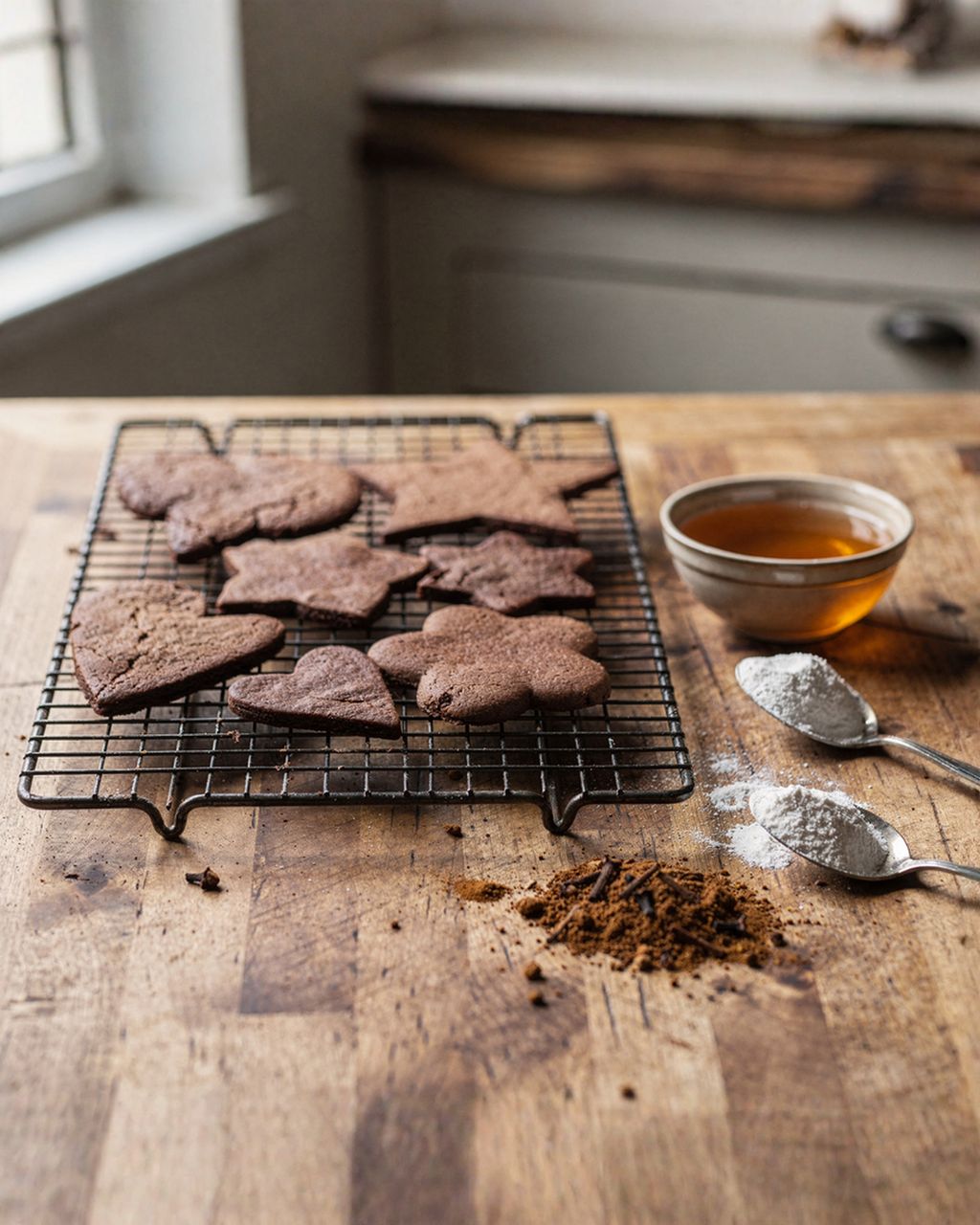
Soft honey gingerbread cookies – here the baking soda both leavens and gives a deep, dark color
Baking powder is the easiest substitute for baking soda: use three times as much by volume. If a recipe calls for 1 teaspoon of baking soda, use 3 teaspoons of baking powder, which is roughly one 12 g sachet.
½ teaspoon of soda (about 2.5 g) → 1½ teaspoons of baking powder (about 6 g, half a sachet)
1 teaspoon of soda (about 5 g) → 3 teaspoons of baking powder (about 12 g, one sachet)
2 teaspoons of soda (about 10 g) → 6 teaspoons of baking powder (about 24 g, two sachets)
This works because baking powder already contains acid. It's a blend of baking soda, an acidic ingredient (most commonly a diphosphate, sometimes cream of tartar) and a little starch. It only needs moisture and heat to activate and requires no extra acid.
There's one catch: if the recipe counts on the soda reacting with an acidic ingredient (buttermilk, cocoa, honey), that acid goes unused with baking powder and the bake can taste slightly sour. In that case, cut back the acidic ingredient a little. And don't overdo the amount: more baking powder than you need leaves a metallic, even bitter aftertaste. Three sachets or more for an ordinary cake made with 250–300 g of flour will already be noticeable.
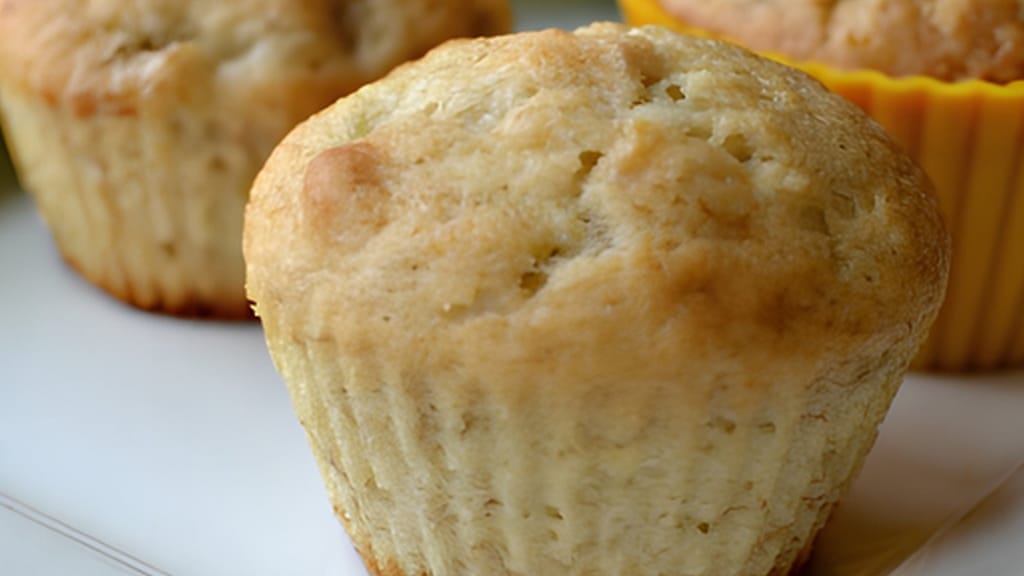
Banana muffins
Banana muffins leavened with baking powder
Potassium bicarbonate is the closest stand-in for baking soda, because it's also an alkaline, just with potassium instead of sodium. Teaspoon for teaspoon works, but a more precise amount is one-fifth more: 1.2 g for every 1 g of soda. The potassium molecule is heavier, so the same amount releases a little less carbon dioxide.
It reacts just like baking soda: it needs acid, moisture and heat, and it promotes browning in the same way. It tends to be a touch more bitter, so it's worth adding a small pinch of salt to balance the aftertaste. You can find it at pharmacies or in health food stores online.
Baker's ammonia, or ammonium bicarbonate, can replace baking soda only in thin, dry bakes: decorating gingerbread cookies, crisp biscuits or pretzels. During baking it breaks down completely into gases, including ammonia, which escapes from thin dough. In a tall, moist batter (a bundt cake, a sweet yeast cake, banana bread) the ammonia would stay trapped and you'd smell it.
That's why you shouldn't add it by a general ratio, only where the recipe specifically calls for it. You'll find out when it suits, how much to use and what to replace it with in our article baker's ammonia (ammonium bicarbonate): which cookies it belongs in and what to replace it with.
Cream of tartar (potassium bitartrate) is an acid, not a leavener, so it can't replace baking soda on its own. Its strength shows up in a pair: mix 2 parts cream of tartar with 1 part baking soda by volume and you get homemade baking powder.
In practice: 2 teaspoons of cream of tartar + 1 teaspoon of baking soda make roughly 3 teaspoons of homemade baking powder, which is the amount in one sachet. Mix it only just before baking, or add a teaspoon of starch so it doesn't absorb moisture and react too early.
Cream of tartar is a natural by-product of winemaking. The crystals that settle in the barrels are ground into a fine white powder, and it leaves no aftertaste in baked goods. It also stabilizes whipped egg whites beautifully, which makes it great for meringues and light sponge cakes: a pinch for each egg white is enough.
A small correction to a common myth: cream of tartar is not the same thing as potassium bicarbonate. They sound alike, but potassium bicarbonate is an alkaline (and a soda substitute), while cream of tartar is an acid.
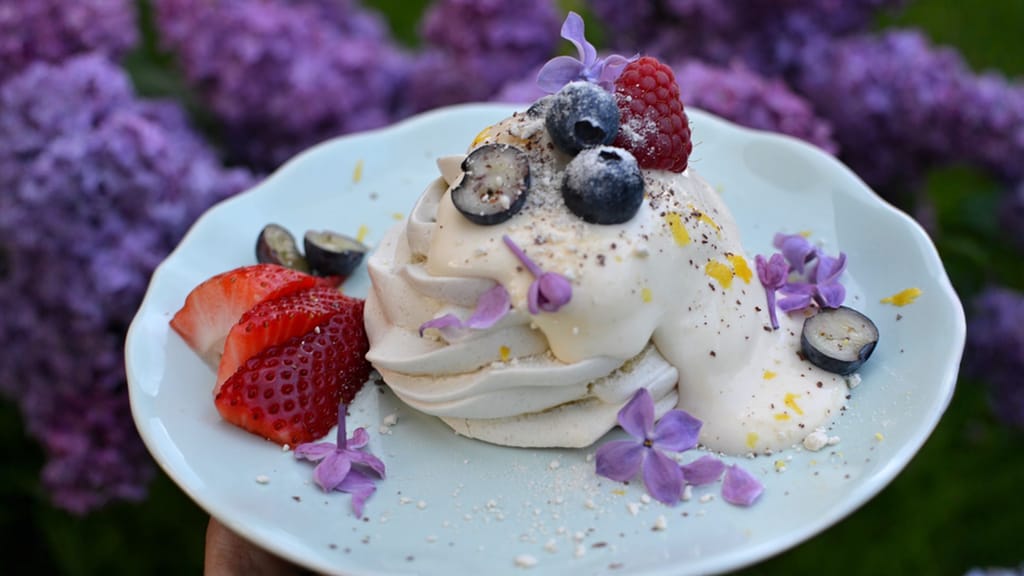
Lilac meringue kisses with lemon curd cream and fresh fruit
Lilac meringues with lemon cream – a pinch of cream of tartar helps egg whites hold stiff peaks
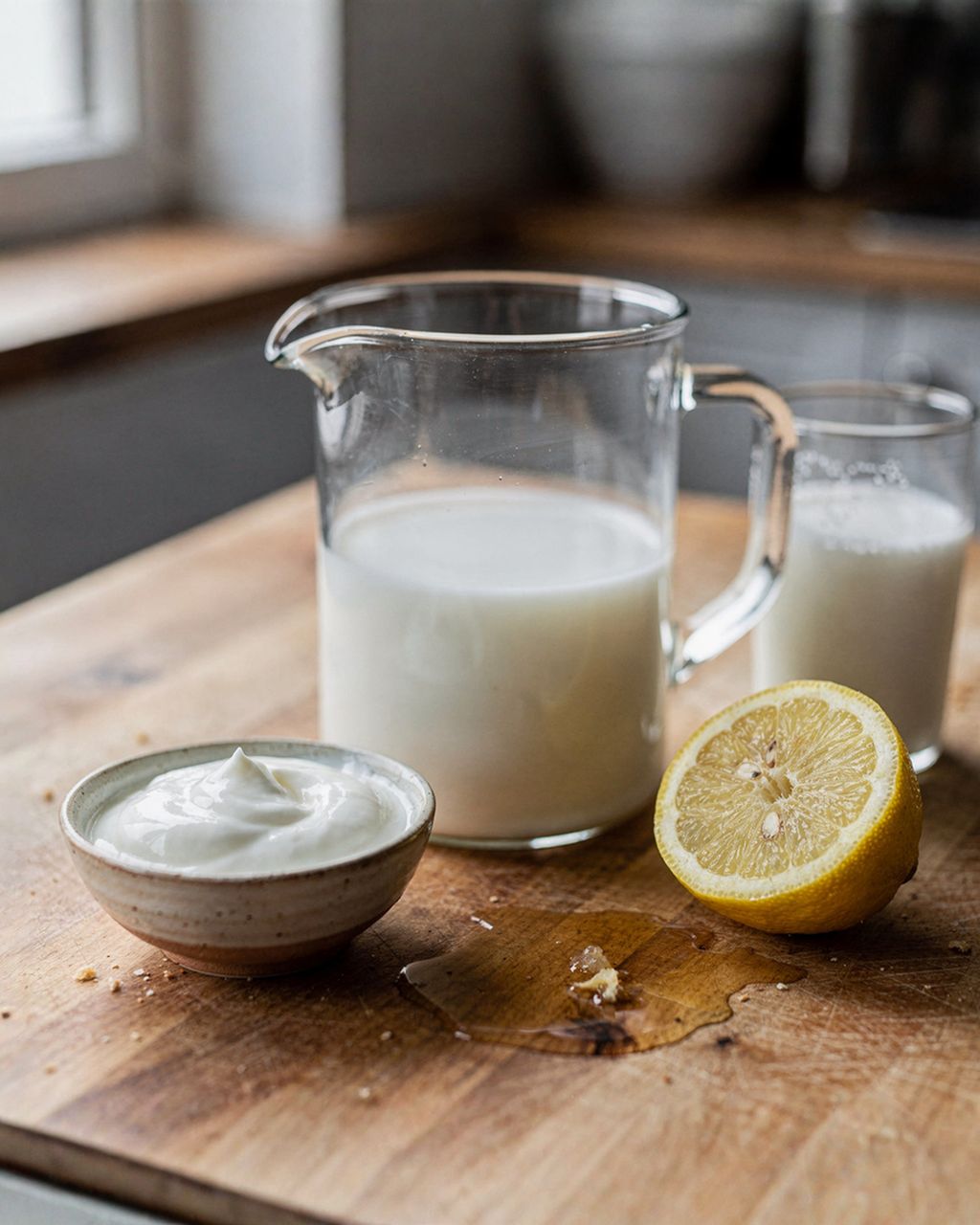
Milk with vinegar gives you a buttermilk substitute, not a baking soda substitute. Soured milk supplies the acid that soda needs in order to react, so the leavener itself has to stay in the batter. Plain yogurt or sour cream play the same role.
You can make homemade buttermilk in a few minutes:
Pour 240 ml (1 cup) of milk into a measuring cup.
Add 1 tablespoon (15 ml) of white or apple cider vinegar (or lemon juice).
Stir and let it stand for 5–10 minutes, until the milk thickens slightly and curdles.
Use the soured milk anywhere a recipe calls for buttermilk, such as fluffy American pancakes or muffins. For a vegan version, plant-based milk works too (soy holds up best).
When soured milk helps with a soda swap: if you're using baking powder instead of soda in a buttermilk recipe, you don't need to change anything else. If, on the other hand, you have soda but the recipe has no acid (plain milk, no cocoa or honey), swap the milk for buttermilk, soured milk or yogurt. Otherwise the soda won't react and the bake will taste soapy.
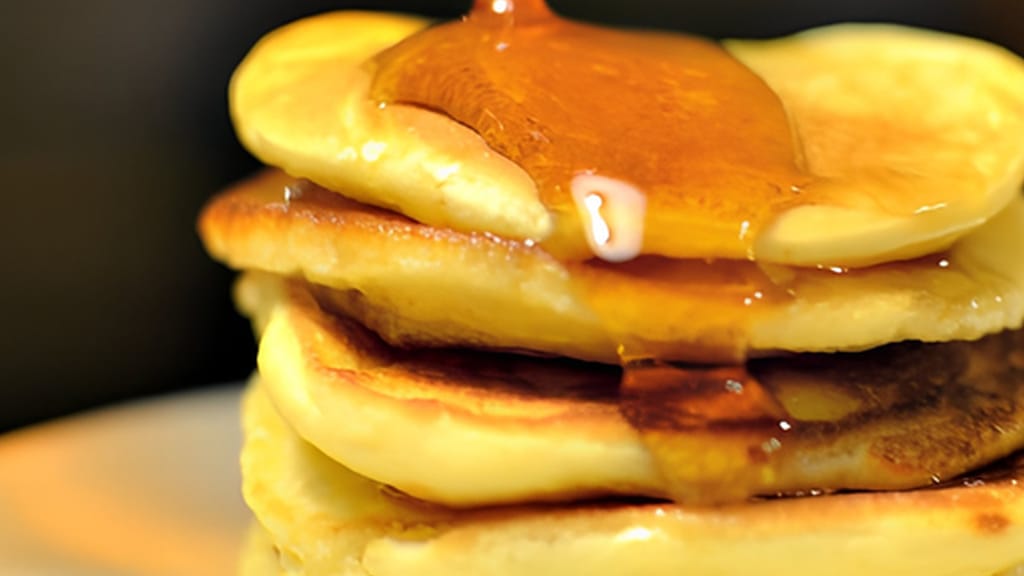
Pancakes – american-style pancakes
Fluffy American pancakes made with buttermilk and baking soda
Without a chemical leavener, you can lift a batter with air: whip egg whites to stiff peaks and fold them in gently at the end. That's how sponge fingers hold up without a leavener. In a denser batter, though, it will only partly replace the soda.
Whipped egg whites – for light sponge and soft batters; 2–3 egg whites for a batch with 250 g of flour, folded in just before baking.
Yeast – only for batters that can handle rising time and a yeasty flavor (yeast-raised pancakes, waffles); allow 30–60 minutes for rising. It isn't suited to cookies or gingerbread.
Sparkling water – used in place of part of the milk in pancakes, it adds a few bubbles, but it won't fully replace a leavener.
What doesn't work: washing soda (sodium carbonate) or industrial soda. They aren't food and don't belong in a batter.
Baking powder gives the palest, most delicate crumb, while baking soda or potassium bicarbonate gives the darkest, crispest result.
Baking powder: more neutral and gentle, with a paler crumb. Too much tastes slightly metallic.
Potassium bicarbonate: leavens and browns much like soda, with a slightly more bitter taste.
Baker's ammonia: an exceptionally crisp, dry texture in thin cookies; an ammonia aftertaste in moist batters.
Cream of tartar with baking soda: a clean flavor and a fine, even texture.
Buttermilk, yogurt and sour cream: a subtle tang and a softer crumb; the color of the crust depends on the leavener you combine them with.
Baking soda on its own: promotes the most browning and crispness, which is why you expect it in cookies or banana bread.
With any new substitute, always try a smaller batch or half a portion of the batter first before committing to the full recipe.
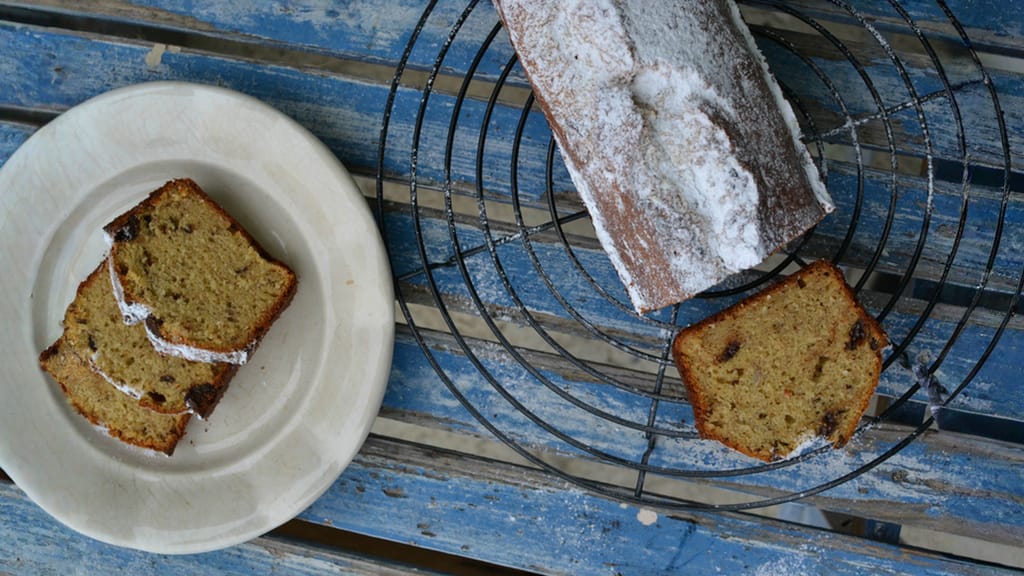
Banana bread
Banana bread – a soft crumb thanks to the reaction of soda with the bananas
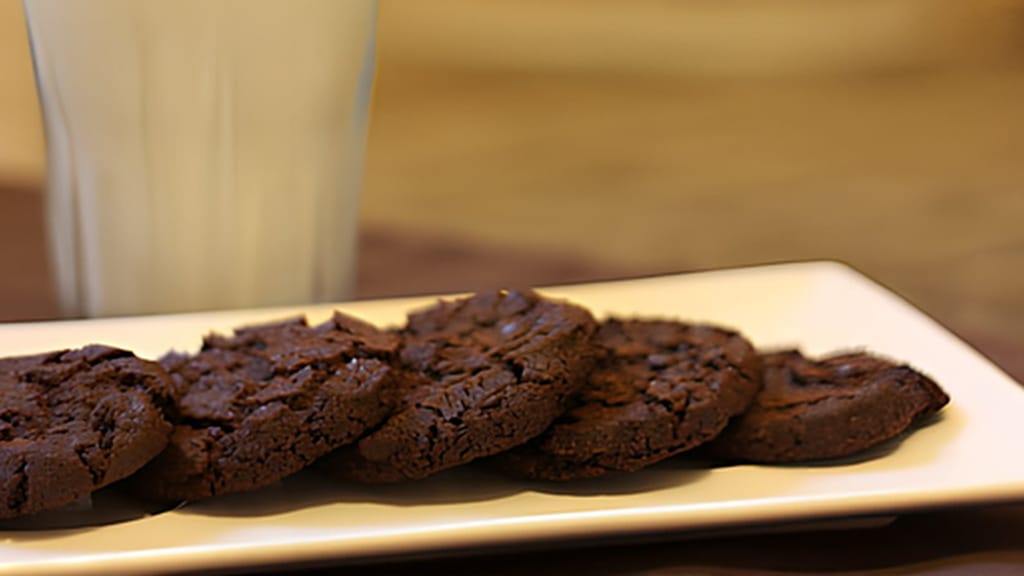
Chocolate chip cookies with fleur de sel
Chocolate cookies with fleur de sel – baking soda gives them a crisp edge
No, baking soda and baking powder aren't interchangeable 1:1. Baking soda is a pure alkaline that needs an acidic ingredient to make a bake rise, whereas baking powder already contains acid and only needs moisture and heat. Baking soda is roughly three to four times stronger, so you need less of it in a batter.
Sprinkle half a teaspoon of baking soda into a little hot water with a few drops of vinegar. Fresh soda fizzes up immediately and vigorously. If almost nothing happens or the bubbles are sluggish, the soda has lost its power and won't lift your batter. Store it airtight and dry, or it will go stale.
You can only leave out baking soda if something else in the batter provides lift, such as baking powder or whisked egg whites. If soda is the only leavener, then without it or a substitute the batter will stay dense and flat. Soda also neutralizes acidic ingredients and encourages browning, so leaving it out will change the flavor and color as well. If you don't have any, the simplest swap is baking powder: 3 teaspoons for 1 teaspoon of baking soda.
In gingerbread and cookies, potassium bicarbonate is the best substitute for baking soda, because it promotes browning just as soda does. Teaspoon for teaspoon works, but a more precise amount is one-fifth more (1.2 g for every 1 g of soda). It's also an alkaline, so it helps with crispness too. Baking powder will work as a leavener, but the crumb and crust come out paler, because baking powder is neutral and doesn't promote browning as much.
The most common reasons a batter doesn't rise enough after a baking soda swap are that it lacks acid or you used too little of the substitute. Baking soda needs an acidic ingredient to work and is stronger than baking powder, so with baking powder use three times as much: 3 teaspoons (about 12 g) for 1 teaspoon of soda (about 5 g). Work the batter quickly, because the leavening reaction starts right after mixing.
No, washing soda (sodium carbonate) is not a substitute for baking soda and doesn't belong in food. It's a strong, irritating alkaline meant for cleaning and laundry, while baking soda is sodium bicarbonate, a food ingredient. Only buy packs labeled as baking soda.
One recipe worth heating the oven for, one tip, and one deal from the shop. Nothing else.