Self-Raising Flour in Europe: Where to Buy It and How to Make It
Banana Bread Without Baking Soda: Baking Powder Ratios and What Changes
Updated Nov 21, 2026
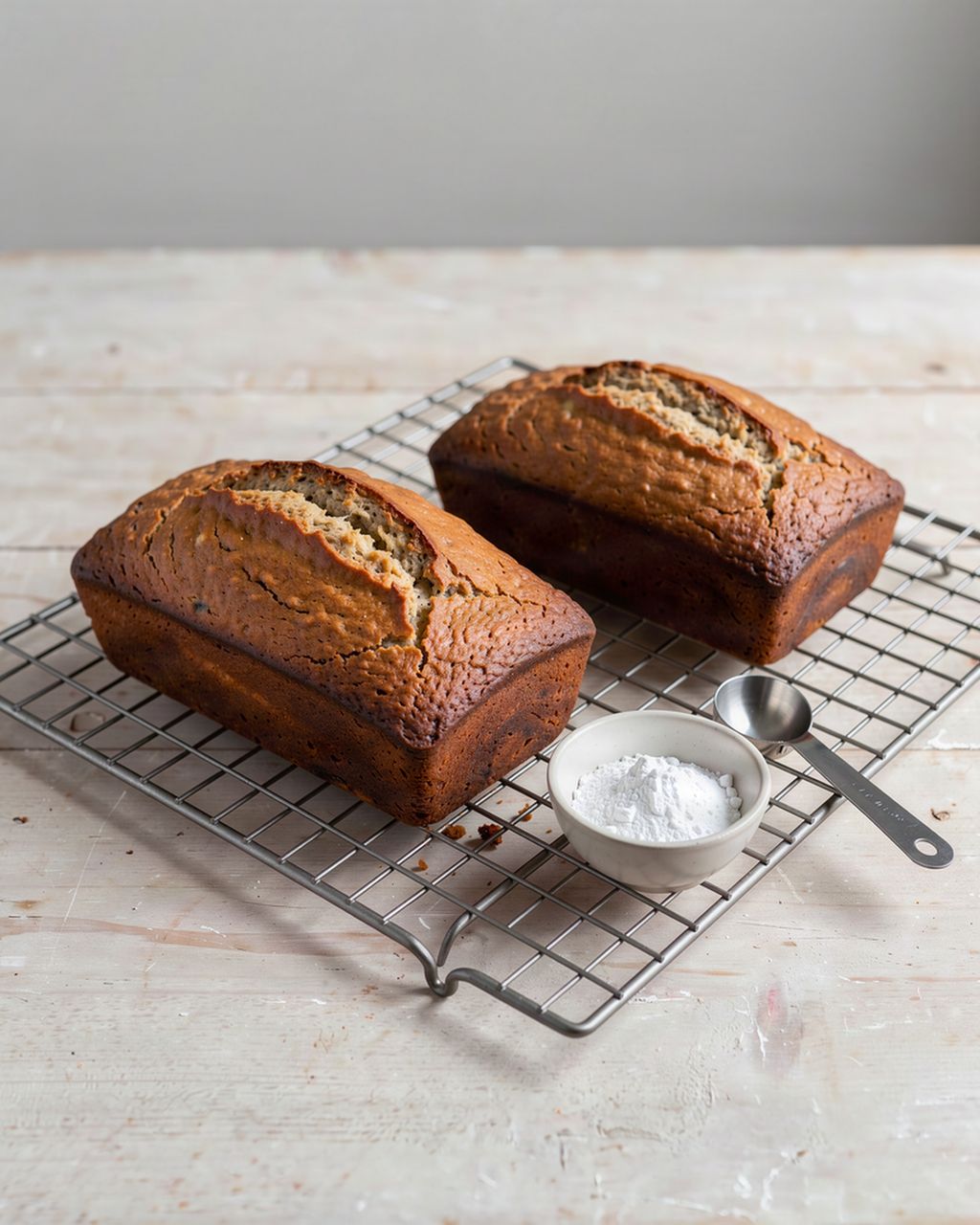
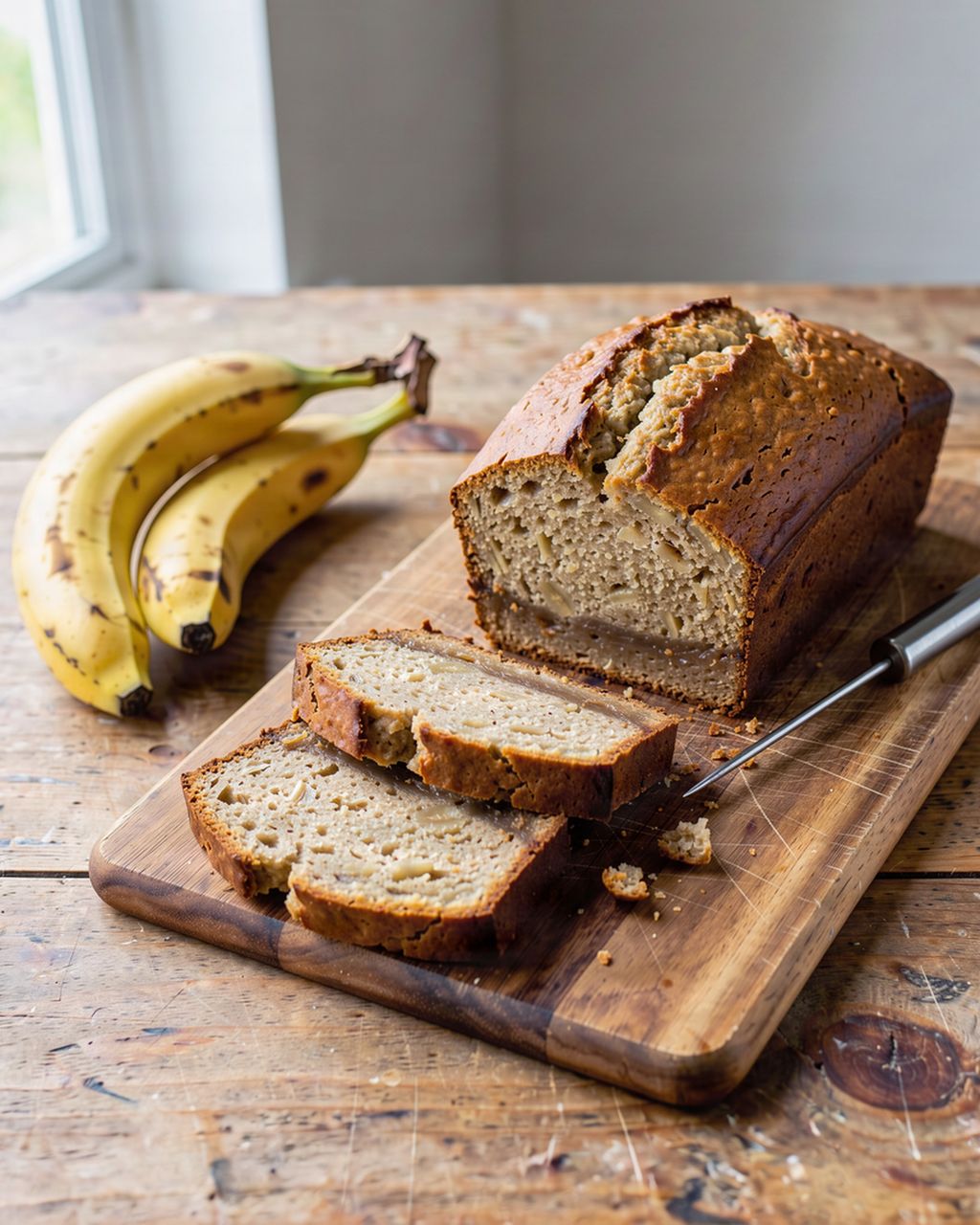
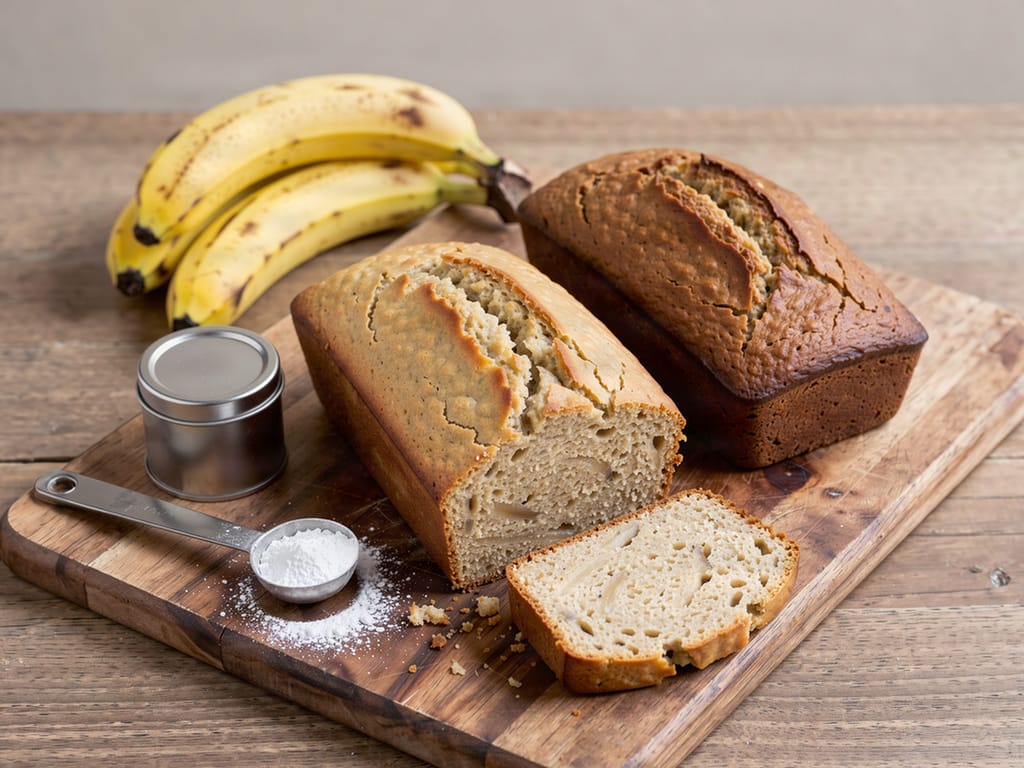
You can make banana bread without baking soda by using baking powder instead: about 1 to 1¼ teaspoons per US cup (125 g) of flour, or King Arthur Baking's straight swap of 3 teaspoons of baking powder for each teaspoon of soda. The loaf rises well but comes out paler, a little taller and less deeply flavored. Here is how to work out the amount for your recipe, how to use self-raising flour or a Czech baking powder sachet, and what happens with no leavening at all.
Baking soda is an alkali. It needs an acid to make gas, and banana bread has plenty: ripe bananas, brown sugar, and often sour cream, yogurt or buttermilk. When they meet, the soda releases carbon dioxide and the loaf rises.
Soda also does two other jobs:
Browning. It makes the batter less acidic, which speeds up browning. That is where banana bread's deep brown crust and dark crumb come from.
Spread and tenderness. King Arthur Baking notes that baking soda is more responsible for outward spread and a tender crumb, while baking powder gives more height.
Baking powder already contains its own acid alongside the soda, so it does not need the banana's acid. That is why it can stand in.
There are two ways to work it out. Both work; the second tastes cleaner.
The straight swap. King Arthur Baking uses 3 times as much baking powder as baking soda: 1 teaspoon of soda becomes 3 teaspoons of powder. It reliably rises, but the amount of powder can leave a slightly bitter, metallic taste.
By the flour. Use about 1 to 1¼ teaspoons of baking powder per US cup of flour. Most banana bread recipes use 1½–2 US cups (about 190–250 g) of all-purpose flour, so that comes to 1½–2½ teaspoons.
If your recipe already has some baking powder as well as soda, keep that powder and add the extra for the soda on top, but don't go much past 1¼ teaspoons per US cup of flour in total.
Measure level, with proper measuring spoons, and check the powder is fresh: a little in hot water should bubble straight away. More on the stand-ins for soda in general is in baking soda substitutes.
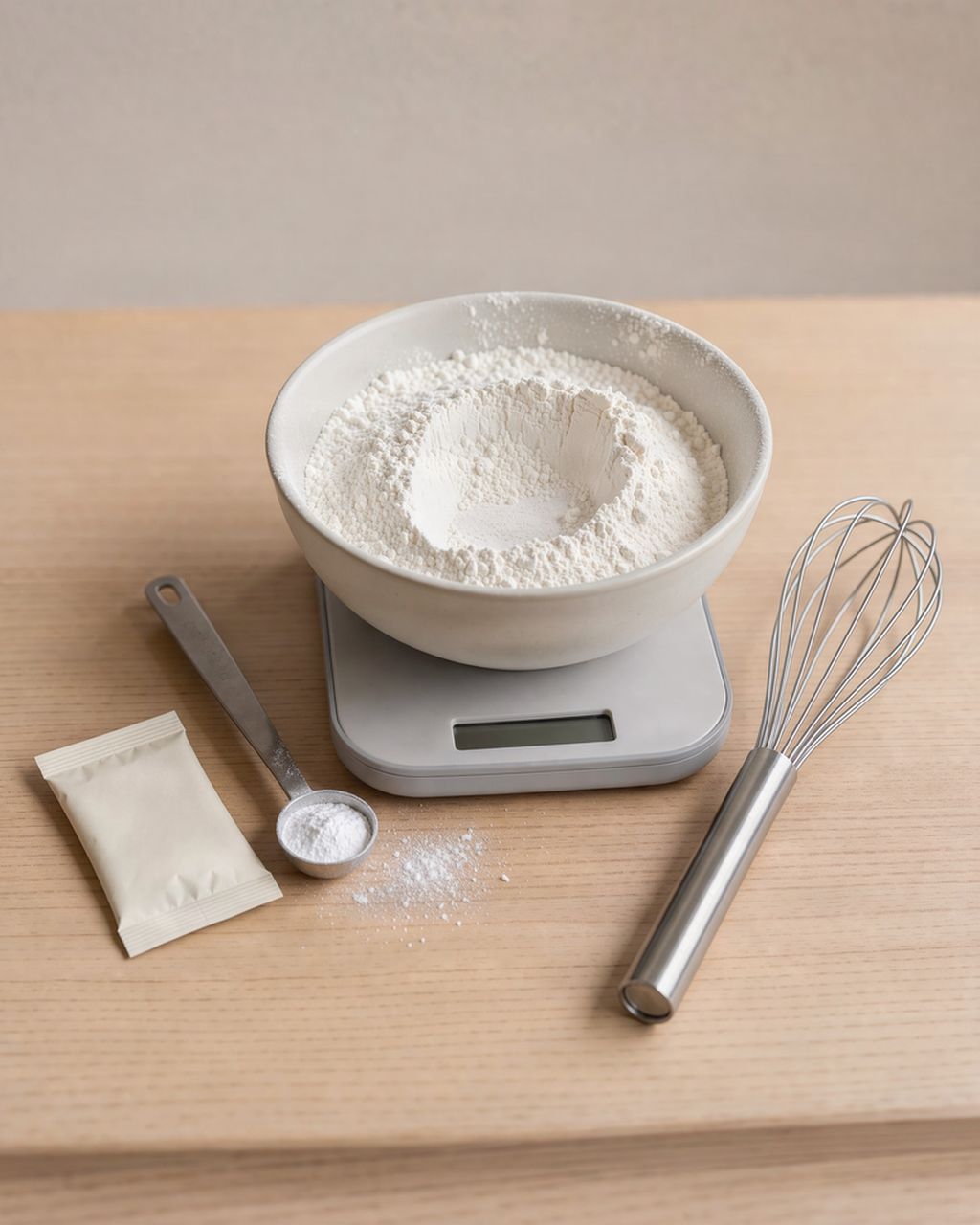
In the Czech Republic and much of Europe, baking powder (in Czech, prášek do pečiva) is sold in small sachets, each sized for a set amount of flour rather than measured by the teaspoon.
Dr. Oetker's standard Czech sachet is 12 g for 500 g of flour. For a loaf with 250 g of flour, use half a sachet, about 6 g. That is roughly 1½ teaspoons: the manufacturer's dose, on the gentle side, which suits the cleaner taste.
Other brands and countries size their sachets differently, so read the dose on your packet.
Weighing is easier than converting sachets to spoons. Our cups and spoons to grams calculator converts your flour from cups so you can match it to the sachet.
Don't use jelení sůl (baker's ammonia, also called hartshorn) for banana bread. It is meant for thin, dry Christmas cookies, where the ammonia can bake off; in a thick, moist loaf it gets trapped and tastes of it.
Swapping soda for powder makes a slightly different banana bread. None of it is a fault.
Color: paler crust and a lighter, golden crumb instead of a deep brown one.
Shape: often taller and more domed, with less spread.
Taste: a little tangier and less caramel-like, since the banana's acid is not neutralized.
Texture: a fluffier, more cake-like crumb.
For a darker loaf, use brown sugar instead of white, add a spoon of honey or molasses, and bake it fully. King Arthur Baking puts done banana bread at 93–96 °C (200–205 °F) in the center.
Self-raising flour (self-rising flour in the US) is plain flour with a raising agent already mixed in.
Replace all the all-purpose flour with self-raising flour, weight for weight.
Leave out the baking soda and baking powder.
Check the bag: some self-raising flours also contain salt, so you may want less salt.
Many British and Australian banana bread recipes are written this way. The result is close to the baking powder version: paler and well risen.
Self-raising flour loses strength with time, like baking powder, so a very old bag gives a flatter loaf. In Czech kitchens, plain flour with a sachet of baking powder is the usual way. If you are working out which European flour to buy, see flour numbers explained.
Recipe of the week, one tip that saves you time and one deal from the shop. Unsubscribe in one click.
The next issue goes out on Thursday, November 26.
Without any leavening, banana bread still bakes, but only the air and steam you build in lift it.
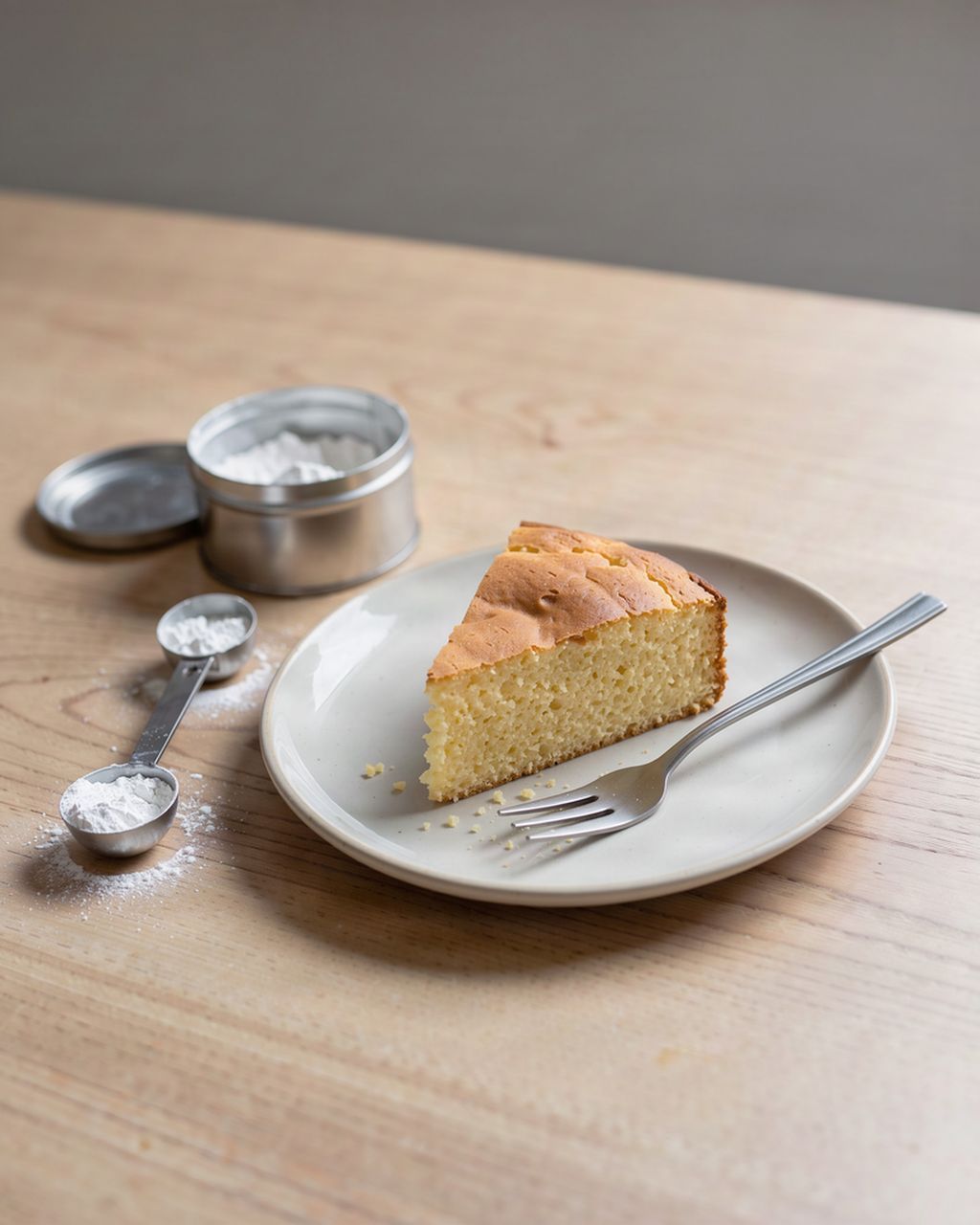
Expect a dense, moist, close-textured loaf, more like a pudding cake.
Beat the eggs and sugar together for several minutes until thick and pale before adding the banana, fat and flour, then fold gently.
Use a wider, shallower pan or bake it as a sheet cake, so the middle bakes through before the edges dry.
Bake to temperature. A dense loaf hides an underbaked middle well.
If the loaf turns out gummy, the usual causes are underbaking and too much banana; weigh the fruit, and test the center.
Yes. Replace it with baking powder, use self-raising flour, or, for a dense loaf, leave the leavening out. Baking powder is the closest swap and still gives a good rise.
King Arthur Baking's rule is 3 teaspoons of baking powder for every teaspoon of baking soda. A gentler option that tastes cleaner is about 1 to 1¼ teaspoons of baking powder per US cup (125 g) of flour, which for most loaves is 1½ to 2½ teaspoons.
The loaf rises well but browns less, so it is paler with a softer crust, often a little more domed, and the banana tastes a bit milder and tangier. Too much baking powder can taste bitter or metallic.
You can, but it will be dense and moist, more like a pudding loaf. Beat the eggs and sugar until thick and pale before adding the rest to trap some air, and bake it in a shallower pan.
Yes. Swap all the plain flour for self-raising flour and leave out the baking soda and baking powder, since self-raising flour already contains a raising agent. This is how many British and Australian banana bread recipes are written.
One recipe worth heating the oven for, one tip, and one deal from the shop. Nothing else.