Why Did My Dumplings Fall Apart? Boiling, Wet Dough and Stirring
Why Are My Dumplings Dense or Hard? Raising Agents, Mixing and Steam
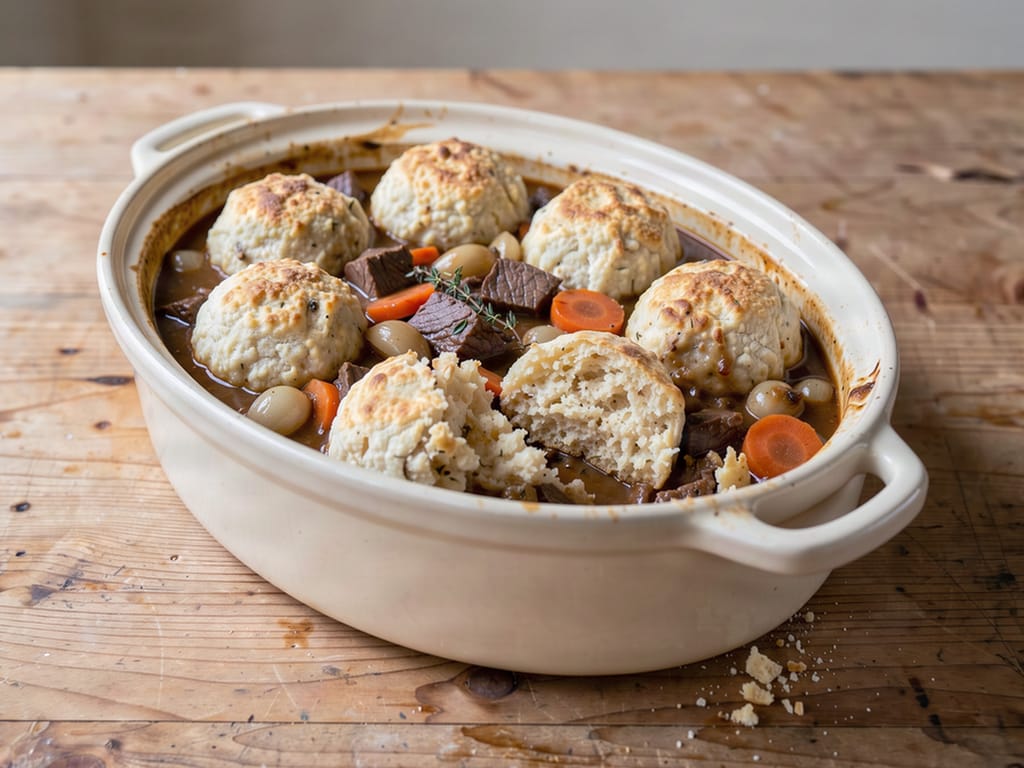
Updated Nov 21, 2026
Stew dumplings come out dense or hard when the baking powder has failed, the dough has been overmixed, or they cooked without enough steam under the lid. Fresh leavening, a soft dough and a covered, gently simmering stew fix most of it. Here is how to tell which went wrong.
Stew dumplings turn out dense or hard when they don't rise, are overworked, or are cooked without enough steam. The usual culprits are old baking powder, plain flour used instead of self-raising, a heavy hand when mixing, or a lid that was lifted too often.
This article is about the dumplings that cook on top of a stew or soup: British suet dumplings and American drop dumplings for chicken and dumplings. Czech knedlíky (bread and potato dumplings) are a different family; see our guide to types of Czech dumplings.
Match what you have:
Heavy and tight all through, didn't grow: the leavening failed.
Tough, chewy and bready: the dough was overmixed or too dry.
Hard crust on top, raw and gummy inside: the lid was off, or the stew wasn't simmering.
Soggy and dense underneath: the stew was too thick, or the dumplings sat too deep.
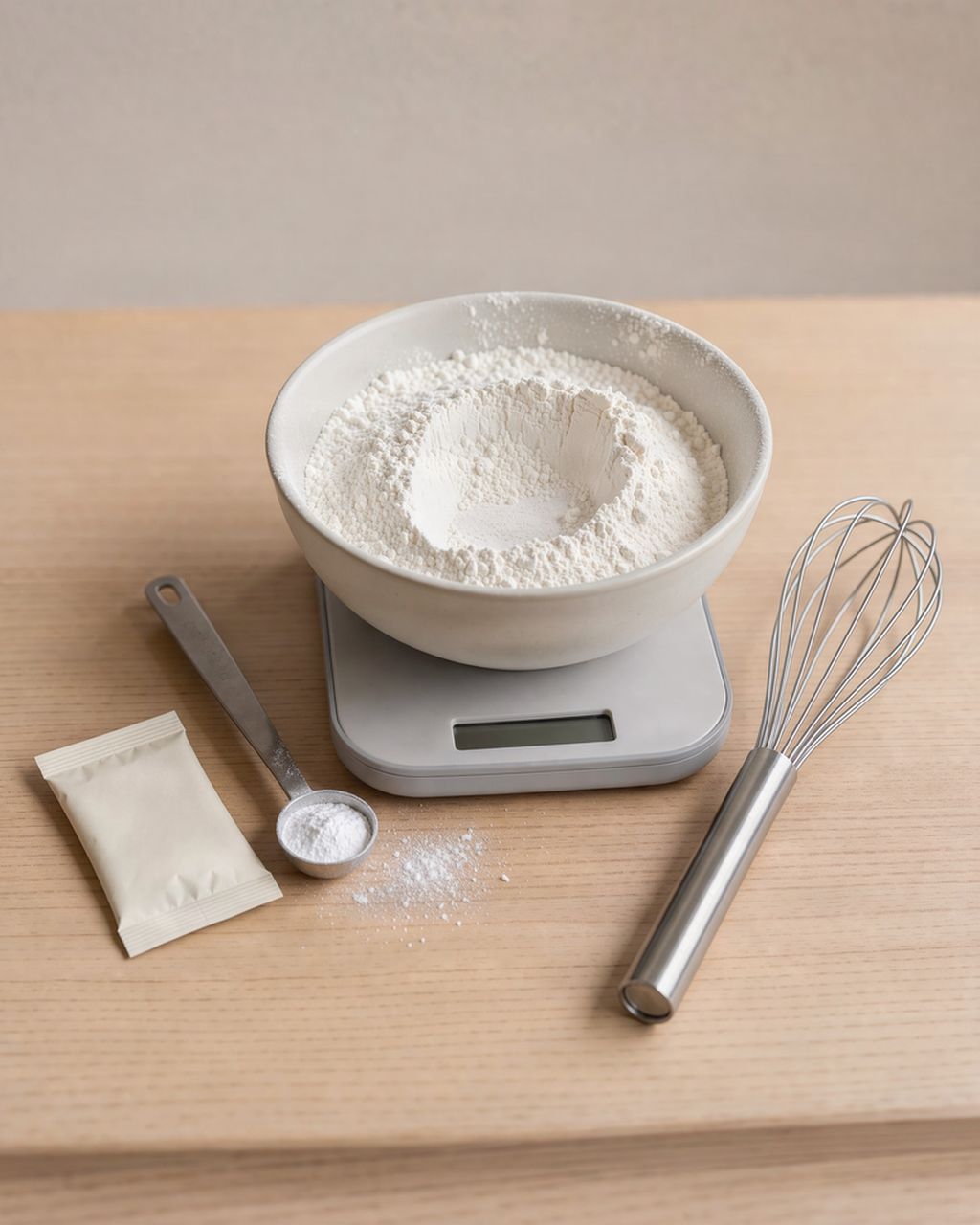
Light dumplings depend on a chemical raising agent. British suet dumplings are usually made with self-raising flour, which already contains it; American dumplings use all-purpose flour plus baking powder, or a baking mix such as Bisquick.
Where it goes wrong:
Baking powder that has lost its strength. It slowly loses power after opening. Our guide to whether baking powder is still good has a quick hot-water test.
Plain flour with no raising agent added, often because a British recipe said "flour" and meant self-raising. Self-raising flour is not sold everywhere in Europe; see self-raising flour in Europe for how to make it.
Too little leavening after scaling a recipe, or after swapping cups for grams. Our cups and spoons to grams calculator helps.
Mixed too early. Once the liquid goes in, the baking powder starts working. Drop the dumplings onto the stew soon after mixing.
If you have run out, our guide to what to substitute for baking powder covers the options.
Dumpling dough should be mixed only until no dry flour shows. It is meant to be soft, rough and a little shaggy, not smooth.
Stirring or kneading develops gluten, the same stretchy network that makes bread chewy. In a dumpling, that means a tight, bready texture instead of a light, fluffy one.
Mix with a fork or a knife, not a whisk.
Add the liquid all at once, stir briefly, stop.
Shape with floured hands and a light touch. Don't roll the balls tightly.
For suet dumplings, rub or stir the suet in lightly so it stays in little flakes. Those flakes melt as the dumplings cook and leave a lighter texture.
British dumplings traditionally use shredded suet, beef or vegetable, in a ratio of roughly two parts self-raising flour to one part suet by weight. A common version is 100 g self-raising flour to 50 g shredded suet, bound with a little cold water.
Too little fat makes a firmer, breadier dumpling. Butter can replace suet: grate it cold into the flour. Vegetable suet works the same as beef suet and suits vegetarians.
The dough should be soft and slightly sticky. If it is stiff and dry, the dumplings will be dense and can crack. Add water a spoonful at a time until it just holds together. American drop dumplings use a wetter batter that you spoon straight onto the stew.
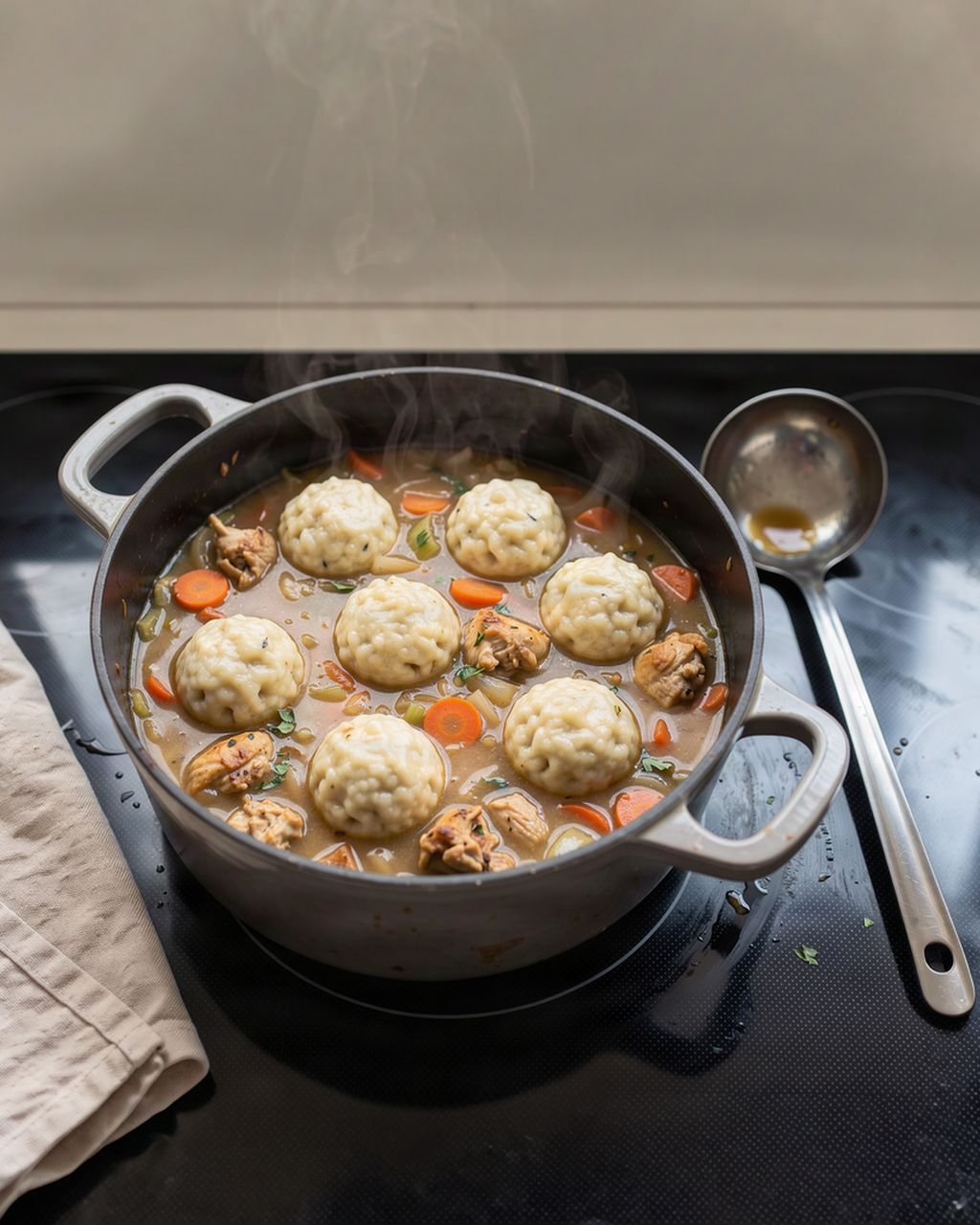
Dumplings cook partly by simmering underneath and partly by steaming on top. Both need the right conditions:
Keep the lid on. The steam cooks the tops and makes them puff. If you keep lifting the lid, the tops stay doughy while the bottoms overcook. Many recipes leave the lid off only near the end to brown the tops in the oven.
Keep the stew at a gentle simmer. Too low and the dumplings sit in liquid and go heavy; a hard boil can break them up.
Leave space. Dumplings roughly double in size. Crowded, they steam into each other and stay dense where they touch.
Have enough liquid, but not too much. They should sit on the surface, half in and half out. In a very thick stew they sink in and turn stodgy; thin the stew with a little hot stock first. If the stew is too thin instead, thicken it after the dumplings are done; our guide to thickening goulash has methods for any stew.
A dumpling that is dense only in the center may simply be undercooked. Cut one open: the inside should be light and fluffy all through, with no wet, doughy layer. Dumplings are made with raw flour, and the FDA advises against eating raw flour or dough, so a gummy center needs more time under the lid.
If one is undercooked, put the lid back on and keep the stew at a gentle simmer for a few more minutes, then test again. Larger dumplings need longer than small ones, so making them evenly sized helps them cook through together.
Slow cooker dumplings often stay dense because the surface is not hot enough to steam them well. Turn the cooker to high for the dumplings, and keep the lid on.
Recipe of the week, one tip that saves you time and one deal from the shop. Unsubscribe in one click.
The next issue goes out on Thursday, November 26.
Dumplings that sink to the bottom of the stew and stay there usually come out heavy. They sink when:
The stew is too thin. There is nothing to hold them up. Simmer it down a little or thicken it lightly first.
The dough is too dense, from old baking powder or overmixing, so they don't puff and float.
They are too big. Large dumplings are heavier and cook unevenly.
The stew wasn't simmering when they went in. In cooler liquid they absorb more of it and get waterlogged.
It is normal for dumplings to sit low at first and rise a little as they cook. If they are still on the bottom near the end, they will likely be dense.
Light dumplings need fresh baking powder or self-raising flour, a soft dough mixed only until combined, and steam. Drop them onto a gently simmering stew, leave space for them to grow, and keep the lid on.
Dumplings that are hard outside and raw inside usually cooked without the lid or on too little heat, so the tops dried out before the middle cooked. Keep the lid on, keep the stew simmering and make them evenly sized.
Dumplings are chewy when the dough is overmixed or kneaded, which builds gluten and gives a bready texture. Stir only until no dry flour shows and shape them with a light touch.
Yes, you can make dumplings without suet by rubbing cold butter into the flour, or by using vegetable suet. American drop dumplings use butter or shortening and a wetter batter.
Slow cooker dumplings are often dense because the surface isn't hot enough to steam them. Turn the cooker to high when you add them and keep the lid on until they are fluffy all the way through.
One recipe worth heating the oven for, one tip, and one deal from the shop. Nothing else.