Why Are My Scones Dry or Hard? Flour, Liquid, Baking Time and Storage
Why Are My Scones Flat? Five Reasons Scones Don't Rise
Updated Nov 20, 2026
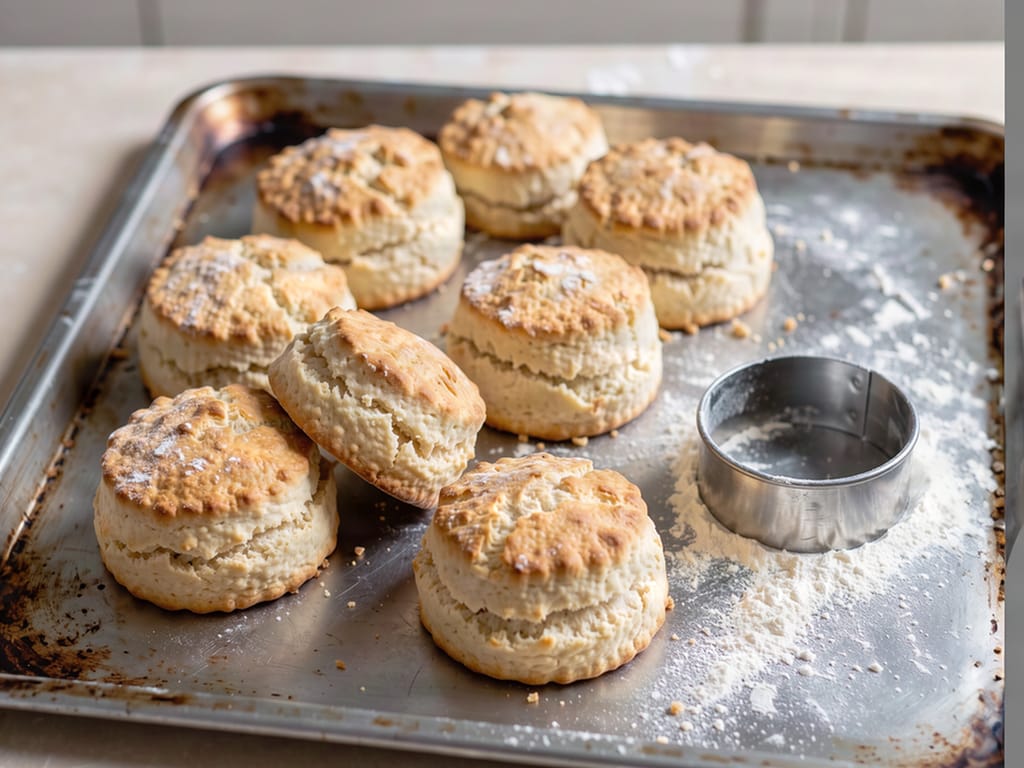
Scones come out flat when the butter was warm, the dough was overmixed or too wet, the cutter was twisted, the baking powder was old, or the oven was not hot enough. Scones need cold fat, a light hand and a hot oven so they rise fast and set before they spread. Fix those five things and they stand tall with the classic split around the middle.
A scone rises in the first few minutes in the oven. The raising agent makes gas, the water in the butter and milk turns to steam, and the dough has to set around them before the butter melts and it slumps. Anything that slows that race, or lets the gas escape, gives you flat scones.
The five usual causes:
warm butter or warm dough
overmixing or a dough that is too wet
a twisted cutter or dough patted too thin
old baking powder or old self-raising flour
an oven that is not hot enough
Flat and dense usually points to old baking powder or overmixing. Flat and wide, with a greasy base, points to warm butter, a wet dough or a cool oven.
Seasonal baking plans, tested recipes and kitchen tricks that save you time. Unsubscribe in one click.
Cold butter is what makes a scone light. Small pieces of cold fat melt in the oven and release steam, which lifts the layers. Butter that is soft before it goes in smears into the flour and simply melts, so the scones spread.
Use butter straight from the fridge, cut into small cubes, or grate it frozen.
Rub it in quickly with your fingertips, the coolest part of your hands, just until the mixture looks like breadcrumbs. BBC Good Food warns against over-rubbing.
Use cold milk or buttermilk.
On a warm day, chill the bowl of rubbed-in flour for 15 minutes before adding the liquid.
Get the scones into the oven soon after cutting. Dough left on the counter in a warm kitchen loses its chill.
Scone dough should be soft and a little sticky, and handled as little as possible.
Overmixing develops gluten and knocks out the gas the baking powder has already started to make. The scones rise less and turn tough. BBC Good Food kneads its ultimate scones just three or four times, only to smooth out the cracks.
Too much liquid makes a slack dough that spreads before it can rise. If the dough runs or will not hold a cut edge, it is too wet. Add the last part of the liquid gradually, and stop when the dough comes together.
Too little liquid is just as bad the other way: dry dough cannot puff and bakes heavy.
Mix with a table knife or a spatula rather than your hands, tip the dough out as soon as it holds together, and pat it out rather than rolling. If you do not have buttermilk, our guide to buttermilk substitutes covers the swaps.
How you cut the scones matters more than most people expect.
Do not twist the cutter. Press it straight down firmly with the palm of your hand and lift it straight up. Twisting pinches and seals the edges, so the scone rises unevenly or not at all at the sides.
Dip the cutter in flour between scones so it cuts cleanly.
Use a sharp metal cutter. Blunt or plastic cutters squash the edges in the same way. BBC Good Food's recipe uses a 5.5 cm (about 2¼ inch) fluted cutter.
Do not pat the dough too thin. BBC Good Food's recipe asks for no less than 2 cm and no more than 2.5 cm (about ¾ to 1 inch). Thinner dough makes thin scones, however well they rise.
Place the scones close together on the tray, or just touching. Neighbors support each other and push upward instead of outward.
The second cut from rerolled scraps always rises a little less. Press the scraps together gently, not into a ball.
Baking powder slowly loses strength once the tub is opened, especially in a humid kitchen. Self-raising flour, which has baking powder mixed in, loses it too.
A quick test: stir half a teaspoon of baking powder into a little hot water. A strong fizz means it is fine. A few lazy bubbles mean it is time for a new tub. Our baking powder page explains how it works.
Also check the amount. Many British recipes use self-raising flour and a teaspoon or two of extra baking powder. If you use plain flour instead, you need to add all the raising agent yourself. And if you have run out, our guide on what to substitute for baking powder gives the ratios.
Scones bake hot and fast. BBC Good Food's ultimate scones recipe uses 220 °C (about 425 °F) in a conventional oven, or 200 °C fan, for 10–12 minutes.
Preheat fully. Many ovens signal they are ready before they reach temperature. Give it an extra ten minutes.
Check the setting. If the recipe gives a conventional temperature and you use fan, reduce it by about 20 °C. The oven temperature converter does the math.
Use a cold tray. A warm tray starts melting the butter from below.
Put them in at once. A cool oven lets the butter melt before the scone has risen and set, and you get flat, pale scones with greasy bottoms.
If your scones brown before they rise, the oven may run hot instead. An oven thermometer settles the question.
Scones spread when the butter melts before the dough sets, usually because the butter or dough was warm, the dough was too wet, or the oven was not hot enough. Keep everything cold and bake in a fully preheated hot oven.
Twisting the cutter seals and drags the cut edges, so the scone cannot rise evenly and comes out lopsided or squat. Press the cutter straight down firmly and lift it straight up.
BBC Good Food bakes its ultimate scones at 220 °C (about 425 °F) in a conventional oven, or 200 °C fan, for 10–12 minutes. A hot oven makes the raising agent and steam work fast, before the butter can melt and the scones can spread.
Stir half a teaspoon of baking powder into a little hot water: if it fizzes hard, it still works; if it barely bubbles, replace it. Self-raising flour loses strength over time in the same way.
BBC Good Food's ultimate scones recipe pats the dough to between 2 and 2.5 cm (about ¾ to 1 inch). Thinner dough gives flat, biscuit-like scones however well everything else goes.
One recipe worth heating the oven for, one tip, and one deal from the shop. Nothing else.