Why Are My Dumplings Dense or Hard? Raising Agents, Mixing and Steam
Why Did My Dumplings Fall Apart? Boiling, Wet Dough and Stirring
Updated Nov 21, 2026
Stew dumplings fall apart when the dough is too wet, the stew is boiling instead of simmering, or they get stirred while they cook. A firmer dough, a gentle simmer and a closed lid keep them whole. Here is what went wrong and how to save the pot.
Stew dumplings fall apart when the dough is too wet, the stew is boiling too hard, or they are stirred and moved while they cook. Sometimes they are just undercooked: the outside dissolves into the liquid before the inside has set.
This is about dumplings cooked on stew or soup, British suet dumplings and American drop or rolled dumplings. Czech fruit dumplings are a different dough with their own problems; see why plum dumplings fall apart.
What you might see:
Dumplings dissolved into the stew, which turned cloudy and thick: dough too wet, or a hard boil.
Ragged, broken pieces: stirred, or crowded and knocking into each other.
A soft outer layer that washed away, raw core: undercooked or not covered.
Dumplings spread into flat puddles: too wet a dough, or not enough raising agent.
Seasonal baking plans, tested recipes and kitchen tricks that save you time. Unsubscribe in one click.
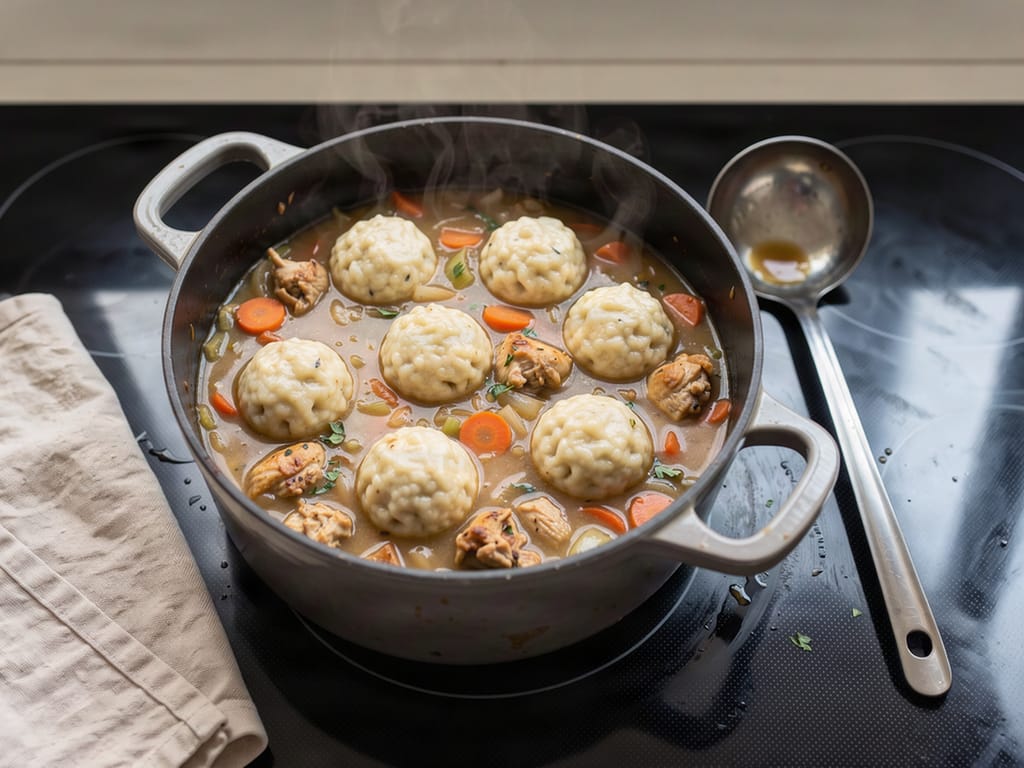
A rolling boil throws the dumplings around and wears their surface away before it has had time to set. Dumplings need a gentle simmer: small bubbles lazily breaking the surface.
Bring the stew to a simmer before adding the dumplings, then lower the heat so it stays gentle.
Lay the dumplings on top; don't push them under.
Put the lid on and leave it on.
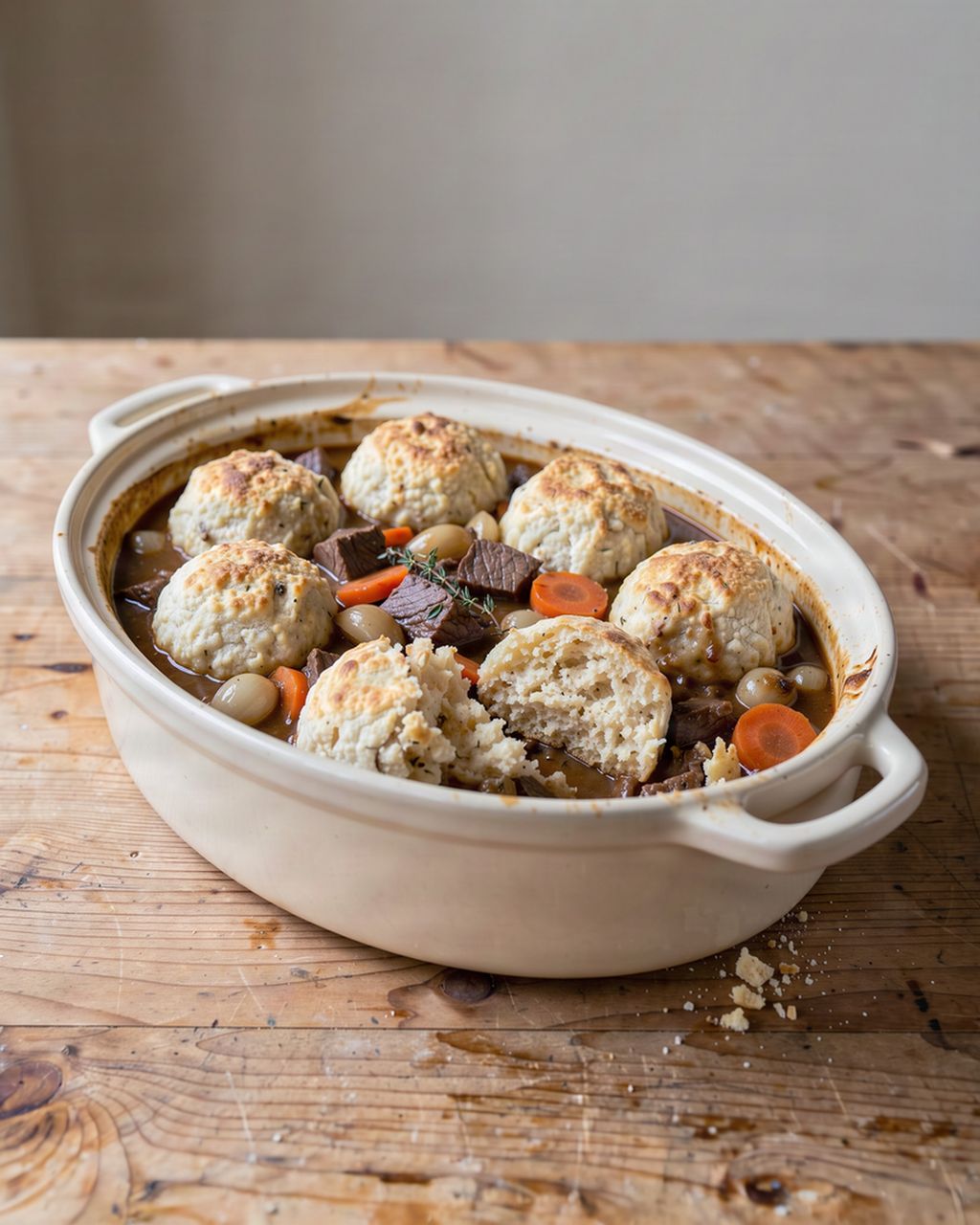
If cooking in the oven, a covered dish in a moderate oven gives an even, gentle heat.
Most dumplings that "dissolve in the soup" were cooked at a boil.
A dough that is too wet has nothing to hold it together until it sets. It spreads, softens and breaks apart.
British suet dumplings should be a soft but shapeable dough, about two parts self-raising flour to one part suet by weight, with just enough cold water to bind. If you can't roll it into a ball with floured hands, add a little flour.
American drop dumplings use a thick batter that holds its shape on a spoon. If it pours, it is too thin.
Rolled dumplings (Southern US chicken and dumplings) need a firmer dough that you roll out and cut into strips.
Measure carefully. A packed cup of flour weighs much more than a spooned and leveled one, and a loose cup much less; our cups and spoons to grams calculator helps. Old baking powder makes dumplings heavy rather than broken, but too much makes them rise quickly and crumble, so check the amount. Our guide to whether baking powder is still good has a quick test.
Once the dumplings are in, the stew should be left alone. Stirring breaks them open while they are still soft.
Stir the stew before you add the dumplings, not after.
Leave space between them. They roughly double in size, and crowded dumplings break as they push against each other.
Don't turn them over. They cook on the bottom in the liquid and on top in the steam.
Lift them out with a slotted spoon when serving, and ladle the stew around them.
A dumpling that falls apart when you serve it, with a wet, pasty middle, is not finished. The outer layer has softened in the liquid but the inside hasn't set.
Cut one open: it should be fluffy and dry inside all the way through. Dumplings are made with raw flour, and the FDA advises against eating raw flour or dough, so a gummy center means more time. Put the lid back on and keep the stew at a gentle simmer until they are done.
Making them evenly sized helps them cook together. Very large dumplings take longer to cook through and are more likely to break before they set.
The liquid matters too:
Too thin: the dumplings sink, sit in liquid and soften until they break apart. Reduce or thicken the stew a little before adding them, then do any final thickening after they are cooked. Our guide to thickening goulash covers flour, roux and other methods for any stew.
Too thick: the dumplings can't float on the surface and absorb the stew from below. They end up soggy and heavy. Thin it with a splash of hot stock.
The right consistency is a stew that coats a spoon but still moves freely, with dumplings sitting half in and half out of it.
If the dumplings dissolved into the stew, the dish isn't ruined. The flour has thickened it, much like a roux would. Keep the stew at a simmer for a few more minutes, stirring, so the dissolved dough cooks through and loses its raw-flour taste, then season again, since the dumplings soak up salt, and serve it as a thicker stew with bread.
If only a few broke, lift out the whole ones, stir the broken pieces into the stew and simmer for a few minutes until they are cooked through.
Next time, try making a slightly firmer dough, cooking at a gentle simmer with the lid on, and not touching them until they are done. For how Czech cooks handle their own dumplings, see our guide to types of Czech dumplings.
Dumplings made from a baking mix such as Bisquick follow the same rules, with one extra trap: the ratio of mix to milk.
Too much milk gives a runny batter that spreads into the stew and breaks up. The batter should be thick enough to hold its shape on a spoon.
Overmixing makes them tough rather than broken, so stir just until the mix is moistened.
Uncovered cooking: the package directions for these dumplings usually include a covered phase so the tops steam. Follow the timing on your package and keep the lid on for that part.
Baking mixes already contain the leavening, so don't add extra baking powder unless your recipe says so. Too much makes them rise fast and crumble.
Dumplings dissolve in soup when the soup is boiling too hard, the dough is too wet, or they are stirred while cooking. Add them to a gentle simmer, cover the pot and leave them alone until set.
Dumplings should be simmered, not boiled. A hard boil breaks them up, while a gentle simmer with the lid on lets them set and steam through.
Keep dumplings together by making the dough firm enough to shape, cooking them on a gently simmering stew with the lid on, giving them space, and not stirring until they are cooked through.
Dumplings are mushy when they sit in too much liquid, the dough is too wet, or they are undercooked in the middle. Keep them half out of the stew, firm up the dough and cook them covered until fluffy inside.
No, don't stir once the dumplings are in. Stir the stew before you add them, then cover and leave them so they don't break apart.
One recipe worth heating the oven for, one tip, and one deal from the shop. Nothing else.