Czech Dumplings (Knedlíky): Bread, Yeast, Quark and Potato Dumpling Recipes
Types of Czech Dumplings: Bread, Potato, Bacon, Fruit and More
Updated Nov 18, 2026
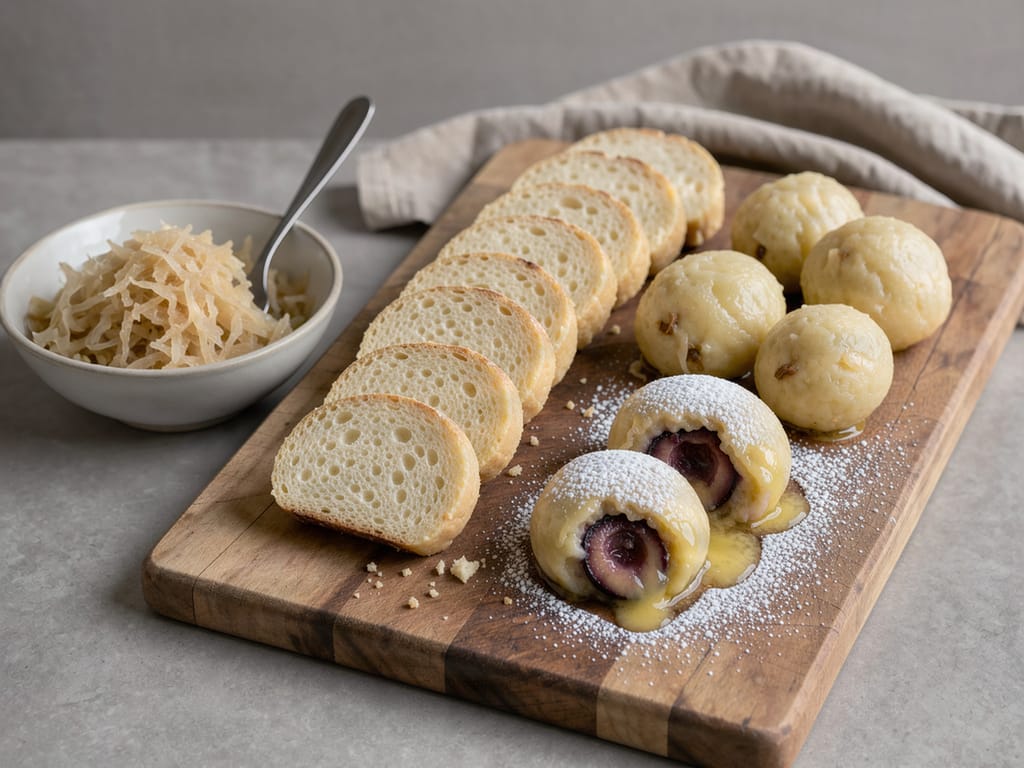
Czech dumplings (knedlíky) come in two big families: savory side dumplings, led by the sliced bread dumpling and the potato dumpling, and sweet fruit dumplings that are a meal on their own. In between sit regional and filled versions, such as the Karlovy Vary napkin dumpling, bacon dumplings and the rough, grated-potato chlupaté dumplings. Here is what each one is made of, what it is served with, and how they differ from German Knödel.
In Czech, a dumpling is a knedlík, and the plural is knedlíky. The word is borrowed from German Knödel, which tells you a lot about the shared Central European kitchen. The type goes in front: houskové knedlíky (bread dumplings), bramborové knedlíky (potato dumplings), ovocné knedlíky (fruit dumplings).
The main types you will meet in Czech homes and pubs are:
Houskový knedlík: the sliced bread dumpling, the default side for sauced meat.
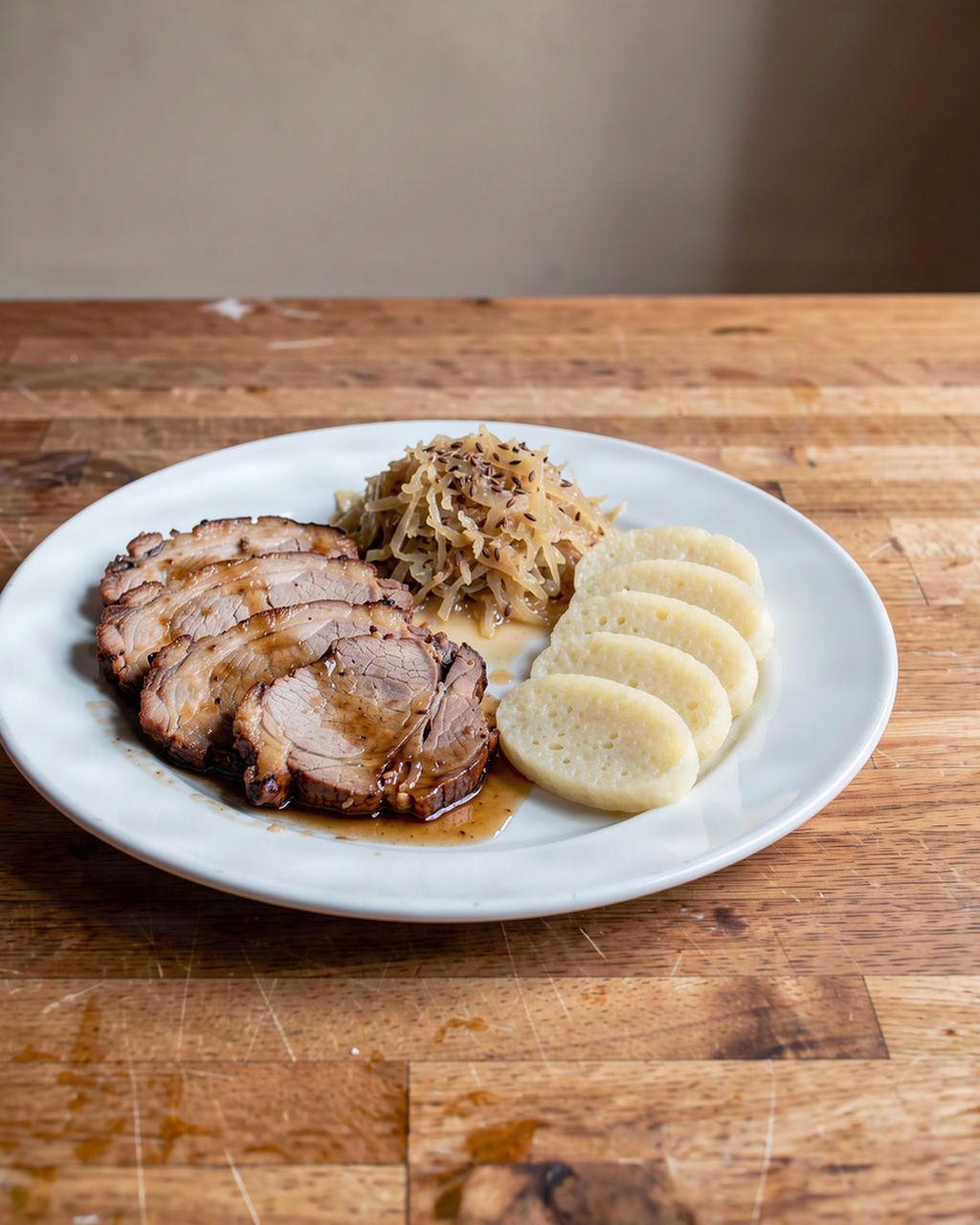
Bramborový knedlík: the potato dumpling, the classic partner for roast pork and sauerkraut.
Karlovarský knedlík: the Karlovy Vary (Carlsbad) dumpling, made from rolls soaked in milk and egg.
Špekové knedlíky: dumplings with diced bacon (špek), often from a bread-roll dough, sometimes from potato dough.
Chlupaté knedlíky: shaggy dumplings made from grated raw potato.
Ovocné knedlíky: fruit dumplings, a sweet main course.
If you just say knedlík in a Czech pub, people will assume you mean the bread dumpling.
Seasonal baking plans, tested recipes and kitchen tricks that save you time. Unsubscribe in one click.
This is the Czech dumpling most people mean. It is made of wheat flour, milk, egg, salt and a raising agent, usually yeast, sometimes baking powder. Cubes of day-old white rolls are worked into the dough. In Czech kitchens the flour is polohrubá mouka (semi-coarse flour), which is a little grainier than US all-purpose or UK plain flour and gives a lighter, springier slice.
The dough is shaped into long logs, left to rise if it has yeast, then boiled in salted water or steamed. Once cooked, the log is pierced to let steam out and cut into slices. Many cooks still slice it with a length of thread wrapped around the log, so the slices are not squashed by a knife.
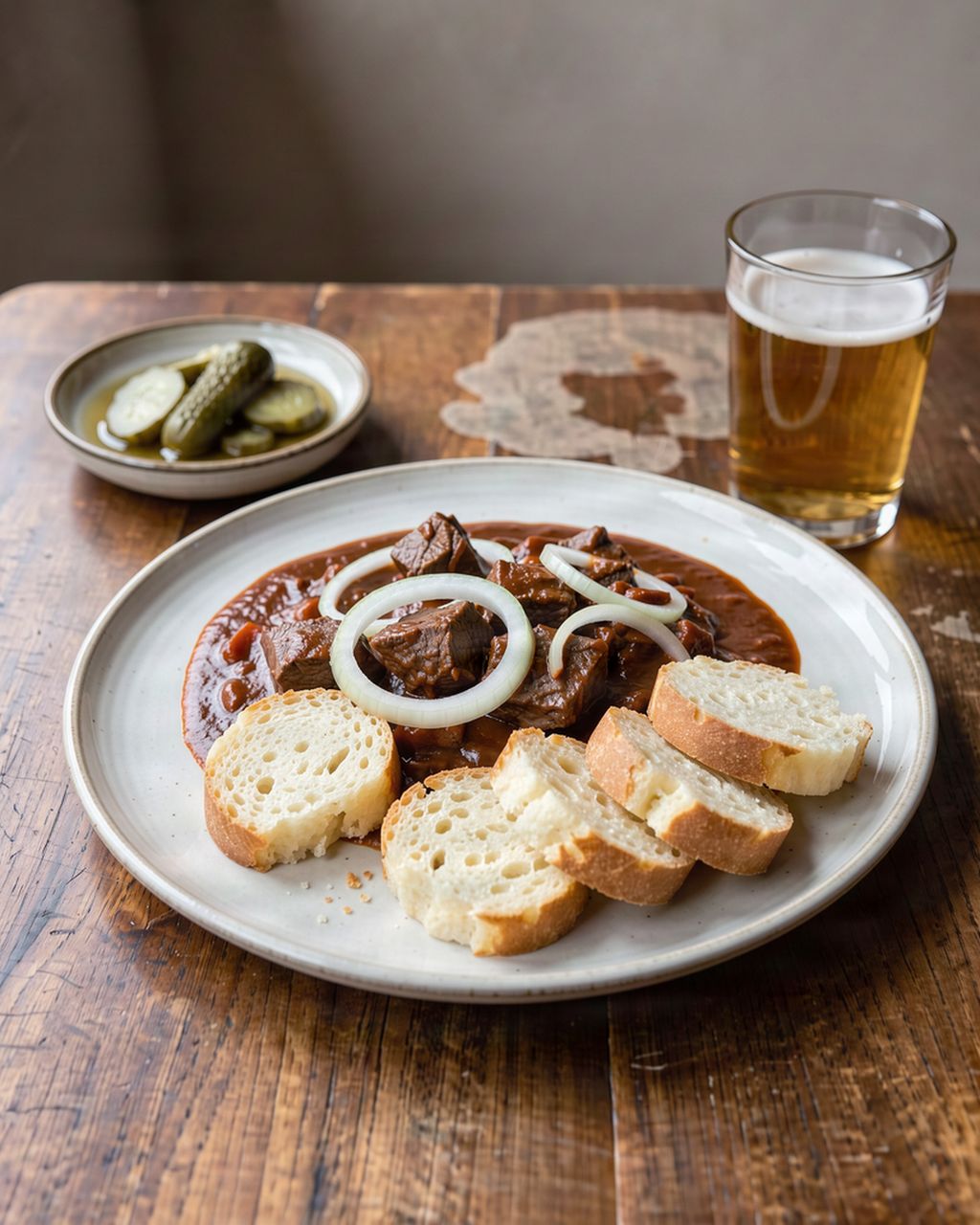
A good bread dumpling is fluffy and holey, with soft bread pockets that drink up sauce. That is its whole job: it is there to carry the sauce of svíčková (beef sirloin in cream sauce), goulash, dill sauce or tomato sauce. You can see what store-bought ones look like on our bread dumpling page.
Bread dumplings freeze well in slices; see how to freeze dumplings for raw versus cooked.
Potato dumplings are made from floury potatoes that are boiled, cooled (often a day ahead) and grated or riced, then bound with flour, egg and salt. Some cooks add a little fine semolina for structure. They are shaped into rolls or balls and boiled.
They are denser and more tender than bread dumplings, with a clear potato flavor. Their classic place is vepřo knedlo zelo: roast pork, dumplings and braised sauerkraut, often with both bread and potato dumplings on the same plate. They also go with roast duck or goose and red cabbage.
The dough is sensitive to the potatoes. Waxy potatoes make it sticky and need more flour, which makes the dumplings heavy. Floury (baking) potatoes, Czech type C, are the usual choice.
The Karlovy Vary, or Carlsbad, dumpling is a different idea. Instead of a flour dough with bread in it, it is mostly bread: diced rolls soaked in milk and beaten egg, with butter, parsley and a pinch of nutmeg. The mixture is wrapped in a cloth or napkin, which is why it is also called a napkin dumpling, then simmered and sliced.
The result is softer, richer and more eggy than a regular bread dumpling. It is served with the same sauced dishes, especially game and mushroom sauces. You can also buy it ready-made in Czech shops.
These two are the farmhouse end of the family.
Špekové knedlíky (bacon dumplings) are potato dumplings with diced smoked bacon or smoked meat, either mixed into the dough or wrapped inside. They are usually served with braised sauerkraut and fried onion, as a full meal rather than a side.
Chlupaté knedlíky (literally hairy or shaggy dumplings) are made mainly from raw grated potato squeezed of its liquid and bound with flour. The grated strands give a rough surface, hence the name. They are firm and slightly chewy, and come with sauerkraut and smoked meat or with cabbage and crisp onions. See chlupaté knedlíky.
Both are regional and homely. You are more likely to meet them in a village pub in South Bohemia or Moravia than in Prague.
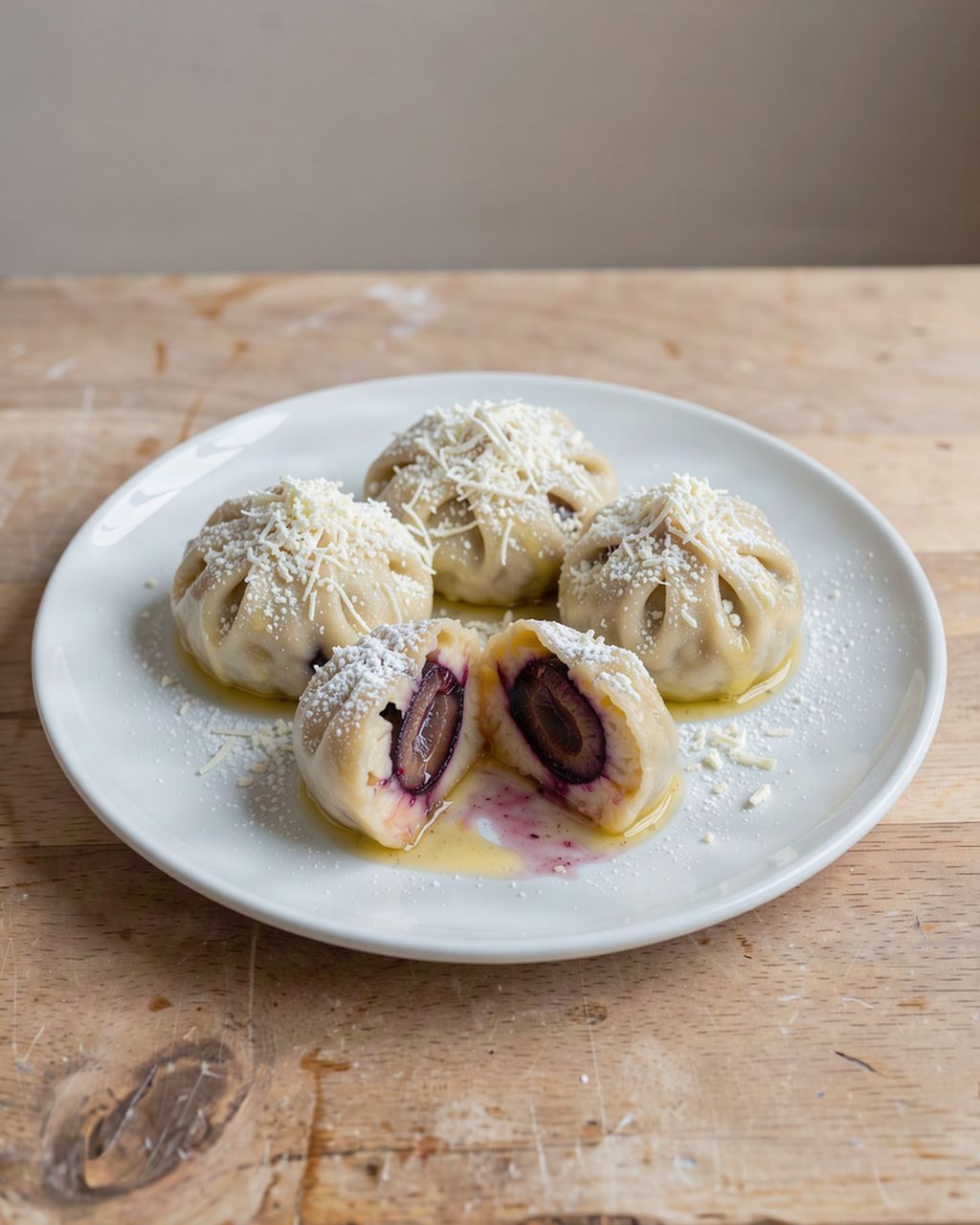
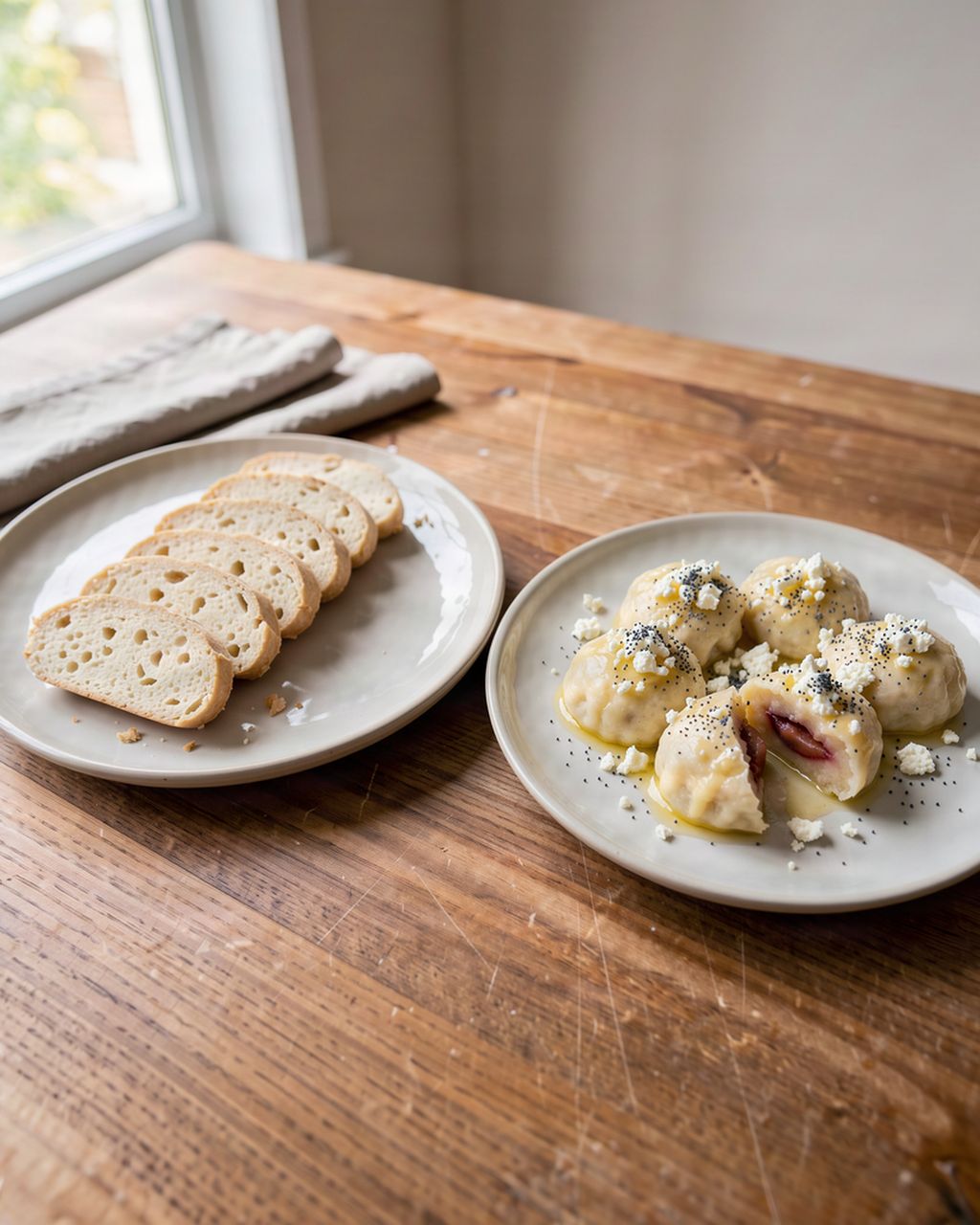
Fruit dumplings are a sweet main course in Czech homes, especially in summer. Whole plums, apricots, strawberries or blueberries are wrapped in dough and boiled. The doughs vary by family:
Tvaroh dough: made with tvaroh (Czech curd cheese, close to quark or farmer's cheese), soft and slightly tangy. See curd cheese dumplings.
Potato dough: like the savory potato dumpling, thin around the fruit.
Yeast dough (kynuté knedlíky): fluffy, bread-like dumplings, also filled with jam or plum butter. See yeasted dough for sweet dumplings.
Choux dough (odpalované těsto): light and holds together well.
They are served hot with melted butter, sugar and grated tvaroh, or with sweetened ground poppy seed. If yours fall apart in the pot, plum dumplings: which dough to choose explains why.
The names are related, the dumplings often are not.
German Semmelknödel are round balls made mostly of stale rolls soaked in milk and egg, with little or no flour. Their closest Czech relative is the Karlovy Vary dumpling, not the everyday bread dumpling.
Czech houskový knedlík is a proper dough of flour, milk, egg and raising agent with bread cubes in it, cooked as a log and sliced. It is lighter and more uniform.
Potato dumplings are the closest match: German Kartoffelknödel and Czech bramborové knedlíky are made in a similar way, though Czech ones are often shaped as rolls and sliced.
So if a German or Austrian recipe calls for Knödel, expect a round ball. If a Czech recipe calls for knedlík with a sauce, expect slices.
A Czech bread dumpling (houskový knedlík) is made of wheat flour, milk, egg, salt, a raising agent (yeast or baking powder) and cubes of day-old white bread rolls. The dough is shaped into logs, boiled or steamed, and sliced before serving.
Czech dumplings are called knedlíky (singular knedlík). The word comes from German Knödel; the type is named in front of it, as in houskové knedlíky (bread dumplings) or bramborové knedlíky (potato dumplings).
No, the everyday Czech bread dumpling is different from German Semmelknödel. The Czech one is a flour dough with bread cubes, shaped into a log and sliced, while Semmelknödel are round balls made mostly of soaked bread with little flour; the Czech Karlovy Vary dumpling is the closer relative.
Savory Czech dumplings are eaten with sauced meat dishes: bread dumplings with svíčková, goulash and roast pork, and potato dumplings with roast pork or duck and sauerkraut. Fruit dumplings are a sweet main course, topped with melted butter, sugar and grated tvaroh or poppy seed.
Czech bread dumplings are sliced because they are cooked as long logs rather than balls. Slices soak up sauce well, and many Czech cooks still cut them with a piece of thread so the slices stay fluffy instead of being pressed flat by a knife.
One recipe worth heating the oven for, one tip, and one deal from the shop. Nothing else.