Why Does My Cake Taste Like Baking Powder? Bitter, Metallic or Soapy
Is My Baking Powder Still Good? The Water Test and When to Replace It
Updated Nov 21, 2026
Baking powder is still good if a teaspoon stirred into warm water bubbles right away, but that test only catches powder that is completely dead. Rising power fades well before the fizz stops, so the opening date matters more: Clabber Girl advises using an opened can within 6 months. Here is how to test it, how long it lasts, and how to keep it working.
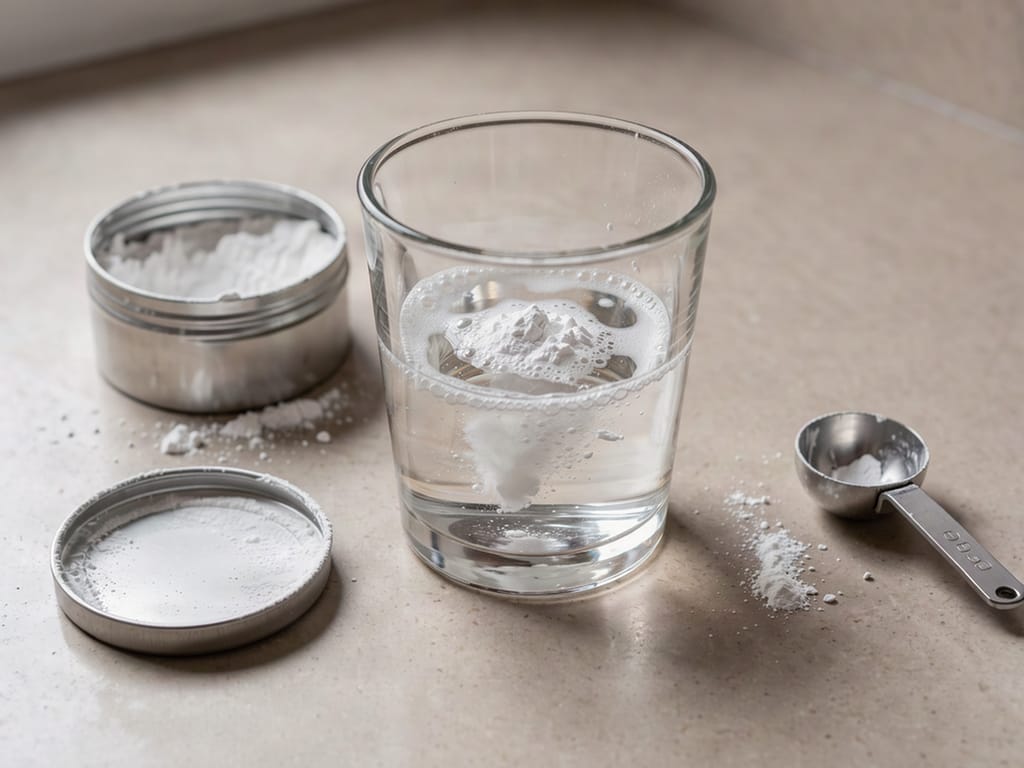
The quick test takes a minute:
Put 1 teaspoon of baking powder in a glass or small bowl.
Pour in about ⅓ US cup (80 ml) of warm water. This is Clabber Girl's version of the test.
Watch. Clabber Girl's rule: if it bubbles right away, it's still good to use.
What you are looking for is an immediate, lively fizz. A few lazy bubbles mean the powder is weak. No reaction at all means it is dead.
Don't confuse this with the baking soda test. Baking soda needs an acid such as vinegar or lemon juice to fizz; baking powder already contains its own acid, so plain water is enough. Our guide to baking soda substitutes explains how the two differ.
America's Test Kitchen tested this. Its testers opened cans of baking powder month by month over a year, then compared them. In the water test, every powder bubbled, even the one open for 12 months. In biscuits, the difference showed: rise started to drop off with powder open for about 6 months, and by 10 months the biscuits rose about half as high as with fresh powder.
So the water test is good at catching powder that is completely dead, and poor at telling you whether it is still at full strength. ATK's advice is to write the opening date on the can and replace baking powder 6 months after opening.
That matches what the manufacturers say. Clabber Girl's FAQ states that an unopened can typically lasts up to 18 months, and an opened one is best used within 6 months for the best rise.
Two sources we trust on this:
North Dakota State University Extension (food storage guide): unopened, 6 to 18 months; opened, 3 to 6 months. Its note: keep it dry and covered.
Clabber Girl (baking powder maker): unopened, up to 18 months; opened, best within 6 months.
These times are about how well it raises your bake. Baking powder doesn't spoil like fresh food; it slowly loses its fizz. The risk with old baking powder is a flat cake, dense scones or heavy pancakes.
Always go by the best-before date on your pack for unopened powder, and by the date you opened it once it's open.
Baking powder is a dry mix of baking soda, one or two acids and a starch. The starch keeps the soda and acid apart and soaks up stray moisture. As soon as water gets in, the soda and acid start reacting and release carbon dioxide, the gas that raises your batter.
In the tin, that reaction is the enemy. Each time humid air reaches the powder, or a damp spoon goes in, a little of it reacts and is lost. Over months, there is less and less left to react in the oven.
Signs it has taken up moisture:
Hard lumps or a solid cake in the tin.
A weak fizz in the water test.
Bakes that rise less than they used to, with the same recipe.
Close the lid tightly after every use. Clabber Girl advises a cool, dry place.
Keep it away from the stove, kettle and dishwasher, where warm, damp air collects.
Use a dry spoon. One wet measuring spoon can start a clump.
Skip the fridge and freezer. Cold cans pick up condensation every time you take them out, and moisture is what spends baking powder.
Buy small. If you bake only now and then, a small can or single-use sachets make more sense than a big tub. In Czech shops, baking powder is mostly sold in sachets: a Czech Dr. Oetker sachet holds 12 g and is meant for 500 g of flour. Our guide to European baking sachets in grams converts them to spoons.
Write the date on the can when you open it.
Old baking powder is a common culprit, but not the only one. Before you blame the can, check the other usual suspects:
The batter waited too long. Some baking powders are single-acting and do most of their work as soon as they get wet; check the label. Batter left standing loses gas before it reaches the oven.
The oven wasn't fully preheated. Ovens can run hotter or cooler than the dial, and a cool oven gives a flat, pale bake.
Overmixing knocked out air, or undermixing left pockets of unmixed powder.
The amount was converted wrongly, for example a European sachet read as a teaspoon.
If the water test shows a lively fizz and the can is fairly new, look at these first.
Recipe of the week, one tip that saves you time and one deal from the shop. Unsubscribe in one click.
The next issue goes out on Thursday, November 26.
If the water test shows almost no fizz, don't try to compensate by adding more. Weak powder used in larger amounts can still leave a bitter, chemical taste, and old powder rarely gives an even rise.
Instead:
Make a quick substitute from baking soda and an acid such as cream of tartar. Our guide to what to substitute for baking powder gives the ratios.
Switch to a recipe that uses baking soda and an acidic ingredient like buttermilk or yogurt.
Use whipped egg whites for lift in sponge-style cakes, where the recipe allows.
Then buy a fresh can and write the opening date on it. You can read more about baking powder on our ingredient page.
Stir 1 teaspoon of baking powder into ⅓ US cup of warm water; Clabber Girl says that if it bubbles right away, it is still good to use. If it barely fizzes, replace it. America's Test Kitchen found older powder still fizzed but rose less, so also check how long the can has been open.
North Dakota State University Extension gives 3 to 6 months for opened baking powder, kept dry and covered, and Clabber Girl says an opened can is best used within 6 months for the best rise. Unopened, NDSU gives 6 to 18 months.
It may still work, but expect a weaker rise, so test it first and use fresh powder for anything that depends on lift, such as sponge cake or scones. The dates and storage times for baking powder are about rising power.
Hard or clumpy baking powder has taken up moisture, which starts the reaction in the tin and uses up some of its rising power. Test it; if it barely fizzes, replace it.
No. Clabber Girl advises storing baking powder in a cool, dry place, and the fridge is damp and causes condensation each time you take the can out. A closed tin in a cupboard away from the stove is best.
One recipe worth heating the oven for, one tip, and one deal from the shop. Nothing else.