Soft honey gingerbread cookies that never go hard
What to Use Instead of Food Colouring: Natural Colours for Icing, Cream & Dough
Updated Oct 6, 2026
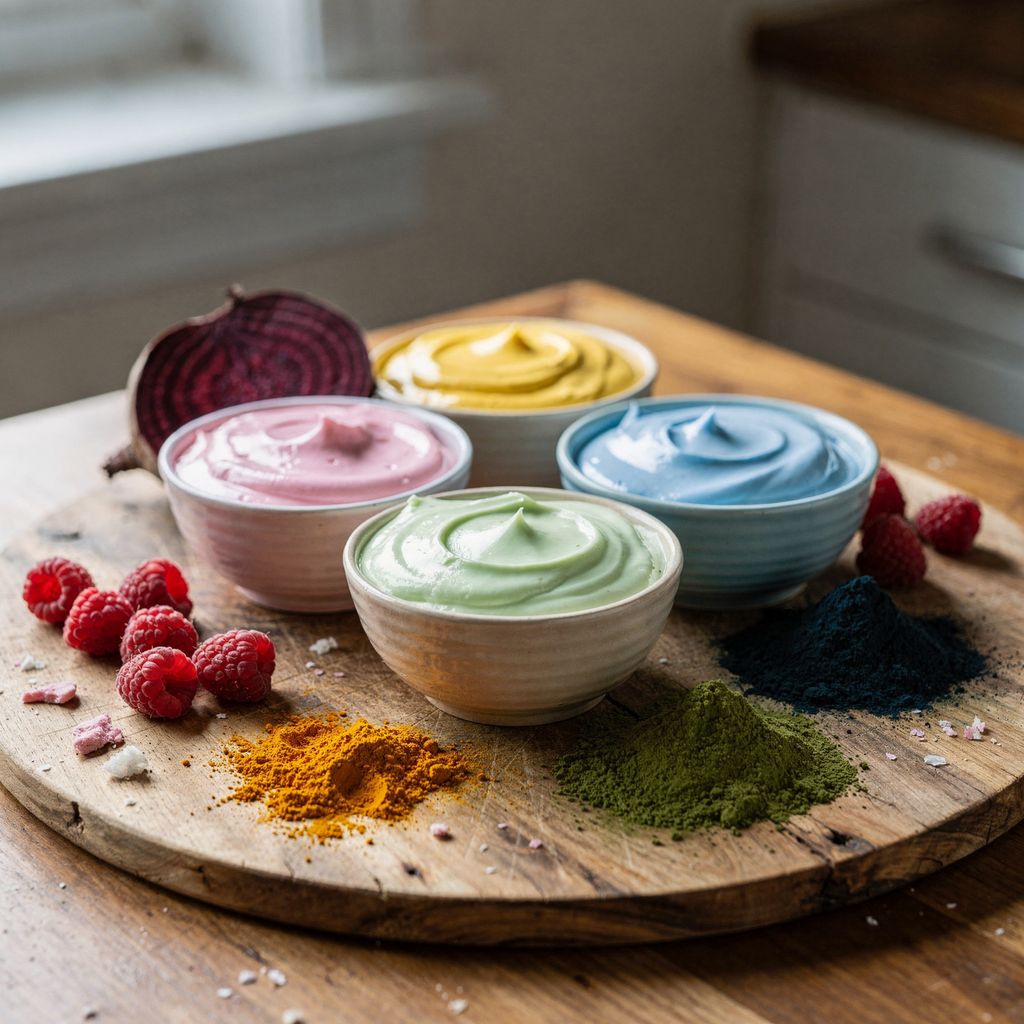
You can swap food colouring for naturally colourful ingredients — ideally powdered ones: freeze-dried raspberries or beetroot for pink, turmeric for yellow, matcha for green, blue spirulina for blue, and cocoa for brown. They work best in cold applications like icing, cream or whipped cream, since most of them turn brown or fade in the oven. Expect pastel tones rather than deep, saturated colour, and each one will add a touch of its own flavour to your bake. Below you'll find what to use for which shade, how much to add, and when it's worth reaching for a gel colour instead.
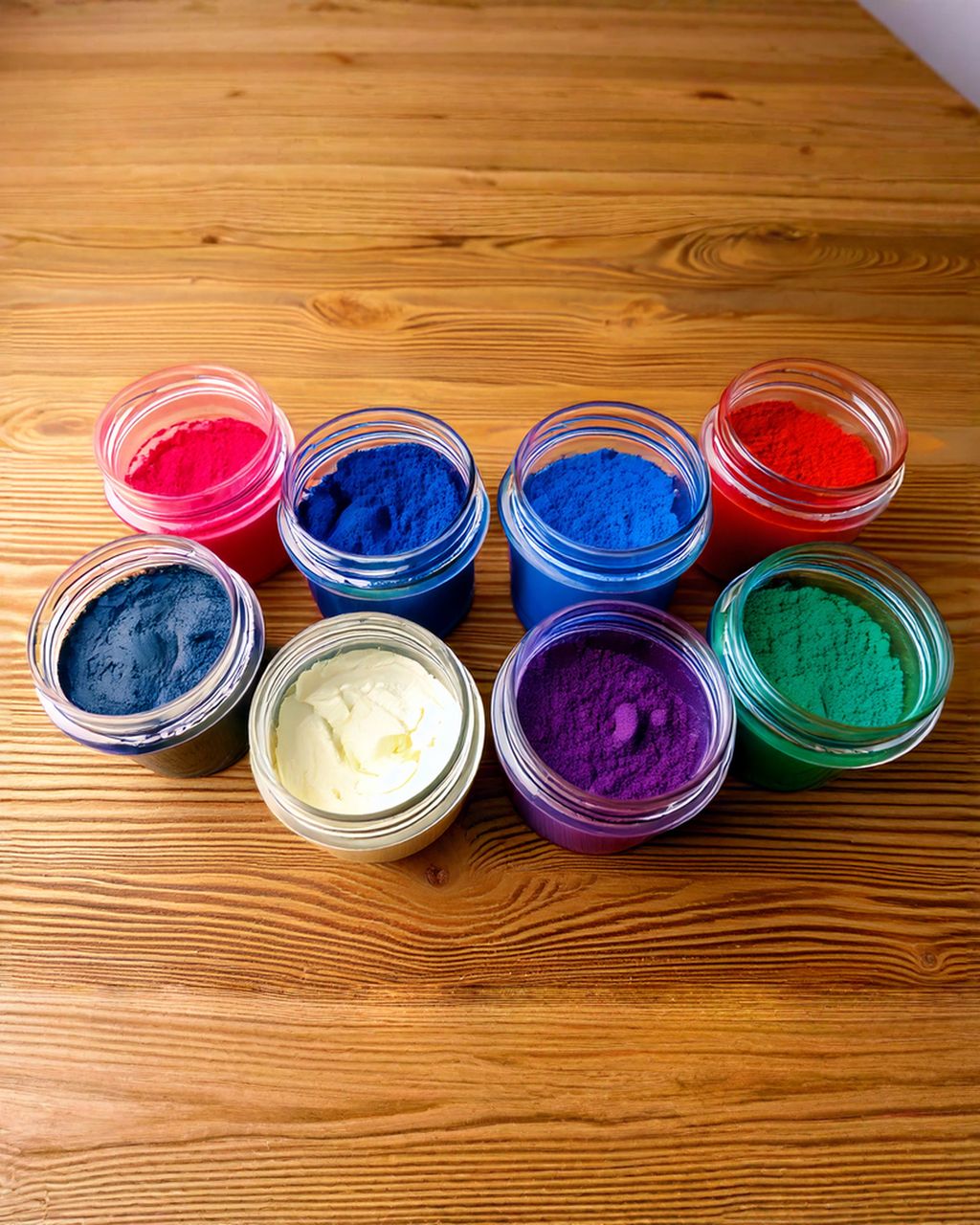
Quick overview: pink from raspberries, strawberries or beetroot, yellow from turmeric or saffron, green from matcha or spinach, blue from spirulina or red cabbage, purple from blueberries or chokeberry, and brown from cocoa or coffee. The amounts below are for roughly 100 g of icing sugar in a glaze. Always start at the lower end and add gradually.
Pink and red: freeze-dried raspberries or strawberries, ground to a powder (1–2 teaspoons). These give a lovely pink shade plus a fruity flavour. Beetroot, whether as juice or powder (from a few drops up to ½ teaspoon), colours more strongly, but in larger amounts tastes earthy.
Yellow and orange: turmeric (start with a pinch, max ⅛ teaspoon) — in larger amounts it turns bitter. Saffron soaked in a teaspoon of warm water gives a golden hue and aroma; use that water to replace part of the liquid in the glaze rather than adding it on top. For orange, carrot or sea buckthorn powder works well.
Green: matcha (½–1 teaspoon) gives a soft olive green with a slightly bitter, tea-like edge. Spinach powder colours more neutrally but can be noticeable in a thick cream.
Blue: blue spirulina, i.e. the phycocyanin extract (just a knife-tip amount). Powdered green spirulina tends to colour more blue-green and has a strong sea-like taste. Another option is red cabbage juice with a pinch of baking soda — more on that below.
Purple: blueberries, chokeberry or blackcurrant as freeze-dried powder, or a reduced juice.
Brown to black: cocoa, black (heavily alkalised) cocoa, or strong coffee. These are the only natural routes to dark shades that still taste good.
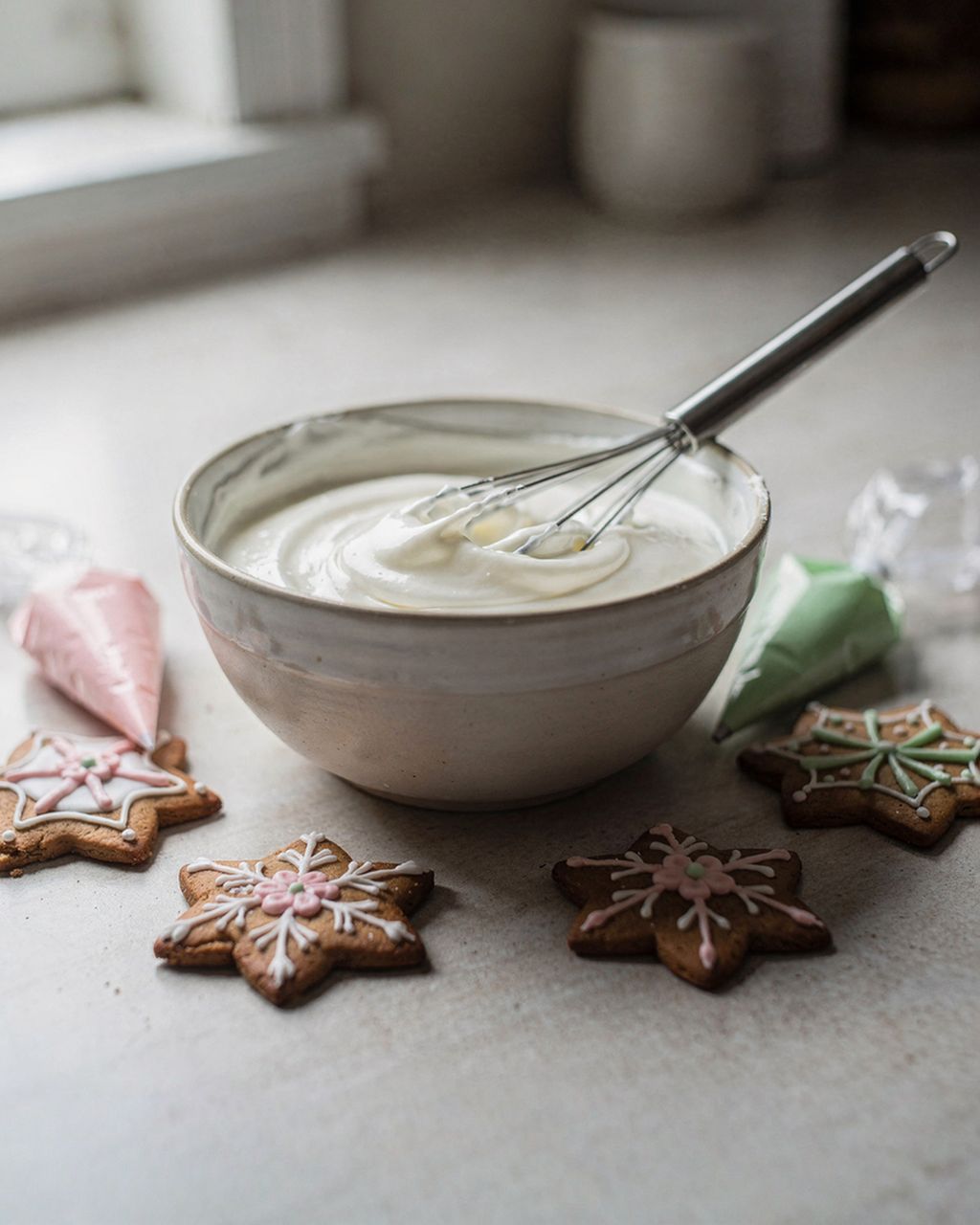
For icing, stick mainly to powders, not juices. Every extra teaspoon of liquid changes the texture — a royal icing meant to hold a clean line can quickly turn into a runny glaze that slides off the edge of a gingerbread cookie.
If you do end up colouring with juice:
Use it to replace the water, not in addition to it. For a simple icing sugar glaze, mix the sugar directly with raspberry or beetroot juice instead of water or lemon juice.
Reduce the juice first — this works well with raspberry or blueberry juice. Simmer it gently and let it cool completely. Don't boil beetroot juice, though: betanin breaks down with heat and the colour turns brown. Use beetroot powder instead.
Sieve the powder. Crush freeze-dried fruit and push it through a fine sieve, or you'll end up with seeds and specks in the icing.
Let the icing rest for 10–15 minutes. The powder dissolves gradually and the colour deepens further. Skip this pause and you risk over-colouring it.
For the exact ratios and consistency of royal icing, see our article on royal icing: ratios, consistency and colouring.
Cream and whipped cream are easier to work with, since fat carries colour well and a little extra moisture doesn't matter. Freeze-dried raspberries in a mascarpone cream are one of the most reliable natural colours there is.
Most natural colourings don't survive baking: beetroot, raspberries, blueberries and spirulina turn brown or fade in the oven, while only turmeric, saffron, cocoa and coffee hold up. Heat and the pH of the batter mainly affect red and purple pigments. According to natural colouring manufacturers, betanin from beetroot is heat-sensitive and browns during baking. Anthocyanins from berries and red cabbage shift towards purple, grey or green in an alkaline environment, such as a batter containing baking soda.
Survive baking: turmeric and saffron (both handle heat well), though turmeric can turn reddish or brown in a batter with baking soda. Cocoa and coffee also hold up, as does matcha to some extent, though it darkens to olive in the oven.
Don't survive baking: beetroot, raspberries, strawberries, blueberries and spirulina. The baked result tends to come out beige, brown or slightly green instead.
Beetroot in batter is still worth using, just for a different reason: it adds moistness and depth of flavour, not pink colour. You can see this in our gluten-free beetroot brownies or beetroot and cinnamon rolls. If you want baked goods that are genuinely vibrant in colour, put the natural colouring into the icing or filling instead, where it stays cold.
Anthocyanins from red cabbage or blueberries act like a pH indicator, so a natural colour can shift shade depending on how acidic or alkaline the icing is. In an acidic environment they turn redder; in an alkaline one they shift towards blue or green. Red cabbage juice, for instance, is purple in a neutral environment. You can use this to your advantage, or at least keep it in mind.
Red cabbage: the juice is purple and turns blue with a pinch of baking soda. Add the soda in small pinches only — too much tastes soapy and pushes the colour towards green.
Raspberries with lemon: acid actually brightens the pink, so a drop of lemon juice in raspberry icing helps bring the colour out.
Natural food colouring always affects the flavour, and the more intense the colour you're after, the more noticeable it becomes.
Beetroot is earthy. Lemon, vanilla or raspberry help balance it out.
Turmeric turns bitter and spicy in larger amounts. Stick to a pinch.
Green spirulina tastes of the sea. For blue, go for the blue extract instead, which is almost flavourless.
Matcha has a pleasant bitterness that pairs well with white chocolate or lemon.
Freeze-dried fruit is the one substitute that tends to improve the flavour rather than just change it.
The practical takeaway: natural colours work best where their flavour actually fits the recipe — think raspberry icing on a chocolate cake, or a matcha cream paired with lemon.
For a deep red, black or really vivid colour, natural substitutes simply won't get you there. Raspberries or beetroot will give you pink, not red — and pushing the amount further just thins out the icing, makes it taste of beetroot, and still leaves you with pink.
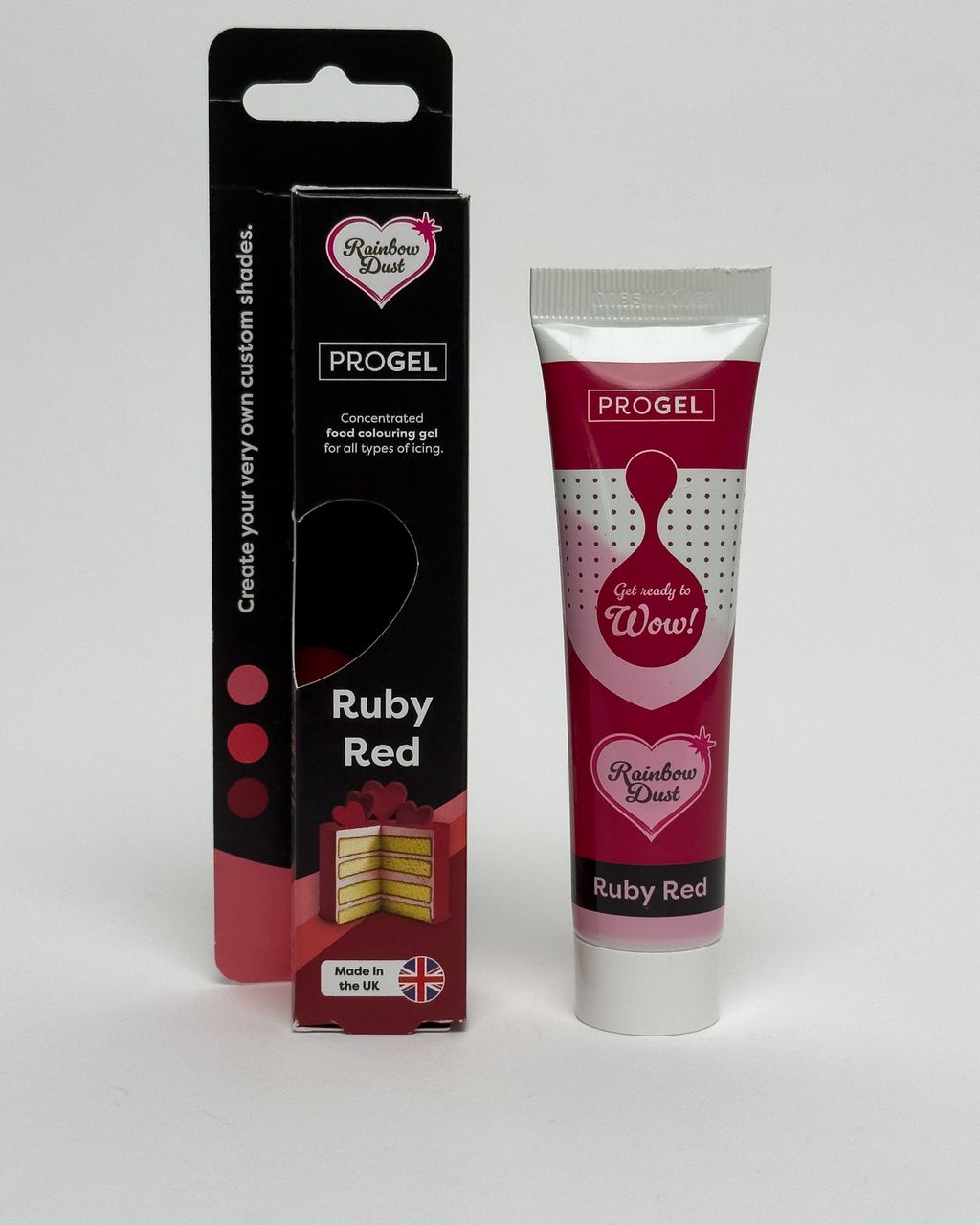
You'll notice this especially with Christmas gingerbread. Red dots, hearts and the outlines on Santa figures need a genuinely red icing that holds a clean line. This is where a gel colour works better, since it has a concentrated pigment with almost no water. For 100 g of icing, one or two dabs on a toothpick is usually enough, and the texture stays unchanged. ProGel's Ruby shade is a good choice for gingerbread — just note that it contains E122 and E129 (see FAQ below). Let the colour develop: red deepens further over 15–30 minutes.
You'll find the full range of gel, powder and oil-based decorating colours in our cake decorating colours category. The differences between them are explained in Food colouring for baking: gel, powder and chocolate colours.
Soft honey gingerbread cookies that never go hard
Soft honey gingerbread that stays tender: the perfect base for coloured icing
You can colour chocolate naturally, but only with dry powder — never with juice. Even a few drops of water will make the chocolate seize and turn grainy. Stir a finely sieved powder, such as freeze-dried raspberry, matcha or turmeric, into melted white chocolate. For bold, saturated shades, use oil-based colours made specifically for chocolate.
Green spirulina is the whole dried algae, which colours things blue-green and has a strong, distinctly sea-like flavour. Blue spirulina is the extracted pigment phycocyanin — it colours a clean blue, tastes almost neutral, and only a pinch is needed. According to manufacturers, though, it doesn't hold up well to acidic environments or heat, so it belongs in neutral icings and creams rather than in batter.
Naturally coloured icing usually starts fading within a few days when exposed to light, while gel colours hold up longer. Beetroot and raspberry fade the fastest, and turmeric is also light-sensitive. Store decorated gingerbread in a tin, away from light, and ideally colour it just a day or two before serving.
Yes — both fondant and marzipan can be coloured naturally by kneading in a fine powder. Juices don't work well here, since they make fondant and marzipan damp and sticky. Add the powder a little at a time and knead thoroughly before adding more, as the true colour only shows once it's fully worked in.
Under EU regulation (EC) No 1333/2008, foods containing any of the six so-called 'Southampton' colourings (E102, E104, E110, E122, E124 and E129) must carry a warning that they may have an adverse effect on children's activity and attention. Other approved colourings don't carry this requirement. If you'd rather avoid these six, check the ingredients list on the packaging.
One recipe worth heating the oven for, one tip, and one deal from the shop. Nothing else.